
This site is supported by our readers. We may earn a commission, at no cost to you, if you purchase through links.

A bad shave rarely starts with the blade. Nine times out of ten, it starts with the lather.
Thin, foamy, or gritty lather drags the razor across your skin instead of letting it glide—and no amount of technique fixes that.
The lather is your foundation, and like any foundation, the quality of everything built on top of it depends on how well you lay it down.
Most shavers rush this step or skip it altogether, then blame the razor when their skin looks like it lost a fight.
Getting the best lather preparation technique dialed in changes the entire experience—smoother passes, less irritation, and a shave that actually feels finished.
Table Of Contents
- Key Takeaways
- Why Lather Preparation Matters
- Essential Tools for Optimal Lather
- Preparing Your Shaving Brush
- Choosing The Best Lathering Method
- Step-by-Step Lather Preparation Guide
- Tips to Improve Lather Quality
- Maintaining Your Shaving Tools
- Frequently Asked Questions (FAQs)
- How to get the best lather?
- What is the best way to get the smoothest shave?
- What is the Marco method for lathering?
- How often should shaving soap be replaced?
- Does lather quality change with different razor types?
- Can skin type affect the ideal lather consistency?
- Is lathering technique different for sensitive skin areas?
- Conclusion
Key Takeaways
- Lather is the true foundation of a great shave — thin, airy, or rushed lather causes drag and irritation that no blade or technique can fix.
- Your brush, soap quality, and water chemistry work as a system — getting any one of them wrong collapses the whole lather before it even hits your face.
- Loading the brush fully, adding water drop by drop, and watching for a glossy, yogurt-thick texture are the three non-negotiables of consistent lather every time.
- Hard water, wrong temperature, and skipping the brush soak are the most common silent saboteurs — small adjustments like distilled water or a proper pre-soak fix most lather problems fast.
Why Lather Preparation Matters
Good lather isn’t just a nice touch — it’s the foundation of a great shave. Get it right, and everything else falls into place.
Master the technique from blade angle to lather prep with this straight razor shaving tutorial for beginners — it’s the kind of step-by-step guide that actually makes a difference.
Here’s why it matters more than most guys realize.
Benefits for Skin and Beard
Building the right lather does more than just look good in the bowl. It’s your first line of defense.
Proper hydration retention keeps skin moist while you shave, and beard softening lets the blade cut cleanly — not tug.
You get barrier reinforcement, irritation reduction, and faster post-shave recovery, all from one step done right.
Understanding water chemistry impacts lather is essential for consistent performance across different water types.
Lather’s Role in Shave Comfort
Good lather isn’t just foam — it’s function. The lubrication glide lets your blade move without drag, while cushion impact absorbs pressure so the edge never bites too hard.
Good lather isn’t just foam — it’s the glide that protects your skin and the cushion that tames the blade
Hair lift brings stubble upright for a cleaner cut.
Moisture retention and skin hydration keep your face supple pass after pass.
Get lather consistency right, and temperature sensory comfort follows naturally.
Achieving small dense bubbles ensures a firm, creamy lather.
Common Lather Mistakes to Avoid
Even perfect lather techniques fall apart when the basics go wrong. Watch out for these four mistakes:
- Improper water ratio — too much creates runny foam; too little makes pasty clumps
- Insufficient product loading — a few seconds on the puck won’t cut it
- Excessive aeration — aggressive whipping builds fluffy air, not protective cushion
- Dry brush mistake — always pre-soak natural bristles before loading soap
Essential Tools for Optimal Lather
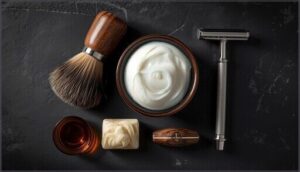
Before you build a single stroke of lather, your tools need to be right.
The brush, the soap or cream, and a few key accessories — each one plays a specific role in what ends up on your face.
Here’s what you actually need to get started on the right foot.
Choosing The Right Shaving Brush
The brush you pick changes everything.
Badger brushes hold more water for dense, creamy lather with less effort. Boar brushes start stiff but soften over weeks. Synthetic brushes dry fast and perform surprisingly well.
| Feature | Hair Type | Best For |
|---|---|---|
| Knot Size/Loft Backbone | Badger | Bowl lathering |
| Brush Weight/Handle Material | Boar | Exfoliation |
| Brush Maintenance | Synthetic | Travel use |
Selecting Quality Soaps or Creams
Not all soaps lather equal — your shaving soap selection shapes every stroke.
The right soap pairs with the right brush and water chemistry, so if your lather keeps falling flat, these shaving lather troubleshooting tips can help you pinpoint exactly what’s off.
- Vegan vs Tallow: Tallow offers rich cushion; plant-based oils match it well.
- Glycerin Content: High glycerin means better hydration and skin protection.
- pH Balance: Aim for 5.5–7 to protect your skin barrier.
- Hardness Levels: Soft creams load fast; hard pucks last longer.
Ingredient transparency tells you everything.
Recommended Accessories for Beginners
Rounding out your kit doesn’t take much. Smart additions turn a scattered routine into something you’ll actually look forward to.
| Accessory | Why It Matters |
|---|---|
| Alum block / Styptic pencil | Stops nicks fast, calms irritation |
| Brush stand + Shave Bowl | Drains your shave brush properly, builds better lather |
Anti-fog mirror keeps your angles honest. Bowl selection, go at least four inches wide — your badger hair shave brush needs room to work.
Preparing Your Shaving Brush
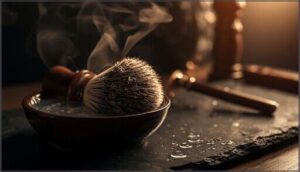
Before you even think about soap or lather, brush needs proper attention — foundation of everything that follows. A well-prepared brush makes the difference between a mediocre lather and one that actually performs.
Here’s what you need to know to get it right.
Soaking and Softening The Bristles
Think of soaking as your shave brush’s warm-up — skip it, and you’re already behind.
For best soak duration, one minute works for badger; boar needs two to three.
Always use lukewarm water; it benefits both the bristles and glue knot protection.
Use the partial submersion technique — bristles only, handle dry.
- Lukewarm water softens hairs without stressing the glue knot
- Partial submersion keeps the handle and knot base dry
- Proper bristle flexibility enhancement means smoother brush loading
- Avoid hot water — it frays tips and loosens your shave brush faster
Synthetic Vs. Natural Brushes
Your choice of shave brush shapes everything that follows.
Synthetic brush fibers dry fast — often within hours — and cut allergy risks completely, making them solid for sensitive skin. Natural brush options like badger offer better water retention, keeping lather hydrated longer.
Cost durability favors synthetics at the entry level. Shave preparation tips, match your lathering technique to your skin’s needs first.
Breaking in a New Brush
A new shave brush needs time before it performs its best. Start with an initial odor removal wash — mild dish soap cuts through factory oils and animal scent fast.
Run six to ten lather bowls just for break-in practice. This tip splitting process softens bristle ends naturally. Follow a simple break-in schedule, check knot integrity early, and your lathering technique improves with every session.
Choosing The Best Lathering Method

Not every barber reaches for a bowl — and that’s perfectly fine. The method you choose comes down to your routine, your gear, and honestly, what just feels right in your hands.
Here are the three main lathering techniques worth knowing.
Bowl Lathering Technique
Bowl lathering gives you full control before the brush ever meets your face. Load your shave brush on the shaving soap for 20–30 seconds, then work it into your lather bowl using circular strokes.
Bowl material choice matters — ceramic or metal bowls hold heat well.
Add water with the water drop technique, watching for lather consistency indicators: glossy, yogurt-thick lather means you’re ready.
Face Lathering Technique
Face lathering skips the bowl entirely — your skin becomes the workspace. Load your shave brush with shaving soap or shaving cream for 20–30 seconds, then work it directly onto wet skin using circular motions. Watch your brush pressure; too much causes redness.
The exfoliation benefits are real — lifted hairs, smoother blade glide. Water drop timing matters here: add small amounts as needed. Perfect for travel convenience.
Hand Lathering Technique
Hand lathering turns your palm into the bowl. Cup one hand slightly, load your shave brush for 30 seconds, then swirl it against your palm in steady circles. Add water drop by drop — texture control comes from patience, not speed.
Body heat warms the lather naturally. Great for travel convenience, and the tactile feedback tells you instantly when your shave preparation is right.
Pros and Cons of Each Method
Each method has a trade-off worth knowing.
Bowl lathering wins on volume vs coverage and water control — you see exactly what you’re building.
Face lathering scores on skin sensitivity benefits and product efficiency since nothing goes to waste in a bowl.
Hand lathering is pure simplicity.
Match your method to your morning — ritual time matters as much as the lather itself.
Step-by-Step Lather Preparation Guide
Getting the lather right comes down to a handful of steps done in the right order. Each one builds on the last, so skipping ahead usually costs you quality.
Here’s exactly how to work through the process from start to finish.
Loading The Brush With Product
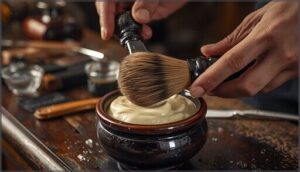
loading as the foundation — get it wrong, and no amount of technique saves your lather.
Shake your shave brush to ideal wetness, then press it gently onto the shave soap using light, swirling strokes. Soap hardness determines loading time — 30 to 60 seconds for hard pucks. Watch for visual cues: thick, pasty tips signal you’re ready.
Synthetic brushes need slightly less water than natural hair.
Adding Water for Ideal Consistency
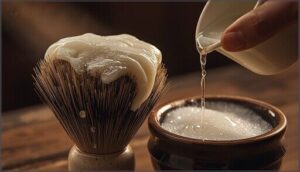
Water is where most shavers go wrong. Use the incremental water technique — drip two or three drops at a time onto your shave brush, then work it into the loaded bristles.
Watch your lather viscosity: ideal lather looks like thick yogurt, glossy and smooth. Hard water? A dropwise hydration approach with temperature‑controlled drops — lukewarm, never hot — protects lather quality every time.
Building and Whipping The Lather
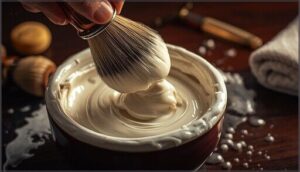
Start with circular motion — short, brisk circles in your shave bowl work air into the proto lather fast. Once it thickens, switch to painting strokes for even coverage.
Water control stays critical here; add drops only as needed. Watch for visual cues: glossy, smooth lather that holds soft peaks on your shave brush, means your lathering and shaving soap are perfectly whipped. Bowl-to-face shift seals it.
Achieving The Perfect Texture

Perfect texture comes down to reading your lather like a professional. Glossy consistency means it spreads thin and even — you should still see your stubble’s outline beneath it. Nail these four markers before touching razor to skin:
- Cushion density: soft peaks, not stiff or pasty
- Slickness balance: two fingers rubbed together feel slick after rinsing
- Bubble control: no large airy pockets — only smooth, yogurt-like surface
- Water hardness impact: switch to distilled water if lather collapses fast
Good lathering with quality shaving soap and a loaded shave brush rewards patience. Lather quality and lather creation live in the details.
Tips to Improve Lather Quality

Even a solid technique can fall apart if your lather isn’t cooperating. Small adjustments — to your water, your additives, or your approach — can make a real difference in the final result.
Here’s what to tweak when things aren’t quite right.
Adjusting Water Temperature
Temperature is your silent partner in lather creation. Lukewarm benefits show up fast — water around 85–95°F lets your shaving soap or shaving cream bloom beautifully on the shave brush. Hot water risks are real: go too hot and your lather collapses.
Cold rinse effects help calm skin post-shave. Test on your wrist first. Steam softening from a warm pre-rinse does the heavy lifting before your first pass.
Dealing With Hard Water
Hard water is quietly sabotaging your shaving lather — calcium and magnesium ions break down shave soap before it even starts. Distilled water use fixes this fast.
A small bowl costs almost nothing.
Citric acid chelation binds those minerals directly in your shaving brush lather.
Boiling tap water helps with temporary hardness.
Hardness testing kits tell you exactly what you’re fighting before your next shave.
Enhancing Lather With Additives
A few drops of the right additive can completely change your lather quality.
A Glycerin Boost makes foam denser and improves Oil Slip so the razor glides without drag. Aloe Gel replaces some water for a cushioned, yogurt-like texture. Clay Stability from kaolin or bentonite tightens structure and improves glide. Add Menthol Cool or Preshave Oil directly into your lathering routine for comfort and a closer finish with any Shaving Cream or Shave Soap.
Troubleshooting Common Issues
Additives fine-tune your lather, but sometimes the basics go wrong first.
Foamy Lather Fix starts with slowing down — add water drop by drop. Dry Sticky Lather needs a few warm drops worked in gently. Runny Lather Remedy? Load more Shave Soap directly.
Hard Water Solutions include distilled water or citric acid. For Brush Shedding Prevention, rinse thoroughly and air-dry bristles.
Maintaining Your Shaving Tools
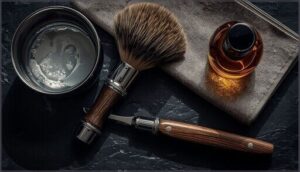
Your tools work hard every shave — they deserve a little care in return.
Neglect them and you’ll notice it fast: split bristles, musty smells, and lather that never quite comes together.
Here’s how to keep everything in top shape.
Cleaning and Drying The Brush
Rinsing your brush right after every shave is the foundation of solid shaving brush maintenance. Hold it horizontal under lukewarm water — that’s your best rinse technique for flushing soap from deep in the knot.
After rinsing, squeeze gently from base to tip for proper water squeezing, flick out the excess, then choose your air‑dry position: upright or in a stand both work.
Skip enclosed cabinets — mildew prevention depends on airflow.
Every month or so, a vinegar bath clears hard water buildup that daily rinsing misses, whether you’re using a synthetic brush or a natural hair brush.
Proper Storage for Longevity
Once your brush is clean and dry, where you put it matters just as much. Keep it bristles-up on a stand — brush ventilation does the real work here, pulling moisture out of the knot.
Humidity control and temperature stability protect both natural and synthetic bristles long‑term.
For travel, a vented travel tube shields the knot without crushing it.
Seal your soap tight to lock in freshness.
Routine Maintenance Tips
Good storage habits set the foundation — now keep that momentum going with a simple routine.
- Blade Replacement Schedule: Swap blades every 5–6 shaves; coarse beards need fresh steel sooner.
- Razor Head Sanitizing: Disassemble weekly, scrub with a soft toothbrush, rinse clean.
- Brush Disinfection Methods: Deep clean every 2–4 weeks using mild shampoo.
Consistent Tool Longevity Tracking keeps your shave routine dialed in.
Frequently Asked Questions (FAQs)
How to get the best lather?
Great lather comes down to four things: brush load timing, water drop control, soap hardness selection, and temperature tweaking.
Nail those, and your shaving lather will be consistent every single time.
What is the best way to get the smoothest shave?
Start with skin exfoliation and pre‑shave oil, then build your shaving lather using quality shaving soap or shave cream.
Control blade angle, mind the water temperature control, and finish with post‑shave moisturization for wet shaving excellence.
What is the Marco method for lathering?
The Marco method floods the brush with water from the start, loads the soap heavily for 45–60 seconds, then swirls into dense, slick lather — fast, forgiving, and ideal for Italian soaps like Cella.
How often should shaving soap be replaced?
Most shaving soaps last 2–3 years when stored dry and cool.
Watch for orange spots, rancid smells, or crumbling texture — those are your replacement signs. Daily users usually go through a standard puck in 4–6 months.
Does lather quality change with different razor types?
Yes, razor-specific lather matters.
Blade exposure effects demand different foam density requirements — straight razors need thick, paste-like consistency, while safety razors work well with slicker, hydrated lather. Lather consistency adjustments are everything.
Can skin type affect the ideal lather consistency?
Absolutely — your skin type shapes the ideal lather consistency more than most people realize.
Oily skin lather should run lighter and slicker.
Dry skin cushion needs a thicker, creamier build. Sensitive skin glide depends on a smooth, bubble‑free texture.
Is lathering technique different for sensitive skin areas?
threading a needle, lathering sensitive areas demands precision. Lighter brush pressure, lukewarm water temperature, fragrance-free product choice, careful application order, and gentle stroke direction all reduce razor irritation and keep skin preparation effective.
Conclusion
A craftsman never blames his tools when his foundation is weak.
The chisel doesn’t fail—the prep does.
Shaving works the same way.
Every smooth pass, every close finish, every morning where your skin feels respected rather than punished—it all starts with how well you build your lather.
Master the best lather preparation technique, and you stop fighting your shave.
You start owning it.
That’s not a small shift.
That’s the whole game.
- https://sharprazorpalace.com/pre-shave-preparation/110090-how-lather-quality-affects-my-shave.html
- https://theshavingcadre.com/threads/face-lather-vs-bowl-lather.6541/
- https://docs.google.com/forms/d/e/1FAIpQLSft2CcQT7O59GB6mBpFvAxcuYez30sIROpeaOIM3LqzTmbG5g/viewform?usp=pp_url&entry.1452073181=Website
- https://www.barristerandmann.com/blogs/our-blog/is-shaving-cream-bad-for-skin
- https://magsskin.com/blogs/magsazine/how-glycerin-helps-after-shaving