This site is supported by our readers. We may earn a commission, at no cost to you, if you purchase through links.

I watched my colleague discreetly pluck a nose hair during a staff meeting, and within two days, he developed a painful nasal infection that required antibiotics—a reminder that convenience doesn’t always equal safety.
Your nose hairs aren’t just cosmetic nuisances; they’re intricate filters that trap bacteria, dust, and allergens before they reach your lungs, and aggressive removal methods like plucking or waxing can compromise this natural defense system while introducing infection-causing bacteria into delicate nasal tissue.
The good news is that you don’t have to choose between looking groomed and protecting your respiratory health, because proper trimming techniques with the right tools can eliminate visible nose hairs without triggering pain, bleeding, or the risk of nasal vestibulitis.
Understanding which removal methods preserve your nasal mucosa’s integrity while achieving smooth results requires knowing what features matter in a trimmer, which techniques minimize discomfort, and which common mistakes can turn a simple grooming task into a medical problem.
Table Of Contents
- Key Takeaways
- Why Trimming is The Safest Nose Hair Removal Method
- Top 7 Nose Hair Trimmers for Pain-Free Removal
- Step-by-Step Guide to Painless Nose Hair Trimming
- How to Choose The Right Nose Hair Trimmer
- Pain Reduction Techniques During Nose Hair Removal
- Common Mistakes to Avoid When Removing Nose Hair
- Frequently Asked Questions (FAQs)
- Conclusion
Key Takeaways
- Trimming nose hair preserves your respiratory system’s natural filtration barrier, while plucking and waxing damage delicate nasal tissue, introduce infection-causing bacteria into hair follicles, and can trigger painful conditions like nasal vestibulitis that require medical treatment.
- Electric trimmers with rounded safety guards, stainless steel blades, and waterproof designs offer the safest removal method because they cut visible hairs without penetrating deep into nasal passages or compromising the protective mucosa that traps airborne pathogens.
- Proper trimming technique involves working in bright light with gentle circular motions, cleaning tools with disinfectant before and after each use, and never inserting blades deeper than visible protruding hairs to prevent accidental injury or bacterial contamination.
- Over-trimming strips away more than 50% of your natural filters and leaves respiratory passages vulnerable to particles that should be trapped, while unsanitized tools create direct pathways for bacterial transfer that can escalate into serious nasal infections.
Why Trimming is The Safest Nose Hair Removal Method
Before you reach for tweezers or book a nose waxing appointment, you need to understand why trimming beats every other removal method regarding safety and comfort.
Your nose hairs aren’t just there to annoy you in the mirror, they’re actually working overtime to protect your lungs from everything floating around in the air you breathe.
Let’s break down exactly how trimming keeps you safe while other methods can land you in trouble, starting with what those little hairs are really doing for your respiratory health. Keeping your nasal hair trimmed with quality fragrance-free grooming tools helps maintain that protective barrier without the irritation or infection risks that come from plucking or waxing.
How Nose Hair Protects Your Respiratory System
Your nose hair isn’t just aesthetic clutter, it’s your respiratory system’s first line of defense. These tiny guardians trap debris before it reaches your nasal cavity, and here’s what they do: That’s why choosing the right nose trimmers for men helps you maintain this natural defense system without damaging these protective hairs.
- Filter airborne bacteria and viruses to reduce infection risk
- Add moisture to inhaled air, supporting mucous membrane integrity
- Work with nasal mucosa to enable mucociliary clearance
This natural air filtration system maintains nasal health while protecting your breathing mechanics from harmful particles. Understanding scientific study summaries is vital for evaluating the effectiveness of such natural defense mechanisms.
Risks of Plucking and Waxing Nose Hair
While trimming respects that protective system, plucking and waxing can wreak havoc on your nasal hygiene.
Plucking introduces bacterial transfer directly into hair follicles, potentially triggering nasal vestibulitis—an infection that’s as uncomfortable as it sounds. Waxing isn’t much better, causing skin irritation, chemical burns, and nasal damage that may lead to nosebleeds. If you’re looking for safer alternatives, this smooth bikini line shaving guide covers gentler methods that won’t wreck your skin.
Both methods compromise infection control while creating ingrown hairs and scarring you definitely don’t need. Using a targeted treatment for ingrown hairs can help minimize these risks and keep your skin healthier during recovery.
Why Trimming Preserves Natural Filtration
Here’s the thing about trimming—it keeps your nasal balance intact while taming visible hairs. Short hairs maintain airflow regulation and mucosa protection better than bare nostrils ever could.
Unlike aggressive hair removal methods that strip your nasal cavity completely, nose trimmers preserve filtration efficiency by leaving enough hair to trap particles. Your respiratory health doesn’t need total removal; it needs smart maintenance.
Top 7 Nose Hair Trimmers for Pain-Free Removal
Finding the right nose hair trimmer can feel like traversing a minefield, especially when you’re trying to avoid pain, irritation, and those cringe-worthy moments when you nick the inside of your nostril. If you’re dealing with ingrown hairs or irritation from traditional shaving, exploring natural ways to shave legs can help you minimize discomfort across all your grooming routines.
The good news is that modern trimmers have come a long way, with safety features and blade technology designed specifically to protect delicate nasal tissue while keeping you looking sharp.
Below, I’ve rounded up seven reliable options that range from manual scissors to sophisticated electric trimmers, each offering a different approach to pain-free grooming.
1. Nad’s Nose Hair Wax Kit
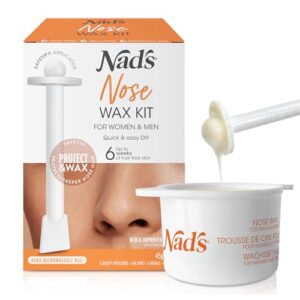
Here’s the thing about at-home waxing: it can feel like liberation, but Nad’s Nose Hair Wax Kit requires a reality check. While DIY hair removal sounds convenient, nose waxing carries real risks—especially for sensitive skin care needs.
The waxing process involves heating wax and inserting applicators deep enough to remove hair from the root, which can irritate delicate nasal tissue and disrupt your natural filtration system.
If you’re committed to hair removal safety, trimming remains the safest option. Wax kit safety simply doesn’t outweigh the potential for burns, irritation, or damaged membranes.
| Best For | People comfortable with DIY beauty routines who want longer-lasting nose hair removal than trimming provides and don’t have sensitive skin or nasal issues. |
|---|---|
| Primary Use | Nose hair removal |
| Product Type | Wax kit |
| Target User | Men and women |
| Maintenance Required | Reheating wax |
| Price Point | Mid-range |
| Ease of Use | Moderate |
| Additional Features |
|
- Results last up to four weeks, much longer than trimming or plucking
- Removes hair from the root, which can slow regrowth over time with regular use
- Cheaper than salon visits and includes everything you need in one kit
- Requires a microwave and careful temperature control to avoid burns or discomfort
- Can irritate sensitive nasal tissue and may disrupt your nose’s natural filtration
- Results vary widely—some users find it messy, painful, or less effective on coarse hair
2. Self Care For Men Guidebook

Look, grooming guides rarely address nose hair maintenance with the seriousness it deserves, but the Self Care For Men Guidebook actually gets it right. This resource emphasizes male grooming tips that prioritize safety over speed, teaching you trimming best practices that protect nasal health benefits while keeping your personal hygiene routine simple.
You’ll find practical advice on selecting ergonomic nose trimmers with proper guards, combining hair removal safety with post-trim skincare, and troubleshooting common issues like snagging or dull blades—all essential knowledge for effective facial hair removal without the drama.
| Best For | Men looking for practical, safety-focused guidance on nose hair trimming that fits into a broader self-care routine without risking irritation or injury. |
|---|---|
| Primary Use | Men’s grooming guide |
| Product Type | Book |
| Target User | Men |
| Maintenance Required | None |
| Price Point | Budget |
| Ease of Use | Simple |
| Additional Features |
|
- Emphasizes ergonomic tool selection and safety features like rounded tips and guards to minimize discomfort and prevent nasal tissue damage during trimming.
- Combines trimming advice with skincare practices and troubleshooting tips for common issues like dull blades or snagging, making it a complete maintenance resource.
- Provides step-by-step techniques for pain-free grooming, including prep work, proper grip, and post-trim care that supports long-term nasal health.
- Covers a wide range of self-care topics beyond nose hair maintenance, so readers seeking only trimming advice may need to sift through unrelated content.
- Some readers have reported quality issues with the physical book, including rough page edges and poor binding that affect the reading experience.
- Includes certain wellness topics like detoxing or New Age practices that some readers find pseudoscientific or unhelpful for practical grooming needs.
3. Panasonic Ear Nose Trimmer
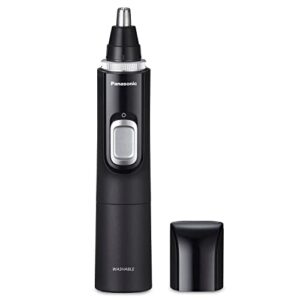
At $39.99, the Panasonic Ear Nose Trimmer delivers a high-velocity motor paired with dual-edge blades that actually capture hair instead of yanking it—a breakthrough for anyone who’s winced through trimming sessions.
Its sophisticated Micro-Vacuum System reduces that annoying mess, while wet/dry capability means you can rinse it clean after each use, which is critical for trimmer maintenance and preventing bacterial buildup.
The rotating head employs gentle trimming techniques that respect nose hair growth patterns, and stainless steel construction ensures reliable ear trimming safety without the irritation cheaper electric nose trimmers cause.
| Best For | People who want a reliable, mess-free trimmer for nose, ear, and facial hair that works in the shower and doesn’t pull or irritate sensitive skin. |
|---|---|
| Primary Use | Nose & ear trimming |
| Product Type | Electric trimmer |
| Target User | General consumers |
| Maintenance Required | Battery replacement |
| Price Point | $39.99 |
| Ease of Use | Easy |
| Additional Features |
|
- High-velocity motor with dual-edge blades trims efficiently without yanking hair, plus the Micro-Vacuum System keeps cleanup minimal
- Wet/dry design lets you use it in the shower and rinse it clean under running water for easy maintenance
- Rotating stainless steel head with safety guard protects delicate nasal passages while trimming effectively
- Some users report the trimmer stops working after a few months or experiences battery connection problems
- No storage case or extra accessories included despite the $39.99 price point
- Guarantee may only be valid in the USA, limiting support for international buyers
4. Panasonic Replacement Blade
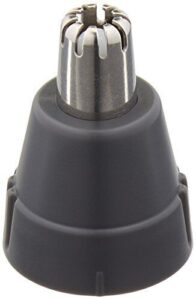
Over time, even the best electric nose trimmers lose their edge, which is exactly why the Panasonic Replacement Blade (WER415K1058) exists—you don’t have to toss your entire device when trimming efficiency drops.
This **O.E.M.
-authorized part fits various Panasonic models and restores the sharp, pain-free performance** you need for proper nose hair removal and hygiene.
At just 0.48 ounces, it’s incredibly lightweight, and following replacement guidelines ensures trimmer safety and blade maintenance that keeps irritation at bay while preserving the natural filtration your nose depends on.
| Best For | Anyone who owns a compatible Panasonic nose hair trimmer and wants to restore sharp, efficient trimming performance without buying a whole new device. |
|---|---|
| Primary Use | Replacement blade |
| Product Type | Replacement part |
| Target User | Panasonic users |
| Maintenance Required | Periodic replacement |
| Price Point | Low |
| Ease of Use | Easy |
| Additional Features |
|
- Official O.E.M. part designed specifically for Panasonic models, so you know it’s made to fit right and work properly
- Super lightweight at less than half an ounce, making installation and handling easy
- Restores pain-free trimming performance when your current blade starts pulling or snagging
- Some users have reported the new blade doesn’t trim as well as expected, which can be frustrating
- Not universal—you need to verify compatibility with your specific Panasonic model before ordering
- Requires replacement every 6–12 months depending on use, which adds to ongoing maintenance costs
5. Tuchaolan Nose Trimmer Replacement Head
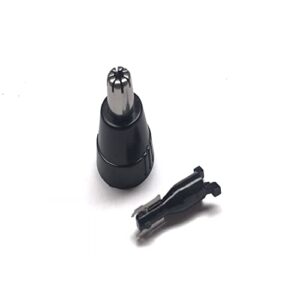
When your electric nose trimmer starts tugging instead of trimming, a replacement head like the Tuchaolan model can restore that gentle, pain-free grooming you need without buying a whole new device.
Designed with stainless steel blades and rounded safety edges, these replacement heads fit multiple Panasonic models—just align the tabs, click it into place, and you’re back in business.
Proper trimmer maintenance means rinsing the head under warm water after each use, air-drying thoroughly, and swapping it out every six to twelve months to keep nose hair safety on point.
| Best For | Anyone with a Panasonic nose trimmer (ER-GN30, ER411, ER421, ER430, ER-GN50, ER-GN40, ER420, or ER-GN10) who wants to refresh their device without buying a new one. |
|---|---|
| Primary Use | Replacement cutting head |
| Product Type | Replacement part |
| Target User | Panasonic users |
| Maintenance Required | Annual replacement |
| Price Point | Low |
| Ease of Use | Easy |
| Additional Features |
|
- Easy installation—just align the tabs and click into place, no tools needed
- Stainless steel blades with rounded edges help reduce tugging and irritation
- Affordable way to extend your trimmer’s life instead of replacing the whole unit
- Quality can be hit or miss—some users report the blade doesn’t last as long as the original
- A few people have experienced jamming or louder operation over time
- Not quite as durable as OEM parts, with some heads wearing out in under 8 months
6. Electric Nose Ear Trimmer Tool
If you want cordless convenience without sacrificing trimmer safety, modern electric trimmers with rotating electric blades and rounded guards give you quick, painless nose hair removal in under a minute. Most battery-powered models deliver 20 to 60 minutes of runtime per charge, making personal grooming easy at home or on the road.
Look for waterproof designs so you can rinse the head after each session—clean blades are essential for preventing infection. Following basic trimming tips, like gentle circular motions and regular maintenance, keeps your nose hair trimmer performing smoothly and your ear care routine stress-free.
| Best For | Anyone who wants a safe, rechargeable trimmer that handles nose and ear hair quickly without pulling or irritation—especially if you travel often or prefer cordless grooming tools. |
|---|---|
| Primary Use | Nose & ear trimming |
| Product Type | Electric trimmer |
| Target User | General consumers |
| Maintenance Required | USB-C charging |
| Price Point | Premium |
| Ease of Use | Easy |
| Additional Features |
|
- 360° dual-blade system cuts efficiently with minimal tugging, so you can trim in under a minute
- Wet/Dry design lets you rinse the head under water for easy cleaning and hygiene
- USB-C rechargeable battery gives you up to 45 minutes of cordless use, eliminating disposable batteries
- Higher price point compared to basic trimmers on the market
- The whole unit can’t be fully submerged, limiting shower use despite wet/dry claims
- May struggle with very thick or coarse hair according to some user feedback
7. Manscaped Weed Whacker Replacement Blade
When your Manscaped Weed Whacker starts tugging instead of trimming, you don’t need a whole new device—just fresh blades.
The SkinSafe replacement blade features a 360-degree dual rotary design with ceramic and stainless steel construction, delivering precision cutting without nicks or pulls. Pre-lubricated and easy to snap in, these blades restore smooth nose hair removal in seconds.
Most users replace them every two to three months to maintain peak trimmer performance and personal grooming hygiene, keeping your trimmer maintenance simple and your nasal passages safe.
| Best For | Anyone who owns a Manscaped Weed Whacker and wants to keep their nose and ear trimmer performing like new without buying a replacement device. |
|---|---|
| Primary Use | Replacement blade |
| Product Type | Replacement part |
| Target User | MANSCAPED users |
| Maintenance Required | Periodic replacement |
| Price Point | Mid-range |
| Ease of Use | Easy |
| Additional Features |
|
- Pre-lubricated dual rotary blade design makes installation quick and restores smooth, precise cutting immediately
- Ceramic and stainless steel construction resists rust and maintains hygiene between cleanings
- Compatible with both Weed Whacker 2.0 and 1.0 models, so you can extend the life of your existing trimmer
- Replacement cost adds up since blades need changing every 2-3 months for optimal performance
- Some users report inconsistent quality, with occasional blades cutting poorly right out of the package
- Price per blade is higher than some competitors, especially when not buying multi-packs
Step-by-Step Guide to Painless Nose Hair Trimming
You’ve got the right tools, you know the risks, and now it’s time to actually do this thing without making your eyes water. The difference between a quick, painless trim and a sneeze-inducing disaster comes down to proper technique, not expensive equipment.
Here’s how to prep, trim, and clean up like someone who’s done this more than once.
Preparing Your Nose and Tools Before Trimming

Before you start trimming, wash your hands and gently clean around your nostrils to keep bacteria at bay. Make sure you’re working in bright light so you can actually see what you’re doing, because fumbling in the dark is a recipe for disaster. Then grab your trimmer and wipe down the blades with a disinfectant:
- Check your tool for any damage or dull spots
- Position yourself near a well-lit mirror
- Keep a clean towel nearby for quick cleanups
This simple nose preparation routine makes all the difference in your personal hygiene.
Proper Trimming Technique With Electric Trimmers
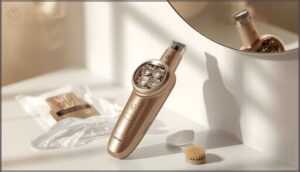
Now you’re ready to actually use that electric trimmer without turning your nostrils into a war zone. Turn it on and work in gentle, circular motions around the nostril opening, letting the guard do its job—don’t shove it deep into your nasal cavity like you’re mining for gold.
Keep the blade clean before and after each session, because infection risks aren’t worth the convenience of skipping sanitization.
Using Manual Scissors With Rounded Tips Safely
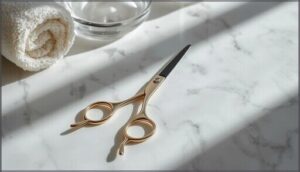
If you’re old-school or just don’t trust battery-powered gadgets, manual scissors with rounded tips are your best friend. Here’s how to use them without inflicting accidental carnage on your delicate nasal tissue:
- Sterilize scissors before each use to prevent infection from lurking bacteria.
- Trim only visible hairs with single, controlled snips—no deep nostril excavations.
- Keep blades small enough to maneuver without scraping cartilage or mucosa.
- Don’t insert scissors deeper than what you can actually see protruding outward.
Post-trimming Care and Cleaning Routine

Once you’ve finished trimming, gently rinse your nostrils with warm water to flush out loose hair and debris—nobody wants stray clippings tickling their sinuses all day.
Clean your trimmer blades with a soft brush, rinse under running water if it’s waterproof, then dry everything completely to prevent rust and bacterial buildup, which are basically hygiene nightmares waiting to happen.
How to Choose The Right Nose Hair Trimmer

Picking the right nose hair trimmer isn’t about grabbing the cheapest option at the pharmacy, it’s about finding a tool that won’t turn a simple grooming task into a painful experience or, worse, a trip to my office with an infected nostril.
You need to understand the real differences between manual scissors and electric models, the safety features that actually matter, and why certain blade designs work better than others.
Let’s break down exactly what to look for so you can make a smart choice that keeps your nose hair under control without the drama.
Manual Scissors Vs Electric Trimmers Comparison
You’ve got two solid paths for nose hair removal: manual scissors and electric trimmers, each with distinct advantages.
Manual nose hair trimming scissors give you surgical precision, letting you target individual hairs with complete control over blade types and trimming techniques.
Electric trimmers, however, deliver faster, more consistent results across your nose anatomy, with built-in trimmer safety features that reduce accidental nicks during nose hair trimming.
Essential Safety Features to Look For
When choosing nose hair removal tools, your safety depends on specific features that prevent injury and infection. As a dermatologist who’s treated nasal vestibulitis from poorly designed trimmers, I can’t stress this enough—these features aren’t optional.
- Safety guards preventing blade contact with delicate tissue
- Stainless steel blade materials with corrosion resistance
- Rounded tips minimizing skin care complications
- Auto shutoff protection against over-insertion
- Waterproof designs enabling thorough sanitization between cosmetic procedures
Waterproof Designs for Easy Maintenance
Waterproof materials transform maintenance from dreaded chore to quick rinse-and-go convenience, and as someone who’s examined countless infected follicles from poorly cleaned trimmers, I can’t overstate this feature’s importance. Look for IPX7-rated devices with sealed blades that won’t corrode, durable construction surviving repeated submersion, and anti-bacterial coatings preventing microbial growth between your nose hair trimming sessions.
| Feature | Benefit | Maintenance Tip |
|---|---|---|
| Sealed Blades | Prevents moisture damage to motor | Rinse under running water after each use |
| Cleaning Modes | Removes trapped hair and debris | Activate weekly for thorough sanitation |
| Waterproof Materials | Allows full submersion for deep cleaning | Dry completely before storing to preserve seals |
| Anti-Bacterial Coatings | Reduces infection risk from contaminated tools | Replace every 12-18 months as coating degrades |
Blade Types and Oscillating Technology Explained
Oscillation speed isn’t just a fancy spec—it’s the difference between smooth trimming and a snag that’ll make your eyes water, which is why I tell patients to understand what’s spinning inside their nostrils.
Here’s what matters when choosing your trimmer:
- Blade materials like stainless steel resist corrosion from nasal moisture, while titanium coatings extend durability
- Oscillation speed ranges from thousands to tens of thousands of cycles per minute for efficient nose hair removal techniques
- Safety guards with rounded tips protect delicate mucosa during trimming
- Trimmer maintenance requires periodic cleaning and occasional blade replacement
- Blade durability varies by material—ceramic stays sharper longer than basic steel
Pain Reduction Techniques During Nose Hair Removal

Look, I get it—nobody wants to feel like they’re inflicting tiny torture sessions on themselves every time they trim their nose hair, and honestly, you don’t have to.
There are some genuinely helpful tricks that can turn this awkward grooming task into something that’s actually tolerable, maybe even painless if you do it right.
Let’s walk through a few simple techniques that’ll help you keep discomfort to an absolute minimum.
Applying Petroleum Jelly to Reduce Friction
If you’ve ever winced mid-trim, you’re not alone—friction is the sneaky culprit behind most nose hair removal discomfort. A pea-sized dab of petroleum jelly applied lightly around your nostrils (never inside) can dramatically reduce skin irritation during trimming, acting as a protective barrier that lets your trimmer glide smoothly.
Just remember: external use only, and always clean your tools thoroughly afterward to maintain proper nasal hygiene.
Using Warm Compresses Before Trimming
Think of thermal therapy as your secret weapon for nasal relaxation before trimming prep. A warm compress applied for 5–10 minutes softens nose hair and surrounding tissue, making facial hair removal techniques far gentler—heat increases blood flow and tissue elasticity, which reduces resistance during contact with your trimmer.
Just keep the temperature comfortable (105–113°F), pat dry thoroughly, and you’re ready for smoother nose hair removal.
Breathing Techniques to Minimize Discomfort
Beyond thermal prep, controlled breathing exercises work wonders for pain management during nose hair removal. Try diaphragmatic breathing—inhale slowly through your nose for four counts, then exhale for six—to activate relaxation methods that genuinely reduce discomfort.
This breathing technique lowers your nervous system’s stress response, so you’ll barely notice the trimmer’s contact. It’s simple nasal comfort science that transforms an awkward moment into something you can actually handle.
Cool Compresses for Post-trimming Relief
After all that breathing work, cold therapy brings instant nasal relief. Wrap a gel pack in clean cloth and press it gently against your nostrils for five to ten minutes—this post-trim care constricts blood vessels and calms inflammation fast.
Ice applications work because they literally cool the irritation, giving your skin health a break. As a dermatologist, I’ve seen these simple skin-soothing techniques prevent redness before it even starts.
Common Mistakes to Avoid When Removing Nose Hair
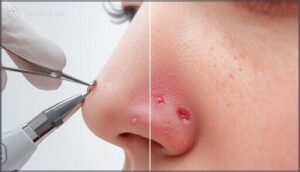
Look, I’ve seen way too many patients walk into my office with preventable nose injuries, infections that could’ve been avoided with just a little more caution.
The truth is, most nose hair removal mishaps aren’t about bad luck—they’re about common errors that people make without realizing the consequences.
Let’s talk about the biggest mistakes you need to steer clear of, so you can keep your nasal passages healthy while still looking your best.
Over-trimming and Its Health Consequences
Trimming too aggressively might feel like taking control, but it actually invites trouble. You’ll strip away more than 50% of your natural filters, leaving your respiratory system vulnerable to particles that would normally get trapped.
Over-trimming with nose hair trimming scissors causes mucosal damage, nasal infections, and nosebleeds, especially if you’re already using nasal steroids.
As a dermatologist, I’ve seen how repeated irritation from overzealous nose hair removal creates persistent crusting and discomfort that disrupts sleep.
Using Unsanitized Tools and Infection Risks
Your nose hair trimmer might be harboring more bacteria than you realize. Even if you’re careful with nose hair removal, skipping proper sanitization methods creates bacterial transfer pathways that dermatologists see daily in cosmetic procedures and safety protocols.
Infection control isn’t optional—unclean tools cause cross contamination that turns simple grooming into nasal vestibulitis, cellulitis, or worse. Clean your tools with alcohol-based disinfectants after every use, because infection risks multiply when tool hygiene fails.
Plucking Dangers and Nasal Vestibulitis
Your hair follicle doesn’t bounce back from plucking trauma—it inflames, creating entry points for Staphylococcus aureus and triggering nasal vestibulitis symptoms like swelling, tenderness, and purulent discharge.
Plucking inflames hair follicles, creating bacterial entry points that trigger nasal vestibulitis with swelling, tenderness, and discharge
Dermatologists see these plucking risks escalate into cellulitis weekly, because nose hair removal through pulling disrupts mucosal barriers that protect nasal health and hygiene.
Nasal infection follows nasal irritation when you ignore your body’s warnings.
Why Waxing Damages Delicate Nasal Tissue
Hot wax transfers heat that inflames your nasal mucosa, while adhesive contact creates microtrauma you won’t notice until infection sets in. Dermatologists warn against nose waxing because it strips mucosa protection through irregular pulling, leaving residue that traps debris and causes nasal irritation.
Waxing risks include microbleeds and abrasions that compromise delicate skin care, ultimately undermining nasal health and hygiene through repeated nose hair removal trauma.
Frequently Asked Questions (FAQs)
How often should I trim my nose hair?
You’ll want to check your mirror every 4 to 8 weeks, though your trimming frequency depends on how fast your nose hairs grow—some people need their trimmer sooner, others can wait longer.
Can nose hair grow back thicker after trimming?
Despite what you might’ve heard, trimming doesn’t make nose hair regrow thicker. Hair follicle health determines thickness from genetics, not cutting height—regrowth simply resumes from the same root without changing diameter or density.
What are signs of a nose hair infection?
Watch for redness, swollen nostrils, and tenderness around hair follicles—classic signs of nose infection.
Nasal discharge, pus formation, or facial pain warrants immediate dermatologist attention, especially if fever develops alongside these symptoms.
Are there age-related changes in nose hair growth?
Yes, aging affects nose hair growth. Many dermatologists observe increased hair density and thickness after middle age, driven by hormonal shifts that lengthen growth cycles and slow shedding. Though genetic factors create significant individual variation.
Can allergies affect how I manage nose hair?
Allergies can make nose hair removal trickier—nasal irritation, sinus pressure, and swelling increase discomfort during trimming.
Antihistamines dry passages, affecting technique, so trim when congestion’s low and prioritize gentle tools for respiratory health and hygiene.
Conclusion
Your colleague’s nasal infection and your commitment to safe grooming both arrive at the same truth: the best way to remove nose hair without pain starts with respecting your body’s natural defenses.
When you choose trimming over plucking, invest in quality tools with protective guards, and clean your equipment religiously, you’re not just avoiding discomfort—you’re preserving the respiratory filtration system that keeps pathogens from reaching your lungs every single day.