
This site is supported by our readers. We may earn a commission, at no cost to you, if you purchase through links.
That persistent itch on your scalp isn’t just annoying—it might be blocked hair follicles, a condition that affects millions yet often gets mistaken for simple dandruff or product sensitivity. When sebum, dead skin cells, bacteria, or product residue trap themselves inside follicles, your scalp responds with inflammation, tender bumps, and sometimes stubborn hair loss that won’t quit.
The good news? Blocked hair follicles scalp treatment doesn’t always require a dermatologist visit, though knowing when to seek professional help can save you months of frustration.
Understanding what’s actually happening beneath your scalp’s surface, recognizing the warning signs your body sends, and learning which treatments target the root cause—rather than just masking symptoms—puts you back in control of your scalp health.
Table Of Contents
Key Takeaways
- Blocked hair follicles result from excess sebum, product buildup, dead skin cells, infections, or mechanical irritation—and early recognition of symptoms like persistent itching, visible bumps, or hair thinning lets you intervene before permanent damage sets in.
- At-home treatments including medicated shampoos with ketoconazole or salicylic acid, regular scalp exfoliation, warm compresses, and switching to non-comedogenic products can effectively clear mild to moderate folliculitis without prescription intervention.
- Severe or persistent cases require medical-grade solutions like topical or oral antibiotics, antifungal washes, corticosteroid injections, or prescription-strength shampoos—and you should see a dermatologist if symptoms last beyond a week, worsen, or cause hair loss.
- Prevention hinges on consistent scalp cleansing with gentle exfoliation, choosing lightweight water-based hair products, managing sweat and oil through diet and hygiene, and adopting protective habits like loose hairstyles and silk pillowcases to keep follicles clear long-term.
What Causes Blocked Hair Follicles on The Scalp?
Your scalp follicles can get blocked for several reasons, and pinpointing the exact cause is the first step toward clearing things up. Most cases trace back to a handful of common culprits that disrupt your scalp’s natural balance, triggering inflammation and buildup.
Restoring your scalp’s natural pH balance is often key to reducing inflammation and preventing further blockages.
Let’s break down the main offenders you need to watch out for.
From static damage to product buildup, common winter hair problems can leave your locks looking dull and lifeless if you’re not careful.
Excess Sebum and Oil Production
Your scalp’s oil glands can go into overdrive, pumping out excess sebum that clogs hair follicles like a traffic jam on a one-way street. This can lead to issues with sebum buildup problems that require proper scalp care.
Hormones, stress, and genetics often trigger this overproduction, disrupting your scalp balance and causing hair follicle blockage.
Fortunately, targeted hair strengthening and thickening treatments can help restore balance and support healthier follicle function over time.
Proper follicle cleansing and oil control restore scalp health and care, minimizing pores while supporting sebum regulation naturally.
Product Buildup From Shampoos and Conditioners
Beyond your scalp’s natural oil production, silicone effects from conditioning agents create a stubborn scalp film that traps dirt and sebum. Up to 70% of hair buildup comes from product residue, particularly quaternary ammonium compounds in conditioners. Hard water worsens this, cementing conditioner ingredients onto your scalp.
Regular scalp care requires:
- Rotating to a clarifying shampoo weekly
- Rinsing thoroughly after each wash
- Limiting styling hair products
- Choosing silicone-free formulations
- Incorporating scalp exfoliation monthly
Dead Skin Cells and Poor Exfoliation
Even with impeccable washing habits, keratinocyte buildup can suffocate your follicles if you’re not removing dead skin cells regularly.
Scalp exfoliation breaks this cycle, though overly aggressive techniques risk scalp irritation and worsen inflammation.
The key? Tailoring your dead skin removal frequency to your scalp type—gentle enough to preserve your skin barrier while effectively preventing clogged hair follicles from derailing your hair follicle care routine.
Fungal and Bacterial Infections
When bacteria like Staphylococcus aureus or fungi such as Malassezia species infiltrate your scalp microbiome, they trigger folliculitis that won’t quit with basic hygiene alone. Bacterial infection produces painful, pus-filled bumps, while fungal infection usually creates flaking and oily scales—both disrupting normal follicle function.
Pairing medical treatment with hair thickening products that support scalp health can help restore follicle strength as your scalp recovers from infection.
Antimicrobial therapy targeting these pathogens, including ketoconazole shampoos for fungal causes, restores balance and clears infection-driven blockages effectively.
Ingrown Hairs and Mechanical Irritation
When hair regrows into your skin instead of upward, you’re dealing with ingrown hair remedies territory—a common trigger for folliculitis and clogged hair follicles. Tight hairstyles, close shaving, or constant friction from headwear bend the hair shaft, obstructing follicles and causing scalp irritation.
This irritation manifests as inflammation, bumps, and eventual follicle damage. Over time, repeated mechanical irritation can contribute to hair loss and persistent hair regrowth issues.
Recognizing Symptoms of Clogged Scalp Follicles
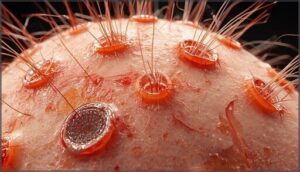
Your scalp doesn’t send subtle signals when follicles get blocked—it makes itself heard through a handful of unmistakable symptoms that range from annoying to downright concerning.
Recognizing these warning signs early gives you the upper hand in treating the problem before it escalates into something more stubborn, like persistent inflammation or noticeable hair loss.
Investing in affordable hair products for dry scalp can help you tackle irritation without breaking the bank.
Catching these symptoms early lets you stop the problem before it becomes persistent inflammation or noticeable hair loss
Here’s what to watch for when your scalp follicles are crying out for help.
Itching and Scalp Discomfort
When your scalp won’t stop itching, that’s often the first red flag pointing to blocked hair follicles. Pruritus Management starts with recognizing moderate to severe itch intensity common in folliculitis cases, where clumped sebum and keratin mechanically irritate nerve endings.
Inflammatory mediators like histamine heighten the urge to scratch, creating a vicious cycle that worsens Skin Irritation and demands targeted Follicle Care for lasting Scalp Soothing.
Redness, Swelling, and Inflammation
Visible erythema signals Follicle Inflammation in action, where immune cells flood perfollicular tissues and trigger Scalp Irritation alongside warmth and swelling. You’ll notice folliculitis-driven Skin Reactions cluster around individual hairs, intensifying with friction or heat.
Effective Redness Treatment hinges on Infection Control through antimicrobial washes or anti-inflammatory scalp treatment, especially when chronic scalp conditions fuel persistent skin inflammation that resists basic cleansing.
Pimples, Bumps, and Pus-Filled Lesions
When pustules dot your scalp like tiny volcanoes, you’re seeing Follicle Infection at work—Scalp Pustules signal bacterial involvement, often Staphylococcus aureus, demanding Folliculitis Management before hair loss accelerates.
Recognizing Hair Bumps tied to follicle blockage guides Lesion Treatment:
- Pinpoint pimples around individual hairs suggest acute folliculitis
- Pus-filled clogged hair follicles indicate active bacterial colonization
- Tender, warm bumps point to deeper inflammation requiring antiseptic care or antibiotics
Scaly or Crusty Patches
When yellow-to-white scales cling stubbornly to your scalp, you’re witnessing Follicle Inflammation through Seborrheic Dermatitis or fungal infections—Crusty Scalp patches demand targeted Scalp Exfoliation and medicated washes. These scalp conditions often extend beyond the hairline, with folliculitis producing brown crusts around infected hair follicles.
Recognizing whether flakes stem from dandruff-related buildup or deeper bacterial colonization shapes your treatment strategy.
Hair Loss or Thinning
Chronic follicular inflammation doesn’t just irritate—it silently weakens hair roots, triggering noticeable thinning or patchy bald spots that signal your follicles are struggling to sustain normal growth cycles. You’ll notice:
- Widening parts exposing more scalp
- Reduced hair density around inflamed areas
- Brittle strands breaking near the follicle
- Slower hair regrowth after shedding
- Miniaturized hairs replacing thick ones
Addressing scalp health now aids follicle repair and hair restoration before damage becomes permanent.
Effective At-Home Treatments for Blocked Follicles
You don’t always need a prescription to tackle blocked hair follicles on your scalp. Several at-home treatments can help reduce inflammation, clear out buildup, and get your follicles functioning properly again.
Here are the most effective strategies you can start using today to take back control of your scalp health.
Medicated and Anti-Dandruff Shampoos

When folliculitis or fungal infections take hold on your scalp, medicated shampoos become your first line of defense. Look for active ingredients like ketoconazole (1–2%), which targets yeast overgrowth, or salicylic acid to gently lift away dead skin clogging hair follicles.
Zinc pyrithione and selenium sulfide shampoos also reduce inflammation and flaking effectively—just use them two to three times weekly for best results.
Scalp Exfoliation Techniques
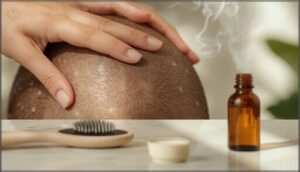
Beyond switching shampoos, you can physically clear away the oil, dead cells, and product residue that suffocate your follicles through regular scalp exfoliation.
Try these techniques to unclog hair follicles safely:
- Scalp massage with fingertips stimulates circulation and loosens debris around each hair follicle.
- Salicylic acid serums dissolve buildup chemically without harsh scrubbing.
- Exfoliating tools like silicone brushes gently lift flakes during washing.
- Microdermabrasion treatments professionally resurface your scalp for stubborn blockages.
Warm Compresses for Soothing Inflammation

Once you’ve exfoliated away debris, a warm compress offers powerful inflammation reduction for folliculitis flare-ups. Soak a clean cloth in comfortably warm water, then hold it against irritated areas for 10 to 15 minutes, one to two times daily.
This heat treatment increases blood flow to clogged hair follicles, flushing out inflammatory mediators while soothing scalp discomfort before you apply medicated shampoos or topical treatments.
Personal Hygiene and Scalp Care Tips
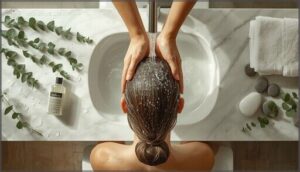
Your daily habits shape scalp health more than you’d expect. Washing two to four times weekly removes sweat and sebum that trap bacteria in clogged hair follicles, while daily rinsing after workouts prevents folliculitis flare-ups.
Gentle shampooing with lukewarm water, paired with scalp massage for follicle stimulation, boosts circulation without stripping protective oils—essential personal hygiene steps that keep your scalp care routine balanced and breakout-free.
Using non comedogenic products can also help prevent scalp breakouts and promote healthy hair growth.
Avoiding Clogging Hair Products

Product ingredients make or break your hair care routine. Choose noncomedogenic hair products to prevent clogged hair follicles—these scalp health tips matter:
- Select lightweight, water-based styling products over heavy creams
- Skip leave-in formulas with waxes or silicones that cause product buildup
- Use gentle shampoos, specifically clarifying types weekly
- Patch-test new hair care products before full scalp application
- Prioritize natural oils sparingly to avoid follicle blockage
Medical Treatments for Severe Scalp Folliculitis

When at-home treatments aren’t cutting it, or your scalp folliculitis keeps coming back, it’s time to bring in the medical-grade options. Your dermatologist has several prescription-strength tools that can tackle severe cases, ranging from targeted antibiotics to specialized washes and injections.
Here’s what medical treatment might look like when your clogged follicles need professional intervention.
Topical and Oral Antibiotics
When folliculitis doesn’t respond to basic care, antibiotics step in to tackle bacterial infections head-on. Topical treatments like mupirocin or clindamycin work for localized lesions, usually applied for 7 to 10 days.
For widespread or stubborn cases, oral therapy—doxycycline or minocycline—targets deeper inflammation over 2 to 12 weeks. Culture tests help guide antibiotic dosage and combat antibiotic resistance, ensuring you’re not fighting blind.
Antifungal and Antiseptic Washes
Fungal infections need targeted scalp cleansers with real antiseptic properties, not just wishful thinking. Ketoconazole shampoos like Nizoral attack yeast-related folliculitis directly, reducing Malassezia populations that thrive in oily environments.
Zinc pyrithione and selenium sulfide offer dual antifungal and antibacterial action in medicinal shampoos, clearing clogged hair follicles while preventing flare-ups. For persistent cases, alternating anti-dandruff treatments keeps fungi from adapting and reclaiming your scalp.
Steroid Injections and Anti-Inflammatory Medications
When inflamed follicles refuse to settle down, corticosteroid therapy steps in like a precision firefighter. Dermatologists target stubborn scalp folliculitis with strategic steroid injections and anti-inflammatory drugs to reclaim control fast:
- Intralesional corticosteroid injections calm severe flares within days
- Short-course oral steroids reduce tissue damage during acute episodes
- Topical high-potency steroids treat superficial lesions under supervision
- NSAIDs manage pain without addressing underlying infection
Watch for steroid side effects—skin thinning and rebound inflammation demand careful dosing in hair follicle treatment.
Prescription Shampoos and Topical Solutions
When over-the-counter solutions fall short, dermatologists prescribe specialized formulations to tackle resistant scalp folliculitis head-on. Antibacterial treatments like clindamycin 1 percent foam, antifungal medications such as ketoconazole 2 percent shampoo, and topical corticosteroids in solution form target infection, yeast overgrowth, and inflammation simultaneously.
Retinoid therapies and keratolytic agents like benzoyl peroxide unclog follicles, normalizing your hair follicle treatment when standard products can’t break through.
When to See a Dermatologist
If your scalp symptoms linger beyond a week despite home care, worsen, spread to new areas, or show signs of infection like pus, fever, or swollen lymph nodes, it’s time for dermatologist consultation.
Hair loss, scarring, or unusual skin and scalp conditions that baffle you also warrant seeing a hair expert for proper dermatological treatments targeting those troubled hair follicles.
Preventing Future Blocked Hair Follicles
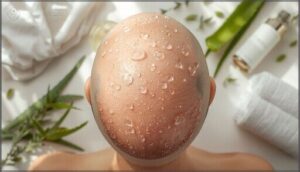
Once you’ve cleared up scalp folliculitis, the real win is keeping it from coming back. Prevention isn’t complicated, but it does require some adjustments to your daily routine and the products you’re using.
Here’s what you need to focus on to keep your follicles clear and your scalp healthy long-term.
Regular Scalp Cleansing and Exfoliation
Consistently cleansing your scalp with a mild shampoo—paired with gentle exfoliants like salicylic acid once or twice weekly—removes dead skin and excess oil that trap clogged hair follicles.
A light scalp massage during your daily cleansing routine boosts circulation, distributes sebum evenly, and promotes hair follicle care without irritating delicate scalp conditions.
These scalp health tips prevent buildup before it starts.
Choosing Non-Comedogenic Hair Products
Beyond cleansing, the hair care you choose matters tremendously—some formulations can worsen clogged hair follicles on your scalp despite regular washing. Look for product labeling that clearly states “oil-free” or “non-comedogenic,” which signals gentle formulas designed for your hair type without blocking follicles.
When selecting ingredients, prioritize these comedogenic ratings:
- Water- or glycerin-based products instead of heavy oils
- Lightweight conditioners that won’t suffocate your scalp
- Silicone-free options if you notice buildup
- Patch-test new hair products on a small area first
Managing Sweat and Oil Production
Your sweat glands and sebaceous glands work independently, but you can manage both to protect skin health and prevent clogged hair follicles.
Control scalp oiliness by reducing refined carbs and saturated fats in your diet, since these can boost sebum regulation.
In humid weather, rinse your scalp more frequently to wash away excess sweat and oil before they accumulate around hair follicles.
Healthy Lifestyle and Immune Support
Your immune system health directly impacts scalp resilience against follicular inflammation. Nutrient-rich foods like fatty fish, berries, and leafy greens lower systemic inflammation while boosting skin health.
Prioritize stress management and consistent sleep patterns—eight hours nightly aids cellular repair and immune defenses.
Regular physical activity enhances circulation to hair follicles, and immune boosters such as zinc, vitamin D, and probiotics strengthen your body’s natural barrier against infections.
Protective Hair Care Habits
Simple shifts in your hair care and maintenance routine protect hair follicles from chronic irritation. Start incorporating these low manipulation habits:
- Wash frequency: Cleansing your scalp 5–6 times weekly reduces sebum buildup and oxidized oils that clog follicles
- Gentle combing and hair ties: Loose styles prevent traction folliculitis and scalp pain
- Silk pillowcases: They wick moisture and minimize bacterial growth overnight
Regular scalp massage boosts circulation while supporting overall hair health.
Frequently Asked Questions (FAQs)
Can diet changes help prevent scalp folliculitis?
Like fine-tuning an engine, adjusting your diet—especially omega benefits, nutrient balance, and probiotic effects—can support follicle health by reducing inflammation and balancing scalp conditions, though evidence remains modest for direct folliculitis prevention.
Is folliculitis contagious to other people?
Yes, folliculitis can be contagious depending on the cause. Bacterial transfer through shared razors or towels, viral spread via skin contact, and fungal infection from contaminated surfaces all pose transmission risks worth addressing seriously.
How long does folliculitis take to heal?
Most folliculitis treatment resolves within one to two weeks with proper care, though mild cases may clear in just three to seven days.
Persistent skin infection treatment requires up to six weeks for complete scalp recovery.
Can stress trigger blocked hair follicles?
Psychological factors absolutely contribute to blocked hair follicles. Stress hormones increase cortisol, which stimulates oil glands and triggers scalp inflammation, creating conditions where follicles become clogged, potentially affecting hair follicle health and hair loss prevention.
Are there natural oils safe for folliculitis?
Tea tree oil, coconut oil, sunflower seed, and jojoba oil properties show promise for folliculitis when properly diluted.
Essential oil dilution matters—aim for 2–3% in a carrier to protect inflamed hair follicles and support skin health.
Conclusion
Think of your scalp like a garden—left unattended, weeds take over, but with consistent care, it thrives. Blocked hair follicles scalp treatment isn’t a mystery once you understand the triggers hiding in your routine.
Whether you’re tackling excess oil, product buildup, or bacterial invaders, you now have the tools to restore balance. Start simple, stay consistent, and don’t hesitate to consult a dermatologist when home remedies fall short. Your scalp deserves that attention.