This site is supported by our readers. We may earn a commission, at no cost to you, if you purchase through links. This content is for general informational and educational purposes only and is not a substitute for professional medical, dermatological, or nutritional advice.
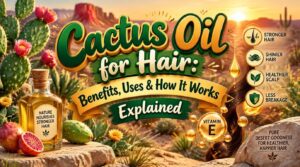
A plant that survives scorching desert heat without losing a drop of moisture has something serious to teach us about hair care. Cactus oil for hair pulls that same survival science out of the seed, delivering fatty acids and vitamin E that coat each strand, seal the cuticle, and lock in hydration where your hair needs it most.
The results people notice aren’t magic. Less breakage, smoother texture, and a calmer scalp come down to one thin film of oil doing exactly what it’s designed to do.
Here’s everything you need to know, from how it works to how to use it.
Table Of Contents
- Key Takeaways
- What is Cactus Oil for Hair?
- Cactus Oil Benefits for Hair and Scalp
- How Cactus Seed Oil Works on Hair
- How to Use Cactus Oil for Hair
- Safety, Side Effects, and Buying Genuine Cactus Oil
- Frequently Asked Questions (FAQs)
- Is cactus oil good for your hair?
- What is the most powerful oil for hair growth?
- What does cactus do to your hair?
- What does cactus hair oil do?
- How long does cactus oil stay fresh?
- Can cactus oil be used on color-treated hair?
- Does cactus oil work for all hair textures?
- Can cactus oil be mixed with other products?
- How soon will cactus oil show results?
- Conclusion
Key Takeaways
- Cactus seed oil works by coating your hair’s outer cuticle with fatty acids and vitamin E, sealing in moisture rather than chemically altering your strands.
- The reduction in shedding you’ll notice comes from less breakage, not stimulated follicle growth — the oil protects length you already have.
- How often you apply it depends on your hair type: oily scalps should limit use to lengths only twice a week, while high-porosity and coily hair benefit from more frequent application.
- When buying, verify "Opuntia ficus-indica seed oil" appears near the top of the ingredient list and look for cold-pressed, opaque packaging to ensure purity and potency.
What is Cactus Oil for Hair?

Curiosity about cactus oil usually starts with the name itself. So what are you actually buying? In most hair products, it’s oil pressed from cactus seeds, though some blends use cactus pulp. Check the label. "Cactus seed oil" as an ingredient tells you the real plant part; flashy "cactus oil" marketing often hides a small fraction in a bigger formula.
For context on pairing plant-based oils effectively, olive oil’s benefits for colour-treated hair show how ingredient quality and sourcing matter just as much as the label claims.
What does it do? Think coating, not chemistry. Like other oils, it’s rich in fatty acids that act as moisturizing agents, sitting on the hair cuticle to soften, smooth, and seal in moisture. It won’t rewire your follicles, but it aids scalp health and conditions strands. You’ll find it in shampoos, serums, leave-ins, and pure oils, each working differently.
Cactus Oil Benefits for Hair and Scalp

So what can cactus oil actually do for your hair? A lot, it turns out. Below, we’ll walk through the four biggest benefits, from stronger growth to serious heat protection, so you know exactly what to expect.
Hair Growth and Reduced Shedding
Let’s talk shedding. Cactus seed oil conditions strands, so you’ll see less hair fall from breakage, not magic follicle stimulation. Big difference, right? Fewer snapped-off short hairs on your brush can look like reduced shedding when it’s really length retention.
For true hair growth, evidence is thin. Want to prevent hair thinning? Pair the oil with proven treatments, and track shedding weekly.
Scalp Hydration and Irritation Relief
Dry, tight scalp? Cactus seed oil helps with scalp moisturization by sealing in moisture, so you get real scalp hydration, not just shine. That’s where scalp irritation relief comes from.
Try this:
- Apply 3–5 drops to your scalp.
- Massage for two minutes.
- Wait 20 minutes.
- Shampoo thoroughly.
Its antiinflammatory properties offer scalp soothing, but fragrance-heavy formulas can backfire.
Choosing a genuinely pure formula matters most, which is why reviewing top olive oil brands for hair by purity and sourcing helps you avoid hidden irritants like fragrance fillers or diluted silicones.
Breakage and Split-End Protection
That same protective film doesn’t stop at your scalp. Cactus oil for hair coats each strand, cutting friction during brushing and detangling, and that’s where most hair breakage prevention actually happens.
Split ends can’t be repaired once they’ve formed, only trimmed. But the oil’s antioxidant properties help shield your cuticle from ongoing stress, so your hair strength holds up longer.
(https://curriedayspa.com/benefits-of-prickly-pear-oil-in-hair-products) go deeper than surface shine, making it a smart long-term investment in strand resilience.
Heat and Sun Damage Protection
Oxidation quietly wrecks your hair. Heat styling and direct sun exposure both trigger it, roughening your cuticle and stripping moisture fast. Cactus seed oil’s fatty acid film coats each strand and steadily slows that damage.
It helps by:
- Reducing heat damage with a pre-styling barrier
- Delivering sun protection and UV protection through occlusion
- Reinforcing environmental hair protection with antioxidant properties
How Cactus Seed Oil Works on Hair

Zoom in on what’s actually happening when cactus seed oil meets your hair, and the mechanism is surprisingly simple. The oil’s unsaturated fatty acids spread across the cuticle surface, filling gaps between lifted scales and lowering friction between strands. That’s your slip, your softness, your fewer snapped ends.
Since these same fatty acids sit on your skin during scalp application, running a quick pre-shave skin barrier check beforehand helps you catch any sensitivity before the oil has a chance to settle in.
Here’s what’s doing the work:
- Fatty acids coat the cuticle layer, reducing moisture loss through occlusion.
- Vitamin E acts as an antioxidant, protecting surface lipids from oxidative breakdown.
- The oil’s viscosity determines how much buildup your scalp accumulates between washes.
No oil penetrates deeply enough to reach hair follicles, so cactus seed oil isn’t triggering hair growth at the root. It’s ultimately a surface game, and that’s still a genuinely powerful result.
Cactus seed oil never reaches your follicles—it wins at the surface, and that’s enough
How to Use Cactus Oil for Hair
Now that you know what cactus oil does, let’s talk about how to actually use it. There are a few different ways to apply it, and the right method depends on what your hair needs most. Here’s what to try.
Pre-Shampoo Scalp Treatment

Think of this as a buffer coat for your scalp. Apply a few drops to dry scalp sections, part your hair, and massage gently to encourage follicle stimulation and scalp nourishment.
That light oil film helps scalp hydration before shampoo strips it. Wait 10 minutes, then wash normally. Scalp cleansing actually feels much gentler afterward, and post-wash tightness? Gone.
Leave-in and Overnight Use

Slathering on cactus oil before bed and waking up to transformed hair is genuine natural hair care at work. Use it as a leavein conditioner for overnight use:
- Towel-dry your hair
- Warm 1-2 drops between your palms
- Run it through lengths and ends
- Sleep on it for 7-9 hours
This locks in hair hydration and boosts scalp nourishment all night. For best results, follow a consistent growth routine schedule that includes 2-3 weekly scalp massages and a deep conditioning mask once a week.
DIY Cactus Hair Masks
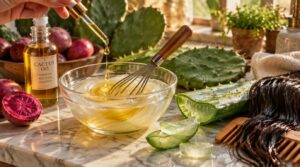
Ready to make a DIY hair mask that delivers? Mix warmed cactus oil with aloe gel or a thick cream. The added texture helps you spread it evenly rather than just coating the ends. A hair mask bowl and brush set makes blending and applying the mixture much easier, giving you even coverage from roots to ends.
Apply to damp strands, keep it on for 15 minutes, then rinse with shampoo. That lifts oily residue cleanly and keeps your hair from looking dull.
Application Frequency by Hair Type
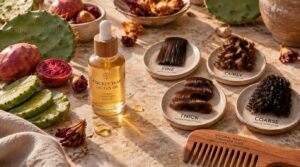
Not every hair type needs the same oil application frequency. Here’s a quick breakdown:
- Oily scalp: apply to lengths only, max twice a week
- Curly/coily: mid-lengths to ends, three to four times weekly
- Fine straight: ends only, once weekly
- Thick wavy: every five to seven days
- High porosity: more frequent; low porosity needs less
Start there, then adjust as needed.
Safety, Side Effects, and Buying Genuine Cactus Oil

Before you add anything new to your routine, do a patch test first. Apply a small amount behind your ear, wait 48 hours, and watch for redness or itching. Scalp irritation is the main risk, especially on chemically treated or sensitive scalps. If you want a cleaner result, skin allergy patch test strips can make it easier to spot subtle reactions before they reach your scalp.
Check your ingredient list carefully. Prickly pear cactus oil should appear as Opuntia ficus-indica seed oil near the top, not buried at the bottom. It’s noncomedogenic, so it won’t clog follicles, but "fragrance" or "parfum" listed early? That’s often what triggers reactions, not the oil.
When buying, look for cold pressing on the label and opaque packaging to prevent oxidation. A good carrier oil mix is fine, but know what you’re getting. No botanical name listed? Skip it.
Frequently Asked Questions (FAQs)
Is cactus oil good for your hair?
One study found prickly pear seed oil contains up to 150% more vitamin E than argan oil. That antioxidant punch, combined with its rich fatty acids, is exactly why cactus oil for hair really works.
What is the most powerful oil for hair growth?
Honestly, no single oil magically unlocks faster follicle growth. Most oils help by reducing breakage and shedding, which means your hair retains length better. Cactus oil for hair does exactly that, supporting scalp health naturally.
What does cactus do to your hair?
Cactus seed oil works deep, penetrating your hair cuticle to strengthen strands from within, boosting scalp blood circulation to support hair growth, and delivering essential fatty acids and vitamin E to hydrate, soothe, and protect.
What does cactus hair oil do?
Imagine your dry, frizzy hair after just one overnight oiling session: smoother, softer, much easier to detangle. Cactus oil for hair works by coating strands with fatty acids, sealing moisture in and cutting surface friction.
How long does cactus oil stay fresh?
Like milk left in the sun, cactus oil turns fast once opened. Unopened, it lasts about 12 to 24 months. After opening, use it within 6 to 12 months, stored away from heat and light.
Can cactus oil be used on color-treated hair?
Color-treated hair practically craves cactus oil. After coloring, your strands become more porous, so they’ll absorb it much faster. It coats them without disrupting dye chemistry, reducing friction and locking essential moisture in. Total win.
Does cactus oil work for all hair textures?
Pretty much, yes. Hair porosity matters more than your curl pattern here. Coarser strands handle it well, while fine hair may get easily weighed down. It’s a solid natural moisturizer, so patch-test your scalp first.
Can cactus oil be mixed with other products?
Cactus oil is practically a diplomat in your hair care routine: it mixes well with other natural hair oils or a good carrier oil, but steer clear of water-based formulas; they’ll cause messy, patchy separation.
How soon will cactus oil show results?
Spoiler: not overnight. Cosmetic changes like softness or less frizz can show after just one use. But real hair growth? Your follicles need weeks of consistent hair care routine before you’ll notice meaningful length gains.
Conclusion
Think of your hair as a plant surviving conditions it wasn’t built for: heat tools, harsh shampoos, sun, and stress. Cactus oil for hair works the same way a cactus does, sealing moisture in before it ever gets the chance to escape.
One oil. Real fatty acids. A calmer scalp and stronger strands you’ll actually feel. Start with a few drops and let the results do the convincing.