This site is supported by our readers. We may earn a commission, at no cost to you, if you purchase through links.

tight, burning sting after a shave isn’t just discomfort—it’s your skin signaling a minor injury. Every blade pass creates microscopic cuts, disrupts your barrier lipids, and triggers an inflammation cascade visible as redness within minutes.
Most people reach for aftershave and hope for the best. rarely enough.
The real fix starts before you pick up the razor and continues with targeted post-shave care that actually targets the mechanism—not just the symptom. Getting it right means knowing what went wrong and correcting it with precision.
Table Of Contents
- Key Takeaways
- Why Your Skin Turns Red After Shaving
- How to Prepare Skin Before You Shave
- Shaving Techniques That Prevent Razor Burn
- Step-by-Step Ways to Calm Inflamed Skin
- Top 5 Products to Soothe Post-Shave Irritation
- Ingredients to Seek Out and Avoid Post-Shave
- When Inflamed Skin Needs a Doctor’s Attention
- Frequently Asked Questions (FAQs)
- Conclusion
Key Takeaways
- Every shave creates microscopic skin tears that trigger an inflammation cascade — your prep and blade quality determine how severe that response gets.
- Dull blades, dry shaving, and going against the grain are the three biggest mechanical mistakes that turn a routine shave into two days of redness.
- Post-shave recovery works best in sequence: cool rinse first, then aloe vera or witch hazel, then a ceramide-based moisturizer to seal the barrier before irritation rebounds.
- If redness spreads, pustules form, or symptoms worsen after 48 hours, that is no longer razor burn — it needs a clinician’s eye, not another layer of aloe.
Why Your Skin Turns Red After Shaving
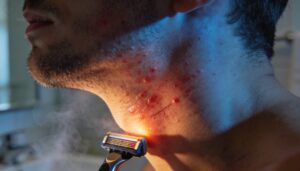
That post-shave redness isn’t random — your skin is reacting to real, specific damage. A few common mistakes during shaving trigger most of it. Here’s what’s actually happening beneath the surface.
Understanding how to reduce inflammation after shaving can help you connect the damage to the right fix, faster.
Micro-Cuts and Skin Barrier Disruption
Even a smooth shave leaves microscopic cuts you can’t see. Here’s what happens next:
- Microinjury Inflammation Cascade triggers redness within minutes.
- Transepidermal Water Loss spikes as your disrupted skin barrier leaks moisture.
- Irritant Permeability Increase lets shaving products penetrate deeper than normal.
Cellular Lipid Sealing breaks down, demanding Barrier Lipid Repair. Reach for aloe vera or a ceramide complex — barrier‑restoring moisturizers close the gap fast. Addressing ceramide deficiency repair is necessary for restoring barrier function.
Dull or Dirty Blades Pulling at Hair
compromised barrier isn’t your only problem. Dull blades compound the damage fast.
Edge Dulling Effects start after just a few uses — the cutting edge rounds microscopically, dragging hair instead of slicing it. Residue-Induced Tugging follows: skin oils and debris create a gritty film.
Blade Corrosion Impact worsens with Storage Moisture Management failures. Keep blades dry. Replace them often.
Dry Shaving and Loss of Natural Lubrication
Dull blades strip sebum — your skin’s built-in lubricant — before the razor even starts moving. Dry shaving accelerates that sebum depletion dramatically.
Without lubricating shaving cream creating a protective film, blade friction heat builds fast, triggering micro mechanical trauma beneath what looks like a clean shave.
Your skin barrier loses moisture rapidly. Dry glide issues leave skin raw, tight, and primed for inflammation.
Shaving Against The Grain
against the grain pulls hair upward before cutting — maximizing blade friction against tender follicles. Hair grain identification matters here. Tighten your skin taut, check a mirror, feel which direction hair lies.
Going opposite that direction gives a closer cut, but at a cost:
- Friction minimization disappears entirely
- Blade glide enhancement becomes impossible without proper grain alignment
- Pressure control fails on curved surfaces like the neck
- Sharp-cut hairs curl back toward follicle openings
- Sensitive skin inflames faster with repeated against-grain passes
Razor Burn Vs. Razor Bumps Vs. Folliculitis
These three conditions look alike but aren’t. pure surface irritation — barrier disruption, no follicle involvement. Razor bumps form one to three days later when cut hairs curl back inward. Folliculitis goes deeper, involving bacterial or fungal inflammatory mechanisms inside the follicle itself.
| Condition | Key Feature |
|---|---|
| Razor Burn | Flat red rash, immediate |
| Razor Bumps | Firm papules, delayed onset |
| Folliculitis | Pus-filled clusters, possible infection |
Postshave skin inflammation management starts with correctly identifying razor burn vs folliculitis — because topical antibiotics and barrier repair strategies aren’t interchangeable treatments.
How to Prepare Skin Before You Shave

Most razor burn starts before the blade ever touches your skin. How you prep makes the difference between a clean shave and two days of redness.
These four steps give your skin the best shot at coming out unscathed.
Warm Water Soak and Hot Compress Technique
Warm water is your skin’s first ally before a blade ever touches it. Soaking in water at 38–40°C softens hair shafts and opens pores — reducing mechanical resistance substantially. Follow with a hot compress to deliver deeper heat.
Here’s how to do it right:
- Temperature Guidelines: Use water between 37–40°C — warm, never scalding.
- Cloth Moisture Management: Wring the cloth thoroughly; damp, not dripping.
- Coverage Area: Fold cloth flat to cover the entire shave zone evenly.
- Application Time: Hold the compress for 5–10 minutes before shaving.
- Safety Checks: Stop immediately if heat increases stinging or redness.
This prep reduces friction, helps your skin’s natural anti-inflammatory agents, and makes every stroke cleaner.
Gentle Exfoliation to Clear Dead Skin Cells
Dead skin cells are gatekeepers — they trap hairs and invite bumps.
Before you shave, clear them with a soft washcloth technique: small circular motions, light pressure, 30 seconds.
A mild enzymatic scrub or pH-balanced cleanser works just as well without stripping your barrier. Stick to an exfoliation schedule of once weekly.
Follow immediately with a barrier-repair moisturizer containing ceramide complex, niacinamide, or colloidal oatmeal.
Applying Pre-Shave Oil for Extra Glide
Think of pre-shave oil as your blade’s best defense. Apply a carrier oil — grapeseed or jojoba — to slightly damp skin.
This moisture-enhanced oil layer optimizes blade glide by improving the oil slip ratio between razor and skin. A thin layer is enough; layer thickness control matters.
Oil first, cream on top. Reapplication strategy: add a drop mid-shave if drag returns.
Choosing a Fragrance-Free Moisturizing Shave Cream
Your shave cream label deserves a closer look. Ingredient transparency isn’t marketing — it’s protection.
Choose a fragrance-free shaving cream with these skin barrier-supporting qualities:
- pH balanced formula that won’t disrupt your acid mantle
- Non-comedogenic moisturizer base — won’t clog freshly opened follicles
- Anti-inflammatory agents like aloe vera or glycerin
- Allergen-free certification — no hidden synthetic fragrance or SLS
Barrier-restoring moisturizers heal. Irritants don’t belong in your prep routine.
Shaving Techniques That Prevent Razor Burn
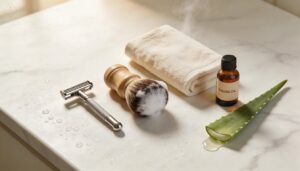
Good prep gets you halfway there — technique carries you the rest of the way. How you actually move the blade across your skin determines whether you walk away clean, or red and stinging.
These four habits make the biggest difference.
Shaving With The Grain Using Light Pressure
Your blade doesn’t need your help cutting. That’s the core idea behind Blade Weight Optimization — let the razor’s own weight do the work.
Before your first stroke, practice Grip Relaxation: loosen your fingers until you’re barely holding on. Then map each facial zone using Hair Growth Mapping — cheeks run downward, neck angles sideways or upward.
| Zone | Growth Direction | Stroke Direction |
|---|---|---|
| Cheeks | Downward | Top to bottom |
| Jawline | Forward/outward | Chin to ear |
| Neck | Upward/sideways | Downward or sideways |
Skin Tension and Pressure Feedback work together — if you feel drag, you’re pushing too hard.
Using The Correct Blade Angle and Short Strokes
Angle matters more than effort. With cartridge razors, lay the head flat against skin — that’s your baseline for Angle Control. For safety razors, aim for roughly 30°.
Short Stroke Benefits show up immediately: fewer micro‑irritations, less blade drag.
- Keep each stroke a few centimeters long
- Lift and reset on curves for Contour Adaptation
- Blade Path Precision means no sideways scrubbing
Rinsing The Blade After Every Stroke
Once your angle is locked in, don’t let buildup undo that precision.
Rinsing the blade after every stroke is a simple hygiene between strokes habit that pays off fast.
Lather residue removal keeps the cutting edge clear, your clog prevention strategy in action.
A clean edge glides — fewer passes, less redness.
Run it under warm water. Done.
How Often to Change Your Razor Blade
Clean strokes mean nothing if the blade is past its prime. Dull blades drag instead of cutting — that friction is what triggers redness.
Replacement Schedule Guidelines depend on your habits: most people swap disposables every 5–10 shaves. Shave Frequency Impact matters too; daily shavers dull edges faster.
Blade Lifespan Indicators — tugging, extra passes, streaks. That’s your cue.
Step-by-Step Ways to Calm Inflamed Skin
Once the blade is down, your skin needs a clear plan for recovery. The steps below move from immediate cooling to targeted treatment, so you’re not just guessing what to reach for.
Work through them in order, and your skin will thank you.
Cool Water Rinse and Cold Compress Application
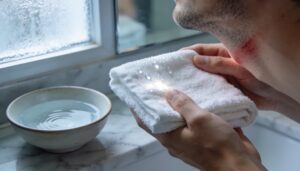
Start with a cool water rinse — ideal water temp is lukewarm, not icy. Very cold water can shock already-tender skin. Rinse away lather and loose debris, then pat dry. Never rub.
For persistent heat, apply a cold compress using a cloth barrier — a damp towel works well. Keep compress duration to 10–20 minutes. Repeat sessions are fine, with breaks between.
Post-compress moisturizing locks in relief before irritation rebounds.
Applying Aloe Vera Gel to Irritated Skin
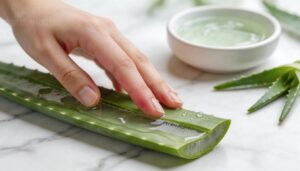
Aloe vera earns its place in post-shave care. Its polysaccharides act as anti-inflammatory agents, calming the barrier disruption that causes redness. Timing matters — apply within minutes of rinsing for best results.
Follow this method for effective thin layer application:
- Patch test a small area first
- Use clean, dry skin only
- Spread a thin layer with fingertips
- Avoid open cuts or bleeding skin
- Discontinue if stinging worsens
Using Alcohol-Free Witch Hazel or Colloidal Oatmeal
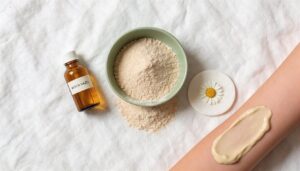
Both alcohol-free witch hazel and colloidal oatmeal work as reliable post-shave cooling and soothing remedies — each targeting inflammation through different mechanisms. Witch hazel tightens superficial vessels; colloidal oatmeal deposits a soothing emollient film that helps skin barrier repair.
Always patch test first. Apply both using light dabbing, never rubbing. Use once or twice daily during active irritation, and store witch hazel sealed at room temperature.
When to Use Over-the-Counter Hydrocortisone Cream
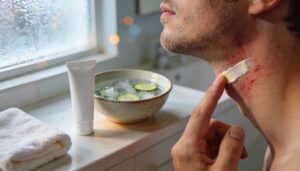
When natural postshave cooling and soothing remedies aren’t cutting it, a thin layer of 1% hydrocortisone cream can calm persistent skin inflammation fast.
Apply it two to three times daily for itching relief — but keep short term use in mind. Trial duration shouldn’t exceed seven days.
Avoid infected skin entirely; hydrocortisone masks infection. If redness spreads, see a dermatologist.
DIY Razor Burn Spray Recipe and How to Use It
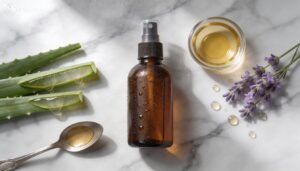
Mix your own witch hazel razor burn spray in under five minutes. Here’s the DIY razor burn spray recipe that works:
- Ingredient Proportions: ¼ cup alcohol-free witch hazel, 1 tsp aloe vera gel, 1 tsp vegetable glycerin, 5–10 drops anti‑inflammatory essential oils for skin
- Mixing Methodology: Combine in a clean glass bottle; shake well
- Bottle Selection: Use a dark glass spritzer to preserve potency
- Shelf Life Guidance: Refrigerate; discard after four weeks
- Application Timing: Spritz this cooling mist immediately post‑shave onto irritated skin
Top 5 Products to Soothe Post-Shave Irritation
The right product can make a real difference after a rough shave. Each option below works on specific aspects of post-shave irritation — from sealing the skin barrier to calming active redness.
Here are five worth keeping in your routine.
1. Handcraft Fractionated Coconut Oil
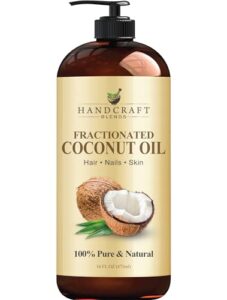
Fractionated coconut oil is one of the quieter workhorses in post-shave care. Handcraft’s 16 oz version is 100% pure, fragrance‑free, and hexane‑free — exactly what irritated skin needs.
Unlike regular coconut oil, the fractionated form absorbs quickly without leaving a greasy film. That matters when your skin barrier is already compromised.
Apply a thin layer to clean, damp skin within minutes of rinsing. It coats micro‑nicks, reduces transepidermal water loss, and helps calm that tight, stinging sensation without adding new irritants.
| Best For | Anyone who shaves regularly and wants a clean, lightweight oil to soothe irritation, lock in moisture, and skip the greasy aftermath. |
|---|---|
| Price | $8.99 |
| Volume | 16 fl oz |
| Purity | 100% pure coconut oil |
| Skin Use | Moisturizer, carrier oil |
| Additives | Fragrance-free, preservative-free |
| Origin | Indonesia |
| Additional Features |
|
- Absorbs fast and doesn’t leave that sticky residue most oils do — great for daily use on your face or body.
- Completely fragrance-free and chemical-free, so it’s a safe bet even for sensitive or freshly-shaved skin.
- Versatile enough to double as a hair treatment, massage oil, or essential oil carrier — one bottle does a lot.
- The pump can get messy, and some users had to puncture the seal just to get consistent flow.
- A few people reported leaks during shipping, so it’s worth checking the bottle when it arrives.
- No preservatives means you’ll need to store it properly — and keep an eye out for it going rancid over time.
2. Nates Pure Raw Unfiltered Honey
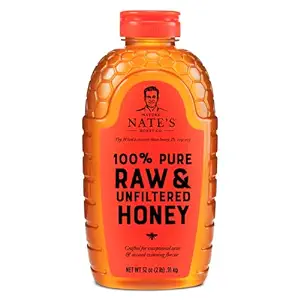
Raw honey isn’t just for your morning tea.
Nature Nate’s pure raw unfiltered honey works as a post-shave treatment because it’s unprocessed — pollen and natural enzymes stay intact, giving it genuine anti-inflammatory and antimicrobial properties.
Apply a thin layer to red, irritated skin, and let it sit for a few minutes before rinsing. It’s fragrance-free, single-ingredient, and gentle enough for compromised skin.
Just don’t use it if you have active open cuts that are bleeding.
| Best For | Anyone who wants a natural, no-fuss sweetener that’s as close to straight-from-the-hive as you can get. |
|---|---|
| Price | $13.97 |
| Volume | 32 oz |
| Purity | 100% pure raw honey |
| Skin Use | Soothing, topical remedy |
| Additives | No additives or preservatives |
| Origin | United States |
| Additional Features |
|
- 100% raw and unfiltered — pollen and enzymes are all still in there, exactly as nature intended.
- The squeeze bottle actually works. Flip cap, squeeze, done — no sticky mess on the counter.
- Versatile enough for your morning coffee, a baking project, or even soothing irritated skin post-shave.
- At $13.97 for 32 oz, it costs more than most store-brand honeys — and some shoppers find comparable quality locally for less.
- It will crystallize over time, so you’ll need to warm it up occasionally to get it flowing again.
- The floral source isn’t listed, which might be a dealbreaker if you’re specifically hunting for a single-origin or monofloral variety.
3. Seven Minerals Organic Aloe Vera Gel
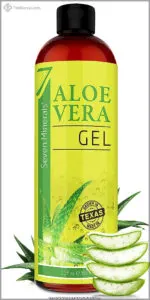
Honey pulls double duty, but sometimes you need something lighter. Seven Minerals Organic Aloe Vera Gel is 99% certified organic aloe — harvested fresh from the leaf, not reconstituted from powder.
That distinction matters. Powdered aloe loses bioactive compounds. This one doesn’t.
The formula uses seaweed extract as a natural thickener, so it absorbs quickly without residue. It also contains ascorbic acid and potassium sorbate to maintain stability.
A thin layer on freshly shaved skin calms the heat fast.
| Best For | Anyone who wants a clean, no-frills aloe gel for everyday skin relief — especially people dealing with sunburn, shaving irritation, or sensitive skin conditions like eczema. |
|---|---|
| Price | $19.95 |
| Volume | 12 oz |
| Purity | 100% pure aloe vera |
| Skin Use | Sunburn, rash, shaving relief |
| Additives | No alcohol, dyes, or synthetics |
| Origin | Southern Texas, USA |
| Additional Features |
|
- Made from freshly cut aloe leaves, not reconstituted powder, so you’re getting the real thing with its natural compounds intact
- Certified NSF Organic and IASC verified — no hidden alcohols, dyes, or synthetic preservatives
- Absorbs fast without leaving a greasy or sticky film, making it easy to use on face, body, or scalp
- Can cause a burning sensation on very reactive skin, so a patch test is a smart first step
- The pump dispenser has a tendency to clog or struggle, which gets frustrating fast
- At $19.95 for 12 oz, the cost adds up quickly if you’re using it over large areas every day
4. Ola Prima Australian Tea Tree Oil
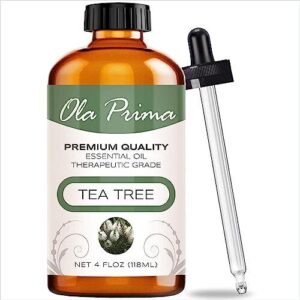
Aloe calms. But if bacteria are your concern, tea tree takes it further.
Ola Prima Australian Tea Tree Oil brings genuine antimicrobial action to post-shave care. The oil is sourced from Australia and bottled in the USA — therapeutic-grade, UV-protected in amber glass.
apply it straight. Dilute a few drops into a carrier oil first. Undiluted tea tree on freshly shaved skin will burn and irritate. Done right, it targets follicular bacteria without stripping your barrier.
| Best For | Anyone dealing with post-shave breakouts, fungal issues, or oily skin who wants a natural, no-nonsense antimicrobial option. |
|---|---|
| Price | $12.99 |
| Volume | 4 fl oz |
| Purity | Therapeutic-grade tea tree oil |
| Skin Use | Acne, fungal, cleansing |
| Additives | Pure oil, no additives |
| Origin | Australia / bottled USA |
| Additional Features |
|
- Therapeutic-grade oil sourced straight from Australia — you’re getting the real thing, not a watered-down blend.
- Versatile enough to use on skin, scalp, in a diffuser, or even as a household cleaner.
- Generous 4 fl oz size at $12.99 makes it solid value for how far a few drops go.
- The scent is strong and polarizing — not everyone’s going to love it.
- You must dilute it before skin contact, which adds a step most people forget until it stings.
- Some orders arrive without the dropper, so you might need to track one down separately.
5. NOW Grapeseed Oil Sensitive Skin Moisturizer
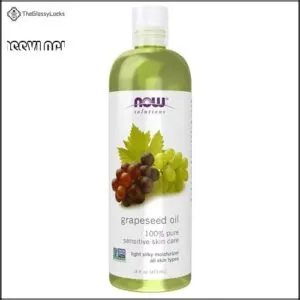
When bacteria aren’t the issue — just dryness and irritation — NOW Grapeseed Oil is your finish line.
Pure Vitis vinifera seed oil, nothing added.
It’s lightweight, non-comedogenic, and absorbs fast without that greasy film that traps bacteria against raw skin.
Linoleic acid dominates its fatty acid profile, which actually helps restore your skin barrier rather than just coating it.
A few drops go far.
Apply while skin is still slightly damp for best absorption.
| Best For | Anyone with dry or sensitive skin who wants a clean, no-fuss moisturizer that won’t clog pores or leave a greasy mess behind. |
|---|---|
| Price | $9.94 |
| Volume | 16 oz |
| Purity | 100% pure grapeseed oil |
| Skin Use | Moisturizer, makeup remover |
| Additives | Pure oil, no additives |
| Origin | USA |
| Additional Features |
|
- Absorbs fast and stays light — no greasy residue, no pore-clogging
- One bottle does a lot: skin, hair, cuticles, makeup removal, massage, you name it
- Pure single ingredient, GMP-certified, cruelty-free, and made in the USA
- No pump means every pour is a little adventure — spillage is a real risk
- Might not cut it on its own for seriously dry spots like elbows or legs
- Some people pick up a faint scent, so it’s not 100% odorless for everyone
Ingredients to Seek Out and Avoid Post-Shave
What you put on your skin after shaving matters just as much as how you shave. Some ingredients actively repair your barrier — others quietly make things worse.
Here’s what to look for and what to leave on the shelf.
Soothing Actives Like Centella Asiatica, Panthenol, and Ceramides
Three actives do the heavy lifting in any good post‑shave routine.
| Active | What It Does |
|---|---|
| Centella asiatica | Calms redness via triterpenoid saponins |
| Panthenol (B5) | Reduces transepidermal water loss |
| Ceramides | Rebuilds the lipid barrier matrix |
Apply them in a leave‑on moisturizer while the skin is still slightly damp. That timing locks in the barrier‑restoring benefits fast.
Why Alcohol, Synthetic Fragrance, and SLS Make Irritation Worse
Check your post-shave label. If alcohol sits near the top, it’s already pulling moisture out of a damaged barrier — classic moisture loss that extends redness for hours.
Synthetic fragrance allergens contact raw skin more directly after shaving. SLS drives lipid stripping by removing surface oils your skin needs most.
Together, irritant synergy turns mild stinging into sustained inflammation. Skip conventional aftershaves; reach for alcohol-free aftershave and sulfate-free cleanser options instead.
How Fragrance-Free Moisturizers Restore The Skin Barrier
When your barrier is already compromised, barrier-restoring moisturizers do real structural work. They drive Barrier Lipid Restoration by delivering ceramides, cholesterol, and fatty acids back into the stratum corneum.
Occlusive Film Formation — petrolatum does this well — cuts transepidermal water loss quickly. Humectant Moisture from glycerin draws water inward. Acidic pH Support keeps enzymes active.
Choosing fragrance-free aftershave products also protects Microbiome Balance on freshly shaved skin.
Avoiding Acids and Abrasive Exfoliants on Razor-Burned Skin
Razor-burned skin can’t tolerate exfoliation — don’t make it worse by reaching for actives.
Acids and scrubs to skip:
- AHAs and BHAs (glycolic, salicylic) sting compromised skin and extend redness
- Alcohol-based tingly sprays — harsh astringents that deepen inflammation
- Physical scrubs or loofahs — mechanical friction prolongs healing
Stick to Acid-Free Soothing options: cool compress, aloe vera, colloidal oatmeal, and barrier-restoring moisturizers with anti-inflammatory ingredients. pH-Neutral Products and Non-Abrasive Care are your Barrier-Repair Strategies here.
When Inflamed Skin Needs a Doctor’s Attention

Most razor burn clears up within a day or two with basic home care. But some reactions cross a line that moisturizer and aloe can’t fix.
Here’s how to tell when your skin is telling you it needs more than a home remedy.
Signs of Infection Vs. Normal Post-Shave Irritation
Not all redness is equal. Normal postshave irritation follows a predictable inflammation timeline — stinging starts immediately, then fades within hours. Bacterial colonization tells a different story.
| Feature | Normal Razor Burn | Infection |
|---|---|---|
| Lesion Distribution | Along shave lines | Follicle-clustered |
| Skin Temperature Rise | Minimal | Noticeable warmth |
| Symptom Progression | Improves quickly | Worsens over time |
Pus, spreading redness, or fever? That’s your cue for medical consultation.
Persistent Redness, Pustules, or Spreading Inflammation
Pustule Pattern Recognition matters here. A raised, yellow-centered bump surrounded by spreading redness isn’t typical postshave redness — it signals your skin is losing the battle.
Inflammation Spread Monitoring is simple: if warmth and swelling expand daily despite a cool compress, aloe vera, or hydrocortisone cream, don’t wait.
Heat Induced Aggravation can escalate noninfectious pustular conditions fast. Anti-inflammatory agents help — but persistent pustules need professional eyes.
Understanding Ingrown Hairs and Folliculitis
Ingrown hairs and folliculitis aren’t the same thing — though they often show up together after shaving. Hair Curl Patterns in coarse or curly hair increase the chance of Follicle Blockage, where a sharp, cut tip curves back into the skin. That triggers inflammation. Bacterial Colonization — often Staphylococcus aureus — can follow, shifting razor burn into true folliculitis.
Ingrown hairs can escalate into folliculitis when curling hair tips penetrate skin and invite bacterial colonization
Watch for:
- Small red bumps centered on follicles
- Pustules with tenderness or warmth
- Skin Microbiome Impact from repeated shaving trauma
- Itching that worsens with sweat or friction
- Symptoms that don’t respond to postshave cooling and soothing remedies or anti-inflammatory agents
Multiple Treatment Modalities exist — but accurate diagnosis comes first.
Long-Term Alternatives if Shaving Keeps Causing Problems
If shaving keeps inflaming your skin, it’s worth stepping back from the blade entirely.
Laser Hair Removal and Electrolysis Treatment permanently reduce the need for repeated passes over reactive skin.
Depilatory Creams dissolve hair without contact cuts.
Waxing and Sugaring pull from the root, spacing out sessions.
Electric Trimming avoids blade contact altogether.
These alternative hair removal methods offer real, long-term hair removal solutions for sensitive skin.
Frequently Asked Questions (FAQs)
How to reduce swelling after shave?
That raw, hot sting after a shave? A cold compress shrinks swollen vessels fast. Follow with witch hazel, aloe vera, or other anti-inflammatory agents to quiet the burn quickly.
Can diet affect how skin reacts to shaving?
Yes. What you eat shapes skin’s inflammatory response.
Omega-3 intake calms reactivity. High-glycemic meals spike inflammation.
Zinc-rich foods support barrier repair.
Hydration levels and gut microbiome health also influence how your skin tolerates shaving friction.
Which body areas are most prone to razor burn?
Certain areas burn faster than others.
The neck jawline, bikini zone, underarm area, legs, knees, and upper lip top the list — thin skin, awkward angles, and coarse hair make each uniquely vulnerable.
Can stress or hormones trigger more post-shave inflammation?
Ever notice your skin flares worse after a rough week? Cortisol inflammation is real.
Stress‑triggered itch, neuroimmune response shifts, and menstrual cycle effects all heighten hormonal skin sensitivity — making stress‑induced inflammation hit harder after every shave.
Does skin type determine the best shaving routine?
Skin type absolutely shapes your ideal shaving routine. Oily skin needs lighter products; dry skin needs barrier-restoring moisturizers. Sensitive skin demands gentler technique above all else.
Conclusion
Think of calming inflamed skin after razor burn like soothing a minor fire – you need to address the cause, not just the flames. By understanding why your skin reacts and following these steps, you’ll be well on your way to smoother shaves.
Remember to calm inflamed skin after razor burn with precision care. A balanced approach combining prep, technique, and targeted soothing agents helps heal and prevent future irritation.
Your skin will thank you.
- https://care.lifemd.com/signup/p/q2b/initial-info?utm_source_site=blog-copy&utm_article=the-6-most-effective-ways-to-treat-razor-burn
- https://pmc.ncbi.nlm.nih.gov/articles/PMC10652890/
- https://www.ncbi.nlm.nih.gov/pmc/articles/PMC6585396/
- https://www.sciencedirect.com/science/article/pii/S1743919118307167
- https://connect.mayoclinic.org/blog/take-charge-healthy-aging/newsfeed-post/using-heat-and-cold-for-pain/