This site is supported by our readers. We may earn a commission, at no cost to you, if you purchase through links.

Your scalp’s health determines whether hair follicles thrive or struggle, and aloe vera directly influences that environment through a combination of bioactive compounds, enzymes, and mineral content. This succulent plant delivers polysaccharides that form protective films around hair shafts, amino acids that reinforce keratin structures, and zinc that promotes follicle metabolism—each component addressing a different barrier to healthy growth.
While aloe vera won’t transform sparse areas into thick coverage overnight, its ability to reduce inflammation, maintain hydration levels, and minimize breakage creates conditions where existing follicles can function more effectively. Understanding which compounds drive these benefits, how to apply them correctly, and which formulations deliver the highest concentration of active ingredients helps you make informed decisions about incorporating aloe vera into your hair care routine.
Table Of Contents
- Key Takeaways
- What is Aloe Vera and How Does It Affect Hair?
- Aloe Vera’s Role in Promoting Hair Growth
- Benefits of Aloe Vera for Different Hair Concerns
- How to Use Aloe Vera for Hair Growth
- Safety Considerations for Aloe Vera on Hair and Scalp
- Top Aloe Vera Products for Hair Growth
- Frequently Asked Questions (FAQs)
- How can I use aloe vera for hair growth?
- Can aloe vera regrow thinning hair?
- Does aloe vera boost hair growth?
- What can one do to improve hair growth?
- How to make aloe vera hair growth serum?
- Does aloe vera increase hair density?
- How do you use aloe vera gel for hair growth?
- Is aloe vera good for your hair?
- What are the side effects of aloe vera on hair?
- Can I apply aloe vera gel on hair daily?
- Conclusion
Key Takeaways
- Aloe vera supports hair growth by delivering polysaccharides, amino acids, and zinc that reduce scalp inflammation, maintain hydration, and minimize breakage rather than triggering new follicle formation or reversing hair loss.
- The plant’s bioactive compounds—including proteolytic enzymes, vitamins A, C, and E, and phenolic antioxidants—work by clearing follicle debris, extending anagen growth phases, and protecting keratin structures from oxidative damage.
- You’ll see the best results from aloe vera when you apply fresh gel directly to your scalp for 20-40 minutes before rinsing, combine it with complementary oils like coconut or jojoba, and perform a patch test first to rule out allergic reactions.
- While aloe vera won’t regenerate lost follicles or dramatically increase hair density, consistent application creates optimal scalp conditions where existing hair can strengthen, reduce shedding, and reach its natural growth potential over time.
What is Aloe Vera and How Does It Affect Hair?
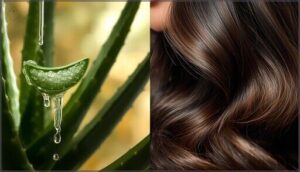
Aloe vera, scientifically known as Aloe barbadensis, is a succulent plant that’s been used medicinally for thousands of years, with historical records dating back to 1750 BC.
Its natural anti-inflammatory properties make it especially effective in aftershave products for men dealing with ingrown hairs, reducing post-shave irritation and preventing razor bumps.
This resilient plant stores water in its thick leaves, which contain over 75 active ingredients including vitamins, minerals, enzymes, and amino acids that may benefit your hair and scalp. Understanding what aloe vera is, what it contains, and how it works on your hair can help you decide if it’s worth incorporating into your hair care routine.
Aloe Vera Plant Origins and Properties
Aloe vera, scientifically known as Aloe barbadensis, is a succulent perennial that originated on the Arabian Peninsula and now thrives in warm climates worldwide.
Its thick, fleshy leaves store water and contain a clear gel rich in polysaccharides, vitamins, and antioxidants. The plant’s active compounds have earned it recognition for soothing skin conditions, and these same properties may benefit your scalp and hair when applied topically.
The plant has played a significant role in traditional medicinal systems across various cultures for thousands of years.
Key Nutrients and Compounds in Aloe Vera
Understanding what makes this plant effective starts with its nutritional profile. Aloe vera contains vitamins A, C, and E that deliver antioxidant protection, while minerals like zinc, calcium, and magnesium support hair follicle integrity.
The plant’s key components include:
- Polysaccharides such as acemannan provide moisture retention on your scalp and hair shaft
- Enzymes including proteolytic types help remove dead skin cells from follicle openings
- Amino acids serve as building blocks for keratin synthesis in growing strands
- Bioactive compounds like phenolics reduce inflammatory mediators affecting growth cycles
Aloe vera is also valued for its, which plays a vital role in overall scalp health.
Mechanisms of Action on Scalp and Hair
Once nutrients enter the scalp microbiome, aloe vera’s mechanisms become clear. Enzymes in the gel break down follicle debris that obstructs keratin production, while anti-inflammatory compounds reduce mediators that disrupt anagen cycling. Sebum regulation improves through enzyme activity, and increased dermal blood flow delivers oxygen to matrix keratinocytes.
These dermatological effects support hair follicles in maintaining growth phases, making this natural remedy effective for scalp health.
| Mechanism | Target Area | Effect on Hair Growth |
|---|---|---|
| Enzyme activity | Follicle opening | Removes buildup blocking growth |
| Anti-inflammatory compounds | Scalp tissue | Extends anagen phase duration |
| Blood flow enhancement | Dermal papilla | Increases nutrient delivery |
Aloe Vera’s Role in Promoting Hair Growth
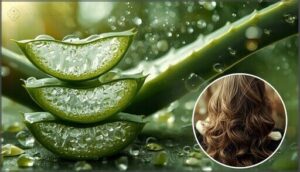
Aloe vera’s impact on hair growth centers on creating the right environment for healthy follicles to thrive, rather than acting as a miracle cure.
The plant’s bioactive compounds work through several mechanisms that address common obstacles to ideal hair development, from scalp inflammation to oxidative stress at the follicular level. Understanding these specific pathways can help you set realistic expectations and use aloe vera more strategically in your hair care routine.
Aloe vera’s bioactive compounds combat scalp inflammation and oxidative stress, creating optimal conditions for healthy hair growth when used strategically
Impact on Scalp Health and Cell Regeneration
Your scalp’s ability to promote hair growth depends largely on its environment and capacity for cell renewal. Aloe vera nourishes scalp health by maintaining hydration levels that foster keratinocyte activity, reduce micro-damage, and create conditions favorable for regenerative processes.
Pairing aloe vera with proven antifungal treatments can further optimize scalp conditions, especially if you’re dealing with dandruff or irritation that might hinder follicle function—shampoos designed for dandruff control often combine both soothing and clarifying ingredients to support this balance.
This natural remedy influences several aspects of follicle health:
- Fosters skin cell turnover and renewal in the scalp microbiome
- Reduces friction and breakage at hair shafts near follicles
- Improves hair anchoring by maintaining healthier scalp condition
- Enhances flexible hair fibers through continuous moisture promotion
Antioxidant and Anti-inflammatory Benefits
Protection against cellular wear matters when you’re trying to control hair health from the roots up. Aloe vera delivers polyphenols and vitamins C and E that neutralize free radicals, reducing oxidative stress on your follicle cells. Its anti-inflammatory properties calm irritated scalps by inhibiting pro-inflammatory mediators, while phenolic compounds scavenge reactive oxygen species that damage hair proteins.
| Benefit | Active Component | Mechanism |
|---|---|---|
| Cellular protection | Flavonoids, vitamins C & E | Neutralize free radical damage |
| Inflammation reduction | Polysaccharides | Modulate inflammatory response pathways |
| Protein preservation | Phenolic compounds | Prevent oxidative stress on hair shaft |
Effects on Hair Follicle Strength and Breakage Prevention
Resilience at the root determines whether your hair can withstand daily stress without snapping.
Aloe vera supplies minerals like zinc and magnesium that support follicle metabolism, while its amino acids help build keratin networks that strengthen structural support around follicles.
The gel forms a protective film reducing friction on emerging shafts, and polysaccharides coat each strand to smooth rough surfaces, decreasing hair breakage and promoting hair strength over time.
Benefits of Aloe Vera for Different Hair Concerns
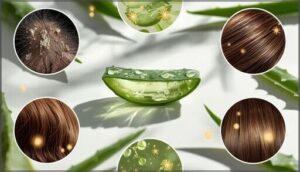
Beyond promoting hair growth, aloe vera tackles several common scalp and hair issues that can interfere with achieving healthy, strong strands.
The plant’s unique combination of vitamins, enzymes, and minerals targets specific concerns, from flakiness and irritation to excessive oiliness and dryness.
Here’s how aloe vera benefits different hair-related problems you might be experiencing.
Reducing Dandruff and Soothing Itchy Scalp
Dandruff causes like dry skin, fungal overgrowth, and inflammation can leave your scalp itching and flaking. Aloe vera’s 95-percent water content delivers scalp hydration, while its antimicrobial properties help balance the Malassezia fungus that often triggers flakes. The gel’s anti-inflammatory compounds soothe scalp irritation, and its polysaccharides lock in moisture to reduce itchy scalp symptoms.
- Hydrates dry, flaky patches that worsen dandruff
- Fights fungal overgrowth linked to persistent flakes
- Reduces inflammation causing scalp irritation
- Forms a protective barrier against environmental irritants
- Aids flake reduction with regular, gentle use
Balancing Scalp PH and Oil Production
Your scalp’s acidic mantle, hovering around pH 4.5 to 5.5, keeps oil production in check and hair follicles healthy. Aloe vera’s natural pH of 4.5 reinforces this balance, stabilizing the microbiome and preventing sebaceous glands from overproducing sebum.
By supporting pH balance and scalp hydration, you’re giving your hair follicles an environment where oil regulation works smoothly, reducing greasy roots while maintaining scalp health for ideal hair growth.
Enhancing Hair Moisture and Texture
When aloe vera’s polysaccharides coat your hair shaft, they form a lightweight film that seals in moisture while natural humectants draw water to each strand. This dual action, paired with enzymes that remove buildup, creates the foundation for smoother texture and lasting hair hydration.
Here’s how aloe vera transforms your hair’s moisture balance and texture:
- Polysaccharides create a protective barrier that prevents moisture loss without weighing down your strands
- Natural humectant properties attract water to your hair, boosting hydration when layered with oils or conditioners
- Enzymes gently dissolve scalp buildup, allowing better penetration of moisturizing products you apply afterward
- Amino acids and natural sugars soften strands, improving manageability and reducing frizz through consistent use
- The gel matrix smooths cuticle edges, decreasing static and flyaways for noticeably improved texture
As a natural moisturizer, aloe vera works best when you pair it with barrier oils like argan or jojoba, extending moisture retention throughout the day. Its compatibility with proteins in hair masks helps you balance hydration with strength, addressing both texture improvement and scalp nourishment simultaneously without overloading your follicles with heavy residues.
How to Use Aloe Vera for Hair Growth
You can incorporate aloe vera into your hair care routine in several ways, depending on your preferences and the specific needs of your scalp and strands. The simplest approach involves applying fresh gel directly from the plant, while more targeted treatments combine aloe with complementary ingredients to address particular concerns.
Here’s how to use aloe vera effectively to support your hair growth goals.
Direct Application of Fresh Aloe Vera Gel
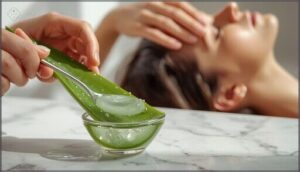
You can extract gel directly from a fresh aloe leaf by slicing it lengthwise and scooping out the clear inner content with a clean spoon. Massage this fresh gel onto your scalp using gentle circular motions to boost blood flow and nourish hair follicles. Store any leftover gel extraction in an airtight container in the refrigerator for up to one week to preserve its active compounds and enhance scalp health benefits.
| Application Step | Technique | Expected Result |
|---|---|---|
| Fresh Gel Benefits | Apply directly to scalp | Immediate hydration and soothing |
| Scalp Massage | Use circular motions for 3-5 minutes | Enhanced blood circulation |
| Daily Application | Leave on 30-60 minutes before rinsing | Improved follicle health over time |
DIY Aloe Vera Hair Masks and Treatments
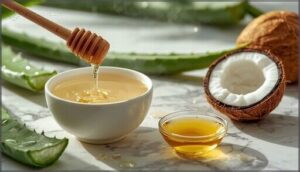
You can enhance fresh Aloe Vera application by blending the gel with nutrient-rich ingredients to create targeted Hair Mask treatments. Mix two tablespoons of Aloe Gel Recipes with one tablespoon of coconut oil or honey to boost Hair Growth Promotion and moisture retention.
Apply these DIY Hair Masks from roots to ends, leave on for twenty to thirty minutes under a shower cap, then rinse with lukewarm water for enhanced Scalp Treatment Tips and Hair Mask Benefits.
Combining Aloe Vera With Other Natural Ingredients
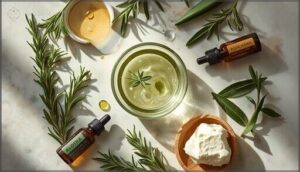
You can boost Aloe Vera‘s benefits by pairing it with complementary Natural Ingredients for Hair Growth that address specific scalp needs. These Aloe Oil Blends and Herbal Infusions work synergistically to support Hair Follicles and promote Hair Growth Promotion.
- Mix aloe with rosemary oil to improve scalp circulation and reduce irritation
- Combine with shea butter for Natural Moisturizers that prevent breakage
- Blend with tea tree oil as Scalp Remedies for itchiness
These Natural Hair Remedies create powerful Hair Masks.
Safety Considerations for Aloe Vera on Hair and Scalp
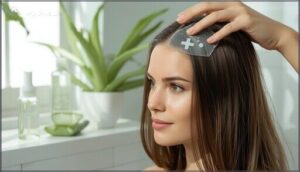
Aloe vera is generally safe for topical use on hair and scalp, but you’ll want to take a few precautions before incorporating it into your routine. Some individuals can experience adverse reactions, and certain medical conditions or medications may require extra caution.
Here’s what you need to know to use aloe vera safely and effectively for your hair care goals.
Performing Patch Tests to Avoid Allergic Reactions
Before applying aloe vera to your scalp, you’ll want to perform a patch test to avoid allergic reactions. Apply a small amount of gel to your inner forearm, cover it with hypoallergenic tape, and wait 48 hours.
If you notice redness, swelling, or itching, don’t use the product on your scalp. This simple step helps identify skin sensitivity before committing to a full hair treatment.
Potential Side Effects and Who Should Avoid Use
While patch tests catch most allergic reactions, other potential side effects of aloe vera deserve attention. Some people experience skin irritation, burning sensations, or contact dermatitis when applying aloe topically.
If you have eczema, rosacea, or open scalp wounds, avoid use until healing. Children under two, pregnant individuals, and those with severe plant allergies shouldn’t use concentrated aloe products without consulting their healthcare provider first.
Interactions With Medications and Precautions
If you’re taking oral medications, particularly anticoagulants or diabetes drugs, be cautious with aloe vera products. The plant’s compounds may alter blood sugar levels and increase bleeding risk, creating drug side effects you don’t need.
Space oral aloe supplements several hours from other medications to minimize absorption interference. Always inform your healthcare provider about any herbal contraindications before combining aloe vera with prescription treatments for scalp health and care or hair loss prevention.
Top Aloe Vera Products for Hair Growth
If you’re ready to tap into aloe vera’s hair-boosting potential but don’t want to extract gel from fresh leaves, several ready-to-use products can make the process more convenient. These options range from pure aloe vera gel to shampoos that incorporate aloe alongside other nourishing ingredients, giving you flexibility based on your hair type and specific concerns.
Here are three top-rated products that deliver aloe vera’s scalp-soothing and hair-strengthening benefits without the DIY hassle.
1. Seven Minerals Organic Aloe Vera Gel
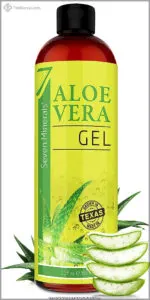
Seven Minerals Organic Aloe Vera Gel stands out for its 98.7 percent organic aloe content, certified by NSF and the International Aloe Science Council.
You’ll find it uses seaweed extract as a natural thickener instead of synthetic carbomers, which helps the gel absorb quickly without leaving sticky residue on your scalp.
The alcohol-free, vegan formulation provides concentrated vitamins and enzymes that support scalp hydration and follicle health.
| Best For | Anyone looking for a pure, organic aloe gel that works for sunburn relief, daily skin hydration, or soothing irritation without harsh chemicals or sticky residue. |
|---|---|
| Primary Use | Skin & Hair Care |
| Key Ingredient | Aloe Vera |
| Product Form | Gel |
| Vegan Formula | Yes |
| Target Audience | Adult & Child |
| Size | 12 fl oz |
| Additional Features |
|
- 98.7% organic aloe vera certified by NSF and IASC, so you’re getting the real deal
- Uses natural seaweed extract instead of synthetic thickeners, which means it absorbs fast without feeling sticky
- Versatile enough for face, body, hair, and everything from sunburns to razor burn
- No clear info on shelf life or expiration dates, so you’re guessing how long it stays good
- Could cause reactions on sensitive skin, so you’ll need to patch test first
- Doesn’t mention how it interacts with other skincare products you might be using
2. Biolage Hydrating Shampoo For Dry Hair
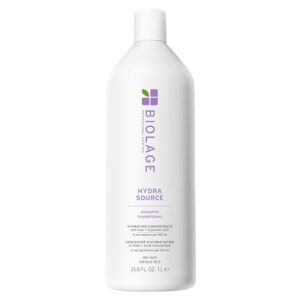
Biolage HydraSource Hydrating Shampoo harnesses micro-filtered aloe vera and fermented hyaluronic acid to deliver moisture directly to dry hair shafts, increasing hydration by six times with a single use according to product testing.
You get paraben-free, vegan cleansing that preserves color integrity while the aloe-based formula softens strands, reduces frizz, and aids detangling. The botanical blend targets moisture retention between washes without weighing hair down.
| Best For | People with dry, color-treated hair who need serious hydration without heavy buildup. |
|---|---|
| Primary Use | Hair Hydration |
| Key Ingredient | Aloe Vera |
| Product Form | Liquid |
| Vegan Formula | Yes |
| Target Audience | All Hair Types |
| Size | 33.8 fl oz |
| Additional Features |
|
- Delivers 6x more moisture in one wash thanks to micro-filtered aloe vera and fermented hyaluronic acid
- Works on all hair types and textures while being vegan and paraben-free
- Keeps color-treated hair vibrant while making strands softer and shinier
- Large bottle is awkward to handle with one hand in the shower
- No pump dispenser makes it messier to use than it needs to be
- $45 price tag puts it out of reach for budget-conscious shoppers
3. Maui Moisture Bamboo Shampoo
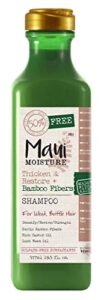
Maui Moisture Bamboo Fibers Shampoo leads with 100 percent aloe vera juice rather than water, which means you’re cleansing with concentrated hydration from the first drop. Bamboo fibers act as natural thickening agents to help fine, brittle strands appear fuller, while castor oil and neem oil provide scalp nourishment and conditioning.
The sulfate-free formula avoids harsh surfactants that strip moisture, making it suitable for regular use on damaged or over-styled hair.
| Best For | People with fine, damaged, or over-styled hair looking for a hydrating, sulfate-free shampoo that adds volume and repairs strands. |
|---|---|
| Primary Use | Hair Repair |
| Key Ingredient | Bamboo Fibers |
| Product Form | Liquid |
| Vegan Formula | Not Specified |
| Target Audience | Damaged Hair |
| Size | 19.5 oz (2-pack) |
| Additional Features |
|
- Uses 100% aloe vera juice instead of water for concentrated hydration
- Sulfate-free formula is gentle on damaged hair and won’t strip natural moisture
- Bamboo fibers and nourishing oils help thicken and strengthen brittle strands
- Higher price point at $48.84 for two bottles
- May not work well for all hair types
- No complete ingredient list provided for those with sensitivities
Frequently Asked Questions (FAQs)
How can I use aloe vera for hair growth?
You can apply fresh aloe vera gel directly to your scalp, leave it on for 20 to 40 minutes, then rinse thoroughly with lukewarm water to nourish follicles and reduce inflammation.
Can aloe vera regrow thinning hair?
Aloe vera enhances the scalp environment and reduces breakage, but it won’t regrow lost follicles. You’ll see thicker-looking strands from better hydration and less snapping, not true follicle regeneration.
Does aloe vera boost hair growth?
While research remains limited, aloe vera‘s vitamins, enzymes, and anti-inflammatory compounds can support scalp health and strengthen follicles, creating conditions that may encourage growth and reduce breakage over time.
What can one do to improve hair growth?
Your best strategy starts at the scalp care—keep it clean, well-nourished, and free of buildup.
Gentle massage boosts blood flow, while hydrating treatments reduce breakage and create conditions where follicles thrive naturally.
How to make aloe vera hair growth serum?
You can create a simple serum by blending fresh aloe gel with a lightweight oil like jojoba in a 1:1 ratio, then adding a vitamin E capsule for antioxidant support.
Does aloe vera increase hair density?
Think of your hair follicles as gardens—aloe vera delivers vitamins A, C, and E, plus minerals like zinc, nourishing the scalp to reduce breakage and support stronger, fuller-looking strands over time.
How do you use aloe vera gel for hair growth?
You can massage fresh aloe vera gel directly onto your scalp, leave it for 20 to 30 minutes, then rinse thoroughly with lukewarm water to remove residue and support follicle health.
Is aloe vera good for your hair?
Yes, aloe vera can benefit your hair by moisturizing strands, soothing scalp irritation, and reducing dandruff through its proteolytic enzymes and anti-inflammatory compounds, though direct growth stimulation evidence remains limited.
What are the side effects of aloe vera on hair?
Some people experience scalp irritation, redness, or itching after applying aloe vera gel.
Allergic reactions may occur in sensitive individuals, while overuse can lead to dryness or residue buildup on your hair.
Can I apply aloe vera gel on hair daily?
Daily aloe vera gel won’t harm your scalp or strands when you start with a small amount, but perform a patch test first to rule out irritation or allergic reactions before committing to this routine.
Conclusion
You’ve likely spent more on products promising miraculous transformations than on the humble aloe vera plant sitting in your kitchen. Yet this unassuming succulent tackles the fundamental scalp conditions that determine whether aloe vera can increase hair growth becomes reality for your follicles.
Your results depend on consistent application, realistic expectations about timelines, and recognizing that ideal scalp health—not overnight miracles—creates the environment where existing hair thrives, strengthens, and reaches its natural growth potential.