
This site is supported by our readers. We may earn a commission, at no cost to you, if you purchase through links. This content is for general informational and educational purposes only and is not a substitute for professional medical, dermatological, or nutritional advice.

You mixed your henna, your gloves are on, and then you notice it: last night’s coconut oil is still coating your strands. Stop right there.
Oil forms a barrier that keeps henna from binding to keratin, so the color slides off instead of sinking in. The result is patchy, uneven color that fades within days. If you’re wondering can I apply henna on oiled hair, the honest answer is yes, but only after you strip the coating first.
A good wash, a damp towel-dry, and a creamy paste make all the difference. Here’s how to get color that lasts.
Table Of Contents
- Key Takeaways
- Can I Apply Henna on Oiled Hair?
- How Hair Oil and Product Buildup Affect Henna Color
- Preparing Oiled Hair for Henna: When to Wash First
- How to Apply Henna Evenly After Removing Excess Oil
- Post-Henna Hair Care: When to Wash and Oil Again
- Frequently Asked Questions (FAQs)
- What happens if we apply henna on oily hair?
- Should we oil hair before applying henna?
- Who should not apply henna on hair?
- Is it better to put henna on clean or dirty hair?
- Can I apply henna on heavily oiled hair?
- How long should I wait after oiling my hair before applying henna?
- Are there any specific oils that work best when applied before henna?
- Can I apply henna on oiled hair if I have a sensitive scalp?
- How long does henna last on natural hair?
- Can henna cause dryness or damage to hair?
- Conclusion
Key Takeaways
- Oil coats your strands and blocks henna from bonding with keratin, so heavy oil leads to patchy color that fades fast, while a very light coat is tolerable.
- Wash with a clarifying or sulfate-free shampoo (twice if you oiled heavily), skip conditioner, and apply the paste to damp, towel-dried hair for the most even color.
- Mix your paste to a creamy, yogurt-like texture, add a little extra lemon juice if your hair still feels slick, and apply it in small sections from roots to ends so you don’t miss spots.
- Leave the color alone for 24 to 48 hours before washing so it can oxidize and deepen, then oil your hair again and wash with sulfate-free shampoo only two or three times a week to make it last.
Can I Apply Henna on Oiled Hair?

You can apply henna on oiled hair, but you probably shouldn’t. Henna needs direct contact with your hair strands to deliver a vibrant, stunning color payoff. A light coat of oil can still be okay. A heavy coat is a problem.
If you’re going the henna route on lighter hair, it helps to know how long hair dye takes at a salon versus at home so you can plan your prep time.
Henna can go on oiled hair, but heavy oil blocks the dye from your strands, so a light coat is fine and a thick one isn’t
Here’s the simple rule. Clean, dry hair gives you the best results. Oiled hair often leads to patchy color, and nobody wants that. Removing oil and product buildup beforehand allows for deeper color penetration and longer-lasting results.
If you oiled your hair last night, wash it first. Use a clarifying shampoo and rinse well. You’ll want an even distribution of oil, or better, almost none, before you mix your paste. Washing takes minutes and protects all the work you’ll put in. Skip the shortcut. Your hair will thank you with rich, lasting color.
How Hair Oil and Product Buildup Affect Henna Color
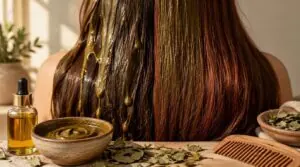
So why does oil cause such a mess? It all comes down to the oil barrier effect. Oil coats each strand and blocks henna from reaching your keratin, so the dye can’t bind.
Here’s what that looks like in real life:
- Patchy, uneven color where the paste beads up and slides off
- Weak, fast-fading shades that rinse out within weeks
- Dull or muddy tones when hard water minerals mix with oil
Silicone products and heavy conditioners cause the same trouble. Without proper product buildup removal, indigo blends suffer most.
A gentle hot oil treatment for locs can help soften stubborn residue while keeping your indigo-dyed strands moisturized without weighing them down.
Hair porosity types matter too. High porosity hair grabs dye fast but loses moisture retention quickly, while low porosity hair resists it. Add an uneven distribution of oil, and some sections soak up color while others stay stubbornly pale.
Preparing Oiled Hair for Henna: When to Wash First

Now that you know how the oil barrier effect ruins color, let’s fix it. Wash first, every time.
Use a clarifying or sulfate-free shampoo right before applying henna. Towel-dry until damp, not dripping.
If you want that same silky finish after the henna sets, this step-by-step at-home hair glossing treatment shows how to seal in shine without a salon visit.
Timing depends on your scalp and hair porosity:
| Hair type | Wash timing | Tip |
|---|---|---|
| Oily | 4-12 hours before | Let sebum settle |
| Normal | Right before | Towel-dry well |
| Heavy oiling | Shampoo twice | Rinse thoroughly |
| Low porosity | Right before | Use warm water |
Skip conditioner. It blocks dye and hurts moisture retention. Adjusting henna mixtures helps too, so add a bit more lemon juice if hair feels slick.
Not sure if you’ve rinsed enough? Run your fingers through a strand. If it feels slippery, shampoo again. Clean hair grabs color much more evenly.
How to Apply Henna Evenly After Removing Excess Oil
Your hair is clean and damp, so you’re ready to apply. Removing excess oil did the hard work. Now keep the color even.
Mix your adjusted henna mixture until it’s creamy, like yogurt. The extra lemon juice helps it grip slick strands. Fresh, finely sifted body art quality henna powder releases dye more reliably, so your creamy paste stays smooth and colors strands evenly.
- Clip your hair into small sections.
- Apply paste from roots to ends, back to front.
- Use widetooth comb distribution to spread dye through each section.
Leftover residue causes uneven distribution of oil, and that shows up as light streaks. Work slowly and press the paste in with gloved hands. Thick globs dry unevenly, so thin them out, avoiding clumping and patchiness. Check your part and your nape twice. Missed spots hide easily, so use a mirror. Stay patient.
A pair of disposable nitrile gloves fits snugly, so you can press paste into each section without staining your hands orange for days.
Post-Henna Hair Care: When to Wash and Oil Again

When should you wash your hair after henna? Wait 24 to 48 hours. Your color needs that time to oxidize and deepen.
Great posthenna care starts with patience. Rinse with plain water only. Skip shampoo until day two.
Mind the time gap between oiling and henna in reverse, too. Oil again only after that wait. You’ll get lovely moisturizing effects without dulling your stain.
| Timing | Action | Reason |
|---|---|---|
| First 24 hours | Avoid water | Protects oxidation |
| Hours 24 to 48 | Wash gently, oil | Locks color |
Wash two or three times weekly with a sulfatefree shampoo. Frequent washing strips color fast. Managing oil residue matters, so rinse thoroughly and use cool water. Dry shampoo helps between washes, keeping roots fresh without overdoing it.
Frequently Asked Questions (FAQs)
What happens if we apply henna on oily hair?
Oil is a locked door for your color.
A thick hair strand coating blocks color absorption, so pigment binding efficiency drops. Even distribution of oil keeps moisture retention, but you’ll still see patchy, stubborn strands.
Should we oil hair before applying henna?
Skip oiling hair before henna. Oil coats each strand, blocks color absorption, and leaves your henna color result patchy. Even distribution of oil won’t fix it. Save oil for after, when moisture retention matters most.
Who should not apply henna on hair?
Skip henna if you have G6PD deficiency, because lawsone can trigger hemolytic anemia. Never use it on babies or newborns. Hold off if your scalp is broken, inflamed, or infected until it’s fully healed.
Is it better to put henna on clean or dirty hair?
A painter never starts on a greasy canvas. Same for you.
Clean hair wins for henna application, since proper hair preparation lets paste touch every strand. Oiled hair works only with even distribution of oil.
Can I apply henna on heavily oiled hair?
One stylist I know saw patchy orange streaks after a client skipped washing. Heavy oil application blocks color absorption, so you shouldn’t apply henna over it. Wash gently first, then work for truly even distribution.
How long should I wait after oiling my hair before applying henna?
One hour is common advice, but no proven time gap exists. Oiling hair before henna? Residue matters.
Applying henna on oiled hair works when managing oil residue. Wash first if your hair texture feels greasy.
Are there any specific oils that work best when applied before henna?
Oiling hair before henna can feel like a magic trick for your strands! Coconut oil suits thick, strong hair, while olive oil suits fine, dry texture. Leave a 24-hour gap, though, and wash lightly first.
Can I apply henna on oiled hair if I have a sensitive scalp?
Worried a wash will irritate you? A mild one won’t. With a sensitive scalp, skip henna on oiled hair, since oil blocks color.
Cleanse with sulfate-free shampoo and save hair moisturization and hair nourishment for afterward.
How long does henna last on natural hair?
Henna on natural hair usually shows color longevity of 4-6 weeks before fading starts and gray roots peek through. With good aftercare, your vibrant shade can last 3-5 months. Washing less often keeps hair color intensity strong.
Can henna cause dryness or damage to hair?
Yes, henna can leave dry hair feeling stiff, since it’s astringent. Don’t leave it on too long. Protect your hair moisture balance with a deep conditioner afterward. That’s hair damage prevention and boosts color longevity.
Conclusion
Worried that washing first will dry out your strands? It won’t, not for long. So, can I apply henna on oiled hair? Yes, once you’ve cleansed it and towel-dried it damp. That one step lets the dye grab keratin and stay put.
Skip it, and you’ll waste an afternoon on color that slides right off. Do it right, and you’ll get rich, lasting color that looks like you planned it. Wash first, wait, then apply.