
This site is supported by our readers. We may earn a commission, at no cost to you, if you purchase through links.
The New York Police Department still bans beards outright in 2025, while officers in Calgary can grow theirs up to two centimeters long. This sharp divide reveals a truth many people don’t realize: whether police officers can have beards depends entirely on where they serve.
Victorian-era lawmen wore full beards as symbols of authority, but by the mid-1900s, military-style discipline had driven most departments to demand clean-shaven faces. Today’s landscape sits somewhere between those extremes, shaped by an intricate mix of safety regulations, religious accommodations, medical exemptions, and evolving attitudes toward professional appearance.
Understanding these policies requires looking beyond simple yes-or-no answers to examine the legal frameworks, departmental traditions, and practical considerations that determine who gets to keep their facial hair on duty.
Table Of Contents
- Key Takeaways
- Police Officer Facial Hair Policies Explained
- Reasons Behind Facial Hair Restrictions
- Recognized Exceptions to Beard Bans
- Top 5 Essential Products for Bearded Officers
- Frequently Asked Questions (FAQs)
- Who decides the facial hair policy for police officers?
- Can cops have mustaches?
- What is the policy on facial hair for police officers?
- Do all police departments have the same policy on facial hair?
- What are the benefits of allowing police officers to have facial hair?
- Are there any drawbacks to allowing police officers to have facial hair?
- Do bearded officers face discrimination from colleagues?
- Can officers dye their beards unnatural colors?
- Are female officers allowed to have facial hair?
- How do beards affect body camera footage quality?
- Conclusion
Key Takeaways
- Police facial hair policies vary dramatically by jurisdiction—the NYPD maintains an outright beard ban while Calgary Police permits beards up to 2 centimeters, reflecting how local departmental standards override any universal rules.
- Officers can secure beard exemptions through religious accommodations protected under Title VII of the Civil Rights Act or medical waivers for conditions like pseudofolliculitis barbae, which affects up to 83% of men with coarse or curly hair.
- Safety equipment requirements, particularly OSHA-mandated respirator seal integrity for gas masks, remain the primary operational justification for beard restrictions since facial hair can increase leakage rates up to 1,000 times compared to clean-shaven faces.
- Research shows bearded officers score higher on 23 of 24 measures related to trustworthiness and approachability, though departments continue balancing these perceptions against traditional views linking clean-shaven standards to discipline and uniformity.
Police Officer Facial Hair Policies Explained
Facial hair policies in law enforcement haven’t always looked the way they do today. What departments allow or prohibit has shifted over time, influenced by safety concerns, public expectations, and changing social norms.
To understand where these policies stand now, you’ll need to examine their historical roots, current regulations, jurisdictional differences, and the role federal and state laws play in shaping them.
Historical Evolution of Grooming Standards

Throughout the 19th century, early facial hair signaled authority in law enforcement, with beards reflecting masculinity and power. As paramilitary influence shaped uniform standards in the early 1900s, grooming standards shifted toward clean-shaven policies. The 1960s shifts brought brief experimentation with relaxed rules, though most departments reversed course. Today’s modern consultations with officers and communities reflect global variations in facial hair policies: The Camden County Police Department recently updated their personal grooming standards.
- Victorian-era beards symbolized law enforcement authority and respect
- Military-style discipline drove strict clean-shaven requirements by mid-1900s
- Social movements in the 1960s-70s temporarily loosened facial hair restrictions
- Contemporary policies balance tradition, safety, and officer diversity considerations
Common Current Regulations on Beards and Mustaches
As grooming standards have evolved, most departments now permit well-groomed facial hair with specific limits. Beard length limits are generally capped at 1/4 inch, while mustache grooming rules require hair to stay above your lip. Goatee length limits often restrict growth to 1½ inches below the chin.
Decorative item bans prohibit beads or adornments, and violating these facial hair policies can result in disciplinary actions or uniform denial. Some departments, like Plano PD, are introducing beard policies to modernize.
Differences Between Departments and Jurisdictions
You’ll find dramatic policy variations across police departments, reflecting departmental standards shaped by local priorities rather than universal rules. Regional contrasts are striking—UK forces allow neat facial hair, but Edmonton restricts beards to detectives only.
The NYPD bans beards outright, while Calgary Police permits them up to 2 cm. These department-specific grooming policies create exemption disparities nationwide, with international comparisons revealing even wider differences in police officer appearance standards as future trends toward relaxation continue.
Impact of Federal and State Laws on Policies
Federal regulations and state laws now shape facial hair policies more than tradition. Title VII of the Civil Rights Act requires departments to provide religious accommodation for beards unless it creates genuine hardship. State protections add another layer—recent litigation highlights how medical waivers for conditions like pseudofolliculitis barbae must be honored under disability law.
Policy design reflects these legal realities:
- OSHA respirator standards limit beard length where gas masks are required
- Title VII mandates individual evaluation of religious beard requests
- State human rights laws supplement federal protections against discrimination
- Medical waivers formalize accommodations for skin conditions affecting up to 60% of Black men
- Agencies document approval processes to demonstrate civil rights compliance
Reasons Behind Facial Hair Restrictions
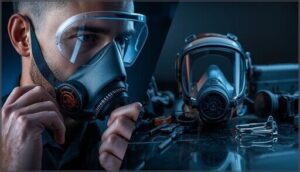
Police departments don’t implement facial hair restrictions without cause. Several practical and institutional concerns shape these policies, ranging from officer safety to how the community perceives those who serve and protect.
Understanding the reasoning behind beard bans helps clarify why some departments maintain strict standards while others have begun to relax their rules.
Professional Image and Public Trust
You might wonder how a beard affects the badge. A 2024 study found officers with beards rated more favorably on 23 of 24 measures related to trustworthiness perceptions and community approachability.
A 2024 study found bearded officers rated more favorably on 23 of 24 measures for trustworthiness and approachability
While facial hair bias persists in some circles, evolving norms show that maintaining public trust hinges more on professionalism and respectful engagement than strict grooming alone. Professional appearance still matters, but neat facial hair doesn’t undermine professional image.
Uniformity and Discipline in Policing
Uniformity creates a visual foundation for discipline in policing. Strict grooming standards serve as a daily test of compliance, with many agencies viewing appearance standards as fundamental to professional conduct.
When department variations exist, policy enforcement remains essential. Supervisors monitor beard length and maintenance to uphold organizational discipline.
While morale impact matters, agencies prioritize consistent grooming policies to maintain public perception of structured, accountable law enforcement.
Operational Safety and Gas Mask Requirements
Beyond uniformity, your safety depends on proper respiratory protective equipment function. OSHA Compliance mandates that facial hair can’t interfere with the respirator seal—beards cause fit testing failures and increase leakage rates up to 1,000 times compared to clean-shaven faces. When tear gas deploys during riot control, these safety concerns become life-threatening.
Consider the operational realities:
- Gas masks require airtight seals against chemical munitions
- Bearded officers achieve median fit factors of just 12 versus 2,950 clean-shaven
- Stubble as short as 1-2 days compromises seal effectiveness markedly
- Alternative respirators like PAPRs accommodate beards but lack tactical mobility
Special teams consistently enforce no-beard policies because officer safety can’t be compromised when seconds matter.
Public Perception and Community Relations
Your community’s trust hinges on more than just uniforms—facial hair shapes how you’re perceived on patrol. Research shows bearded officers score higher on 23 of 24 appearance measures, yet professionalism ratings and approachability decline when beards appear.
Demographic variations matter: white respondents show 58% favorable attitudes versus 40% among Black communities. These community expectations and cultural norms directly influence departmental grooming policies aimed at maintaining public trust.
Recognized Exceptions to Beard Bans
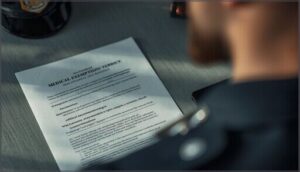
While most departments maintain strict beard policies, they aren’t absolute. Several legitimate circumstances allow officers to maintain facial hair, even in departments with otherwise firm clean-shaven requirements.
Understanding these exceptions helps clarify when and how you might qualify for a waiver under current regulations.
Religious Accommodations and Legal Protections
If your religious beliefs require you to grow a beard, you’re legally protected. Title VII of the Civil Rights Act mandates that departments grant religious accommodations unless they prove undue hardship.
Court decisions increasingly side with officers, and recent policy reforms have simplified accommodation requests.
Whether you’re Muslim, Sikh, or practice another faith, religious exemptions shield you from religious discrimination when formal documentation validates your request.
Medical Exemptions (e.g., Pseudofolliculitis Barbae)
If you struggle with painful razor bumps from shaving, you likely have Pseudofolliculitis Barbae (PFB), a skin condition affecting up to 83% of men with coarse or curly hair. Medical exemptions protect you when shaving worsens this condition:
- You’ll need a physician’s note documenting your PFB diagnosis
- Departments like NYPD permit beards up to half-inch length under medical waivers
- Your beard must stay neatly trimmed to accommodate gas mask requirements
- Legal protections and settlements have expanded medical accommodation policies
- Military waiver trends show growing institutional recognition of PFB’s impact
Process for Obtaining Waivers or Exemptions
To request a medical or religious accommodation, you’ll submit a formal waiver application to your supervisor with required documentation—physician’s letter for medical waivers or religious authority statement for religious accommodations.
Approval rates for medical exemptions reach 75-90% in most departments, while religious requests average 50-70%.
If your no-shave waiver gets denied, you have legal recourse through internal grievances or Title VII protections, though safety considerations like gas mask fit-testing may limit beard length.
Special Roles: Detectives and Undercover Officers
Beyond waivers, detectives’ appearance standards often permit neatly trimmed facial hair in plainclothes roles—VCU Police allow full beards up to half-inch if well-maintained.
Undercover assignments grant even greater policy discretion: undercover cops can grow unrestricted beards matching target demographics, with covert units exempting officers from standard no-beard rules entirely.
Compliance data shows NYPD expanded cropped beards for special assignment detectives in 2019, while vice and narcotics units adjust grooming per operational requirements.
Top 5 Essential Products for Bearded Officers
If your department allows you to maintain a beard, you’ll need the right gear to stay comfortable and effective on duty. Bearded officers face unique challenges, from maintaining professional appearance standards to ensuring equipment fits properly and functions as intended.
The following products can help you navigate these demands while keeping your facial hair well-groomed and manageable throughout your shift.
1. First Tactical Lightweight Patrol Glove
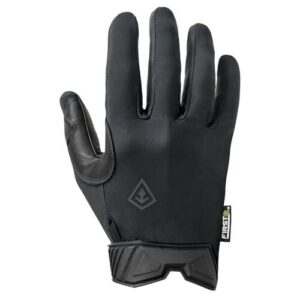
You need gloves that won’t interfere with your touchscreen sensitivity or firearm handling during tactical use, especially when addressing beard policies and protective masks on duty.
The First Tactical Lightweight Patrol Glove delivers with 100% goatskin leather palms and a U-shaped gusset designed specifically for proper weapon seating. The TouchTac fingertips let you operate devices without removing them, while perforated fourchettes keep your hands comfortable during long shifts.
This glove material balances protection with dexterity, and its glove durability holds up to daily police officer demands, making it essential safety equipment.
Best For: Law enforcement, security personnel, and tactical shooters who need touchscreen-compatible gloves with excellent grip and dexterity for firearm handling without sacrificing comfort during extended wear.
- Goatskin leather palms provide superior tactile feedback and grip that actually improves over time as the material absorbs oils and sweat
- U-shaped gusset and pistol grip palm design optimize weapon handling and recoil control while maintaining full dexterity
- Touchscreen-compatible fingertips work without removing gloves, and the deep bezel cutout accommodates oversized tactical watches
- Durability is inconsistent, with some users reporting tearing or excessive wear after limited use despite the quality materials
- Touchscreen functionality can be hit-or-miss initially and may require a break-in period before working reliably
- Sizing based on height rather than hand measurements means finger lengths may not fit all users comfortably
2. Compact Rechargeable EDC Flashlight Tool
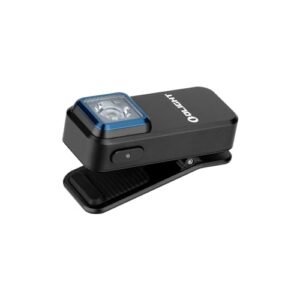
You need reliable illumination during low-light calls, especially when officer safety concerns demand both hands free for tactical situations. Bearded police officers benefit from compact rechargeable EDC flashlights that clip securely to uniforms without interfering with safety equipment.
Look for models delivering 500-1000 lumens brightness with USB-C charging and 2-3 hour battery runtime on high settings. Aircraft-grade aluminum construction and IPX7 water resistance guarantee durability concerns are addressed.
Market trends favor magnetic tail caps and lockout switches, preventing accidental activation during patrol while maintaining portability factors critical for daily carry.
Best For: Police officers and first responders who need hands-free lighting during tactical situations and low-light calls where both hands must remain available for safety equipment.
- Dual light sources with white and red modes provide versatility for different scenarios, plus magnetic backing enables true hands-free operation during patrol
- USB-C rechargeable design eliminates the need to carry spare batteries, with compact 1.06-ounce weight that won’t interfere with uniform equipment
- Clip attachment and lightweight aluminum construction make it easy to carry daily without adding bulk to your gear loadout
- Multiple users reported durability concerns and units failing prematurely, sometimes within weeks of purchase
- Battery life can be extremely limited, with some reports of runtime not exceeding 10 minutes on higher settings
- Quality control issues mean the return window might not be long enough to catch defects that appear after regular use
3. Duty Belt Key Holder Clip
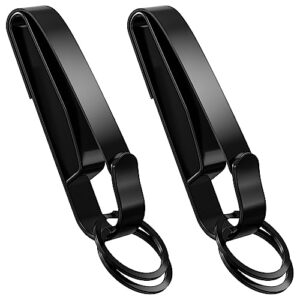
During patrol shifts, you’ll juggle keys, handcuffs, and other gear while maintaining quick access to essential items. Duty belt key holder clips, constructed from stainless steel or reinforced nylon, offer clip material durability that withstands the rigors of police work without corrosion concerns.
Attachment compatibility matters—select models fitting belts 1.5 to 2.25 inches wide with secure spring mechanisms. Capacity retention for multiple keys, combined with operational features enabling one-handed access, mitigates officer safety concerns when you need rapid response capability during law enforcement operations.
Best For: Police officers, law enforcement personnel, and security professionals who need quick, reliable access to keys and gear during active duty shifts.
- Built from heavy-duty stainless steel or reinforced nylon that resists rust and corrosion, with some models exceeding 200-pound pull tests and backed by lifetime warranties
- Quick-release mechanisms and spring clips allow one-handed operation for rapid access during emergencies without fumbling
- Fits a wide range of duty belts (1.5 to 2.25 inches) and can hold multiple keys or equipment with secure retention that prevents accidental loss
- May need a break-in period to reach optimal strength and flexibility for smooth operation
- Black powder coating can scratch or wear away over time with heavy daily use
- Some users report the clip being larger than expected, which might feel bulky on smaller belt setups
4. Smith and Wesson Border Guard Knife
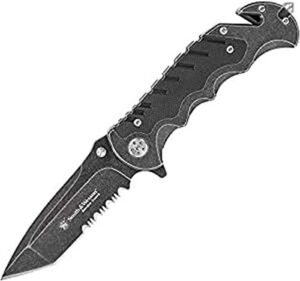
You’ll encounter situations requiring a reliable cutting tool with tactical benefits during emergency response or routine duties. The Smith & Wesson Border Guard Knife features a 3.5-inch serrated tanto blade constructed from 7Cr17MoV high carbon stainless steel, paired with an aluminum handle design offering ambidextrous thumb knobs for rapid deployment.
Safety features include a liner lock mechanism and integrated glass breaker, addressing officer safety concerns beyond gas mask compliance considerations.
Market reception averages 4.1 stars, reflecting acceptance among police departments seeking dependable safety equipment that complements existing facial hair accommodations.
Best For: Law enforcement officers, first responders, and tactical users who need a dependable everyday carry knife with emergency rescue features like a glass breaker and strap cutter.
- Spring-assisted opening with ambidextrous thumb knobs and flipper tab gives you fast, one-handed blade deployment when seconds count.
- Integrated glass breaker and strap cutter add real utility for emergency rescue situations without adding bulk or weight.
- Lightweight at 3.5 ounces with a pocket clip makes it easy to carry all day without feeling weighed down.
- The opening mechanism can be sticky or tight out of the box and might need some break-in time or adjustment before it operates smoothly.
- The seat belt cutter doesn’t work as well as it should unless you’re holding the belt really tight, which isn’t always practical in emergencies.
- The hex nuts can loosen over time, which affects blade stability and means you’ll need to check and tighten them regularly.
5. Coidea Waterproof Pocket Field Notebook
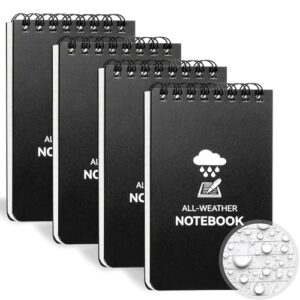
Your documentation system needs to survive every weather condition you’ll face on patrol, which is why the Coidea Waterproof Pocket Field Notebook earns its place among essential safety equipment for police officers.
This 3×5-inch notebook withstands complete submersion while maintaining writing performance with ballpoint pens or pencils, supporting grooming standards compliance documentation in rain or extreme temperatures.
The tear-resistant synthetic material quality and PVC cover provide durability that police departments expect, making pocket portability practical for officers addressing modern facial hair policy requirements.
Best For: Police officers, security guards, and first responders who need reliable documentation in harsh weather conditions and wet environments.
- Withstands complete submersion and extreme temperatures from -20°F to 150°F while keeping your notes legible
- Compact 3×5-inch size fits easily in duty belts and pockets without adding bulk to your gear
- Works with standard ballpoint pens and pencils, so you don’t need special writing tools
- Some users report difficulty writing smoothly on the synthetic paper surface
- Ink may smudge more easily than expected, even with the waterproof material
- The pocket size might be smaller than what some officers prefer for detailed field notes
Frequently Asked Questions (FAQs)
Who decides the facial hair policy for police officers?
Your department’s leadership holds the reins—police chiefs and command staff craft facial hair policies under a High Court-backed Legal Framework.
Department Authority varies widely, reflecting Chief Discretion and local Policy Variations across departmental guidelines nationwide.
Can cops have mustaches?
Yes, most police departments permit mustaches under specific grooming standards. Mustache length limits generally restrict growth beyond the upper lip line or mouth corners, while style prohibitions ban handlebar designs, ensuring professional appearance and uniformity.
What is the policy on facial hair for police officers?
While many departments mandate clean-shaven faces, facial hair regulations for police vary widely.
Some agencies now permit well-groomed beards with specific length limits, while mustache regulations and religious exemptions continue evolving across jurisdictions.
Do all police departments have the same policy on facial hair?
No federal mandate governs police grooming policies, so departmentspecific grooming policies vary widely. Regional variations reflect local standards—some agencies enforce strict no-beard rules, while others permit well-groomed facial hair, exercising department discretion over appearance requirements.
What are the benefits of allowing police officers to have facial hair?
Allowing facial hair boosts officer morale, recruitment, and retention while enhancing public perception. Bearded officers appear more approachable, improving community relations.
Relaxed grooming policies attract diverse candidates, addressing staffing challenges without compromising professionalism.
Are there any drawbacks to allowing police officers to have facial hair?
While facial hair can boost officer morale, drawbacks include respirator seal compromise affecting safety equipment, uniformity disruption, and public perception bias.
Operational safety risks during altercations, and policy enforcement challenges impacting community relations and trust are also concerns.
Do bearded officers face discrimination from colleagues?
Yes, some bearded officers face workplace discrimination through harassment incidents, retaliation tactics, and accommodation denials. Legal challenges reveal disqualification rates affecting minorities, highlighting tensions between departmental uniformity and individual rights, inclusivity, and cultural diversity.
Can officers dye their beards unnatural colors?
Think of a rainbow flag at half-mast—it won’t fly.
Department policies universally ban unnatural dye in beards, requiring natural colors like brown, black, or gray to maintain professional appearance standards and grooming guidelines across jurisdictions.
Are female officers allowed to have facial hair?
Department policies on grooming standards apply gender-neutral rules, focusing on professional appearance rather than hormonal conditions.
You won’t find explicit bans targeting female officers—enforcement consistency means facial hair, regardless of gender, must align with established neatness requirements.
How do beards affect body camera footage quality?
Regarding clarity, beards can throw a wrench in the works. Facial recognition errors spike up to 30%, while video clarity issues from shadows and pixelation create identification interference, impacting operational effectiveness and mitigation findings.
Conclusion
The devil’s in the details when answering whether police officers can have beards. Your department’s location, operational needs, and individual circumstances all factor into the equation.
Religious beliefs, medical conditions, and specialized assignments can override blanket restrictions, but you’ll need documentation and approval.
Before assuming you can grow facial hair on duty, review your specific agency’s grooming standards and understand the proper waiver process. Policy varies widely, so verification matters.
- https://www.bigissue.com/news/fact-fiction-can-police-officers-have-beards/
- https://www.cbc.ca/news/canada/prince-edward-island/pei-rcmp-uniform-change-1.5200558
- https://www.police1.com/law-enforcement-policies/when-it-comes-to-uniform-and-grooming-standards-are-we-at-the-point-of-no-return
- https://taskandpurpose.com/news/military-beards-break-gas-mask-seal/
- https://journals.sagepub.com/doi/10.1177/21650799241230039