
This site is supported by our readers. We may earn a commission, at no cost to you, if you purchase through links.

You finish shaving and catch yourself in the mirror—smooth skin, clean lines, but within an hour that familiar tightness creeps in. Your face feels like it’s shrinking, and by evening you’re dealing with redness or those annoying bumps that seem to appear out of nowhere.
Most men reach for aftershave and call it done, but there’s a better approach hiding in plain sight. Beard oil isn’t just for the bearded—it’s one of the most effective tools for calming freshly shaved skin and preventing the irritation that follows.
The oils work by creating a protective barrier that locks in moisture while delivering nutrients directly to your skin and hair follicles. When you understand how to apply it correctly, you’ll transform your post-shave routine from damage control into genuine skin care.
Table Of Contents
Key Takeaways
- Beard oil after shaving creates a protective barrier that locks in moisture and repairs your skin’s disrupted outer layer, preventing the tightness and dryness that typically follows within hours of shaving.
- Applying beard oil post-shave can reduce razor burn by up to 60% and prevent ingrown hairs in 45-83% of prone users through anti-inflammatory ingredients that calm irritation and soften hair follicles.
- Choose lightweight, non-comedogenic oils like jojoba, argan, or grapeseed with a comedogenic rating of 0-2 to avoid clogging pores, especially if you have sensitive or acne-prone skin.
- Apply 3-5 drops to damp—not soaking—skin using gentle upward circular motions, working the oil into your pores for maximum absorption within 5-10 minutes of shaving.
Can We Apply Beard Oil After Shaving?
Can you really reach for beard oil right after you put down the razor? Yes, you can apply beard oil after shaving, and it often works well for postshave skin care. When you shave, you’re temporarily disrupting the outer layer of your skin and increasing water loss, which is why your face might feel tight or dry afterward.
Beard oil creates a thin, protective layer that helps lock in moisture and reinforces skin barrier repair. The trick is choosing products with lightweight, non-comedogenic ingredients—oils like jojoba, argan, or grapeseed absorb quickly without clogging pores. Beard oil can also moisturize the skin, preventing dryness.
Product compatibility matters, especially if you have sensitive or acne-prone skin. Post-shave hydration with the right beard oil can reduce irritation, improve comfort, and set the stage for healthier regrowth over the long-term effects of consistent use.
Benefits of Using Beard Oil Post-Shave

Applying beard oil after shaving isn’t just about keeping your skin soft—it’s about protecting it from the stress that comes with every stroke of the razor. Your skin takes a beating during shaving, losing moisture and facing irritation that can linger for hours or even days.
Here’s how beard oil steps in to repair, protect, and prepare your skin for what comes next.
Soothing and Hydrating The Skin
Shaving disrupts your skin’s moisture barrier, raising transepidermal water loss (TEWL) and leaving your face vulnerable to dryness. Beard oil after shaving delivers emollient benefits that lock in hydration—studies show post-shave skin care with plant oils can restore moisture levels to match unshaved skin within hours.
This barrier strengthening improves skin flexibility and comfort, making your face feel softer and more supple throughout the day. Using hydrating shaving gel can help create a cushion for the shave.
Reducing Razor Burn and Ingrown Hairs
Razor burn strikes over half of men using cartridge razors, while ingrown hairs plague 45-83% of those with curly follicle morphology. That’s where beard oil after shaving becomes your ally—its anti-inflammatory ingredients calm irritated skin while softening hair to reduce penetration back into follicles.
Beard oil after shaving calms razor burn and softens hair to prevent ingrown hairs in up to 83% of prone users
Studies show up to 60% fewer papules when you combine preventative measures with proper product ingredients, managing razor burn before it takes hold.
Promoting Healthy Beard Growth
Beyond calming irritation, beard oil after shaving fosters healthy beard growth through Follicle Nourishment and Hydration Effects. A 2025 trial showed 24% faster growth and 48% denser beards at four weeks with daily oil application—thanks to antioxidants protecting follicles and improved moisture reducing Breakage Reduction.
While oils won’t override genetics (Growth Limits exist), consistent Application Timing post-shave creates the ideal environment for thicker, fuller facial hair over time.
Preventing Dryness and Itchiness
When your razor glides across skin, it strips away protective oils and disrupts the Skin Barrier—leading to tightness and itch in over 30% of shavers. Beard oil after shaving delivers Emollient Therapy that addresses skin dryness head-on:
- Hydration Techniques lock moisture into freshly shaved skin within 24 hours
- Oil Composition mimics natural sebum to restore balance
- Application Timing post-shave maximizes absorption
- Strategic use helps moisturize skin and prevent irritation before discomfort begins
Choosing The Right Beard Oil After Shaving

Not all beard oils work the same way on freshly shaved skin. Your skin type, sensitivity level, and ingredient preferences all play a role in finding what works best for you.
Let’s look at what matters most when choosing a post-shave beard oil that won’t cause problems.
Key Ingredients for Post-Shave Skin
Your post-shave beard oil should work like a repair crew for stressed skin. Carrier oils form the foundation—jojoba mimics your natural sebum and penetrates within 30 minutes, while argan delivers oleic and linoleic acids to restore the barrier. Essential oils like tea tree bring antiseptic muscle to prevent razor burn, and aloe vera accelerates healing with 50% faster cellular turnover in just 24-48 hours.
| Ingredient | Primary Benefit |
|---|---|
| Jojoba Oil | Absorbs quickly, hydrates without clogging |
| Argan Oil | Restores skin barrier, soothes redness |
| Tea Tree Oil | Prevents infection, loosens ingrown hairs |
| Aloe Vera | Repairs irritation, boosts collagen 40% |
| Vitamin E | Locks moisture, reduces inflammation |
These ingredients work together to transform your skin hydration after shaving—carrier oils provide the nourishment while essential oils tackle specific problems like breakouts and itchiness.
Non-Comedogenic and Natural Formulas
When shopping for beard oil after shaving, look for noncomedogenic carrier oils rated 0–2 on the comedogenicity scale—jojoba, grapeseed, and argan won’t clog your pores.
Studies show formulas with pore-clogging ingredients increase acne risk 2.5 times compared to natural ingredients that support skin barrier effects.
Skip synthetic additives and choose plant-based beard oil ingredients if you have acne-prone skin.
Best Beard Oils for Sensitive Skin
If your skin reacts easily, choosing beard oil for sensitive skin isn’t about finding one magic bottle—it’s about matching ingredients to your skin sensitivity. European surveys show 36–56% of men describe their facial skin as sensitive, and daily shaving accounts for 40% of triggers.
Look for these anti-inflammatory beard oil ingredients that offer natural oils benefits for sensitive skin types:
- Jojoba oil mimics your natural sebum and aids skin barrier repair after shaving.
- Argan oil delivers vitamin E and measurably reduces oxidative stress markers.
- Grapeseed oil soothes irritation without heaviness.
- Sweet almond oil ranks as hypoallergenic with a long dermatological track record.
- Fragrance-free formulas sidestep fragrance allergens that affect up to 4% of the population.
These carrier oils work because they’re mild, non-irritating, and clinically backed—not just marketing hype.
Scent and Allergen Considerations
Fragrance allergens in beard oil deserve attention, especially after shaving breaks down your skin barrier. Roughly 2–3% of adults carry fragrance allergies, and leave-on cosmetic products on compromised skin multiply that risk. Before committing to a scented oil, patch testing a small area for 24 hours helps identify skin sensitivity. IFRA standards cap allergen levels, but checking ingredient labels for limonene, linalool, or citral aids allergen avoidance when skin irritation is a concern.
| Common Fragrance Allergen | Found In | Patch Test Positivity |
|---|---|---|
| Limonene (oxidized) | Citrus essential oils | 1–3% of tested patients |
| Linalool (oxidized) | Lavender, bergamot oils | Similar magnitude |
| Citral | Lemongrass, citrus scents | Part of Mix I screening |
| Coumarin | Tonka, vanilla fragrances | Declarable at >0.001% |
| Eugenol | Clove, spice oils | Mix I component |
How to Properly Apply Beard Oil After Shaving
Applying beard oil after shaving isn’t complicated, but doing it right makes all the difference in how your skin responds. The technique matters just as much as the product itself—proper application ensures the oil absorbs effectively and delivers maximum benefit to freshly shaved skin.
Let’s walk through the essential steps that will help you get the most out of your post-shave routine.
Pre-Application Skin Preparation

Before you reach for that bottle, think of your face like a clean canvas—it needs the right prep. Rinse with warm water to open pores, then use a gentle facial cleansing routine to remove leftover shaving cream and debris.
Pat dry with a towel, leaving skin slightly damp. This simple skin and hair preparation ensures your beard oil absorbs properly and delivers maximum hydration.
Correct Application Techniques

With your skin prepped and damp, dispense 3–5 drops into your palms and rub them together—this warms the oil and sets up even distribution.
Start by massaging upward from your neck using gentle circular motions, working against the grain to lift stubble and reach the skin underneath. Then smooth downward with the direction of hair growth, conditioning each zone thoroughly without dragging or applying excessive pressure.
Amount and Frequency of Use

Once you’ve worked the oil in, daily applications of 2–3 drops are plenty for stubble under an inch—your skin holds just enough moisture without going greasy. In dry conditions or winter months, you can bump that to twice daily with a lighter evening dose.
Beard length matters: longer growth needs 5–7 drops, while oily skin types should stick to the minimum. Maximum use rarely exceeds 10 drops, and if you’re still shiny an hour later, dial it back.
Tips for Optimal Absorption

For faster absorption, apply beard oil to damp—not soaking—skin after rinsing, since a touch of water helps lighter carrier oils penetrate within 5–10 minutes. Massage with gentle upward circles to push the formula into your pores.
Skip pre-soaking your face; studies show that over-hydrating beforehand can actually cut penetration by nearly 30%, leaving you greasy instead of moisturized.
Preventing Irritation and Common Mistakes
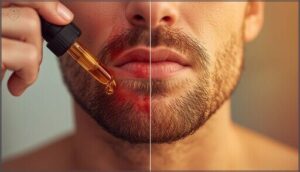
Even with the right product and technique, beard oil can sometimes cause problems if you’re not careful about a few key details. Small mistakes like using too much oil or applying it to already irritated skin can set you back instead of helping you heal.
Let’s cover the most common pitfalls and how to avoid them so your post-shave routine works the way it should.
Avoiding Pore Clogging
Not all carrier oils treat your skin the same after a shave. Coconut oil sits at a comedogenic rating of 4, meaning it’s more likely to clog pores, while argan and hemp seed oil score 0—making them pore-friendly choices.
If you’re prone to breakouts, stick with non-comedogenic ingredients like jojoba or grapeseed oil to keep your skin barrier protected without blocking follicles.
Managing Sensitive or Irritated Skin
Sensitivity isn’t a weakness—it’s your skin telling you to adjust. Post-shave irritation, which affects the majority of men, demands a shift toward skin barrier repair and antiinflammatory ingredients over harsh formulas.
- Choose beard oil after shaving with minimal ingredients—soothing essential oils like chamomile or lavender work best for sensitive skin care
- Patch-test new products on your wrist before applying to freshly shaved areas, preventing skin irritation before it starts
- Skip products with synthetic fragrances, which trigger reactions in up to 4% of people
- Apply gentle exfoliation 24 hours before shaving to reduce razor burn risk and promote irritation prevention through natural remedies
When to Avoid Beard Oil Post-Shave
Sometimes, applying beard oil after shaving does more harm than good. Skip it entirely if you have open cuts—oils trap bacteria and delay healing for 24 to 48 hours.
Avoid it with active acne or skin conditions, as comedogenic ingredients worsen breakouts.
If you have fragrance allergies, sensitive skin, or excessive dryness with stinging, hold off until razor burn and irritation subside completely.
Frequently Asked Questions (FAQs)
Can beard oil replace aftershave balm completely?
Beard oil offers lighter conditioning, but it won’t deliver the thicker, cushioning barrier that aftershave balm provides.
For true post-shave hydration and skin barrier repair, balm remains your more protective option.
How long does beard oil last on skin?
Most beard oils absorb within 15–30 minutes, but hydration and skin barrier benefits last 12–24 hours. Reapplication timing depends on your skin type, climate, and daily beard oil application routine for ideal skin health.
Can women use beard oil after shaving faces?
Despite the name, women can absolutely use beard oil after shaving faces—especially lightweight, non-comedogenic formulas that suit their skin type.
Facial hydration and cosmetic safety matter more than marketing labels when protecting skin barrier integrity post-shave.
Should I refrigerate beard oil for better results?
Refrigeration isn’t required for beard oil stability. Cool, dark storage below 25°C slows oxidation and extends shelf life effectively.
Chilling thickens oils like jojoba temporarily without improving skin health or carrier oil benefits beyond proper room-temperature conditions.
Conclusion
Your post-shave routine can make the difference between walking around looking raw and irritated or stepping out with calm, protected skin.
The answer to whether you can apply beard oil after shaving isn’t just yes—it’s one of the smartest moves you’ll make. You’re not simply moisturizing; you’re actively defending against razor burn, ingrown hairs, and that tightness that derails your morning.
Apply it right, and you’ll wonder why you ever skipped this step.
- https://plasticsurgerykey.com/the-influence-of-emollients-on-dermal-and-transdermal-drug-delivery/
- https://pmc.ncbi.nlm.nih.gov/articles/PMC5698208/
- https://emedicine.medscape.com/article/1071251-overview
- https://community.the-hospitalist.org/content/new-razor-technology-improves-appearance-and-quality-life-men-pseudofolliculitis-barbae
- https://theshaveden.com/forums/threads/preshave-oil-and-beard-oil.57258/