This site is supported by our readers. We may earn a commission, at no cost to you, if you purchase through links.

You can swim with a wig—but not without a game plan. Jump in unprepared and you’re risking slippage, tangling, or chlorine damage that’ll leave your hairpiece looking worse for wear.
The good news? With the right wig type and a few smart precautions, you can dive, lap, or float without worry. Synthetic wigs resist moisture better than human hair, and waterproof adhesives or swim caps can lock everything in place.
Pre-swim prep matters too—wetting your wig with fresh water first creates a barrier against pool chemicals. Whether you’re a casual swimmer or training for laps, knowing how to secure, protect, and care for your wig means you won’t have to choose between the water and your confidence.
Table Of Contents
- Key Takeaways
- Can You Swim With a Wig?
- Best Types of Wigs for Swimming
- How to Secure Your Wig for Swimming
- Protecting Your Wig While Swimming
- Caring for Your Wig After Swimming
- Frequently Asked Questions (FAQs)
- Can you swim in a wig?
- Does swimming damage a wig?
- Can you swim with a wig in an updo?
- How to style a swimming wig?
- Can You Wash a swimming wig with the right shampoo?
- Can you wear a wig at the pool?
- Can I swim underwater with a wig on?
- How often should I replace my swim wig?
- Will my wig color fade in the pool?
- Can I use regular shampoo on swim wigs?
- Conclusion
Key Takeaways
- You can swim with a wig by choosing synthetic fibers over human hair, using waterproof adhesives or swim caps for security, and pre-soaking the wig in fresh water to block chlorine absorption by up to 70%.
- Proper preparation matters—style your wig into a braid or bun before swimming, apply leave-in conditioner as a protective barrier, and test your adhesive to prevent mid-swim slippage.
- Post-swim care extends wig life significantly—rinse immediately in cool water, wash with wig-specific shampoo within 24 hours, and deep condition every two to four weeks to reverse chemical damage.
- Custom swim wigs with silicone vacuum caps offer the best security for frequent swimmers, while casual swimmers can protect standard wigs by combining wig grips with swim caps to boost stability by 50%.
Can You Swim With a Wig?

Wondering if you can take the plunge with your wig on? The short answer is yes—you absolutely can swim with a wig. Whether you’re dealing with hair loss or just want the comfort of your favorite style, wigs give you the water confidence to dive into pools, beaches, and other water activities without holding back.
That said, swimming with wigs does require some planning. Chlorine and saltwater can dry out fibers and weaken adhesives, so wig security becomes paramount when you’re in the water. You’ll also need to think about comfort factors like weight and breathability.
The good news? With proper wig care and the right preparation, you don’t have to choose between your hairpiece and making a splash. To protect the wig and scalp, wearing a protective wig cap is highly recommended. Social perceptions shouldn’t limit your freedom—take the leap.
Best Types of Wigs for Swimming

Not all wigs hold up the same way in water. Some are built to handle chlorine and waves without falling apart, while others need extra care or won’t last long at all.
Here’s a look at the main types you can wear in the pool or ocean and what makes each one different.
Synthetic Swim Wigs
Synthetic wigs work better for swimming than you might think. These fibers are engineered to resist moisture—PAN-based materials like Kanekalon repel water and dry fast, so your style bounces back without heat tools. Design features like adjustable straps and built-in clips keep everything secure.
Still, chlorine and saltwater will shorten your wig’s lifespan over time, so plan for replacements. A secure fit is key for keeping your wig in place while swimming.
Human Hair Wigs Vs Synthetic Wigs
You’ll spend more upfront on human hair wigs—often $700 to $3,500 compared to synthetic wigs at $30 to $500—but that investment pays off. Human hair vs synthetic hair boils down to fiber durability: human hair units last nine to twelve months with proper care, while synthetic wig options fade in four to six.
Chlorine dries out both, yet human hair benefits from conditioning. Styling options and aesthetic appeal run higher with human hair, though maintenance needs climb too.
Monofilament and Silicone Vacuum Wigs
When hair loss shifts your focus to performance and comfort, monofilament and silicone vacuum wigs deliver both. These alternative hair systems offer cap breathability and secure adhesion that traditional hairpieces can’t match:
- Monofilament mesh promotes airflow, reducing overheating during water activities
- Silicone vacuum caps create suction-based grip without adhesives
- Water performance remains stable—no stretching or loosening when wet
- Material durability offsets higher cost comparison against standard wigs
Custom and Swim-Specific Wigs
Silicone vacuum wigs engineered for aquatic performance give you the freedom to dive, lap, and surf without worrying about slippage. Custom design features—medical-grade seals, directional hair implants, and non-stretch silicone—keep these swimmable wigs secure during vigorous movement.
When choosing a swimming wig, consider frequency: occasional swimmers can use standard wigs under swim caps with hair protection, while regular pool-goers benefit most from custom-made swim wigs built for material durability.
| Feature | Custom Swim Wigs | Standard Wigs |
|---|---|---|
| Secure Fit | Vacuum suction, no adhesives | Adhesive-dependent |
| Water Resistance | Non-stretch silicone | May loosen when wet |
| Recommended Use | Frequent swimmers, water sports | Occasional use with swim cap |
| Durability | High chlorine/salt tolerance | Degrades faster in water |
How to Secure Your Wig for Swimming
The last thing you want is your wig slipping off mid-swim. A secure fit lets you focus on enjoying the water instead of worrying about your hairpiece.
There are several proven methods to keep your wig firmly in place, from specialized adhesives to physical barriers that work with the water instead of against it.
Waterproof Wig Adhesives and Tapes

Your wig won’t budge if you choose the right waterproof adhesive or tape. Bold Hold Silicone Maxx and Walker Tape Ultra Hold deliver 2-6 week secure attachment, even through pool submersion.
Here’s what matters most:
- Wait 24 hours after application before swimming to let waterproof glue cure completely
- Apply 4 layers of Bold Hold for next-day swimming sessions
- Expect chlorine exposure to weaken bonds over time with repeated use
Most waterproof wig tapes last 3-7 days in swimming conditions.
Wig Grips, Headbands, and Swim Caps

Without glue, you can rely on wig grips, headbands, and swim caps for solid wig security in water. Grips outperform clips by 40% in retention, while 85% of users report zero slippage during low-impact swimming. Headband wigs with combs stay put 100% of the time underwater.
Combining grips with caps boosts support by 50%.
| Method | Security Level | Best For |
|---|---|---|
| Wig Grip | Medium-High | Daily swimming |
| Swim Cap + Grip | High | Chlorine protection |
| Headband Wig | Very High | Active water sports |
Choosing Short or Tied Styles for Security

Want to cut drag and keep your wig locked in place? Short style wigs deliver hydrodynamic benefits by reducing water resistance, while ponytails and braids boost wig stability during swimming.
Tied-back styles improve braid stability and tangling prevention, keeping fibers from knotting in chlorine.
Sport styles designed for active use stay secure without constant adjustments, so you can jump in worry-free.
Protecting Your Wig While Swimming
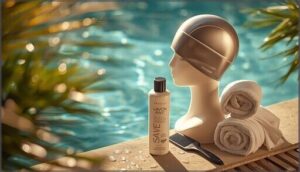
Getting your wig in the water is one thing—keeping it in good shape is another. Once you’ve secured your wig, you’ll want to take steps to protect it from the wear and tear that comes with swimming. Here’s what you need to know before you jump in.
Pre-Swim Preparation and Styling
Before you hit the water, wet your wig with fresh water—this reduces chlorine absorption by up to 70%. Apply a lightweight leave-in conditioner to create a protective barrier.
Style long hair into a braid or low bun to prevent tangling.
Test your waterproof adhesive and wig grip with a quick sink submersion, and keep backup elastic bands handy for extra security.
Using Protective Products and Swim Caps
Layering protection gives you confidence and freedom. Start with a silicone-based leave-in conditioner that cuts chlorine retention while sealing strands. Add a UV protectant to reduce breakage by 30%.
Then secure a wig grip underneath your swim cap—silicone options reduce water ingress by 40%. The right swim cap matters too: silicone outperforms latex, lasting three times longer in pools.
Avoiding Damage From Chlorine and Saltwater
Protection only goes so far when chlorine oxidizes keratin proteins within 15 seconds, breaking down the bonds that keep your wig elastic. Saltwater’s 30.6% sodium chloride draws out moisture just as fast, leaving fibers brittle and frizzy.
Chlorine oxidizes keratin in 15 seconds while saltwater strips moisture just as fast, leaving wig fibers brittle and damaged
Both raise porosity, fade color—especially in blonde shades—and shorten your wig’s lifespan. Limit your swim time and rinse immediately to slow the damage.
Tips to Prevent Tangling and Shedding
Pre-swim detangling with a wide-tooth comb cuts shedding by 40%, and working from ends to roots protects synthetic fibers. Secure styling—like a ponytail under a silicone swim cap—prevents 75% of knots.
In-water handling matters too: smooth strokes and minimal submersion reduce tangling by 80%.
After your swim, air-dry on a stand and wait to detangle, then apply a leave-in conditioner to seal moisture and cut residual tangles in half.
Caring for Your Wig After Swimming

Getting out of the water is only half the battle—what you do next makes all the difference in how long your wig lasts. Chlorine and saltwater don’t just rinse away on their own, and skipping proper care can leave your wig dry, tangled, or damaged.
Here’s how to keep your wig in great shape after every swim.
Immediate Washing and Conditioning
As soon as you finish your swim, rinse your wig in cool, clean water to flush away chlorine or salt before it causes dryness.
Within 24 hours, wash it with a wig-specific shampoo—regular formulas leave dulling residue. Follow with conditioner from mid-length to ends, letting it soak for a few minutes to reverse chemical stress and prep for gentle hair detangling once dry.
Deep Moisturizing for Wig Longevity
After washing and conditioning, lock in moisture with a deep conditioning mask every two to four weeks—more often if you swim frequently. This ritual rebuilds fiber integrity, fights hair dryness, and keeps your wig soft and shiny.
Think of it as a spa day: the right product application and conditioning frequency can stretch your wig’s lifespan from months to over a year, protecting both hydration strategies and aesthetic appearance.
Proper Drying Techniques
How you dry your hairpieces makes all the difference. Air drying on a wig stand in a well-ventilated area protects fibers better than heat application, which can melt synthetic strands or fry human hair. Gently towel blotting removes excess water without stretching the cap.
Control environment conditions—skip direct sunlight and radiators. These postswim wig care and wig maintenance tips transform hair washing from a chore into longevity insurance.
Routine Maintenance for Swimmable Wigs
Beyond immediate post-swim cleansing, your hairpiece needs a consistent maintenance schedule to stay healthy.
Follow these wig maintenance tips for proper hairpiece care and long-term fiber preservation:
- Wash human hair wigs every 7–10 days during swimming season, using sulfate-free shampoo types
- Apply deep moisture restoration treatments every 1–2 weeks
- Schedule professional checkups twice yearly
- Keep a dedicated swim wig to protect your primary hairpiece
Routine wig care and maintenance extends your investment’s lifespan.
Frequently Asked Questions (FAQs)
Can you swim in a wig?
Where there’s a will, there’s a wave. Swimming with wigs is possible, though wig detachment risks and water quality impact vary.
Swimmable wigs offer waterproof features, but comfort considerations and hairstyle limitations affect your experience.
Does swimming damage a wig?
Yes, swimming can harm your wig. Chlorine degradation and saltwater effects dry out fibers, while UV exposure causes hair color fading. Mechanical stress increases tangling, and water damage accelerates wear and tear without proper post-swim care.
Can you swim with a wig in an updo?
Absolutely—braid it, bun it, or twist it into a ponytail. Secure updos reduce drag and keep your wig stable.
Pair them with waterproof adhesive, a snug swim cap, and protective accessories to guard against chlorine impact and saltwater effects.
How to style a swimming wig?
Start with pre-swim braiding or low buns to reduce tangling. Choose synthetic fiber for better style consistency. Secure with clips and caps.
Apply protective products before swimming, then refresh your beach braids or reshape with post-swim conditioning.
Can You Wash a swimming wig with the right shampoo?
Use a dedicated wig shampoo for proper hair care and caring for wigs. Synthetic shampoos protect fiber integrity, while human hair requires sulfate-free formulas.
Washing techniques—cool water, gentle swishing—preserve your hairpiece.
Washing frequency matters for summer wig care and wig maintenance.
Can you wear a wig at the pool?
You can wear a wig at the pool when you use waterproof adhesives and cover it with a swim cap.
Without proper wig pool safety measures, chlorine wig damage and wig detachment risks increase considerably.
Can I swim underwater with a wig on?
You can swim underwater with a wig, but wig security in water depends on adhesive strength and wig type.
Submersion increases water damage risks—tangling, shedding, and slippage—making hairpiece alternatives or waterproof wig products essential for a secure fit.
How often should I replace my swim wig?
Replacement timelines depend on swim frequency and material impact. Budget planning for a dedicated swim wig every three to six months protects hair quality, while careful hair maintenance and care routine can extend wear and tear limits.
Will my wig color fade in the pool?
Like a canvas left in the sun, your wig’s color can fade in the pool. Chlorine and saltwater oxidation weaken pigments, especially in human hair.
Synthetic wigs resist color change better, though UV exposure dulls both types over time.
Can I use regular shampoo on swim wigs?
Skip regular shampoo—it strips synthetic damage and dries human hair wigs. Use sulfate-free or wig-specific cleansers for hair protection.
Washing frequency matters: every 6-8 wears maintains hairpiece color and longevity after swimming.
Conclusion
Wigs and water don’t have to be enemies. With the right wig type, secure attachment, and post-swim care, you can swim with a wig without sacrificing style or confidence.
Pre-soak before you dive, lock everything down with adhesives or caps, and rinse thoroughly afterward. Whether you’re doing laps or splashing around, a little preparation goes a long way. Your wig can handle the pool—you just need to give it the right backup.
- https://www.resiliencehairgroup.com/swim-wig
- https://www.youtube.com/watch?v=tmJjYLcADyE
- https://haircenterofpalmbeaches.com/2023/06/04/restrictions-on-activities-while-wearing-a-custom-hair-prosthesis/
- https://www.reddit.com/r/Wigs/comments/1jlhevf/what_do_you_do_about_swimming_or_the_gym_etc_do/
- https://www.newporthairlosscenter.com/effects-of-water-quality-on-hair-real-hair-wigs-and-extensions/