
This site is supported by our readers. We may earn a commission, at no cost to you, if you purchase through links.
Your buddy swears by his beard oil for everything—beard, hair, even dry elbows. Sounds convenient, right? But before you raid his grooming shelf, you need to know what you’re actually putting on your scalp.
Beard oil isn’t just rebranded hair product. The ingredients overlap, sure, but the formulations target different needs. Your facial hair grows thicker and coarser than what’s on your head, which means beard oil packs a heavier punch.
That extra richness can work wonders on dry, frizzy hair—or turn fine strands into a greasy mess. The trick is knowing when it helps and when it sabotages your style.
Table Of Contents
- Key Takeaways
- Can You Use Beard Oil on Hair?
- Benefits of Applying Beard Oil to Hair
- Potential Drawbacks and Precautions
- Beard Oil Vs. Hair Oil: Key Differences
- How to Use Beard Oil on Hair Effectively
- When to Avoid Using Beard Oil on Hair
- Top Beard Oils for Hair Application
- Natural Alternatives to Beard Oil for Hair
- Frequently Asked Questions (FAQs)
- Does beard growth oil work on regular hair?
- Can you use beard oil for hair oil?
- What else can I use beard oil for?
- Is beard oil different to hair oil?
- Should you use beard oil?
- Is Beard oil good for hair growth?
- Is Beard oil bad for your hair?
- Is beard oil the same as hair oil?
- Is beard oil good for normal hair?
- Can I use beard oil on body hair?
- Conclusion
Key Takeaways
- You can use beard oil on head hair if your strands are dry, frizzy, or textured—but skip it if you’ve got fine hair or an oily scalp, since the heavier formulation will leave you looking greasy within hours.
- Beard oil and hair oil share similar carrier oils like jojoba and argan, but beard oil is lighter and targets facial skin while hair oil packs more conditioning power for longer strands and scalp health.
- Apply only 1-3 drops to damp mid-lengths and ends—never the roots—because overuse creates buildup, weighs down your style, and can irritate sensitive scalps with concentrated essential oils.
- If beard oil doesn’t work for your hair type, switch to dedicated alternatives like argan oil for frizz control, coconut oil for deep moisture, or jojoba oil for lightweight hydration without the guesswork.
Can You Use Beard Oil on Hair?
Yes, you can use beard oil on your hair—but whether you should depends on what you’re working with. Beard oil and head hair have different needs, so understanding the basics helps you avoid a greasy mess or wasted product.
If you’re curious about better alternatives designed specifically for facial hair, check out these organic beard grooming product recommendations that won’t weigh down your style.
Let’s break down what makes them different, what’s actually in the bottle, and who benefits most from making the switch.
Key Differences Between Beard and Head Hair
Your beard and head hair aren’t twins. Beard follicles sit at sharper angles and pump out thicker, curlier strands with shorter growth cycles. That wiry texture? It’s all about follicle structure and how facial skin produces sebum differently than your scalp.
Head hair grows smoother and longer because those follicles play a totally different game—straighter angles, finer texture, and way more scalp oil working in your favor.
To understand more about the, note that facial hair develops differently due to hormone-driven changes after puberty.
Common Ingredients in Beard Oil
Most beard oils rely on a few core layers. Knowing what’s inside helps you decide if your hair can handle the same formula:
- Carrier oils like jojoba, argan, or sweet almond deliver moisture and softness without heavy residue.
- Essential oils such as tea tree or cedarwood add scent and antimicrobial properties.
- Vitamin E acts as an antioxidant and natural preservative to extend shelf life.
- Plant esters improve spreadability and reduce friction during brushing.
- Natural fragrances balance aroma with lower irritation risk than synthetic perfumes.
These natural ingredients work together to hydrate both skin and hair.
You can learn more about the importance of carrier and essential oils in beard oil formulations.
Who Should Consider Using Beard Oil on Hair
Now that you know what’s in the bottle, let’s talk about who can actually benefit from using beard oil on hair. If your head hair feels dry or brittle, the lightweight oils soften the cuticle and tame tangles without weighing you down.
People with frizzy or flyaway strands get smoother, easier styling with just a drop or two. Got a dry, itchy scalp? Beard oil adds moisture to the surface and calms irritation when you use it sparingly.
Those with long or textured hair often see improved manageability and less static when they treat it like a light leave-in conditioner. And if your skin’s sensitive, a fragrance-free formula hydrates without triggering flare-ups—just make sure it’s low in irritants.
Benefits of Applying Beard Oil to Hair
Beard oil isn’t just for your face—it can work wonders on your head hair too. The same natural oils that soften and condition facial hair can tackle dryness, frizz, and unruly strands up top.
Here’s what beard oil brings to the table when you use it on your hair.
Moisturizing and Softening Effects
Think of beard oil as a secret weapon for parched strands. Here’s how it transforms your hair care game:
- Hair Hydration locks in moisture through occlusives that seal the hair shaft
- Softening Mechanisms smooth cuticles with lipid-rich fatty acids
- Moisture Retention relies on humectants pulling environmental moisture inward
- Scalp Comfort arrives from light application soothing dry, itchy areas
- Hair Silkiness emerges when conditioning esters detangle and add slip
Your mane gets softer without the weight.
Reducing Frizz and Flyaways
Humidity doesn’t stand a chance when you seal your cuticles with beard oil. A pea-sized drop on mid-lengths smooths frizzy ends and tames flyaways without weighing down your mane.
Here’s how beard oil stacks up against hair oil for frizz control:
| Feature | Beard Oil | Hair Oil |
|---|---|---|
| Texture | Lightweight, fast-absorbing | Richer, heavier consistency |
| Target Area | Mid-lengths to ends | Scalp to tips |
| Frizz Control | Quick smoothing for flyaways | Deep hair hydration for lasting results |
Your strands lie flatter, and static becomes a distant memory with consistent hair care.
Enhancing Shine and Manageability
Light-reflecting oils coat each strand, delivering natural gloss without silicone overload. Argan and jojoba smooth cuticles to boost Hair Shine while making your locks easier to style—no heavy products needed.
Manageable Hair starts with two drops warmed between your palms, then worked through damp mid-lengths. Your styling routine shrinks, your shine lasts longer, and those stubborn tangles finally surrender to your comb.
Soothing Dry or Itchy Scalp
Persistent itch signals your scalp barrier needs backup. Beard Oil delivers soothing oils like jojoba and argan that calm inflammation and restore hair hydration without synthetic overload. Sparse application gives your dry scalp the dryness remedies it craves while you tackle the root cause.
Three ways to optimize Scalp Relief:
- Massage a few drops into problem zones before bed for overnight scalp conditioning.
- Pair with a pH-balanced cleanser to preserve your scalp health long-term.
- Monitor frequency—daily use risks buildup that worsens itchy scalp symptoms.
Potential Drawbacks and Precautions
Beard oil isn’t a magic fix for every hair situation, and it can backfire if you’re not careful. A few drops too many or the wrong formula can leave you looking like you skipped a shower.
Let’s break down what can go wrong and how to avoid it.
Risk of Greasiness and Product Buildup
Apply too much beard oil and you’re staring down greasy hair within hours. Oils with high oleic content can create product residue along your midlengths, making strands feel weighted and slick.
Without regular clarifying, buildup prevention becomes impossible—dust sticks, your scalp balance shifts, and that healthy shine turns into an oily sheen no amount of dry shampoo can mask.
Scalp Sensitivity to Essential Oils
Essential oils pack punch, but your scalp mightn’t welcome that intensity. Undiluted blends or high-frequency use disrupt scalp barrier function, triggering skin irritation—tingling, redness, even burning when you sweat. Tea tree and peppermint hit harder on sensitive skin than milder options.
Smart oil dilution methods keep essential oil reactions in check: stick to 0.25–2 percent concentration, patch test first, and lean toward fragrance-free carriers for irritation prevention and real sensitive scalp care.
Limitations for Hair Growth and Strength
Beard oil won’t resurrect lazy hair follicles or fix deeper issues. Hormonal imbalance, nutrient deficiencies, and genetic factors dictate hair growth and hair strength—carrier oils can’t override your DNA or rebalance thyroid levels. Chronic scalp inflammation needs targeted treatment, not a moisturizer.
For real hair follicle health and scalp health gains, reach for dedicated hair care with biotin, peptides, and anti-inflammatory actives designed to tackle root causes.
Beard Oil Vs. Hair Oil: Key Differences
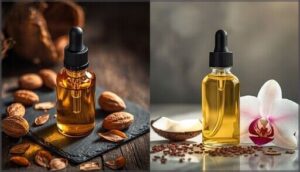
You might think beard oil and hair oil are basically the same thing, but they’re built for different jobs.
The formulas, textures, and even the price tags tell different stories.
Here’s what actually separates them.
Formulation and Texture Comparison
Think of it like comparing a sports car to an SUV—both get you places, but they’re built differently. Beard oil runs lighter because it’s formulated for quick absorption into coarse facial hair. Hair oil brings heavier emollients and rheology modifiers to tackle longer strands and scalp coverage. Ingredient interactions with carrier oils create distinct textures you’ll feel immediately.
| Feature | Beard Oil | Hair Oil |
|---|---|---|
| Oil viscosity | Lightweight, thin consistency | Rich, heavier formulation |
| Emollient effects | Quick absorption, minimal residue | Deep conditioning, lasting film |
| Texture analysis | Satin finish with low tackiness | Cushioned feel with moderate grip |
Natural oils like jojoba and argan dominate beard blends for their sebum-mimicking properties. Hair oils layer in silicones and fatty alcohols to boost slip and manageability across different hair types. Formulation science reveals that beard products skip the thickening polymers you’ll find stabilizing hair emulsions.
Intended Uses and Target Areas
Now that you know what sets them apart texture-wise, let’s talk about where they actually do their job. Beard care focuses on facial hair and the skin underneath—that’s where beard oil brings relief to the skin and tames coarse bristles. Hair oil, on the other hand, targets your entire scalp and strands from root to tip, delivering hydration and managing scalp health for daily wear.
| Product | Primary Target | |
|---|---|---|
| Beard oil | Facial hair follicles and underlying skin | |
| Hair oil | Full scalp coverage plus hair shaft length | |
| Beard oil benefits | Softening coarse texture, reducing itch | |
| Hair oil benefits | Deep conditioning, promoting hair growth | |
| Best for | Short facial hair moisturizing | Long strands needing intensive care |
Price and Value Considerations
Beyond what they’re made for, your wallet has a say in this choice. Beard oils generally cost $10 to $25 per ounce—premium tiers use organic botanicals and command higher prices. Hair oils often start under $10 but vary widely based on bundling options and longevity factors. A one-ounce bottle lasts six to twelve weeks with daily use, so value pricing depends on how many drops you need per application.
| Product Type | Average Price Range | Typical Duration |
|---|---|---|
| Budget beard oil | Under $10/oz | 6-8 weeks daily use |
| Premium beard oil | $25+/oz | 8-12 weeks (concentrated) |
| Standard hair oil | $8-$15/oz | 4-6 weeks full coverage |
How to Use Beard Oil on Hair Effectively
Getting beard oil onto your hair isn’t rocket science, but a little technique goes a long way. The right amount and placement make the difference between soft, manageable hair and a greasy mess.
Here’s how to apply it like you know what you’re doing.
Proper Application Techniques

Think of applying beard oil to hair like seasoning food—less is more, and technique matters. Warm 1 to 3 drops between your palms for 5 to 10 seconds before working through damp, clean hair.
Treat beard oil like seasoning—warm a few drops between your palms, then work through damp hair with restraint
Focus on mid-lengths to ends, avoiding the scalp to prevent greasiness. Use a wide-tooth comb for even oil dispersion and better product layering with your existing hair care routine.
Recommended Dosage and Frequency
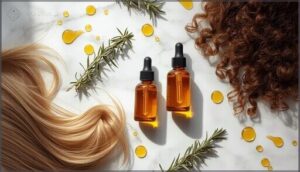
Generally, your oil dosage depends on hair type—fine hair needs just 1 to 2 drops, while thick or coarse strands handle 6 to 8.
For daily application, start with 3 to 4 times per week and adjust based on scalp considerations. If your hair looks shiny or feels heavy, skip a day. This frequency guide keeps your hair care routine balanced without buildup.
Tips for Short Vs. Long Hair

Hair Length Considerations change everything when applying beard oil. Short cuts need just a pea-sized dab—spread it through with your fingertips to dodge flatness.
Long Hair Care Routine fans should target mid-lengths to ends, skipping roots to prevent grease.
Hair Texture Variations matter too: fine strands absorb oil fast, while coarse hair tolerates more. Match your Oil Application Methods to your Hair Type for balanced results.
When to Avoid Using Beard Oil on Hair

Beard oil isn’t a magic solution for every head of hair. Some hair types and scalp conditions won’t respond well, and forcing it can leave you worse off than when you started.
Here’s when you should skip the beard oil and reach for something else.
Hair and Scalp Types Not Suited for Beard Oil
Not everyone’s scalp plays nice with beard oil. If you’ve got an oily scalp, you’re basically adding fuel to the fire—your roots will look greasy within hours and clog pores along your hairline. Watch out if you have:
- Fine or low-porosity hair that refuses to absorb oils, leaving a slick finish
- Curly or coiled textures that trap product and lose volume fast
- Sensitive skin prone to dermatitis that flares up from essential oils
Signs of Overuse or Irritation
Your scalp will tell you when enough is enough. Skin irritation shows up fast—redness, itching, or burning along your hairline within hours. Greasy buildup makes hair look slick and refuses to wash out, while paradoxical dryness symptoms appear after the oil blocks moisture. Here’s what to watch for:
| Warning Sign | What You’ll Notice | When It Appears |
|---|---|---|
| Scalp sensitivity | Stinging or rash on contact | Minutes to hours |
| Oil allergies | Breakouts near hairline | Days after use |
| Product overload | Stiff, weighed-down strands | Within one hour |
If sensitive skin reacts or scalp health declines, stop immediately—your hair care products should help, not hurt.
Alternatives for Specific Hair Concerns
When beard oil doesn’t cut it, match your solution to the problem. For frizz control, try silicone-free serums with fatty alcohols or argan oil to tame flyaways without clogging pores.
Coconut oil addresses dryness remedies and breakage, while jojoba mimics natural sebum for scalp soothing.
Need shine enhancers? Lightweight argan oil delivers gloss on dull hair.
Choose hair care products designed for your hair texture—alternatives to beard oil for hair work smarter, not harder.
Top Beard Oils for Hair Application
Not all beard oils work the same when you’re using them on your hair. Some formulas absorb better, feel lighter, and won’t leave you looking like you dunked your head in a fryer.
Here are seven solid options that actually deliver when you branch out from facial hair.
1. Beard Growth Kit By The Beard Club
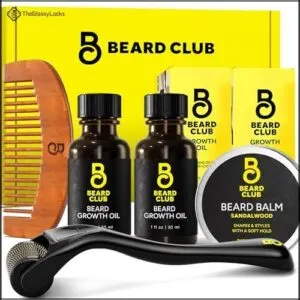
Looking for a one-stop solution that works on both beard and hair? The Beard Growth Kit by The Beard Club packs everything you need.
You’ll get a derma roller with 540 titanium-coated needles, growth oil featuring castor and cedar, sandalwood balm for styling, and an ergonomic wooden comb.
The growth oil is light enough for head hair while delivering deep moisture without heavy buildup. It’s cruelty-free, natural, and works for all hair types—perfect if you want versatility in your grooming routine.
| Best For | Anyone wanting a complete beard care system that also works on head hair, especially if you value natural, cruelty-free products and need help with growth, styling, and hydration. |
|---|---|
| Material Feature | Cruelty Free, Natural |
| Hair Type | All |
| Primary Use | Beard growth & styling |
| Key Ingredients | Castor, Cedar, Avocado |
| Scent Profile | Sandalwood |
| Size | Kit bundle |
| Additional Features |
|
- Complete kit with derma roller, growth oil, balm, and comb—everything you need in one package
- Natural oils like castor and cedar promote growth without heavy buildup
- Versatile enough for both beard and head hair, works for all hair types
- Some users might find the product scents too strong or overpowering
- Derma roller can cause skin irritation or discomfort for sensitive skin
- Results take patience and won’t happen overnight
2. Majestic Pure Coconut Oil Moisturizer
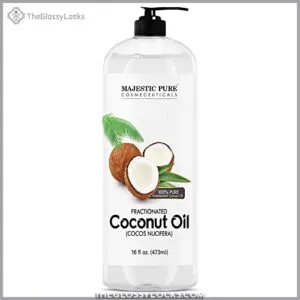
If you prefer a single-ingredient solution, Majestic Pure Coconut Oil Moisturizer keeps it simple. This 100% pure, fractionated coconut oil absorbs fast without leaving your hair looking slick or weighed down.
It’s odorless, won’t stain, and the 16-ounce bottle lasts forever. You can use it on hair ends to lock in moisture or massage a tiny amount into your scalp for relief from dryness.
Just patch test first—some people react to coconut oil. For external use only, so keep it away from your eyes.
| Best For | People who want a pure, single-ingredient moisturizer that works for hair, skin, and scalp without added fragrances or chemicals. |
|---|---|
| Material Feature | 100% Pure, Natural |
| Hair Type | Adult |
| Primary Use | Moisturizer & carrier oil |
| Key Ingredients | Fractionated Coconut Oil |
| Scent Profile | Odorless |
| Size | 15.91 fl oz |
| Additional Features |
|
- Fast-absorbing formula that doesn’t leave hair greasy or weighed down
- Large 16-ounce bottle offers great value and lasts a long time
- Multi-purpose use for hair ends, scalp, skin, and as a carrier oil for essential oils
- May cause allergic reactions, so patch testing is necessary before full use
- Some users reported a noticeable coconut smell despite being marketed as odorless
- Not suitable for internal use and must be kept away from eyes and children
3. Pura D’or Organic Argan Oil
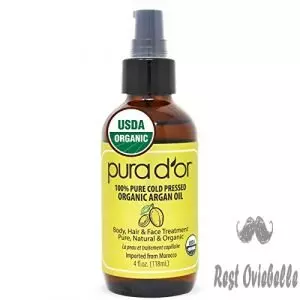
Pura D’or Organic Argan Oil brings you 100% cold-pressed Moroccan argan oil in a 4-ounce dark glass bottle. It’s packed with vitamin E and essential fatty acids that soften frizz and add natural shine without greasiness.
You can use it on split ends, dry scalp patches, or massage a few drops through damp hair as a leave-in treatment. The formula is USDA organic, hexane-free, and works for all hair types.
Just watch the dispenser—it pumps strong, so start with one drop to avoid overdoing it.
| Best For | Anyone looking for a lightweight, organic argan oil to tame frizz, add shine, and nourish dry hair or skin without feeling greasy. |
|---|---|
| Material Feature | USDA Organic, Hexane-free |
| Hair Type | All types |
| Primary Use | Skin & hair treatment |
| Key Ingredients | Moroccan Argan Oil |
| Scent Profile | Unscented |
| Size | 4 oz |
| Additional Features |
|
- 100% pure, cold-pressed, and USDA organic with no harsh chemicals like parabens or sulfates
- Absorbs quickly and works on hair, face, body, and nails—so it’s versatile
- Rich in vitamin E and fatty acids that help with split ends, dry scalp, and overall softness
- The dispenser pumps out a lot at once, making it easy to use more than you need
- May not be moisturizing enough for very dry skin, especially in cold winter weather
- Some people might find it too lightweight if they prefer heavier oils
4. Viking Beard Wash And Conditioner Set
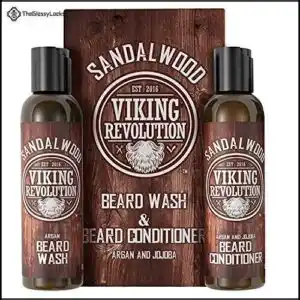
If you want to clean and condition in one go, Viking Beard Wash and Conditioner Set delivers with argan and jojoba oils in a 5-ounce travel-friendly bottle. It lathers well, strips dirt without yanking your natural oils, and leaves hair softer after each rinse.
The sandalwood scent sticks around just enough to feel fresh. Use a small amount, work it in, let the conditioner sit briefly, then rinse.
It’s paraben-free and sulfate-free—solid if you need straightforward hydration without chemical baggage.
| Best For | Guys who want a two-in-one wash that hydrates and softens their beard without harsh chemicals, especially if they travel often or prefer natural oils like argan and jojoba. |
|---|---|
| Material Feature | Paraben-free, Sulfate-free |
| Hair Type | All types |
| Primary Use | Beard growth & hydration |
| Key Ingredients | Argan & Jojoba oils |
| Scent Profile | Sandalwood |
| Size | 5 oz each |
| Additional Features |
|
- Cleans effectively while keeping natural oils intact, so your beard stays soft instead of stripped
- Paraben-free and sulfate-free formula with argan and jojoba oils for solid hydration
- Travel-friendly 5-ounce bottle with a pleasant sandalwood scent that doesn’t overpower
- May not lather as much as traditional chemical-based washes
- Could irritate very sensitive skin despite the natural formula
- Limited size options—only comes in 5oz or 17oz bottles
5. Viking Mustache Wax for Men
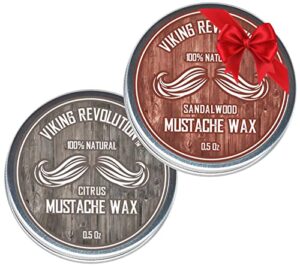
Viking Mustache Wax uses natural beeswax for a firm hold that survives rain and daily wear without cracking. You get citrus or sandalwood scents—both subtle and clean.
Warm a pea-sized dab between your fingers, then work it from the center out for precise shaping. It conditions with jojoba and argan oils, so your hair stays hydrated while you lock in your style.
The 2 oz tin fits in your pocket, and it won’t leave a glossy finish or greasy residue.
| Best For | Guys who want a natural-looking hold that keeps their mustache trained without feeling stiff or tacky. |
|---|---|
| Material Feature | Paraben-free, Natural |
| Hair Type | Straight |
| Primary Use | Mustache styling & hold |
| Key Ingredients | Natural wax blend |
| Scent Profile | Citrus & Sandalwood |
| Size | 1.41 oz |
| Additional Features |
|
- Natural ingredients with conditioning oils keep your mustache healthy while styling
- Long-lasting hold handles rain and daily activity without cracking or needing touch-ups
- Comes with a guitar pick applicator that makes it easier to scoop out product
- Hold isn’t strong enough for dramatic handlebar styles or extreme shaping
- Wax can be too soft in warmer weather, making it tricky to apply evenly
- Small container means you’ll need to restock more often than larger tins
6. Grave Before Shave Beard Oil
Grave Before Shave Gentlemen’s Blend delivers bourbon and sandalwood notes without knocking anyone over. Argan, jojoba, and sweet almond oil work together to soften hair and hydrate your skin underneath.
The 1 oz dropper makes dosing easy—a few drops go a long way. It won’t weigh you down or leave greasy streaks, and the natural shine looks intentional, not slick.
Grab the 4 oz bottle if you’re planning to use it daily on both your beard and head hair.
| Best For | Guys who want a daily conditioning oil with a bold bourbon-and-sandalwood scent that softens their beard without feeling heavy or greasy. |
|---|---|
| Material Feature | Alcohol-free, Natural |
| Hair Type | All types |
| Primary Use | Beard conditioning |
| Key Ingredients | Natural oils blend |
| Scent Profile | Pine & Cedar |
| Size | 1 oz |
| Additional Features |
|
- Natural oils (argan, jojoba, sweet almond) hydrate skin and prevent itchiness and beardruff
- Dropper bottle makes it easy to control how much you use—a little goes a long way
- Adds natural shine and softness without weighing down your beard or leaving it looking slick
- Oil can get sticky if you don’t use it within a year
- The bourbon-sandalwood scent might not be everyone’s thing
- Small 1 oz bottle won’t last long if you’re using it daily on a big beard
7. Northern Fir Beard Oil Conditioner
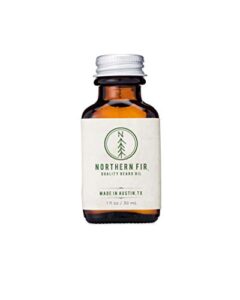
Northern Fir blends argan and jojoba oils with cedar, black pepper, and juniper berry—a woodsy scent that doesn’t linger all day but shows up when it matters. The lightweight formula absorbs fast and won’t leave your hair looking slick or greasy.
Black pepper stimulates blood flow to the follicles, while vitamin E keeps your scalp and strands moisturized. You’ll notice softer hair and less frizz after a few applications.
The 1 oz bottle runs $25, so it’s not cheap—but you only need a drop or two per use.
| Best For | People with frizzy or unruly beards who want a natural, woodsy-scented oil that softens hair without feeling heavy or greasy. |
|---|---|
| Material Feature | Paraben-free, Vegan |
| Hair Type | Frizzy |
| Primary Use | Beard softening & growth |
| Key Ingredients | Argan, Jojoba, Vitamin E |
| Scent Profile | Cedar & Black Pepper |
| Size | 1 fl oz |
| Additional Features |
|
- Lightweight formula with argan and jojoba oils absorbs quickly and reduces frizz
- Black pepper stimulates follicle circulation while vitamin E moisturizes scalp and hair
- All-natural, vegan-friendly, and made in the USA with UV-protective amber glass packaging
- At $25 for 1 oz, it’s pricier than many beard oils on the market
- The woodsy scent fades throughout the day and may not last as long as some prefer
- Small bottle size might not be ideal for those with longer or thicker beards who use more product
Natural Alternatives to Beard Oil for Hair

Not sold on using beard oil for your hair? You’re not locked into that choice.
A few natural oils deliver the same moisture and shine without the guesswork—and they’re designed with your scalp and strands in mind.
Argan Oil Benefits for Hair
Argan Oil delivers serious hair nourishment without the weight—your strands get oleic and linoleic acids that lock moisture in and smooth things out. It confronts frizz control head-on, taming flyaways while improving hair texture from root to tip.
Natural ingredients like vitamin E support scalp relief when dryness strikes, and the oil absorption is quick, so you won’t look greasy. It’s a straightforward alternative to beard oil that actually works.
Coconut Oil as a Hair Moisturizer
Coconut oil cuts straight through hair dryness with lauric acid that actually penetrates the hair shaft—not just the surface. You get real hair moisture benefits when it locks in hydration and smooths your cuticle.
This natural hair remedy works as a pre-wash treatment or finishing touch. Just keep it light on the roots; heavy application turns your scalp into an oil slick fast.
Jojoba Oil for Lightweight Hydration
Jojoba Oil‘s sebum mimicry lets it hydrate without the weight—perfect for fine hair use. It seals cuticles and balances your scalp without clogging pores, making it smarter than typical beard oil for daily hair care.
You won’t get that greasy buildup because it absorbs fast. Apply two drops to damp ends, skip the roots on oily scalps, and you’re set.
Frequently Asked Questions (FAQs)
Does beard growth oil work on regular hair?
Yes, beard growth oil works on regular hair. Carrier oils like jojoba and argan moisturize your scalp and hair shaft, reducing dryness while softening cuticles for better manageability and less frizz.
Can you use beard oil for hair oil?
Absolutely—beard oil substitutes work fine as hair oil. These beard care products share similar oil absorption rates and deliver comparable hair texture improvement and scalp moisturizing.
The main beard oil vs hair oil difference? Formulation weight, not function.
What else can I use beard oil for?
Beyond beard care and hair styling, you can apply beard oil as a facial moisturizer or scalp treatment.
The natural oils hydrate skin, soothe irritation, and support overall skin health without heavy residue.
Is beard oil different to hair oil?
Like comparing a Swiss Army knife to a chef’s knife, beard oil and hair oil share similar carrier oils but target different needs.
Beard care formulas prioritize skin benefits beneath facial hair, while hair care products emphasize scalp health and hair growth along longer strands.
Should you use beard oil?
If you’ve got dry, coarse, or frizzy hair—and your scalp isn’t overly oily—beard oil can work wonders.
It moisturizes, tames flyaways, and adds shine without the heavy feel of traditional hair products.
Is Beard oil good for hair growth?
Hair growth factors depend more on genetics than any oil-based treatments. Beard oil benefits your scalp health by preventing dryness, but it won’t dramatically speed up natural hair growth or follicle production.
Is Beard oil bad for your hair?
Beard oil won’t damage your hair when used sparingly, but overuse creates greasiness and buildup.
Essential oils may irritate sensitive scalps, and heavy application disrupts scalp pH balance while weighing down fine hair strands.
Is beard oil the same as hair oil?
You grab beard oil for your chin and wonder if it’ll work on your head—sounds efficient, right? Not quite. Beard oil is lighter and targets facial skin, while hair oil is richer for scalp health.
Is beard oil good for normal hair?
Yes, beard oil works well for normal hair types. It provides lightweight hydration without heavy buildup, balances hair moisture, and improves manageability. Just don’t overdo it—a little goes a long way.
Can I use beard oil on body hair?
Soft body hair might seem like it needs less care, but coarse chest or leg hair craves moisture just like facial fuzz.
Beard oil tames dry patches and soothes irritation without heavy residue.
Conclusion
You’ve cracked the code—beard oil isn’t some forbidden potion reserved for your jawline. Can you use beard oil on hair? Absolutely, if your hair craves moisture and you’re not drowning fine strands in grease.
Match the formula to your texture, start light, and watch how your hair responds.
Your grooming routine just got simpler. No need for a separate arsenal when one bottle does the job right.
- https://www.healthline.com/health/hair-oiling-benefits-oil-and-how-to
- https://us.tangleteezer.com/blogs/inspiration/the-7-different-types-of-hair-oil-and-their-benefits
- https://www.aad.org/public/everyday-care/hair-scalp-care/hair/healthy-hair-tips
- https://www.verywellhealth.com/terminal-hair-1069284
- https://www.medicalnewstoday.com/articles/sebum