This site is supported by our readers. We may earn a commission, at no cost to you, if you purchase through links.
Your dryer’s label might promise frizz-free shine or salon-speed drying, but the real magic happens inside that barrel—and it’s all about the technology you choose. Ionic dryers flood your hair with negative ions that shatter water droplets, cutting drying time in half and sealing down the cuticle for smooth, sleek results. Ceramic dryers, on the other hand, wrap heating elements in a ceramic coating that spreads warmth evenly across every strand, preventing those dreaded hot spots that fry fine hair.
The difference between ionic and ceramic hair dryers isn’t just technical jargon—it’s the reason your thick, frizzy mane might love one while your delicate waves thrive with the other. Knowing which technology matches your hair type means you’ll stop fighting your tools and start getting the results you actually want.
Table Of Contents
- Key Takeaways
- What is an Ionic Hair Dryer?
- What is a Ceramic Hair Dryer?
- How Ionic and Ceramic Dryers Differ
- Pros and Cons of Ionic Hair Dryers
- Pros and Cons of Ceramic Hair Dryers
- Which Dryer is Better for Your Hair Type?
- Styling Results: Ionic Vs Ceramic
- Features to Compare When Buying
- Maintenance Differences and Tips
- Expert Recommendations and Final Tips
- Frequently Asked Questions (FAQs)
- Conclusion
Key Takeaways
- Ionic dryers slash drying time by up to 50% and cut frizz by 40% using negative ions that break down water molecules and seal your cuticle—making them the power move for thick, coarse, or frizz-prone hair that needs fast results.
- Ceramic dryers deliver consistent, even heat without hot spots by distributing warmth through ceramic-coated elements, protecting fine or damaged strands from temperature spikes that cause breakage while maintaining gentle drying efficiency.
- Your hair type decides which technology wins: ionic models excel at frizz control and speed for thicker textures, while ceramic dryers preserve volume and prevent damage on delicate, fine hair that can’t handle aggressive heat or ion flattening.
- Hybrid dryers combining both technologies give you the best of both worlds—even heat distribution plus ion-powered frizz control—though proper maintenance (monthly filter cleaning, moderate heat settings) extends any dryer’s lifespan from 3-5 years to a full decade.
What is an Ionic Hair Dryer?
An ionic hair dryer uses a built-in generator to release negative ions into the airflow while you dry. Those ions attach to water molecules in your hair and break them down faster, which speeds up drying time and cuts down on frizz.
You’ll find these dryers alongside other hair care styling accessories designed to protect and enhance your hair’s natural texture.
Here’s how the technology actually works, what benefits you can expect, and the features you’ll usually find on ionic models.
How Ionic Technology Works
Ionic hair dryers work by releasing negative ions that shatter water droplets clinging to your strands. This sophisticated ionization accelerates evaporation right at the surface, slashing drying time without cranking up the heat.
Professional ionic hair dryers for salon use this same technology to deliver faster, gentler results that protect hair integrity during daily styling.
The result? Faster moisture control and smoother hair smoothing as ion emission balances charge, taming flyaways.
Many ionic hair styling tools now combine this moisture-balancing technology with ceramic or tourmaline plates for even gentler, salon-quality styling at home.
Most ionic technology pairs with tourmaline or ceramic coatings to amp up frizz reduction power.
These heated tools with ceramic hair straightening brushes deliver salon-quality smoothness by locking in moisture and distributing heat evenly.
Key Benefits of Ionic Dryers
When you flip on an ionic hair dryer, you’re commanding a tool that cuts frizz by up to 40% and shrinks drying time by half. Ionic technology releases negative charges that seal your cuticle, locking in shine and smoothness you can see.
If you want both benefits in one tool, a hair dryer brush combo delivers ionic drying while you style.
Ionic hair dryers cut frizz by up to 40% and slash drying time in half by sealing your cuticle with negative charges
You’ll breeze through styling sessions with less heat exposure, protecting your strands while taking full control of your look.
Common Features of Ionic Models
Most ionic hair dryers pack serious features you’ll use daily. You’ll find built-in ionizers firing negative charges to crush static and frizz, plus multiple heat settings that let you dial in the perfect airflow control for your hair type.
Expect lightweight, ergonomic design that won’t tire your arm, and attachments like concentrators and diffusers that target your styling goals with precision.
What is a Ceramic Hair Dryer?
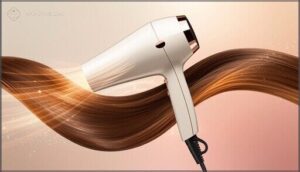
Ceramic dryers take a different approach—they use ceramic-coated heating elements to deliver consistent, even warmth without those annoying hot spots that can fry your hair. This technology is all about gentle, controlled heat that protects your strands while still getting the job done.
Let’s break down how ceramic components actually work, what benefits they bring to the table, and the features you’ll usually find in these models.
How Ceramic Components Function
Think of ceramic heating as your hair’s bodyguard against temperature spikes. When electricity flows through the metal coils wrapped in ceramic coating, that ceramic layer distributes warmth evenly across the barrel—no hot spots burning your strands.
The ceramic’s thermal mass smooths out those wild temperature swings, while its infrared emission gently dries from within. That’s how ceramic technology protects your hair while getting the job done.
Key Benefits of Ceramic Dryers
Consistency is what gives ceramic dryers their edge in hair protection. That even heat distribution cuts hot spots by up to 15%, so you’re not scorching sections while others stay damp.
Ceramic technology’s infrared warmth penetrates the cuticle for faster drying efficiency without cranking surface temps. The payoff? Better moisture retention, less breakage, and smoother results—especially when you’re working with fragile strands that can’t handle aggressive heat.
Typical Features of Ceramic Models
Most ceramic models carry a ceramic coating on the internal heating element or ceramic plates that maintain temperatures between 300–360°C for professional-grade performance. Many combine ceramic with tourmaline for enhanced heat distribution, giving you precise control without the guesswork.
You’ll find multiple heat and speed settings for gentle drying at even temperature levels, plus cool shot buttons to lock in shine.
How Ionic and Ceramic Dryers Differ
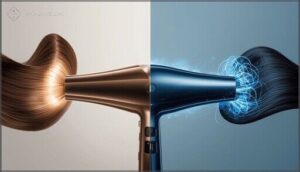
You’ve learned what each dryer type does, but the real question is how they actually stack up against each other. The differences come down to three core areas that directly affect your results.
Let’s break down heat consistency, frizz control, and how fast each one gets the job done.
Heat Distribution and Consistency
Your dryer’s heat patterns make or break your styling results. Ceramic elements deliver uniform heat distribution by radiating stable warmth across the airflow—think infrared heat that wraps each section evenly. That thermal balance means you control drying efficiency without chasing hot spots.
Ionic models generate negative ions but rely on wattage and design for temperature regulation and airflow control, not the ions themselves.
Ion Emission and Frizz Control
Negative ions flip the script on frizz by neutralizing static charges and sealing down your cuticle layers—real results you can see. Studies show frizz reduction climbing 10–20% when ions target those lifted scales.
Ceramic dryers skip ion emission entirely.
- Ion Balance smooths flyaways by canceling positive charges in strands
- Frizz Reduction intensifies in humid climates where ions lock cuticles tight
- Hair Smoothing depends on ionizer placement and emission density
- Static Control delivers faster wet-to-dry times—up to 20% quicker
- Moisture Locking keeps hydration sealed inside, preventing frizz formation
Drying Speed Comparison
Speed means everything when you’re racing the clock. Ionic drying technology cuts moisture removal time by 10–50% compared to standard dryers—negative ions fracture water droplets for faster evaporation.
Ceramic models match conventional speeds at identical wattage, relying on steady heat settings and airflow control rather than ion emission.
For rapid frizz reduction and shorter sessions, ionic drying technology wins this round.
Pros and Cons of Ionic Hair Dryers
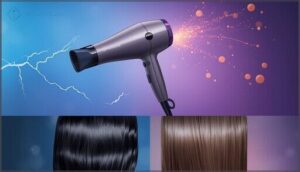
Ionic dryers pack some serious power in taming frizz and cutting down your drying time—but they’re not a one-size-fits-all solution.
Your hair type plays a big role in whether you’ll love or hate the results.
Let’s break down what works and what doesn’t so you can decide if ionic technology is your new best friend.
Advantages for Different Hair Types
Your hair texture decides which dryer unlocks the best results. Ionic models slash frizz and boost drying speed for medium or coarse hair types—negative ions lock moisture while taming flyaways.
Ceramic dryers shine with fine or damaged strands, delivering gentle, even heat that prevents hair damage and preserves style retention.
Choose ionic for frizz control on thicker hair, ceramic for fragile textures needing consistent warmth.
Potential Drawbacks to Consider
But ionic dryers aren’t perfect. Some models buzz loudly—ion generation circuitry creates audible noise levels that annoy users mid-style. High heat settings can cause heat damage and split ends if you’re not careful, and budget versions face durability issues with latch failures.
Maintenance costs add up when ionizing filters need replacing. User complaints also note frizz control fades in humid climates, limiting hair damage prevention when you need it most.
Pros and Cons of Ceramic Hair Dryers
Ceramic dryers have their own set of strengths and weaknesses that you need to know before making a choice. They work differently than ionic models, which means they’ll suit some hair types better than others.
Let’s break down what ceramic technology brings to the table and where it might fall short.
Benefits for Fine and Damaged Hair
Gentleness is everything when your strands are already fragile. Ceramic dryers give you the heat protection you need without those damaging hotspots that fry delicate fibers:
- Even heat distribution keeps temperatures stable—think consistent warmth instead of temperature spikes that zap moisture
- Lower heat settings deliver gentle drying while ionic technology cuts frizz and static
- Faster drying times mean less heat exposure, helping you prevent further hair damage while locking in hair moisture for damage repair and enhanced frizz control
Limitations and Considerations
But there’s a catch: ceramic dryers aren’t invincible. Mineral buildup can compromise heat consistency over time, and cheaper models struggle with heat inconsistencies that drag out drying time.
Durability concerns pop up with budget picks—longevity factors matter.
Compatibility issues with attachments limit styling options, and if you’ve got thick hair craving ionic frizz control, ceramic alone won’t cut it against stubborn static.
Which Dryer is Better for Your Hair Type?
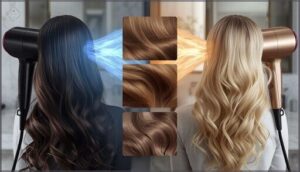
Your hair type isn’t just a detail—it’s the deciding factor in whether an ionic or ceramic dryer will actually work for you. Each technology targets specific textures and challenges, so matching the right one to your strands makes all the difference.
Let’s break down which dryer manages thick, fine, or curly hair best.
Thick or Coarse Hair
You need serious firepower to tame a thick mane or coarse locks—and that’s where ionic tech shines. It cuts drying time by 20–50% and confronts frizz control head-on, keeping your moisture balance in check.
Ceramic delivers steady heat distribution, preventing hot spots that damage your hair texture. For the ideal combo, grab a tourmaline-ionic dryer—it’s built for your hair type and won’t quit.
Fine or Fragile Hair
Fine hair demands a lighter touch. Ceramic dryers deliver damage prevention through stable, low heat that won’t spike and fry delicate strands. Fragile care starts with gentle styling: choose medium heat, keep the nozzle moving, and finish with a cool shot.
Ionic models can flatten your hair type, robbing you of volume. Ceramic minimizes hair breakage while respecting what fine, fragile locks actually need.
Curly or Frizzy Hair
Frizz control is where ionic dryers shine—literally. Negative ions neutralize static, smoothing your cuticle for less frizz. But here’s the catch: ionic technology can flatten curls if you’re not careful.
For curl enhancement, pair an ionic model with a diffuser and medium heat. If your hair porosity runs high, ceramic maintains moisture balance through gentle warmth.
Match your hair type to the right styling techniques, and you’ll own your texture.
Styling Results: Ionic Vs Ceramic
You’ve picked your dryer based on your hair type, but how does each one actually perform when you’re styling? The real difference shows up in your finished look—how your hair catches the light, holds its shape, and stays healthy over time.
Let’s break down what ionic and ceramic dryers deliver in three key areas that matter most.
Shine and Smoothness
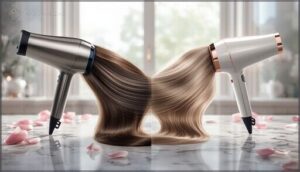
Want that showroom shine you see in magazines? Both ionic and ceramic hair dryers deliver a glossy finish, but they take different paths to get there.
| Feature | Ionic Dryers | Ceramic Dryers |
|---|---|---|
| Frizz Control | Negative ions seal cuticles and reduce static by 10–40% | Even heat minimizes damage, smoothing texture |
| Shine Enhancement | Breaks down water molecules for faster drying and enhanced hair gloss | Consistent warmth prevents hot spots, protecting your smooth finish |
| Best For | Coarse, frizz-prone hair texture needing serious smoothing | Fine strands requiring gentle, damage-free shine |
Ionic hair dryers excel at taming flyaways and boosting that glossy finish, while ceramic hair dryers protect delicate hair while delivering smooth hair results.
Volume and Bounce
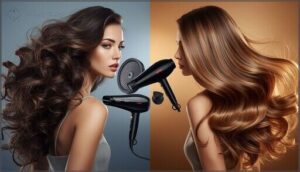
Looking to own that salon-level bounce? Your hair dryer’s tech plays a bigger role than you think. Ionic hair dryers cut drying time, preserving root lift and minimizing shrinkage for manageable volume. Ceramic hair dryers deliver consistent, gentle heat, maintaining bounce without flattening strands.
Your hair texture and styling tools matter—diffusers boost bounce for curly hair, while concentrators and airflow control enhance shine and root lift across all hair thickness levels.
| Feature | Ionic Dryers | Ceramic Dryers |
|---|---|---|
| Root Lift | Rapid drying preserves lift for several minutes post-styling | Even heat maintains uniform tension at roots |
| Bounce Retention | Reduces excess shrinkage, maintaining volume | Gentle warmth prevents strand flattening |
| Best Attachment | Diffuser for curly/wavy hair texture | Concentrator for controlled airflow |
| Hair Styling Impact | Quick results with manageable volume | Consistent bounce across all hair thickness types |
Long-Term Hair Health
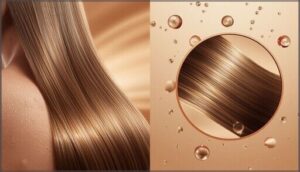
Your hair dryer isn’t just a quick-fix tool—it’s shaping your hair’s future. Ionic dryers tackle frizz prevention and static, while ceramic models minimize heat damage through even warmth distribution. Both reduce moisture loss and support cuticle care when you dial down the heat. Regular hair maintenance and smart heat control protect hair health benefits across every hair type.
| Factor | Ionic Dryers | Ceramic Dryers |
|---|---|---|
| Heat Control | Negative ions reduce drying time, lowering heat exposure | Even heat distribution prevents localized overheating |
| Hair Damage Risk | Lower with moderate settings; high heat still risks cuticle damage | Consistent warmth minimizes hot spots and cumulative damage |
| Best Practice | Use cool shot to seal cuticle and reduce moisture loss | Select lower to moderate heat for long-term hair health |
Features to Compare When Buying
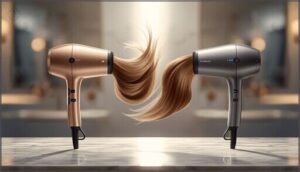
You’ve narrowed down the technology—now it’s time to look at the specs that actually affect how a dryer performs in your hands. Not all ionic or ceramic models are built the same, and a few key features separate the winners from the duds.
Let’s break down what to compare so you don’t waste money on a dryer that can’t keep up with your hair.
Wattage and Power
Think of wattage as your hair dryer’s horsepower—most ionic and ceramic models run between 1800 and 2000 watts, while pro-level picks push 2200 to 2400 watts for serious airflow control.
Higher wattage levels mean faster drying and better heat settings, though brushless motors optimize energy efficiency without sacrificing power consumption.
Match your AC motor or DC motor to your hair’s needs, not just the biggest number.
Attachments and Accessories
Beyond raw power, your attachments transform how you work that heat—concentrators, diffusers, picks, and combs let you own every styling angle from sleek blowouts to voluminous curls.
Most ionic and ceramic models throw in a nozzle and diffuser as standard gear, while premium picks add magnetic attachments for lightning-fast swaps.
Diffuser benefits curly textures, nozzle designs shape precision, and accessory materials with smart storage solutions keep everything travel-ready.
Heat and Speed Settings
Once you’ve locked in your attachments, temperature control and speed variability become your secret weapons—ionic hair dryers and ceramic models both pack low, medium, and high heat levels plus at least two speed settings to dial in your ideal airflow settings. Look for a cool shot button to seal cuticles fast, and check wattage to match your hair’s density with the right heat technology.
- Low heat coaxing fine strands into glossy submission
- High speed blasting thick manes dry in record time
- Medium warmth balancing speed and safety for everyday styling
- Cool shot locking in shine and taming flyaways on command
Maintenance Differences and Tips
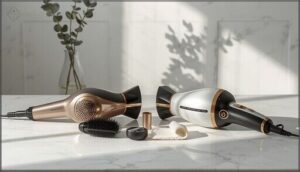
Taking care of your dryer the right way keeps it working better and lasting longer—but ionic and ceramic models need slightly different attention. The coatings and components that make each technology work also affect how you should clean and store them.
Here’s what you need to know to protect your investment and get the most out of whichever dryer you choose.
Cleaning Ionic Dryers
Your ionic hair dryer demands a gentle touch—always unplug it before diving in. Use a soft brush on that air intake grill monthly; blocked filters choke airflow and torch dryer longevity.
For stubborn buildup, dab mild soapy water on a cotton swab, rinse with a fresh swab, then let it air-dry completely for 24 hours. This simple filter maintenance protects your ionic components and keeps performance sharp.
Regular maintenance also involves understanding the benefits of negative ion technology to enhance your hair dryer’s performance.
Caring for Ceramic Dryers
Ceramic hair dryers require a unique care approach. After unplugging, gently wipe the ceramic coating with a soft, slightly damp cloth, avoiding abrasive scrubbers that can scratch the surface. Professionals recommend monthly filter cleaning to maintain even heat distribution.
Beyond the basics, ceramic maintenance focuses on these key areas:
- Clean ceramic surfaces with cotton swabs dipped in mild detergent or rubbing alcohol for product buildup
- Avoid water submersion completely—only lightly dampened cloths touch ceramic components
- Dry surfaces thoroughly before plugging in to prevent short circuits
- Store with power cord care by loosely coiling instead of wrapping tight around the handle
- Check attachments regularly for cracks that could obstruct vents and overheat your ceramic heating system
Skip the highest heat setting constantly; alternating between medium and high preserves your ceramic elements longer. Smart dryer storage means a cool, dry spot away from humidity—let it cool completely before tucking it away. With proper ceramic vs ionic technology care habits, your ceramic hair dryer benefits from years of reliable performance instead of early burnout.
Ensuring Long-Term Performance
Consistent upkeep habits separate dryers that last a decade from those burning out in eighteen months. Regular maintenance and understanding of hair dryer types can greatly impact their longevity.
Don’t let dust choke your motor—filter cleaning every two weeks prevents overheating and extends motor longevity. Heat control matters too; constantly maxing out temperature settings accelerates wear on both ionic hair dryers and ceramic hair dryers.
Performance optimization starts with smart habits: cool-shot finishes, proper storage, and respecting your dryer’s limits guarantee hair dryer technology works harder, longer.
Expert Recommendations and Final Tips
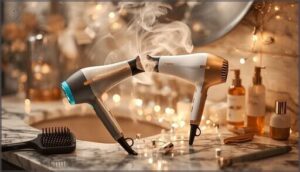
You’ve got the tech breakdown, the pros and cons, and how each dryer matches your hair type.
Now let’s talk about making the smart buy—one that fits your wallet, your lifestyle, and actually delivers salon-quality results at home.
Here’s what you need to lock in before you swipe that card.
Choosing Based on Lifestyle and Budget
Your daily usage patterns and hair goals should drive your budget analysis. If you blow-dry every morning, spending $100–$150 on an ionic hair dryer delivers real cost effectiveness through time savings and frizz control.
But if you dry once a week, a $40 ceramic hair dryer often covers your needs without wasting cash. Match lifestyle priorities to your hair dryer buying guide decisions for smarter hair care and styling investments.
Trusted Brands and Models
When you’re ready to invest in proven hair dryer technologies, trusted names deliver consistent performance without gambling your cash. Here’s your brand comparison shortlist based on model reviews and real testing:
- Dyson Supersonic – premium ionic technology with temperature control every second
- Shark HyperAIR – budget-friendly ionic hair dryers that rival pricier models
- Bio Ionic GrapheneMX – professional ceramic components with a 10-year warranty
- BaBylissPRO Nano Titanium – combines ceramic and tourmaline for adaptable styling
- Conair InfinitiPro – solid midrange choice for straightforward dryer maintenance
Pick brands that match your hair dryer comparison priorities and styling habits.
Maximizing Results With Each Dryer Type
Getting the most from your hair dryer technology means pairing the right tool with smart styling tips. Here’s how to level up your user experience with each heat technology:
| Technique | Ionic Hair Dryers | Ceramic Hair Dryer |
|---|---|---|
| Dryer Settings | Medium heat, high airflow for thick hair texture | Low-to-medium heat, balanced speed for fine strands |
| Distance | 6–8 inches to balance ion delivery and protection | Close enough for even warmth, far enough to avoid hot spots |
| Product Integration | Heat protectant plus anti-frizz serum before drying | Volumizing mousse at roots, lightweight serum on ends |
| Finish Move | Cool shot seals cuticle and locks shine | Alternating warm-cool passes build smoothness without damage |
Adjust your approach based on whether you need frizz control or gentle consistency—that’s the real power move.
Frequently Asked Questions (FAQs)
Can you combine ionic and ceramic in one dryer?
Yes—hybrid models pack both ionic and ceramic tech into one tool. You’ll find dual-technology dryers that blend even heat distribution with frizz-fighting ions, delivering smoother results across various hair types.
Do ionic dryers work on color-treated hair?
Ionic hair dryers can help color-treated hair by cutting drying time and heat exposure.
They smooth frizz while locking in hair moisture, but always use lower heat settings to boost color protection and long-term color retention.
How long do ceramic dryers typically last?
Most ceramic hair dryers survive three to five years with regular use—paradoxically, premium models often outlast budget picks by years.
Proper dryer maintenance, moderate heat settings, and regular vent cleaning combat component wear and extend ceramic longevity beyond user expectations.
Are tourmaline dryers better than ionic or ceramic?
Tourmaline technology promises stronger ionic output and infrared heat, but independent tests show mixed results. Performance depends heavily on airflow and heat settings rather than tourmaline alone, so evaluate the complete dryer package.
Do ionic dryers damage hair with overuse?
Don’t let the hype scare you—ionic hair dryers won’t wreck your hair. Heat damage risks stem from high temperatures, not ionic emissions themselves.
Use lower settings and proper distance to protect your hair cuticle while enjoying frizz control benefits.
Conclusion
Your next blowout won’t feel like a guessing game once you’ve matched the right tech to your strands. The difference between ionic and ceramic hair dryers comes down to what your hair craves—speed and frizz control or gentle, even heat.
Stop settling for tools that work against you. Pick the dryer that actually delivers, and you’ll transform every wash day from a battle into a two-minute victory lap.
- https://elsevier.blog/sub-points-outlining-organization/
- https://www.ai-literacy.se/research-prompts.html
- https://www.sciencedirect.com/science/article/pii/S0749208123000268
- https://x.com/godofprompt/status/1990526288063324577
- https://github.com/vinhphunguyen/how-to-write-a-paper/blob/master/how-to-write-paper.out