This site is supported by our readers. We may earn a commission, at no cost to you, if you purchase through links.
You grab what looks like a trimmer from your bathroom drawer, angle it toward your nose, and immediately realize something’s wrong—the blade guard is too wide, the angle is awkward, and you’re one wrong move away from a painful nick inside your nostril.
Using a regular trimmer for nose hair isn’t just ineffective, it’s risky, because these tools are engineered for completely different jobs. A nose trimmer features a compact, cylindrical head with rotating blades enclosed in protective guards, specifically designed to navigate the tight curves of your nostrils and ears without catching delicate skin.
Regular trimmers, built with wider, multi-blade configurations for facial hair and body grooming, prioritize speed and coverage over the precision and safety features you need for sensitive areas. Understanding these distinctions helps you choose the right tool for each grooming task, preventing discomfort while achieving cleaner, more efficient results.
Table Of Contents
- Key Takeaways
- Key Differences Between Nose and Regular Trimmers
- Design and Functionality Comparison
- Safety and Hygiene Considerations
- Performance and Efficiency
- Maintenance Requirements for Each Trimmer
- When to Choose a Nose Trimmer or Regular Trimmer
- Top Nose and Regular Trimmers Compared
- 1. Philips Norelco Nose Trimmer Kit
- 2. Personal Ear And Nose Trimmer
- 3. Panasonic Ear Nose Trimmer
- 4. Philips Norelco Multigroom Trimmer Kit
- 5. Electric Nose Ear Trimmer Tool
- 6. Conair Man Nose Trimmer Tool
- 7. Panasonic Nose And Ear Trimmer
- 8. Professional Ear Nose Trimmer Clipper
- 9. Virtually Indestructible Trimmer Tool
- Frequently Asked Questions (FAQs)
- Conclusion
Key Takeaways
- Nose trimmers feature compact, cylindrical heads with enclosed rotating blades designed specifically for tight nostril curves, while regular trimmers use wider, multi-blade configurations built for speed and facial coverage—using the wrong tool risks painful nicks and ineffective results.
- The protective design differences matter for safety: nose trimmers include rounded tips, skin barriers, and 360-degree guards that prevent blade-to-skin contact, whereas regular trimmers lack these safeguards and prioritize cutting efficiency over delicate tissue protection.
- Maintenance demands vary significantly—nose trimmers require daily sanitizing after each use due to exposure to mucous membranes and need blade replacements every 12-24 months, while regular trimmers follow weekly cleaning schedules with longer blade life but higher consumable costs.
- You’ll get better grooming results by matching each tool to its intended purpose: nose trimmers excel at precise, pull-free trimming in confined nasal and ear spaces, while regular trimmers deliver the power and coverage needed for beards, sideburns, and broader facial hair styling.
Key Differences Between Nose and Regular Trimmers
You can’t swap a nose trimmer for a regular trimmer and expect the same results—they’re built for completely different jobs. The tools vary in blade design, safety mechanics, precision level, and how much skin they’re meant to cover.
Here’s what sets them apart and why choosing the right one matters for your grooming routine.
Purpose and Intended Use
Your grooming needs dictate which trimmer types you’ll reach for. A nose trimmer addresses unwanted nose hair trimming inside your nostrils with guards designed for delicate mucosa, while regular trimmers handle broader facial hair removal like beards and sideburns.
Nose care demands specialized tools for personal hygiene in tight spaces, whereas an ear and nose hair trimmer won’t shape your jawline effectively. Regular cleaning and proper storage of your nose trimmers for seniors helps prevent irritation and ensures they stay sharp for years of comfortable grooming.
Effective auditing tools, such as those using scientific study methods, are essential for evaluating the efficacy of various grooming tools.
Blade Design and Cutting Mechanism
Blade materials and cutting action separate these tools completely. Nose trimmers use single-pass, confined rotating blade assemblies with rounded guards and stainless steel blades that minimize skin contact through 360-degree motion.
Nose trimmers rely on confined, rotating blade assemblies with rounded guards to protect skin, unlike the exposed cutting mechanisms of regular trimmers
Regular trimmers deploy wider, multi-blade setups—often dual edge trimmers or rotary slide trimmers—with vertically aligned cutters for faster beard coverage. For precision grooming in hard-to-reach areas, high-quality nose trimmers for men feature protective guards and sharp blades designed to safely navigate delicate nasal passages.
Edge sharpness and trimmer efficiency depend on corrosion-resistant coatings, but nose models prioritize safety features over raw cutting speed. Balancing these factors is crucial when selecting nose trimmers for sensitive skin, where protective guards and hypoallergenic materials matter as much as blade performance.
Safety Features and Skin Protection
Protection matters most when you’re working near delicate tissue. Nose trimmers feature rounded tips, skin cushion barriers, and guard design that prevents direct blade contact—some even offer SkinSafe technology with auto shutoff if binding occurs. Stainless steel blades resist corrosion, while waterproof construction simplifies trimmer maintenance under running water. If you have sensitive skin, consider switching to hypoallergenic razor blades that minimize nickel exposure and irritation during routine grooming.
Regular trimmers lack these safeguards, prioritizing speed over enclosed protection.
Area of Coverage and Precision
Beyond protection, you’ll notice stark contrasts in what each tool addresses. Nose hair trimmers zero in on tight nostril cavities with compact heads under 6 mm, delivering precision cutting in curved passages. Regular trimmer heads span 20–40 mm for facial coverage, prioritizing speed over finesse. Here’s what sets them apart:
- Nose trimmer heads are cylindrical, accessing confined spaces with trimming accuracy
- Ear and nose hair trimmer designs limit depth to protect delicate tissue
- Regular grooming tools use elongated heads for broader beard strokes
- Coverage area differences dictate which tool fits your routine
Design and Functionality Comparison
You can’t judge a trimmer by its motor alone—design shapes how well it actually works in your hand. Nose trimmers and regular trimmers are built with completely different jobs in mind, from the shape of their heads to the accessories they come with.
Let’s break down how their physical design and functionality stack up against each other. Understanding the difference between rotary and foil shavers helps you decide which cutting mechanism works better for your skin type and facial contours.
Head Shape and Size

Think of the trimmer head as your precision tool’s fingerprint—size and shape dictate everything. Nose trimmer heads stay compact and cylindrical, hugging nostril contours without hogging facial coverage. Regular trimmer heads spread wider, slicing across cheeks and necklines fast. Check nose hair trimmer reviews and you’ll see centralized cutting openings trump broader guards for targeted skin protection every time.
| Feature | Nose Hair Trimmers | Regular Trimmers |
|---|---|---|
| Head Size | Small, cylindrical design | Larger, broader coverage |
| Shape Focus | Fits nostril contours precisely | Covers flat facial surfaces |
| Cutting Openings | Centralized, perpendicular extraction | Wide guards for drag reduction |
| Coverage Area | Minimal facial contact | Extensive cheek and neckline reach |
| Precision Target | Ear and nose hair trimmer accuracy | Beard and sideburn efficiency |
Motor Power and Speed

You’ll find motor power separates cautious from aggressive trimming. Nose trimmers clock 2 to 6 watts with fixed rotary speed, protecting delicate tissue from friction burns, while electric trimmers deliver gentle cutting speed. Regular battery-operated models push 6 to 20 watts, offering multiple speed settings for thicker beards. Motor efficiency and trimmer torque determine whether your rotating blade pulls hair or slices cleanly—power consumption reflects that precision trade-off.
| Specification | Nose Trimmers | Regular Trimmers |
|---|---|---|
| Motor Power | 2-6 watts equivalent | 6-20 watts equivalent |
| Speed Settings | Fixed or minimal adjustment | Multiple adjustable speeds |
| Rotary Speed | Lower RPM for safety | Higher RPM for efficiency |
| Motor Type | Compact brushed DC motors | Sturdy brushless or brushed motors |
Ergonomic Handling and Grip

You’ll grip a nose trimmer differently than a bulky regular trimmer, and that handle contour makes all the difference. Nose trimmers feature balanced weight distribution for one-handed precision work, while non-slip coating keeps control during wet grooming sessions. The ergonomic design places buttons where your index finger naturally rests, and grip texture prevents slipping during extended personal grooming routines—essential for confident hair trimming.
| Feature | Nose Trimmer | Regular Trimmer |
|---|---|---|
| Weight Distribution | Concentrated near cutting head for precision control | Heavier, distributed across larger body for stability |
| Handle Contour | Slim, pencil-like for detailed nasal work | Wider grip for palm-based handling |
| Grip Texture | Fine ridges for fingertip control | Broader grooves for full-hand grasp |
| Button Placement | Index-finger accessible near tip | Thumb-operated on body or side panel |
| Coating Type | Light non-slip coating for dry/wet use | Rubberized grip pads for extended sessions |
Attachments and Accessories

Regular trimmers pack a full arsenal—multiple precision combs for beard lengths, detailing guards, and sometimes even full-body grooming attachments. Nose trimmers keep it simple with protective caps, compact cleaning brushes, and travel cases designed for portability. You’ll find stainless steel blades on both, but ear and nose hair trimmer accessories focus on maintenance: storage pouches protect delicate rotary heads, while regular trimming tools include length-adjustment combs for adaptable grooming.
| Feature | Nose Trimmer Accessories | Regular Trimmer Accessories |
|---|---|---|
| Primary Attachments | Protective caps, cleaning brushes, travel cases | Precision combs, length guards, detailing attachments |
| Storage Solutions | Compact storage pouches for portability | Larger cases with compartments for multiple guards |
| Maintenance Tools | Small cleaning brushes for sealed heads | Blade oil, multiple brushes, guard cleaners |
Safety and Hygiene Considerations

When you’re trimming hair near your nose or face, safety isn’t negotiable. The design differences between nose trimmers and regular trimmers directly impact how well they protect your skin, how easy they’re to keep clean, and whether they’ll cause irritation in sensitive areas.
Let’s break down what separates a safe trimming experience from a painful one.
Protective Features to Prevent Nicks
You won’t find the same nick prevention in a beard trimmer that you get with a dedicated nose hair trimmer. Specialized protective features set nose trimmers apart, keeping your skin safe while you tackle tight spaces.
- Enclosed blade systems with rotary blades behind cylindrical guards prevent direct skin contact, unlike exposed regular trimmer blades
- Rounded tips made from hypoallergenic stainless steel blades glide smoothly along nasal contours without scratching delicate tissue
- Narrow slot openings in waterproof guard systems admit hair shafts while blocking soft skin from entering the cutting zone
When choosing a trimmer, consider the benefits of nose hair trimmers for safe and effective grooming.
Cleaning and Maintenance Requirements
You’ll master nose hair trimmers with quick rinses under warm water after each trimming session, while regular trimmers demand thorough blade sharpening and guard removal.
Your trimmer maintenance guide should include weekly sanitizing methods using 70% isopropyl alcohol, proper trimmer storage in dry cases, and scheduled cleaning solutions.
These grooming tips protect your personal hygiene and extend blade life, keeping your trimming routine efficient and safe.
Hygiene in Sensitive Areas
Sanitizing methods separate grooming amateurs from hygiene champions when you’re working with nose trimmers near delicate mucous membranes. Your bacterial control strategy starts with dedicated disinfectant wipes between each nose hair trimming session, protecting skin from contamination that regular trimmers rarely face.
Smart trimmer maintenance means never sharing devices, storing your nose trimmer in sealed cases, and replacing sealed heads every six months for premium personal hygiene and skin protection.
- Never insert trimmers into broken or irritated nasal tissue – you’ll risk infection that spreads fast
- Dry your device completely before storage – moisture breeds mold in confined spaces
- Use antimicrobial coatings approved for intimate grooming – cheap materials harbor dangerous bacteria
- Schedule annual checkups for your grooming routine – professional nose hair removal advice prevents costly mistakes
Skin Irritation Risks
Beyond contamination lies another threat: skin sensitivity that turns routine grooming into a painful ordeal. Nose trimmers with protective shields minimize friction against delicate nasal membranes, while regular trimmers with exposed blades increase irritation risks on facial skin.
Dull blades, nickel components, and aggressive passes trigger allergic reactions in sensitive users, making hypoallergenic materials and proper technique your best defense against redness and contact dermatitis.
Performance and Efficiency
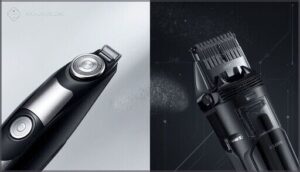
Performance differences between nose trimmers and regular trimmers go beyond just where you use them. Each tool is built to handle specific grooming tasks with varying levels of speed, precision, and power.
Here’s what you need to know about how these trimmers stack up in real-world use.
Trimming Precision for Nose Vs. Beard
Precision blades separate nose hair management from beard styling tips—your nose trimmer uses sub-millimeter adjustments per pass, while beard trimmers offer 0.5 mm to 12 mm settings for broader coverage. This difference defines your grooming essentials and hair trimming techniques.
- Nose hair trimmers employ micro-focus blades with circular motion to protect delicate nasal passages, whereas beard trimmers use sweeping strokes across larger facial contours
- Trimming precision for nose work targets discrete nostril edges with confined angles, while beard styling requires uniform length distribution across jawline and cheeks
- Your nose trimmer prioritizes safety margins near mucus membranes, but beard trimmers tolerate more aggressive blade action for efficient facial hair removal
Speed and Convenience
You’ll notice electric trimmers with rotary blades cut faster than manual options, thanks to automatic rotating heads that tackle nose hair from every angle. Battery-operated models with quick charging get you groomed in seconds, while ergonomic design means easy handling even in tight spaces.
Waterproof electric trimmers let you clean up in the shower, and smart sensors adjust cutting speed automatically—no fuss, no delays.
Versatility for Different Hair Types
Nose trimmers handle coarse nasal hair with small, protective cutting heads but won’t tackle beard textures or facial hair styling.
Regular trimmers deliver versatility—multiple guard attachments let you groom mustaches, necklines, and sideburns across varied hair types, while nose trimmers stick to close, short trims in curved areas.
For full grooming preferences beyond nose hair management and ear hair trimmer needs, regular trimmers win.
Battery Life and Power Options
Battery operated nose trimmers run 60 to 90 minutes on AA or rechargeable lithium-ion power, while electric trimmer models for beards deliver 2 to 6 hours per charge—critical for mens grooming tools with heavy attachment loads.
Battery capacity and power efficiency matter when you’re choosing waterproof models with USB-C charging speed. Runtime comparison reveals energy savings depend on motor load and battery life design.
Maintenance Requirements for Each Trimmer
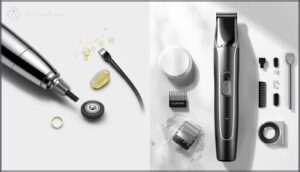
Keeping your trimmer in top shape isn’t one-size-fits-all—nose trimmers and regular trimmers demand different care routines.
You’ll need to know what each type requires so you’re not wasting time or money on the wrong approach. Here’s what separates their maintenance needs.
Cleaning Frequency and Methods
Keeping your tools spotless isn’t optional—it’s part of owning your grooming game. Nose trimmers demand daily sanitizing after every use to banish hair and oils, while regular trimmers need a quick rinse post-session and a deeper weekly clean.
Here’s your hygiene practices playbook:
- Rinse detachable heads under warm water to flush debris
- Brush embedded hair from blades with a soft tool
- Wipe grips with a damp cloth, avoiding electrical ports
- Apply mild cleaning solutions to sanitize blades when necessary
- Dry completely before reassembly to block rust and mold
High-humidity environments or shared-use scenarios call for more frequent trimmer maintenance. Store your nose trimmer with its protective cap in a dry, ventilated spot—smart storage methods preserve performance and keep contamination at bay. Your grooming arsenal stays sharp when you treat cleaning like the non-negotiable ritual it is.
Blade Replacement and Longevity
Sharp blades don’t last forever—you’ll replace your nose trimmer blades every 12 to 24 months, faster than regular trimmer blades due to their finer rotating blade geometry. Stainless steel quality drives corrosion resistance and edge retention, so daily cleaning extends blade durability.
Heavy users face steeper replacement costs as hair type and grooming frequency accelerate wear. Check your nose hair trimmer’s blade material specs—ceramic-coated steel outlasts basic options.
Storage and Portability
Compact storage separates winners from clunky losers—your nose trimmer slips into a travel case or pocket with zero hassle, while regular trimmers hog drawer space.
Lightweight materials and detachable parts make battery-operated and manual trimmers road-ready, and waterproof designs let you rinse and pack without waiting.
Portable grooming means freedom, so choose compact storage that moves with you.
Maintenance Costs
You’ll spend less keeping your nose trimmer sharp than feeding a regular trimmer’s appetite for parts—replacement costs hit $5 to $20 per blade set, and frequency depends on your grooming habits.
- Blade expenses for nose trimmers stay lower due to smaller, simpler designs
- Cleaning supplies like brushes and solution run under $5 annually
- Battery replacement for cordless models costs $15 to $40 when needed
- Warranty coverage shields you from unexpected maintenance fees on quality units
- Regular trimmer consumables demand replacement every 6–12 months with heavier use
Smart maintenance protects your investment and keeps personal grooming tips simple.
When to Choose a Nose Trimmer or Regular Trimmer
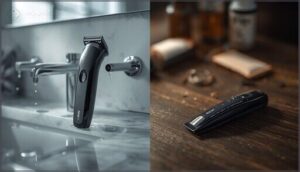
Choosing the right trimmer isn’t about guessing—it’s about matching the tool to your actual needs. Your grooming habits, lifestyle, and where you use the trimmer all play a role in making the smart call.
Here’s what you need to keep in mind when deciding between a nose trimmer and a regular trimmer.
Suitability for Different Grooming Needs
You need precision when tackling nasal hair, and that’s where a nose trimmer earns its place in your grooming arsenal.
These specialized tools use small, enclosed heads designed to minimize skin contact in delicate nasal passages, while regular trimmers deploy larger cutting heads built for facial hair like beards and mustaches.
For sensitive areas, nose hair trimmers deliver targeted performance without the risk regular trimmers carry.
User Preferences and Lifestyle
Your lifestyle dictates which trimmer fits your mens grooming routine best. Nose trimmers win on travel preferences with compact designs that slip into any pocket, while regular trimmers demand space but deliver versatility.
Consider these personal grooming factors:
- Noise levels matter if you’re trimming before dawn or in shared spaces
- Ergonomic grips reduce hand fatigue during extended sessions
- User satisfaction peaks when your tool matches your grooming tips and nose hair trimming frequency
Grooming Frequency and Routine
Your hair growth patterns determine how often you’ll reach for each tool. Nose trimmers handle quick 2-minute sessions every 1–2 weeks, while facial hair maintenance demands 10-minute routines 2–3 times weekly.
Adjust trimming schedules based on your rate of growth—coarse beard hair needs tighter frequency than fine nasal strands. Track your tailored maintenance rhythm over thirty days to master your mens grooming routine without over-trimming.
Travel and On-the-Go Use
Portable trimmers shine when you’re on the move. Compact designs slip into dopp kits, while nose trimmer units occupy minimal luggage space compared to bulky beard shapers.
Look for these travel-ready features:
- Battery operated models offering 30–90 minutes per charge keep you groomed without hunting for outlets
- Waterproof ratings enable quick sink cleanup in hotel bathrooms
- Protective travel cases shield blades from damage during transit
Choose battery life and water resistance that match your trip length.
Top Nose and Regular Trimmers Compared
You’ve got the differences down, now let’s talk about what’s actually worth your money. The trimmers below cover both nose-specific tools and adaptable multi-groomers, each bringing something different to the table.
Here’s how the top contenders stack up when you compare features, performance, and real-world use.
1. Philips Norelco Nose Trimmer Kit
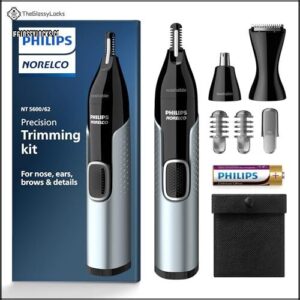
You won’t find many grooming tools that deliver precision and versatility like the Philips Norelco Nose Trimmer Kit. This nose trimmer earns high user reviews for its dual-sided trimmer blades, which efficiently tackle nose hair and ear hair without irritation.
The protective guard system shields your skin, while the washable design simplifies trimmer maintenance. Weighing just 100 grams and powered by a single AA battery, it’s a reliable grooming tool for perfecting sideburns or managing unwanted facial hair.
Philips Norelco proves you can master nose hair trimmers without compromise.
| Best For | Anyone looking for a compact, affordable grooming tool to handle nose hair, ear hair, and quick facial touch-ups without the bulk of a full trimmer kit. |
|---|---|
| Power Source | Battery (AA) |
| Washable | Fully Washable |
| Trimming Areas | Nose, Ear, Eyebrow |
| Blade Type | Dual-sided Steel |
| Weight | 100 Grams |
| Portability | Compact |
| Additional Features |
|
- Protective guard system keeps sensitive skin safe while the dual-sided blades work efficiently
- Fully washable design makes cleanup quick and hassle-free
- Lightweight at 100 grams and battery-powered, so it’s easy to handle and great for travel
- Won’t trim super close to the skin, so it’s not ideal for eliminating fine peach fuzz
- Runs on a single AA battery instead of being rechargeable, which means you’ll need to keep batteries on hand
- Some users with very fine hair reported it didn’t work as well for them
2. Personal Ear And Nose Trimmer
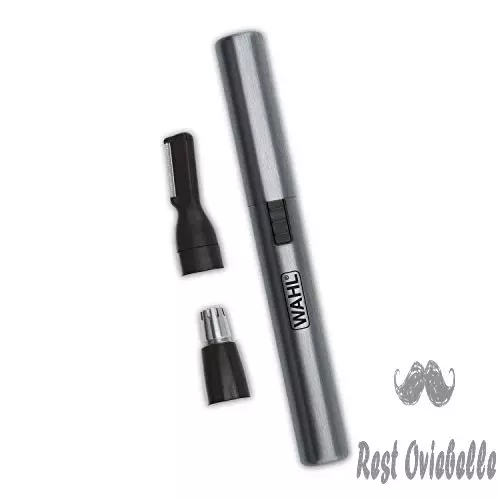
You demand control over every detail, and the Personal Ear And Nose Trimmer delivers that precision. This battery-powered tool features interchangeable heads for nose care, ear hair, eyebrows, and necklines, making it essential among grooming essentials.
Weighing just 1.8 ounces, it fits your travel kit without sacrifice. The rinseable design streamlines nose hair trimming and maintenance, while trimmer designs with rounded tips protect sensitive skin.
Mixed reviews mention durability concerns, but for quick touch-ups and personal grooming on the go, this nose hair trimmer covers your basic trimming tips needs.
| Best For | People who want a compact, affordable trimmer for quick touch-ups on nose hair, ear hair, eyebrows, and necklines while traveling or at home. |
|---|---|
| Power Source | Battery (AAA) |
| Washable | Rinseable Heads |
| Trimming Areas | Nose, Ear, Eyebrow |
| Blade Type | Interchangeable Heads |
| Weight | 1.8 Ounces |
| Portability | Travel-sized |
| Additional Features |
|
- Lightweight at 1.8 ounces and travel-friendly, so you can toss it in your bag without thinking twice
- Interchangeable heads let you tackle nose hair, ears, eyebrows, and necklines with one device
- Rinseable heads make cleanup easy and keep things hygienic between uses
- Durability is questionable—some users report it breaking or losing effectiveness within weeks
- Build quality feels cheap and may not hold up to frequent or heavy use
- Performance can be inconsistent, especially for tougher jobs like thicker nose hair
3. Panasonic Ear Nose Trimmer
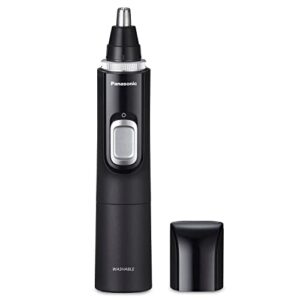
You want a tool that doesn’t mess around with dual-edge blades and a high-velocity motor. The Panasonic Ear Nose Trimmer, priced at $39.99, combines nose precision with ear safety through its sophisticated Micro-Vacuum System that captures clippings before they scatter.
This trimmer design accommodates wet/dry use, letting you tackle nose hair trimmer maintenance in the shower or at the sink. Battery life runs on two AAA batteries, powering effective trimming techniques for ear and nose hair trimmer tasks without pulling or tugging sensitive follicles.
| Best For | People who want a reliable dual-purpose trimmer for nose and ear hair that works in wet or dry conditions and includes a vacuum system to minimize mess. |
|---|---|
| Power Source | Battery (2 AAA) |
| Washable | Wet/Dry |
| Trimming Areas | Nose, Ear, Eyebrow |
| Blade Type | Dual-edge |
| Weight | 2.24 Ounces |
| Portability | Portable |
| Additional Features |
|
- Dual-edge blades with a high-velocity motor provide smooth, efficient trimming without pulling or tugging on sensitive hair
- Advanced Micro-Vacuum System captures clippings during use, keeping your sink and bathroom cleaner
- Wet/dry capability means you can use it in the shower or at the sink, and it’s easy to rinse clean after each use
- Some users reported the trimmer stopped working after just a few months of use, raising durability concerns
- Battery connection issues have been noted, which can interrupt performance unexpectedly
- At $39.99, it’s a bit pricey considering it doesn’t include a storage case or extra accessories
4. Philips Norelco Multigroom Trimmer Kit
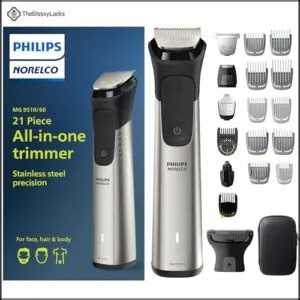
You break free from cluttered grooming routines when you grab the Philips Norelco Multigroom 9000 Series, priced around $60. This nose trimmer powerhouse delivers 21 trimmer accessories, covering everything from precision beard work to body grooming with blade durability that stays sharp through heavy use.
Smart BeardSense Technology adjusts motor power when you tackle thick patches, while stainless steel blades handle trimmer versatility across your entire grooming kit.
Battery life extends up to six hours per charge, and user experience feedback consistently praises its all-in-one design with grooming tips included for mastering every trimming attachment.
| Best For | Men who want a single trimmer that handles everything from beard shaping to body grooming without buying separate tools. |
|---|---|
| Power Source | Battery (USB-A) |
| Washable | Not Specified |
| Trimming Areas | Face, Head, Body |
| Blade Type | Self-sharpening Steel |
| Weight | 1.93 Pounds |
| Portability | Premium Storage Case |
| Additional Features |
|
- 21 attachments cover every grooming need, from precise 0.2mm beard adjustments to nose/ear trimming
- Smart BeardSense technology automatically boosts power through thick hair, and blades stay sharp without replacement
- Six-hour battery life means you can go weeks between charges, plus it comes with a premium case for travel
- Beard guards feel too narrow for some users and don’t offer enough length variety for longer styles
- Swapping between 21 attachments gets tedious when you’re just trying to do a quick trim
- Blade removal can be tricky—some users report attachments sticking or being difficult to detach
5. Electric Nose Ear Trimmer Tool
You take control of nose care and ear hair with the Electric Nose Ear Trimmer Tool, a compact device built on low-voltage DC motors and micro blades that deliver precise cuts without yanking or pulling.
Electric trimmers featuring waterproof designs let you rinse the unit under running water, making cleanup easy after each session. Most electric nose trimmers use AA or rechargeable batteries, offering travel-ready portability, while protective guards improve trimmer safety by minimizing nicks in sensitive areas—essential grooming tips for mastering your ear and nose hair trimmer routine.
| Best For | Anyone who wants a reliable, low-maintenance trimmer for nose and ear hair without the hassle of dealing with painful pulling or constant battery replacements. |
|---|---|
| Power Source | Battery (USB-C) |
| Washable | Wet/Dry |
| Trimming Areas | Nose, Ear |
| Blade Type | 360° Rotary Dual-blade |
| Weight | 0.28 Kilograms |
| Portability | Portable |
| Additional Features |
|
- 7,000 RPM motor with dual rotating blades cuts hair quickly and cleanly without tugging or irritation
- Wet/dry functionality means you can use it in the shower and rinse it clean under the tap when you’re done
- USB-C rechargeable battery gives you up to 45 minutes of use and eliminates the need to buy replacement batteries
- Higher price point compared to basic trimmers you’ll find at the drugstore
- The whole unit can’t be fully submerged in water, so you need to be careful when cleaning
- May struggle with very thick or coarse hair based on some user feedback
6. Conair Man Nose Trimmer Tool
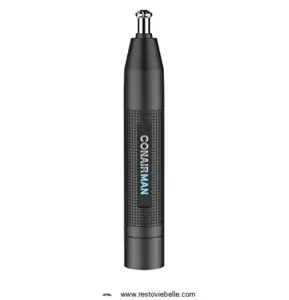
You command precise nose hair trimming with the ConairMan PG1000L, a lithium-powered grooming tool that features a 360-degree beveled blade system and diamond-shaped 3-bevel design for close cuts without pulling.
This nose trimmer delivers user experience through its compact 3.88-ounce build, washable attachment for trimmer maintenance, and included storage pouch for travel.
Grooming tool reviews note its cordless convenience and effectiveness on nose hair, ear hair, and eyebrows, though some users report occasional noise and a plastic feel—essential grooming tips when evaluating nose hair trimmers for your trimmer design preferences.
| Best For | Men who want a lightweight, portable trimmer specifically for nose, ear, and eyebrow hair without needing a full multi-grooming kit. |
|---|---|
| Power Source | Battery (AA Lithium) |
| Washable | Washable Attachment |
| Trimming Areas | Nose, Ear, Eyebrow |
| Blade Type | 360° Beveled Blade |
| Weight | 3.88 Ounces |
| Portability | Storage Pouch |
| Additional Features |
|
- 360-degree beveled blade system cuts hair from any angle without painful tugging
- Cordless and lithium-powered design makes it easy to use anywhere, plus the washable head keeps it hygienic
- Compact size with included storage pouch fits easily in a travel bag or gym locker
- Build quality feels somewhat plasticky and less durable than expected for the price point
- Can be noisy during operation and may produce a slight burning hair smell
- Battery compartment door seems fragile and prone to breaking with regular use
7. Panasonic Nose And Ear Trimmer
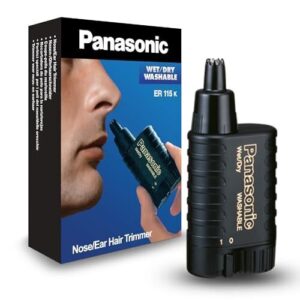
The Panasonic Nose And Ear Trimmer gives you precision nose care with its rotary motion cutting head and washable design, running on a single AA battery for up to 90 minutes of nose hair trimming. This nose trimmer features a protected blade system that prioritizes trimmer safety, reducing skin contact while you tackle ear hair and nose hair with controlled, pull-free cuts.
Grooming tips from users highlight its compact 80-gram build and portability, though some note the tip’s size may limit ear hair trimmer effectiveness—making trimmer design essential when choosing among nose hair trimmers.
| Best For | People who want a simple, battery-powered grooming tool specifically for nose and ear hair removal without needing extra features or recharging hassles. |
|---|---|
| Power Source | Battery (AA) |
| Washable | Washable Head |
| Trimming Areas | Nose, Ear |
| Blade Type | Rotary Motion |
| Weight | 80 Grams |
| Portability | Compact |
| Additional Features |
|
- Rotary cutting system with a protected blade design minimizes pulling and reduces direct skin contact for safer trimming
- Washable head makes cleanup quick and keeps the trimmer hygienic after each use
- Runs on a single AA battery for up to 90 minutes, so it’s easy to replace and great for travel
- The trimming tip may be too large for some users to effectively reach ear hairs
- Some users report durability concerns and occasional discomfort or stinging during use
- Not actually waterproof despite being washable, so you need to be careful around water
8. Professional Ear Nose Trimmer Clipper
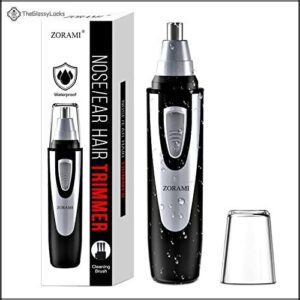
The Professional Ear Nose Trimmer Clipper sharpens your grooming tips arsenal with its narrow, rounded clipper design that keeps trimmer safety front and center during nose hair trimming and ear care sessions.
You’ll appreciate the protective guard that shields the cutting aperture when stored, while non-contact blades handle nose hair and ear hair trimmer duties without snagging delicate skin.
Battery-powered operation stays whisper-quiet, and waterproof construction lets you rinse components after each pass—perfect for nose trimmers targeting ear and eyebrow grooming with minimal nick risk.
| Best For | Anyone looking for a safe, quiet trimmer to handle nose and ear hair without nicks, especially if you want something waterproof you can rinse clean after every use. |
|---|---|
| Power Source | Battery (AA) |
| Washable | IPX7 Waterproof |
| Trimming Areas | Nose, Ear, Eyebrow, Face |
| Blade Type | Dual-edge Spinning |
| Weight | 2.8 Ounces |
| Portability | Compact |
| Additional Features |
|
- Narrow, rounded tip with protective guards minimizes contact with sensitive skin and reduces the risk of cuts or irritation
- Waterproof design makes cleanup simple—just rinse under running water after trimming
- Quiet, battery-powered operation keeps things discreet and avoids the buzz of larger grooming tools
- Battery power gets mixed reviews, with some users wishing for a rechargeable option instead of replacing AA batteries
- A few customers report receiving different brands or units that don’t work as expected
- May struggle with thicker or coarser hair, and requires regular cleaning to stay effective
9. Virtually Indestructible Trimmer Tool
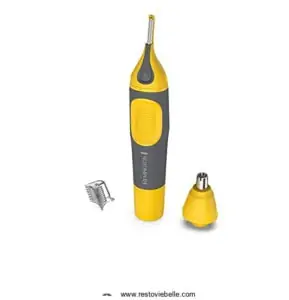
Remington’s NE3871 nose trimmer doubles down on Tool Longevity with its rubberized, non-slip grip and a design that claims Indestructible Design credentials—you won’t baby this yellow powerhouse.
The stainless steel rotating blade system delivers reliable trimming through a dual-sided comfort head that blocks nicks while you tackle nose, ear, and brow maintenance. Waterproof construction aids Device Maintenance via quick rinse-offs, and the washout system keeps blade material free from buildup.
Just note that battery drain runs high and worn tips require full unit replacement, tempering the Trimmer Durability promise.
| Best For | People who need a rugged, waterproof trimmer for nose, ear, and eyebrow grooming that can handle daily use and shower trimming without breaking down. |
|---|---|
| Power Source | Battery (AA) |
| Washable | 100% Waterproof |
| Trimming Areas | Nose, Ear, Eyebrow |
| Blade Type | Dual-sided Trimmer |
| Weight | 2.05 Ounces |
| Portability | Portable |
| Additional Features |
|
- Durable rubberized grip and waterproof design make it tough enough for wet or dry use without worrying about drops or damage
- Dual-sided comfort trimmer head with rotating stainless steel blades prevents nicks and cuts in sensitive areas
- Easy to clean with a washout system that rinses away hair and debris quickly
- Burns through batteries faster than expected, adding to long-term costs
- No replacement tips available—you have to buy a whole new unit when the blades wear out
- Some users report durability issues and irritation during nose trimming despite the “indestructible” claims
Frequently Asked Questions (FAQs)
Can women use nose trimmers safely?
Yes, women can use nose trimmers safely when following basic precautions. Modern devices include protective guards that minimize skin contact, reducing nick risks during personal grooming and gentle trimming for effective nose hair removal.
How often should nose hair be trimmed?
You’ll want to trim every two to six weeks, depending on your hair growth rate. Weekly trimming works if you prefer a consistently neat appearance, though over-trimming can cause irritation.
Do nose trimmers work for eyebrow grooming?
Nose trimmers aren’t ideal for eyebrow shaping since their rounded guards and blade angles target nasal hair, not the precision eyebrow grooming demands.
Dedicated eyebrow trimmers or scissors deliver cleaner, more controlled results.
Are manual nose trimmers better than electric?
Electric nose trimmers offer better trimmer safety with enclosed housings that reduce skin contact, while manual trimmers demand steady hands for blade sharpness control.
Your grooming tips should match your trimming techniques and hair texture needs.
What causes excessive nose hair growth?
Hormonal changes during the aging process trigger nose hair growth, influenced by genetic factors and androgens like testosterone.
Medication effects and nasal irritation also stimulate follicles, making regular nose hair trimming with a nasal trimmer essential for control.
Conclusion
Nearly 65% of grooming injuries happen when people use the wrong tool for the job, which is exactly why understanding the difference between nose trimmer and regular trimmer matters beyond simple preference.
Your nose deserves the compact, rotating blade design built specifically for its contours, while your beard responds best to wider, powerful cutting systems.
Match each tool to its purpose, and you’ll transform grooming from a risky chore into a precise, painless routine that actually produces outcomes.
- https://www.youtube.com/watch?v=4-ykpfOAtbE
- https://www.usa.philips.com/c-p/NT9110_60/norelco-nosetrimmer-3300-nose-ear-eyebrow-trimmer-series-3000
- https://www.reddit.com/r/explainlikeimfive/comments/10v3ccd/eli5_how_do_trimmers_not_cut_skin_when_theyre/
- https://stryv.co/products/nosetrimmer
- https://vanityhero.com/best-nose-hair-trimmer-for-women-safe-subtle-options-that-actually-work/