
This site is supported by our readers. We may earn a commission, at no cost to you, if you purchase through links.

Your skin doesn’t clock out when you do. Between midnight and 4 AM, cellular repair peaks, DNA fixes itself, and collagen production ramps up while you sleep. Miss this window with the wrong evening skincare routine steps, and you’re basically leaving your skin to fend for itself during its most productive hours.
The difference between washing your face and following a strategic nighttime sequence isn’t just cosmetic—it’s the gap between supporting your skin’s natural repair mechanisms and working against them. A targeted routine doesn’t need to be complicated, but the order matters more than most people realize.
Table Of Contents
- Key Takeaways
- Why a Nighttime Skincare Routine Matters
- Step-by-Step Evening Skincare Routine
- Customizing Your Routine for Skin Type
- Top 9 Products for Evening Skincare Steps
- 1. Neocutis Bio Serum Firm Anti-Aging Serum
- 2. Sulwhasoo Gentle Cleansing Oil Makeup Remover
- 3. Elemis Pro-Collagen Cleansing Balm Makeup Remover
- 4. Anua Heartleaf Pore Control Cleansing Oil
- 5. iS Clinical Gentle Cleansing Complex
- 6. Tatcha Rice Wash Cream Cleanser
- 7. La Roche-Posay Gentle Foaming Cleanser
- 8. Kate Somerville ExfoliKate Exfoliating Treatment
- 9. Medicube Zero Pore Exfoliating Toner Pads
- Tips for Building Consistent Night Routines
- Frequently Asked Questions (FAQs)
- Conclusion
Key Takeaways
- Your skin undergoes peak cellular repair between midnight and 4 AM, making a strategic nighttime routine essential for supporting DNA repair, collagen synthesis, and barrier restoration during this critical window.
- Product layering order matters more than complexity—apply treatments from thinnest to thickest texture, waiting 30–60 seconds between layers, and always seal active ingredients with moisturizer to prevent overnight water loss.
- Match your routine to your skin type by adjusting cleansing frequency and product textures: oily skin needs non-comedogenic formulas with salicylic acid, while dry skin requires ceramide-rich moisturizers and minimal exfoliation to avoid barrier damage.
- Consistency beats perfection—a simple 5–10 minute routine you follow nightly delivers better results than elaborate protocols you abandon, especially when you track progress with photos every two weeks under consistent lighting.
Why a Nighttime Skincare Routine Matters
Your skin doesn’t rest when you do—it shifts into repair mode. While you sleep, your body works to undo the damage from pollution, UV exposure, and daily stress.
A targeted evening routine gives your skin exactly what it needs during this critical window, addressing everything from cellular renewal to moisture retention.
Skin’s Reparative Phase During Sleep
While you sleep, your skin shifts into high gear for repair. Nocturnal DNA repair processes peak during the night, clearing UV damage accumulated throughout the day. Keratinocyte proliferation increases, accelerating skin rejuvenation. Collagen synthesis ramps up during sleep, strengthening your skin’s structure. Antioxidant systems work overtime to neutralize free radicals.
While you sleep, your skin shifts into high gear—DNA repairs, collagen builds, and antioxidants neutralize the day’s damage
This nighttime skincare routine window maximizes skin repair, barrier function restoration, and skin hydration—making beauty sleep more than just a phrase. Sleep deprivation can negatively impact skin’s barrier function.
Reduced Environmental Stressors at Night
Beyond repair processes, your skin gets a break from daytime assault. Nighttime removes key environmental stressors that challenge skin health:
- UVB absence halts DNA damage and photoaging stimulus
- Pollution reduction indoors decreases ROS mitigation needs and barrier disruption
- Blue light exposure drops, lowering oxidative stress
Cumulative exposure can lead to visible skin damage. TEWL increase at night signals active skin barrier repair. Your nighttime skincare routine works when environmental stressors finally quiet down.
Benefits for Anti-aging and Skin Health
With environmental damage on pause, your nighttime skincare routine steps become powerful antiaging skincare tools.
Evening retinoids deliver wrinkle reduction—nightly tretinoin cut periorbital lines by 17% in 24 weeks. Peptide serums visibly firm skin and smooth fine lines within weeks. Hyaluronic creams lock in moisture for plumper texture by morning.
Antioxidants fight photoaging effects while niacinamide evens tone, supporting skin rejuvenation and nourishment during repair hours.
Impact on Hydration and Skin Barrier Repair
Nighttime skincare routine steps deliver hydration when you need it most. Your skin loses water overnight—TEWL increases by up to 25%, making humectant benefits and lipid barrier support critical.
Hyaluronic acid serums boost water content by 134% immediately, while ceramide creams repair barrier structure during natural skin repair cycles.
Pair these with occlusives like petrolatum for TEWL reduction, and consider environmental control through bedroom humidity for sustained overnight hydration and morning glow.
Step-by-Step Evening Skincare Routine
Your skin does its best repair work while you sleep, but only if you set the stage properly. A good evening routine doesn’t need to be complicated—it just needs to follow the right order.
Here’s how to layer your products so each one can do its job effectively.
Removing Makeup and SPF Thoroughly

Your skin can’t repair itself if yesterday’s sunscreen and foundation are still sitting on top. Double cleansing—using an oil cleanser first, then a water-based wash—removes makeup and SPF more completely than a single step.
For waterproof makeup or long-wear formulas, oil-based removers or micellar water work best without harsh rubbing that causes skin irritation. Focus on your hairline and jawline, where buildup hides.
Choosing The Right Cleanser for Your Skin

How can you cleanse without stripping your skin? Match your cleanser to your skin type for better results. Oily or acne-prone complexions benefit from gel or foaming formulas with pH-balanced, non-comedogenic ingredients. Dry and sensitive skin needs a gentle cleanser—cream or lotion textures with hydrating ingredients like hyaluronic acid.
Wash twice daily with lukewarm water, using fingertips for 20–30 seconds, then rinse thoroughly.
Exfoliation: How Often and What Type

How often should you exfoliate? Start with once weekly, then increase to 2–3 times per week if your skin tolerates it. Chemical types—AHAs for surface renewal, BHAs for pore-clearing—work deeper than physical exfoliation and integrate well into evening routines.
Over-exfoliation risks include redness and barrier damage, so watch for irritation. These active ingredients remove dead skin cells and improve skin texture without harsh scrubbing.
Applying Targeted Treatments and Serums

After exfoliation dries, you’ll apply your most potent active ingredients—this is when targeted treatments work hardest. Layer serums from thinnest to thickest texture, waiting 30–60 seconds between each to boost absorption and avoid pilling.
- Hydrating serums with hyaluronic acid bind moisture when applied to damp skin
- Anti-aging serums containing retinoids or peptides support overnight cell turnover
- Brightening formulas with niacinamide or vitamin C address hyperpigmentation safely at night
- Limit to 1–2 serums per routine to prevent irritation and maintain barrier health
Moisturizing for Overnight Hydration

Moisturizer locks in everything you’ve applied and prevents overnight dehydration—your skin barrier repairs best when hydration stays sealed. Choose formulas with humectants like glycerin to draw water in, then layer occlusive agents like dimethicone or petrolatum to block evaporation.
Overnight masks deliver intensive barrier repair for dry skin, while lightweight lotions suit oily types. Timing matters: apply within 60 seconds of damp skin for maximum skin hydration during your nighttime skincare routine.
Eye Cream and Optional Face Oils

Eye creams target periorbital concerns like puffiness and fine lines—studies show 12-week use can improve elasticity up to 28% and reduce wrinkle depth considerably. Apply with your ring finger to avoid tugging thin undereye skin.
Face oils seal hydration but check oil comedogenicity: sunflower promotes barrier function without clogging pores, while olive oil may disrupt it in some users.
Customizing Your Routine for Skin Type

Your skin type shapes every product choice you make, from the cleanser you reach for to how often you exfoliate. What works beautifully for someone with oily skin might leave dry skin feeling tight and irritated.
Let’s look at how to adjust your evening routine based on whether your skin is oily, dry, combination, or going through changes.
Oily and Acne-prone Skin Adjustments
When dealing with acne-prone skin, you’ll want to adjust your nighttime routine carefully. Twice-daily cleansing keeps inflammation in check without overdrying, but avoid comedogenic ingredients that can worsen breakouts.
Here’s how to adapt your evening approach:
- Double cleanse at night — start with an oil-based cleanser, then follow with a water-based, non-comedogenic formula
- Limit exfoliation frequency to one to three times weekly to prevent barrier disruption
- Apply retinoid or salicylic acid toner after cleansing, then add lightweight, oil-free moisturizer for barrier support
Dry and Sensitive Skin Considerations
Barrier function is the priority for dry and sensitive skin types. Choose a gentle cleanser with a pH balance near 4.5–6 to avoid skin irritation, then focus on hydration through ceramide-rich moisturizers. Gentle exfoliation once weekly with polyhydroxy acids prevents inflammation, and irritant avoidance—skipping fragrances and alcohol—protects your barrier overnight. Sleep quality aids repair, so keep your routine simple and soothing.
| Evening Step | Product Type | Benefit |
|---|---|---|
| Cleanse | pH-balanced, fragrance-free | Preserves barrier integrity |
| Exfoliate (weekly) | Polyhydroxy acid | Minimizes irritation |
| Moisturize | Ceramide serum + occlusive | Restores lipid barrier |
| Sleep | 7–9 hours nightly | Enhances barrier recovery |
Combination Skin Strategies
Combination skin demands targeted treatments matched to each zone. Apply a lightweight, oil-free moisturizer to your T-zone while using richer emollients on drier cheeks—this dual moisturization approach prevents overhydration where you’re already oily.
About half of adults with combination skin report sensitivity, so skip fragrances and test new products first.
Seasonal adjustments matter too: winter may require more barrier support, while summer calls for gel-based formulas that support T-zone balance without clogging pores.
Adapting to Changing Skin Needs
Your skin’s needs shift as life unfolds. Hormonal shifts during puberty, pregnancy, or menopause reshape oil production and hydration—menopause alone can drain 30% of collagen in five years.
Seasonal adjustments matter: winter’s dry air spikes water loss, while summer pollution accelerates aging.
Watch for these changes and tweak your skincare routine accordingly, adding richer moisturizers or antioxidant serums to match your evolving skin type and concerns.
Top 9 Products for Evening Skincare Steps
Now that you’ve built a routine suited to your skin type, you’ll need effective products to bring each step to life. The right cleanser, serum, or exfoliant can make the difference between a routine that works and one that falls flat.
Here are nine dermatologist-recommended products that cover the essential evening skincare steps.
1. Neocutis Bio Serum Firm Anti-Aging Serum
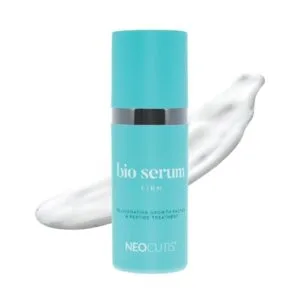
When most serums promise results in weeks, Neocutis Bio Serum Firm delivers visible change in days. This antiaging powerhouse combines peptide technology with human growth factors to target fine lines, firmness, and texture during your nighttime skincare routine.
In clinical trials, 78% of users saw smoother skin within six days, while eight-week data showed 94% improved texture and 77% reduced wrinkles.
You’ll apply this fragrance-free serum after cleansing and before moisturizer—its sodium hyaluronate base drives skin hydration deep while proprietary skincare ingredients support collagen production overnight.
Best For: People with mature or aging skin who want fast-acting results on fine lines, firmness, and texture and are willing to invest in a premium serum with clinically-backed peptide and growth factor technology.
- Clinical results show visible improvements in as little as 6 days, with 78% of users reporting smoother skin and 76% experiencing better hydration almost immediately
- Formulated with the brand’s highest concentration of proprietary peptides and human growth factors that actively support collagen, elastin, and hyaluronic acid production for long-term skin health
- Non-comedogenic and fragrance-free formulation works for all skin types including sensitive and acne-prone skin, making it a versatile addition to most evening routines
- Expensive at $290 for a 30ml bottle, which may not be feasible for everyone’s skincare budget
- The packaging makes it difficult to see how much product is left, so you might run out without warning
- Absorbs very quickly into skin, which some users find means they go through the bottle faster than expected—lasting around two weeks instead of a full month
2. Sulwhasoo Gentle Cleansing Oil Makeup Remover
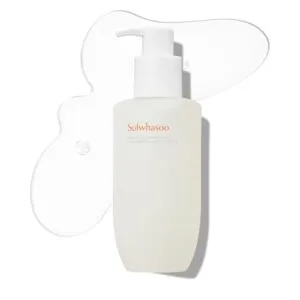
If your routine starts with removing makeup and SPF, you’ll appreciate how thoroughly Sulwhasoo Gentle Cleansing Oil handles even waterproof formulas. This herbal-infused blend—featuring apricot kernel, camellia, and sesame oils—dissolves impurities while supporting skin hydration, making it ideal for double-cleansing.
In two-week trials, 93% of users confirmed complete makeup removal and moisturized skin after use. Consumer reviews highlight its gentle, non-irritating profile and silky finish, though some note the $34 price point.
You’ll massage one to two pumps onto dry skin, then rinse with lukewarm water for a refreshed, comfortable feel.
Best For: Anyone who wears waterproof makeup or SPF daily and wants a gentle first-step cleanser that removes everything without stripping moisture from their skin.
- Effectively dissolves waterproof makeup and sunscreen while leaving skin soft and hydrated, not tight or stripped
- Formulated with traditional Korean botanical oils like camellia and sesame that support your skin barrier during cleansing
- Dermatologically tested and gentle enough for sensitive skin, with 96% of users reporting comfortable use in trials
- At $34 for 6.76 oz, the price is steep compared to other cleansing oils on the market
- Contains fragrance ingredients like limonene and linalool, which might irritate if you’re sensitive to scents
- Some users find the texture too greasy or report mixed feelings about whether it’s worth the cost
3. Elemis Pro-Collagen Cleansing Balm Makeup Remover

For a luxurious approach to removing makeup and SPF, Elemis Pro-Collagen Cleansing Balm transforms from solid to oil to milk during double cleansing. Its mineral oil-free formula blends elderberry, starflower, and almond oils with lavender and chamomile, dissolving waterproof mascara in roughly five seconds.
Two-week trials showed 90% effective makeup removal, 94% clean skin, and 96% softness. You’ll warm a small amount in your hands, massage over dry skin, then rinse.
Market positioning reflects premium pricing, though a fragrance-free “Naked” variant suits sensitive complexions.
Best For: Anyone who wants a spa-like cleansing experience and needs something strong enough to melt away heavy makeup and waterproof mascara without stripping skin dry.
- Melts makeup fast—waterproof mascara breaks down in about five seconds, and the three-phase formula (balm to oil to milk) gets everything off in one go
- Leaves skin soft and hydrated instead of tight or stripped, thanks to plant oils like elderberry and starflower instead of mineral oil
- Backed by solid trial results showing 90% of users felt it removed makeup effectively and 94% said their skin felt clean after two weeks
- The strong lavender and chamomile scent isn’t for everyone—if you’re sensitive to fragrance, you’ll need the unscented Naked version
- Premium pricing puts it well above drugstore cleansing balms, and some people question whether it’s worth the extra cost
- A few users report skin irritation, so it might not work for every skin type despite being marketed for all
4. Anua Heartleaf Pore Control Cleansing Oil
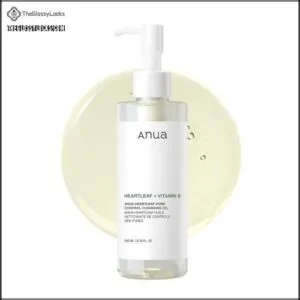
If blackheads and excess oil dominate your nighttime skincare routine concerns, Anua Heartleaf Pore Control Cleansing Oil offers targeted relief for oily and acne-prone complexions. This gentle cleanser dissolves waterproof makeup and sunscreen residue—leaving only 5.8% behind versus 36.8% with foam—while its heartleaf extract calms irritation during double-cleansing.
Four-week trials documented 22.81% less sebum, 18.88% fewer blackheads, and 70.83% reduction in inflammatory acne. Non-comedogenic testing confirms skin suitability across types, and 95% of users report no stinging around eyes, supporting consistent facial cleansing without post-wash tightness.
Best For: People with oily, acne-prone, or sensitive skin who need an effective first-step cleanser that removes heavy makeup and sunscreen without clogging pores or causing irritation.
- Removes waterproof makeup and sunscreen more thoroughly than foam cleansers, leaving minimal residue behind
- Clinical testing showed significant reductions in sebum, blackheads, and acne after four weeks of regular use
- Non-comedogenic and gentle enough for sensitive skin, with 95% of users reporting no eye irritation
- May not control pores effectively for everyone, and some users experience breakouts or peeling
- Strong pump can cause product to splatter during dispensing
- Some skin types may need extra moisturizer and exfoliation to prevent dryness
5. iS Clinical Gentle Cleansing Complex
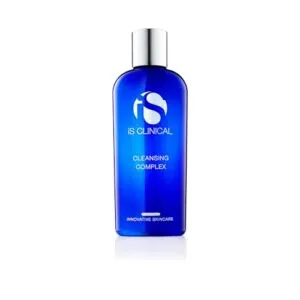
When sensitive or acne-prone skin reacts to most cleansers, iS Clinical Gentle Cleansing Complex delivers deep pore cleansing without irritation. A product formulation review shows only 0.1% irritation in nearly 5,000 users.
Its white willow bark provides natural exfoliation comparable to salicylic acid, while sugarcane extract encourages resurfacing effects similar to 33% glycolic acid.
User satisfaction rates reflect 100% positive feedback for acne improvement and six-year repeat purchases, making this gentle cleanser a cornerstone in nighttime skincare routine steps for essential cleansing across all skin types.
Best For: People with sensitive or acne-prone skin who need a deep-cleaning formula that won’t strip or irritate their face.
- Uses natural willow bark and sugarcane extracts to gently exfoliate without harsh chemicals
- Works for all skin types and doubles as a makeup remover or shaving cleanser
- Backed by clinical testing showing minimal irritation and high customer satisfaction over years of use
- Pricey at $49 for 8.8 ounces compared to drugstore options
- Some users feel the formula is too watery for the cost
- A few reports of packaging problems and potential counterfeits
6. Tatcha Rice Wash Cream Cleanser
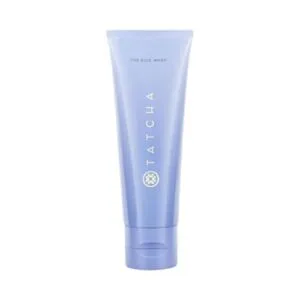
When normal to dry skin struggles with that tight, stripped feeling after cleansing, Tatcha Rice Wash Cream Cleanser delivers a pH-neutral amino acid formula that respects your skin’s natural balance.
This gentle cleanser increased hydration by 41% at six hours in a 21-person bio-instrumentation study, while 96% of users saw clarified skin within one week.
Japanese rice powder provides mild polishing, and hyaluronic acid plumps with moisture—making this a standout choice for nighttime skincare routine steps focused on facial cleansing without compromise in your evening routine.
Best For: People with normal to dry skin who want a hydrating cleanser that won’t leave their face feeling tight or stripped after washing.
- Boosts hydration by 41% six hours after use and leaves 96% of users with visibly clarified skin in just one week
- Contains Japanese rice powder and hyaluronic acid to gently polish and plump skin while maintaining a pH-neutral formula
- Free from sulfates, parabens, mineral oil, and other harsh ingredients that can irritate sensitive skin
- Price point is higher than most drugstore cleansers, which some customers find hard to justify
- May cause itching or irritation for certain skin types despite being labeled non-irritating
- Some users need to follow up with a moisturizer immediately after use to feel fully hydrated
7. La Roche-Posay Gentle Foaming Cleanser
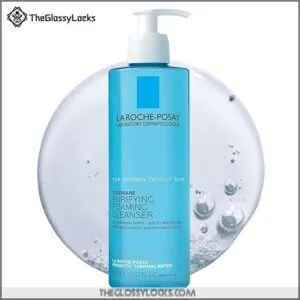
If your skin is often oily or acne-prone, you’ll appreciate La Roche-Posay Toleriane Purifying Foaming Cleanser’s pH-balanced approach to nighttime skincare routine steps. This soap-free formula removes excess oil and makeup without stripping your barrier function, thanks to ceramides and niacinamide that support a healthier skin surface.
The gentle formulation proved effective in cleansing efficacy studies while remaining non-comedogenic—essential for preventing breakouts. Your routine integration becomes simpler when you can trust this dermatologist-tested cleanser twice daily, making skin cleansing and preparation reliably tolerable even for sensitive skin.
Best For: People with oily, combination, or acne-prone sensitive skin who need a gentle evening cleanser that removes excess oil and makeup without disrupting their skin barrier.
- Contains ceramides and niacinamide to actively support and protect your skin barrier while cleansing, which is especially helpful if you use actives like retinoids at night
- Truly non-irritating formula—free of soap, sulfates, fragrance, oil, and parabens—so it won’t add inflammation or clog pores when your skin is already sensitive or reactive
- Works well as part of a double-cleanse routine and is gentle enough for twice-daily use without leaving that tight, stripped feeling
- Struggles with waterproof mascara and heavy makeup, so you’ll likely need an oil-based first cleanse or a second pass to get everything off
- Not ideal if you have dry skin, especially in winter—you may find it doesn’t provide enough moisture and need to layer on extra hydration afterward
- The foaming action, while gentle, might still feel a bit drying for people with compromised or very dehydrated skin barriers
8. Kate Somerville ExfoliKate Exfoliating Treatment
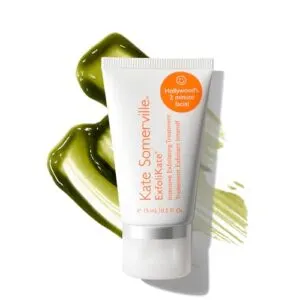
When you need intensive exfoliation, Kate Somerville ExfoliKate combines physical silica particles with lactic acid (AHA) and salicylic acid (BHA) in one night skincare routine step. You’ll also get papaya, pineapple, and pumpkin enzymes that target dead skin cells.
Clinical results showed 100% of participants improved pore size after one use. Apply this treatment 1–2 times weekly for about two minutes on clean, wet skin.
If you have sensitive skin, reduce contact time to under one minute—ExfoliKate ingredients work quickly but can cause tingling initially.
Best For: People with normal to oily skin looking for a powerful weekly treatment that combines multiple exfoliation methods to smooth texture, minimize pores, and brighten dull complexion.
- Clinically proven pore reduction after just one use, with 100% of study participants seeing visible improvement
- Triple-action formula combining physical, chemical, and enzymatic exfoliation saves time by replacing multiple products in your routine
- Works quickly in just 2 minutes, making it easy to fit into a busy evening routine
- High price point for a small 0.5-ounce tube, which some users feel doesn’t justify the cost
- Can cause tingling, redness, or breakouts in sensitive skin types, requiring careful introduction and shorter contact times
- Too intense for daily use—limited to 1-2 times weekly means you’ll still need gentler exfoliation options for other nights
9. Medicube Zero Pore Exfoliating Toner Pads
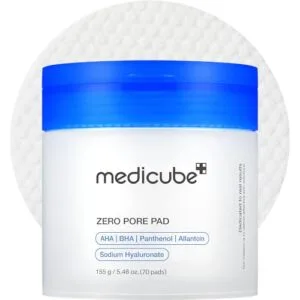
For stubborn blackheads and enlarged pores, Medicube Zero Pore Exfoliating Toner Pads offer a dual-texture design: one embossed side for physical exfoliation, one smooth side for soothing.
You’ll get 4.5% lactic acid and 0.45% salicylic acid as key actives that work together to exfoliate and unclog pores. Clinical self-tests showed 47.1% less sebum and 87.3% reduction in pore waste.
For routine integration, use these pads 1–2 times weekly after cleansing—they’re a simple addition to your nighttime skincare routine. Usage frequency matters: overuse disrupts your skin barrier.
Best For: People with oily or combination skin dealing with stubborn blackheads, enlarged pores, and excess sebum who want a convenient exfoliating toner that fits into their nighttime routine.
- Dual-sided pads make it easy to customize your approach—rough side for congested areas, smooth side for sensitive zones
- Combines chemical exfoliation (AHA and BHA) with hydrating ingredients so your skin doesn’t feel stripped or tight
- Clinical tests showed real results: nearly half the sebum and most pore debris gone with consistent use
- Can cause irritation or breakouts if you overdo it—stick to 1–2 times weekly to avoid damaging your skin barrier
- Some users report a sticky residue, especially on dry skin, which might require an extra moisturizer step
- Not suitable for people with rosacea or very sensitive skin, as the acids can make redness and irritation worse
Tips for Building Consistent Night Routines

Knowing the steps is one thing, but making them stick is another. Even a well-designed routine falls apart without consistency, and that’s where most people struggle.
Here’s how to build habits that last and give your skin the steady care it needs to thrive.
Setting a Realistic Routine Duration
Your evenings aren’t infinite, so choose a routine you’ll actually do. Most people finish their nighttime skincare routine in ten minutes or less, and that’s enough time for effective product layering when you skip the waiting game. Building a nighttime skincare routine that sticks means matching routine complexity to your real schedule, not your ideal one.
Here’s how to set yourself up for habit formation:
- Start with 5–10 minutes – This covers cleansing, one treatment, and moisturizer without overwhelming your schedule or patience.
- Add steps gradually – Introduce new products one at a time over several weeks so your skin and routine can adapt together.
- Account for age variations – Younger adults often spend 15–20 minutes on skincare routine steps, while older age groups average closer to 12 minutes.
- Plan for tired nights – Keep a shortened version ready for when you’re exhausted but still want the importance of nighttime skincare covered.
- Track time honestly – Use your phone timer for a week to see how long each step actually takes, then adjust your expectations.
Remember, consistency beats flawlessness. A simple routine you follow nightly outperforms an elaborate one you abandon by Wednesday. Time commitment matters less than showing up regularly—your skin responds better to steady care than sporadic marathon sessions.
Overcoming Common Skincare Mistakes
Even when you’ve nailed the timing, you might still trip over five predictable errors. Makeup removal failures set you back—about 36% of adults skip full cleansing weekly, clogging pores and fueling breakouts. Over-exfoliation risks barrier damage if you scrub more than three times weekly. Wrong cleanser selection strips protective oils, while retinoid misuse triggers peeling.
Product layering matters: apply thinnest to thickest for absorption.
Incorporating Relaxation Into Your Routine
When you treat your nightly skincare routine as a wind-down ritual rather than a chore, you protect both sleep quality and skin pH level. Deep breathing exercises during cleansing lower stress, while facial massage boosts circulation and product absorption. Aromatherapy benefits extend beyond scent—lavender improved sleep quality scores in trials.
- Mindful skincare: Focus on each step to quiet racing thoughts.
- Calming massage: Gentle upward strokes ease muscle tension.
- Warm baths: Bathing one to three hours before bed shortens sleep onset.
Creating a relaxing skincare experience makes consistency simple.
Tracking Skin Improvements Over Time
When you capture before-and-after photos under the same lighting every two weeks, you transform subjective impressions into visible progress. Digital skin tracking apps maintain structured logs of your nighttime skincare routine, while objective scoring scales measure barrier function and skin hydration.
Acne clinical indices count lesions at six-week intervals, and patient satisfaction outcomes reveal how skin repair and rejuvenation during improved skin turnover align with your confidence.
Frequently Asked Questions (FAQs)
Can I skip moisturizer if I use serums?
Like putting a lid on a pot, serums boost hydration briefly but can’t seal moisture in—they lack the barrier-forming ingredients your skin needs.
Use both for lasting nighttime skincare routine benefits and maximum skin hydration.
Should I apply retinol every single night?
Not at first. Beginners should start retinol one to two times weekly, then gradually increase frequency over four to twelve weeks as your skin acclimates, minimizing initial irritation while maximizing long-term benefits.
What order should I layer multiple serums?
Your serum layering order matters: start with water-based formulas, then move to thicker textures.
Apply pH-dependent actives first, allow absorption timing between layers, and limit your nighttime skincare routine to three serums maximum.
Do face masks replace my regular routine steps?
No, face masks don’t replace cleansers, serums, or moisturizers in your nighttime skincare routine. They’re intensive treatments used one to three times weekly, while core skincare routine steps require daily application for long-term skin health.
How long should I wait between product layers?
Think of your skin as a sponge—each layer needs time to settle. Wait 30–60 seconds between most skincare routine steps, though oil-based formulations and active ingredients often require 2–3 minutes for proper absorption time.
Conclusion
A 32-year-old patient recently reversed months of dullness by simply reordering her evening skincare routine steps—cleanser before serum, not after. That’s the difference proper sequencing makes.
Your skin’s repair clock doesn’t wait for you to figure things out. Follow the steps consistently, respect the order, and you’ll stop guessing why products aren’t working.
The routine isn’t just maintenance—it’s your skin’s best chance at overnight renewal.
- https://theindustry.beauty/new-data-reveals-why-its-crucial-to-wash-your-face-before-bed/
- https://pmc.ncbi.nlm.nih.gov/articles/PMC11735236/
- https://onlinelibrary.wiley.com/doi/10.1111/jocd.12995
- https://www.driveresearch.com/market-research-company-blog/skincare-statistics-and-trends/
- https://amaesthetics.clinic/blog/breaking-down-the-science-of-double-cleansing-the-supposed-twice-a-day-grooming-miracle-gq-magazine/