
This site is supported by our readers. We may earn a commission, at no cost to you, if you purchase through links.

Most shavers never question the ritual—load the brush, swirl it around, apply it to your face. Simple enough.
But spend time in any wet shaving community and you’ll quickly discover that where you build your lather sparks more debate than the soap itself.
Face lathering and bowl lathering each have loyal followings, and for good reason. Your skin type, your morning pace, even your personality can steer you toward one or the other.
Both methods can deliver a close, comfortable shave—they feel completely different in practice, and the gap matters more than you’d expect.
Table Of Contents
- Key Takeaways
- What is Shaving Lather?
- Face Lathering Explained
- Bowl Lathering Explained
- Step-by-Step Face Lathering Guide
- Step-by-Step Bowl Lathering Guide
- Face Lathering Vs Bowl Lathering: Key Differences
- Pros and Cons of Each Technique
- Choosing The Best Method for You
- Frequently Asked Questions (FAQs)
- Conclusion
Key Takeaways
- Bowl lathering gives you consistent, controllable lather from first pass to last, making it the smarter starting point if you’re new to wet shaving.
- Face lathering does double duty — it builds your lather and exfoliates your skin at the same time, which is a quiet win most shavers overlook.
- Your skin type is the real decision-maker: dry skin does better with the extra hydration bowl lathering delivers, while oily or normal skin handles face lathering just fine.
- Good lather isn’t just comfort — it directly affects blade life, irritation levels, and how clean each pass actually cuts.
What is Shaving Lather?
Before you pick a lathering method, it helps to understand what lather actually is and why it matters. Good lather isn’t just foam — it’s doing real work every time the razor touches your skin.
Think of lather as your razor’s buffer — and understanding what proper shaving lather actually does makes it clear why cutting corners here shows up on your face.
Here’s what you need to know.
Role of Lather in Shaving
Good lather does more than just feel nice — it’s the foundation of a great shave. It manages lubrication efficiency by creating a slick layer so your razor glides instead of dragging.
It delivers skin cushioning and razor cushion to protect against nicks. It softens beard hair for easier cutting and uses brush action for hair lifting, setting up every pass for success.
Key Ingredients for Quality Lather
What makes lather quality great starts with the soap itself.
Stearic acid builds structure — that dense, cushiony foam that holds up through every pass. Tallow benefits your skin by mimicking its natural oils. Glycerin hydration keeps things slick and soft. Sorbitol foam adds silky texture, while Cocamidopropyl Betaine lifts whiskers cleanly.
The right shaving soap formula is everything. A vegetable glycerin base enhances lather quality.
How Lather Affects Shave Comfort
The ingredients set the stage — but how lather actually feels against your skin is where comfort is won or lost.
- Lubrication Smoothness lets the blade glide without drag or heat buildup
- Cushioning Protection forms a dense buffer that prevents nicks across every pass
- Hydration Retention softens hair and keeps skin supple throughout
- Consistency Balance — yogurt-thick, glossy lather — holds its structure without flaking
- Temperature Influence from lukewarm water unlocks creamy texture and better razor glide
Whether you prefer Face Lathering or Bowl Lathering, your Lather Consistency directly shapes Shaving Comfort across all your Shaving Techniques.
Face Lathering Explained
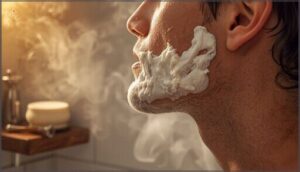
Face lathering is exactly what it sounds like — you build the lather right on your skin instead of in a separate bowl.
It’s a technique worth understanding before you decide which method fits your routine.
Here’s what you need to know about how it works, what tools you’ll need, and what it actually does for your skin.
How Face Lathering Works
Face lathering skips the middleman — you build lather directly on your skin. Load your shaving brush, then work it across your face in circular motions. Your skin’s warmth actually helps dissolve the soap faster than a cold bowl ever could. That’s Skin Temperature Influence doing the heavy lifting.
| Phase | Action | Result |
|---|---|---|
| Loading | Press damp brush on soap 30 sec | Bristles saturated with base soap |
| Spreading | Circular swirls on wet face | Thin bubbly foam forms immediately |
| Water Addition | Dip brush tips, add 2-3 drops | Foam begins thickening toward cream |
| Agitation | Scrub circles 45-90 seconds | Air Incorporation Technique builds density |
| Finishing | Paint strokes across face | Glossy, stable lather ready for razor |
Brush Water Control matters here — start dry, add water gradually. The Lather Texture Evolution happens right under your fingertips. Bonus: that scrubbing motion delivers a real Exfoliation Effect, lifting stubble and prepping skin better than most pre‑shave routines.
Tools Needed for Face Lathering
The gear list for face lathering is refreshingly short. You really only need three things:
- A shaving brush with a 21–24mm brush knot size and 50–55mm loft for solid water retention
- A soap puck — standard soap puck weight runs 100–125g, plenty for months of daily use
- Water temperature control — lukewarm, around 85–95°F, nothing fancy
A shaving stand helps your brush dry properly. That’s it.
It also keeps your setup tidy—much like how the right grooming routine can prevent the irritation that comes from coarse hair and sensitive skin.
Skin Benefits of Face Lathering
Brushing lather directly onto your skin does more than prep for a shave — it’s quiet skin care hiding in plain sight.
Circular motions deliver gentle exfoliation, lifting dead cells and clearing pores.
Real-time moisture feedback through touch lets stubble softening happen naturally.
Gear-free routine doubles as personal grooming — genuine shaving benefits with zero extra effort.
Bowl Lathering Explained
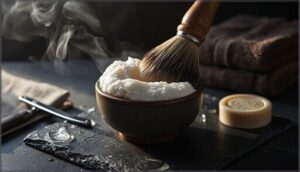
Bowl lathering is the classic wet shaving approach — and for good reason.
It gives you a level of control that’s hard to beat, especially when you’re still figuring out your technique.
Here’s what you need to know about how it works, what you’ll need, and why so many shavers swear by it.
How Bowl Lathering Works
Bowl lathering is like a mini ritual — and once you get the rhythm, it’s oddly satisfying.
- Load your shaving brush with firm pressure directly onto the soap puck
- Transfer that paste into your shaving bowl using circular motion timing — clockwise, then switch
- Control the bubble formation process by adding water drop by drop
- Apply brush pressure technique to push lather back down repeatedly
- Use the lather transfer method to apply evenly onto your face
Water temperature control matters here — lukewarm unlocks the soap without killing your lather.
Required Tools and Setup
You don’t need much — but the right tools make a real difference.
| Tool | Best Option | Why It Matters |
|---|---|---|
| Shaving Brush | Badger or Boar Brushes | Holds water, builds rich lather |
| Shaving Bowl | Ceramic Lather Bowls | Retains heat, ridges speed lathering |
| Drying Stand | Wall-mounted stand | Bristles dry evenly, last longer |
Brush selection and bowl material directly affect soap consistency. Water temperature — lukewarm, always — keeps hand lathering smooth without killing your foam.
Advantages of Bowl Lathering
Think of a shaving bowl as your personal lather lab — everything stays controlled, warm, and ready.
- Consistency Control lets you nail the perfect soap-to-water ratio before touching your face.
- Hot Lather from warm water in the bowl softens stubble and boosts razor glide.
- Mess Minimization keeps foam contained, no counter splatter.
- Soap Efficiency stretches each load across more passes, saving product.
Wet shaving rarely gets this satisfying.
Step-by-Step Face Lathering Guide
Face lathering isn’t complicated, but a little structure goes a long way. Getting it right comes down to three things: how you load your brush, how you work the lather onto your skin, and how you fine-tune the consistency as you go.
Here’s exactly how to do it.
Loading The Brush for Face Lathering
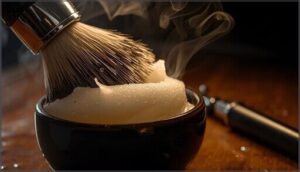
Soak your shaving brush in warm water for three to five minutes — brush soak timing matters more than most people realize.
Synthetic knots just need a quick rinse.
After soaking, squeeze the knot and shake it once or twice. You want damp, not dripping. Then swirl firmly on your soap for 20–40 seconds, letting knot density and loading pressure do the work.
Building Lather Directly on The Skin
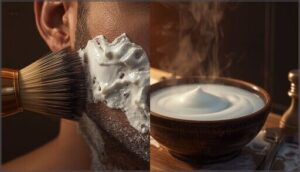
Once your brush is loaded, bring it to your damp face and start working in small circles — cheeks first, then chin.
Vigorous circular strokes for 15–30 seconds lift whiskers and deliver real exfoliation benefits.
Your brush load ratio matters here: too dry and you’ll drag, too wet and it collapses.
Dip the tips once or twice, keeping water temperature control steady at lukewarm.
Watch the lather texture monitoring itself into a glossy, yogurt-like coat.
Tips for Achieving Optimal Lather Consistency

Getting face lather right comes down to three things: soap loading, brush hydration, and gradual water addition. Load generously — for at least 30 seconds of firm circles.
Then add water one drop at a time. Lukewarm water temperature keeps lather stable and creamy. Your consistency indicators? Glossy sheen, no big bubbles, soft peaks that hold. That’s your green light.
Step-by-Step Bowl Lathering Guide
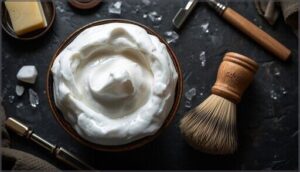
Bowl lathering has a rhythm to it — once you get it down, it almost feels automatic.
The process breaks into three clear steps, and each one builds on the last.
Here’s exactly what to do.
Preparing Your Shaving Bowl
Before you touch your brush, the bowl itself needs a little love. Give it a quick rinse — your pre‑shave cleaning routine removes leftover residue that can wreck lather quality and consistency.
For ceramic bowl heating, a one‑minute hot water soak brings it to around 120°F.
Also, pick your bowl wisely: surface texture selection matters, since ridges help aerate faster.
Proper bowl dimension guidelines — at least 4 inches wide, 3 inches deep — give your brush real room to work.
Whipping Up Lather in The Bowl
Now your bowl’s ready — time to actually build something worth using.
- Load your shaving soap or shaving cream generously onto your brush, following a solid soap loading ratio.
- Use brush motion variations — circular, side-to-side, then painting strokes.
- Focus on air incorporation by keeping light pressure throughout.
- Mind your water drop timing: add drops gradually, not all at once.
- Warm water ensures steady temperature control for even bloom.
Whip for 45–60 seconds until you’ve got peaks that hold.
Transferring Lather to The Face Effectively
Transferring lather well is where bowl lathering either pays off or falls apart. brush pressure light — barely splay the tips.
straight painting strokes across cheeks, neck, and chin, then add short circular passes to work lather into the stubble. If it drags, dip just the tips in warm water. Good lather stability means glossy peaks that cling, not slide.
Face Lathering Vs Bowl Lathering: Key Differences

So now that you know how both methods work, let’s put them side by side.
The differences come down to a few key areas that actually matter when you’re standing at the sink at 7am. Here’s what sets them apart.
Lather Quality and Consistency
The real difference comes down to control. Bowl lather gives you a consistent batch — same hydration, cushion balance, and slickness glide from pass one to pass four. Face lather shifts as you work, often thicker early and thinner later.
| Factor | Face Lather | Bowl Lather |
|---|---|---|
| Hydration Control | Harder to dial in | Easier to adjust |
| Texture Stability | Varies by pass | Stays uniform |
| Pass Consistency | Decreases over time | Reliable throughout |
Equipment and Time Required
Gear-wise, face lathering wins on simplicity — just your brush and soap puck. Bowl lathering adds a vessel, but ceramic holds heat beautifully for warm, luxurious lather. For travel compactness, face lathering is unbeatable.
| Factor | Face Lathering | Bowl Lathering |
|---|---|---|
| Brush Load Speed | Faster | Slightly slower |
| Prep Time Comparison | ~4 minutes | ~5.5 minutes |
| Cleanup Efficiency | Minimal | Extra bowl wash |
| Bowl Heat Retention | N/A | Excellent (ceramic) |
| Travel Compactness | Ideal | Bulkier setup |
Impact on Skin Preparation
skin prep actually matters more than most shavers realize.
Face lather wins here — the brush works directly on your skin, delivering exfoliation benefits, deep hydration, and genuine pore cleansing in one motion. Bowl lather applies cleanly and consistently, but it skips that direct contact.
| Skin Factor | Face Lather | Bowl Lather |
|---|---|---|
| Lubrication Penetration | Deep, into pores | Surface-level coat |
| Irritation Reduction | Excellent | Good |
| Exfoliation Benefits | Yes, built-in | Minimal |
Pros and Cons of Each Technique

Both methods have real strengths — and real trade-offs worth knowing.
The right pick depends on what matters most to you: convenience, control, or ritual.
Here’s an honest look at where each technique shines and where it falls short.
Benefits of Face Lathering
Face lathering is the minimalist’s secret weapon. It delivers real results without the extra gear — just your brush, soap, and a little technique.
Face lathering delivers real results with nothing but a brush, soap, and technique
- Exfoliation Boost: Circular brush strokes lift dead skin cells and clear pores naturally.
- Stubble Softening: Direct contact hydrates whiskers longer, giving you a closer, smoother glide.
- Tactile Feedback: You feel the lather’s consistency instantly and adjust water on the spot.
- Minimal Gear & Travel Friendly: No bowl means fewer items to pack, clean, or store.
Drawbacks of Face Lathering
It’s not all upside, though. For sensitive skin issues, face lathering can cross a line fast — stiff bristles dragging across thin neck skin cause real skin irritation and razor irritation that linger. Hygiene risks are real too; repeated brush-to-face contact spreads bacteria.
Inconsistent lather and time consumption add up, especially when you’re rushing. Bowl lathering exists for good reason.
Benefits of Bowl Lathering
Switch to bowl lathering, and things get noticeably more controlled.
You’re whipping shaving soap in one spot, watching lather quality and consistency develop in real time — wetter, drier, exactly how you want it.
Air incorporation turns a small amount of cream into a full bowl.
Consistent cushion, pass after pass.
Temperature control stays easy with a warm bowl.
Better product longevity, too.
Wet shaving at its most satisfying.
Drawbacks of Bowl Lathering
Bowl lathering isn’t perfect, though. That control comes at a cost.
- Extra Gear and Cleanup Hassle — another tool to buy, store, and scrub clean after every session.
- Lather Waste — up to 30% stays in the bowl, unused.
- Weaker Skin Prep — the brush barely touches your face, so exfoliation suffers.
A longer routine every single morning.
Choosing The Best Method for You

There’s no single right answer here — the best method is the one that actually works for you.
A few key factors can point you in the right direction. Consider these before settling on your go-to routine.
Factors to Consider (skin Type, Time, Preference)
Three things really drive the decision: your skin type, your morning schedule, and how you like to shave.
Dry skin thrives with bowl lathering‘s wetter, cushioned lather. Oily or mildly sensitive skin often manages face lathering just fine.
Short on time? Face lathering wins the morning rush. Prefer a slower ritual? Bowl lathering turns shaving into something worth waking up for.
Recommendations for Beginners
If you’re just starting out, bowl lathering gives you room to breathe. You can watch the lather build, tweak water levels, and get a feel for consistency before it touches your face.
- Pick a synthetic brush starter — no soaking needed
- Follow a simple water temperature guide: lukewarm only
- Use loading amount tips: 30–45 seconds on the puck
- Nail soap selection basics before chasing premium soaps
Adapting Your Routine for Optimal Results
Tweaking your shaving routine isn’t complicated — it’s just about paying attention to what works.
| Adjustment | Practical Tip |
|---|---|
| Skin Type Tweaks | Oily skin? Drier face lathering. Dry skin? Bowl lathering with extra hydration. |
| Water Ratio Adjustments | Hard water needs 20% more in the bowl; soft water needs barely a drip. |
| Brush Technique Modifications | Synthetic brushes suit face lathering; badger brushes shine in bowl lathering. |
| Temperature Control Strategies | A scuttle keeps bowl lathering 10°F warmer across multiple passes. |
| Pass Consistency Planning | Bowl lathering manages 4-5 passes easily; face lathering needs mid-shave water dips. |
Small shaving tips like these make every shave noticeably better.
Frequently Asked Questions (FAQs)
Can lathering technique affect razor blade longevity?
Surprisingly, yes — lather hydration impact and slickness level effects directly influence blade wear reduction.
Better consistency and blade life go hand in hand.
Good lathering techniques simply help your razor last longer.
Does water hardness impact lather quality significantly?
Yes, water hardness matters more than most shavers realize.
Mineral interference from calcium and magnesium triggers scum formation, cutting available soap by up to 50% and noticeably reducing lather slickness and longevity.
Which method works better with shaving creams?
Both methods work well with shaving creams, but the bowl edges ahead. Its controlled water ratio builds denser foam consistency, maximizing cream performance across multiple passes without waste.
How does brush size influence lathering results?
Knot diameter impact is real.
A 22mm brush balances water retention capacity, maneuverability control, and lathering speed well.
Smaller knots improve product usage efficiency; larger ones build lather faster, but can feel unwieldy.
Can lathering method help reduce ingrown hairs?
It’s no coincidence that switching up your lathering methods cuts down on ingrown hairs. Proper shave preparation with an exfoliation boost lifts hairs upright, while moisture control keeps bristles soft for clean, bump-free cuts.
Conclusion
The right tool for the right job—that’s as true in shaving as anywhere else.
Face lathering vs bowl lathering isn’t a contest with one winner. It’s a choice that depends on your skin, your pace, and honestly, what feels good in your hands at 7 a.m.
Try both. Give each a fair run. Your face will tell you which one belongs in your routine. Trust that feedback—it’s the most honest shaving advice you’ll ever get.
- https://www.therazorcompany.com/blogs/the-benefits-of-wet-shaving/lathering-techniques-bowl-face-and-hand-lathering-explained
- https://shavingadvisor.com/shaving-bowls/bowl-vs-face-lathering/
- https://www.sugardaddyshaves.com/sds/bowlVsFaceLathering.cfm
- https://www.sirhare.com/blogs/shaving/face-lathering-vs-bowl-lathering
- https://www.razoremporium.com/bloglathering-101-how-to-correctly-lather-when-wet-shaving