This site is supported by our readers. We may earn a commission, at no cost to you, if you purchase through links.
Most people own at least seven face skin care products, yet struggle to see results from any of them.
After years working with clients in the treatment room, I’ve found the problem isn’t effort—it’s wrong information. The wrong cleanser strips your barrier. A serum with the right ingredient in the wrong formula does nothing. And labels like “hypoallergenic” sound reassuring but carry no regulated standard behind them.
Knowing what’s actually in your products, and why, changes everything. These ten reviewed picks cut through the noise with ingredients that earn their place and formulas that deliver.
Table Of Contents
- Key Takeaways
- What Are Face Skin Care Products?
- Key Ingredients to Look for in Face Skin Care
- Most Important Face Skin Care Product Types
- Top 10 Face Skin Care Products Reviewed
- 1. CeraVe Hydrating Facial Cleanser
- 2. La Roche Posay Sunscreen Lotion
- 3. Tatcha Water Cream Moisturizer
- 4. Sunday Riley Lactic Acid Face Serum
- 5. Paula’s Choice Salicylic Acid Exfoliant
- 6. EltaMD Tinted Face Sunscreen
- 7. The Ordinary Niacinamide Serum
- 8. Drunk Elephant Babyfacial Mask
- 9. Kiehls Ultra Facial Cream Moisturizer
- 10. Biossance Squalane Facial Oil
- Best Face Skin Care Routine by Skin Type
- How We Chose The Best Face Skin Care Products
- Frequently Asked Questions (FAQs)
- Which brand is best for face skin care?
- What is the best product for my face?
- What are the 5 basic of skin care?
- Which is best brand for skincare?
- What 3 skincare products should I use?
- How long should I wait between applying different products?
- Can I use expired skincare products?
- Should skincare products be stored in the refrigerator?
- What order should I layer sunscreen with other products?
- How often should I change my skincare routine?
- Conclusion
Key Takeaways
- Skincare labels like “hypoallergenic” and “non-comedogenic” are not regulated, so you cannot rely on them—always check the actual ingredient list yourself.
- A few proven ingredients do most of the heavy lifting: hyaluronic acid hydrates, retinol fights aging, niacinamide balances oil, and vitamin C fades dark spots and protects against damage.
- Your skin type should drive every product choice—what works for oily skin can actively harm dry or sensitive skin, so matching formula to skin type matters more than brand loyalty.
- Layering order is not optional—apply thinnest to thickest (cleanser, toner, serum, moisturizer, sunscreen) or your actives will not absorb properly and you are wasting your money.
What Are Face Skin Care Products?
Face skin care products are anything you apply to clean, treat, protect, or hydrate your skin. With so many options on the shelf, knowing what labels actually mean can save you from a lot of guesswork.
If you’re not sure where to start, this guide to best facial skin care products breaks it all down by skin type so you’re not just guessing at the drugstore.
Here’s what you need to understand before picking up your next product.
Fragrance-Free, Non-Comedogenic, and Hypoallergenic Labels Explained
Label regulations in skincare can feel like a foreign language. Here’s what those claims actually mean for your skin:
- Fragrance-Free: No added scent ingredients — lower risk of skin irritation
- Non-Comedogenic: Formulated to avoid clogging pores
- Hypoallergenic: Reduced allergen load, but no universal cosmetic standards back this up
None are guarantees. Always check ingredient safety yourself, especially with sensitive skin, skincare recommendations, and dermatologist-recommended products.
For an in-depth look at non-comedogenic and hypoallergenic meanings, see this expert guide.
Key Ingredients to Look for in Face Skin Care
Not all ingredients are created equal, and knowing which ones actually work makes shopping a whole lot easier. Whether you’re tackling dryness, dullness, or the first signs of aging, the right actives can make a real difference.
Here are the key ingredients worth looking for and why each one earns its spot in your routine.
Hyaluronic Acid for Deep Hydration
Hyaluronic acid is one of those skincare ingredients that actually delivers on its promise. It pulls moisture into your skin and holds it there — up to 1,000 times its own weight in water. That’s real skin plumping and deep hydration you can feel.
Hyaluronic acid holds up to 1,000 times its weight in water, delivering deep, lasting hydration you can actually feel
Look for it around 1 to 2 percent in serums for effective daily moisture retention and genuine facial rejuvenation. One of the key benefits is that it helps reinforce your skin’s natural protective barrier, as explained in this detailed guide to hyaluronic acid.
Retinol for Anti-Aging and Cell Turnover
Retinol is the anti-aging workhorse your routine might be missing. It speeds up cell turnover, pushing fresh skin to the surface while smoothing texture and softening fine lines over time.
Start at 0.3 percent, two to three nights a week. Your skin needs time to adjust before you build up. The collagen boost and wrinkle reduction that follow are worth the patience.
Niacinamide for Elasticity and Radiance
Niacinamide is vitamin B3 doing quiet, consistent work. As a barrier repair ingredient and anti-inflammation ally, it reduces redness, controls oil, and makes pores look smaller over time.
For skin elasticity and radiance, a 4 to 5 percent formula hits a sweet spot — effective for uneven tone without overwhelming sensitive skin. It’s steady, reliable, and genuinely earns its place in your routine.
Glycolic Acid for Exfoliation and Brightness
Glycolic acid is the quietly rebellious one in your ingredient lineup. This alpha hydroxy acid has tiny molecules that break down dead surface cells without any scrubbing required — that’s the beauty of chemical exfoliation.
Regular use improves skin texture, enhances skin brightening, and combats hyperpigmentation over two to four weeks. It even pulls moisture in while it works. Steady wins.
Vitamin C for Dark Spot Fading and Protection
Vitamin C is your skin’s daily bodyguard. At 10 to 20 percent, it delivers real skin brightening results — fading dark spots, improving texture, and neutralizing free radicals from UV and pollution exposure.
Its antioxidant properties make it a cornerstone of anti-aging skincare. Apply it every morning under sunscreen for maximum skin protection. Stubborn hyperpigmentation treatment? A 20 percent formula gets serious results.
Most Important Face Skin Care Product Types
Every solid skincare routine is built on a handful of product types that each pull their own weight. Knowing what each one does — and why it belongs in your lineup — makes choosing the right products a whole lot easier.
Here are the five most important face skincare product types worth understanding.
Cleansers for Removing Dirt and Makeup
Your skin type is the foundation of everything else you put on your skin. Choosing the right one starts with your skin type — gel face wash for oily skin, cream cleansers for dry, and foaming formulas for combination.
If you wear heavy makeup, double cleansing with a cleansing oil first makes a real difference. Skin type match matters more than the label.
Toners for Balancing and Prepping Skin
Think of toner as the reset button between cleansing and everything that follows. The right one sets your entire skincare routine up for success. Toner ingredients determine what your skin gets next:
- Hydrating toners boost skin hydration with hyaluronic acid
- Exfoliating toners handle facial exfoliation with glycolic acid
- Clarifying toners focus on pore minimizing with AHA/BHA blends
- Soothing toners calm redness using botanicals
- Treatment toners target dark spots with vitamin C
Serums for Targeted Skin Concerns
Serums are the workhorses of any routine — concentrated formulas designed to go deep where moisturizers can’t. Each serum targets specific skin concerns with precision.
Hydrating serums use hyaluronic acid to plump dehydrated skin, while brightening serums fade dark spots with vitamin C. Anti-aging skincare serums boost collagen, and acne serums clear pores. Ingredient analysis matters here — the right serum delivers real product efficacy.
Moisturizers for Lasting Hydration
Your moisturizer is what locks everything in — without it, all those serums just evaporate. Choosing the right one depends on your skin’s needs.
Dry skin benefits from thick facial creams loaded with ceramides for skin barrier repair. Oily skin does better with a lightweight gel moisturizer.
Hyaluronic acid works across all types, boosting skin hydration and moisture retention without feeling heavy.
Sunscreens for Daily UV Protection

Sunscreen is your skin’s last line of defense — and skipping it cancels out everything else in your routine. For daily application, look for broad spectrum formulas that cover both UVA and UVB rays.
SPF 30 blocks around 97 percent of UVB rays, which is solid for everyday sun protection. Mineral filters with zinc oxide work well for sensitive skin while supporting skin hydration without clogging pores.
Top 10 Face Skin Care Products Reviewed
After testing dozens of products with clients, I’ve narrowed it down to ten that consistently deliver real results.
These picks cover every step of your routine, from cleansing to sun protection, and work across a range of skin types and concerns.
Here’s what made the cut.
1. CeraVe Hydrating Facial Cleanser
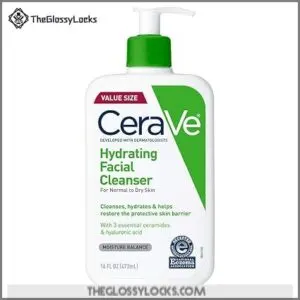
CeraVe Hydrating Facial Cleanser is one of those rare drugstore finds that actually delivers. It’s non-foaming and creamy, so it won’t strip your skin dry after every wash.
With ceramides, hyaluronic acid, and glycerin working together, it strengthens your moisture barrier while pulling out dirt and light makeup. It’s fragrance-free, non-comedogenic, and dermatologist-developed — a solid combo for sensitive or dry skin.
If you’re pairing it with a retinoid or acid, this cleanser helps keep irritation in check.
| Best For | People with normal to dry or sensitive skin who want a gentle, hydrating daily cleanser that won’t strip their face. |
|---|---|
| Fragrance Free | Yes |
| Skin Type | Normal to Dry |
| Key Ingredient | Hyaluronic Acid |
| Product Form | Cleanser |
| Paraben Free | Yes |
| Daily Use | Yes |
| Additional Features |
|
- Keeps skin moisturized without that tight, squeaky-clean feeling — great for dry or sensitive types
- Packed with ceramides and hyaluronic acid, so it’s actually doing skincare work while it cleans
- Fragrance-free and non-comedogenic, so it plays nicely with most skin and routines
- The lotion-like texture isn’t for everyone — if you love a foamy lather, this might feel off
- Not the best pick for oily or acne-prone skin
- Struggles with waterproof makeup, so you’ll probably need a separate remover for that
2. La Roche Posay Sunscreen Lotion
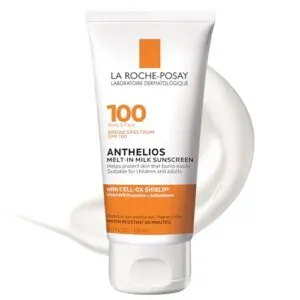
Once your skin is clean, protection is the next non-negotiable step. La Roche-Posay’s SPF 100 lotion means serious business — it blocks both UVA and UVB rays without oxybenzone or octinoxate, making it a gentler choice for sensitive skin.
The oil-free formula won’t clog your pores or leave that heavy, white-cast look. Vitamin B5 keeps it from feeling stripped, and it stays water resistant for up to 80 minutes. Adults and kids 3+ can use it daily.
| Best For | Anyone with sensitive skin who wants serious daily sun protection for both face and body, including kids 3 and up. |
|---|---|
| Fragrance Free | Yes |
| Skin Type | All/Sensitive |
| Key Ingredient | Vitamin B5 |
| Product Form | Sunscreen |
| Paraben Free | No |
| Daily Use | Yes |
| Additional Features |
|
- SPF 100 with broad spectrum UVA and UVB protection — that’s about as covered as you can get
- Oil-free and free of oxybenzone and octinoxate, so it’s gentler on sensitive skin and won’t leave a greasy mess
- Vitamin B5 keeps skin feeling soft, and it holds up for 80 minutes in the water
- Can sting the eyes with extended wear, so be careful around that area
- Some users have noticed breakouts or whiteheads, depending on how their skin reacts to the formula
- Not the best pick for a day at the beach or pool — you’ll want a reef-safe option for heavy water activities
3. Tatcha Water Cream Moisturizer
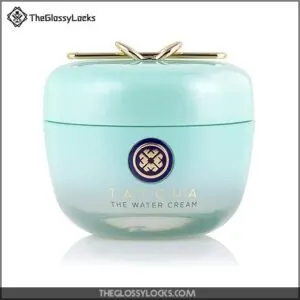
If your skin craves hydration without heaviness, Tatcha’s Water Cream delivers. This lightweight, oil-free gel-cream is built for normal, combination, and oily skin types that don’t want to feel like they’re wearing a mask.
It absorbs fast, controls excess oil, and leaves a clean, natural finish that plays well under makeup. Formulated with Hadasei-3 — a blend of rice, green tea, and algae — plus sodium hyaluronate and multi-weight glycerin, it hydrates without clogging your pores.
At $72 for 50 ml, it’s an investment, but the results back it up.
| Best For | Anyone with oily, combination, or normal skin who wants solid hydration without that heavy, greasy feeling. |
|---|---|
| Fragrance Free | No |
| Skin Type | All |
| Key Ingredient | Green Tea/Rice/Algae |
| Product Form | Moisturizer |
| Paraben Free | No |
| Daily Use | Yes |
| Additional Features |
|
- Lightweight and fast-absorbing — no sticky residue, no shine
- Packed with Japanese botanicals like green tea, rice, and algae that actually do something for your skin
- Sits beautifully under makeup without pilling or sliding around
- At $72 for a small 50 ml jar, it’s a tough sell if you’re on a budget
- Not the move if you have dry skin or love a rich, thick cream
- A few buyers have reported quality control issues, like missing seals or products that looked tampered with
4. Sunday Riley Lactic Acid Face Serum
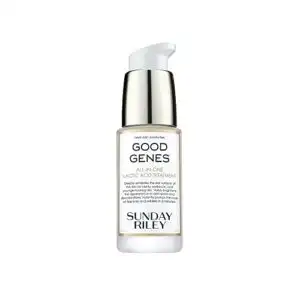
Sunday Riley’s Good Genes Lactic Acid Treatment is the kind of serum that earns its $85 price tag. It uses purified lactic acid to exfoliate dead skin cells, smooth texture, and brighten dark spots — all in one step.
Licorice root adds extra brightening power, while aloe and squalane keep irritation in check. You’ll notice a visible glow boost fast. Sensitive? Use it as a rinse-off mask. Just don’t skip sunscreen the next morning.
| Best For | Anyone looking to smooth texture, fade dark spots, and get a noticeable glow — especially if dull or uneven skin tone is your main concern. |
|---|---|
| Fragrance Free | Yes |
| Skin Type | All |
| Key Ingredient | Lactic Acid |
| Product Form | Serum |
| Paraben Free | Yes |
| Daily Use | No |
| Additional Features |
|
- Lactic acid exfoliates and brightens fast, so you actually see results quickly
- Licorice root targets dark spots and discoloration without added irritation
- Free from fragrance, parabens, sulfates, and a long list of other stuff you don’t want on your skin
- At $85 for one ounce, it’s a serious investment that’s not for everyone’s budget
- Can cause dryness or a tingling sensation, so sensitive skin types need to tread carefully
- The packaging makes it tough to get every last drop out, which stings a little at that price
5. Paula’s Choice Salicylic Acid Exfoliant

Paula’s Choice Skin Perfecting 2% BHA Liquid Exfoliant is a cult favorite for good reason. That 2% salicylic acid works deep inside your pores — clearing out the buildup that causes blackheads, bumps, and dullness.
It’s fragrance-free, leaves no gritty residue, and absorbs quickly. You can use it morning or night, with a cotton pad or your fingertips. Start slow if you’re new to exfoliants. And yes — wear sunscreen after. Your skin will thank you.
| Best For | Anyone dealing with blackheads, clogged pores, or uneven skin tone who wants a simple, no-fuss exfoliant that works. |
|---|---|
| Fragrance Free | Yes |
| Skin Type | All |
| Key Ingredient | Salicylic Acid (BHA) |
| Product Form | Liquid Exfoliant |
| Paraben Free | Yes |
| Daily Use | No |
| Additional Features |
|
- Salicylic acid digs deep into pores to clear out buildup and fight blackheads
- Fragrance-free and gentle enough for daily use on most skin types
- No gritty scrubbing — just smooth, even exfoliation without the mess
- Can feel a little greasy after applying, which some people find annoying
- Sensitive skin types may experience irritation, especially when starting out
- Won’t do much for severe acne — you’ll probably need something stronger for that
6. EltaMD Tinted Face Sunscreen
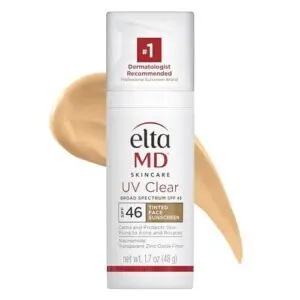
EltaMD UV Clear Tinted SPF 46 is the sunscreen I recommend most in my treatment room — and for good reason. It’s lightweight and oil-free, and packed with 5% niacinamide and hyaluronic acid, so it actually improves your skin while protecting it.
The zinc oxide formula won’t leave a white cast, and the sheer tint evens out your skin tone without feeling like makeup. Sensitive or acne-prone skin? This one’s built for you. It’s fragrance-free, dermatologist-recommended, and wears beautifully under foundation.
| Best For | Anyone with sensitive, oily, or acne-prone skin who wants a daily sunscreen that doubles as a light skin treatment. |
|---|---|
| Fragrance Free | Yes |
| Skin Type | Sensitive/Acne-Prone |
| Key Ingredient | Zinc Oxide |
| Product Form | Tinted Sunscreen |
| Paraben Free | No |
| Daily Use | Yes |
| Additional Features |
|
- Zinc oxide formula with SPF 46 protects against UVA/UVB without leaving a white cast
- Niacinamide and hyaluronic acid actually improve your skin while you wear it
- Sheer tint evens out skin tone and works great alone or under makeup
- Small 1.7 oz bottle means you’ll run out faster than you’d like
- Pricier than most drugstore sunscreens
- The single tint shade may not work well for deeper skin tones
7. The Ordinary Niacinamide Serum
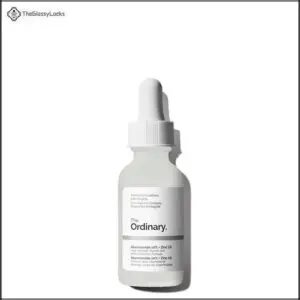
At just $6, The Ordinary Niacinamide 10% + Zinc 1% Serum punches well above its price tag. This lightweight, water-based formula addresses enlarged pores, excess oil, and uneven tone without overwhelming your skin.
The zinc PCA keeps shine in check, while niacinamide works steadily to brighten and smooth texture. It’s fragrance-free, oil-free, and layers cleanly under moisturizer. If you have oily skin or acne-prone skin, this one belongs in your routine. Just patch test first — a little goes a long way.
| Best For | Anyone with oily or acne-prone skin who wants to shrink pores, cut shine, and even out their skin tone without spending a lot. |
|---|---|
| Fragrance Free | Yes |
| Skin Type | Oily/Acne-Prone |
| Key Ingredient | Niacinamide |
| Product Form | Serum |
| Paraben Free | No |
| Daily Use | Yes |
| Additional Features |
|
- At $6, it’s hard to beat the value — you get a solid 10% niacinamide concentration that actually works
- Lightweight and fragrance-free, so it layers easily into any routine without clogging pores or irritating skin
- Tackles multiple concerns at once — pores, oil, texture, and brightness — all in one simple serum
- Can cause redness or peeling, especially around the nose and eye area, so patch testing is a must
- The slight vinegary scent catches some people off guard, even though it fades quickly
- Probably not the best pick if your skin runs dry or sensitive — it’s really formulated with oily skin in mind
8. Drunk Elephant Babyfacial Mask
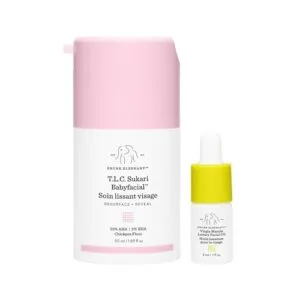
Think of Babyfacial as a professional peel you can do at home on a Friday night. Drunk Elephant packs a 25% AHA blend — glycolic, lactic, tartaric, and citric acids — plus 2% salicylic acid to clear out pores and resurface your skin in one shot.
Apply it for 10 to 20 minutes once a week, then rinse. Aloe and hyaluronic acid keep it from feeling brutal. At $80, it’s an investment, but the results — smoother texture, clearer tone — are hard to argue with.
| Best For | Anyone who wants smoother, clearer skin without booking a facial — especially people dealing with uneven texture, dull tone, or clogged pores. |
|---|---|
| Fragrance Free | Yes |
| Skin Type | All |
| Key Ingredient | AHA/BHA Blend |
| Product Form | Mask |
| Paraben Free | No |
| Daily Use | No |
| Additional Features |
|
- Packs a serious punch with 25% AHA blend plus 2% salicylic acid — that’s a lot of exfoliation in one mask
- Works for all skin types and skips the fragrance, silicones, and essential oils, so it’s pretty low-drama for most people
- Results are noticeable — softer texture and a clearer, more even tone after just a few uses
- $80 for 50ml is a real commitment, especially when you’re only using it once a week
- Sensitive skin folks might feel a sting or burn, so a patch test isn’t optional — it’s smart
- Can’t use it on active breakouts or open skin, which is frustrating when that’s exactly when you want to do a treatment
9. Kiehls Ultra Facial Cream Moisturizer
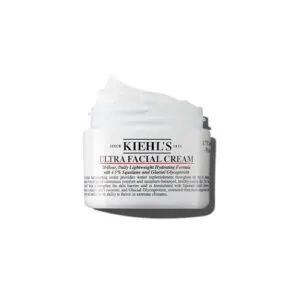
If your skin feels like it’s constantly running on empty, Kiehl’s Ultra Facial Cream was basically made for you. It’s loaded with 4.5% squalane, glacial glycoprotein, and pro-ceramides — ingredients that work together to reinforce your moisture barrier and keep skin hydrated for up to 72 hours.
It absorbs fast, wears clean under makeup, and won’t leave you greasy. At $39, it’s a dependable daily moisturizer that’s fragrance-free, paraben-free, and gentle enough for sensitive and eczema-prone skin.
| Best For | Anyone with dry, sensitive, or normal skin who wants a lightweight, no-fuss daily moisturizer that actually keeps skin hydrated without any irritants. |
|---|---|
| Fragrance Free | Yes |
| Skin Type | All |
| Key Ingredient | Squalane |
| Product Form | Moisturizer |
| Paraben Free | Yes |
| Daily Use | Yes |
| Additional Features |
|
- Absorbs fast and sits comfortably under makeup — no greasy residue
- Fragrance-free and paraben-free, so it’s gentle enough for sensitive skin
- Packed with squalane and pro-ceramides that genuinely strengthen your moisture barrier
- No SPF, so you’ll need a separate sunscreen step in the morning
- At $39, it’s a bit of a splurge compared to drugstore options
- If you have very oily skin, it might feel like more moisture than you need
10. Biossance Squalane Facial Oil
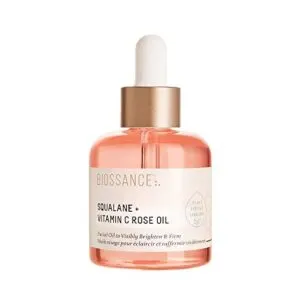
If Kiehl’s keeps your skin hydrated, Biossance takes it one step further by sealing everything in. This oil is 100% squalane — nothing else — derived from sugarcane, not sharks. It’s fragrance-free, non-comedogenic, and accepted by the National Eczema Association, so even sensitive skin can handle it.
Apply it as your last step, day or night, and your skin drinks it up without any greasy residue. At $74, it’s an investment, but 93% of users reported noticeably more nourished skin after two weeks.
| Best For | Anyone with dry or sensitive skin who wants a simple, no-nonsense oil that hydrates deeply without clogging pores. |
|---|---|
| Fragrance Free | No |
| Skin Type | All |
| Key Ingredient | Vitamin C |
| Product Form | Facial Oil |
| Paraben Free | No |
| Daily Use | Yes |
| Additional Features |
|
- Pure squalane means it works for almost every skin type, even acne-prone
- Fragrance-free and NEA-accepted, so sensitive skin won’t freak out
- Absorbs without grease — works day or night as a final step
- $74 is a tough pill to swallow for a one-ounce bottle
- Some users notice formula or scent changes between batches
- If you want a multi-ingredient treatment oil, this keeps it pretty minimal
Best Face Skin Care Routine by Skin Type
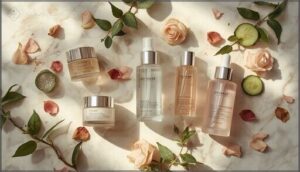
No two skin types need the same routine, and that’s exactly the point.
What works for oily skin can leave dry skin feeling tight, and sensitive skin has its own rules entirely.
Here’s how to build a routine that actually fits yours.
Morning Skincare Routine for Hydration
Your morning skincare routine sets the tone for the entire day. Start with a hydrating cleanser that won’t strip your barrier, then apply an alcohol-free morning toner to prep skin. Layer a hyaluronic acid serum on damp skin for serious skin hydration, and seal everything with a moisturizer.
- Use a hydration mist between steps for better serum absorption
- Hyaluronic acid serum benefits dehydrated and oily skin equally
- Always finish your moisturizer before sunscreen
Nighttime Skincare Routine for Repair
Night repair is where real skin regeneration happens. While you sleep, your skin barrier kicks into high gear.
Start with double cleansing, then layer a retinol serum and hyaluronic acid to lock in moisture. Overnight masks and a rich night cream seal everything in.
This skincare routine also targets dark spot fading, making it your hardest-working barrier function reset.
Skincare Routine for Sensitive Skin
Sensitive skin needs calm skin, not complexity. Unlike the repair-focused night routine, this approach is all about barrier repair and keeping reactions at bay.
Use a gentle cleanser, fragrance-free moisturizer, and mineral sunscreen — nothing more. Fragrance avoidance is non-negotiable here. These fragrance-free and gentle formulations are the backbone of any solid sensitive skin skincare routine for irritated skin that actually works.
Skincare Routine for Oily and Acne-Prone Skin
Oily, acne-prone skin doesn’t have to run your life. Three steps make the biggest difference:
- Cleanse with a salicylic acid gel cleanser twice daily for oil control and pore minimization.
- Treat with an azelaic acid or benzoyl peroxide spot treatment for breakout reduction.
- Moisturize with a lightweight, niacinamide-based formula to balance skin texture.
Consistent exfoliation two to three times weekly keeps acne-prone skin clear long-term.
Correct Order of Skincare Product Application
Five words sum up layering techniques perfectly: thin to thick, always. Your daily skincare application order starts with cleanser, then toner, serum, moisturizer, and sunscreen.
Product absorption depends on this sequence — skip it, and you’re wasting money. Nighttime sequencing swaps sunscreen for actives like retinol.
Establishing a skincare routine built on this logic protects your skin barrier every single day.
How We Chose The Best Face Skin Care Products

Not every product earns a spot on this list just by having a pretty label. Each one was put through a specific set of standards before making the cut.
Here’s exactly what we looked at.
Ingredients and Formulation Standards
Every product on this list earned its spot based on what’s actually in the formula. I looked at pH balance, comedogenic ratings, fragrance limits, preservative systems, and ingredient stability before making any call.
Here’s what guided each skincare product review:
- Skin-friendly pH between 4.5 and 5.5
- Low comedogenic ratings on key ingredients
- Fragrance limits following IFRA safety standards
- Preservative systems free of formaldehyde releasers
- Stable, effective skincare ingredients backed by evidence
Suitability for Different Skin Types and Concerns
No two faces are the same — and that’s exactly how I approached product matching here.
Skin type analysis and skin mapping guided every pick, so you’ll find skincare for different skin types covered across the board.
Whether your skin concerns lean dry, oily, or reactive, these personalized routines reflect real concern identification and skin type specific care, especially sensitive skin skincare recommendations.
Frequently Asked Questions (FAQs)
Which brand is best for face skin care?
No single brand wins for everyone. Your skin type drives the decision — CeraVe suits dry, sensitive skin, while La Roche-Posay leads for redness.
Dermatologist insights and consumer reviews both confirm this.
What is the best product for my face?
The best product for your face starts with skin type analysis. Match it to your facial concerns, budget, and tolerance.
What works consistently for you — without irritation — is always the right answer.
What are the 5 basic of skin care?
The five basics of skincare are skin cleansing, gentle exfoliation, deep nourishment, daily moisturizing, and sun protection.
These core steps keep your cleanser, moisturizer, and other skincare products working their hardest every day.
Which is best brand for skincare?
No single brand wins for everyone. For dry skin, CeraVe leads. Sensitive types do best with La Roche-Posay. Your skin concerns, budget, and key ingredients matter more than any label.
What 3 skincare products should I use?
Your core skincare routine starts with a gentle cleanser, a daily moisturizer matched to your skin type, and a broad-spectrum sunscreen. Master basic cleansing first, then build from there.
How long should I wait between applying different products?
Wait until each layer stops feeling wet or slippery before adding the next one. For most products, that’s about 1 to 2 minutes.
Active ingredients like retinol or glycolic acid need 5 to 15 minutes.
Can I use expired skincare products?
Using expired skincare products isn’t worth the risk.
Past their shelf life, active ingredients break down and bacteria can grow — turning your trusted routine into a source of irritation, infection, or zero results.
Should skincare products be stored in the refrigerator?
Most skincare products stay stable at room temperature. Refrigeration benefits only select items like vitamin C serums or eye gels.
For general skincare stability and product shelf life, a cool, dry cabinet works fine.
What order should I layer sunscreen with other products?
Ironically, sunscreen order goes last — not first. In your morning routine, layer cleanser, toner, serum, then moisturizer.
Once absorbed, apply SPF 30 sunscreen. That order locks in product absorption and keeps daily protection intact.
How often should I change my skincare routine?
Most routines need changing only a few times a year. Adjust seasonally, swap one product at a time, and give each change 6 to 8 weeks before judging results.
Conclusion
Your skin is a mirror—it reflects every product decision you make, for better or worse. The right face skin care products don’t just sit on the surface; they work with your biology, not against it.
Strip away the marketing noise, and what’s left is simple: ingredients that are proven, formulas that are honest, and a routine built around your actual skin. You now have that foundation. Trust it, and your skin will show the difference.
- https://health.clevelandclinic.org/proper-skin-care-product-order
- https://www.botanicalformulations.com/blog/optimal-concentration-of-8-active-ingredients
- https://www.cosmopolitan.com/style-beauty/beauty/a25372431/what-order-to-apply-skincare-products/
- https://gfacemd.com/decoding-skincare-jargon-what-does-non-comedogenic-and-other-terms-really-mean/
- https://dermamade.com/derma-blog/what-is-the-correct-order-of-products-for-skin-care/