This site is supported by our readers. We may earn a commission, at no cost to you, if you purchase through links.
Gray hair doesn’t just resist color—it actively fights it. The cuticle structure changes as melanin fades, leaving strands coarser, more porous, and surprisingly selective about what pigment they’ll hold. That’s why a shade that looks rich and dimensional on the box can turn flat, patchy, or washed out on white or silver strands.
Choosing the wrong formula, the wrong shade depth, or skipping one prep step can mean the difference between full coverage that lasts four weeks and a muddy rinse that fades by Wednesday. The right approach to hair coloring for grey coverage comes down to understanding how gray hair actually behaves.
The solution lies in working with it instead of against it.
Table Of Contents
- Key Takeaways
- 10 Best Hair Colors for Gray Coverage
- 1. Phyto Golden Blonde Ammonia Free Hair Color
- 2. AGE Beautiful Hair Color Starter Kit
- 3. Christophe Robin Dark Blonde Hair Gel
- 4. Clairol Medium Brown Root Touch Up
- 5. Schwarzkopf Keratin Cappuccino Brown Hair Color
- 6. Clairol Dark Neutral Brown Hair Color
- 7. Better Natured Dark Plum Hair Dye
- 8. Clairol Red Clay Hair Color
- 9. Wella ColorCharm Medium Brown Hair Dye
- 10. Clairol Rich Dark Brown Hair Color
- Why Gray Hair Resists Color
- Choose The Right Shade
- Pick The Best Dye Type
- Color Gray Hair at Home
- Make Gray Coverage Last Longer
- Frequently Asked Questions (FAQs)
- What is the 50 50 50 rule for gray hair?
- What hair color works best to cover grey?
- Is it better to go darker or lighter with grey hair?
- What do hairdressers use to cover grey hair?
- Which hair color covers gray the best?
- What hair color is best over grey?
- What hair color cancels out gray?
- What is the best hair color to blend with gray?
- Can gray hair be colored without permanent dye?
- What are the best products for stubborn gray?
- Conclusion
Key Takeaways
- Gray hair resists dye because its structure actually changes — strands get coarser, drier, and more porous as melanin fades, causing uneven pigment absorption and faster color fade.
- Permanent color is the only formula that penetrates deep enough for reliable gray coverage, using oxidation chemistry to bond pigment inside the hair shaft rather than just coating the surface.
- Your gray percentage drives your formula choice — under 25% needs minimal help, but above 75% requires a neutral-heavy base mix or the result looks hollow and artificial on resistant white strands.
- Aftercare matters as much as the dye itself — sulfate-free shampoo, cool water rinses, weekly deep conditioning, and UV protection are what separate color that lasts four weeks from color that’s gone by Wednesday.
10 Best Hair Colors for Gray Coverage
Not every box dye manages gray the same way, and the wrong pick can leave you with patchy roots after two weeks.
Some formulas just aren’t built for stubborn grays, so if yours missed the mark, check how long to wait before re-dyeing your hair before reaching for another box.
These ten formulas stood out across color payoff, fade resistance, and how they hold up on coarser, drier gray strands. Here’s what made the cut.
1. Phyto Golden Blonde Ammonia Free Hair Color
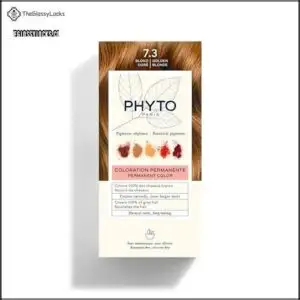
Phyto’s Golden Blonde (shade 7.3) is a solid pick for permanent gray coverage without the ammonia burn. The formula blends five plant-derived dye sources with jojoba and monoi oils, ensuring hair doesn’t feel stripped—testers consistently reported softer, silkier strands post-color.
It delivers 100% white hair coverage in one application, though heavy gray may require the full 40-minute processing time.
A key consideration: the color often pulls darker than the swatch, so select a shade lighter than your target tone.
| Best For | Anyone wanting ammonia-free gray coverage at home, especially first-timers who want a gentler, less irritating experience with a pleasant scent. |
|---|---|
| Gray Coverage | Partial/Inconsistent |
| Color Longevity | 45-min processing |
| Formula Type | Ammonia-free permanent |
| Conditioning Agents | Built-in conditioner |
| Kit Completeness | Single tube, applicator tip |
| At-Home Friendly | Yes, beginner-suitable |
| Additional Features |
|
- No ammonia means no burning or eye irritation during application or rinsing
- Hair comes out softer and silkier — the jojoba and monoi oils actually condition as they color
- Low-odor formula makes the whole 45-minute process way more bearable than typical dyes
- Color tends to go darker than the swatch, so size up to a lighter shade than you think you need
- Gray coverage can be hit or miss on heavy white hair, even with the full processing time
- Hard to find in the US, which is a headache if you want to restock and stick with it long-term
2. AGE Beautiful Hair Color Starter Kit
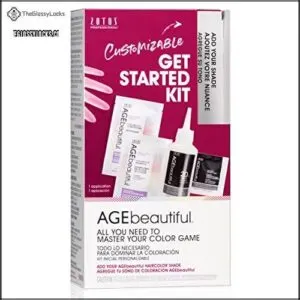
AGEbeautiful’s Get Started Hair Color Starter Kit fills the gap for those seeking more than just dye. It includes a 20-volume developer in an applicator bottle, ColorLock shampoo and conditioner, a skin wipe, gloves — everything except the shade itself, which you select separately.
For hair that’s 50% or more gray, the formula requires 45 minutes of processing time. Biotin, keratin peptides, and silk proteins enhance softness and coverage throughout the coloring process.
| Best For | First-time home colorists with thinning or graying hair who want a complete, salon-quality setup without the guesswork. |
|---|---|
| Gray Coverage | 100% |
| Color Longevity | Up to 8 weeks |
| Formula Type | Permanent with biotin |
| Conditioning Agents | Silk protein, keratin |
| Kit Completeness | Full starter kit included |
| At-Home Friendly | Yes, with full kit |
| Additional Features |
|
- Packed with hair-loving ingredients like biotin, keratin peptides, and silk proteins that leave hair softer and more manageable
- Comes with everything you need to get started — developer, shampoo, conditioner, gloves, and a skin wipe
- Delivers solid gray coverage that can last up to 8 weeks
- Doesn’t include the actual color shade, so you’ll need to buy that separately
- The dye smell is strong and it’s more likely to stain your skin than some other box dyes
- Some users notice fading after just a few washes, and a few report drier or more brittle ends afterward
3. Christophe Robin Dark Blonde Hair Gel
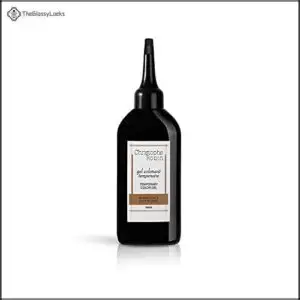
Not ready to commit to permanent color? The Christophe Robin Temporary Color Gel in Dark Blonde is worth keeping in your kit. It’s a no-mix gel that surrounds each hair fiber with pigment—no ammonia, no peroxide, no oxidants.
The formula is 92% natural-origin ingredients, enriched with oat flakes and inula flower extract to protect and brighten hair.
Lasting 5 to 7 shampoos, it’s ideal for blending sparse grays between salon visits—without long-term commitment.
| Best For | Anyone easing into gray coverage who wants a low-commitment, allergy-friendly option that skips the harsh chemicals. |
|---|---|
| Gray Coverage | Temporary/Gradual |
| Color Longevity | Few shampoos |
| Formula Type | Temporary gel |
| Conditioning Agents | Natural protective ingredients |
| Kit Completeness | Single tube, no tools |
| At-Home Friendly | Yes, no mixing needed |
| Additional Features |
|
- No mixing needed — just squeeze and apply straight from the tube
- Leaves hair feeling softer and shinier after each use
- Safe for people with PPD/PTD allergies who can’t use traditional dyes
- Coverage can be patchy on porous or previously colored hair, leaving some grays still visible
- The gel can stain your sink or shower if you don’t wipe it down right away
- Only lasts a few shampoos, so you’ll be reapplying pretty often
4. Clairol Medium Brown Root Touch Up
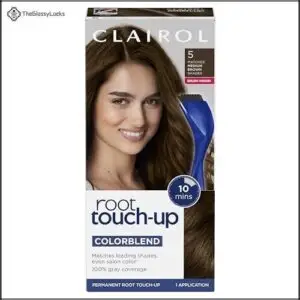
For something more committed than a temporary gel, Clairol Root Touch-Up in Medium Brown is a reliable go-to between appointments. At $7.96, it covers gray roots in 10 minutes flat — or 15 minutes if your grays are particularly stubborn.
The product’s ColorBlend Technology ensures the shade matches your existing hair color, creating a blended root-to-tip result rather than a patched appearance.
The kit includes a brush, bowl, and gloves, simplifying application. However, the 1.1 oz volume may be insufficient for thicker hair.
| Best For | Anyone who colors their hair regularly and wants a quick, affordable way to cover gray roots between salon visits. |
|---|---|
| Gray Coverage | 100% up to 3 weeks |
| Color Longevity | Up to 3 weeks |
| Formula Type | Permanent cream |
| Conditioning Agents | Color cream formula |
| Kit Completeness | Brush, bowl, gloves included |
| At-Home Friendly | Yes, quick application |
| Additional Features |
|
- Covers gray in just 10 minutes — no salon trip needed
- ColorBlend technology matches your existing shade so roots don’t look patchy
- Comes with everything you need: brush, bowl, and gloves included
- Only 1.1 oz per kit, which may not be enough for thick or long hair
- Coarse or stubborn hair might need more than one application for full coverage
- The mixture looks darker before it processes, so timing matters
5. Schwarzkopf Keratin Cappuccino Brown Hair Color
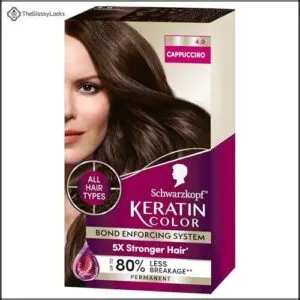
Schwarzkopf’s Keratin Color in 4.0 Cappuccino Brown targets gray hair that struggles to hold color. Its 3-step Bond Enforcing System combines a pre-color serum with vitamin B6 and collagen, a keratin-infused color cream, and a K-Bond-Plex conditioner.
This system delivers 100% gray coverage in one application while reducing comb-related breakage by up to 80% on damaged hair. At $11.97, it offers serious value.
Note that curly hair types may experience frizz, and longer hair typically requires two boxes for full coverage.
| Best For | Anyone looking to cover stubborn grays at home without wrecking their hair’s strength or texture. |
|---|---|
| Gray Coverage | 100% single application |
| Color Longevity | Fade-resistant |
| Formula Type | Permanent with keratin |
| Conditioning Agents | K-Bond Plex conditioner |
| Kit Completeness | Serum, developer, conditioner |
| At-Home Friendly | Yes, complete kit |
| Additional Features |
|
- Full gray coverage in one shot, with a 3-step system that actually works to keep hair stronger
- Cuts comb-related breakage by up to 80% — real difference if your hair’s already damaged
- At $11.97, it punches well above its price point
- Curly hair types may lose definition and deal with extra frizz after coloring
- Longer hair needs two boxes, which doubles the cost pretty quickly
- Color longevity can be hit or miss — some users saw gray coming back within three weeks
6. Clairol Dark Neutral Brown Hair Color
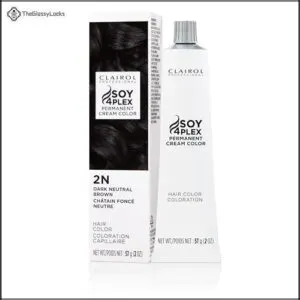
Clairol Professional 2N Dark Neutral Brown is a dependable workhorse for stubborn gray coverage at just $8.25.
Before applying, try a warm towel prep to open hair follicles — it helps the color absorb more evenly for fuller gray coverage.
Its SOY4PLEX formula conditions while it colors, eliminating the dry, straw-like feel often left by permanent dyes. The result is a neutral brunette tone that appears natural—not flat or muddy.
Mix at a 1:1 ratio with developer and process for up to 45 minutes for resistant grays. This ensures optimal coverage and depth.
Inconsistent mixing can cause patchy results, so careful preparation is key.
| Best For | Anyone who wants reliable, full gray coverage at home without spending a lot or sacrificing soft, healthy-looking hair. |
|---|---|
| Gray Coverage | 100% |
| Color Longevity | Fades after washes |
| Formula Type | Permanent cream |
| Conditioning Agents | Deep-conditioning agents |
| Kit Completeness | Color cream only |
| At-Home Friendly | Yes, experienced users |
| Additional Features |
|
- Covers stubborn grays completely, with no patchy roots showing through
- Leaves hair feeling soft and conditioned — not dry or straw-like after coloring
- Gives a natural, glossy finish that doesn’t look flat or overdone
- Color can fade after several washes, so touch-ups are part of the deal
- Uneven mixing leads to uneven coverage, so you have to be precise
- Only comes in dark neutral brown, so your shade options are pretty limited
7. Better Natured Dark Plum Hair Dye
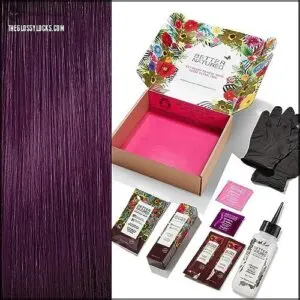
Better Natured’s 3V Dark Plum Liqui-Crème delivers a deep violet brunette tone with full gray coverage in 35–45 minutes. Its Triple Plant-Milk blend (Tahitian palm, coconut, and orchid) conditions hair during the dyeing process, leaving it soft rather than stripped.
At 90% naturally-derived and low on ammonia odor, this formula offers a gentler permanent coloring experience, particularly suited for sensitive scalps.
A few users note fading at the ends after a wash or two, so pairing the dye with a color-safe shampoo is recommended to maintain vibrancy.
| Best For | Anyone who wants a rich, salon-quality plum color at home — especially those with heavy grays or sensitive scalps who want a gentler dye experience. |
|---|---|
| Gray Coverage | Full gray coverage |
| Color Longevity | Up to 8 weeks |
| Formula Type | Low-ammonia permanent |
| Conditioning Agents | Triple plant milk blend |
| Kit Completeness | Serum, developer included |
| At-Home Friendly | Yes, beginner-suitable |
| Additional Features |
|
- Full gray coverage with a deep violet brunette tone that looks genuinely rich, not flat
- Triple plant-milk blend (palm, coconut, orchid) keeps hair feeling soft instead of fried
- Low ammonia smell makes the whole process way more bearable
- Color can fade at the ends after just a wash or two, so you’ll want a good color-safe shampoo
- Some buyers have gotten defective packaging — punctured tubes, dried-out product
- Results can look more dark brown than purple depending on your lighting
8. Clairol Red Clay Hair Color
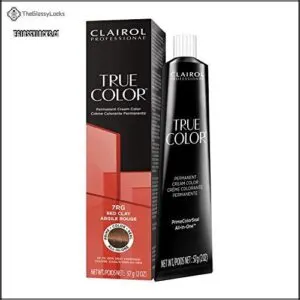
Red hair is commitment — and Red Clay delivers on that promise. This Clairol True Color permanent shade produces a rich auburn-brown tone with up to 100% gray coverage when paired with a 10–20 volume developer (sold separately, so grab that before you start).
On light to medium bases, expect a warm, glossy result that fades naturally toward copper over time. The chemical odor is noticeable, so work in a ventilated space.
Color-safe shampoo between touch-ups keeps that red from going brassy too fast.
| Best For | Anyone with light to medium brown hair who wants a warm, natural-looking auburn shade with solid gray coverage. |
|---|---|
| Gray Coverage | Full with developer |
| Color Longevity | Standard permanent |
| Formula Type | Permanent cream |
| Conditioning Agents | Shine and softness agents |
| Kit Completeness | No developer included |
| At-Home Friendly | Partial, needs developer |
| Additional Features |
|
- Rich red-brown color that looks natural and fades gracefully toward copper
- Full gray coverage when used with a 10–20 volume developer
- Leaves hair noticeably soft and shiny after processing
- Developer not included — you have to buy it separately
- Strong chemical smell, so you’ll want good ventilation
- Minimal coverage on very dark or heavily white/gray hair
9. Wella ColorCharm Medium Brown Hair Dye
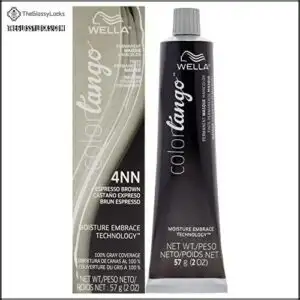
Wella ColorCharm Medium Brown is the reliable workhorse of at-home gray coverage. Its 7NN "Intense Neutral" formula bonds color molecules directly to resistant gray strands using Liquifuse technology, delivering 100% coverage in a single application.
The formula excels on processed or thinned hair when mixed with a 20–30 volume developer, ensuring minimal damage while depositing consistent, fade-resistant color.
One caveat: developer and tools aren’t included, so prepare all necessary items beforehand.
| Best For | Anyone who dyes their hair at home and wants reliable gray coverage without a salon visit, especially those with resistant grays or fine, processed hair. |
|---|---|
| Gray Coverage | Excellent gray coverage |
| Color Longevity | Fade-resistant |
| Formula Type | Permanent cream |
| Conditioning Agents | Standard conditioning |
| Kit Completeness | No developer included |
| At-Home Friendly | No, requires tools |
| Additional Features |
|
- Great gray coverage — the 7NN formula handles stubborn grays really well in one shot
- Gentle enough for processed or thinned hair when paired with a lower-volume developer
- Color stays vibrant and fade-resistant, so you’re not touching up every few weeks
- Developer and tools are sold separately, so it’s not a grab-and-go kit
- Pricier than your average drugstore box dye
- Can be tricky to get right — timing and measurements matter, or you risk uneven results
10. Clairol Rich Dark Brown Hair Color
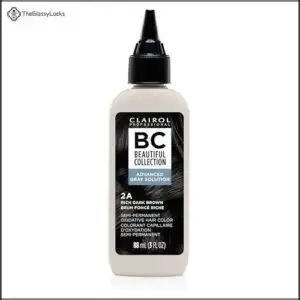
If deep, lasting coverage is your goal, Clairol Nice’n Easy R4 Rich Dark Brown delivers exactly that. Its oil-infused permanent formula penetrates fully, giving you 100% gray coverage with multi-dimensional color that mimics natural brunette depth.
The included Revitashine Intense Treatment bonds and seals color after application, keeping hair soft and luminous for up to 8 weeks.
At $7.90 a kit — with gloves included — it’s one of the most accessible permanent options for consistent, fade-resistant results at home.
| Best For | Anyone who wants gentle gray coverage without harsh chemicals — especially those with curly, coily, or previously chemically treated hair. |
|---|---|
| Gray Coverage | Effective semi-permanent |
| Color Longevity | Several washes |
| Formula Type | Semi-permanent no-mix |
| Conditioning Agents | Moisturizing formula |
| Kit Completeness | Pre-mixed, no developer |
| At-Home Friendly | Yes, single-step |
| Additional Features |
|
- No ammonia or peroxide, so it’s safe to use on relaxed or color-treated hair without extra damage
- Pre-mixed and ready to go — no developer, no measuring, just apply and wait 25 minutes
- Leaves hair feeling soft and moisturized, not stripped
- Color can fade faster than expected, sometimes needing a touch-up within two weeks
- The shade you see on the box isn’t always what you get — some users report unexpected tones like cherry-red instead of brown
- No gloves included, and the instructions can be tough to read, which makes a clean application trickier
Why Gray Hair Resists Color
Gray hair isn’t just a color change — it’s a structural one, and that’s exactly why it fights back against dye.
Gray hair doesn’t just lose its color — it transforms structurally, which is exactly why it resists dye
The strands are coarser, drier, and stripped of natural pigment, which once helped the color to lock in. Here’s what’s actually happening beneath the surface, and why it matters for getting coverage that sticks.
Coarser Texture and Lower Pigment
Gray strands carry coarser pigment particles with lower tinting strength, which creates a granular appearance and subtle opacity rather than a smooth, solid result. That coarser texture perception matters when dyeing gray hair because pigment scatters light unevenly, producing a matte finish instead of rich depth.
Ammonia-free hair dye options with ingredient nourishing oils support soft blending, while gray hair blending strategies rely on hair bonding and damage reduction techniques to hold color evenly.
Why Dry Strands Absorb Dye Unevenly
Dry gray strands absorb dye unevenly due to a porosity gradient along the shaft — porous ends absorb pigment faster than the roots. Cuticle roughness creates uneven entry points, causing color to pool in some spots while skipping others.
Moisture competing with dye molecules and chemical damage exacerbate this inconsistency. These factors disrupt the hair’s ability to uniformly retain color, worsening patchiness.
Moisturizing formulas enriched with nourishing oils support hair health after dyeing and improve color consistency. By addressing dryness and damage, these treatments help achieve more even pigment absorption.
Why Permanent Color Covers Gray Better
Permanent hair color works through a specific chemistry that other formulas simply can’t match for gray coverage. An alkaline pH shift opens the cuticle, allowing cortex penetration deep into the shaft. Oxidative pigmentation then develops inside the fiber through oxidation — not just coating the surface. That permanent pigment bonding creates opaque, durable coverage.
Demi-permanent formulas blend, while permanent color covers.
Common Reasons Gray Roots Show Quickly
Even with the right permanent formula, roots can reappear faster than expected. Genetic predisposition plays a real role — rapid hair growth (averaging half an inch monthly) combined with high color contrast between dyed lengths and dense gray coverage creates a visible line quickly. Fast product fading compounds the problem. The average hair growth of about half an inch per month means new roots can show in as little as two weeks.
Understanding gray hair regrowth patterns helps you stay ahead:
- High gray density breaks through at the hairline first
- Dark shades on light gray roots sharpen contrast fastest
- Semi-permanent formulas fade before regrowth even appears
When Blending Works Better Than Full Coverage
Blending works better than full coverage when you’re somewhere in that 20–60% gray range and tired of sharp root lines every four weeks. Techniques like babylights and balayage create a dimensional finish by weaving gray into placed tones — soft grow-out included, no hard demarcation.
It’s client-friendly, requires gentler color use, and stretches visits to 8–12 weeks. This approach offers lower maintenance and a more natural result.
Choose The Right Shade
Picking the right shade is more than matching a box to your memory of your old hair color. Gray percentage, skin tone, and how much coverage you actually want all pull the decision in different directions.
Here’s what to weigh before you commit: what to weigh before you commit.
Match Color to Your Natural Base
Your natural base level is the anchor for everything else. Base-level harmony starts with staying within one or two shades of your existing depth — that’s what keeps roots from telegraphing harsh contrast as they grow in.
Undertone alignment matters just as much: warm bases need golden or copper reflection; cool bases need ash.
Face-frame sync and subtle root gradation follow naturally when color depth matching is accurate from the start.
Pick Shades by Gray Percentage
Your gray percentage drives the formula — not just the shade you like.
- Low Gray Ratio (under 25%): A small neutral boost is enough; your remaining pigment does most of the work.
- Quarter Gray Mix (25–50%): Blend roughly 25% neutral base into your target shade for stability.
- Half Gray Blend (50–75%): Equal parts neutral and target shade anchors coverage reliably.
- High Gray Neutral (75–100%): Shift toward a Full Gray Formula — 75% or more neutral base — so color doesn’t look hollow or bright on resistant white strands.
Blonde, Brunette, Red, and Fashion Tones
Tone does as much work as pigment does. Cool Blonde Undertones in ash or champagne shades neutralize brassiness on gray hair coverage, while platinum blonde creates striking contrast on white strands.
Warm Brunette Highlights—honey, chestnut, tortoiseshell—hide regrowth with dimensional depth.
Rich Red Depths, like auburn and copper, deliver solid color fade resistance up to eight weeks.
Fashion Tone Pairings, from plum to teal, offer Best Vibrant Color. Seasonal color trends shift toward mushroom ash and warm terracotta.
Soft Shades for a Natural Finish
Soft shades — think cool taupe tones, muted beige, and mushroom — are one to two levels lighter than your natural base. Feathered root blending keeps regrowth invisible, ensuring a seamless transition instead of harsh lines.
Demi-permanent deposits work well here, layering tone with a gentle conditioning formula that nourishes without stripping coarse strands. This approach maintains hair health while delivering subtle, natural-looking coverage.
Cooler shades resist brassiness, preserving a polished tone over time. A glossy soft finish adds dimension, enhancing depth and movement for natural-looking gray hair coverage without a flat, artificial appearance.
Skin Tone and Eye Color Considerations
Your skin tone and eye color work like a filter — they either enhance or flatten your chosen shade.
- Warm undertones (golden, peachy skin): reach for honey blonde, copper, or chestnut; avoid ashy tones that dull your natural glow.
- Cool undertones (pink, bluish skin): ash brown, espresso, or soft burgundy deliver clean gray hair coverage without looking harsh.
- Eye color contrast guides depth — green or hazel eyes pop with caramel warmth; blue or gray eyes sharpen against cooler tones.
Neutral undertones have the widest flexibility in color matching based on skin tone.
When to Choose Gray Blending Instead
Not every head of gray needs full coverage. If you’re having 20 to 50 percent gray, blending is a low-maintenance alternative that stretches appointments to 8 to 12 weeks.
Babylights and balayage create a natural finish without that harsh regrowth line.
It’s also the smartest transition strategy for hair health — less chemical overlap, more softness between sessions.
Pick The Best Dye Type
Not all dyes are built the same, and that difference matters a lot when gray coverage is the goal. The type you choose affects how long the color lasts, how much your hair can handle, and how often you will need to reapply.
Here’s a breakdown of your best options.
Permanent Color for Stubborn Gray Coverage
When permanent hair color is the goal for gray coverage, it stands as the only formula that ensures long-term effectiveness. This is driven by oxidation chemistry, which facilitates deep Color Molecule Penetration into each hair strand, outlasting every other option.
Three critical components underpin its efficacy:
- 20-volume Developer Strength opens resistant cuticles.
- Pre-Color Conditioning evens porosity.
- Post-Color UV Shield extends hair dye longevity.
Demi-permanent Color for Softer Blending
Not every gray strand needs to disappear. Demi-permanent color works through deposit-only benefits — no harsh lift, no dramatic commitment. It lasts 12–28 washes, fading gradually so your grow-out stays soft rather than stark. That gradual fade shift makes root shadow technique easier to maintain between sessions.
| What Demi Does | What It Skips |
|---|---|
| Blends first grays softly | Full gray elimination |
| Adds shine and tone | Lightening your base |
| Eases grow-out lines | Strong developer action |
| Refreshes faded lengths | Permanent structural change |
| Enhances soft blend layers | High-commitment upkeep |
Gray hair blending with demi-permanent color suits mature hair that becomes dry or fragile — it’s a low commitment refresh that still delivers real, dimensional results.
Semi-permanent Options for Quick Refreshes
When demi-permanent feels like too much commitment, semi-permanent options step in cleanly. Color Depositing Masks, Leave‑in Tint Enhancers, and Direct Dye Touch‑up formulas refresh faded lengths without developer — no mixing, no guesswork.
- Pigment Shampoo Boost refreshes tone in one wash
- Temporary Color Sprays deliver same-day coverage fast
- Color Depositing Masks condition while adding pigment
- Temporary Color Depositing Mask formulas fade gradually, never dramatically
- Direct dyes offer strong color fade resistance on lightened hair
Root Touch-up Kits for Between Sessions
Root touch-up kits are the bridge between salon visits — and the right kit makes that gap nearly invisible. Both deliver solid color fade resistance and kit value without overcomplicating developer ratios.
Clairol’s precision brush design gives you targeted control, while dpHUE’s cap timing (45 minutes) manages resistant gray with minimal effort.
Apply color to your grayest sections first for even gray coverage every time.
Ammonia-free Formulas for Mature Hair
Mature hair is drier and more fragile, so an ammonia-free formula makes real sense here. Instead of the harsh cuticle lift that ammonia causes, these formulas use oils and gentle alkalizers for hair damage reduction while still delivering effective gray hair coverage.
Key benefits worth knowing:
- Nourishing oils like coconut and macadamia support moisturizing formulas for dry gray hair
- Odor reduction makes the whole process far more comfortable
- Extended processing time ensures even color deposit
- Some permanent ammonia-free options reach 100% gray coverage
- Sustainable packaging is increasingly common in this category
Follow up with strong post-dye hair care maintenance tips to keep the color smooth and vibrant.
Salon Color Versus At-home Kits
Salon color excels in customization flexibility and application precision — a stylist adjusts developer strength, blends multiple shades for resistant gray, and targets regrowth section by section.
At-home kits cost less per use, making cost comparison an easy win for DIY. However, fixed formulas limit ingredient control and professional consultation.
For stubborn gray, professional versus drugstore hair dye performance isn’t even close.
Color Gray Hair at Home
Coloring gray hair at home is totally doable — you just need the right steps in the right order. Gray strands are stubborn, so skipping even one part of the process can leave you with patchy coverage or faster fading.
Here’s exactly what to do from start to finish.
Patch Test Before Every Application
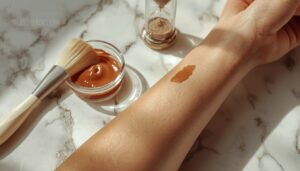
Patch testing before hair dye use isn’t optional — it’s your first line of defense. Mix a small amount of color, apply it to the inside of your elbow, and leave it uncovered for 48 hours.
Allergy timing matters: reactions can appear immediately or days later. Redness, itching, or burning mean stop.
Cross-reaction awareness applies too — even a formula you’ve used safely before can trigger a new sensitivity.
Gather Tools and Protect Skin
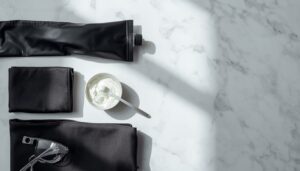
Before you squeeze a single drop of dye, set yourself up properly — your skin will thank you.
- Apply a barrier cream along your hairline, ears, and neck before you begin applying dye.
- Choose gloves based on glove material — nitrile resists chemicals better than latex and won’t trigger reactions.
- Clip on a protective apron and use an eye shield if you’re prone to splashing.
Section Hair for Even Saturation
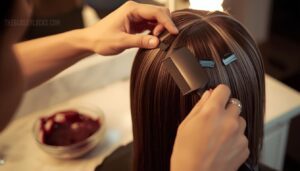
Think of your hair like a map — without clear zones, you’ll miss spots every time. Divide it into four quadrants using a center part and an ear-to-ear part, then clip each section away.
Section size control matters: Keep slices ½ to 1 inch thick for coverage consistency and placement flow.
| Section Type | Best For |
|---|---|
| ½ inch slices | Dense, thick hair |
| 1 inch slices | Fine or medium hair |
| Density subsections | Long or layered hair |
| Quadrant sectioning | All-over color uniformity |
Apply Color to The Grayest Areas First
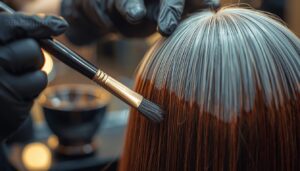
Start at the front hairline — that’s where gray is most visible and most resistant. Front hairline focus isn’t just cosmetic; those strands need the longest contact time with fresh product.
Use a brush bowl method for precise saturation technique, working each gray zone root-to-scalp before moving back.
Gray zone prioritization here is what separates patchy results from clean, even coverage.
Process for The Full Recommended Time
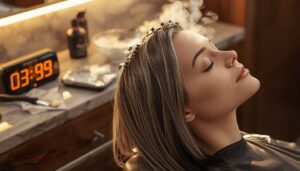
Once your last section is saturated, start your timer — not before. Timer accuracy changes everything here.
Full development takes 30 to 45 minutes, depending on your formula’s developer concentration. Cutting this short leaves gray strands undercooked, as their cuticles open slower.
Gray cuticles open slower, so saturation timing at the root section matters most.
Follow your application instructions exactly—don’t guess. Avoid overprocessing by stopping at the stated limit.
Rinse, Condition, and Check Coverage
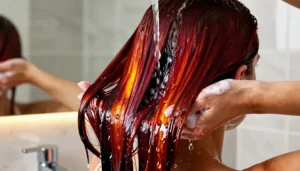
Once your timer goes off, move straight to a lukewarm rinse — hot water opens the cuticle and pushes pigment right out. Start at the scalp and work down, lifting sections for thorough section-by-section rinsing through thick or coily hair.
Apply conditioner only to mid-lengths and ends. Squeeze each section: waxy or slippery means residue remains.
Your scalp residue check is the last step before you’re done.
Fix Missed Spots Without Overprocessing
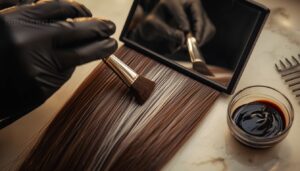
Mirror check before adding more dye saves you from overprocessing.
If you spot a missed gray strand, grab a precision brush and apply minimal product directly to that area — no wide sweeps.
- Target only the gray strand, not the surrounding roots
- Avoid section overlap by blending edges gently
- Use spot timing: don’t restart the full clock
- A temporary color-depositing mask works for minor gaps between root touchup solutions for gray hair
Make Gray Coverage Last Longer
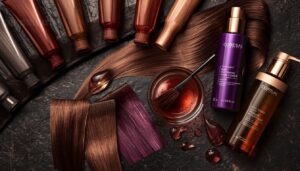
Getting the color down is only half the battle — keeping it fresh is where most people slip up.
Gray hair fades faster than pigmented strands, so your aftercare routine matters just as much as the dye you choose.
Here’s what actually is the key factor between color that lasts and color that washes out by week two.
Touch-up Schedule by Gray Regrowth
Your regrowth rate sets the clock — and gray density timing determines how fast it ticks.
If you’re more than 50% gray, plan touch‑up frequency around every four weeks; less than that, you can stretch interval planning to six.
Maintenance schedule for dyed gray hair works best when you schedule consistently, not reactively. Root regrowth management stays easier when you’re never chasing a full inch of contrast.
Sulfate-free Shampoo and Color-safe Conditioner
The cleanser you reach for after coloring matters more than most people realize.
Gentle cleansing agents — glucosides, betaines, sulfosuccinates — lift buildup without stripping pigment, unlike classic sulfates. These ingredients ensure color retention while effectively cleansing.
Low-foam formulas with a pH-balanced rinse keep the cuticle sealed, preserving vibrancy. Slip-enhancing conditioners further reduce detangling friction, minimizing damage to colored hair.
Look for UV filter additives; sun exposure accelerates gray coverage fade more aggressively than washing. This extra protection helps maintain color longevity between treatments.
Deep Conditioning for Dry Gray Hair
Gray hair loses moisture faster than pigmented hair — that’s just porosity at work. A color-protecting hair mask with both Humectant Boost ingredients (glycerin, aloe) and Protein Balance support fills rough cuticle gaps while sealing in softness.
- Porosity Repair: Apply using the right Application Technique — ends first, then mid-lengths
- Best Moisturizing Formula: Choose richer masks labeled Best For Dry Hair
- Treatment Frequency: Weekly deep conditioning delivers the most consistent hair care post-dye maintenance results
Heat and Sun Protection After Coloring
Heat is one of the fastest ways to undo fresh color. Flat irons reach up to 185°C — hot enough to lift the cuticle and let pigment escape — so a heat protectant spray before every tool is non-negotiable.
UV stability of dyes drops with UVA light exposure, making a UV filter spray and sun‑shielding hats essential outside.
A leave-in barrier aids hair care post-dye maintenance by evening out porosity and locking moisture in.
Glosses and Toners to Refresh Tone
Think of glosses and toners as a reset button between dye appointments. Both deposit color on the hair shaft’s surface — no lifting, no harsh chemistry — so they won’t disturb your base shade.
- Brassiness Neutralization: Purple shampoo and a temporary color-depositing mask counteract yellow and copper tones in silver or blonde hair.
- Sheer Pigment Boost: A color-depositing conditioner refreshes faded tone while delivering moisture — especially useful on coarse gray strands.
- Shine Enhancement: Acidic pH benefit the cuticle by sealing it flat, so toner services and gloss treatments leave hair noticeably more reflective.
Rotate a color-protecting shampoo into your routine daily, and reach for a mask refresh every four to six weeks to keep tone even.
How to Reduce Fading Between Dyes
Fading isn’t inevitable — it’s manageable with the right habits.
A low-wash schedule (twice weekly) combined with cool water rinses keeps cuticles sealed and slows color fading over washes considerably.
| Habit | Why It Works |
|---|---|
| Dry shampoo intervals | Extends days between washes without stripping pigment |
| Cool water rinses | Seals cuticles, improving fade resistance |
| Filtered shower water | Removes minerals that accelerate color fade |
| Leave-in protective spray | Blocks UV oxidation between appointments |
| Sulfate-free shampoo | Preserves color longevity and fade rate |
When to Recolor Roots or Lengths
Roots need attention every 4–6 weeks — sooner if your gray percent threshold is above 50%, which shortens that window to about 4 weeks. Overlapping permanent color too often causes buildup, so match your root touchup schedule to regrowth speed.
Lengths are a different story: recolor them only when they look visibly faded or uneven. Leave lengths alone until fade signs actually appear, as over-processing can lead to uneven results.
Frequently Asked Questions (FAQs)
What is the 50 50 50 rule for gray hair?
The 50/50/50 rule states that by age 50, roughly 50% of Caucasians have at least 50% gray hair — though global demographic statistics show actual prevalence sits closer to 6–23% worldwide.
What hair color works best to cover grey?
Permanent color works best because it penetrates the cortex for 100% gray coverage. Mineral build-up and low hair porosity block dye, so pre-moistening dry strands before applying improves results noticeably.
Is it better to go darker or lighter with grey hair?
Lighter shades win for low-maintenance grow-out — root fade speed is slower, texture compatibility improves on coarse gray strands, and the warm-cool contrast stays softer against maturing skin tones.
What do hairdressers use to cover grey hair?
Most professional hair colorists reach for permanent color mixed with the right developer strength, using a professional applicator brush for precise pigment bonding at the root — where gray coverage effectiveness matters most.
Which hair color covers gray the best?
Permanent color wins, hands down. Its oxidation levels and color molecule size allow pigment concentration to reach the cortex, ensuring effective gray hair coverage.
Demi and semi-permanent options simply can’t match that depth.
What hair color is best over grey?
Like finding the right key for a stubborn lock, permanent color with strong cortical penetration and high pigment density covers gray most effectively.
Ammonia-free formulas, in particular, offer advanced gray hair coverage effectiveness, ensuring optimal results.
What hair color cancels out gray?
Warm Golden, Rich Chocolate, Ash Brown, Red Copper, and Cool Platinum shades all cancel out gray effectively.
Each tone neutralizes silver differently, depending on your desired finish and gray coverage effectiveness.
What is the best hair color to blend with gray?
Cool blonde blends and ash brown camouflage work best. Balayage highlights, root smudging, and gloss toning soften transitions naturally — giving gray hair blending that looks intentional, not overworked.
Can gray hair be colored without permanent dye?
Semipermanent, demipermanent, and temporary options all work. They won’t fully erase stubborn grays, but ammonia-free hair dye options using plant pigments and oil-infused conditioning can blend and soften them noticeably.
What are the best products for stubborn gray?
Wella Koleston Perfect and L’Oréal Superior Crème are virtually unbeatable for stubborn gray, delivering 100% full gray coverage.
Both use non-drip creams with built-in extended wear boosters and UV protection additives.
Conclusion
The theory that gray hair simply can’t hold color? Disproven—repeatedly, by anyone willing to use the right formula and technique. Gray hair doesn’t have to mean faded, patchy, or short-lived results.
Hair coloring for gray coverage works when you match dye type to your gray percentage, prep strands properly, and stay consistent with your touch-up schedule.
Treat it like the different structure it is, and what grows in silver can look intentional.
- https://ritahazan.com/
- https://www.instagram.com/KimberlyLoomis
- https://www.solasalonstudios.com/
- https://goto.walmart.com/c/2035850/565706/9383?veh=aff&sourceid=imp_000011112222333344&u=https://www.walmart.com/ip/Revlon-ColorSilk-Beautiful-Color-Permanent-Hair-Color-41-Medium-Brown-1-count/10451024&partnerpropertyid=1874032
- https://phytohaircare.co.uk/phytocolor-7-3-golden-blonde/