
This site is supported by our readers. We may earn a commission, at no cost to you, if you purchase through links.
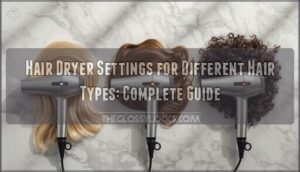
Your hair dryer’s temperature dial isn’t just a random feature—it’s the difference between a salon-quality blowout and a frizzy disaster. Most people crank their dryers to maximum heat, assuming hotter means faster and better. That approach works about as well as using a flamethrower to toast bread.
Fine hair sizzles at temperatures that barely warm thick curls, while coarse strands need heat levels that would devastate chemically treated locks. Understanding hair dryer settings for different hair types transforms your styling routine from guesswork into precision.
The right combination of heat, speed, and airflow protects your strands while delivering the results you want.
Table Of Contents
- Key Takeaways
- Hair Dryer Temperature Guidelines by Hair Type
- Choosing The Right Heat and Speed Settings
- Protecting Hair From Heat Damage
- Risks of Excessive Heat Exposure
- Best Hair Dryer Features for Hair Health
- Styling Straight Hair With a Hair Dryer
- Styling Wavy and Curly Hair Safely
- Blow-Drying Coily and Thick Hair
- Selecting The Ideal Professional Hair Dryer
- Hair Dryer Maintenance for Optimal Performance
- Frequently Asked Questions (FAQs)
- Conclusion
Key Takeaways
- Match your dryer’s heat setting to your hair’s damage threshold—fine and chemically treated hair needs 80–200°F, while thick and coarse strands can handle 325–355°F without breaking down protein structure.
- Speed and heat work as a team, not solo acts—low airflow protects fragile hair from mechanical stress, while high speed paired with moderate heat efficiently dries thick textures without prolonged exposure.
- Heat protectant products block up to 60 percent of thermal transfer and prevent moisture loss, making them non-negotiable for any heat styling routine regardless of your hair type.
- Modern dryer technology with ionic, ceramic, and NTC temperature sensors actively prevents damage by distributing heat evenly and adjusting power in real time, turning your tool into precision equipment rather than a blunt instrument.
Hair Dryer Temperature Guidelines by Hair Type
Getting the temperature right isn’t a guessing game—it’s about matching your dryer’s heat to what your hair can actually handle. Different hair types need different temperature ranges to dry efficiently without causing damage.
If you’re unsure where to start, understanding how blow drying affects your hair can help you choose the safest heat setting for your specific texture.
Here’s what you need to know for your specific hair type.
Fine and Damaged Hair Settings
Fragility defines fine hair and damaged hair—both demand your gentlest approach.
Use low heat between 80–100°F to prevent heat damage before it begins. Apply a heat protectant spray first, then limit each pass to 3–5 seconds. Keep your dryer at least six inches away.
Short exposure times preserve what strength remains, letting you style without sacrificing the health you’re working to rebuild.
It’s especially important to understand how hair texture affects heat when setting your dryer for delicate hair types.
Medium and Wavy Hair Settings
Medium hair and wavy hair require balanced heat for wave enhancement—set your dryer between 300°F and 340°F. Avoid exceeding 375°F, or you’ll flatten those natural S-shaped patterns.
Here’s your wavy hair care roadmap:
- Apply a lightweight wave enhancer on damp hair before drying
- Attach a diffuser to cup and lift sections toward your scalp
- Use medium heat styling with low to moderate airflow
- Finish with a cool shot to lock in definition and reduce frizz
For a step-by-step technique, check out this wavy hair tutorial method that demonstrates how tools and brushing methods affect your final look.
Thick and Coarse Hair Settings
Thick hair and coarse hair demand a different approach to heat control methods. Start at 325°F to 355°F with low to medium dryer speed settings—your strands can handle warmth, but moisture balance tips matter here.
Apply a leave-in conditioner before drying to shield against heat damage. Use a diffuser on low speed for thick hair styling that preserves texture and prevents frizz.
Curly and Coily Hair Settings
Curly and coily hair needs your care with curl definition in mind. Set your dryer to 200°F–230°F, pair it with a diffuser, and use low speed for frizz control.
Hair porosity affects moisture retention, so apply a heat protectant first. Ionic technology reduces static while preserving coily texture.
Tilt your head sideways, pulse warm air gently, and finish with cool bursts for curl enhancement.
Chemically Treated Hair Settings
Chemical damage breaks bonds and lifts cuticles, leaving your hair vulnerable to heat sensitivity and breakage.
Keep your dryer between 180°F–200°F to protect hair porosity while preventing further structural harm. Apply a heat protectant before every session for color preservation and damaged hair recovery.
Use ceramic or tourmaline technology for gentle temperature control, reducing the risk of heat damage while maintaining your treated texture.
Choosing The Right Heat and Speed Settings
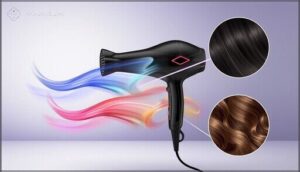
Understanding heat and speed settings is the difference between a perfect blowout and fried, damaged hair. Your dryer’s controls work together to customize airflow and temperature for your specific hair type and styling goal.
Here’s how to master each setting and know exactly when to reach for that cool shot button.
Low, Medium, and High Heat Explained
Understanding the heat settings on your dryer unlocks smarter temperature control and shields against thermal damage. Your choice of low, medium, or high heat directly impacts hair porosity and moisture levels.
- Low heat (120–140°F) protects fine or damaged strands from heat damage while preserving cuticle integrity
- Medium heat (140–160°F) balances speed with heat regulation for most styling techniques
- High heat (160–180°F) penetrates thick hair fast but demands careful heat management
- Match your heat setting to your hair’s tolerance for best results
Speed Settings for Different Hair Types
Speed settings control airflow management and heat distribution across your strands. Low speed reduces mechanical stress for fine or damaged hair, while medium speed balances drying time with texture preservation for wavy types. High speed handles thick, coarse hair efficiently by removing moisture fast.
Match speed variations to your hair type for smarter hair flow control and advanced drying techniques.
When to Use Cool Shot Function
The cool shot button is your secret weapon for locking in styles and preventing heat damage. A burst of cool air seals the cuticle after hot styling, delivering serious frizz control and shine.
Use cool shot to:
- Set curls or waves after diffusing for lasting hold
- Smooth roots and ends to minimize flyaways
- Lock in styles without additional temperature control exposure
- Boost shine by tightening hair cuticles
- Protect color-treated strands when paired with heat protectant
Cool air finishes what heat starts.
Cool air seals the cuticle after heat styling, locking in your look and preventing damage
Protecting Hair From Heat Damage

Heat damage doesn’t happen by accident—it’s the result of skipping protective steps that shield your hair from high temperatures. You can’t just crank up the heat and hope for the best.
Let’s cover the essential practices that keep your hair healthy while you style.
Importance of Heat Protectant Products
Heat protectant creates a barrier between your hair and the dryer’s heat, blocking up to 60 percent of direct thermal transfer. Most formulas use silicones or polymers that form a protective film around each strand, minimizing moisture loss and protein breakdown. Without this thermal shield, temperatures above 300°F can quickly strip your hair’s natural defenses.
| Product Type | Key Ingredient | Best For |
|---|---|---|
| Silicone Spray | Dimethicone | Fine, damaged hair |
| Leave-In Cream | Polyquaterniums | Thick, coarse hair |
| Serum | Argan Oil + Panthenol | Color-treated hair |
| Heat Shield Mist | Glycerin + UV Filters | Daily heat styling |
| Professional Formula | Cyclomethicone | All hair types |
Apply your heat protectant to towel-dried hair before blow-drying. Section your hair into four parts for complete coverage from root to tip. Allow 30 to 60 seconds for the product to dry before you start styling. This simple step aids damage prevention and extends the time between trims by preserving your hair’s structural integrity.
Safe Drying Techniques
Protecting hair from heat damage starts the moment you pick up your dryer. Temperature control and smart drying techniques form the foundation of safe styling practices, shielding your strands from unnecessary thermal stress.
These hair protection methods work together with your heat protectant, creating multiple layers of defense against thermal damage.
- Keep the dryer at least 6 inches from your scalp to prevent heat concentration and hotspots.
- Use a nozzle attachment to direct airflow along the hair shaft for even heat distribution.
- Move the dryer continuously in smooth, sweeping motions rather than holding it in one spot.
- Brush or comb while drying to spread heat evenly and reduce damage risk.
- Lower airflow on fragile hair combined with moderate heat minimizes mechanical breakage.
Drying Damp Vs. Wet Hair
One of the smartest drying techniques you can master is starting with damp hair instead of soaking wet strands. Damp hair dries 20 to 40 percent faster and withstands heat damage better because water doesn’t increase heat transfer into the cortex.
This approach gives you excellent moisture management and temperature control while reducing frizz and breakage across every hair type.
Risks of Excessive Heat Exposure
Your hair can only take so much before heat crosses the line from styling tool to damage dealer. What happens in those first few seconds matters just as much as what shows up months down the road.
Here’s what you need to watch for and how to keep your dryer from working against you.
Immediate Effects on Hair Health
Your hair’s reaction to heat damage shows up fast. Within minutes of blow drying, moisture loss drops hydration by 10 to 20 percent, especially on fine strands. Cuticle damage creates visible roughness and frizz, while protein degradation weakens the shaft.
Proper hair dryer temperature and heat settings with solid temperature control protect hair health and prevent immediate hair breakage.
Long-Term Damage and Signs
Over weeks and months, that quick damage adds up. Hair breakage clusters near mid-shaft and ends, while dry, straw-like texture replaces your natural bounce. Heat damage signs include increased frizz in humidity and visible color fade on processed strands. Watch for:
- Breakage appearing repeatedly in the same zones
- Rough, dull surface texture and reduced elasticity
- Scalp irritation or sensitivity from heat exposure
- Split ends migrating upward without regular trims
Structural weakness becomes harder to reverse without careful thermal protection and frizz control.
How to Prevent Overheating
Smart damage prevention starts with managing both time and temperature. Set your dryer between 140°F and 165°F for delicate hair, using the Cool Shot function every 15 to 20 seconds. Keep the nozzle 3 to 4 centimeters away and work in small sections.
| Prevention Method | Action Required | Benefit |
|---|---|---|
| Heat Limiting | Start low, increase gradually | Reduces thermal stress |
| Thermal Sensors | Monitor temperature display | Controls heat damage |
| Airflow Control | Maintain moderate speed | Prevents heat concentration |
| Damage Prevention | Apply heat protectant first | Shields hair cuticle |
Modern dryers with NTC technology adjust heat settings automatically within your chosen temperature range, giving you consistent heat damage prevention without constant manual tweaking.
Best Hair Dryer Features for Hair Health
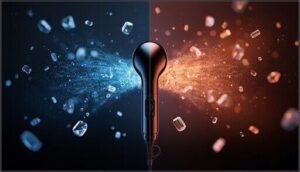
The right hair dryer technology can make the difference between damaged, dull hair and healthy, shiny strands. Modern dryers pack features that do more than just push hot air—they actively protect your hair while styling.
Let’s break down the three key technologies that separate professional-grade dryers from basic models.
Ionic, Ceramic, and Tourmaline Technologies
Modern dryer technology transforms how you protect your hair during styling. Three powerhouse features work together to minimize damage:
- Ionic technology releases negative ions that break down water molecules, speeding evaporation while smoothing your cuticle and eliminating static
- Ceramic plates distribute infrared heat evenly across every strand, preventing hot spots that cause breakage
- Tourmaline benefits boost ionic flow for maximum frizz control and enhanced shine
Advanced Temperature Regulation Systems
High-speed dryers with NTC technology use heat sensors and PID controllers to adjust your temperature range automatically. These smart heating systems monitor outlet temperatures in real time, preventing heat spikes that damage strands.
Thermal regulation keeps settings between 100°F and 140°F by responding within fractions of a second. You get consistent temperature control that adapts as your hair dries.
Essential Attachments for Styling
The right hair dryer attachments and tools transform your styling routine. Professional attachments direct airflow precisely, improve texture, and protect strands from concentrated heat.
- Concentrator nozzle creates sleek, frizz-free finishes by targeting specific sections for precision styling around bangs or edges
- Diffuser preserves curl definition while spreading airflow gently across natural texture and minimizing frizz
- Round brush adds instant volume at roots and creates smooth bends for professional blowout results
Styling Straight Hair With a Hair Dryer
Straight hair gives you a blank canvas to work with—whether you’re going for sleek and polished or full of movement. The key is knowing which techniques bring out the finish you want without causing unnecessary damage.
Let’s break down the essential methods, settings, and tools that’ll help you nail the perfect straight blow-dry every time.
Sleek Straight Blow-Dry Technique
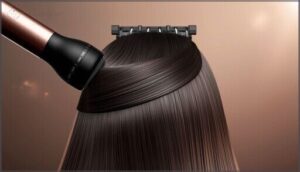
Creating sleek straight hair starts with heat control between 300 and 350°F to smooth the cuticle without damage.
Divide your hair into four to six horizontal sections, starting at the nape. Hold your round brush at a 45-degree angle downward, maintaining steady tension as you glide through each 1 to 2 inch pass without lingering.
Adding Volume and Shine
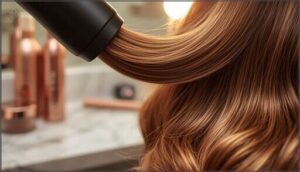
Lift your roots with purpose—direct the nozzle downward at a 45-degree angle while pulling a round brush upward to create tension.
Apply lightweight volumizing mousse at damp roots before drying for lasting height.
Finish with a cool shot to lock the cuticle, then smooth a small amount of shine serum on dry ends to reflect light without adding weight.
Recommended Settings and Tools
Set your dryer to medium heat (350 to 375°F) with medium speed for balanced thermal control. Pair a concentrator nozzle with a 2-inch round ceramic brush to direct airflow precisely.
Choose heat tools with ionic technology to combat static while maintaining temperature control. These dryer settings protect your hair type during styling while delivering salon-quality results with proper hair care.
Styling Wavy and Curly Hair Safely

Wavy and curly hair needs a different approach than straight textures—mainly because the wrong technique turns beautiful texture into a frizzy mess.
The secret lies in controlling both heat and airflow to work with your natural pattern instead of against it.
Here’s how to bring out your best waves and curls while keeping damage at bay.
Enhancing Waves With Diffusers
Diffuser placement transforms how your waves form by scattering heat evenly across every strand instead of blasting one spot. When you cradle sections at a 45-degree angle from your scalp, you’ll lift roots while reducing direct heat concentration—critical for achieving defined waves without the frizz.
- Start at the roots and hold the diffuser steady to encourage natural lift and volume
- Move in upward circular motions along sections to mold uniform wave patterns gently
- Use medium heat and medium speed to shape waves while minimizing cuticle damage
- Finish with cool air to lock the wave pattern and reduce flyaways
Defining Curls Without Frizz
Product selection makes or breaks curl definition and frizz control. Use curl enhancement creams or lightweight gels on damp curly hair to coat each strand before styling.
Scrunch sections gently while diffusing on low to medium heat—this method locks in your hair texture without disrupting natural curl definition. Ionic technology dryers cut frizz reduction time, while a cool shot at the end seals the cuticle for lasting hold.
Temperature and Airflow Tips
To define those curls and keep them intact, it’s essential to dial in the right thermal settings. Airflow control and heat distribution work together to prevent frizz while maintaining moisture.
- Set your hair dryer temperature between 90-110°F (32-43°C) for curly hair.
- Use low air speed to avoid disrupting curl patterns.
- Position the diffuser 3-4 inches from your scalp for even heat distribution.
- Finish with cooling systems or a cool shot to lock in definition.
Blow-Drying Coily and Thick Hair
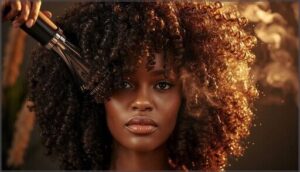
Coily and thick hair demands a different approach than other textures—one that respects its unique structure and moisture needs. You’ll need to balance effective drying with preserving your hair’s natural pattern and health.
Here’s how to blow-dry coily and thick hair without causing damage or losing definition.
Gentle Stretching Methods
Stretching coily or thick hair with heat requires careful temperature control to avoid heat damage. Use low heat settings around 90-110°F, ideal for your hair type, while incorporating breathing techniques and posture correction to reduce tension.
Flexibility exercises before styling improve blood flow and support tissue repair. Muscle relaxation during the process helps prevent pulling, protecting your fine hair sections from breakage without compromising your desired length.
Maintaining Moisture and Definition
Your hair’s moisture balance depends on sealing the cuticle during and after drying. Apply a lightweight leave-in conditioner to damp sections, then use medium heat with low speed to minimize friction.
Direct airflow from roots to tips—this locks in hydration and enhances shine. Finish with a cool shot for 10 seconds to close the cuticle, supporting long-term moisture retention and frizz control.
Recommended Heat and Speed Levels
Keep heat settings between 320 and 360 degrees Fahrenheit to protect your coils without sacrificing drying power. This hair dryer temperature range respects thermal limits while delivering effective results. Ideal heat settings preserve moisture, and low heat paired with consistent airflow prevents cuticle damage better than high heat bursts.
Use low to medium speed controls to reduce mechanical stress on fragile strands.
Selecting The Ideal Professional Hair Dryer
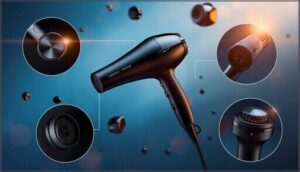
Choosing the right professional hair dryer can feel overwhelming with so many options on the market. The best dryer for you depends on your hair’s unique needs and the features that protect it from damage.
Here’s what you should look for to make a smart investment.
Key Features for Different Hair Types
Choosing your dryer starts with matching technology to hair texture. Fine strands thrive with ceramic coating that spreads gentle heat evenly, while thick hair needs tourmaline elements for powerful negative ions.
Ionic technology cuts drying time across all hair types without cranking up dangerous temperatures. Look for multiple heat settings that give you control—low for damaged locks, high for coarse manes.
NTC and Intelligent Temperature Control
Modern NTC sensors transform how your dryer regulates heat. These thermistors detect tiny temperature shifts—down to fractions of a degree—feeding real-time data that triggers adaptive modulation of heater power.
Intelligent temperature control keeps outlet air within plus or minus 2°C of your target, preventing the spikes that fry fragile strands.
Safety cutoffs engage instantly if readings hit risky thresholds, giving you consistent, damage-free styling every time.
Investment Tips for Long-Term Hair Health
Think of a quality dryer as hair health insurance—an upfront investment that slashes damage repair costs over years of styling.
Budget $150 to $300 for ionic or tourmaline models with intelligent controls; they deliver safe hair styling practices that prevent breakage and eliminate expensive salon treatments.
Prioritize preventive measures now, and your long-term styling becomes seamless while hair health maintenance stays affordable.
Hair Dryer Maintenance for Optimal Performance
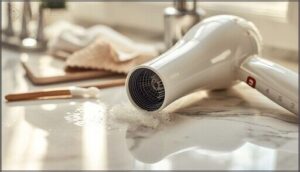
Your hair dryer won’t perform at its best without regular upkeep. A little maintenance goes a long way in protecting your hair and extending your dryer’s lifespan.
Here’s what you need to focus on to keep your tool in top shape.
Cleaning and Filter Care
Your hair dryer won’t perform at its best if filters are clogged with dust and debris. Regular filter inspection and cleaning frequency directly impact airflow maintenance and drying efficiency. Here’s what you need to know about filter replacement and dust removal:
- Unplug your dryer and remove the filter housing to check for buildup monthly
- Use a soft brush or compressed air for thorough dust removal without pushing particles deeper
- Replace filters when visibly clogged or per manufacturer guidelines to protect hair health maintenance
Checking Attachments and Cords
Beyond filters, cord safety demands your attention. Inspect the plug for bent prongs or cracks before each use. Check your hair dryer’s cord for fraying near both ends—damage prevention starts here.
Verify your concentrator nozzle and other attachments snap securely without wobble. Wire maintenance isn’t glamorous, but loose connections create safety risks. Replace worn nozzle attachment pieces immediately.
Frequently Asked Questions (FAQs)
Can I air dry hair instead of using heat?
Yes, you can air dry hair instead of using heat. Air drying reduces heat exposure, preserves natural texture, and minimizes moisture loss—especially beneficial for fine, curly, or chemically treated hair types.
How often should I replace my hair dryer?
Replace your hair dryer every 3 to 5 years with normal use. Professional hair dryers with proper maintenance tips and regular safety checks can last longer, but watch for heat damage signs and declining performance.
Does wattage affect hair dryer performance significantly?
Absolutely—wattage impacts drying speed, heat distribution, and airflow control dramatically. Models between 1800-2000 watts dry thick hair faster while offering better energy efficiency.
Professional hair dryers balance high wattage with intelligent temperature guidelines for ideal results.
Can hair dryers cause scalp irritation or burns?
Direct high heat raises scalp skin temperature quickly, causing redness, itching, and discomfort. Burn risk factors increase with faulty dryers or pre-existing scalp conditions. Always maintain distance and use heat protectants for scalp burn prevention.
Should I blow dry hair before or after styling products?
The old “slather everything on first” approach? That’s a recipe for flat, greasy hair.
Apply heat protectant before blow-drying, then layer styling products after to lock in shape and control frizz effectively.
Conclusion
Your hair dryer becomes a precision tool when you match settings to your specific needs. Fine hair thrives with gentle warmth, thick strands demand sustained heat, curls need careful airflow control.
Mastering hair dryer settings for different hair types eliminates guesswork and protects your investment in healthy hair. Temperature dials aren’t obstacles—they’re your styling advantage.
Start with conservative settings, observe how your hair responds, then adjust accordingly. The difference between mediocre and outstanding results lives in these small, deliberate choices.