This site is supported by our readers. We may earn a commission, at no cost to you, if you purchase through links. This content is for general informational and educational purposes only and is not a substitute for professional medical, dermatological, or nutritional advice.
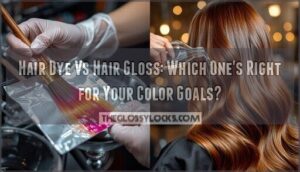
You’ve stared at enough Pinterest boards to know what you want: glossy, dimensional color that makes people do a double-take. But here’s where it gets confusing—salons throw around “hair dye” and “hair gloss” like they’re interchangeable, and they’re absolutely not.
Hair dye cracks open your hair shaft and rewrites your color from the inside out, while gloss coats the outside to amplify what’s already there. One’s a commitment that lasts through months of bad hair days and good ones; the other’s a low-risk refresh that fades gracefully.
If you’re standing in the color aisle or sitting in a salon chair wondering which treatment gets you closer to your goals, the answer depends on whether you’re ready to transform or just want to turn up the volume on what you’ve got.
Table Of Contents
- Key Takeaways
- Hair Dye and Hair Gloss Basics
- Chemical Composition Differences
- Color Transformation Capabilities
- Application and Process Comparison
- Longevity and Fading Patterns
- Impact on Hair Health
- Maintenance and Aftercare Tips
- Benefits and Drawbacks Compared
- Best Uses for Each Treatment
- Choosing The Right Option for You
- Frequently Asked Questions (FAQs)
- Does hair gloss count as hair dye?
- Does a hair gloss darken your hair?
- What is the difference between hair gloss and hair dye?
- Can hair dye damage split ends?
- Can hair gloss be used on dyed hair?
- Are hair gloss & glaze healthier than permanent dyes?
- What is a hair color gloss?
- Do hair glosses make a difference?
- Is hair gloss better than hair color?
- What are the disadvantages of hair gloss?
- Conclusion
Key Takeaways
- Hair dye cracks open your hair shaft to permanently rewrite color from the inside out, while gloss coats the surface to enhance what’s already there without deep penetration or lasting commitment.
- Dye delivers dramatic transformations and full gray coverage that lasts months but comes with chemical damage risks, harsh root lines, and mandatory touch-ups every four to six weeks.
- Gloss boosts shine by 25-40% and subtly adjusts tone without structural damage, fading gracefully over two to six weeks with no visible regrowth line.
- Your choice depends on whether you need a complete color overhaul with dye or just want to amplify vibrancy and neutralize brassiness with a low-risk gloss treatment.
Hair Dye and Hair Gloss Basics
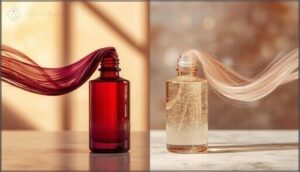
Before you commit to a color change, you need to understand what you’re actually putting in your hair. Hair dye and hair gloss work in completely different ways, and knowing the basics keeps you in control of your results.
If you’re still figuring out which shade works best for your skin tone and lifestyle, this guide on what color you should dye your hair breaks down how to choose without the guesswork.
Let’s break down what each treatment really is and what it’s meant to do.
Definition of Hair Dye
Hair dye is a cosmetic product that chemically transforms your hair color by depositing pigment and altering natural melanin inside the hair structure. Through oxidative chemical reactions involving hydrogen peroxide and alkaline agents, permanent hair dye opens the cuticle and triggers color theory principles in the cortex.
This pigment deposition creates lasting changes—whether you choose permanent hair dye or demipermanent color—giving you complete control over your look. For a clear overview of the different types of hair dye, it’s important to bear in mind how each option suits your color goals.
Definition of Hair Gloss
Unlike permanent color that transforms melanin, a gloss treatment is a semi-permanent product that coats the outer cuticle to boost hair shine and revitalize color without full penetration.
This lightweight formula creates a reflective coating that improves hair luminosity and vibrancy. Gloss benefits include instant color enrichment and improved texture, revitalizing your hair between salon visits. It’s a low-commitment way to intensify what you’ve already got.
For more information on the benefits, application methods, and results of gloss treatments, see this detailed guide on hair gloss treatments and shine.
Key Purpose of Each Treatment
Now that you understand what each treatment does on a technical level, let’s get into why you’d reach for one over the other.
Hair dye changes your pigment completely—think gray coverage, bold transformations, or serious color correction when things go sideways. Hair gloss, your go-to semipermanent treatment, delivers shine boosters and tone revitalizing without the commitment. It’s perfect for temporary treatment situations when you want hair enhancement between full color services or subtle gray blending without permanent dye.
Here’s what each treatment actually accomplishes:
- Dye creates lasting change by depositing new color deep inside your hair shaft for complete gray coverage or dramatic level shifts
- Gloss adds reflective shine while gently adjusting tone to neutralize brassiness and revive faded color between appointments
- Dye facilitates major transformations from dark to light or precise color correction when previous treatments need fixing
- Gloss delivers low-stakes enhancement that boosts vibrancy and smooths the cuticle without altering your base hair color
Chemical Composition Differences
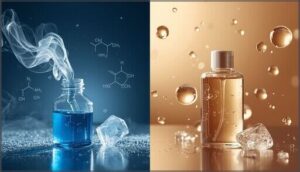
The real difference between dye and gloss comes down to what’s actually in the bottle. Hair dye packs powerful chemicals designed to crack open your hair and rewrite its color from the inside out. Gloss takes a gentler route with a completely different formula that works on the surface instead.
Dye cracks open your hair to rewrite color from within; gloss coats the surface with a gentler formula
Ingredients in Hair Dye
When you go permanent, you’re unleashing serious chemistry on your strands. Hair dye packs ammonia to crack open your hair’s outer layer and hydrogen peroxide that triggers chemical reactions inside.
Colorant types like para-phenylenediamine form new pigment molecules, while pH levels shift dramatically to let those dye components penetrate deep. That’s how permanent hair color locks in—through aggressive chemical hair processing and oxidizing agents working together.
Ingredients in Hair Gloss
Gloss formulas flip the script with gentler chemistry. You won’t find ammonia or hydrogen peroxide here—just conditioning agents like panthenol and cuticle sealers such as dimethicone that coat your strands. Redken Shades EQ and similar ammoniafree glosses rely on color depositing micro-pigments and neutralizing pigments to adjust tone without forcing open the cuticle.
- Gloss enhancers like silicone derivatives add slip and shine
- Plant oils and humectants maintain moisture for a reflective finish
- Film-forming polymers create temporary transparent layers that boost gloss
How Each Formula Works
The color chemistry behind these two treatments couldn’t be more different. Hair dye penetrates deep by raising the pH to 9 with ammonia, pushing hydrogen peroxide and pigment molecules into the cortex, where pigment binding creates permanent hair color through covalent bonds. Meanwhile, hair gloss coating sits on the cuticle surface, using reflective polymers and conditioning agents that amplify shine without true dye penetration or formula interaction below.
| Aspect | Hair Dye | Hair Gloss |
|---|---|---|
| Chemical action | Opens cuticle, deposits pigment in cortex | Coats cuticle surface with reflective film |
| pH level | Alkaline (9+) for penetration | Near-neutral for gentle application |
| Bonding mechanism | Covalent bonds with keratin fibers | Temporary polymer layer over strands |
| Key agents | Ammonia, hydrogen peroxide, oxidative dyes | Silicones, conditioning oils, micro-pigments |
| Result durability | Permanent until hair grows out | Fades evenly over 4–6 weeks |
Color Transformation Capabilities
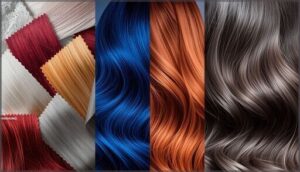
Here’s where the rubber meets the road: what can each treatment actually do to your hair color? Dye rewrites your entire color story, while gloss works with what you’ve already got.
If you’re aiming for a low-key transformation, exploring subtle hair color change ideas can help you choose the right approach for your look.
Let’s break down which one delivers the transformation you’re after.
Permanent Color Changes With Dye
Permanent hair dye isn’t playing around—it breaks down your natural hair pigmentation to rebuild your color from the inside out. This permanent color shift gives you control over dramatic transformations, gray coverage, and serious level changes, but with that power comes real color fade patterns and dye damage control challenges.
- Lifts melanin inside the cortex using oxidizers to lighten your base shade
- Deposits larger pigment molecules that lock into keratin for lasting color
- Covers stubborn grays completely by filling gaps where natural pigment vanished
- Changes levels dramatically—go from dark brunette to bright blonde or vice versa
- Creates defined regrowth lines requiring touch-ups every four to six weeks
Subtle Enhancements With Gloss
Think of hair gloss as your secret weapon for a low-commitment glow-up. This hair treatment adds shine enhancement by depositing a micro-thin layer that boosts your hair’s reflection by 15 to 25 points on a gloss meter—no heavy chemicals required. You get color refresh and hair smoothening without the drama of hair dye.
| Gloss Benefits | What You Actually See |
|---|---|
| Color Enhancement | Shifts tone 1–2 levels, neutralizes brass |
| Shine Boost | Reflective finish at 420–460 nanometers |
| Texture Gains | 10–20% frizz reduction, smoother cuticle |
| Gloss Durability | Lasts 5–10 washes, fades evenly |
Hair gloss vs. hair dye? Gloss wins for subtlety. It won’t lighten your base hair color, but it’ll make what you’ve got look expensive.
Suitability for Drastic Vs. Gentle Color Shifts
Your hair goals determine whether you need hair dye or hair gloss. Drastic makeovers—like going from brunette to blonde—require dye to penetrate the cortex and permanently alter pigment.
Hair gloss vs hair dye comes down to depth: gloss offers gentle toning and shade enhancement that sits on the cuticle for color shift options without structural change. Tone correction and color enhancement stay surface-level with gloss, while hair color transformation demands dye’s deeper reach.
Application and Process Comparison
Getting your hair colored isn’t just about picking a shade—it’s about how the process actually fits into your life. Whether you’re booking a salon appointment or grabbing a box from the drugstore, dye and gloss require different levels of commitment and skill.
Let’s break down how each one works in practice, from where you can get it done to how long you’ll be sitting in that chair.
Salon Vs. At-Home Methods
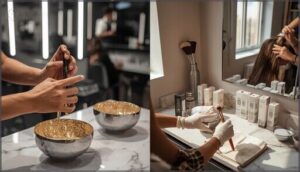
You’ve got two paths here: salon services with professional tools and custom formulas, or at-home kits you mix in your bathroom. Salons offer consultations that dial in color accuracy using customized cosmetic hair treatments for both hair dye and hair gloss.
DIY risks include uneven results and limited shade control, but kits give you freedom and budget flexibility for your hair color goals.
| Method | Advantages | Limitations |
|---|---|---|
| Salon | Precision formulas, bond protection, expert color correction | Higher cost, scheduling required |
| At-Home | Budget-friendly, convenient timing, control over process | Limited customization, potential for errors |
| Both | Can achieve dye or gloss results | Skill level impacts final outcome |
Application Time and Complexity
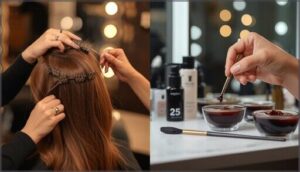
Whether you choose salon services or DIY, timing considerations matter. Dye processing takes 30 to 45 minutes, with sectioning techniques that demand precision—each subsection needs careful attention to avoid patchiness. Gloss application is faster, usually 20 to 30 minutes total, with simpler one-step coverage. Salon efficiency shines with both cosmetic procedures, but gloss wins for speed.
| Treatment | Application Time | Complexity Level |
|---|---|---|
| Hair Dye | 30-45 minutes | High (precise sectioning required) |
| Hair Gloss | 20-30 minutes | Low (uniform application) |
| Both | Plus 5-10 min rinse | Skill affects results |
Compatibility With Different Hair Types
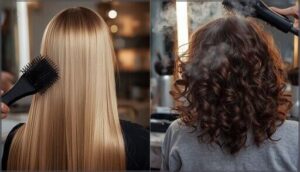
Your hair texture and porosity determine how well each treatment performs. Fine hair shows dramatic color shifts with dye but responds gently to gloss. Coily and curly curl patterns may need longer processing for even dye coverage, while straight hair takes color predictably. Scalp sensitivity? Gloss wins with gentler formulas that won’t irritate.
| Hair Type | Dye Compatibility | Gloss Compatibility |
|---|---|---|
| High Porosity | Fast absorption, quick fading | Even shine, gentle enhancement |
| Low Porosity | Needs heat, longer processing | Surface coating, predictable results |
| Fine/Straight | Strong color change | Lightweight shine boost |
| Coily/Curly | Heat-assisted coverage needed | Moisture sealing, frizz control |
Longevity and Fading Patterns
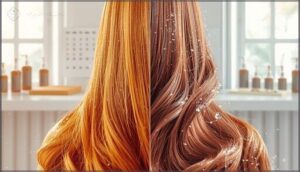
You need to know how long your color will last before you commit. Dye and gloss fade in completely different ways, and that affects how often you’ll be back in the chair.
Let’s break down what you can expect from each treatment over time.
Duration of Hair Dye Results
Generally, permanent hair color holds strong for four to six weeks before fading patterns become obvious. Your hair porosity plays a huge role in color retention—porous strands lose vibrancy faster than moisturized ones.
Hot water and frequent washing speed up color fade rates, while color-safe routines extend dye longevity. Root regrowth usually prompts touch-ups every month or so.
How Long Hair Gloss Lasts
Semi-permanent gloss longevity sits between two and six weeks, depending on your hair porosity and washing routine. Color fade speeds up with hot water and sulfate shampoos, while sulfate-free products stretch shine duration by one to two extra weeks.
Unlike permanent hair color, gloss fading patterns stay gradual and even—no harsh lines, just a soft return to your base.
Fading and Root Line Differences
Root line management separates dye from gloss in fading speed and visibility. Dye creates a sharp demarcation line as your natural color grows in, while gloss blends regrowth seamlessly.
Color fade patterns differ too—dye shifts toward warmer tones over weeks, but gloss loses reflectivity gradually without dramatic change.
Porosity effects intensify both processes, speeding hair color loss on damaged strands.
Impact on Hair Health
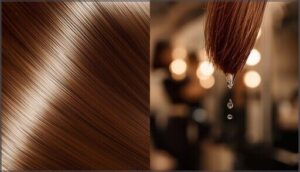
Your hair’s health matters just as much as the color you’re chasing. Dye and gloss don’t treat your strands the same way, and understanding the difference keeps you in control.
Here’s what each treatment does to your hair’s strength and shine.
Potential Damage From Dye
Hair dye packs a punch, but that power comes with risks. High concentrations of hydrogen peroxide and ammonia can destroy protein bonds, leaving you with breakage, scalp irritation, and even follicle damage. Chemical burns aren’t just salon horror stories—they’re real.
Here’s what chemical processing can do:
- Weaken your hair’s structure through repeated exposure and oxidative stress
- Trigger contact dermatitis from dye ingredients penetrating your scalp
- Strip protective barriers and disrupt natural oil production around follicles
Gentleness of Hair Gloss
Unlike dye’s aggressive assault on your strands, hair gloss brings gentle formulas designed for hair protection without the trauma. These color enhancement treatments skip ammonia and harsh peroxides, relying on lightweight polymers and conditioning agents instead.
You get gloss benefits like damage reduction through surface sealing, improved moisture retention, and smoother cuticles. It’s a rebellion against chemical destruction—boosting hair health without sacrificing your mane’s integrity.
Hair Strength and Shine After Treatment
After color treatments, you’re looking at real changes in both hair strength and shine—not just surface glitter. Dye temporarily weakens strands but bounces back with protein-rich conditioners, while gloss creates that mirror-like finish by sealing gaps.
- Hair breakage drops up to 20% with bond-building products after dye
- Shine boosters like gloss increase light reflection by 25-40% instantly
- Color fade happens unevenly with dye but gloss fades smoothly
- Damage repair takes 2-4 weeks as hair porosity stabilizes post-treatment
Maintenance and Aftercare Tips

Your color isn’t a one-and-done deal—it needs the right backup to stay vibrant and healthy. Whether you went bold with dye or subtle with gloss, your aftercare routine makes all the difference.
Here’s how to protect your investment and keep your color looking fresh.
Products for Dye Maintenance
Your Color Protecting shampoo and conditioner are non-negotiables—they seal cuticles and fight fading with UV filters. Clarifying shampoos tackle mineral buildup without stripping pigment.
Between salon visits, Color Depositors refresh your shade without commitment. Bond building Hair Masks strengthen strands so your Hair Dye actually lasts.
Leave-in Shine Enhancers with heat protection? They’re your secret weapon against styling damage while keeping that Hair Color vibrant.
Caring for Glossed Hair
Glossed strands don’t demand much—just smarter choices. Start with sulfate-free shampoo to lock in that reflective finish without stripping it away prematurely.
Your Hair Gloss Maintenance toolkit:
- Lightweight conditioner for daily slip without weighing down shine
- Weekly deep mask to restore moisture and boost reflectivity
- Heat protectant spray below 350°F for Thermal Protection during styling
- Cool water rinses to seal cuticles and enhance Shine Enhancement
- UV protective products for serious Color Preservation against sun fade
Keep it simple, keep it shiny.
Washing Frequency and Styling Advice
Wash your dyed or glossed hair every two to three days—this rhythm preserves shine and prevents premature fading. Stick with Sulfate Free Routines and lukewarm water for Gentle Shampooing that protects your Hair Color investment.
Before heat styling, always apply a protectant and keep tools below 350°F for proper Styling Tool Care. Air dry when you can, and finish with Color Safe Products to maintain that fresh-from-the-salon look longer.
Benefits and Drawbacks Compared
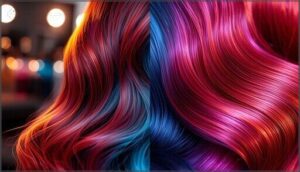
Before you commit to one treatment over the other, you need to see the full picture. Both hair dye and hair gloss come with their own set of advantages and limitations that’ll directly impact your results.
Here’s what you’re signing up for with each option.
Pros and Cons of Hair Dye
Permanent color delivers full gray coverage and lasting transformation, but chemical risks like dye allergies and hair breakage come with the territory. High-level lightening can cause serious color damage if you’re not careful with aftercare.
Semi-permanent color offers flexibility without the commitment, though color fade kicks in faster.
Hair dye gives you control and bold results, but respect the process.
Pros and Cons of Hair Gloss
Hair gloss brings major shine and subtle color enhancement without breaking your hair’s structure—that’s the beauty of going gentle. You won’t face the chemical damage risks or harsh root lines that come with dye.
Gloss durability runs about two to six weeks, and it fades evenly, giving you flexibility without long-term commitment. Hair protection meets instant glow-up, no regrets attached.
Limitations of Each Treatment
Even your best choice comes with trade-offs you need to know before booking. Hair dye brings damage risks and uneven color fade patterns if you skip maintenance costs, while hair gloss won’t tackle gray coverage or lighten your base.
Treatment longevity depends on hair type limits—porous strands lose color correction and enhancement faster, cutting your shine window short.
Best Uses for Each Treatment
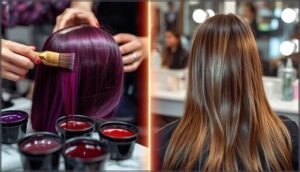
Choosing between dye and gloss isn’t about which one’s better—it’s about what you’re trying to achieve with your hair. Your specific color goals will point you toward the right treatment every time.
Here’s when each option makes the most sense for your situation.
When to Choose Hair Dye
You’re ready to take control when you want dramatic color change or full gray coverage. Hair dye delivers permanent color that lasts months, making it your go-to for multi-level shifts or color correction and enhancement.
The dye commitment means accepting potential hair damage, but you’ll get longevity expectations that outlast temporary fixes. Choose permanent color when subtle adjustments won’t cut it.
When to Opt for Hair Gloss
Sometimes you want shine boosters and color enhancement without the damage. Hair gloss is your gentle treatment when you’re craving a quick refresh. Opt for gloss benefits when:
- Your hair needs a reflective finish and vibrancy boost between salon visits
- You want to neutralize brassiness without committing to permanent hair color
- You’re protecting hair health and damage-free results matter more than drastic transformation
Gloss delivers hair shine that fades evenly over 2 to 6 weeks.
Special Considerations (e.g., Gray Coverage, Shine)
Your specific goals determine which treatment wins. Gray coverage demands permanent hair dye—most formulas deliver 100 percent coverage on resistant strands. For shine enhancement, hair gloss seals the cuticle and boosts brightness by 20 to 40 percent without damage.
| Priority | Best Choice |
|---|---|
| Gray hair coverage | Permanent hair dye |
| Shine enhancement | Hair gloss |
| Color longevity | Hair dye (4–6 weeks) |
| Heat styling protection | Gloss with thermal products |
Porosity factors influence how your hair absorbs pigment and maintains reflectivity.
Choosing The Right Option for You

Your hair goals and daily routine are the two biggest factors that’ll point you toward the right choice. Think about how much time you’re willing to spend on upkeep and how bold you want to go with color.
Let’s break down what actually matters when you’re standing at this crossroads.
Factors to Consider (Hair Goals, Lifestyle)
Your hair goals drive the decision—do you want a total color transformation or a subtle upgrade?
Consider your hair type and current health, since damaged strands handle dye differently than virgin hair.
Think about your lifestyle: can you commit to regular touch-ups and color-safe maintenance, or do you need something low-key?
Match your personal style and color preference to the right treatment.
Expert Recommendations
Before you book any hair color services, get a professional color consultation with a cosmetologist who can perform hair analysis. They’ll match your shade goals through proper shade matching while prioritizing damage prevention.
If you’re chasing a dramatic transformation, hair dye delivers. For shine and subtle richness, gloss application wins. Trust expert guidance to protect your investment.
Frequently Asked Questions (FAQs)
Does hair gloss count as hair dye?
No, gloss isn’t dye. It coats your hair shaft with shine-boosting conditioning agents instead of cracking open the cuticle to deposit permanent color.
Think of it as a temporary color enhancement rather than a chemical transformation.
Does a hair gloss darken your hair?
Don’t expect a total transformation, but yes—your hair gloss can darken your hair slightly.
Semi-permanent results depend on your base color and the gloss shade, creating subtle temporary shade adjustments.
What is the difference between hair gloss and hair dye?
Dye triggers a chemical treatment with permanent color change through hair shaft penetration, while hair gloss delivers a semi-permanent gloss finish that enhances your existing shade without the aggressive color change process.
Can hair dye damage split ends?
Yes, permanent color can worsen split ends if your hair is already dry or overprocessed. Chemical agents like ammonia open the hair shaft, stripping moisture and weakening brittle ends, which accelerates hair breakage and end fraying.
Can hair gloss be used on dyed hair?
Absolutely—you can refresh your previously colored strands with a sheen treatment.
Gloss over dye works beautifully for color enhancement, boosting dyed hair shine, neutralizing brassiness, and extending vibrancy between your regular retouches.
Are hair gloss & glaze healthier than permanent dyes?
Gloss and glaze treatments are gentler on your hair than permanent dyes. They skip harsh oxidative chemicals, seal the cuticle for protection, and reduce cumulative chemical exposure while boosting shine without deep processing damage.
What is a hair color gloss?
A hair color gloss is a semi-permanent gentle treatment that boosts hair shine and enhances your existing color with subtle tones.
It smooths the cuticle without lifting pigment, delivering gloss benefits with zero drama.
Do hair glosses make a difference?
Imagine this: a surface-level shimmer that’s no smoke and mirrors. Gloss Benefits include boosted Hair Shine and subtle Color Enhancement that lasts two to six weeks, transforming dull strands without permanent Hair Coloring commitment.
Is hair gloss better than hair color?
Neither treatment is universally better—it depends on your goals. Hair gloss offers shine and subtle tone without permanent commitment, while hair color delivers lasting transformation and full gray coverage.
What are the disadvantages of hair gloss?
Despite its benefits, you’ll face a few real trade-offs. Gloss fading happens fast—sometimes within a few washes. Buildup effects can weigh down fine hair, and color shift issues might turn your blonde brassy or create scalp irritation.
Conclusion
Picture your friend who went platinum overnight—two years later, she’s still nursing split ends and box-dye regret. That’s the hair dye vs hair gloss decision in action. Dye rewrites your color story permanently, demanding commitment and upkeep. Gloss enhances what’s already written, fading without consequence.
Your color goals aren’t wrong either way—they’re just asking different questions. Choose the treatment that respects both your vision and your hair’s future, not just what looks good today.