This site is supported by our readers. We may earn a commission, at no cost to you, if you purchase through links.

By the third month after giving birth, many new mothers notice more hair collecting in their brush than they’d like. What feels alarming is rarely permanent—it’s a natural reaction to hormonal shifts—but that knowledge doesn’t make clumps in the drain any easier to watch. The scalp, once vibrant and full, can suddenly feel fragile and exposed.
The right hair growth serum helps restore balance, calming inflammation while awakening slowed follicles. Whether you’re seeking a lightweight botanical blend or a dermatologist-tested formula, the right choice can turn this phase into the start of healthier, stronger regrowth.
Table Of Contents
- Key Takeaways
- Best Hair Growth Serums for Postpartum Hair Loss
- Key Ingredients for Postpartum Hair Regrowth
- Factors to Consider When Choosing a Serum
- Safe Application Tips for New Mothers
- Supporting Hair Growth Through Nutrition
- Frequently Asked Questions (FAQs)
- Which serum is best for postpartum hair loss?
- How to grow hair faster after postpartum hair loss?
- How do you reverse postpartum hair loss?
- How long does postpartum hair loss typically last?
- Are scalp massages effective for promoting hair regrowth?
- When should I seek medical advice for excessive hair loss?
- Conclusion
Key Takeaways
- Postpartum hair loss is a temporary, hormone-driven phase that typically resolves within six to eighteen months with proper care and nutrition.
- Gentle, pH-balanced, sulfate-free shampoos and serums with natural ingredients like rosemary, castor oil, and biotin help soothe the scalp and support regrowth.
- Consistent routines—like daily scalp massage, balanced nutrition with iron and protein, and careful product selection—strengthen follicles and reduce shedding.
- Medical evaluation is recommended if hair loss lasts beyond a year, worsens, or comes with other symptoms such as fatigue or hormonal irregularities.
Best Hair Growth Serums for Postpartum Hair Loss
Postpartum hair loss can feel scary, but it’s usually a temporary phase, not a life sentence for your hair. The right scalp‑focused products can support regrowth, calm shedding, and help your hair look fuller while your hormones settle.
For gentle, effective options that nurture your scalp and support new growth, explore these best shampoos for postpartum hair loss.
Let’s walk through some of the best options to explore next.
1. Vanicream Dandruff Shampoo
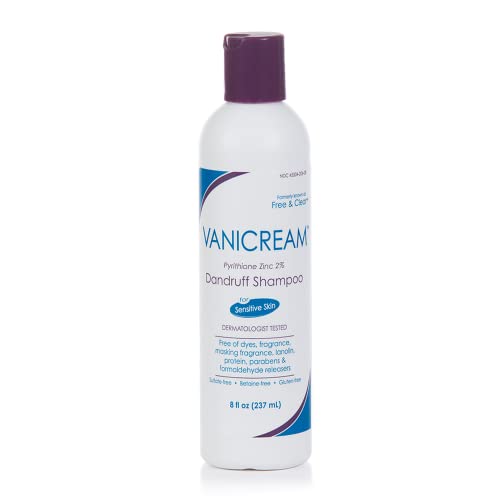
Vanicream Dandruff Shampoo is a quiet standout for postpartum scalps that feel itchy, oily, or flaky. Its 2% pyrithione zinc helps calm inflammation and control dandruff without harsh chemicals.
The pH-balanced, fragrance-free formula suits even the most sensitive skin. Because it’s sulfate- and paraben-free, it won’t strip fragile postpartum hair.
Used twice weekly, it gently clears buildup and soothes irritation, creating a clean, balanced foundation that helps other hair growth serums work their best.
| Best For | People with sensitive, itchy, or flaky scalps looking for a gentle, fragrance-free way to control dandruff and soothe irritation. |
|---|---|
| Product type | Medicated shampoo |
| Primary concern | Dandruff & seborrhea |
| Key ingredient | 2% pyrithione zinc |
| Hair type | Sensitive scalp |
| Usage frequency | Regular use |
| Scent | Fragrance-free |
| Additional Features |
|
- Calms itching and flaking with 2% pyrithione zinc.
- Fragrance- and paraben-free, ideal for sensitive skin.
- Gently cleans without stripping natural oils.
- Can leave hair feeling a bit dry if overused.
- Smaller 8 oz bottle runs out quickly.
- Price is higher than many drugstore dandruff shampoos.
2. Dermaharmony Pyrithione Zinc Shampoo Bar
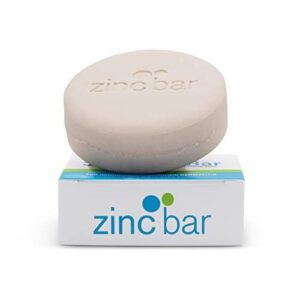
If you like the idea of less clutter in your shower, Dermaharmony’s 2% pyrithione zinc Shampoo Bar gives you dandruff control in one small brick.
It’s sulfate‑free, plant‑based, and has a skin‑friendly pH around 5.1, so it’s gentle on a sensitized postpartum scalp while still targeting itching, redness, and flaking.
The dense lather works on scalp, face, and body, which can feel oddly freeing when you’re short on time and energy but still want your scalp calm and your hair products working for you.
| Best For | Anyone dealing with dandruff or seborrheic dermatitis who wants a simple, low‑waste option that’s gentle on skin and easy to use from head to toe. |
|---|---|
| Product type | Shampoo bar |
| Primary concern | Dandruff & seborrhea |
| Key ingredient | 2% pyrithione zinc |
| Hair type | Most hair types |
| Usage frequency | Daily or frequent |
| Scent | Peppermint |
| Additional Features |
|
- Plant‑based and sulfate‑free, so it’s mild on sensitive scalps.
- Doubles as a body and face soap for less shower clutter.
- Creates a rich, creamy lather that leaves skin and hair feeling clean but not stripped.
- Can fade hair color or toner over time.
- Needs a conditioner afterward to keep hair soft.
- May cause temporary irritation if it gets in your eyes.
3. Jupiter Anti Dandruff Shampoo
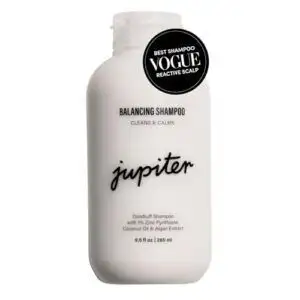
If you loved the simplicity of a bar, but want something that feels a bit more “spa in a bottle,” Jupiter’s Anti Dandruff Shampoo is a strong next step. It uses 1% zinc pyrithione to target Malassezia yeast, so it calms flakes, itching, and redness while also offering antifungal and antibacterial action.
The sulfate‑free, vegan, color‑safe formula adds hydration with squalane, coconut, and aloe, making it a good fit if your postpartum scalp feels both oily and weirdly sensitive.
| Best For | Anyone dealing with persistent dandruff, itchiness, or a dry, irritated scalp who still wants a gentle, spa‑like shampoo that hydrates and protects colored hair. |
|---|---|
| Product type | Anti-dandruff shampoo |
| Primary concern | Dandruff & itch |
| Key ingredient | 1% pyrithione zinc |
| Hair type | Oily, dry, sensitive |
| Usage frequency | Regular use |
| Scent | Not specified |
| Additional Features |
|
- Fights flakes, itchiness, and redness with 1% zinc pyrithione.
- Hydrates and soothes with squalane, aloe, and sugar kelp.
- Vegan, cruelty‑free, and safe for regular or color‑treated hair.
- May not work for all hair types or scalp conditions.
- Possible mild sensitivity to certain ingredients.
- Long‑term effects and product interactions are unclear.
4. Rogaine Minoxidil Hair Regrowth Foam
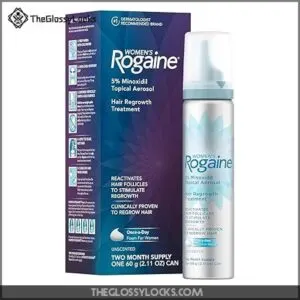
If you’re ready for something that goes beyond soothing the scalp, Rogaine’s 5% Minoxidil Foam steps in with science on its side. This clinically proven formula revives sleeping follicles, helping hair grow back thicker and fuller.
For a balanced approach, you can pair it with natural hair care tips that strengthen roots and encourage healthy growth.
The lightweight, unscented foam absorbs fast, so it won’t leave that greasy feel. Used once daily, it can show visible fullness within a few months—but keep in mind, it’s generally not meant for hair loss triggered by childbirth.
| Best For | People experiencing hereditary hair thinning who want an easy, proven way to regrow thicker hair at home. |
|---|---|
| Product type | Minoxidil foam |
| Primary concern | Hereditary hair loss |
| Key ingredient | 5% minoxidil |
| Hair type | Thinning hair |
| Usage frequency | Twice daily |
| Scent | Unscented |
| Additional Features |
|
- Clinically proven to regrow hair up to 48% thicker.
- Lightweight, unscented foam that absorbs quickly without residue.
- Uses Tricho-Prime technology to soothe and condition the scalp.
- Needs consistent use to maintain results.
- May cause dryness or scalp irritation in some users.
- More costly than generic alternatives.
5. Olaplex Bond Building Hair Perfector
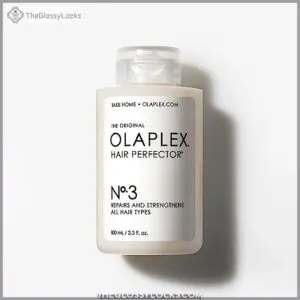
Think of Olaplex No. 3 Hair Perfector as a structural repair crew for your strands, not a postpartum growth serum. Its patented bond-building technology (Bis-Aminopropyl Diglycol Dimaleate) relinks broken disulfide bonds from coloring, heat, and styling.
Clinical testing shows hair can become up to three times stronger and softer after several uses, with internal structure up to 75 percent stronger over time. For postpartum shedding, less breakage means fewer snapped hairs.
Apply to damp hair, leave ten minutes, then rinse.
| Best For | People with damaged, chemically treated, or heavily heat-styled hair who want to strengthen and repair their strands rather than focus on hair growth alone. |
|---|---|
| Product type | Bond repair treatment |
| Primary concern | Damage & breakage |
| Key ingredient | Bond Building Technology |
| Hair type | All hair types |
| Usage frequency | Weekly use |
| Scent | Not specified |
| Additional Features |
|
- Repairs and strengthens hair by rebuilding broken bonds, making it up to 3X stronger after use.
- Helps restore a healthier look and softer texture, with less breakage over time.
- Works on many hair types—coily, curly, wavy, and straight—and on damage from color, heat, and styling.
- Pricey compared to many other at-home hair treatments, especially for the size.
- Results depend on using it correctly, including applying enough product and leaving it on long enough.
- Because you need a generous amount to fully coat the hair, the bottle can run out faster than you’d like.
6. John Frieda Volume Lift Conditioner
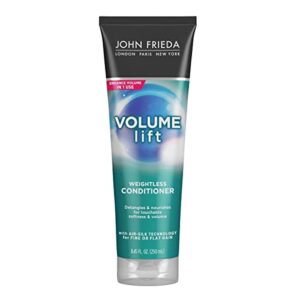
John Frieda Volume Lift Conditioner steps in for your fine, flat postpartum hair, using Air-Silk Technology to lift and volumize without the heavy feel.
This lightweight formula nourishes, detangles, and boosts fullness from the first use, especially when paired with its matching shampoo—keeping strands soft, bouncy, and tangle-free to cut down on breakage amid shedding.
Safe for color-treated hair, just smooth it through wet lengths after shampooing, then rinse. You’ll reclaim that natural body, gently and effectively.
| Best For | People with fine, flat, or postpartum hair who want lightweight volume without losing softness. |
|---|---|
| Product type | Volumizing shampoo |
| Primary concern | Fine or flat hair |
| Key ingredient | Air-Silk Technology |
| Hair type | Fine, color-treated |
| Usage frequency | Daily use |
| Scent | Not specified |
| Additional Features |
|
- Adds natural fullness and bounce from the first use.
- Safe for color-treated hair and gentle enough for daily use.
- Keeps hair feeling soft, clean, and fluffy without greasiness.
- May not provide strong detangling for very knot-prone hair.
- Can feel slightly drying on certain hair types.
- Some users report occasional packaging issues on delivery.
7. Head and Shoulders Anti Dandruff Shampoo
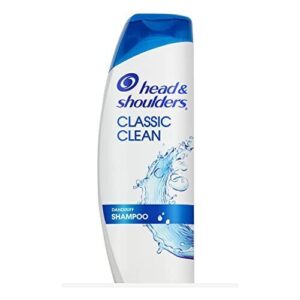
Head and Shoulders Anti Dandruff Shampoo brings calm back to your scalp when postpartum dryness, itch, or flaking join the mix. Its zinc pyrithione formula targets dandruff-causing yeast while soothing irritation, leaving hair clean and balanced.
Conditioning agents like dimethicone smooth strands without heaviness—a plus when every strand feels precious. Safe for regular use, it can fit neatly into a postpartum routine, promoting a healthier scalp so hair serums and treatments can do their best work.
| Best For | New moms or anyone struggling with postpartum dandruff, dryness, or scalp itch who wants gentle, lasting relief. |
|---|---|
| Product type | Anti-dandruff shampoo |
| Primary concern | Dandruff & itch |
| Key ingredient | Scalp Shield Technology |
| Hair type | Most hair types |
| Usage frequency | Daily use |
| Scent | Light classic scent |
| Additional Features |
|
- Delivers up to 72 hours of dandruff and itch protection.
- SCALP SHIELD TECHNOLOGY nourishes and soothes the scalp.
- Safe for daily use with a light, clean scent that feels fresh.
- Some users find it pricey for the size.
- May not suit all scalp or hair types.
- Occasional reports of smaller-than-expected travel bottles or packaging errors.
Key Ingredients for Postpartum Hair Regrowth
The right ingredients can make all the difference when your hair’s in recovery mode after birth. Each one works in its own way to bring strength, shine, and balance back to your scalp.
Here’s what to look for when choosing a serum that aids healthy regrowth.
Rosemary Oil Benefits
Ever notice how your postpartum hair loss feels like it’s stealing your confidence? Rosemary oil steps in as a powerhouse among natural remedies and essential oils.
Its antioxidants, like carnosic acid, shield your scalp health from stress, while massage boosts hair circulation to nourish follicles.
Diluted in light carriers, this hair growth oil promotes thicker regrowth without greasiness—perfect for your recovery.
Castor Oil for Scalp Nourishment
Strong, thick, and a little stubborn, castor oil acts like a protective raincoat for your scalp during postpartum hair loss, locking in moisture while you heal.
With Scalp Massage and Natural Remedies, you support hair regrowth and overall scalp health using simple, realistic Nourishment Tips and oil benefits. Pairing these practices with natural postpartum hair remedies can also address underlying hormonal shifts, stress, and nutrient gaps that drive shedding.
- Deeply hydrates dry, tight postpartum scalps to support hair growth and comfort.
- Creates a protective layer on fragile strands, reducing breakage and helping visible hair regrowth.
- Pairs well with gentle Scalp Massage, boosting circulation without harsh chemicals.
- Works best as part of a simple, consistent routine rather than a “miracle cure.”
Biotin for Stronger Hair Follicles
Think of biotin as reinforcement for every tiny hair follicle fighting postpartum hair loss. Real biotin benefits come from supporting keratin production, so hair growth feels steadier and breakage slows.
If you’ve had low iron or any vitamin deficiency, your hair follicles are already stressed, and biotin can help nudge hair regrowth and fuller hair regrowth over time for you.
Rice Water for Shine and Softness
Once you’ve shored up your follicles with biotin support, rice water steps in as your shine-boosting sidekick. Rice Water Benefits come from its amino acids, vitamins, and antioxidants, which help smooth the cuticle, so light reflects better—think simple, Natural Hair Care with real payoff.
For Postpartum Regrowth, look for hair care products or serums that use rice water to improve softness and strength, then pair them with gentle Hair Shine Tips like cooler rinses and minimal heat for longer-term hair regrowth, even while you’re still dealing with postpartum hair loss. Those small “Softness Secrets” add up, especially when your routine finally works for you, not against you.
Batana Oil for Repair
Once your shine is back, Batana Oil steps in as your heavy‑lifting repair expert. Batana Oil Benefits come from its antioxidants and fatty acids, which support hair regeneration, strengthen brittle strands, and cushion follicles stressed by postpartum hair loss.
As part of your Oil Therapy routine, it fits right into Natural Remedies and natural hair remedies, especially if you want Postpartum Regrowth without harsh hair care products.
For practical Hair Repair Tips, use it as a rich pre‑wash scalp treatment on thinning areas two to three nights a week to support steady hair growth and repair.
Factors to Consider When Choosing a Serum
Choosing a serum after pregnancy isn’t just about what promises the fastest growth—it’s about what feels right for your scalp and fits your lifestyle. Your hair and skin may be more sensitive now, so the right formula should work gently but effectively.
Here’s what to think about before picking the one that’s truly made for you.
Gentle Formulation for Sensitive Scalps
Sensitive scalps after postpartum hair loss don’t need punishment; they need protection and calm, so your serum and shampoo should feel more like skin care than harsh cleaner. Gentle, sulfate‑free shampoos formulated for can further protect your hair and scalp during this recovery phase. Prioritize pH balance around the scalp’s natural level, fragrance free formulas, and gentle cleansers to protect barrier function and maintain hair growth and long‑term scalp health.
- Choose fragrance free, hypoallergenic formulas to lower the risk of itching, burning, and redness on a sensitized postpartum scalp.
- Look for pH balance near 5.5, which helps maintain the scalp’s acid mantle and maintain a healthy microbiome and overall scalp health.
- Pick sulfate free, mild surfactant bases labeled for Sensitive Scalp, since strong detergents can worsen dryness and flaking and undermine hair regrowth treatment.
- Favor Soothing Agents such as aloe, panthenol, or licorice root that calm tightness and irritation while you focus on gentle hair care practices.
- When in doubt, reach for formulas described as gentle cleansers for daily or frequent use, so you can maintain hair growth without repeatedly damaging your scalp barrier.
Natural Ingredients Focus
Once your scalp feels calm again, it’s time to nourish it with natural ingredients that truly work. The best hair growth serums blend Plant Oils, Herbal Extracts, and Essential Oils with Nourishing Vitamins for safe hair regrowth, even while breastfeeding.
Here’s how each element aids postpartum hair loss recovery:
| Ingredient Type | Star Example | Benefit |
|---|---|---|
| Plant Oils | Castor or Pumpkin Seed | Moisturize and reduce dryness |
| Herbal Extracts | Black Seed or Rosemary | Stimulate scalp circulation |
| Essential Oils | Tea Tree or Ginger | Balance microbes and calm irritation |
| Nourishing Vitamins | Biotin, B Complex | Strengthen follicles |
| Breastfeeding Safety | Low‑dose formulas | Support recovery safely |
Scalp Compatibility and Hair Type
Your serum has to match both your Scalp Sensitivity and your Hair Texture, or you’ll keep fighting the same postpartum hair loss battle on repeat. Postpartum Itch, Dry Scalp, and Oily Roots all behave differently, so you want hair growth serums that respect your scalp hydration needs and your hair type:
- Oily Roots with irritation: choose lightweight caffeine–niacinamide formulas.
- Dry Scalp with tightness or flaking: look for aloe, glycerin, and ceramides.
- Fine hair: pick peptide–niacinamide serums that won’t weigh strands down.
- Thick or curly textures: rich shea or coconut blends tame frizz while supporting hair growth.
- Ultra‑sensitive scalp: soothing aloe, calendula, and centella calm itch without sting.
Ease of Application and Absorption
Speed matters when your mornings revolve around baby feedings and diaper changes. Go for hair growth serums with a light Serum Texture and quick Absorption Rate—those that sink in within minutes without sticky Product Residue.
Smooth formulas improve Scalp Comfort, making daily Application Tips easy while supporting hair absorption for stronger hair regrowth after postpartum hair loss.
Long-Term Safety for Breastfeeding
Long-term Nursing Safety isn’t just about your hair, it’s about Infant Exposure and your overall Maternal Health. Any hair growth serums you use on your scalp can send tiny amounts into your bloodstream, then into breast milk, but with low-absorption, safe hair treatments during breastfeeding, Toxicity Risks stay very low.
Focus on mild, well‑studied options for postpartum hair loss and hair growth, avoid strong drugs like frequent topical minoxidil on a newborn’s scalp-contact area, and check with your doctor if your baby’s feeding, sleep, or weight gain change after you start a new product while breastfeeding.
Safe Application Tips for New Mothers
Using a hair growth serum after giving birth shouldn’t feel complicated or risky. With the right approach, you can help your scalp recover while keeping your routine simple and safe.
Here’s how to apply it correctly and what to watch for along the way.
How to Apply Hair Growth Serums

You deserve hair care products that work, not just scent the shower.
- Scalp Preparation: After shampoo, keep scalp damp; hair growth serums spread, supporting hair growth.
- Application Tips: Section hair so serum targets postpartum hair loss.
- Dosing Guidelines: Follow label; more isn’t better for hair regrowth.
- Serum Timing: Leave on; avoid hats.
- Product Safety: Wash hands; keep off your baby.
Frequency and Massage Techniques
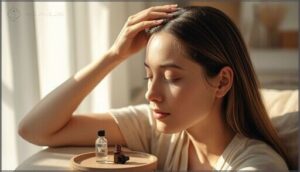
Think of your scalp treatment like a Daily Routine reset for stressed roots: aim for 3–5 minutes of Scalp Stimulation once a day, most days of the week, to support hair growth and hair regrowth.
Use your fingertips with Gentle Pressure in small circles over every Hair Follicle, letting your hair growth serum glide, especially where postpartum hair loss feels most obvious.
Monitoring for Side Effects

Noticing side effects early is a quiet form of hair loss prevention, and it gives you back some control when you’re using hair growth serums for postpartum hair loss. Watch for:
- Scalp Irritation or burning during or after scalp treatment.
- Serum Allergies or Skin Reactions like hives or swelling.
- Hair Shedding that suddenly jumps or lasts beyond a couple of months.
- Product Interactions that trigger dizziness, rapid heartbeat, or headaches.
- New facial hair or body hair growth suggesting the serum is spreading beyond the scalp.
Consulting Healthcare Providers

You’re already doing smart hair loss prevention by tracking irritation and odd shedding, and that same mindset should guide your Doctor Consultation and overall Postpartum Care.
When postpartum hair loss feels too heavy, lasts beyond about a year, or comes with fatigue, irregular periods, or other hormonal changes, it’s time for Medical Evaluation and clear Healthcare Guidance from your obstetrician, primary doctor, or dermatologists to confirm the Hair Loss Diagnosis, rule out deeper issues, and protect your long‑term hair growth.
Supporting Hair Growth Through Nutrition

Healthy hair starts from the inside out. Your body needs the right mix of nutrients to rebuild strength, shine, and thickness after childbirth.
Here’s what truly has an impact in supporting hair growth naturally.
Iron, Zinc, and B Vitamins
Postpartum hair loss is often amplified by low iron levels, shaky mineral balance, and quiet vitamin deficiencies, so this is where you start taking back control. Iron deficiency, low zinc supplements, and a well-designed B vitamin complex all support hair growth by improving nutrient absorption and follicle energy, making your hair growth supplements actually work harder for you.
- Picture your follicles as tiny factories, each one needing iron to carry oxygen in and waste out so they can stay in growth mode longer instead of bailing into shedding.
- Imagine zinc as your scalp’s calm engineer, keeping oil, inflammation, and keratin production in line so new strands grow in steadier and thicker.
- See B vitamins as the power grid, feeding constant energy into rapidly dividing follicle cells so postpartum hair has the fuel to come back stronger, not just thinner and tired.
Protein Intake for Hair Health
You’ve supported your follicles with minerals; now, let’s talk protein—the backbone of strong Hair Structure. Protein Deficiency throws off Nutrition Balance and slows hair growth. Your hair is mostly made of Amino Acids, so keeping Daily Intake steady protects against postpartum hair loss linked to nutrient deficiencies.
| Weight (kg) | Minimum (g/day) | Ideal (g/day) |
|---|---|---|
| 50 | 40 | 50–60 |
| 60 | 48 | 60–72 |
| 70 | 56 | 70–84 |
| 80 | 64 | 80–96 |
Foods to Support Postpartum Recovery
After steady protein intake, your body needs Nutrient Dense Meals that restore energy fast. Think Omega 3 Benefits from salmon or chia pudding, Fiber Rich Foods like oats and lentils, and Antioxidant Fruits such as berries—each supporting hair nourishment and postpartum recovery.
Pair them with smart Hydration Tips to ease nutrient deficiencies and boost hair growth naturally.
Addressing Vitamin Deficiencies
Harmony in your Nutrient Balance can turn fragile strands around. Vitamin Therapy helps close hidden gaps, while Iron Supplements and Zinc Deficiency correction restore strength from the inside out.
Add Biotin Benefits and vitamins for hair growth into your routine—these targeted nutritional supplements for hair health rebuild vitality, offering genuine hair growth support and lasting hair nourishment.
Frequently Asked Questions (FAQs)
Which serum is best for postpartum hair loss?
No single hair growth serum works miracles for postpartum hair loss—it’s like trying to outrun a hormonal tidal wave.
The best prioritize hormone balance, hair thickness restoration, and serum efficacy through natural remedies like rosemary oil, supporting your postpartum recovery and hair regrowth safely.
How to grow hair faster after postpartum hair loss?
After postpartum hair loss, focus on Hair Regrowth Tips that support balance—steady Hormone Balance, nutrient‑rich Postpartum Nutrition, daily Scalp Massage, gentle postpartum hair care, and proven hair growth serums or supplements to restore Hair Thickness naturally.
How do you reverse postpartum hair loss?
You can reverse postpartum hair loss by restoring hormone balance, improving postpartum nutrition, and practicing gentle scalp massage.
Consistent hair growth serums and targeted hair restoration treatments naturally promote hair regeneration, supporting healthy postpartum hair care and lasting hair regrowth.
How long does postpartum hair loss typically last?
It often surprises new mothers how long the shedding lasts. The typical postpartum hair loss timeline spans three to six months, but full postnatal hair recovery—including regrowth and stabilized shedding patterns—usually unfolds over twelve to eighteen months.
Are scalp massages effective for promoting hair regrowth?
Scalp massages boost Blood Flow Improvement and Hair Follicle Stimulation, helping follicles re‑enter their growth phase faster.
This Mechanical Stimulation Effect aids Postpartum Regrowth Strategies, complementing hair growth serums and treatments for fuller, healthier hair regrowth.
When should I seek medical advice for excessive hair loss?
You should seek medical advice if Excessive Shedding, Hair Thinning, or hair shedding continues past the usual Postpartum Duration of about 9–12 months.
If you notice Scalp Pain, bald patches, or whole‑body Medical Warning signs of hormonal hair loss or other female hair loss conditions, consult a healthcare professional.
Conclusion
Think of your scalp as a quiet garden after a storm: scattered petals, shaken roots, but soil still rich with potential. With patience, consistent care, and well-chosen hair growth serums for postpartum hair loss, you’re not just chasing what fell out—you’re coaching new strength to grow in.
Pair your serum with gentle habits, smart nutrition, and medical guidance when needed, and this season of shedding becomes the proof of how resilient you really are inside.
- https://www.carencampbellmd.com/blogs/news/understanding-telogen-effluvium-hair-shedding-after-pregnancy-stress-and-covid-19
- https://traya.health/blogs/hair-health/postpartum-hair-loss-monthly
- https://www.droracle.ai/articles/584468/when-does-telogen-effluvium-after-delivery-typically-improve
- https://hairgp.co.uk/hair-loss-treatments-while-breastfeeding-safe-options-guide/
- https://bailleul.com/content/93-everything-you-need-to-know-about-postpartum-hair-loss