
This site is supported by our readers. We may earn a commission, at no cost to you, if you purchase through links.

Eighty percent of men and half of all women will experience significant hair loss by their seventieth birthday, yet most people who notice their hairline receding or their part widening don’t know which treatments have actual clinical evidence behind them.
The market overflows with products making ambitious promises, while only a handful of interventions have survived rigorous scientific scrutiny. Between FDA-approved medications that block hormone pathways, emerging therapies that reawaken dormant follicles, and evidence-backed natural approaches that support scalp health, the gap between marketing hype and measurable results has never been wider.
Understanding which hair loss solutions deliver verifiable regrowth—and which underlying causes they address—can mean the difference between wasted money and genuinely restored density.
Table Of Contents
- Key Takeaways
- Proven Causes of Hair Loss
- Effective Medical Hair Loss Treatments
- Natural and At-Home Hair Regrowth Methods
- Top 7 Hair Loss Solutions That Actually Work
- 1. Nutrafol Women’s Hair Growth Supplement
- 2. NutraM Hair Serum DHT Blocker
- 3. Keranique Hair Regrowth Treatment For Women
- 4. Hers Minoxidil Hair Regrowth Treatment Solution
- 5. BosleyMD Minoxidil Hair Regrowth Treatment Men
- 6. Hers Minoxidil Foam Hair Regrowth Treatment
- 7. Keeps Minoxidil Hair Regrowth Treatment Men
- Choosing The Right Hair Loss Solution
- Frequently Asked Questions (FAQs)
- What is the best hair loss treatment?
- How do you find the best hair loss treatments?
- Do hair loss treatments really work?
- Should I get a hair loss treatment at home?
- What are the best products for hair loss?
- How long does it take for hair loss treatments to work?
- What is the most effective thing to stop hair loss?
- How did Japan find a cure for baldness?
- Can hair loss treatments cause initial shedding?
- How long before seeing hair regrowth results?
- Conclusion
Key Takeaways
- Only FDA-approved minoxidil and prescription finasteride have survived rigorous clinical trials, with combination therapy achieving roughly 80% effectiveness in halting androgenetic alopecia when you commit to consistent, long-term use.
- Hair regrowth demands patience and persistence—you won’t see measurable results for three to six months with most treatments, and stopping therapy reverses your gains within weeks as follicles return to their baseline state.
- Identifying your specific hair loss cause through proper diagnostic workup—whether it’s genetic DHT sensitivity, hormonal shifts, nutritional deficiencies, or autoimmune triggers—determines which treatment will actually work instead of wasting money on mismatched interventions.
- Natural approaches like rosemary oil and dietary optimization show modest evidence for supporting scalp health, but they can’t match the documented efficacy of medical-grade treatments when you’re facing significant pattern baldness or accelerated thinning.
Proven Causes of Hair Loss
Hair loss doesn’t just happen randomly, and understanding the underlying causes can help you choose the right treatment approach. From genetic predisposition to hormonal shifts, nutritional gaps, and even how you manage stress, multiple factors can trigger thinning or shedding.
Let’s examine the five most common causes backed by clinical evidence so you can identify what might be affecting your hair.
Genetic Factors (Male and Female Pattern Hair Loss)
Why does hair loss run in families? Genetic factors drive androgenetic alopecia, the most common form affecting up to 80% of men and 50% of women by age 70.
Heredity accounts for roughly 80% of male pattern hair loss, with specific genetic loci—especially AR gene variants—determining your follicular sensitivity to androgens. This heightened sensitivity triggers follicular miniaturization, progressively shrinking terminal hairs into fine, short vellus strands that barely emerge from your scalp.
Research indicates that DHT production impacts hair follicle health.
Hormonal Changes and Imbalances
Beyond genetics, your body’s shifting endocrine landscape can trigger significant shedding, particularly during menopause, postpartum recovery, or when endocrine disorders alter androgen sensitivity. Declining estradiol after menopause often accelerates female pattern hair loss, while postpartum shedding peaks around three to four months after delivery as estrogen plummets. One potential cause is reduced oestrogen levels.
- Contraceptive Impact: Starting or stopping hormonal contraceptives may shift hundreds of hairs into telogen effluvium within weeks.
- Endocrine Disorders: Polycystic ovary syndrome drives androgenetic alopecia in up to 70% of affected women through chronic androgen excess.
- DHT Conversion: Elevated 5-alpha-reductase activity in balding scalp amplifies local dihydrotestosterone levels, miniaturizing follicles despite normal systemic hormones.
Nutritional Deficiencies and Diet
Your follicles demand a surprising roster of micronutrients, and deficiencies in histidine, leucine, iron, and vitamin D rank among the most common hair loss causes. Protein intake below maintenance thresholds triggers acute shedding, while mineral imbalances—particularly low zinc and iron deficiency—weaken keratin structure.
Dietary patterns heavy in alcohol and refined sugar correlate with accelerated thinning, whereas antioxidant-rich foods and adequate amino acids support both hair loss prevention and regrowth.
Stress and Lifestyle Influences
While nutrient deficits set the stage, stress androgens and lifestyle choices often tip the scale toward active hair thinning. Chronic stress elevates cortisol—studies show 73.8% of stressed individuals experience hair loss—pushing follicles into premature resting phases. Poor sleep quality, lack of exercise, and substance abuse starve your scalp of oxygen, disrupt growth cycles, and sabotage effective hair loss prevention before you even consider hair loss solutions.
- Chronic stress raises cortisol, forcing hair follicles into prolonged resting phases that halt regrowth
- Sleep deprivation triggers delayed shedding, with noticeable thinning appearing 2–3 months after poor rest begins
- Regular exercise boosts scalp circulation, delivering essential nutrients and reducing stress-related hair loss causes
- Smoking and alcohol damage follicle DNA, dehydrating your scalp and accelerating premature shedding
- 7–9 hours of nightly sleep reverses most stress-induced thinning by normalizing hormone levels naturally
Inflammatory and Autoimmune Conditions
When your immune system mistakenly attacks hair follicles, you’re facing alopecia areata—a condition affecting over 30 million people worldwide. Women experience twice the incidence of men, with autoimmune triggers causing circular bald patches or complete hair loss.
Scarring alopecia, like lichen planopilaris, destroys follicles permanently through inflammatory mechanisms, making early hair loss diagnosis critical.
Corticosteroids remain the primary hair loss treatment, while targeted immunomodulators show promising treatment responses.
Effective Medical Hair Loss Treatments

When lifestyle changes aren’t enough, medical treatments offer some of the most effective solutions for stopping hair loss and encouraging regrowth. These interventions range from FDA-approved topical solutions to sophisticated surgical procedures, each backed by clinical evidence and varying success rates.
Here’s what actually works when you’re ready to move beyond supplements and home remedies.
Minoxidil: Usage, Results, and Side Effects
Minoxidil remains the only FDA-approved topical hair loss treatment, delivering measurable regrowth when you commit to consistent use. Men generally apply 5% solutions twice daily, while women use 2% formulations or 5% foam once daily—early shedding affects about 16% of users but signals hair cycling, not failure.
Systemic absorption stays below 1% with intact scalp barriers, yet scalp eczema appears in 16% of topical users. Results emerge over four to twelve months, and discontinuation often reverses gains within three to six months—persistence becomes your best ally.
- In 48-week trials, 5% topical minoxidil outperformed 2% by 45% in nonvellus hair counts
- Oral minoxidil boosted vertex terminal density by 21.6%, surpassing topical formulations
- Hypertrichosis occurs in roughly 80% of low-dose oral users, though serious cardiovascular events remain uncommon
Finasteride for Male Pattern Baldness
For men with male pattern hair loss, finasteride—a prescription medication—blocks DHT production at the root, increasing hair counts by roughly 24% over the long term.
You’ll take 1 mg daily for at least six months before judging efficacy, and maintenance requires continuous use; stopping reverses gains.
Sexual side-effects occur in 2–3% of users, and emerging topical finasteride formulations may reduce systemic exposure while preserving hair loss treatment benefits.
Corticosteroids for Alopecia Areata
When you’re facing those tell-tale circular bald patches from alopecia areata, corticosteroids offer proven hope. Intralesional injections achieve hair regrowth in up to 83% of patients, with high-potency topical options like clobetasol propionate showing 85% improvement in children.
You’ll need consistent treatment—results usually appear within three months—though nearly half experience relapse after stopping, and local side effects like skin atrophy occur in roughly one-third of cases.
Hair Transplantation and Surgical Options
When medical treatments plateau, hair transplant surgery offers permanent restoration, with graft survival rates reaching 90-95% using modern techniques. You’re choosing between FUE and FUT methods, each with distinct advantages, while understanding procedure costs average $8,000-$15,000 nationally. Consider these realities:
- FUE allows quicker recovery timeline (7-10 days to normal activity)
- FUT yields 10-30% more viable follicles for extensive baldness
- Surgical complications occur in under 5% of cases
- Initial regrowth appears at 3-4 months post-procedure
- Full results emerge by 9-12 months
Scalp reduction and hair replacement procedures complement transplantation for thorough hair restoration.
Platelet-Rich Plasma (PRP) Therapy
Your body’s own healing factors can work against androgenetic alopecia through Platelet-rich plasma (PRP) therapy, where concentrated growth factors from your blood stimulate dormant follicles. After three monthly sessions, you’ll see hair density increase by 31%, with 76% patient satisfaction reported in meta-analyses. Treatment protocols generally cost $1,500-$9,000 for initial sessions.
| Outcome Measure | Baseline | After 3 Months |
|---|---|---|
| Hair Density | 40.76 hairs/cm² | 66.00 hairs/cm² |
| Terminal Hair Count | Standard baseline | +40.1 hairs/cm² improvement |
| Patient Satisfaction | N/A | 76% satisfaction rate |
This hair loss treatment option shows minimal side effects, with temporary shedding occasionally occurring between weeks two and six as part of the natural hair regrowth cycle.
Natural and At-Home Hair Regrowth Methods
Not everyone wants to jump straight into prescription treatments or invasive procedures, and that’s perfectly understandable. Natural remedies and at-home methods can support scalp health and may help slow hair loss, though they generally work more gradually than medical interventions.
Let’s look at some evidence-based natural approaches you can try at home.
Botanical Oils (Rosemary, Peppermint, Onion Juice)

Plant-based remedies offer evidence-backed hair growth solutions you can try at home. Rosemary oil matched minoxidil’s hair count gains after six months, while peppermint oil increased follicle numbers by 740% in studies. Onion juice induced regrowth in nearly 87% of users within eight weeks.
These hair loss treatment options work best when applied consistently, ideally combined with carrier oils like castor for enhanced absorption and scalp nourishment.
Scalp Massage and Blood Flow Stimulation

Simple massage techniques can improve blood flow to your scalp, delivering oxygen and nutrients that support hair follicle health. A 2016 study showed that daily scalp massage for 24 weeks increased hair thickness from 0.085 mm to 0.092 mm in Japanese males.
You’ll want to commit to 10–20 minute sessions, three to four times weekly, for best hair growth and improved scalp health.
Dietary Changes and Key Nutrients

Your diet plays a surprisingly powerful role in hair health. Iron deficiency, present in nearly 60% of women with diffuse hair loss, triggers excessive shedding and stalls growth—supplementation can double ferritin levels in just six months. Zinc corrects hair loss in over half of alopecia areata cases, while B vitamins increase growth density by 10%.
Consider these nutrient-rich additions:
- Antioxidant-rich Mediterranean foods lower hair loss risk, especially in women
- Omega-3 and omega-6 supplements promote thicker hair and reduce loss in 90% of users
- Biotin, folate, and B12 strengthen hair shafts and support active growth phases
Stress Reduction for Hair Health

Chronic stress floods your system with cortisol, pushing up to 50% of follicles into premature shedding—a condition called telogen effluvium.
Mindfulness benefits include measurably lower hair cortisol levels after just eight weeks, while yoga effects show 19% better delta wave coherence for deeper relaxation.
CBT techniques tackle stress at its source, supporting cortisol reduction and healthier hair cycling when you need effective hair loss prevention most.
Top 7 Hair Loss Solutions That Actually Work
After reviewing the evidence on what actually reverses hair loss, certain products stand out for their clinical backing and real-world results.
The following seven solutions combine FDA-approved ingredients, proven botanical compounds, and targeted delivery systems that address the root causes of thinning hair.
Each option has been selected based on formulation quality, ingredient concentration, and documented efficacy in clinical or consumer studies.
1. Nutrafol Women’s Hair Growth Supplement
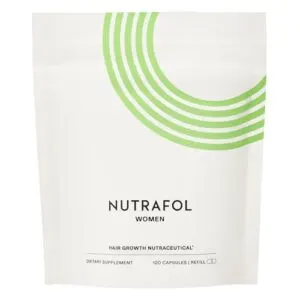
Nutrafol Women stands out among hair growth supplements with its physician-formulated blend of 21 vitamins, minerals, and botanicals, including saw palmetto, ashwagandha, and marine collagen peptides.
In controlled trials, approximately 90% of women reported overall hair improvement after six months, with 84% experiencing reduced shedding. You’ll usually notice thicker, denser hair within three to six months of consistent daily use, though minor digestive symptoms affect up to 10% of users.
The supplement targets multiple underlying causes, from hormonal imbalances to nutritional deficiencies, making it a thorough hair loss treatment option.
Best For: Women ages 18-44 experiencing thinning hair who are willing to commit to a 6-month daily supplement routine and can afford the $88 monthly cost.
- 90% of women saw overall hair improvement after 6 months, with clinically proven results showing 10% thicker hair compared to placebo
- Targets multiple root causes of hair loss through 21 carefully selected ingredients including saw palmetto, ashwagandha, and marine collagen
- 84% of users experienced reduced shedding with continued improvements in hair density and strength over time
- Expensive at $88 per month with no satisfaction guarantee offered by the company
- Up to 10% of users experience digestive issues like bloating and nausea, with some reporting headaches or skin breakouts
- Requires taking 4 capsules daily for at least 3-6 months before seeing visible results, demanding significant commitment and patience
2. NutraM Hair Serum DHT Blocker
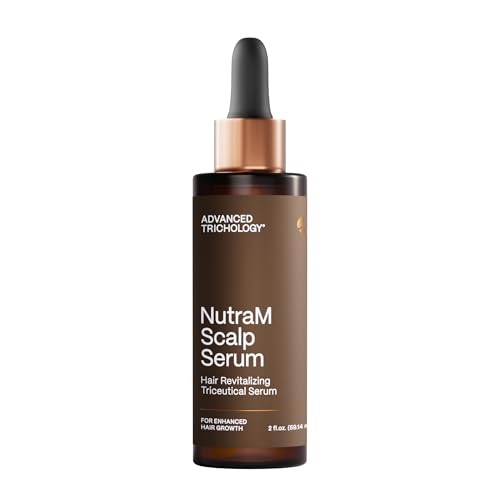
NutraM DHT Blocking Hair Serum combines melatonin with botanical DHT blockers, targeting the hormonal pathway underlying androgenetic alopecia without systemic side effects. Clinical evidence on topical melatonin shows increased hair density over three to six months, and the serum’s oil-free formulation promotes daily compliance.
You’ll apply one to two droppers nightly to thinning areas, with most users noticing reduced shedding around three months. User reviews mention improved thickness, though some report mild scalp irritation. The application protocol is straightforward, making it a practical adjunct to established hair loss treatments.
Best For: Adults with androgenetic alopecia seeking a non-greasy, topical DHT-blocking serum that can be used daily alongside other hair loss treatments without systemic hormonal side effects.
- Combines melatonin with botanical DHT blockers to target multiple hair loss pathways, with clinical evidence showing increased hair density over three to six months of consistent use.
- Oil-free, non-greasy formulation makes it easy to apply nightly without affecting hairstyling or leaving residue, improving long-term adherence.
- Generally well-tolerated with no reported systemic endocrine or sexual side effects, unlike oral DHT blockers such as finasteride.
- Mixed reviews on scent, with some users finding the natural herbal smell unpleasant during nightly application.
- May cause mild scalp irritation, redness, or itching in sensitive individuals due to alcohol content and active botanical ingredients.
- Lacks large-scale, independently published randomized controlled trials specific to the NutraM formulation, with efficacy claims based primarily on internal polling and practice-based data rather than peer-reviewed research.
3. Keranique Hair Regrowth Treatment For Women
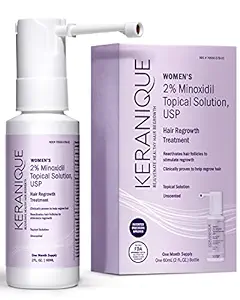
Among over-the-counter hair loss treatments for female pattern thinning, Keranique’s 2% minoxidil spray offers the only FDA-approved concentration for women. You’ll apply it twice daily to areas of hair thinning, with most clinical data showing visible hair regrowth after three to four months of consistent use.
User adherence is key—discontinuing treatment reverses gains within months. Potential side-effects include scalp irritation and an early shedding phase, but the application frequency and expected timeline align well with what dermatologists recommend for female hair growth interventions.
Best For: Women with mild to moderate hereditary hair loss who are willing to commit to twice-daily application for at least several months to see results.
- Only FDA-approved over-the-counter minoxidil concentration specifically for female pattern hair loss, with clinical data showing improved scalp coverage in about 40% of users after 3–4 months
- Precision spray applicator makes it easy to target thinning areas directly without waste or mess
- Unscented formula helps maintain discretion and integrates easily into daily routines
- Requires indefinite, ongoing use to maintain results—stopping treatment leads to hair loss returning within a few months
- May cause scalp irritation, dryness, or an initial shedding phase in the first 6–12 weeks as follicles transition
- Mixed customer feedback on value and effectiveness, with some users reporting no visible improvement or greasy hair texture
4. Hers Minoxidil Hair Regrowth Treatment Solution
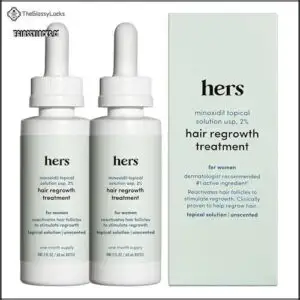
Hers delivers 2% topical minoxidil in a liquid solution specifically formulated for female pattern hair loss, particularly targeting thinning at the vertex and crown. You’ll apply 1 mL twice daily to dry scalp areas—consistency over three to six months is necessary before visible hair regrowth appears.
Clinical trials in women aged 18–49 showed significant improvements in nonvellus hair count at 48 weeks. Potential side-effects include scalp irritation, dryness, and unwanted facial hair.
Long-term use is required; stopping minoxidil reverses your gains within months.
Best For: Women with gradual thinning on the top of the scalp who are ready to commit to twice-daily application for at least 3–6 months and continue indefinitely to maintain results.
- Clinically proven to increase hair count and scalp coverage in women with female pattern hair loss after consistent use
- FDA-approved 2% formulation balances effectiveness with a lower risk of side effects compared to higher-strength options
- Straightforward application—just 1 mL twice daily to dry scalp areas
- Requires continuous, indefinite use to maintain regrowth; stopping leads to gradual hair loss returning to baseline
- Results take 3–6 months to appear, demanding patience and consistent daily commitment
- Can cause scalp irritation, dryness, and unwanted facial hair growth in some users
5. BosleyMD Minoxidil Hair Regrowth Treatment Men
 View On Amazon
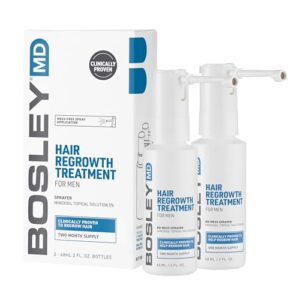
 BosleyMD’s 5% topical minoxidil solution is FDA-approved for male pattern hair loss, reactivating dormant follicles to stimulate hair regrowth over nine to twelve months. You’ll apply 1 mL twice daily to affected areas.
Clinical data shows 67.3% of men experience measurable reduction in balding by four months, with peak hair density improvements at one year. Minoxidil effectiveness depends on consistent application techniques; discontinuing treatment reverses gains within two to three months.
Common side effects include scalp irritation and temporary shedding during the initial weeks of use.
Best For: Men with male pattern baldness who can commit to twice-daily application for at least a year and want clinically proven results without prescription treatments.
- Clinically effective with 67% of users seeing measurable improvement in balding areas by four months and peak results at nine to twelve months
- FDA-approved treatment using the same 5% minoxidil formula as Rogaine, delivered in a convenient no-mess sprayer
- Well-tolerated with minimal side effects—only 3.9% of users report scalp irritation or redness
- Requires lifelong commitment since stopping treatment causes hair loss to resume within two to three months
- Application design has issues with the liquid dripping or streaming, making it messier than advertised
- Results plateau after about a year of use, and the product can’t be returned if it doesn’t work for you
6. Hers Minoxidil Foam Hair Regrowth Treatment
 View On Amazon
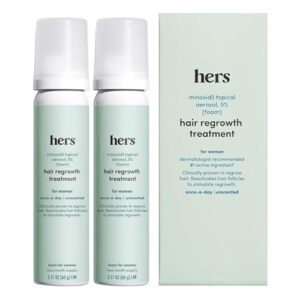
 Women experiencing hair thinning on the vertex now have a simple option: Hers 5% minoxidil foam, applied once daily.
In a 24-week trial of 113 women with androgenetic alopecia, this foam matched the hair regrowth of twice-daily 2% minoxidil solution, while causing considerably less scalp irritation and pruritus.
You’ll see initial hair growth around three months, with maximal density by six to twelve months. The foam’s cosmetic acceptability improves long-term adherence, though potential side effects include facial hypertrichosis if the product drips beyond your hairline.
Best For: Women with androgenetic alopecia seeking a once-daily, clinically proven treatment that delivers similar hair regrowth to twice-daily options with less scalp irritation.
- Clinically proven effective—matched the hair regrowth results of twice-daily 2% minoxidil in 24-week trials with 113 women
- Better tolerated than 2% solution, with significantly lower rates of itching, dandruff, and overall scalp irritation
- Convenient once-daily foam application that doesn’t interfere with hair styling, making it easier to stick with long-term
- Requires consistent daily use for at least 3-6 months before visible results appear, and stopping treatment reverses gains
- Can cause unwanted facial hair growth if the foam drips onto your face or forehead during application
- May trigger scalp irritation, dryness, or increased shedding in some users, though generally less than liquid formulations
7. Keeps Minoxidil Hair Regrowth Treatment Men
 View On Amazon
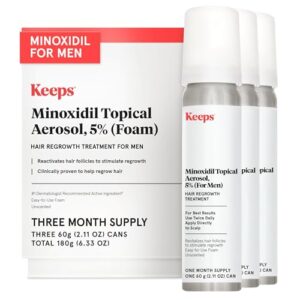
 Men targeting vertex thinning benefit from Keeps 5% minoxidil foam, a telemedicine-delivered formulation identical to FDA-approved products. In a 16-week trial, this concentration yielded statistically significant increases in non-vellus hair count compared to placebo, with 75% of participants showing improvement by week 24.
Structured telemedicine support nearly doubles treatment adherence—84.7% at six months versus 44.7% for over-the-counter minoxidil—which directly improves hair growth outcomes. You’ll generally see results after two to four months of twice-daily foam application, though scalp irritation affects roughly 4.5% of users.
Best For: Men with early to moderate hair thinning at the crown who want a clinically proven treatment with structured telemedicine support to boost adherence and results.
- Clinically proven to increase hair growth, with 75% of users showing improvement by week 24 and significantly more non-vellus hair than placebo
- Telemedicine model nearly doubles adherence rates (84.7% at six months vs. 44.7% for over-the-counter options), directly improving outcomes
- Lightweight, unscented foam format is easy to apply with high user satisfaction—over 90% report being satisfied with ease of use
- Results take time, typically requiring two to four months of twice-daily use before visible regrowth appears
- Some users experience scalp irritation, itching, or rashes (about 4.5% report irritation), and results vary by individual
- Only works for vertex thinning and requires continuous use to maintain results—stopping treatment leads to hair loss within months
Choosing The Right Hair Loss Solution

Picking the right hair loss solution isn’t about choosing what’s popular—it’s about matching treatment to the root cause of your thinning. Without understanding what’s driving your hair loss, you’re basically guessing, and that often means wasted time and money.
Choosing a hair loss solution without understanding the root cause is just expensive guessing
Here’s what you need to think about before committing to any treatment plan.
Identifying Underlying Causes Before Treatment
Why does pinpointing the root cause matter so much? Because effective hair loss treatment starts with understanding what’s driving your shedding. Before reaching for any product, your doctor should conduct a thorough hair loss diagnosis that includes:
- Medical history reviewing recent stressors, medications, and nutritional habits
- Physical exam evaluating scalp condition and hair loss patterns
- Blood tests checking ferritin, vitamin D, thyroid hormones, and other markers
- Scalp biopsy when inflammatory or autoimmune conditions need confirmation
Diagnostic methods distinguish hormonal hair loss from nutritional deficiencies, autoimmune triggers, or lifestyle factors—each requiring different approaches.
Evaluating Ingredients for Hair Growth
Once you know your diagnosis, scrutinize the active ingredients in any product you’re considering. Minoxidil’s effectiveness peaks at a 5% concentration, increasing hair count by 18.6 hairs per cm² after 12 months. Look for DHT blockers like finasteride, which reduces serum DHT by 60-70%, or botanical extracts such as rosemary oil, matching 2% minoxidil’s results after six months.
| Ingredient Type | Key Examples & Mechanisms |
|---|---|
| FDA-Approved Topicals | Minoxidil 2-5% extends anagen phase, improving density by 60% in responders |
| Prescription DHT Blockers | Finasteride inhibits 5-alpha reductase, halting loss in 83% of men within 12 months |
| Botanical Extracts | Rosemary oil boosts microcirculation 25%; onion juice yields 87% regrowth in alopecia areata |
| Nutritional Supports | Hair growth peptides, vitamins targeting follicle health and reducing inflammation |
Importance of Consistency and Long-Term Use
Understanding which ingredients work matters, but consistency determines whether you’ll actually see results. Hair regrowth isn’t a quick fix—minoxidil requires 2-4 months before visible improvement, while most topical hair loss treatments need 12 months for full evaluation.
Here’s what impacts hair loss treatment effectiveness:
- Adherence impact: 84.7% stick with combination formulas versus 44.7% for standard minoxidil, yielding better outcomes
- Treatment duration: Maximal density improvements emerge after 6-12 months of uninterrupted use
- Regrowth retention: 90% lose regained hair within six months of stopping minoxidil
- Continued efficacy: Consistent application stabilizes shedding in 64.1% of adherent patients
Your hair loss prevention strategies only succeed when you commit long-term. Discontinuing therapy erases progress within 3-6 months, so think of your regimen as permanent maintenance, not a temporary intervention.
FDA-Approved Vs. Alternative Solutions
When weighing options, you’ll find topical hair loss treatments like minoxidil stand apart—FDA-approved with proven efficacy comparison over alternatives. Oral finasteride, approved in 1997, and 2–5% minoxidil deliver stronger long-term results than laser therapy for hair loss or over-the-counter nutraceuticals.
Safety profiles, treatment costs, and patient preferences vary, but combinations show 92.4% stabilization versus modest gains from non-approved devices or supplements.
When to Consult a Dermatologist
When shedding accelerates over weeks, or you notice scalp inflammation signs like redness or tenderness, early dermatologist consultation improves outcomes. Progression and delay often worsen scarring alopecias, and systemic impact—fatigue, hormonal shifts—requires diagnostic workup with blood tests or biopsy.
A dermatologist-recommended treatment plan, grounded in hair loss causes and treatments, provides evidence-based treatment options specific to your pattern.
Frequently Asked Questions (FAQs)
What is the best hair loss treatment?
There’s no one-size-fits-all answer, but FDA-approved minoxidil and finasteride lead treatment options. Each brings about 90% stabilization when used consistently—though individualized solutions combining therapies often deliver the strongest hair regrowth outcomes.
How do you find the best hair loss treatments?
Finding the best hair loss treatments starts with a dermatologist-recommended treatment plan.
Compare treatment efficacy, cost comparison, and side effects from clinical trials and patient reviews to identify effective hair regrowth solutions for your specific hair thinning concerns.
Do hair loss treatments really work?
Hair loss treatment effectiveness varies, but evidence validates several options. Minoxidil increases hair density in 74% of men, while finasteride halts progression in 86% with mild to moderate loss.
Hair transplants achieve 90-95% graft survival rates, demonstrating measurable long-term results when you maintain consistency.
Should I get a hair loss treatment at home?
At-home hair regrowth can work well if you’re prepared for realistic expectations and consistent treatment adherence.
Over-the-counter options offer telemedicine benefits and combination therapies, but safety monitoring matters—especially when mixing OTC hair loss treatment products without professional oversight.
What are the best products for hair loss?
Like picking the right tool from a well-stocked kit, selecting effective hair loss solutions requires matching ingredients to your specific condition—minoxidil for pattern baldness, Nutrafol for diffuse thinning, or prescription finasteride when over-the-counter options fall short.
How long does it take for hair loss treatments to work?
Most hair loss treatment options require patience—generally, you’ll notice visible improvements around three to six months with consistent use.
Hair regrowth procedures and hair loss solutions demand realistic expectations, as maintenance matters for sustained hair growth success.
What is the most effective thing to stop hair loss?
Think of hair loss treatment like layering winter clothes—single items help, but the combination keeps you warmest.
Combining oral finasteride with topical minoxidil ranks highest for efficacy, achieving about 80% effectiveness in males with androgenetic alopecia.
How did Japan find a cure for baldness?
Japan hasn’t actually found a baldness cure. Researchers are developing promising cell therapy and hair follicle regeneration methods using Japanese stem cells, but these regenerative medicine approaches remain experimental—not yet proven as definitive hair loss treatments.
Can hair loss treatments cause initial shedding?
Yes, many hair loss treatments trigger temporary shedding within weeks as they shift dormant follicles into growth phase. This side effect usually lasts 2–4 months before regrowth emerges, reflecting normal hair growth cycle adjustments.
How long before seeing hair regrowth results?
Like watching a seed push through soil, hair regrowth usually emerges around 8–12 weeks with minoxidil, though meaningful density improvements during recovery periods usually require 3–6 months of consistent treatment adherence.
Conclusion
The same industry that sells you “miracle serums” from influencers who’ve never seen a microscope will gladly let you throw money at snake oil while your follicles quietly surrender.
But you now know which hair loss solutions actually work: those that have earned FDA approval, survived peer review, and demonstrated measurable regrowth in clinical trials.
The difference between genuine results and expensive disappointment isn’t luck—it’s choosing interventions backed by dermatological evidence, not marketing departments.