This site is supported by our readers. We may earn a commission, at no cost to you, if you purchase through links.
Your hair doesn’t need another product—it needs the right chemistry. Hair serum works at the molecular level, creating a protective polymer film around each strand while delivering active ingredients that penetrate the cuticle layer. Unlike oils that sit on the surface, serums use precisely calibrated formulations with silicones, proteins, and targeted actives to address specific damage patterns.
The difference shows immediately: smoother cuticles mean 60-80% more light reflection, which translates to visible shine. But the real hair serum benefits extend beyond aesthetics.
When applied correctly, these concentrated formulas reduce mechanical breakage during styling, shield against heat up to 450°F, and maintain moisture balance in the cortex. The key is understanding what you’re actually putting on your hair and why it works.
Table Of Contents
- Key Takeaways
- What is Hair Serum?
- How Hair Serum Improves Hair Health
- Key Benefits of Hair Serum
- Hair Serum for Damage Repair
- Hydration and Nourishment With Hair Serum
- Types of Hair Serums and Their Uses
- Essential Hair Serum Ingredients
- Choosing The Right Hair Serum
- How to Apply Hair Serum Effectively
- Top 6 Hair Serums for Maximum Benefits
- Frequently Asked Questions (FAQs)
- Can hair serum cause hair loss?
- How long does hair serum last?
- Is hair serum suitable for all hair types?
- Can hair serum cause build-up?
- Can hair serum be used on wet hair?
- Can hair serum cause buildup on the scalp?
- How often should you use hair serum weekly?
- Does hair serum work on all hair textures?
- Can you use hair serum before swimming?
- Will hair serum weigh down fine hair?
- Conclusion
Key Takeaways
- Hair serums use silicone-based polymers and targeted actives to coat strands and penetrate the cuticle, delivering measurable benefits like 60-80% increased light reflection and heat protection up to 450°F—unlike oils that only sit on the surface.
- Consistent serum application strengthens internal hydrogen and disulfide bonds through proteins and amino acids, reducing breakage by reinforcing keratin structure and improving tensile strength over 4-6 weeks.
- Match your serum formulation to your hair’s porosity and texture—fine hair needs lightweight silicones to avoid weighing down strands, while thick or damaged hair benefits from protein-rich formulas with humectants for deeper repair.
- Apply 1-2 pumps to damp hair from mid-lengths to ends (never at roots) to lock in moisture and create a protective barrier, then wait 1-2 minutes before heat styling to prevent damage and maximize absorption.
What is Hair Serum?
Hair serum is a styling product designed to coat your hair strands with protective ingredients that smooth the cuticle and shield against damage. Unlike heavy creams or oils, serums use lightweight formulations—often built on silicones or botanical extracts—to deliver shine, reduce frizz, and lock in moisture without weighing hair down.
If your waves need extra hydration before styling, pair serum with a leave-in conditioner designed for wavy hair to boost moisture and definition.
Before you choose one, you need to understand what it actually does, how it differs from other products, and which ingredients deliver real results.
Learning how to tell if your skin is dehydrated is a good first step before investing in any hydrating product.
Definition and Key Functions
Hair serum is a lightweight cosmetic product designed to coat your hair shaft and create a protective barrier on the surface. Think of it as a shield that works from the outside in. The key hair serum benefits include:
If you’ve recently dyed your hair, choosing one of the best hair serums for coloured hair can help lock in vibrancy while repairing damage from chemical processing.
- Smoothing the cuticle to reduce frizz and boost shine
- Providing heat protection during styling
- Improving manageability by reducing tangles
How Hair Serums Differ From Oils
While both deliver hair serum benefits, they work differently. Serums use silicone-based film-forming agents that coat your hair shaft for quick frizz control and a light finish. Hair oils rely on fatty acids to moisturize more deeply but feel heavier.
If you’re dealing with damaged ends, a targeted hair repair serum for split ends can help seal and protect fragile strands without the weight of traditional oils.
If you want instant smoothing without weight, serums win. For intensive conditioning on coarse or damaged hair texture, oils are your oil alternative—just expect slower absorption.
Pairing your serum or oil with an organic shampoo and conditioner set creates a complete routine that maximizes moisture retention and natural shine.
Common Ingredients in Hair Serums
Most serums build their formulas around a handful of proven molecules—dimethicone for slip, cyclomethicone for fast evaporation, and sometimes a blend of natural oils to soften the synthetic feel. You’ll also find humectants like glycerin that draw moisture into your cuticle, plus proteins such as hydrolyzed keratin to reinforce damaged bonds.
- Dimethicone and cyclomethicone create a smooth, breathable film that tames frizz without heaviness
- Argan or jojoba oil adds fatty acids for deeper nourishment alongside silicone-based protection
- Hydrolyzed keratin and amino acids patch gaps in your hair structure to reduce breakage
- Vitamin E and other antioxidants neutralize free radicals from pollution and UV exposure
- Citric acid adjusts pH so your cuticle lies flat, boosting shine and manageability
How Hair Serum Improves Hair Health
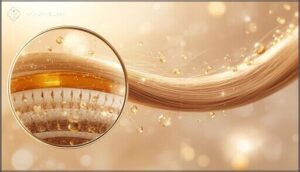
Hair serum doesn’t just sit on your strands—it actually works at a structural level to improve your hair’s condition from the inside out. When you apply serum consistently, you’re not just masking problems but actively supporting your hair’s natural resilience and strength.
Here’s how serum creates real, measurable improvements in your hair’s health over time.
Strengthening Internal Hair Bonds
Your hair’s internal structure relies on hydrogen and disulfide bonds—think of them as tiny bridges holding everything together. Bond repair serums with proteins and amino acids attach to damaged sites, reinforcing keratin restoration and improving hair elasticity. Cross-linking agents can temporarily increase tensile strength, measurably reducing breakage.
| Bond Type | How Serum Helps | Visible Result |
|---|---|---|
| Hydrogen bonds | Conditioning actives reform links | Improved flexibility |
| Disulfide bonds | Proteins strengthen cross-links | Reduced breakage |
| Keratin structure | Amino acids fill damaged spots | Enhanced resilience |
| Cortex integrity | Cross-linking agents reinforce | Increased strength |
Promoting Long-Term Hair Wellness
Consistency fuels transformation. When you layer serums into your hair wellness routines, you’re doing more than quick fixes—you’re building hair fiber integrity over months.
Regular scalp health management with protective formulations delivers long-term moisture and shields against cumulative hair damage prevention. Antioxidants fight oxidative stress, humectants lock in hydration, and proteins preserve tensile strength.
That sustained hair nourishment transforms fragile strands into resilient ones, giving you the hair health you deserve.
Enhancing Hair Structure
Structural integrity matters when you want manageable hair. Hair serums deposit polymers and silicones onto the cuticle, reducing surface roughness by 20–40% and supporting cuticle repair. That means less structural damage from styling.
Proteins reinforce cortex bonds for hair strengthening, while lipids improve hair porosity control and deliver frizz reduction.
The result? Smoother hair texture, effective hair damage repair, and reliable hair protection you can see.
Key Benefits of Hair Serum

Hair serums deliver visible results that go beyond basic styling. They transform how your hair looks and feels through targeted actions on the hair shaft and cuticle.
Here’s what you can expect when you use a quality serum consistently.
Boosting Shine and Luster
You’ve probably noticed how dull strands can look lifeless, but the right hair serum changes that fast. Shine enhancement happens when silicone-based formulas smooth your cuticle, boosting light reflection by 5–15% in controlled tests. That’s real hair gloss you can see.
Weekly use of luster-boosting serums keeps your strands shinier because they reduce surface roughness. The result? Visibly glossy, healthier-looking hair that catches the light naturally.
Controlling Frizz and Flyaways
Frizz control starts with understanding how humidity swells porous hair cuticles. Silicone-based serums form a barrier that blocks moisture transfer from humid air, cutting flyaway occurrence by reducing static buildup.
When you apply serum to damp hair focusing on mids and ends, you’re creating a smooth film that keeps frizzy damaged hair sleek. The result? Frizz-free hair that stays manageable all day.
Reducing Tangles and Knots
Knot reduction happens because silicone ingredients in serum minimize friction between strands. That’s how you get easier detangling and fewer snags when you comb through damp or dry hair.
Focus your application on mid-lengths to ends—where tangles love to form. Here’s what conditioning polymers deliver:
- Silky slip that lets your brush glide through without yanking
- Protective coating preventing new knots from forming throughout the day
- Smoother cuticles reducing friction that causes painful snarls
- Less breakage when you work through stubborn tangles post-wash
Improving Manageability
Manageable texture starts with layering the right serum on damp strands. Silicones and conditioning agents create a slip layer that cuts static, flyaways, and stiffness—making hair smoothening and tangle reduction easier during every comb-through.
You’ll notice consistent strand separation and frizz control, even in humidity. That’s practical hair manageability: detangling tips meet frizz-free hair with less force and breakage.
Hair Serum for Damage Repair

Your hair faces damage every single day—from the blow dryer you can’t live without to the color treatments that keep you feeling like yourself. Hair serums don’t just coat the surface; they actively work to rebuild what’s been broken down and shield your strands from ongoing stress.
Here’s how the right serum protects and repairs the damage you’re dealing with.
Protecting Against Heat Styling
Thermal damage isn’t just about split ends—it’s chemistry attacking your hair with every styling pass. When you apply heat protection serums before blow-drying or flat ironing, silicone-based formulas create a protective film that reduces cuticle lifting by up to 50%.
This hair shielding lowers surface temperature on your strands, minimizes frizz, and preserves moisture. For styling safety, choose serums tested to 230°C and reapply between multiple passes.
Repairing Chemically Treated Hair
Color treatments and bleach strip your hair’s protein structure, leaving strands fragile and prone to breakage. Hair serums with hydrolyzed keratin rebuild weakened cortex layers while antioxidants block ongoing chemical damage from UV exposure.
- Silicone formulations smooth lifted cuticles and seal moisture
- Protein repair ingredients restore strand resilience
- UV filters prevent photooxidation in color-treated hair
Regular serum application improves manageability and reduces breakage in chemically processed tresses.
Defending Against Environmental Aggressors
Pollution deposits film and particles that dull your hair’s surface. Hair serums form a barrier layer, reducing pollutant buildup by 20–40% in independent tests.
UV protection serums shield strands from photodamage, while silicone-based formulas smooth the cuticle against wind damage and humidity control needs.
You’ll see measurable frizz reduction and preserved shine when environmental aggressors can’t penetrate your hair’s protective coating.
Hydration and Nourishment With Hair Serum
Dry hair loses moisture faster than your skin loses water on a cold day. Hair serums tackle this by trapping hydration inside each strand and delivering oils that mimic your scalp’s natural protection.
Here’s how serums keep your hair moisturized and nourished.
Moisturizing Dry and Brittle Hair
Dry, brittle hair craves one thing: deep hydration—and the right hair serum delivers moisture where your strands need it most.
When you’re tackling dry, damaged hair, look for formulas with humectants and emollients that support real hair revitalization:
- Glycerin draws water from the air into your hair fiber
- Hyaluronic acid plumps strands and increases elasticity by up to 14%
- Natural oils like argan provide fatty acids for moisture locking
- Consistent use over 4–6 weeks noticeably softens dry hair
- Apply on damp hair for maximum absorption and hair hydration
Sealing in Hydration
Locking in moisture is where your serum’s real power shows up—hydration mechanisms create a physical barrier that stops water from escaping the cortex. Silicone-based serums form a protective film that traps hair hydration inside, reducing breakage from dehydration. Hair porosity matters—low-porosity strands need lighter formulas, while high-porosity hair benefits from heavier moisture retention barriers that control humidity exposure.
Serum Formulations and Moisture Retention Performance
| Serum Type | Hydration Duration |
|---|---|
| Silicone-Based | 24–48 hours |
| Occlusive Agents | 1–3 days |
| Humectant-Free | 24+ hours |
| Hybrid Formulas | Variable retention |
| High-Porosity Match | Enhanced sealing |
Nourishing With Natural Oils
Natural oils deliver fatty acids and vitamin E that reduce protein loss and improve keratin alignment in damaged strands. Argan oil, coconut oil, and jojoba work as hair lubrication agents that seal the cuticle for shine enhancement and frizz reduction.
- Lightweight lipids form a barrier preventing moisture loss
- Enhanced reflectivity from improved surface smoothness
- Decreased static through reduced friction on hair fibers
- Moderate application prevents buildup on fine hair
Test small amounts first—over-application weighs down your strands.
Types of Hair Serums and Their Uses
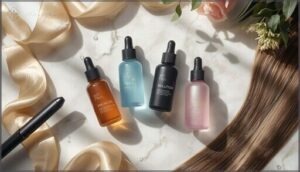
Not all hair serums work the same way—each type targets specific concerns with different active ingredients and formulation strategies. The serum you choose depends on what your hair needs most, whether that’s smoothing frizz, repairing damage, or protecting against heat.
Here’s a breakdown of the main categories and what they actually do for your strands.
Frizz Control Serums
Frizz reduction relies on silicone-based serum formulas that create a film on your hair shaft, cutting surface friction by up to 40%. These frizz fighters seal cuticles and resist humidity for roughly 24 hours, helping you achieve frizz-free hair.
If you’re dealing with frizzy damaged hair, polymer technology in hair smoothing serums reorganizes fibers, reducing flyaways by 20–35% in trials.
Moisturizing and Repair Serums
When your hair feels brittle or parched, moisturizing and repair serums deliver targeted conditioning agents that penetrate the cuticle and strengthen damaged fibers. These hair care products combine humectants and lightweight oils for effective hair hydration and damage restoration.
- Moisture lock mechanisms seal the cuticle using silicones or esters, reducing water loss by up to 30%
- Protein-rich serum formulations with hydrolyzed keratin rebuild structure for hair regeneration
- Heat-protective barriers minimize styling damage when applied to damp hair before blow-drying
Growth-Boosting Serums
Growth-boosting serums target follicle stimulation with active serum ingredients like peptides, caffeine, or minoxidil that support scalp health and hair density over 12 to 24 weeks.
You’ll notice these formulations require daily or semi-daily use for measurable results, and they often combine conditioning agents with hair growth compounds—making it difficult to attribute density changes to a single active alone.
UV and Heat Protection Serums
You protect strands from daily styling and sun exposure with UV protection serums containing avobenone derivatives or mineral filters that shield against color fading.
Thermal shielding polymers in these hair serum formulations create a barrier for heat damage repair during blow-drying.
For heat-damaged hair, look for silicone-based film formers that reduce heat transfer, fortify bonds, and restore hair shine and luster.
Hybrid and Multi-Benefit Serums
You’ll find hybrid formulations combine silicone-based smoothing agents with botanical oils for all-encompassing benefits—frizz control, shine, and nourishment in one product.
Consumer trials report 68% improved manageability after four weeks of serum usage.
These multi-benefit options deliver at least two outcomes per application, making them efficient for damaged hair that needs simultaneous heat protection and conditioning without layering multiple products.
Essential Hair Serum Ingredients
Understanding what’s actually in your serum matters more than the marketing hype on the bottle. The ingredients determine whether your product will smooth, strengthen, or simply weigh down your hair.
Here’s what works and why these specific components earn their place in effective formulations.
Silicones for Smoothing
Smoothing agents like dimethicone and cyclopentasiloxane dominate silicone-based formulations for good reason. These ingredients wrap each strand in a flexible film that seals the hair cuticle, locking out humidity while boosting hair shine. You’ll get frizz-free hair that feels slippery and manageable. Here’s what silicone benefits deliver:
- Protective barrier – reduces moisture loss and environmental damage
- Light reflection – fills micro-gaps for shinier hair
- Heat styling support – maintains fiber integrity under high temperatures
Oils (Argan, Jojoba, Etc.)
Now, if you want more than just surface shine, reach for hair serums packed with oils like argan and jojoba. These ingredients don’t just sit on top—they hydrate, support cuticle repair, and bring real frizz control.
Jojoba oil mimics your scalp’s natural oils, keeping hair balanced, while argan oil boosts elasticity and delivers lasting hair smoothing. Using argan oil benefits can greatly improve the overall health and appearance of your hair.
Proteins and Amino Acids
Proteins like hydrolyzed keratin rebuild your hair’s structure from within, increasing internal bonding by about 6.5 percent. That’s real hair fortification. Amino acids—cysteine, arginine, serine—penetrate the cortex and reduce breakage while improving tensile strength.
Protein-infused serums deliver molecular bonding that reverses damage from heat and chemicals. For lasting keratin repair and measurable amino acid benefits, these ingredients matter most.
Using the right hair growth products can boost the effectiveness of these serums.
Antioxidants and UV Filters
Free radical damage accelerates when UV rays hit your hair, degrading proteins and cuticles. Antioxidants like vitamin E and ferulic acid neutralize this threat, offering real photoaging prevention. UV filters—avobenzone, octisalate—create a hair fiber shield by absorbing radiation. Together, they deliver measurable antioxidant benefits:
- Reduced oxidative stress after sun exposure
- Preserved color in treated hair
- Maintained strand strength over time
- Enhanced hair protection in silicone-based formulas
Choosing The Right Hair Serum
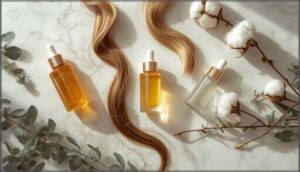
The serum aisle can feel overwhelming when you’re staring at dozens of bottles with different promises. Your hair has specific needs—whether it’s fine and limp, thick and frizzy, or color-treated and fragile—and the right serum works with those needs, not against them.
Here’s how to cut through the marketing claims and find a formula that actually delivers.
Matching Serum to Hair Type
Your hair texture determines which serum formulation works best. Fine hair needs lightweight, silicone-based polymers that won’t weigh strands down. Thick or coarse hair manages richer oils for frizz control and manageability. Curls require humectants and light oils for curl enhancement without buildup. Heat-styled hair benefits from thermal protectants, while color-treated strands need UV filters for damage prevention.
| Hair Type | Ideal Serum Formulation |
|---|---|
| Fine/Low-Density | Lightweight silicones |
| Thick/Coarse | Rich, emollient oils |
| Curly Hair | Humectants + lightweight oils |
Addressing Specific Hair Concerns
Frizz reduction starts with serums that form a protective barrier to lock in moisture and smooth your cuticles. For color protection, choose formulas with UV filters to keep vibrancy intact.
Dry scalp issues respond to lightweight hydration ingredients that soothe irritation without heaviness.
Split ends and hair breakage benefit from protein-infused serums that temporarily seal damaged hair, though real repair requires consistent hair care tips and trimming.
Evaluating Ingredient Lists
Check the ingredient labeling for active functional cosmetic ingredients like silicone-based polymers or natural oils listed near the top. Regulatory compliance ensures disclosure accuracy, so compare formulation analysis against safety assessments and toxicity screening standards.
Watch for proprietary blends that mask exact amounts of hair product ingredients. Don’t settle for vague claims—demand transparency in your hair serum usage choices.
Considering Color-Safe Options
Protecting your hair pigmentation starts with smart serum formulations designed for color retention. Color-treated hair demands products that won’t strip dye or dull your vibrant look—you’re entitled to both damage repair and dye preservation.
Look for these color protection features:
- Sulfate-free silicone-based formulas that shield without lifting pigment
- UV filters that prevent oxidative fade from sun exposure
- pH-balanced ingredients that maintain cuticle integrity and color longevity
Choose hair serums for damaged hair that explicitly state color-safe compatibility on the label.
How to Apply Hair Serum Effectively
Getting great results from your hair serum isn’t about the product alone—it’s about how you apply it. The difference between limp, greasy hair and glossy, frizz-free strands often comes down to technique.
Here’s what you need to know to use serum the right way.
Application on Damp Vs. Dry Hair
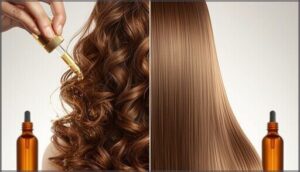
Timing your hair serum application can make or break your results. Application timing depends on whether you prioritize hydration or surface smoothing for your hair care routine.
Damp hair benefits include smoother serum distribution and better moisture sealing—ideal for thick or curly textures. Dry hair tips lean toward frizz control and instant shine without weighing down fine strands.
Hair texture matters, so test both methods.
Correct Amount and Distribution
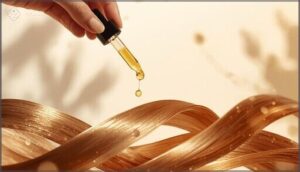
Getting the hair serum dosage right prevents buildup and maximizes benefits. Here’s how to master application techniques:
- Short hair: Start with a pea-sized drop
- Medium to long hair: Use 1–2 pumps
- Fine hair: Apply half a pump to one pump
- Distribution methods: Rub between palms, then work from mid-lengths to ends
- Hair length considerations: Brush through for even coverage
Reapply every 1–2 days after washing to maintain results without heaviness.
Layering Serums for Added Benefits
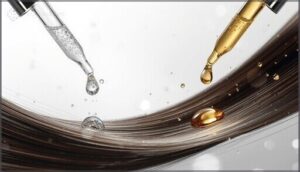
You can stack compatible hair serums to boost results. Apply a water-based or humectant-rich formula first, then follow with an oil-based serum—this order locks in moisture better.
Studies show cumulative effects on smoothness and enhanced protection against humidity. Hybrid formulas simplify product stacking, but sequential layering of targeted hair treatment serums often delivers exceptional hair repair and long-term hair care benefits.
Common Application Mistakes to Avoid
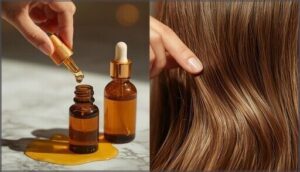
Even layered serums fail if you make basic errors. Over application weighs hair down—start with a dime-sized amount. Inadequate distribution leaves ends dry while roots look greasy.
Applying to a wet scalp triggers buildup; focus on mid-lengths to ends instead.
Insufficient absorption before heat styling causes sizzling and damage. Wait 1–2 minutes for penetration, ensuring hair serums for damaged hair deliver proper hair protection and strengthening.
Top 6 Hair Serums for Maximum Benefits
You’ve learned how serums work and how to apply them correctly. Now you need to know which products actually deliver on their promises.
Here are six formulations that combine effective ingredients with proven performance across different hair concerns.
1. Marula Oil Hair Serum Anti Frizz
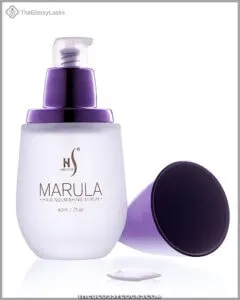
Marula oil serums deliver measurable frizz reduction—controlled tests show up to 20–40% improvement in frizz control. This silicone-based formula costs just $13.99 for 2 fluid ounces and works by sealing the hair cuticle with oleic and linoleic fatty acids.
You’ll get a lightweight barrier that diminishes moisture loss without sticky residue, making it ideal for hair serums for damaged hair.
The antioxidants defend against environmental stressors while promoting hair smoothening and hydration. Apply 2–3 drops to damp hair for frizz-free hair that stays manageable in humidity.
| Best For | Anyone with frizzy, flyaway-prone hair looking for a lightweight daily serum that works on all hair types, including damaged or color-treated strands. |
|---|---|
| Price | $13.99 |
| Volume | 2 fl oz |
| Hair Type | All types |
| Primary Benefit | Frizz reduction |
| Formula Base | Silicone-based |
| Application | Damp hair |
| Additional Features |
|
- Clinically reduces frizz by 20–40% while leaving hair smooth and shiny without greasy or sticky residue
- Packed with nourishing ingredients like marula oil, aloe, and vitamin E that protect against environmental damage
- Affordable at $13.99 for a 2-ounce bottle that works on damp or dry hair, before or after heat styling
- The marula oil scent isn’t everyone’s favorite and might be too strong for sensitive noses
- Some users report it doesn’t add much extra shine, depending on their hair type
- Bottle design may differ from what’s shown in product photos
2. Hair Food Hemp Extract Manuka Honey Leave in Conditioner
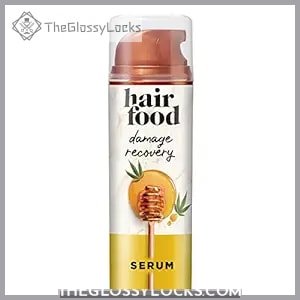
This sulfate-free leave-in conditioner contains hemp extract and Manuka honey to repair damage through humectant-based hydration. You’ll find it addresses split ends and breakage in dry, color-treated hair while providing continuous hair nourishment between washes.
The 5.1-ounce formula creates slip for hair smoothing and hydration without rinsing—apply a small amount to mid-lengths and ends on damp hair.
At under $10, it’s a practical hair treatment and repair option, though overapplication may weigh down fine textures.
| Best For | People with dry, damaged, or color-treated hair looking for an affordable leave-in conditioner that hydrates and reduces frizz without rinsing. |
|---|---|
| Price | $10 (under) |
| Volume | 5.1 fl oz |
| Hair Type | Dry, color-treated |
| Primary Benefit | Damage repair |
| Formula Base | Sulfate-free |
| Application | Damp hair |
| Additional Features |
|
- Sulfate-free and paraben-free formula works well for color-treated or chemically processed hair
- Hemp extract and Manuka honey provide moisture and help repair split ends and breakage
- Budget-friendly at under $10 for ongoing conditioning between washes
- Can feel sticky or heavy if you use too much, especially on fine or oily hair
- May not fully tame very curly or frizz-prone hair on its own
- Some people might be sensitive to the honey scent or botanical ingredients
3. Davines Curl Building Serum for Curly Hair
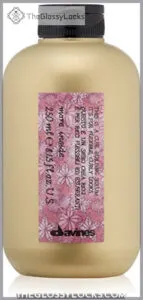
This lightweight serum formulation builds curl definition in wavy to curly hair textures without the crunch you get from traditional hair styling products. Silicone-based smoothing agents are combined with conditioning oils that reduce frizz while supporting curl clumpiness—the key to bouncy, structured curls.
Apply 2-4 drops to damp hair from mid-lengths to ends for hair smoothing and hydration. At $34 for 250 milliliters, it delivers reliable curly hair care and product efficacy, though periodic clarifying washes prevent buildup on high-porosity hair.
| Best For | Anyone with wavy to curly hair looking for frizz control and bounce without stiff, crunchy curls. |
|---|---|
| Price | $34.00 |
| Volume | 250 ml |
| Hair Type | Wavy to curly |
| Primary Benefit | Curl definition |
| Formula Base | Silicone-based |
| Application | Damp hair |
| Additional Features |
|
- Lightweight formula defines curls and adds shine without weighing hair down
- Works well in humid conditions to keep frizz under control
- Adds volume and structure that lasts throughout the day
- Can feel sticky if you use too much product
- May require some experimenting to find the right amount for your hair
- Needs occasional clarifying washes to prevent buildup on certain hair types
4. Perfect Serum Original Korean Hair Serum
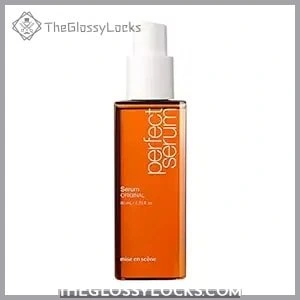
This Korean hair care formulation contains seven naturally derived oils and is marketed as the number one serum in its category. Silicone-based serum ingredients coat each hair strand, providing heat protection up to 446°F, which is essential for daily hot tool users.
Priced at $18.99 for 2.71 fluid ounces, it offers hair nourishment and smoothening without mineral oil or animal derivatives. For best results, apply 2-3 drops to damp hair to control frizz and improve hair health. However, fine hair may require less product to avoid weighing down strands.
| Best For | Anyone with frizzy, dry, or heat-styled hair who wants lightweight shine and protection without heavy buildup. |
|---|---|
| Price | $18.99 |
| Volume | 2.71 fl oz |
| Hair Type | Frizzy, dry |
| Primary Benefit | Heat protection |
| Formula Base | Silicone-based |
| Application | Damp hair |
| Additional Features |
|
- Protects hair from heat damage up to 446°F, making it safe for daily straightening or curling
- Contains seven natural oils that add shine and smooth frizz without feeling greasy
- Free from mineral oil, animal oils, and other harsh chemicals, so it’s a cleaner option for your hair
- Small bottle size at 2.71 oz means you’ll need to restock fairly often if you use it regularly
- Fine or thin hair types might find even a small amount too heavy or oily
- Works best when combined with other products, so it’s not really a one-and-done solution
5. Garnier Fructis Sleek and Shine Anti Frizz Serum
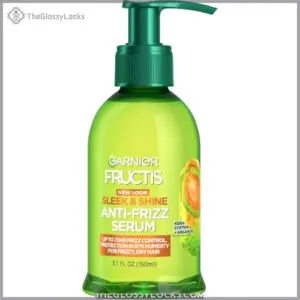
You want affordable frizz control backed by proven ingredients? Garnier Fructis Sleek and Shine Anti Frizz Serum delivers silicone-based hair smoothing for $8 per 5.1 fluid ounces. Cyclopentasiloxane and dimethicone coat hair strands to reduce frizz and boost shine enhancement in up to 97% humidity—though real-world anti-humidity results vary by hair type.
Apply 2-4 drops to damp hair before heat styling for frizz-free hair. Fine hair users should start with less product to avoid weighing down strands, while coarse textures may need slightly more for effective hair care tips and tricks application.
| Best For | People with frizzy or dry hair looking for an affordable, lightweight serum that smooths strands and adds shine without breaking the bank. |
|---|---|
| Price | $8.00 |
| Volume | 5.1 fl oz |
| Hair Type | Frizzy, dry |
| Primary Benefit | Frizz control |
| Formula Base | Silicone-based |
| Application | Damp hair |
| Additional Features |
|
- Delivers noticeable frizz control and shine at just $8 for 5.1 oz, making it one of the most budget-friendly options in the anti-frizz category.
- Contains proven silicone-based ingredients like cyclopentasiloxane and dimethicone that create a protective barrier against humidity and environmental moisture.
- Works well on damp hair before styling and can be reapplied sparingly for touch-ups on day-old hair without feeling heavy or greasy.
- Can weigh down fine or thin hair if you use too much, so you need to be careful with the amount you apply near the roots.
- Silicone buildup happens over time with frequent use, meaning you’ll need to clarify your hair regularly to keep it from feeling coated or dull.
- Real-world humidity protection varies depending on your hair type and environment—some users still experience frizz in extremely humid conditions despite the 97% claim.
6. Obliphica Seaberry Hair Serum for Dry Hair
Dry damaged hair needs more than surface slip—it requires essential fatty acids that penetrate the cuticle. Obliphica Seaberry Hair Serum delivers omega-7 palmitoleic acid and vitamin E from seaberry extract at $35.99 for 2.2 fluid ounces. Unlike silicone-based formulas, this oil-based serum provides actual nourishment alongside frizz control methods.
Apply 2-4 drops to damp hair, focusing on mid-lengths to ends. Hair serum reviews note lightweight hydration without greasiness—key for dry hair solutions. Seaberry oil benefits include antioxidant protection, though deep-repair claims lack clinical backing.
Follow basic hair care tips and tricks: start small, add gradually.
| Best For | People with dry, frizzy, or damaged hair looking for lightweight nourishment and shine without heavy buildup. |
|---|---|
| Price | $35.99 |
| Volume | 2.2 fl oz |
| Hair Type | All types |
| Primary Benefit | Hair thickness |
| Formula Base | Oil |
| Application | Damp hair |
| Additional Features |
|
- Contains omega-7 palmitoleic acid and vitamin E that actually penetrate the hair cuticle instead of just coating it
- Lightweight oil-based formula hydrates without making hair greasy or weighing it down
- Works on multiple hair types (fine, medium, coarse, curly, straight) and provides frizz control with a pleasant sea berry scent
- At $35.99 for 2.2 fluid ounces, it’s pricier than many drugstore alternatives
- May require washing hair more frequently (every 5-6 days instead of 7) due to oil buildup
- Deep-repair and damage-reversal claims aren’t backed by publicly available clinical data
Frequently Asked Questions (FAQs)
Can hair serum cause hair loss?
Most serums won’t cause hair loss, but product allergies or scalp sensitivity to silicone-based formulas can irritate follicles.
Overuse may clog pores in oily scalps, occasionally worsening existing hair damage or shedding.
How long does hair serum last?
Most hair serums remain effective for 6 to 12 months after opening. Unopened bottles have a shelf life of 2 to 3 years when stored properly. Watch for discoloration or texture changes signaling expiration.
Is hair serum suitable for all hair types?
No one-size-fits-all solution exists in hair care. Hair serum formulations vary by hair texture and porosity—silicone-based serums suit coarse strands, while lightweight options prevent weighing down fine hair types.
Can hair serum cause build-up?
Yes, overusing silicone-based formulas can leave residue that weighs hair down and clogs follicles. Water-insoluble dimethicone accumulates over time, requiring clarifying shampoos for buildup removal and follicle clogging prevention.
Can hair serum be used on wet hair?
You can apply serum to damp hair after washing—it helps seal the hair cuticle and lock in moisture.
This technique improves serum absorption and aids effective damp hair care for various hair types.
Can hair serum cause buildup on the scalp?
When you overuse silicone-based formulas or skip clarifying washes, residue accumulates. That leads to follicle occlusion risks, greasy roots, and scalp irritation.
Focus application mid-length down and alternate with buildup management tips for healthy hair care routines.
How often should you use hair serum weekly?
Most hair types do best with serum 2–3 times weekly after washing to balance frizz control and shine against buildup risk.
Fine or oily hair may need less frequent application to avoid weighing strands down.
Does hair serum work on all hair textures?
Serums perform differently across textures. Fine straight hair needs lightweight formulas to avoid greasiness, while coily textures require richer emollients.
Matching serum formulation to your curl patterns and porosity delivers best results.
Can you use hair serum before swimming?
Yes, you can use hair serum before swimming to create a hair barrier against chlorine damage. Silicone-based or oil-rich formulas offer pre-swim protection by reducing pool chemical absorption and limiting hair damage during swim care tips routines.
Will hair serum weigh down fine hair?
It depends. Lightweight, silicone-based formulas won’t weigh down fine hair if you use pea-sized amounts on mid-lengths only.
Heavy oils and product buildup flatten roots, so choose fluid serums designed for fine hair care.
Conclusion
Think of your hair like a high-performance engine—it won’t run smoothly on the wrong fuel. Hair serum benefits depend entirely on matching the formulation to your specific damage pattern and hair structure.
Silicones seal the cuticle. Proteins rebuild bonds. Heat protectants create thermal barriers up to 450°F.
You don’t need more products cluttering your routine. You need precision: the right active ingredients, applied correctly, delivering measurable results. That’s the difference between guessing and knowing.
- https://github.com/vinhphunguyen/how-to-write-a-paper/blob/master/how-to-write-paper.brf
- https://mcluhan.unk.edu/lawson/?page_id=187
- https://www.rjpbcs.com/pdf/2016_7(6)/%5B343%5D.pdf
- https://www.ncbi.nlm.nih.gov/pmc/articles/PMC4938278/
- https://ualresearchonline.arts.ac.uk/id/eprint/10349/1/IFSCC%20Paper_Daniels_0316.pdf