This site is supported by our readers. We may earn a commission, at no cost to you, if you purchase through links. This content is for general informational and educational purposes only and is not a substitute for professional medical, dermatological, or nutritional advice.
Your hair doesn’t recognize the difference between tap water and a chemistry experiment, but your scalp certainly does. Roughly 85% of U.S. households receive hard water—water saturated with calcium and magnesium minerals that cling to each strand like microscopic barnacles.
These mineral deposits don’t rinse away cleanly. They accumulate with every wash, forming a coating that blocks moisture, roughens the cuticle, and transforms once-manageable hair into a brittle, frizzy version of itself.
The damage isn’t immediate, but it compounds over weeks and months, leaving visible signs that many people mistake for product failure or genetic bad luck. Understanding how mineral buildup weakens hair structure reveals why standard shampoos often fail and which targeted treatments actually restore damaged strands.
Table Of Contents
- Key Takeaways
- What is Hard Water and Why It Matters
- How Hard Water Affects Hair Health
- Signs Your Hair is Damaged by Hard Water
- Can Hard Water Cause Hair Loss?
- Hair Types Most Vulnerable to Hard Water
- How to Detect Hard Water in Your Home
- Preventing and Repairing Hard Water Hair Damage
- Solutions for Managing Hard Water Effects
- Frequently Asked Questions (FAQs)
- What are the long-term effects of hard water on hair?
- Can hard water damage hair that is already damaged?
- What are the best products to use for hard water hair?
- How can I tell if my hair is damaged by hard water?
- What are some other ways to prevent hard water damage to hair?
- Does hard water affect hair growth rate?
- Can hard water damage hair extensions or wigs?
- How long does mineral buildup take to occur?
- Are childrens hair more vulnerable to hard water?
- Does hard water worsen dandruff or flaking issues?
- Conclusion
Key Takeaways
- Hard water minerals (calcium and magnesium) coat your hair shaft with deposits that block moisture absorption, roughen the cuticle, and cause brittleness, frizz, and breakage over repeated washes.
- About 60-85% of U.S. households deal with hard water, with the highest concentrations in the Northeast, Midwest, and Southwest where limestone-rich aquifers dominate the water supply.
- Chelating shampoos containing EDTA dissolve mineral buildup more effectively than regular clarifying products, and should be used 1-2 times weekly followed by deep conditioning to restore moisture.
- Installing a shower head filter or whole-house water softener removes minerals before they touch your hair, while weekly acidic rinses (diluted apple cider vinegar) help dissolve existing deposits and restore your hair’s natural pH.
What is Hard Water and Why It Matters
You’ve probably heard the term “hard water” thrown around, but what does it actually mean for your hair? Hard water isn’t just a plumbing issue—it directly affects how your hair looks and feels.
Let’s break down what hard water is and why it matters for your hair health.
Definition of Hard Water
Hard water is water loaded with dissolved minerals—primarily calcium and magnesium ions. Water hardness is measured as calcium carbonate equivalents in milligrams per liter (mg/L). When these calcium levels exceed 60-120 mg/L, your water officially earns the “hard” label.
Here’s what you need to know:
- Mineral content varies by location – regional geology determines hardness
- Water quality isn’t compromised – hard water is safe to drink
- Scale and buildup are the real issues – mineral deposits affect hair and appliances
- Geographic differences matter – some areas have notably harder water
- Testing reveals your water hardness – measurements guide treatment decisions
Common Minerals in Hard Water
Calcium and magnesium dominate the mineral composition of hard water. These ions bond with bicarbonates, creating what we call carbonate hardness—the main driver of scaling and buildup. Over time, these mineral deposits can coat and weigh down strands, which is especially problematic for delicate 4A curl patterns that rely on moisture balance.
Chlorides and sulfates tag along at lower concentrations, affecting taste and corrosion. You might also see trace amounts of iron and manganese, which leave those telltale rust-colored stains on fixtures.
Prevalence in U.S. Households
Your location shapes your water hardness more than you’d think. About 60% to 85% of U.S. homes deal with hard water, especially in the Northeast, Midwest, and Southwest where limestone-rich aquifers dominate. If you’re already noticing damage, switching to a gentler daily hair care routine can help reverse some of the effects while protecting your strands going forward.
Most U.S. homes—60% to 85%—face hard water issues, especially in regions where limestone-rich aquifers dominate the water supply
Regional variations matter—municipal water testing often reveals calcium and magnesium levels exceeding 120 mg/L in these areas. A simple water filter or water softener can confirm your household impact through mineral analysis. Hard water can also affect different hair texture types unevenly, with porous curls building up minerals faster than smoother, low-porosity strands.
Understanding scientific study summaries can help identify similar issues in water quality research.
How Hard Water Affects Hair Health
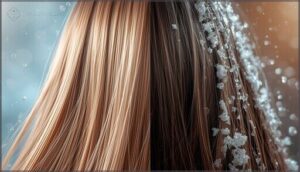
Hard water doesn’t just sit on your hair—it changes how your strands behave from the inside out. The minerals attach to each strand and create a cascade of problems that affect texture, strength, and your scalp’s ability to stay balanced. Over time, this buildup can make even your best long-lasting hair styling techniques fall flat by the end of the day.
Here’s what happens when hard water becomes part of your daily routine.
Impact on Hair Texture and Strength
Your hair’s texture and strength take real hits when minerals coat each strand. Hard water deposits calcium and magnesium on your hair shaft, creating roughness you can actually feel.
Here’s what happens to your hair:
- Hair Cuticle Damage from mineral buildup makes strands rough and unmanageable
- Tensile Strength Loss weakens keratin fibers, reducing breaking load in controlled tests
- Elasticity Reduction decreases hair’s resilience and stiffness over time
- Mineral Buildup Effects block moisture absorption, leaving hair brittle and prone to breakage
Effects on Scalp Health
Friction from mineral deposits can trigger scalp irritation and micro-scratches you don’t always notice. Your scalp’s pH shifts when calcium and magnesium settle on the skin, throwing off sebum regulation and creating dryness or excess oil. Flaking that looks like dandruff often stems from mineral residue, not a fungal issue. Sensitive scalps face more follicle inflammation with chronic exposure.
| Scalp Issue | Cause | Solution |
|---|---|---|
| Itchiness and redness | Mineral friction and soap residue | Chelating shampoo, scalp toner |
| Oily or dry patches | Altered pH and sebum regulation | pH-balanced cleanser, scalp care routine |
| Flaking or tightness | Mineral film buildup | Acidic rinse, scalp health maintenance |
| Follicular discomfort | Low-grade inflammation | Gentle formulas, protective treatments |
Mineral Buildup on Hair
You’ll feel a film coating each strand after washing—that’s calcium carbonate and magnesium salts settling on your hair. These mineral deposits disrupt the cuticle, scatter light, and block moisture, leaving you with dullness and static.
High-porosity hair grabs minerals faster, so buildup accelerates. Scalp irritation and reduced product performance follow when minerals interact with sebum and styling formulas. Mineral removal restores smoothness.
Signs Your Hair is Damaged by Hard Water
Your hair will tell you when hard water is taking a toll—you just need to know what to look for. The damage doesn’t happen overnight, but certain signs show up consistently when mineral buildup starts wreaking havoc. If you’re noticing brassy, orange, or yellow tones creeping in, that’s often a clear sign that hard water minerals are clinging to your cuticle and distorting your color.
Here are the three most common indicators that hard water is damaging your hair.
Dryness and Brittleness
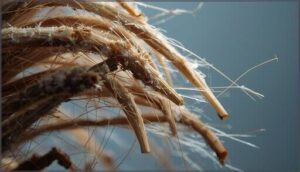
When your strands snap at the slightest tug, hard water is likely the culprit. Mineral buildup from calcium and magnesium blocks moisture absorption, increasing hair porosity and causing cuticle damage that leaves you with brittle ends.
Here’s what you’ll notice:
- Hair breaks easily during brushing or styling
- Dry skin and flaking appear on your scalp
- Moisture loss makes strands feel straw-like despite regular hair care routines
Hard water damage escalates quickly without intervention.
Frizz and Tangling
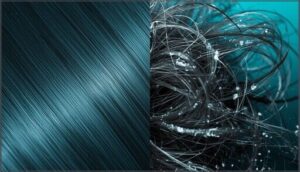
When your hair refuses to lie flat no matter what product you use, hard water minerals are roughing up your cuticles. Frizz control becomes nearly impossible as calcium and magnesium create friction between strands, making tangling issues worse—especially if you have high hair porosity.
Watch for these signs:
- Unmanageable frizz even in low humidity
- Knots form quickly after washing
- Cuticle damage creates a rough, chalky texture
Mineral buildup escalates hair breakage and disrupts your entire hair care routine.
Dullness and Residue
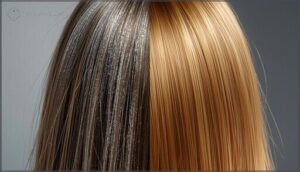
When your hair looks lifeless despite every product you try, mineral buildup from hard water is coating each strand. Calcium and magnesium create a film that blocks light reflection, leaving you with dull, flat hair that lacks vibrancy.
- Soap scum forms when hard water reacts with shampoo ingredients
- Color-treated hair fades faster due to mineral deposits
- Residue removal requires chelating shampoos with EDTA
- Scalp treatment helps restore moisture and natural shine
Can Hard Water Cause Hair Loss?
The link between hard water and hair loss isn’t black and white—the science is still catching up. What experts understand is that hard water weakens your hair shaft and irritates your scalp, which can create conditions for increased shedding.
Let’s break down what the research shows, how mineral buildup might trigger hair loss, and what other factors you need to keep in mind.
Current Scientific Findings
Recent studies show mineral buildup from hard water alters your hair texture and increases roughness by up to 30%. Calcium and magnesium reduce conditioning efficiency by 15–25%. Mineral impact also changes hair porosity by 5–12% over repeated washes.
Scalp irritation appears more common with poor water quality. While hair damage is measurable, direct links between hard water and hair loss remain under investigation.
Potential Links to Hair Shedding
Mineral buildup on your scalp can interfere with hair follicle health and shift shedding patterns. Here’s what may happen:
- Calcium and magnesium deposits irritate your scalp, triggering inflammation that increases hair shedding.
- Residue weakens hair cuticles, causing breakage near the root that mimics hair loss.
- Altered pH disrupts sebum balance, loosening hair shaft cohesion.
Breakage prevention starts with addressing scalp irritation and mineral residue.
Other Contributing Factors
Hard water rarely acts alone. Genetic predisposition, hormonal imbalance, and dietary influence all shape your hair’s resilience. Environmental factors like pollution compound mineral buildup stress.
Lifestyle choices—smoking, poor sleep—worsen skin irritation and itchy skin. Soap scum from hard water can trigger skin problems that affect your scalp.
Address these variables together for the clearest picture of your hair loss pattern.
Hair Types Most Vulnerable to Hard Water
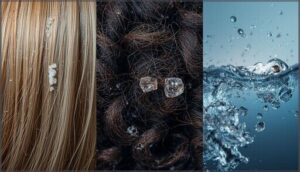
Not all hair reacts the same way to mineral-heavy water. Some hair types take the hit harder than others, showing damage faster and more severely.
Here’s what you need to know about the hair types that struggle most with hard water exposure.
Color-Treated Hair
Your hair dye faces a tougher battle in hard water. Minerals latch onto chemically treated strands, accelerating color fading and stealing vibrancy. Chelating agents in your color products can’t work as well, meaning your shade won’t last.
Here’s what you need to know:
- Use chelating shampoos designed for color protection to strip mineral buildup without damaging hair color.
- Apply pH-balanced conditioners after washing to seal cuticles and lock in pigment.
- Rinse with cooler water to reduce color loss from mineral interactions.
- Add leave-in UV protection to fight oxidative damage from hard water minerals.
Expect more frequent touch-ups if your tap runs hard.
Curly and Fine Hair
Curly and fine strands face a double threat. Your curls’ natural porosity traps minerals fast, blocking moisture and cranking up frizz. Fine hair shows every speck of buildup, losing volume and bounce.
Hard water raises your cuticle, wrecking curl definition and making detangling brutal. Mineral balance matters—your hair porosity works against you here.
Focus on scalp care to prevent breakage before it starts.
Sensitive Scalp Conditions
Inflammation from mineral deposits hits hardest if you’re managing dermatitis care or psoriasis management. Hard water disrupts your scalp microbiome, triggering flare-ups and intense itchy skin.
Studies link higher mineral content to worse itch relief outcomes and increased flaking.
A daily scalp toner with chelating agents helps, but water filtration addresses the root cause. Pair it with gentle scalp care and skin irritation remedies for lasting hair damage repair.
How to Detect Hard Water in Your Home
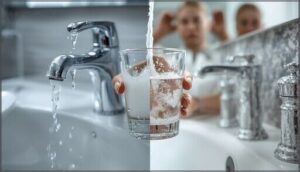
You don’t need a lab test to figure out if hard water is wreaking havoc on your hair and home. Your own eyes and hands can tell you most of what you need to know.
Here’s how to spot the telltale signs and confirm what’s flowing through your pipes.
Visual and Physical Signs
You can spot hard water damage without a lab test. Check your strands after washing—if you see a white, chalky film or mineral buildup, that’s your first clue.
Run your fingers through dry hair. Notice stiffness or roughness even after conditioning? That signals mineral deposits blocking moisture. Color-treated hair may show copper or greenish tints from iron and minerals.
Your scalp might feel itchy with flaky residue near the roots. Dullness, persistent frizz, and increased hair breakage at the ends all point to hard water’s grip on your hair texture. These signs demand action.
Regional Hard Water Maps
Across the United States, water hardness levels shift dramatically by region. The Midwest and certain Southern states show higher calcium and magnesium concentrations—often exceeding 180 mg/L of CaCO3—while coastal areas tend toward softer water.
You can access free geographic trends data through U.S. Geological Survey maps and local utility reports. These map analysis tools classify your area as soft, moderately hard, hard, or very hard.
Hard water testing reveals regional variations tied to aquifer geology. Understanding these patterns helps you decide whether water treatment or a water softener makes sense for protecting your hair from water hardness effects.
Preventing and Repairing Hard Water Hair Damage
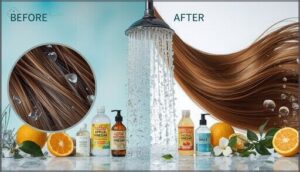
You don’t have to let hard water win this fight. There are proven ways to strip away mineral buildup and restore your hair’s natural strength and shine.
Here’s what actually works to protect and repair the damage.
Clarifying and Chelating Shampoos
Your best defense against mineral buildup? Clarifying shampoos strip away styling products and chlorine, while chelating shampoos—fortified with EDTA or tetrasodium EDTA—specifically target hard water minerals like calcium and magnesium.
Use them 1–2 times weekly for hair detoxification. Overuse strips natural oils and color, so always follow with conditioner. If you have a sensitive scalp, consult a dermatologist first.
Deep Conditioning and Hair Masks
Deep conditioning treatments replenish moisture stripped by mineral deposits. Apply a hair mask with chelating agents and hydrolyzed proteins 1–2 times weekly to damp hair. Heat improves penetration—use a warm cap or shower steam for 10–20 minutes.
- Choose masks with EDTA derivatives to dissolve calcium buildup
- Match treatment to your hair porosity for ideal absorption
- Apply to towel-dried strands before heat application
- Rinse with lukewarm water to seal the cuticle
Acidic Rinses (Vinegar, Lemon Juice)
Acidic rinses lower your hair’s pH back to its natural mildly acidic range, smoothing cuticles and dissolving mineral buildup.
Mix 1–3 tablespoons of apple cider vinegar or lemon juice per liter of water. Pour over shampooed hair, wait 2 minutes, then rinse with cool water.
Use weekly for hair damage prevention—avoid undiluted solutions that irritate your scalp or strip color-treated strands.
Solutions for Managing Hard Water Effects
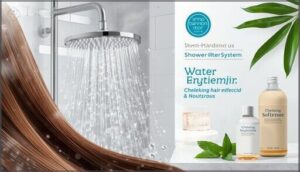
You don’t have to accept hard water as a permanent sentence for your hair.
There are practical tools and systems that can reduce mineral buildup before it even touches your strands.
Here’s what works to protect your hair from hard water damage.
Shower Head Filters
A shower head filter gives you control over what touches your hair. These filtration systems attach to your existing shower head and reduce calcium and magnesium at the point of use.
Here’s what makes them work:
- Activated carbon or KDF media removes chlorine and heavy metals through chemical reduction
- Filter maintenance requires cartridge replacement every 3–6 months for consistent mineral removal
- Most units install on standard shower arms without plumbing changes
- Water quality improvement varies with your specific mineral profile and flow rate
- Reduced mineral deposition means less buildup on hair strands and better shampoo lather
Check your water quality before choosing a filter.
Water Softeners and Purifiers
For whole-house hard water treatment, ion exchange water softeners replace calcium and magnesium with sodium, reducing hardness by 60–95%. Salt-free conditioners prevent mineral adherence but don’t actually remove minerals. Reverse osmosis purifiers deliver the cleanest water but produce wastewater.
All water filtration systems require purifier maintenance—expect cartridge changes every few months and periodic membrane replacement for ideal water softening solutions.
Tips for Daily Hair Care in Hard Water Regions
Beyond installing filters and softeners, your daily hair routines need adjusting too. Hard water treatment works best when paired with protective hair care products.
Here are your essential hard water remedies:
- Use chelating shampoo weekly to strip mineral deposits—look for EDTA on labels
- Follow every wash with deep conditioner to restore moisture and prevent hair loss
- Apply acidic rinses monthly using diluted vinegar for extra protection
These shower filter benefits multiply when you layer defenses.
Frequently Asked Questions (FAQs)
What are the long-term effects of hard water on hair?
Over time, mineral accumulation acts like rust on a pipe—calcium and magnesium deposits stiffen hair shafts, weaken cuticle integrity, and trigger scalp irritation.
These deposits also compromise follicle health, accelerating hair breakage and porosity-related damage.
Can hard water damage hair that is already damaged?
Yes, hard water worsens existing hair damage. Mineral buildup blocks moisture, making damaged strands drier and more prone to breakage.
Chelating agents and deep conditioning can help restore hair porosity and manageability.
What are the best products to use for hard water hair?
Think of chelating shampoos as your hair’s reset button—they dissolve mineral deposits fast. Pair with hydrating conditioners, weekly scalp toners, and pH balancers to keep strands soft and breakage-free.
How can I tell if my hair is damaged by hard water?
Your hair feels persistently dry and brittle despite conditioning. You’ll notice increased frizz, tangling, and dullness. Color fades faster, and mineral buildup creates visible residue.
Your scalp may itch or feel irritated after washing.
What are some other ways to prevent hard water damage to hair?
Protect your strands proactively with point-of-use water softeners installed at the showerhead. Follow with chelating treatments using clarifying shampoo, then apply pre-wash conditioners. Rinse using filtered water, add hydrating hair masks weekly, and minimize heat styling damage.
Does hard water affect hair growth rate?
Hard water doesn’t directly slow hair growth rate, but mineral buildup can increase breakage and scalp irritation.
This affects perceived length over time, making follicles appear less productive than they actually are.
Can hard water damage hair extensions or wigs?
Yes, extensions and wigs are vulnerable to hard water. Mineral buildup creates friction, causes tangling, and weakens adhesive bonds. Calcium deposits dull fibers and make removal difficult.
Regular chelating treatments protect your investment.
How long does mineral buildup take to occur?
Mineral accumulation begins within days of exposure. Most people notice visible buildup after five to seven washes.
Hard water effects accelerate on damaged or porous hair, where mineral deposition occurs faster than on healthy strands.
Are childrens hair more vulnerable to hard water?
Children’s hair is typically finer and produces less natural oil, making mineral sensitivity higher. Hard water exposure can worsen scalp irritation and tangling, requiring specialized pediatric hair care to prevent hair damage.
Does hard water worsen dandruff or flaking issues?
It can. Mineral buildup from hard water irritates your scalp and disrupts moisture balance, which may worsen flaking. Chelating shampoos and scalp toner help remove deposits and reduce dandruff symptoms.
Conclusion
A woman spent two years blaming her shampoo for brittle, dull strands—then moved apartments and watched her hair transform within weeks. The difference? Her new building had a water softener.
Hard water effects on hair don’t require complicated fixes. Install a shower filter, use a chelating shampoo monthly, and follow with acidic rinses. Your hair will respond faster than you expect, proving the problem was never you.