
This site is supported by our readers. We may earn a commission, at no cost to you, if you purchase through links.
Your skin loses up to 25 grams of moisture during a single shave, triggering an inflammatory cascade that manifests as burning, tightness, and visible redness. Aftershave balm interrupts this cascade through targeted delivery of anti-inflammatory compounds and barrier-supporting lipids that address the immediate aftermath of razor contact.
The mechanism centers on three synchronized actions: moisture retention through humectant binding, inflammatory mediator suppression via botanical extracts, and structural repair of the compromised lipid barrier. Understanding how aftershave balm soothes irritated skin reveals why this post-shave step transforms a routine that damages your protective barrier into one that reinforces it, converting daily aggravation into measurable resilience with each application.
Table Of Contents
- Key Takeaways
- What is Aftershave Balm?
- How Shaving Causes Skin Irritation
- Key Soothing Ingredients in Aftershave Balm
- How Aftershave Balm Soothes Irritated Skin
- Choosing The Right Aftershave Balm
- Step-by-Step Guide to Applying Aftershave Balm
- Benefits of Using Aftershave Balm Regularly
- Top Aftershave Balms for Irritated Skin
- Aftershave Balm Vs. Moisturizer for Post-Shave Care
- Frequently Asked Questions (FAQs)
- Does aftershave help with skin irritation?
- Does aftershave reduce inflammation?
- Does post-shave balm reduce redness?
- How does aftershave balm help?
- Can aftershave balm prevent ingrown hairs from forming?
- How long does aftershave balm take to work?
- Is aftershave balm safe for use after waxing?
- Can women use aftershave balm on their legs?
- Does aftershave balm expire or lose effectiveness over time?
- Conclusion
Key Takeaways
- Shaving strips up to 25 grams of moisture from your skin and creates micro-cuts that trigger inflammatory cascades, leaving your protective barrier compromised and vulnerable to irritation.
- Aftershave balm works through three mechanisms—humectants like hyaluronic acid bind moisture into skin, botanical extracts such as chamomile and aloe suppress inflammatory mediators, and lipids like ceramides repair the damaged barrier structure.
- Alcohol-free formulations with squalane, glycerin, and panthenol deliver superior hydration and soothing compared to traditional alcohol-based aftershaves, which strip moisture and intensify stinging on sensitive skin.
- Consistent daily use of aftershave balm within 60 seconds post-shave builds measurable skin resilience over 4-8 weeks by strengthening lipid lamellae, reducing transepidermal water loss by up to 20%, and preventing razor burn before it develops.
What is Aftershave Balm?
Aftershave balm is a skincare product designed to calm, hydrate, and repair your skin immediately after shaving.
If you’re new to post-shave care, this beginner’s guide to aftershave balms breaks down how to choose and use the right formula for your skin type.
Unlike alcohol-based aftershaves that can sting and dry out your face, balms work by delivering moisture-rich ingredients that soothe irritation and support your skin’s natural barrier. Understanding what aftershave balm is—and how it differs from other post-shave products—helps you make informed choices for healthier, more comfortable skin.
Definition and Purpose
Aftershave balm is a post-shave care product with a creamy, lotion-like texture that you apply to freshly shaved skin. Its purpose centers on shaving relief—soothing skin irritation, restoring moisture, and reducing the tight, stinging sensation that follows a close shave.
The balm ingredients form a protective layer that locks in hydration, helps your skin’s natural barrier, and delivers immediate comfort after every shave.
How It Differs From Traditional Aftershave
Traditional aftershave relies on alcohol to close pores and disinfect, which can sting and dry your skin. In contrast, aftershave balm uses little or no alcohol, focusing instead on moisture-rich ingredients like shea butter and jojoba oil that soothe skin irritation without the harsh bite.
This gentle formula delivers deeper hydration, aids skin repair, and reduces redness—especially beneficial for sensitive skin prone to razor burn. For a thorough breakdown of the difference between aftershave lotion and balm, you can find more details from skin care experts.
Common Forms and Textures
You’ll find aftershave balm in several textures, each designed to soothe skin irritation differently. Gel textures dry quickly with a matte finish, while lotion hydration spreads evenly without heaviness.
Cream formulations provide richer moisture and barrier protection, whereas balm consistency melts on contact to seal in hydration. Serum benefits include rapid absorption and a non-greasy feel, making these ingredients adaptable for your post-shave routine.
How Shaving Causes Skin Irritation

Shaving removes more than just hair—it disrupts your skin’s protective surface in ways you mightn’t realize.
Every stroke of the razor creates physical trauma that triggers irritation, inflammation, and sensitivity. Understanding these specific mechanisms helps explain why your skin reacts the way it does after shaving.
Micro-cuts and Skin Sensitivity
Every time you shave, your razor creates tiny openings in your skin’s surface—micro-cuts that trigger nerve sensitivity and skin irritation. These invisible wounds disrupt your barrier, letting irritants slip through and amplifying stinging sensations.
Here’s what happens:
- Micro-cuts expose deeper skin layers to environmental allergens
- Nerve endings become hypersensitive, heightening itch and discomfort
- Transepidermal water loss increases, leaving sensitive skin vulnerable
- Inflammation signals activate, priming your face for razor burn
Proper barrier repair helps soothe this cascade. The way your skin reacts to shaving is closely related to.
Razor Burn and Redness
When razor burn occurs, friction and pressure inflame follicles, creating that unmistakable fire you know as razor burn. You’ll see redness bloom across your jawline and neck—visible proof that inflammation cascaded through irritated tissue.
This post shave reaction happens because repeated strokes trigger histamine release, dilating capillaries and fueling burn. Aftershave balm targets this cascade, delivering redness relief and soothing reactive skin before razor bumps form.
Impact on Skin Barrier
Your blade doesn’t just trim hair—it scrapes away the stratum corneum, creating micro-abrasions that spike transepidermal water loss and wreck lipid balance. That disruption triggers inflammation control failures, leaving your skin barrier function compromised.
Aftershave balms with soothing ingredients restore moisture retention and support barrier repair, while anti-inflammatory properties calm the chaos and boost skin hydration to alleviate discomfort fast.
Key Soothing Ingredients in Aftershave Balm
Your skin needs more than wishful thinking after a shave—it needs real ingredients that work.
The best aftershave balms rely on a few science-backed components that calm inflammation, lock in moisture, and repair damage without harsh side effects.
Let’s break down what actually has a positive impact when your skin is angry and red.
Aloe Vera and Its Calming Effects
Aloe vera stands out as one of the most effective natural calming agents for post-shave skin irritation. Its gel contains aloe polysaccharides like acemannan that create a protective moisture layer, while vitamins A, C, and E deliver anti-inflammatory action.
Here’s how it helps your skin recover:
- Cooling sensation: Provides immediate relief from razor burn
- Skin barrier repair: Restores moisture and reduces transepidermal water loss
- Soothing support: Reduces inflammatory mediators that cause redness and swelling
Chamomile for Redness Reduction
Chamomile delivers targeted redness relief through chamazulene and bisabolol, two anti-inflammatory compounds that calm irritated skin after shaving. This botanical ingredient inhibits prostaglandins and stabilizes mast cells, reducing flare-ups and capillary dilation that cause visible redness.
| Component | Mechanism | Benefit |
|---|---|---|
| Chamazulene | Reduces inflammatory mediators | Calms redness and swelling |
| Bisabolol | Penetrates skin layers | Eases surface irritation |
| Apigenin | Modulates inflammatory signaling | Promotes skin comfort |
| Polyphenols | Provides antioxidant protection | Promotes even tone |
Look for chamomile extracts in alcohol-free balms to enhance calming effects without additional irritation.
Squalane and Deep Hydration
Squalane replicates your skin’s natural lipid matrix, slipping into the barrier to lock moisture in place without that greasy film you’re trying to avoid. This plant-derived emollient soothes post-shave dryness while fortifying your stratum corneum—the outermost defense layer that razors compromise.
- Absorbs quickly and reduces transepidermal water loss for up to 24 hours
- Strengthens the lipid matrix, supporting barrier repair after micro-trauma
- Works across all skin types without clogging pores or triggering breakouts
Alcohol-Free Formulations
Alcohol-free aftershave balm protects sensitive skin by replacing ethanol with gentle humectants like glycerin and propanediol that actually bind moisture instead of stripping it away.
These plant-based formulas rely on natural preservatives for stability, often arriving fragrance-free to minimize reactivity.
You’ll find hypoallergenic options that soothe without the sting, delivering hydration through ethanol alternatives that respect your compromised barrier.
How Aftershave Balm Soothes Irritated Skin
Aftershave balm works through several precise mechanisms to calm your skin after shaving. Each action targets a specific aspect of post-shave irritation, from dryness to inflammation.
Understanding these processes helps you appreciate how this product aids your skin’s recovery.
Hydration and Moisture Lock
Your skin loses water fast after shaving, and that’s where aftershave balm steps in. It delivers deep skin hydration through ingredients that work on two levels:
- Humectant properties draw moisture into your skin, with hyaluronic acid holding up to 1,000 times its weight in water
- Emollient effects from squalane create lightweight moisture barriers without greasiness
- Water retention improves as glycerin forms a protective layer
- Moisturisation rebuilds what shaving strips away
- Ceramides seal everything in, preventing transepidermal water loss
This dual action hydrates and soothes skin simultaneously.
Anti-inflammatory Action
Beyond hydration, your aftershave balm works at the cellular level to calm inflammation reduction. Ingredients like chamomile and aloe contain anti-inflammatory agents that target the cytokine response triggered by shaving.
They suppress NF-kB signaling pathways, helping reduce redness and restore your skin barrier. These anti-inflammatory properties deliver irritation relief by blocking prostaglandin synthesis, so soothing happens faster than your skin can flare up.
Cooling and Calming Sensations
You’ll feel the cooling effect almost instantly as ingredients like aloe vera activate TRPM8 receptors in your skin, lowering surface temperature by 3 to 5 degrees Celsius within minutes.
That calming sensation isn’t just invigorating—it’s temperature control at work, distracting from razor irritation while soothing agents deliver sensory relief through smooth, calming textures that glide on without friction.
Barrier Repair and Skin Recovery
Beyond the immediate cool-down, your lipid barrier begins rebuilding damaged intercellular structures to restore moisture balance and cellular repair.
Aftershave balm delivers targeted ingredients that soothe irritation while supporting skin recovery:
- Ceramides rebuild your barrier to reduce water loss by 10 percent within 7 days
- Free fatty acids restore the lipid matrix for flexible resilience
- Panthenol accelerates skin regeneration of micro-injuries
- Niacinamide strengthens barrier cells and lowers inflammation control mediators
- Cholesterol forms a protective surface layer against future irritants
Choosing The Right Aftershave Balm

Not every aftershave balm works the same way for your skin. Your skin type, specific sensitivities, and ingredient tolerances determine which formula will actually soothe irritation instead of making it worse.
Here’s what you need to evaluate before choosing a product.
Identifying Your Skin Type
Before you shop for the right balm, you’ll need to know your skin type. Look at your T-zone for shine and enlarged pores indicating oily skin, check your cheeks for flakiness suggesting dry skin, or notice both features pointing to combination skin. Perform a patch test on your inner forearm to confirm sensitivity levels and avoid reactions.
| Skin Classification | Tone Analysis & Pore Size | Moisture Levels & Sensitivity Tests |
|---|---|---|
| Normal skin | Balanced tone, small pores | Maintains hydration, tolerates most products |
| Oily skin | Shiny T-zone, enlarged pores | Excess sebum, benefits from oil-free formulas |
| Dry/Combination/Sensitive | Rough patches or mixed zones | Loses moisture quickly, may react to irritants |
Best Ingredients for Sensitive Skin
You’ll want natural soothers like aloe vera, which forms a protective layer and delivers lightweight hydration without clogging pores.
Chamomile brings anti-inflammatory properties that calm redness, while squalane mimics your skin’s own lipids for deep moisture.
Look for hypoallergenic formulas with ceramides to reinforce your barrier—these calming agents won’t sting or trigger reactions on sensitive skin.
Avoiding Harsh Chemicals and Fragrances
Steer clear of products with fragrances or parfum—even natural essential oils can trigger sensitivities in people with sensitive skin.
Alcohol-based formulas strip moisture and inflame already-compromised tissue, so choose fragrance-free formulas instead. Look for short ingredient lists without formaldehyde-releasing preservatives or colorants, prioritizing chemical safety with hypoallergenic options that offer soothing relief without the irritation.
Non-Comedogenic and Hypoallergenic Options
Non-comedogenic balms won’t clog your pores or trigger breakouts, making them essential for oily skin or acne-prone skin. Hypoallergenic products minimize common allergens, reducing flare-up risk for sensitive skin.
Gentle formulas with lightweight emollients like caprylic/capric triglyceride absorb quickly without buildup. Skin type matters—choose dermatologist-tested, fragrance-free options to guarantee your sensitive skin care routine delivers soothing relief without compromising barrier health.
Step-by-Step Guide to Applying Aftershave Balm
Applying aftershave balm correctly ensures your skin receives maximum soothing and hydration benefits after shaving. The timing, technique, and amount you use can substantially impact how well the balm reduces irritation and aids barrier repair.
Follow these steps to refine your post-shave routine and minimize redness, razor burn, and discomfort.
When and How Much to Use

Ideal Application Time matters—apply aftershave balm within two minutes of finishing your shave while skin remains warm to enhance absorption and soothe razor burn effectively.
- Start with a pea-sized amount for your first pass on a single facial area to prevent overloading skin
- Increase to a dime-sized portion only after longer shaves or with heavy growth for full coverage
- Use minimal amounts on sensitive zones to avoid shine or heaviness
- Reapply sparingly if tightness develops later, limiting use to twice within 24 hours
- Apply immediately post-shave when pores are receptive and irritation peaks
Proper Application Techniques
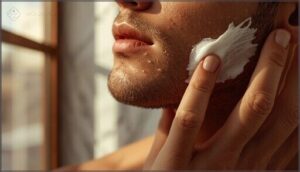
Gentle application starts with warming a small amount of aftershave balm between your fingertips for five to ten seconds, improving spreadability and absorption. Use light circular motions across shaved areas, lifting hair and softening stubble without pressing hard.
Smooth excess product along your jawline and neck to maintain uniform barrier protection. Pat—don’t rub—irritated spots to prevent further micro-damage while delivering soothing, anti-inflammatory relief.
Focusing on High-Irritation Areas
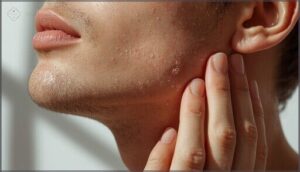
Your jawline, neck crease, and chin tip experience the most razor burn and skin irritation—they need extra post shave care. Apply additional balm to these high friction sensitive zones using gentle tapping motions.
The targeted approach delivers a heightened soothing effect on sensitive skin.
- Jawline and under-chin, where blade pressure creates micro-cuts
- Neck creases, prone to moisture loss from thinner skin
- Cheeks near ears, where hair grows in multiple directions
- Areas showing visible redness or ingrown hairs
Tips for Maximum Absorption
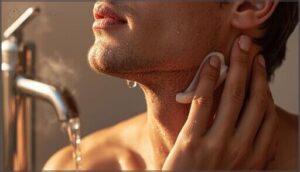
Application Timing matters—apply your aftershave balm within 60 seconds of shaving to lock in moisture and boost absorption by about 20 percent. A warm water rinse beforehand raises capillary activity, helping soothing ingredients penetrate deeper skin layers.
| Technique | Effect on Absorption |
|---|---|
| Warm water pre-rinse | Increases uptake by up to 15% |
| Apply within 60 seconds | Reduces water loss by ~20% |
| Thin layer, then second micro-layer | Boosts active absorption by ~12% |
| Gentle circular massage (15–30 sec) | Enhances microcirculation, deeper penetration |
| Skin pH near 5.5 formulas | Preserves enzyme function, improves efficiency |
Massage Benefits are real—15 to 30 seconds of circular motions per cheek increases blood flow and helps actives reach deeper epidermal layers. For Layering Techniques, a thin initial coat followed by a second micro-layer improves moisturization without tackiness, allowing your skin to soothe and recover effectively while maintaining barrier integrity.
Benefits of Using Aftershave Balm Regularly
When you make aftershave balm part of your daily routine, you’re not just treating irritation—you’re preventing it from happening in the first place.
Regular use of aftershave balm doesn’t just soothe irritation—it stops it before it starts
Consistent use rebuilds your skin’s resilience, turning post-shave discomfort into something you rarely think about. Here’s what regular application delivers for your skin.
Reduced Redness and Razor Burn
Consistency matters when fighting redness and razor burn. Aftershave balm delivers anti-inflammatory properties that target skin irritation at its source, calming the inflammation caused by razor friction.
You’ll notice post shave redness fades faster because soothing ingredients like aloe vera and chamomile work to soothe irritated tissue, giving you redness relief and better irritation control with each use in your postshave care routine.
Improved Skin Texture and Comfort
Regular use of aftershave balm transforms how your skin feels after each shave. Lightweight emollients fill microtexture, delivering visible skin smoothing within minutes—you’ll notice roughness soften on your cheeks and neck.
Hydration balance from humectants and occlusives maintains comfort for up to 12 hours, reducing dry patches and creating a non-greasy protective layer. This texture repair offers genuine irritation reduction without sticky residue.
Enhanced Skin Barrier Over Time
Rebuilding resilience takes weeks, but your patience pays off—consistent aftershave balm use strengthens the skin barrier through lipid renewal and inflammation control that compounds with each application. Barrier repair from ceramides and fatty acids reduces transepidermal water loss, transforming reactive skin into calm, hydrated territory.
- Lipid lamellae reseal over 4 to 8 weeks, lowering moisture evaporation and boosting barrier integrity
- Humectants and occlusives maintain skin hydration levels across multiple days, preventing dryness cycles
- Anti-inflammatory ingredients modulate immune responses, reducing redness and sensitivity after each shave
- Enhanced moisture balance facilitates natural cell turnover, smoothing texture and minimizing micro-tears over time
Suitability for All Skin Types
Versatility defines quality aftershave balm—formulations labeled “suitable for all skin types” deliver gentle hydration and inflammation reduction whether your complexion runs dry, oily, sensitive, or combination. Water-based textures prevent pore blockage for oily zones, while humectants like glycerin draw moisture into dry patches, and fragrance-free options shield reactive skin from irritation.
| Skin Type | Recommended Features |
|---|---|
| Oily | Water-based, non-comedogenic balms |
| Dry | Squalane, ceramides for barrier support |
| Sensitive | Fragrance-free, hypoallergenic formulas |
| Combination | Lightweight humectants, pH-balanced blends |
| Normal | Aloe vera, chamomile for soothing care |
Top Aftershave Balms for Irritated Skin
Not all aftershave balms are created equal in terms of calming irritated skin. You need formulations that deliver proven soothing ingredients without harsh additives that could make irritation worse.
Here are two dermatologist-recommended options that consistently perform well for post-shave sensitivity.
1. Nivea Men Sensitive Post Shave Balm
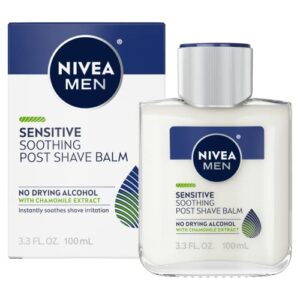
Nivea Men Sensitive Post Shave Balm delivers targeted relief through its VitaminPro Complex, which combines vitamin E, provitamin B5, and chamomile extract to calm irritated skin. The alcohol-free formula absorbs quickly without greasiness, addressing five signs of shave irritation—burning, micro-cuts, dryness, tightness, and stubble itch.
Apply a pea-sized amount to clean skin, focusing on irritation-prone areas like your jawline and neck for maximum soothing.
| Best For | Men with sensitive skin looking for fast-absorbing, alcohol-free post-shave relief that tackles burning, dryness, and irritation without leaving a greasy residue. |
|---|---|
| Skin Type | Sensitive |
| Formula | Alcohol-free |
| Texture | Non-greasy |
| Age Range | Adult |
| Primary Benefit | Soothes irritation |
| Absorption | Fast-absorbing |
| Additional Features |
|
- VitaminPro Complex with vitamin E, B5, and chamomile provides targeted soothing and long-lasting hydration
- Fast-absorbing, non-greasy formula that won’t leave sticky residue on your skin
- Tackles all five major shave irritation issues in one product—burning, micro-cuts, dryness, tightness, and stubble itch
- Flawed cap design can lead to spills and product waste
- Small 3.3-ounce size may require frequent repurchasing for daily users
- Lacks a convenient squeeze bottle with flip-top cap that some users prefer
2. Bee Bald Aftershave Healing Balm
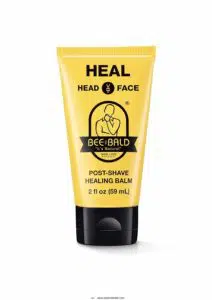
Bee Bald Heal Post Shave Healing Balm combines aloe vera leaf juice, panthenol, and oat kernel extract to reduce razor burn and redness on your scalp and face. The light gel-to-cream texture absorbs quickly without leaving greasy residue, while propolis and honey extracts provide antimicrobial support.
Apply a thin layer to irritated zones immediately after shaving—the alcohol-free formula delivers a cooling sensation without stinging sensitive skin.
| Best For | People with sensitive skin who need quick relief from razor burn and irritation after shaving their head, face, or neck. |
|---|---|
| Skin Type | All Types |
| Formula | Alcohol-free |
| Texture | Lightweight |
| Age Range | Adult |
| Primary Benefit | Soothes irritation |
| Absorption | Quick-absorbing |
| Additional Features |
|
- Absorbs fast without leaving an oily or greasy feeling on your skin
- Works well on all skin types, including sensitive skin that reacts to harsh products
- Contains natural ingredients like honey, aloe, and oat extract that calm and heal irritated skin
- The scent isn’t great according to some users
- A few people found it left a greasy residue or weird texture on their skin
- The 2 oz tube is pretty small and might not last long if you use it regularly
Aftershave Balm Vs. Moisturizer for Post-Shave Care

You might think aftershave balm and moisturizer do the same thing, but they’re built for different jobs. Each one targets specific post-shave needs, from calming inflammation to maintaining hydration throughout the day.
Here’s how their formulations differ, when to reach for each one, and whether using both together makes sense for your skin.
Differences in Formulation and Function
Aftershave balm targets post-shave inflammation with anti-inflammatory properties, while moisturizer maintains general hydration. Balm composition includes squalane and aloe vera to soothe razor-damaged skin and support moisture retention; standard moisturizers focus on long-term skin pH balance.
Ingredient interactions differ—balms combine emollients with calming agents, whereas formulation variations in moisturizers prioritize sustained nourishment without addressing acute irritation.
| Aspect | Aftershave Balm | Moisturizer |
|---|---|---|
| Primary Goal | Calm irritation, repair micro-damage | Maintain hydration, prevent dryness |
| Key Ingredients | Aloe, chamomile, squalane | Ceramides, hyaluronic acid, glycerin |
| Texture | Lightweight gel-cream, fast-absorbing | Rich emulsion or lotion |
| Best Use | Immediately post-shave | Daily, morning and night |
When to Use Each Product
Your skin dictates the timing. Use aftershave balm immediately post-shave to calm inflammation and lock moisture, especially when blade irritation occurs. Apply it before moisturizer in your aftershave routine to reduce alcohol sting.
On days when skin feels tight, reapply balm to prevent micro-irritations from environmental factors.
| Scenario | Aftershave Balm | Moisturizer |
|---|---|---|
| After every shave | Required for soothing | Optional for extra hydration |
| Hot, humid climates | Lightweight gel-style | Skip if balm suffices |
| Sensitive or dry skin | Fragrance-free, daily | Rich formula, morning/night |
Combining Both for Optimal Results
Layering both products unlocks synergistic skincare benefits that single-step routines can’t match. Apply a pea-sized amount of aftershave balm first to soothe and seal moisture within 60 seconds, then follow with moisturizer for dual hydration that reduces water loss by up to 28 percent over 48 hours.
| Application Step | Product | Key Benefit |
|---|---|---|
| Step 1 (Immediate) | Aftershave Balm | Calms inflammation, begins barrier repair |
| Step 2 (1-2 minutes) | Moisturizer | Locks in layered moisture, enhances barrier |
| Combined Effect | Both Products | Optimized routine reduces redness 20%, improves texture 18% over two weeks |
| Ingredient Focus | Squalane + Ceramides | Strengthens lipid matrix, accelerates recovery 30% |
| Long-Term Result | Daily Dual Use | Resilient skin with sustained comfort |
This optimized routine strengthens your skin’s defenses against daily razor exposure.
Frequently Asked Questions (FAQs)
Does aftershave help with skin irritation?
Like a cool cloth on a sunburn, aftershave balm delivers instant relief. It soothes skin irritation with anti-inflammatory agents and deep hydration, calming redness while supporting barrier repair—essential post shave care for lasting comfort.
Does aftershave reduce inflammation?
Yes, balms with anti-inflammatory properties—such as chamomile, aloe vera, and witch hazel—dampen redness and swelling after shaving, delivering inflammation relief through barrier repair and a soothing effect that calms post-shave irritation.
Does post-shave balm reduce redness?
Up to 80% of people experience redness after shaving.
Post-shave balm provides effective redness relief through anti-inflammatory ingredients like aloe and chamomile, delivering calming effects while hydrating your skin to reduce irritation control concerns.
How does aftershave balm help?
Aftershave balm delivers hydration and anti-inflammatory properties through ingredients like aloe vera and chamomile, which create a calming effect on freshly shaved skin.
While replenishing moisture and supporting your skin’s natural barrier repair process, these ingredients work together to provide a soothing experience.
Can aftershave balm prevent ingrown hairs from forming?
Regular application of non-comedogenic balms with exfoliating agents like salicylic acid helps loosen dead skin cells, freeing trapped hairs and reducing follicle blockage—key factors in ingrown hair prevention alongside proper razor burn relief.
How long does aftershave balm take to work?
Most balms begin to calm your skin within 30 seconds, delivering full relief from razor burn in 10 to 20 minutes—though your skin type, ingredient concentration, and application technique can substantially affect soothing speed.
Is aftershave balm safe for use after waxing?
Yes, but choose fragrance-free formulas with aloe vera or squalane. These soothing ingredients calm post-wax redness without stinging.
Avoid menthol-heavy balms—they can irritate freshly waxed skin. Patch-test first for safety.
Can women use aftershave balm on their legs?
Absolutely, you can apply this gentle formula to your legs after shaving.
Women benefit from aftershave balm’s soothing ingredients and skin hydration properties, which calm skin irritation and replenish moisture regardless of where you shave.
Does aftershave balm expire or lose effectiveness over time?
Aftershave balm does expire, usually lasting 1 to 3 years after opening.
Watch for changes in scant, texture, or color—these spoilage signs indicate degraded ingredients that may worsen skin irritation rather than provide relief.
Conclusion
Like applying a fire extinguisher to smoldering embers, aftershave balm doesn’t just mask post-shave damage—it actively dismantles the inflammatory response at its source.
You’ve learned how aftershave balm soothes irritated skin through humectant moisture retention, botanical anti-inflammatory compounds, and lipid barrier reconstruction. Each application transforms your shaving routine from a daily assault on your skin’s defenses into a reinforcement cycle that builds measurable resilience, reducing redness while accelerating recovery with clinically supported precision.