
This site is supported by our readers. We may earn a commission, at no cost to you, if you purchase through links.
Your beard won’t appear overnight, but it won’t take years either. Most men see visible stubble within the first week, though a full, shaped beard usually requires three to six months of consistent growth. The timeline varies considerably based on your genetics, age, and hormone levels—some men develop thick coverage in weeks, while others face months of patchy growth before density improves.
Testosterone and its derivative dihydrotestosterone drive follicle activation, but your inherited growth patterns ultimately determine thickness, texture, and distribution.
Understanding the distinct stages of beard development helps you set realistic expectations and avoid premature trimming that interrupts natural progression. Proper care during each phase accelerates visible results and reduces common frustrations like itching and uneven patches.
Table Of Contents
- Key Takeaways
- Beard Growth Timeline: What to Expect
- Stages of Beard Growth
- Key Factors Affecting Beard Growth
- Tips to Grow Your Beard Faster
- Signs You May Struggle With Beard Growth
- Top Beard Growth and Care Products
- Frequently Asked Questions (FAQs)
- Can Everyone Grow a Beard?
- How Long Does It Take to Grow a Short Beard?
- How Long Does It Take to Grow a Full Beard?
- How Long Does It Take to Grow a 1-inch Beard?
- What Makes a Beard Grow?
- Do Beard Growth Serums and Vitamins Work?
- How Long Does It Take to Grow a Beard With Rogaine (Minoxidil)?
- Can shaving more often make beards grow faster?
- Why does beard hair feel coarser than scalp hair?
- Can minoxidil be safely used for beard growth?
- Conclusion
Key Takeaways
- Most men need three to six months of consistent growth to develop a full beard, with visible stubble appearing within the first week and noticeable density forming by month three.
- Your beard’s thickness and growth rate are primarily determined by genetics and hormone levels—particularly testosterone and DHT—though lifestyle factors like nutrition, sleep, and stress management can optimize your natural potential.
- Patience through the early patchy phase is critical since follicles activate on different schedules, with cheeks often lagging behind the chin and mustache area before filling in around the three-month mark.
- Strategic maintenance accelerates progress more than aggressive trimming—regular cleansing, moisturizing with beard oil, and monthly shaping preserve length while eliminating split ends that slow overall development.
Beard Growth Timeline: What to Expect
Growing a beard isn’t something that happens overnight, and the timeline can look different for everyone depending on genetics, age, and hormones. Most men need anywhere from two to six months to develop what you’d call a full beard, though reaching longer lengths can take up to a year.
Here’s what you can realistically expect as your facial hair develops through each phase of growth.
Average Time to Grow a Full Beard
Most men can grow a full beard in 2 to 6 months, though your beard growth timeline depends on hormonal influence, age-related changes, and genetics. You’ll notice stubble within the first week, with the beard growth stages revealing your natural pattern by month three.
Growth benchmarks vary—some reach full coverage in 90 days, while extended growth over 6 to 12 months may be needed for thicker, more voluminous styles. During the initial stages, using high-quality beard oil can alleviate itchiness.
Month-by-Month Beard Growth Stages
Your beard growth timeline unfolds in predictable stages of beard growth, though individual growth variability keeps things interesting. Here’s what you can expect:
- Month 1: Stubble visibility emerges within 3–7 days, reaching roughly 0.3–0.5 inches by week four.
- Month 2: Patchy coverage fills in gradually; you’ll gain about 0.5 inches total.
- Month 3: Length milestones hit 0.75–1 inch, defining your facial hair growth stages.
- Months 4–6: Trimming impact becomes noticeable as your beard reaches 1.5 inches.
- Months 7–12: Terminal length stabilizes near 1.5–3 inches, completing the beard stages.
Washing the beard every three days helps maintain cleanliness, but proper beard maintenance is also essential.
When to Expect Noticeable Changes
Understanding stages of beard growth helps you anticipate your facial hair growth stages. Initial stubble appears within 7–10 days for most adults. Patchy growth peaks around weeks 3–4, when 80% notice uneven coverage.
Volume formation becomes evident by months 2–3, as 65% report defined thickness. Growth milestones continue through month 6, influenced by hormonal influence and genetics.
Your beard growth timeline unfolds predictably, though individual results vary.
Stages of Beard Growth
Growing a beard isn’t a straight shot from stubble to full coverage. Your facial hair moves through distinct phases, each with its own characteristics and challenges.
Here’s what happens at each stage as your beard develops from day one to full maturity.
Stage 1 – The Stubble Phase
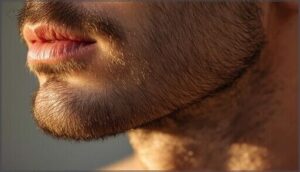
You’ll spot light facial stubble within 24 to 48 hours after shaving—your first visible sign of beard growth. Over the next week, expect to see about 2 to 3.5 millimeters of coverage as hair emerges at roughly 0.3 to 0.5 millimeters daily.
Don’t be surprised if itchy stubble kicks in near week’s end, when short hairs curl back and irritate skin. Moisturizing now helps prevent that infamous itch.
Stage 2 – Patchy and Pattern Development
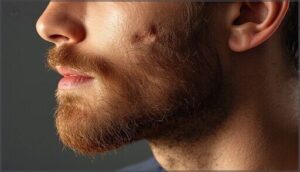
During weeks 2 to 4, you’ll notice uneven patches as facial hair growth stages reveal your long-term beard growth timeline. Your chin and mustache often fill in first, while cheeks lag behind—that’s normal patchiness driven by hormonal influence and genetics.
Each follicle enters its growth phase on its own schedule, creating regional growth patterns. Interventions during patchiness, like topical minoxidil, can help patchiness resolution over several months.
Stage 3 – Noticeable Beard Formation
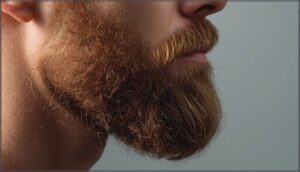
Around weeks 4 to 8, your facial hair growth stages shift into visible beard growth—this is when about 70% of men see their stubble turn into an actual beard.
Density development accelerates as slower follicles cycle into active growth, filling patchy spots from earlier stages of beard growth.
Your beard appearance takes shape along the chin, jawline, and mustache, often reaching over 1 inch by week 8.
Stage 4 – Slower Growth and Maintenance
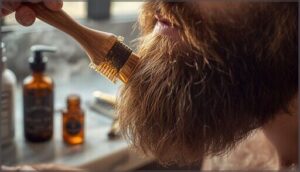
By month 3, your beard care routine shifts as growth expectations change—facial hair adds just 0.5 inches monthly during this maintenance phase. Patchiness solutions come naturally as longer hairs mask gaps, though 70% of men still see uneven density.
Focus on these beard maintenance essentials:
- Brush daily to prevent tangles
- Apply beard oil twice weekly
- Wash with beard-specific shampoo
- Trim stray hairs for shape
- Condition for manageability
Stage 5 – Shaping and Full Beard Maturity
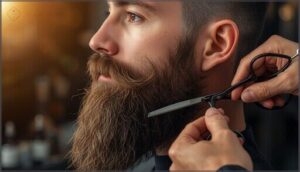
Your beard reaches terminal length between years 2 and 3, when density stabilization creates that fully mature look. Shaping practices now define your style—trim cheek lines and necklines to improve symmetry. DHT sensitivity determines your final thickness, so focus on preventing hair breakage through gentle beard maintenance. Regular conditioning protects against environmental damage while strategic beard styling maximizes coverage.
| Timeline | Key Changes | Focus |
|---|---|---|
| 4–12 months | Length reaches 6 inches | Begin beard shaping |
| 1–2 years | Density peaks | Hone contours |
| 2–3 years | Terminal length achieved | Prevent breakage |
Key Factors Affecting Beard Growth

Your beard’s growth potential isn’t one-size-fits-all—it’s shaped by a mix of biological and environmental influences that vary from person to person. Some factors you can’t change, like your genetic blueprint, while others respond to how you take care of yourself day to day.
Understanding what’s working for or against your beard helps you set realistic expectations and make smarter choices along the way.
Genetics and Ethnicity
Your genetics set the stage for your beard’s destiny—texture, density, and growth pattern all trace back to inherited traits. Ethnicity plays a measurable role, with Mediterranean and Middle Eastern men usually exhibiting higher facial hair density compared to East Asian populations, who often show sparser coverage.
Here’s what shapes your beard:
- Genetic markers like SPRY1 and RSPO1 influence follicle development
- Family history increases likelihood of denser growth
- Androgen sensitivity varies by ethnic background
- Ethnic density differs considerably across populations
- Global patterns confirm measurable variation in beard characteristics
Age and Hormone Levels
Facial hair shows up during puberty, usually between 11.5 and 15.5 years when testosterone climbs past 200–300 ng/dL. Your beard reaches peak density around 25–35, driven by DHT influence on follicles.
Hormonal imbalances or deficiency below 300 ng/dL can leave you with sparse coverage. Age-related changes bring modest declines after 30, but your beard stays relatively stable through midlife.
Medical Conditions Impacting Growth
Several medical conditions can slow or halt your beard growth. Autoimmune alopecia areata targets facial follicles, creating patchy gaps in roughly 2% of men. Thyroid disorders disrupt growth cycles, while hypogonadism drops testosterone below the threshold needed for density. Watch for:
- Alopecia barbae – beard-specific hair loss with coin-shaped bare patches
- Prolactinoma – pituitary tumors thinning facial coverage
- Nutritional deficiencies – low iron or zinc weakening follicles
Lifestyle and Environmental Factors
Your diet, exercise, stress, and sleep directly shape how fast your beard fills in. Men logging under 7 hours nightly or smoking regularly see slower growth as blood flow and testosterone dip. Polluted air clogs follicles, while diets lacking zinc and protein weaken shafts.
Regular aerobic activity and whole foods—fruits, lean meats, vegetables—support the circulation and nutrition your follicles need to thrive.
Tips to Grow Your Beard Faster

You can’t change your genetics, but you can stack the deck in your favor as you work toward growing a healthier, fuller beard.
You can’t change your genetics, but you can stack the deck in your favor when growing a healthier, fuller beard
The right combination of nutrition, sleep, skincare, and grooming habits creates an environment where your facial hair can reach its full potential.
Here’s what you need to focus on to improve your beard growth.
Optimizing Diet and Nutrition
Your beard won’t outpace your genetics, but a balanced diet bolsters growth. Protein intake fuels keratin production, while micronutrient deficiencies—especially in iron, zinc, and vitamin C—can slow follicle cycling. Biotin benefits primarily appear when you’re deficient. Essential fats from fish and nuts maintain skin health.
Though supplement limits exist, a healthy diet rich in lean proteins, vegetables, and whole grains covers most bases.
Improving Sleep and Reducing Stress
Sleep quality directly influences hair growth through hormone regulation. Chronic stress elevates cortisol, pushing follicles into dormancy and slowing your beard’s development. Aim for seven to nine hours nightly—studies show sleep restriction lowers testosterone by 10–15%.
Stress management through meditation or deep-breathing techniques helps lower cortisol, supporting healthier follicle cycling. Prioritizing rest and stress reduction means you’re giving your beard the hormonal environment it needs to thrive.
Effective Skincare and Exfoliation
Under a beard, dead skin cells and oil can clog follicles, triggering ingrown hairs and breakouts that disrupt growth. You’ll want to cleanse your facial skin twice daily with a gentle, non-soap cleanser—men who do report 32% fewer lesions.
Exfoliate once or twice weekly using mild chemical exfoliants or soft brushes to clear debris without irritation. This approach preps healthy skin to absorb topical treatments more effectively while reducing itch and patchiness.
Proper Beard Maintenance and Trimming
Against intuition, strategic trimming actually accelerates your path to a full beard by eliminating split ends that slow overall growth. Most men benefit from monthly shaping to control stray hairs while preserving length.
- Trim short beards every 1–2 weeks; medium beards every 2–4 weeks
- Wash with lukewarm water and beard-specific shampoo to prevent dryness
- Apply beard oil daily to reduce flaking and improve texture
- Use adjustable trimmers for precision maintenance at home
Signs You May Struggle With Beard Growth

Not everyone’s beard journey follows the same path, and certain signs can hint that you might face more challenges along the way. Recognizing these indicators early helps you set realistic expectations and adjust your approach accordingly.
Here are the key signs that beard growth may be more difficult for you.
Patchy or Sparse Hair Patterns
If your facial hair comes in with noticeable gaps, you’re not alone—approximately 25% of American men can’t grow full beards, with patchiness being a primary obstacle. Patchy beard causes range from genetics and androgen receptor distribution to autoimmune conditions like alopecia areata, affecting nearly 2% of people globally.
Understanding these factors affecting beard growth helps set realistic growth expectations. Fortunately, styling techniques and targeted treatment options can boost confidence while you work through the beard growth stages.
History of Slow Hair Growth
Your scalp hair might be your best crystal ball. If you’ve always watched other guys’ hairlines race ahead while yours barely budges—averaging under 0.5 centimeters monthly versus the typical 1 to 1.25 centimeters—your beard growth stages may follow suit. Ancient hair loss patterns and evolutionary factors affecting your hair growth cycle don’t discriminate between body sites.
- Beard stagnation often mirrors historical treatments needed for sluggish scalp growth
- Cultural perceptions aside, facial hair growth stages depend on the same hair follicles and growth phases
- Slower anagen duration across all body hair signals systemic rather than localized causes
Sensitive or Irritated Skin
Your beard’s battleground might already be waving a white flag. If you deal with chronic redness, stinging, or persistent beard itch after shaving, product allergens and shaving irritation may signal underlying skin pathophysiology that slows growth. Studies reveal up to 60% of men self-identify as having sensitive skin, and razor modifications plus targeted beard oils often become non-negotiable.
| Risk Factors | Common Triggers | Impact on Growth |
|---|---|---|
| Barrier disruption | Mechanical trauma, harsh products | Prolonged inflammation delays follicle recovery |
| Contact dermatitis | Fragrances, p-phenylenediamine | Perifollicular irritation disrupts anagen phase |
| Poor preparation | Dry shaving, dull blades | Increased bacterial exposure, recurrent lesions |
Consistent beard care—gentle cleansing, hydration with beard oils, and strategic razor modifications—helps rebuild your skin’s defenses. If dry skin and skin irritation persist despite diligent grooming, the underlying sensitivity may require dermatologic evaluation before your beard reaches its full potential.
Medical Causes of Poor Beard Growth
Sometimes your follicles aren’t stubborn—they’re sick. Medical conditions affecting beard growth include hormone imbalance (testosterone below 264 ng/dL), autoimmune disorders like alopecia areata (2% lifetime prevalence), thyroid issues disrupting follicle cycling, and nutritional deficiencies (iron, zinc). Substance influence and conditions such as Becker’s nevus also play roles.
When grooming fails, beard growth medication, targeted therapy, or beard implants may restore what biology withheld.
Top Beard Growth and Care Products
You can’t control your genetics or hormone levels, but you can support your beard with the right products. A solid routine that includes cleansing, moisturizing, and grooming makes a noticeable difference in how your beard looks and feels.
Here are five products that address the most common beard growth and maintenance needs.
1. Beard Growth Serum Natural Oils Blend
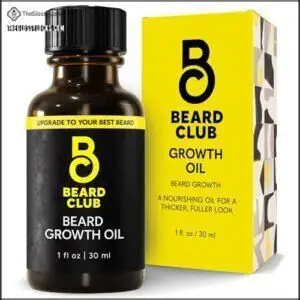
You’ll find plenty of natural beard growth oil blends formulated to support your beard growth stages, especially during the early process when itch and patchiness can frustrate you. Castor, jojoba, and rosemary oils show promise based on preclinical models—rosemary matched minoxidil in one trial, and peppermint oil boosted follicle activity considerably.
Market trends confirm demand is rising, with North America alone representing over $326 million in 2024. Still, serum limitations exist: human evidence for beard-specific oil efficacy remains sparse, and application methods matter more than ingredient lists alone.
Best For: Men looking for a natural, chemical-free approach to filling in patchy facial hair and reducing beard itch while supporting healthier growth over time.
- Combines evidence-backed oils like castor, jojoba, and rosemary that show promise in hair growth research, with rosemary matching minoxidil results in one clinical trial
- Free from harsh additives (alcohol, parabens, phthalates, silicones) and works for all hair types, making it a gentler alternative to synthetic treatments
- Tackles multiple beard issues at once—moisturizes skin, softens coarse hair, soothes irritation, and strengthens roots for fuller coverage
- Human trials specifically for beard growth are limited, so results may vary and timelines aren’t guaranteed despite strong preclinical data
- Cedar and sandalwood scent can be overpowering for some users, and the small 1-ounce bottle may run out quickly with daily use
- Quality control issues reported by some buyers (damaged packaging, partially empty bottles), and formulation may not suit every skin type or beard texture
2. Proraso Exfoliating Beard Paste Scrub
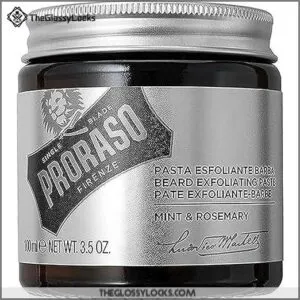
While serums address your follicles, exfoliation addresses what happens at skin level. Proraso’s paste—96% natural ingredients including almond and hazelnut shell powder—scrubs away dead cells that clog pores and trap emerging hairs.
You’ll notice its mint-rosemary scent immediately; menthol delivers a cooling effect that feels barbershop-fresh. Apply twice weekly before shaving to lift stubble and reduce ingrown hairs.
Dermatological testing confirms tolerability, though you should avoid daily use if your skin runs sensitive. This Italian-made scrub keeps your beard grooming routine functional without silicones or parabens.
Best For: Men with beards who want to reduce flaking and ingrown hairs, or anyone looking for a natural, pre-shave scrub that deep-cleans without harsh chemicals.
- 96% natural formula with almond and hazelnut shell exfoliants removes dead skin and unclogs pores effectively
- Fresh mint-rosemary scent with cooling menthol creates an invigorating barbershop feel
- Made in Italy without parabens, silicones, or mineral oils, and dermatologically tested for tolerability
- At $18 for 3.5 oz, it’s pricier than many facial scrubs on the market
- Strong menthol scent and sensation may be too intense near the eyes for some users
- Can be too harsh for daily use, especially if you have sensitive skin
3. Wild Willies Beard Growth Serum
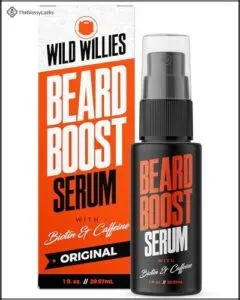
If you want a targeted formula, Wild Willies Beard Growth Serum combines biotin and caffeine with castor, jojoba, and tea tree oils. The serum ingredients aim to activate dormant follicles and strengthen your facial hair shaft, though user reviews show mixed results—some men report fuller beards after 90 days of nightly application, while others see no change.
Apply one to two drops to clean skin beneath your beard. Watch for sensitivity; tea tree and rosemary can irritate prone skin despite the brand’s natural positioning.
Best For: Men with patchy or thin beards who want a natural serum with biotin and caffeine to target dormant follicles and strengthen existing facial hair.
- Combines caffeine and biotin with nourishing oils like castor and jojoba to support both hair growth and softness
- Lightweight, non-greasy formula that absorbs quickly without leaving residue
- Affordable at $7.88 and widely available at major retailers
- Results are inconsistent—some users see no visible improvement even after 90 days of daily use
- Tea tree and rosemary oils can irritate sensitive skin or cause rash and flaking
- No independent clinical trials verify the beard growth claims made by the brand
4. Smooth Viking Beard Brush Comb Set
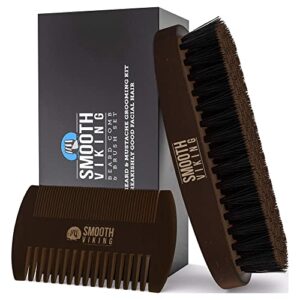
Once you’ve applied growth-supporting serums, mechanical grooming becomes your next priority. The Smooth Viking Beard Brush & Comb Set pairs boar bristle material with a dual-sided pearwood comb design—the coarse teeth detangle longer growth, while fine teeth shape mustaches and edges.
Customer reviews note styling benefits within two weeks when you combine the brush with beard oil, distributing sebum evenly to reduce dryness. At roughly $13, this kit value covers essential beard grooming products without redundant tools cluttering your routine.
Best For: Men with medium to long beards who want an affordable two-tool kit that handles detangling, styling, and even oil distribution without needing separate purchases.
- Natural boar bristles spread sebum and beard oils evenly while exfoliating skin underneath, which helps reduce flaking and dryness
- Dual-sided pearwood comb tackles thick tangles with coarse teeth and fine-tunes mustache edges with finer teeth—works on both wet and dry hair
- At around $13, you get both essential tools in one compact set that customers say shows visible softness and control improvements within two weeks
- Boar bristles can shed a bit when the brush is new, and some users notice a mild pork smell when the bristles get damp
- Comb teeth spacing might feel too wide or rough for guys with very short or fine facial hair
- The wooden comb won’t work for everyone—if your beard type needs tighter teeth or a different material, you’ll need to swap it out
5. Scotch Porter Conditioning Beard Balm
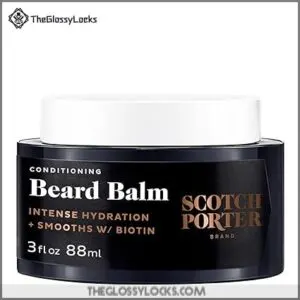
Softening coarse facial hair demands formulation precision—Scotch Porter Conditioning Beard Balm delivers biotin liposomes and nettle leaf to strengthen follicles while white willow bark calms irritation beneath your beard.
You’ll massage a small amount into damp growth post-wash, focusing on ends and underlying skin to combat dryness.
User reviews highlight noticeable texture improvement within one week, with the warm spice and sandalwood scent profile adding a refined finish.
At $17 for 3 ounces, this balm’s ingredients blend competes favorably among beard care products, though some users report packaging inconsistencies that don’t affect performance.
Best For: Men with coarse, dry beards looking for a natural conditioning balm that softens hair, reduces irritation, and promotes healthier growth without harsh chemicals.
- Biotin and nettle leaf formula strengthens follicles and noticeably improves texture within a week
- White willow bark and aloe reduce itchiness, beardruff, and skin irritation underneath the beard
- Warm spice and sandalwood scent adds a refined, masculine finish without being overpowering
- Some users find the $17 price point expensive for a 3 oz jar
- Packaging issues like sharp edges and missing seals have been reported by customers
- May cause sensitivity reactions in users with allergies to specific botanical ingredients
Frequently Asked Questions (FAQs)
Can Everyone Grow a Beard?
Not everyone can grow a full beard. Your genetics, hormones like testosterone and DHT, age, and medical conditions such as alopecia barbae all determine your unique beard potential and follicle responsiveness.
How Long Does It Take to Grow a Short Beard?
Growing a short beard feels fast yet takes patience. Most men need three to six weeks at typical facial hair growth stages, though your beard growth timeline depends on genetics, hormones, and consistent maintenance.
Tips for managing early patchiness solutions include consistent maintenance.
How Long Does It Take to Grow a Full Beard?
Most men can expect their full beard to develop within 2 to 6 months, though genetics influence timeline and density. The beard growth stages progress gradually, with noticeable filling-in around the 3‑month mark.
How Long Does It Take to Grow a 1-inch Beard?
Most men reach a 1-inch beard in seven to nine weeks. Individual variation is significant—faster growers may achieve this length in under six weeks, while slower growers require three months or longer.
What Makes a Beard Grow?
Your beard’s growth hinges on genetic predispositions, hormonal influences like testosterone and DHT, and hair follicle health.
Lifestyle impacts—diet, sleep, and stress—also shape density, while stages of beard growth reveal individual patterns.
Do Beard Growth Serums and Vitamins Work?
Topical minoxidil efficacy shows measurable improvement in beard density within 3–6 months, but biotin supplements lack evidence for non-deficient individuals.
Most serum ingredients and beard growth kits remain unproven beyond placebo effects.
How Long Does It Take to Grow a Beard With Rogaine (Minoxidil)?
You’ll usually notice initial shedding and fine vellus facial hair after 1–2 months of consistent minoxidil use.
Peak results—denser, darker terminal beard growth—usually emerge between 6–12 months, though genetics and hormones influence your timeline.
Can shaving more often make beards grow faster?
No, shaving frequency doesn’t affect facial hair growth rate or follicle stimulation. Dermatological consensus confirms that shaving cuts hair at the surface without altering the beard growth process, though blunt ends may create a growth perception illusion.
Why does beard hair feel coarser than scalp hair?
Your beard feels coarser because facial hair follicles produce thicker shafts with more cuticle layers and irregular cross-sectional shapes.
Androgen sensitivity drives this strong hair texture compared to finer scalp hair.
Can minoxidil be safely used for beard growth?
In a 16-week trial, 3% minoxidil boosted terminal beard hair count by roughly 48%, but you’ll likely face mild skin irritation—and it’s off-label, so consult your dermatologist first.
Conclusion
Patience pays off, but preparation matters more. How long does a beard take to grow? The answer depends less on calendar weeks and more on your commitment to consistent care during each developmental stage.
Your genetics set the ceiling, but your daily habits—nutrition, sleep, skincare—determine how quickly you reach it.
Track progress monthly, not daily. Resist the urge to trim prematurely. The beard you want is already growing; you just need to let it.
- https://www.struthealth.com/blog/how-fast-does-hair-grow-each-month-including-beards-and-eyebrows
- https://honorinitiative.com/blogs/articles/how-long-does-it-take-to-grow-a-beard
- https://www.beardsandmoney.com/posts/math-model-beard-growth-awesomeness
- https://www.beardbrand.com/blogs/urbanbeardsman/how-long-to-grow-beard
- https://dermdude.com/blogs/dude-cave/at-what-age-does-beard-grow-fully