
This site is supported by our readers. We may earn a commission, at no cost to you, if you purchase through links.
You picked the perfect color, applied the dye carefully, and your beard looks exactly how you imagined. Then, just a few weeks later, you notice the gray creeping back in or that rich brown starting to fade.
If you’re wondering how long you can expect your beard dye to hold up before your next touch-up, the answer isn’t as straightforward as you might hope. The lifespan of beard dye depends on several factors—from the type of product you choose to how you care for your facial hair afterward.
Understanding what affects color retention helps you set realistic expectations and, more importantly, gives you the tools to keep your beard looking fresh and vibrant for as long as possible.
Table Of Contents
- Key Takeaways
- How Long Does Beard Dye Last?
- Types of Beard Dye and Their Lifespans
- Factors Influencing Beard Dye Longevity
- Common Reasons Beard Dye Fades Quickly
- Tips to Make Beard Dye Last Longer
- Best Practices for Applying Beard Dye
- Natural and Long-Lasting Beard Dye Alternatives
- Frequently Asked Questions (FAQs)
- How long does it take to dye a beard?
- How long does beard dye last?
- How long does a henna beard last?
- How do I keep my beard color from fading?
- When should you reapply beard dye?
- How often should you dye your beard?
- Can I dye my beard while its wet?
- Does beard dye stain skin permanently?
- Is beard dye safe for sensitive skin?
- Can I mix different beard dye colors?
- Conclusion
Key Takeaways
- Beard dye typically lasts 4–6 weeks depending on the type you choose, with permanent formulas holding up the longest and temporary options fading after just one or two washes.
- Your washing habits make a huge difference—frequent washing with harsh, sulfate-based shampoos can strip up to 65% of color in the first wash alone, so stick to gentle, sulfate-free products 2–3 times per week.
- Sun exposure and heat styling are your color’s worst enemies, breaking down dye molecules by 20–30% monthly, so protect your beard with hats, UV products, and by limiting heat tools.
- Proper application technique matters just as much as the product itself—mixing ratios, even coverage, correct processing time, and thorough rinsing all directly impact how long your color actually sticks around.
How Long Does Beard Dye Last?
The truth is, beard dye doesn’t last forever—but how long it sticks around depends on what type you’re using and how you care for it. Some formulas fade in a couple of weeks, while others can hold strong for a month or longer.
Let’s break down what you can actually expect based on the dye type and the habits that make the biggest difference.
Average Lifespan of Beard Dye
Most beard dye generally lasts around 4–6 weeks before you’ll notice considerable fading or root regrowth. That said, the actual lifespan depends on several variables. Here’s what generally determines how long your color sticks around:
- Dye type—permanent formulas outlast semi-permanent ones, which fade faster than temporary options
- Washing frequency—frequent washing accelerates color fading, especially with harsh cleansers
- Your beard’s growth rate—faster growth means roots show sooner, prompting touch-ups
Brand differences matter too. Just For Men, for instance, claims up to six weeks, though many users find they need touch-ups every 2–3 weeks. Considering quality dye products can greatly impact longevity.
The key? Dye longevity isn’t one-size-fits-all—your maintenance habits and lifestyle heavily influence how long that color actually holds.
Key Factors Affecting Duration
So, what really controls how long your color lasts? Dye composition and product ingredients matter—permanent formulas stick around longer, while semi-permanent and henna-based types fade faster. Application method plays a big role too; uneven coverage or rushed timing can lead to patchy color fading.
Hair condition—think texture, porosity, and moisture—affects how well dye holds. Lifestyle choices, like frequent beard washing or lots of sun exposure, can speed up fading. Even daily habits, such as using harsh cleansers or heat styling, influence dye longevity more than most folks realize.
Deficiencies in certain nutrients, such as copper and vitamins, can also lead to premature hair graying, affecting how beard dye is retained.
Types of Beard Dye and Their Lifespans
Not all beard dyes are created equal, and the type you choose makes a huge difference in how long your color sticks around. Some fade in a couple weeks, while others can last a month or more before you need a touch-up.
Let’s break down the main options so you can pick what works best for your beard and lifestyle.
Permanent Beard Dye
When you want color that truly sticks around, permanent beard dye is your best bet. It penetrates the hair shaft deeply, so the pigment stays locked in for three to six weeks before root regrowth becomes obvious.
Most guys reapply every four to six weeks to maintain that uniform gray coverage. The chemical penetration means better color retention than other options, though you’ll still see some maintenance cycles needed as your beard grows out naturally.
Semi-Permanent Beard Dye
Semi-permanent beard dye takes a different approach. Instead of penetrating deep into the hair shaft like permanent formulas, it coats the outer layer, which is why it fades progressively over four to six weeks. You’ll notice a gradual color decline rather than sharp regrowth lines.
Frequent washing and harsh cleansers speed up fading, so most guys reapply every three to four weeks for consistent coverage. It’s a middle-ground option—longer-lasting than temporary, less commitment than permanent.
Temporary Beard Dye
If you’re testing a color before committing or need a quick gray touch-up for an event, temporary beard dye is your answer. This type forms a surface coating that rinses away after one or two washes, making it ideal for color experimentation without long-term consequences.
Most users see visible fading within days, perfect for single-wash color or short-term commitment. It’s the reversible option when you want flexibility.
Henna-Based Beard Dye
If you’re drawn to natural ingredients, henna beard dye offers a gentler alternative to chemical formulas. This plant-based option generally lasts 10–14 days per application, making it shorter-lived than permanent dyes but ideal for those prioritizing natural ingredient benefits.
Henna application tips include weekly touch-ups to build color depth. While henna vs. chemical dyes presents trade-offs—natural alternatives fade faster but carry fewer allergic reaction risks—many find the gradual fading and earth-toned henna color options worth the extra maintenance.
Henna requires weekly touch-ups and fades faster than chemical dyes, but many prefer its natural approach despite the extra maintenance
Factors Influencing Beard Dye Longevity
So you’ve got your beard dyed and looking sharp, but now you’re wondering how long it’ll actually stick around. The truth is, how long your beard dye lasts depends on a bunch of different things working together.
Let’s look at the main factors that determine whether your color stays vibrant or starts fading.
Hair Texture and Porosity
Your beard’s hair texture and porosity determine how well dye sticks around. Coarser beard hair has a thicker shaft and lower porosity, so it grips color longer than fine hair. Conversely, high-porosity strands—especially damaged ones—absorb dye quickly but release it faster with each wash.
Understanding your specific hair texture helps you choose the right dye type and adjust processing time for even, longer-lasting results across your entire beard.
Sun and Environmental Exposure
Your beard’s color enemy isn’t time—it’s what you expose it to. UV rays break down dye molecules through photodegradation, while chlorine strips protective oils and accelerates fading. Saltwater dehydrates hair fibers, and pollution adds oxidative stress.
Here’s what damages your color fastest:
- Direct midday sun exposure and UV radiation
- Chlorinated pool water and chemical swimmers
- Saltwater and coastal environments
- Urban pollution and environmental oxidants
Photoprotection methods like hats and UV filters measurably slow this process.
Beard Growth Rate
Your beard’s natural growth rate directly impacts how quickly you’ll see regrowth at the roots. Most men grow facial hair about 0.5 inches monthly, meaning dye touch-ups are needed every 3–4 weeks. However, hormonal influence, genetic factors, and seasonal variation mean your timeline might differ.
Patchy beard growth during early months complicates initial color evenness. Understanding your personal growth phase duration helps you plan maintenance schedules and maintain consistent color coverage throughout your beard.
Common Reasons Beard Dye Fades Quickly

So you’ve got your beard dyed and looking sharp, but you’re noticing the color isn’t holding up like you hoped. The truth is, beard dye doesn’t fade randomly—there are specific habits and choices that make it happen faster.
Let’s look at the main culprits behind that fading color.
Over-Washing and Harsh Cleansers
How you wash your beard matters more than you might think. When you use harsh shampoos with strong surfactants like sulfates, you’re basically opening your beard’s cuticles and stripping away color molecules. Research shows up to 65% of dye can leach out in the first wash alone.
Here’s what accelerates fading:
- Sulfate-based shampoos raise pH levels, causing cuticle swelling that releases dye
- Daily washing reduces color lifespan from weeks to just days
- Clarifying shampoos remove significant color in single applications
Switch to sulfate-free options to keep your color locked in.
Incorrect Application Techniques
Even perfect product choices fail without proper application techniques. Mixing ratios matter—deviation from manufacturer specs alters color yield and wash-resistance. Sparse application leaves undyed fibers that look faded within days.
Processing time is equally critical; rinsing early stops oxidation and pigment binding.
Shade selection should match your beard’s natural undertones to prevent harsh regrowth contrast. Rushing through these steps virtually guarantees patchy results and premature fading, regardless of dye quality.
Heat Styling and Sun Exposure
Beyond application mishaps, your environment and grooming habits matter just as much. Heat styling accelerates color fading by up to 30% monthly, while UV radiation speeds it another 20-25% with daily outdoor exposure.
High heat opens hair cuticles, letting pigment escape fast. Sun damage breaks down dye molecules unevenly, causing patchy lightening within weeks.
Air drying and UV-protective products extend color vibrancy considerably—sometimes by 15-25%. Protect your investment by limiting heat tools and wearing hats outdoors.
Tips to Make Beard Dye Last Longer
The good news is that keeping your beard color vibrant doesn’t require much extra effort—just a few smart habits that protect your dye investment.
We’ll walk you through the most effective ways to extend your beard dye’s lifespan, from shielding it against sun damage to adjusting your daily care routine.
Let’s look at what actually works.
Sun and Heat Protection Strategies
Since UV rays are one of the biggest culprits behind color fade, protecting your beard from sun exposure is essential for keeping that dyed color vibrant. Research shows that UV radiation accounts for a significant portion of hair color loss, with lighter beards especially vulnerable to sun damage. Heat styling tools can accelerate fading too by opening your hair cuticles and letting pigments escape faster.
Here’s what works:
- Wear a hat or cap during peak sun hours (10 AM to 4 PM)
- Apply UV-protective beard products before outdoor activities
- Limit heat styling or use heat protectants beforehand
- Keep your beard dry when spending time in intense sunlight
These simple strategies make a real difference in extending your color’s vibrancy.
Proper Beard Maintenance Routines
Your daily routine is just as important as sun protection for preserving that color. Stick to washing your beard only two to three times per week with a gentle, sulfate-free shampoo—daily washing strips oils and speeds fading.
After each wash, apply beard oil or balm while your beard is still slightly damp to lock in moisture and protect the color from within. Comb through gently once daily to distribute those natural oils evenly.
Weekly trimming removes damaged ends that show color fade faster. This consistent beard care routine keeps your dyed beard looking fresh longer while maintaining overall health.
Best Practices for Applying Beard Dye
Getting the dye right is only half the battle—how you apply it matters just as much. The good news is that proper application doesn’t take much more time, and it makes a real difference in how long your color lasts.
Let’s walk through the techniques that’ll help you avoid mistakes and get the best results from your beard dye.
Preparing Your Beard Before Dyeing

Think of your beard like a canvas—the better you prep it, the better the final result. Clean your beard with a mild shampoo the night before to remove oils and product buildup, which can interfere with dye absorption by 15–20%.
Then follow these essentials:
- Trim and detangle with a wide-tooth comb for even coverage
- Apply petroleum jelly around edges to protect surrounding skin
- Do a patch test 24–48 hours prior to catch allergic reactions
This groundwork ensures vibrant, consistent color.
Step-by-Step Application Guide

Now it’s time to actually apply the dye. Mix your color cream and developer in a 1:1 ratio—usually 60 grams to 60 milliliters—in a non-metal bowl.
Using a brush, work the dye through your beard in small sections, starting where you have the most gray. Follow the natural direction of hair growth to avoid patchiness.
Leave it on for about 5–10 minutes, then rinse thoroughly with lukewarm water until the water runs clear. This careful application technique ensures even coverage and lasting results.
Avoiding Common Mistakes
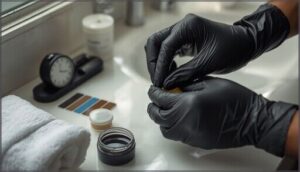
Before dyeing, patch test for 48 hours to catch potential allergic reactions. Don’t over-process—leaving dye on longer than recommended can burn your skin and damage hair.
Choose a shade only one to two shades darker than your natural color to avoid harsh contrasts.
Prep by washing with a gentle cleanser to remove oils, and rinse thoroughly afterward until water runs clear.
Natural and Long-Lasting Beard Dye Alternatives
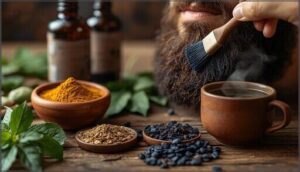
If you’re looking to sidestep harsh chemicals, natural beard dyes offer a gentler approach that can still deliver lasting color.
These plant-based alternatives work differently than synthetic formulas, so understanding what they bring to the table helps you make the right choice.
Let’s compare your options and see how to get the most out of natural dyes.
Benefits of Henna and Organic Dyes
Looking for natural alternatives to synthetic beard dye that actually deliver? Henna and organic dyes offer impressive benefits beyond color retention:
- Hair Health: They coat rather than penetrate your beard, strengthening fibers without damaging keratin structures
- Chemical Safety: No PPD or ammonia means fewer allergic reactions
- Scalp Microbiome: Antimicrobial properties help combat dandruff
- Natural Composition: Plant-based oils condition coarse facial hair
- Color Retention: Pure henna maintains visibility for 4–6 weeks before fading
Comparing Synthetic Vs. Natural Options
Choosing between permanent beard dye and natural alternatives boils down to balancing dye longevity against safety. Semipermanent beard dye and henna deliver similar herbal wear-time—roughly 4–6 weeks—but synthetic options risk PPD sensitization and oxidative damage.
Market growth in natural alternatives to synthetic beard dye reflects rising demand for labeling accuracy, as you weigh color retention against ingredient transparency and skin health.
Maintenance Tips for Natural Dyes
You can stretch your natural hair color by washing just 2–3 times per week—daily scrubbing strips henna faster. Apply castor oil 8–12 hours before shampooing to lock in pigment and prevent orange tones.
Shield your beard dye from UV rays with hats or protective balms, and reapply every 1–2 weeks to keep color maintenance consistent. Always patch-test before each session to avoid allergy precautions issues.
Frequently Asked Questions (FAQs)
How long does it take to dye a beard?
At-home beard dye application takes about 10–20 minutes from start to finish, including mixing and a 5–10-minute processing window. Professional barber visits usually require 20–60 minutes for complete color services.
How long does beard dye last?
You’d think permanent means permanent, right? Most beard dyes actually last just three to six weeks before fading or new growth shows.
Dye type, washing frequency, and sun exposure are the main factors influencing beard dye longevity.
How long does a henna beard last?
Henna beard dye generally lasts about 7–10 days before fading noticeably. Reapplication frequency depends on wash resistance and exposure effects, with most users updating color every 4–7 days as new growth appears.
How do I keep my beard color from fading?
Reduce washing with harsh sulfates, and shield your beard from UV rays and heat styling. Use pH-balanced, color-safe products.
Gentle mechanical handling and proper conditioning seal the cuticle, preventing color fading effectively.
When should you reapply beard dye?
You should reapply beard dye every 4 to 6 weeks, watching for fading signs like visible roots or dull color. Touch-ups can extend intervals, while semi-permanent formulas need reapplying every 2 to 4 weeks.
How often should you dye your beard?
Most people refresh beard color every 3–6 weeks, depending on dye fading and regrowth visibility. Permanent formulas usually need a touchup around the four-week mark, while damage prevention and skin sensitivity may warrant extending that interval.
Can I dye my beard while its wet?
No—applying beard dye to a wet beard dilutes the formula, reducing color intensity and causing uneven coverage. Water also increases skin staining risk and makes dye application harder to control, so always start with a completely dry beard.
Does beard dye stain skin permanently?
Good news: beard dye won’t stain your facial skin permanently. Normal skin turnover removes most dye within 7–14 days.
However, allergic reactions, PPD-related burns, or improper dye application can cause longer-lasting pigmentation requiring dermatologic care.
Is beard dye safe for sensitive skin?
Beard dye can trigger allergic reactions in sensitive skin, especially from PPD sensitivity. Patch testing 48 hours before use helps identify skin reactions.
Consider alternative dyes like plant-based options for safer practices and less facial skin irritation.
Can I mix different beard dye colors?
Most beard dyes contain PPD, a known allergen in darker shades. You can mix colors within the same brand safely, but always patch-test first. Avoid combining oxidative and non-oxidative formulas together.
Conclusion
Like capturing lightning in a bottle, keeping your beard color vibrant takes more than just the initial dye job. Now that you know how long beard dye lasts—and what influences it—you’re ready to stretch those results.
Choose the right product for your goals, protect your beard from the elements, and stick to a maintenance routine that doesn’t strip color. Your beard will thank you with weeks of consistent, head-turning color.
- https://www.shampoolounge.com/post/how-long-does-beard-dye-last-tips-to-make-dye-last-longer
- https://www.hennacolorlab.com/faq/how-long-will-my-beard-color-last/
- https://beardgains.com/blogs/learn/beard-dye-lifespan
- https://becleverman.com/blog/temporary-vs-semi-permanent-hair-and-beard-dye
- https://asmoothshave.com/how-long-does-beard-dye-last/