This site is supported by our readers. We may earn a commission, at no cost to you, if you purchase through links.
You book your color appointment, walk out with stunning new hair, and for the first three weeks, you can’t stop catching your reflection. Then the shine dulls, the vibrancy fades, and those roots start making their presence known. Understanding how long hair dye lasts isn’t just about marking your calendar for the next salon visit—it’s about recognizing the complex relationship between your hair’s unique characteristics, the type of color you choose, and the daily habits that either preserve or sabotage your investment.
Permanent dyes embed into your hair shaft and technically never wash out completely, but they fade and change tone over time, while semi-permanent options gradually release with each shampoo, usually disappearing within four to twelve weeks.
Your hair’s porosity, texture, and natural color all influence how quickly your dye transforms, and the way you care for your color in those key first few weeks determines whether you’re scheduling touch-ups every month or stretching your appointments to eight weeks or longer.
Table Of Contents
- Key Takeaways
- How Long Does Hair Dye Last?
- What Factors Affect Hair Dye Longevity?
- How Does Hair Type Impact Color Fade?
- How Long Does Permanent Hair Dye Last?
- How Long Does Semi-Permanent Hair Dye Last?
- Can Lifestyle Choices Shorten Dye Duration?
- How Can You Make Hair Dye Last Longer?
- What Hair Care Routine Preserves Color?
- When Should You Re-Touch Hair Color?
- What Products Help Maintain Hair Color?
- Frequently Asked Questions (FAQs)
- Is it possible to lighten my hair color with permanent dye?
- Can I use permanent hair dye on gray hair?
- What should I do if my permanent hair dye fades quickly?
- Does hair dye damage your hair permanently?
- Can you dye hair during pregnancy safely?
- How to remove unwanted hair dye color?
- What causes allergic reactions to hair dye?
- Does diet affect how hair holds color?
- Conclusion
Key Takeaways
- Permanent dye alters your hair structure and lasts 4–6 weeks before roots show, while semi-permanent options fade gradually over 4–12 washes, giving you full control over commitment level and color longevity.
- Your hair’s porosity is the real boss—high porosity hair absorbs dye fast but releases it just as quickly, while resistant strands hold color longer but take more work to penetrate initially.
- Daily habits like hot showers, frequent washing, UV exposure, and heat styling accelerate color fade faster than product quality alone, making your routine the difference between monthly touch-ups and eight-week stretches.
- Strategic care choices—switching to cool water rinses, washing 2–3 times weekly with sulfate-free products, and using color-depositing conditioners—can extend your color’s vibrancy by 30% or more without additional salon visits.
How Long Does Hair Dye Last?
The lifespan of your hair dye depends entirely on which type you choose, and the differences are significant. Permanent color commits to your strands for months, while temporary shades wash out in days, giving you total control over how long you want to rock that new look.
Here’s how each category of hair dye stacks up regarding staying power.
Permanent Vs. Semi-Permanent Dye
Color chemistry separates permanent from semipermanent dye in how they interact with hair porosity. Permanent hair dye uses oxidative developers to open the cuticle and lock color deep in the cortex, lasting 4–6 weeks until roots show.
Semipermanent dye coats the shaft with smaller molecules, fading gradually over 4–12 washes. These dye formulas create distinctly different fading patterns and color depth.
Demi-Permanent Dye Duration
Demi permanent hair dye sits between semi and permanent formulas, lasting 12 to 24 washes depending on your hair porosity and washing routine. These deposit-only formulas fade more evenly than semipermanent dye, with color gradually washing out instead of dramatic fading patterns.
Your hair’s ability to grab and hold pigment determines how long you’ll rock that shade—higher porosity means longer-lasting color deposit, while low-porosity strands release pigment faster.
Understanding science writing concepts is essential for effective communication of hair care research.
Temporary Hair Color Longevity
If you’re after a no-commitment look, temporary dye washes out in just 1 to 3 shampoos, coating your cuticle without altering your natural shade. Color fading patterns show the most dramatic intensity loss after your first wash, especially on porous hair—but that’s exactly the freedom you want when experimenting with bold hues.
Temporary Dye Tips for Maximum Control:
- Wash with cool water to slow color fade and keep pigment locked in longer between reapplication sessions
- Skip clarifying shampoos that strip temporary dye faster than you can say “color longevity”
- Apply to dry hair for deeper initial intensity, then refresh with color-depositing conditioners as needed
- Darker shades cling longer than pastels, giving you more washes before fading prevention methods become necessary
- Layer product over previously treated strands to extend vibrancy without constant touch-ups
Understanding the science behind hair dye can involve methodological rigor to guarantee the best results.
What Factors Affect Hair Dye Longevity?

You’ve dyed your hair and want that color to stick around, but it seems like the vibrancy fades faster than you’d like. Several factors work behind the scenes to either lock in your color or let it slip away.
Your hair’s unique characteristics, the shade you’ve chosen, how you care for it, and even your washing habits all play a role in how long that dye lasts.
Hair Texture and Porosity
Your hair’s porosity determines how fast color escapes. High porosity hair—think damaged cuticles—absorbs dye quickly but releases it just as fast, while low porosity strands resist both absorption and fade. Fine texture shows color loss sooner than coarse hair due to surface area differences.
| Hair Type | Color Absorption | Fade Speed |
|---|---|---|
| High Porosity | Fast, uneven | Rapid (1-3 weeks) |
| Medium Porosity | Balanced | Moderate (4-6 weeks) |
| Low Porosity | Slow, resistant | Slower (6-8 weeks) |
| Damaged Cuticle | Quick but patchy | Very rapid |
Hair Color Choice
The shade you pick dictates how often you’ll need a refresh. Lighter shades and vibrant fashion colors fade faster than deeper tones, affecting overall color longevity and color maintenance demands.
Dye formulas with larger pigment molecules resist washing out, extending vibrancy levels between salon visits.
- Dark browns and blacks hold pigment longest due to dense color molecules
- Reds and coppers require frequent touch-ups as warm tones oxidize quickly
- Platinum and ash blondes show brassiness within weeks
- Vivid fashion hues (pinks, blues) need regular tonal balance correction
- Permanent hair dye formulas with ammonia outlast gentler alternatives
Hair Health and Damage
Your hair’s current condition is the boss when it comes to color fade. Damaged strands with open cuticles bleed pigment faster than healthy hair, turning your bold statement into a dull whisper within weeks.
| Hair Condition | Color Retention | Fade Speed |
|---|---|---|
| Healthy, sealed cuticles | Excellent pigment lock | Slow, gradual |
| Heat-damaged strands | Moderate to poor | Rapid loss |
| Chemically compromised | Minimal adherence | Accelerated fade |
Split ends and frizz control issues signal cuticle damage that sabotages color longevity. Hair breakage from protein deficiencies accelerates pigment escape, while scalp health directly influences dye adherence.
Prioritize hair damage prevention through bond-building treatments and minimal heat styling to maintain your color’s rebellion against the ordinary.
Frequency of Washing
Every time you lather up, you’re inviting pigment molecules to escape down the drain. Washing schedules dramatically impact color longevity—frequent shampooing accelerates color fade while strategic spacing preserves your investment.
- Limit washing to 2-3 times weekly to maintain dye saturation and natural oils
- Choose color-safe shampoos without sulfates that strip pigment aggressively
- Rinse with cool water instead of hot to seal cuticles and lock color in
Your hair care routine determines whether your color stays rebellious or surrenders early.
How Does Hair Type Impact Color Fade?
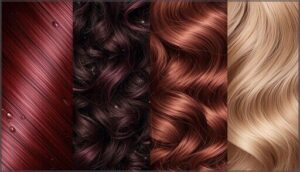
Your hair type doesn’t just define your style—it actually dictates how well color clings to each strand and how quickly it fades. The structure, porosity, and natural pigment of your hair create a unique blueprint that determines whether your dye will last for weeks or start slipping away after just a few washes.
Let’s break down exactly how different hair types hold onto color, so you can work with what you’ve got instead of fighting against it.
Fine Vs. Coarse Hair
Your hair’s thickness plays a surprisingly powerful role in how color clings and fades. Fine hair has a higher surface-to-diameter ratio, which lets dye molecules absorb quickly—but also escape faster, especially when porosity runs high. Coarse hair’s thicker strands hold onto color longer, though uneven fade patterns can sneak in without proper conditioning.
| Hair Texture | Color Longevity |
|---|---|
| Fine hair | Fades faster due to rapid absorption and release |
| Coarse hair | Retains color longer, with diffuse, gradual fade |
| High-porosity fine hair | Quickest fade; needs lightweight, color-safe products |
Porous Vs. Resistant Hair
Think of porosity as your hair’s gatekeeper—wide open or tightly locked. Porous hair, with its lifted cuticles and cortex damage, drinks up dye fast but releases it just as quickly, leading to rapid color fade.
Porous hair absorbs dye quickly but releases it just as fast, acting like a wide-open gate that can’t hold color for long
Nonporous or resistant hair keeps cuticles sealed, slowing dye penetration and color uptake, yet once pigment locks into that cortex, you’ll see slower, more stubborn fade.
Natural Hair Color Influence
Your natural hair color sets the stage for how dye performs—darker natural tones pack dense pigment and higher melanin levels, requiring longer processing for even color uptake and delivering richer shade depth.
Lighter natural bases reflect more brilliance, letting color shine through with clarity.
That underlying pigmentation influences color fade speed and how easily formulas over-tone or shift, shaping hair type’s role in color longevity.
How Long Does Permanent Hair Dye Last?
Permanent hair dye is your longest-lasting option, but the timeline isn’t set in stone—it depends on your hair’s growth rate, your maintenance routine, and how much wear and tear your strands endure. You’ll see color shift over time rather than vanish completely, since permanent dye actually alters your hair’s structure.
Here’s what you need to know about how long your color will stay vibrant, what fading looks like, and how previously colored hair changes the game.
Typical Duration in Weeks/Months
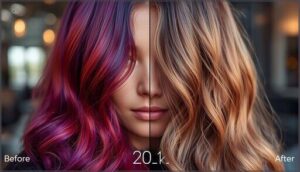
Generally, permanent hair dye longevity stretches 4 to 6 weeks before root regrowth takes center stage. Hair porosity effects and dye longevity factors dramatically shift this timeline—porous hair accelerates color fade, while resistant strands hold pigment longer.
Your hair dye’s staying power hinges on washing frequency and color retention tips you implement daily, making fading prevention methods essential for maintaining that vibrant, rebellious look you crave.
Signs of Fading
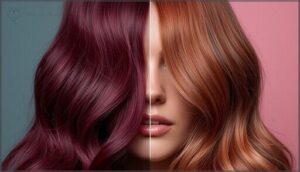
Your hair announces fading through dull undertones and uneven color distribution, with vibrancy loss appearing most dramatically at the ends. Warm tones like reds show tone changes faster than cool shades, while brassiness signals dye migration in blondes.
You’ll notice color shift within 2-6 weeks as your once-bold hue transforms into muted versions of its original intensity, demanding color fade prevention strategies for lasting color preservation.
Permanent Dye on Previously Colored Hair
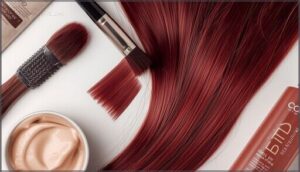
Layering permanent dye over existing color demands a strand test first—your hair’s porosity determines whether you’ll achieve even results or patchy color lift.
Processing times stay around 30-45 minutes, but bond-building additives prevent strand damage when dye overlap effects occur.
A clarifying wash before recoloring removes buildup that blocks color correction methods, ensuring your permanent hair dye delivers the bold transformation you’re chasing.
How Long Does Semi-Permanent Hair Dye Last?
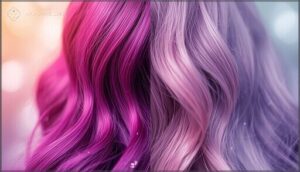
Semi-permanent hair dye gives you the freedom to experiment with color without the long-term commitment, usually lasting between 4 to 6 weeks depending on how you care for it. Unlike permanent dye, it gradually fades with each wash, giving you a gentler, more natural shift back to your base color.
Understanding how it fades, how long you can expect it to last, and when to refresh your color will help you maintain that vibrant look you’re after.
Typical Duration in Weeks
You’re looking at 4 to 6 weeks of vibrant color with most semi-permanent dyes before they start their gradual exit. That’s your hair dye longevity window, though color duration variance kicks in based on a few key factors:
- Hair porosity impact determines how deeply pigment penetrates your strands
- Washing frequency accelerates or slows color fade patterns
- Product formulation varies—some brands push color longevity closer to 8 weeks
Fading Patterns
Semi-permanent color fading follows a predictable pattern: you’ll notice the most dramatic color shift in your mid-lengths and ends first, while roots cling to pigment longer.
Porosity effects drive these fade rates—highly porous hair releases color faster during each wash, creating uneven dye migration.
Environmental impact from UV exposure accelerates color fading, especially in vibrant shades, making color fade prevention essential for maintaining color longevity and maximizing color protection throughout your dye’s lifespan.
Color Refresh Options
Between dye sessions, you’ve got multiple color revival pathways to extend your shade’s vibrancy and prevent premature color fade. Color touchups using dye boosters and hair glazing techniques deliver targeted color deposit without full reapplication, while tonal adjustments fine-tune your hue for ideal color protection and extended color longevity.
- Demi-permanent dyes refresh color for 4 to 12 washes depending on porosity
- Color-depositing conditioners introduce gradual tint lasting 3 to 10 washes
- Glaze treatments add reflective boost for 2 to 4 weeks
- Temporary sprays offer instant correction lasting 1 to 2 washes
- Professional glossing services provide controlled, even color refresh
Can Lifestyle Choices Shorten Dye Duration?

Your daily habits can sabotage your color faster than you think, even if you’re using all the right products. From what you do outdoors to how you style your hair, certain lifestyle choices accelerate fading and dullness in ways that aren’t always obvious.
Let’s break down the biggest culprits so you can protect your investment and keep your color vibrant longer.
Sun Exposure and UV Damage
Your hair’s worst enemy? Direct sunlight. UV rays break down pigment molecules, causing noticeable color fade after just 10–20 hours of sun exposure. Red and auburn shades shift toward brassy orange tones fastest, while darker colors lose depth and vibrancy.
Shield your color with UV protection sunscreen sprays, wear a hat during peak hours, and invest in leave-in treatments for fade prevention and lasting hair health.
Swimming and Chlorine
Chlorine strips hair color faster than almost anything else, causing rapid fade and cuticle lift that drains pigment with every wash.
Pool water impact on color-treated hair is brutal—protect yourself with a swim cap and rinse immediately with fresh water post-swim.
Use chlorine removal shampoos and color-protecting conditioners to minimize hair damage and keep your hue vibrant.
Heat Styling Effects
High heat from flat irons and curling wands accelerates color fade by opening your cuticle and breaking down pigment molecules—especially at temperatures above 450°F. Thermal protection sprays create a barrier that limits dye loss and preserves cuticle integrity during styling.
Lower your heat settings, air-dry when possible, and use ceramic tools to distribute warmth evenly, preventing color shift and extending your hair dye’s vibrancy between salon visits.
How Can You Make Hair Dye Last Longer?
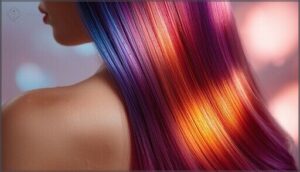
Making your hair color last longer isn’t about luck—it’s about taking control of your daily routine and the products you use. You don’t need a complicated system or expensive salon treatments to keep your color vibrant for weeks beyond what you’d expect.
Here are three straightforward strategies that protect your investment and keep that color looking fresh.
Use of Color-Safe Products
Switching to the right products is your first line of defense against fade. Color-safe shampoos and conditioners use gentle formulas with balanced pH levels that seal your cuticles and lock in pigment, extending vibrancy by 1–2 weeks on average.
Look for products with:
- Sulfate-free cleansers that won’t strip color
- UV filters for photo-oxidation protection
- Antioxidants to combat environmental damage
- Silicone-free conditioners preventing buildup
- pH range between 4.5–6.0 for color preservation
These ingredients work together for serious color protection and enhancement.
Limiting Shampoo Frequency
You’ve already got the right products—now cut back on how often you’re using them. Washing 2-3 times per week protects your color investment by keeping surfactants from stripping out dye molecules.
Between shampooing, try dry shampoo or scalp-only cleansing to refresh without rinsing away pigment. This simple shift in your hair care routine adds serious staying power to your color.
Avoiding Hot Water
Here’s where water temperature makes or breaks color longevity. Hot showers open your hair’s cuticle like a trap door, letting pigment escape fast. Cool water benefits you by sealing everything shut, locking color in tight.
For thermal protection that works:
- Rinse with lukewarm water during washing
- Finish every shower with a cool rinse
- Keep water below 100°F to prevent cuticle damage
- Skip steaming hot baths that strip dye molecules
Gentle rinsing preserves your investment.
What Hair Care Routine Preserves Color?

Preserving your color isn’t about following a one-size-fits-all rulebook—it’s about building a routine that works with your hair, not against it. You’ve already invested time and money into your new shade, so why let it fade faster than it needs to?
Here are three non-negotiable habits that’ll keep your color vibrant and your hair healthier for the long haul.
Deep Conditioning and Hydration
Moisture is the backbone of color-treated hair health—without it, your vibrant hue fades fast. Deep conditioning 1–2 times weekly restores broken bonds in the hair shaft and boosts elasticity, locking color molecules inside.
Hydration masks with humectants pull water into hair fibers, improving manageability and delivering up to 25% higher moisture retention. Use color-safe shampoos between treatments to protect your investment.
Minimizing Heat Styling
Heat styling accelerates hair damage and color longevity decline, so embracing heatless styling methods or switching to gentle tools at low temperature (under 350°F) preserves your dye investment.
Always layer on thermal protection before blow-drying or flat-ironing to shield strands from hair breakage.
Your hair care routine should prioritize air-drying and cold-setting products—your hair type will thank you.
Regular Trims for Healthier Color
Regular trims every 6–8 weeks remove split ends that dull your hair color and disrupt color uptake along the hair shaft. By cutting away damaged, porous ends, you prevent uneven fading and preserve healthy hair growth that holds permanent hair dye more uniformly.
This trim frequency keeps your hair health strong, extends color longevity, and ensures your hair care routine delivers maximum vibrancy.
When Should You Re-Touch Hair Color?
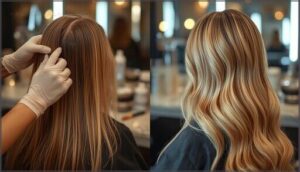
Knowing when to schedule your next color appointment isn’t just about following a strict timeline—it’s about reading the signals your hair sends you. Your roots, fading pattern, and overall color vibrancy all tell different stories about what your hair needs and when.
Let’s break down the key signs that it’s time to book that touch-up and how to stay ahead of unwanted color shifts.
Recognizing Signs for a Touch-Up
Your hair will tell you when it’s time—watch for these regrowth signs and fading indicators. Root inspection reveals the truth: a defined line of demarcation appears within 1-4 weeks, especially at your temples and crown. Track these touch-up timing cues for ideal color maintenance:
- Noticeable contrast between your natural roots and dyed lengths
- Color fade patterns showing uneven saturation or brassy tones
- Loss of vibrancy affecting permanent hair dye’s original intensity
Root Growth Vs. Overall Fading
Understanding the difference enhances your maintenance strategy: root regrowth becomes visible within 2–4 weeks as new hair growth emerges, while color fade across your lengths takes 4–8 weeks to show a noticeable color shift.
Permanent hair dye roots signal touch-up time faster than overall fading patterns, especially with lighter shades.
Your hair growth dictates root visibility, but washing frequency and UV exposure accelerate color longevity loss at your ends.
Scheduling Maintenance Appointments
Booking your color appointment before you even leave the salon keeps you ahead of regrowth management and color fade. Most colorists recommend scheduling maintenance every 4–8 weeks for semi-permanent dyes and 6–12 weeks for permanent hair dye longevity.
Salon reminders via text or email help you stay consistent with follow-up care, ensuring vibrant color maintenance scheduling becomes seamless rather than reactive.
What Products Help Maintain Hair Color?
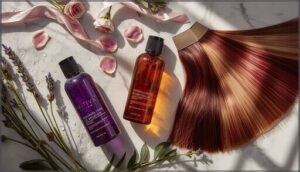
Your color doesn’t have to fade on someone else’s timeline—you get to decide how long it lasts. The right products act like armor for your dye, protecting it from everything that wants to wash it away.
Here’s what actually works to keep your color vibrant and under your control.
Color-Depositing Conditioners
Think of color-depositing conditioners as your secret weapon for extending vibrancy between salon visits. These specialized products work double duty on color-treated hair, delivering moisture while reviving faded tones through pigment deposit. Here’s how to amplify their impact:
- Choose Your Shade Wisely – Match your current hair color for smooth color enhancement, or go slightly deeper for a vibrancy boost
- Apply Strategically – Use weekly for subtle hair toning, or with every wash for bold color refresh on high-maintenance shades
- Let Them Work – Allow 3-5 minutes of contact time for ideal pigment absorption, especially on porous ends
Pair with colorsafe shampoos for complete hair color maintenance and extended color longevity.
Leave-in Treatments and Masks
Color boosters in leave-in serums and hair masks create a moisture lock that shields your color-treated hair from daily wear. These color protectants reduce fade by up to 30% when you use them regularly, forming a protective barrier that guards against heat styling and UV damage.
Pair with color-safe shampoos for complete hair color maintenance, and watch your vibrancy stick around weeks longer.
Silk Pillowcases and Gentle Tools
Beyond treatments, the tools you sleep on and style with matter just as much. Silk fabric against your hair overnight cuts friction by nearly half compared to cotton, reducing color stripping and breakage while you rest.
Swap out harsh brushes for gentle combs with wide teeth—they glide through without snagging, keeping your color locked in and your cuticles smooth.
Frequently Asked Questions (FAQs)
Is it possible to lighten my hair color with permanent dye?
Permanent dye can lift your hair one to two levels using 20–40 volume developers, but substantial lightening often requires a separate bleaching session first to avoid damage and achieve your target shade.
Can I use permanent hair dye on gray hair?
Absolutely—permanent hair dye delivers up to 100 percent gray coverage, especially when you’re dealing with 50 percent gray or more.
Choose natural base shades with 20-volume developer for resistant strands, ensuring rich, lasting color.
What should I do if my permanent hair dye fades quickly?
Switch to sulfate-free shampoo immediately and wash less often with cool water. Apply a color-depositing gloss weekly for enhanced vibrancy.
Shield your hair from UV rays and chlorine to prevent fading. Minimize heat styling to maintain color integrity and overall hair health.
Does hair dye damage your hair permanently?
Most dyes won’t ruin your hair forever, but repeated bleaching and ammonia treatments can weaken your strands long-term.
Chemical risks build up—once protein loss and breakage set in, growing it out becomes your only real fix.
Can you dye hair during pregnancy safely?
Most professional guidelines indicate that dyeing hair during pregnancy carries low risk when you use standard salon products in well-ventilated spaces, though choosing ammonia-free or semi-permanent formulas offers extra peace of mind.
How to remove unwanted hair dye color?
When color goes rogue, clarifying shampoo or a color remover can strip unwanted tones.
For stubborn permanent hair dye, a professional color corrector handles fading remedies and dye correction methods safely.
What causes allergic reactions to hair dye?
Para-phenylenediamine (PPD), a common ingredient in permanent hair dye, triggers most allergic reactions.
This PPD sensitivity causes contact dermatitis with skin irritation, requiring dermatitis treatment and careful selection of color-treated hair care products.
Does diet affect how hair holds color?
Your dietary habits influence hair health and color retention. Nutrient intake—especially protein, iron, and vitamins—strengthens hair structure, helping pigmentation hold better and supporting overall hair care for improved color longevity.
Conclusion
Most color-treated clients return to the salon every six to eight weeks, yet with strategic care, you can extend that timeline considerably. How long does hair dye last ultimately depends on your willingness to adjust your routine—swapping hot showers for lukewarm rinses, trading daily washes for every other day, protecting your hair from chlorine and sun.
Your color’s longevity isn’t predetermined; it’s earned through consistent, intentional choices that honor both your investment and your hair’s integrity.