This site is supported by our readers. We may earn a commission, at no cost to you, if you purchase through links. This content is for general informational and educational purposes only and is not a substitute for professional medical, dermatological, or nutritional advice.
Your face can grow about half an inch of beard per month, but that measurement tells you almost nothing about when you’ll actually look bearded. Most men expect a full beard in four to six weeks, then panic when their reflection shows patchy stubble and bare spots that refuse to cooperate.
The truth is, achieving a genuinely full beard takes three to six months for most guys, sometimes longer depending on your genetics, age, and hormone levels. Your follicles don’t all activate on the same schedule, and early growth stages look awkward before they look impressive.
Understanding the specific timeline, what’s happening beneath your skin at each phase, and how to work with your biology instead of against it makes the difference between giving up at week three and successfully growing the beard you want.
Table Of Contents
- Key Takeaways
- Beard Growth Timeline: Key Stages Explained
- Factors Affecting How Fast Your Beard Grows
- Common Beard Growth Challenges
- How to Encourage Faster, Fuller Beard Growth
- Essential Beard Care and Maintenance Tips
- Top 5 Beard Growth and Care Products
- Frequently Asked Questions (FAQs)
- How long does it take to get a full beard?
- Does castor oil help with the growth of a beard?
- How fast does a beard grow?
- When can a man grow a full beard?
- How long does it take to grow a short beard?
- When does beard growth start?
- How Long It Takes to Grow A Beard as A teenager?
- Can certain medications affect beard growth speed?
- How does facial hair color impact growth visibility?
- Do beard-growth supplements actually work?
- Conclusion
Key Takeaways
- Your beard won’t look full until three to six months of consistent growth, not the four to six weeks most guys expect, because follicles activate on different schedules and early stages always look patchy before they fill in.
- Genetics determine your maximum beard density and growth pattern more than any product or routine can override, so check your dad’s or grandfather’s facial hair to preview what’s actually possible for you.
- The uncomfortable patchy phase between weeks two and four happens because hair density sits at only 10 to 30 percent of full coverage during this window, but patience and proper care let those gaps close naturally as individual follicles mature.
- Daily beard oil application, washing two to three times weekly with sulfate-free shampoo, and trimming every four to six weeks maintain health and prevent the dryness, breakage, and beardruff that sabotage growth before it reaches full potential.
Beard Growth Timeline: Key Stages Explained
Growing a full beard doesn’t happen overnight, and understanding the beard growth timeline helps you manage expectations along the way.
Most men start seeing noticeable growth after 2–4 weeks, though learning how to style a beard early on keeps it looking sharp during those awkward in-between stages.
Your facial hair progresses through distinct phases, each with its own characteristics and challenges that you’ll need to navigate. Here’s what you can expect during each stage of your beard growth journey.
Initial Stubble Growth (0-2 Weeks)
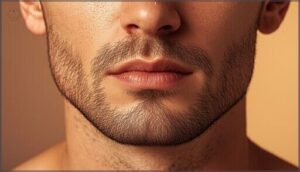
Within the first two weeks, your stubble care journey begins as beard follicles awaken. Early growth appears as soft shadows by days 10 to 14, signaling your facial hair transformation. Skin adaptation occurs naturally, though mild beard itch around days 3 to 5 is common as new hairs emerge.
- Stubble reaches 0.5 to 1.5 millimeters by week one
- Visible coverage spans 10 to 40 percent of your future profile
- Light itchiness peaks midweek, then subsides
- Oil production increases to lubricate growing hairs
Patchy and Uneven Phase (2-4 Weeks)
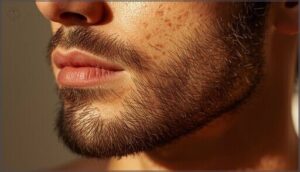
By week two through four, your beard enters its most frustrating stretch—patchy growth dominates as hair density hovers around 10 to 30 percent of full coverage.
Cheeks often lag behind the chin, creating uneven facial hair development. Follicle care becomes critical now, so maintain skin hydration with lightweight oils and gentle brushing to train hairs and visually fill gaps during this beard growth stage.
Filling in and Thicker Growth (1-3 Months)
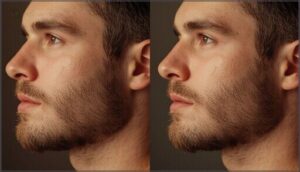
After the awkward patchy phase, your beard enters a transformation zone—follicle health improves as each hair thickens roughly 0.3 to 0.5 millimeters daily, increasing beard density from 30 to 60 percent coverage.
Growth patterns shift, with cheeks filling in ahead of mustache areas in most men. Maintain consistent beard care during this facial hair development window to support hair thickening and smoother beard texture along the beard growth timeline.
Achieving a Full Beard (3-6 Months and Beyond)
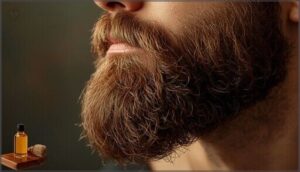
By month three, most gaps vanish as beard density reaches 70 to 85 percent fullness, revealing your true facial hair potential.
Growth patterns stabilize around month four, letting you explore beard styling options that suit your face shape. Regular maintenance tips—trimming every two to four weeks and daily oil application—keep your beard healthy during this final beard growth stage, supporting long-term beard care success.
Factors Affecting How Fast Your Beard Grows

Your beard’s growth rate isn’t entirely in your control, and that’s something most men don’t realize until they’re a few weeks in.
Most men don’t realize their beard’s growth rate isn’t fully in their control until they’re a few weeks in
Several biological and environmental factors determine whether you’ll see a full beard in three months or closer to six.
Understanding what influences your facial hair growth helps you set realistic expectations and work with what you’ve got.
Genetics and Family Traits
Your beard’s destiny lives in your DNA—look at your dad’s or grandfather’s facial hair for a preview of what’s possible. Genetic predisposition determines your follicle density, growth rate, and pattern through inherited characteristics passed down through family traits.
Here’s what genetics controls:
- Follicle distribution across your jaw, cheeks, and neck
- Hair thickness and texture at each beard growth stage
- Growth speed influenced by your body’s testosterone sensitivity
Hereditary factors set your maximum potential, so embrace your genetic blueprint. For a deeper understanding of how beard traits are passed down, you can explore basic genetics and inheritance.
Age and Hormonal Influences
Testosterone levels peak in your late twenties and early thirties, then gradually decline—this hormonal shift directly impacts beard density and growth patterns. Your age factors into hair follicle science, as younger men often experience faster beard growth stages tied to testosterone and DHT production.
| Age Range | Hormonal Impact on Beard |
|---|---|
| 18-25 | Androgen receptors activate, initiating terminal hair growth cycle and establishing baseline density |
| 30-40 | Peak testosterone levels boost follicle activity, creating ideal conditions for fullness and thickness |
| 50+ | Declining DHEA and growth hormone slow new hair production, though existing beards usually remain stable |
Hormone balance governs your beard’s transformation from patchy to full.
Testosterone and DHT drive follicle activation, while foods that promote beard growth provide the nutrients your body needs to support those hormones naturally.
Ethnicity and Facial Hair Patterns
Genetic variance across populations shapes your beard’s density and distribution patterns in measurable ways. Ethnicity influences facial hair growth through androgen receptor sensitivity and hair follicle concentration, creating distinct ethnic patterns you’ll notice in your own beard journey.
- East Asian descent usually shows sparser facial structure coverage, with lighter density that develops later in life
- South Asian and Middle Eastern genetics often produce thicker, denser beards with earlier adolescent onset
- African ancestry frequently displays coarser hair texture with variable regional density across the face
- Androgen sensitivity genes vary by ethnicity, directly affecting how your hair follicles respond to testosterone
- Regional beard density patterns differ—some groups show fuller chins, others stronger mustache growth
Genetics and ethnicity are key drivers behind what experts call.
Medical Conditions Impacting Growth
Underlying health issues can quietly sabotage your beard’s potential, even when genetics look favorable. Conditions like alopecia areata or alopecia barbae trigger patchy hair loss through immune attacks on follicles, while hormone imbalance from thyroid disorders or prolactinoma disrupts the testosterone-DHT axis needed for growth. Skin conditions like Becker’s nevus also create uneven patterns.
| Condition Type | Impact on Beard Growth |
|---|---|
| Growth Disorders (hypothyroidism, Cushing syndrome) | Slowed follicle activity, thinning density |
| Hair Loss Conditions (alopecia areata, alopecia barbae) | Circular bald patches, immune-mediated damage |
| Hormone Imbalance (prolactinoma, hypogonadism) | Reduced testosterone, sparse terminal hair |
Medical treatments and health supplements can sometimes restore growth if you tackle the underlying issue early.
Common Beard Growth Challenges
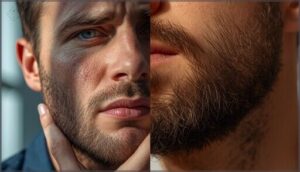
Growing a beard isn’t always smooth sailing, and nearly every guy hits a few bumps along the way.
From relentless itching during the early weeks to stubborn patches that won’t fill in, these obstacles can test your patience and commitment.
Understanding what’s normal and how to address each challenge will help you push through the awkward stages and reach your full beard potential.
Dealing With Itchiness and Irritation
That prickly sensation can feel like fire ants throwing a party on your face, but you can tame it with simple skin soothers. Your new beard hair irritates the follicles and strips moisture, triggering itch relief needs within the first two weeks.
- Cleanse with a sulfate-free beard care wash 2-3 times weekly to remove buildup without harsh stripping
- Apply beard oil daily to hydrate skin underneath and soften coarse hairs
- Use a cool compress for instant irritation remedies when itching flares
- Moisturize with beard balms containing ceramides to repair your skin barrier
- Avoid hot showers and scratching, which worsen dry skin solutions
Managing Patchy Areas
Uneven facial hair appears in the first 2 to 4 weeks because hair follicle density varies across your face, creating natural gaps in beard density. You can work with your growth patterns by letting longer sections mask thin zones, trimming sparse areas to match fuller ones, and brushing daily to train hairs over patchy spots.
Patience during beard growth stages transforms scattered stubble into cohesive coverage as individual shafts mature and thicken.
Handling Beardruff and Dry Skin
Flaking skin beneath your beard signals that the follicle-dense area is trapping dead cells and moisture.
Wash 2 to 3 times weekly with a sulfate-free shampoo containing pyrithione zinc or tea tree oil to lift beardruff without stripping natural sebum, then apply lightweight beard oil daily to restore beard hydration and shield against skin irritation while gentle exfoliation once a week promotes long-term skin health.
Overcoming Uneven Growth
Beyond dry skin, your hair follicles naturally activate at different rates across your face, creating patchy beard zones that disrupt facial symmetry.
Let stubble reach 1 to 2 inches—longer length conceals sparse patches while consistent brushing trains hairs to cover thin spots, improving beard density.
Strategic trimming shapes uneven growth patterns into a balanced silhouette, mastering beard maintenance through each beard growth stage.
How to Encourage Faster, Fuller Beard Growth
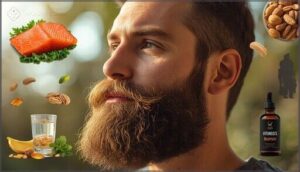
You can’t override your genetics, but you can absolutely fine-tune the growth you’re working with.
Small shifts in what you eat, how you sleep, and how you care for your beard can make a real difference in fullness and speed. Here’s what actually moves the needle.
Optimizing Diet and Nutrition
Your beard growth depends on nutrient balance, so load up on protein-rich diet staples like eggs and lean meats to fuel hair growth.
Healthy fats from avocados support follicle health, while vitamin supplements—biotin, zinc, vitamin D—fill nutritional gaps.
Hydration tips matter too: drink plenty of water to enhance nutrition for hair and beard care from the inside out.
Improving Lifestyle and Sleep
Getting seven to eight hours of sleep each night stabilizes your testosterone levels, which directly influences beard growth despite genetics.
Stick to a consistent sleep schedule to strengthen those healthy habits, and pair it with stress management through relaxation techniques like deep breathing or journaling.
Nutrition planning sets the stage, but your lifestyle choices—especially quality rest—determine how quickly follicles respond and thrive.
Exercise and Testosterone Support
Resistance training with multi-joint compounds—squats, deadlifts—recruits more muscle and triggers acute testosterone spikes that support beard growth, so aim for moderate to high intensity (60–85 percent of your one-rep max) with short rest intervals.
Regular weekly workouts lift resting hormone balance over time, but you’ll need adequate recovery between sessions to avoid blunting that natural testosterone response.
Consistent Beard Care Routine
Daily grooming anchors everything you’ve built, because missed sessions let dryness and tangles reverse weeks of progress.
Your beard care routine should include:
- Wash with sulfate-free shampoo 2–3 times weekly using lukewarm water for 10–20 seconds.
- Condition to restore moisture and prevent breakage.
- Apply beard oil daily for skin exfoliation beneath and softness.
- Brush to distribute natural oils evenly.
- Trim every 4–6 weeks to remove split ends.
Consistent beard maintenance protects beard health while maximizing beard oil benefits and overall beard hygiene.
Essential Beard Care and Maintenance Tips
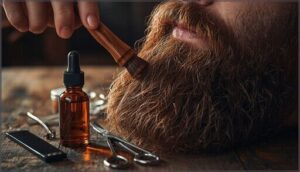
You can’t just grow your beard and forget about it—proper maintenance is what transforms scraggly stubble into a healthy, well-defined beard.
A solid care routine keeps your facial hair soft, manageable, and free from common problems like dryness, breakage, and irritation. Here’s what you need to focus on to maintain a beard that looks as good as it feels.
Washing and Conditioning Your Beard
Maintaining a clean beard without stripping natural oils requires the right wash frequency and product selection. Use a sulfate-free beard shampoo two to three times weekly, massaging it gently for twenty to thirty seconds before rinsing thoroughly.
Follow with conditioner for one to three minutes, then pat dry and apply beard oil while damp to lock in moisture and support beard health.
Daily Brushing and Oil Application
Your beard care routine sets the foundation for healthy facial hair growth and skin hydration. Brush twice daily with a soft boar bristle beard brush, working from neck to cheeks to distribute natural oils and stimulate blood flow.
After brushing, apply a nickel-sized amount of beard oil containing jojoba or argan for deep beard hydration, allowing two to three minutes for absorption before styling.
Trimming and Shaping for Health
Strategic beard trimming every two to four weeks removes split ends before they travel down the hair shaft, reducing breakage and supporting fuller appearance. Clean, sharp trimming tools prevent micro-tears at hair follicles that cause skin irritation and infection risk.
- Sculpt your neckline just above the Adam’s apple to improve drainage and minimize ingrown hairs
- Define cheek lines along natural bone structure to reduce friction-related irritation
- Disinfect tools before each session to protect facial hygiene and prevent bacterial transfer
Avoiding Common Beard Care Mistakes
Over-washing strips protective sebum, turning your beard brittle and triggering the itchy beard phase many men abandon prematurely.
Limit cleansing to three to five sessions weekly using sulfate-free formulas, then apply beard oil tips like warming product between palms before distribution.
Skip harsh shaving techniques near growth zones, avoid beard dye risks without patch testing, and never use dull trimming tools that fracture hair shafts and compromise beard health and wellness.
Top 5 Beard Growth and Care Products
The right products can make the difference between a patchy, uncomfortable beard and one that grows in thick and healthy.
You’ll want a targeted routine that includes serums to support follicle activity, exfoliants to prevent ingrown hairs, and conditioning tools to distribute natural oils evenly across your facial hair.
Here are five dermatologist-recommended products that address the most common growth and maintenance challenges.
1. Beard Growth Serum Oil
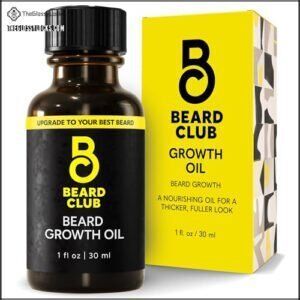
Nourishing follicles directly can reveal thicker beard potential, and serum oils deliver concentrated growth-supporting ingredients like castor oil, Redensyl, and biotin right where you need them. Apply a pea-sized amount to damp skin beneath your beard, massaging from follicles outward to boost microcirculation and nutrient delivery.
These lightweight formulas often combine argan and jojoba oils to balance sebum production while vitamin E protects against oxidative stress. Consistent daily use over several weeks usually yields noticeable improvements in density, texture, and reduced patchiness.
| Best For | Men looking to fill in patchy areas and achieve a thicker, fuller beard while reducing itch and irritation during the growth process. |
|---|---|
| Price | $24.99 |
| Material Type | Alcohol Free, Paraben Free |
| Primary Use | Beard growth oil |
| Hair Type | All types |
| Key Benefit | Thicker, fuller beard |
| Formula | Natural oils blend |
| Additional Features |
|
- Contains natural growth-supporting oils (castor, cedar, avocado) that nourish follicles and help minimize patchiness
- Alcohol-free, paraben-free formula reduces irritation and conditions both hair and skin underneath
- Cedar and sandalwood scent adds a pleasant grooming experience for most users
- Some users report the scent is too strong when first applied
- Results vary widely—not everyone experiences significant thickness or growth improvements
- Occasional packaging issues and price concerns, with some feeling $24.99 is steep for the results
2. Proraso Exfoliating Beard And Face Scrub
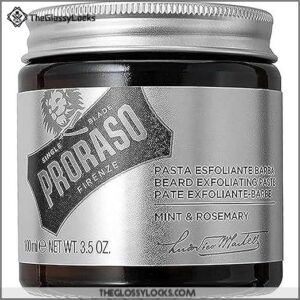
Healthy follicles require a clean foundation, and exfoliating away dead skin buildup beneath your beard creates the ideal environment for fuller growth. Proraso’s scrub uses finely ground almond and hazelnut shell granules to gently lift impurities from both your facial skin and beard hair without harsh abrasion.
Massage it into damp skin two to three times weekly, working down to the follicle level where mint and rosemary oils leave an invigorating sensation. This mechanical exfoliation clears pores, reduces beardruff, and may improve apparent density by keeping follicles unobstructed.
| Best For | Men with beards who want to prevent ingrown hairs and beardruff while improving skin texture and creating a healthier foundation for beard growth. |
|---|---|
| Price | $18.00 |
| Material Type | Italian Made |
| Primary Use | Exfoliating scrub |
| Hair Type | All types |
| Key Benefit | Removes dead skin |
| Formula | Fine granule paste |
| Additional Features |
|
- Fine granules from almond and hazelnut shells provide gentle but effective exfoliation without harsh scrubbing
- Works double duty as both a beard care product and full facial scrub for versatile use
- Mint and rosemary oils leave skin feeling refreshed and invigorated after each use
- Price point of $18 is higher than many competing exfoliating products
- May be too intense for daily use depending on your skin sensitivity
- Exfoliation results aren’t dramatically different from less expensive alternatives
3. Wild Willies Beard Growth Serum
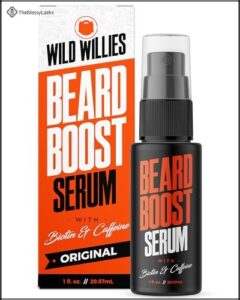
After clearing debris from your skin, you can improve follicle response by applying targeted serum formulations. Wild Willies Beard Growth Serum combines caffeine and biotin to stimulate dormant follicles and reinforce keratin structure, while castor and jojoba oils hydrate the epidermis beneath your beard.
Apply a few drops daily to clean skin, massaging down to the root zone where absorption occurs. Consistent use over several weeks may improve apparent fullness, though individual genetics ultimately determine your ceiling for density and coverage.
| Best For | Men looking to fill in patchy spots and encourage fuller beard growth with a natural, fragrance-free formula. |
|---|---|
| Price | $9.85 |
| Material Type | Natural ingredients |
| Primary Use | Growth serum |
| Hair Type | All types |
| Key Benefit | Stimulates follicles |
| Formula | Liquid serum |
| Additional Features |
|
- Contains biotin and caffeine to stimulate hair follicles and strengthen hair structure
- Lightweight, non-greasy serum absorbs easily and works well under other products
- Affordable at under $10 for daily targeted treatment
- Results vary significantly based on individual genetics and hair growth patterns
- Some users report an unpleasant smell despite being marketed as fragrance-free
- Packaging issues during shipping have caused product damage for some buyers
4. Smooth Viking Beard Brush And Comb Set
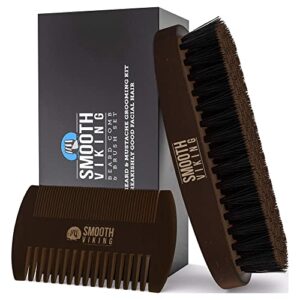
Once you’ve encouraged follicle activity with serums, physical grooming redistributes your skin’s natural sebum across each hair shaft. The Smooth Viking Beard Brush and Comb Set pairs boar bristles with pear wood teeth to detangle without static buildup, training hairs into alignment while reducing breakage.
Brush daily to move oils from root to tip, then comb through to shape and smooth. Regular mechanical stimulation improves apparent fullness by laying hairs in the same direction, creating a denser visual effect regardless of underlying follicle count.
| Best For | Men with beards of any length who want to maintain a polished look while promoting healthier growth through daily grooming and even oil distribution. |
|---|---|
| Price | $13.99 |
| Material Type | Boar bristle, Wood |
| Primary Use | Grooming tools |
| Hair Type | Various types |
| Key Benefit | Distributes oils evenly |
| Formula | Natural bristles |
| Additional Features |
|
- Natural boar bristles effectively distribute sebum and styling products from root to tip for better conditioning
- Dual-sided wooden comb handles both wet and dry styling needs with ergonomic comfort
- Affordable at $13.99 for a complete grooming set that reduces breakage and improves beard texture
- Boar bristles may shed during the first few uses until the brush breaks in
- Comb teeth may feel rough or uneven, with some users reporting poor spacing or unfinished edges
- Initial use can feel scratchy on sensitive skin and requires regular cleaning to maintain effectiveness
5. Scotch Porter Beard Conditioning Balm
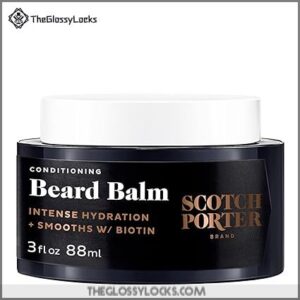
After brushing distributes your natural oils, lock in moisture with a targeted conditioning balm. Scotch Porter Beard Conditioning Balm combines biotin liposomes and shea butter to soften coarse hairs while white willow bark soothes the skin underneath, reducing flakiness and irritation that slow apparent growth.
Warm a pea-sized amount between your palms, then work it through from root to tip. The formula absorbs quickly without greasy residue, providing light hold that tames flyaways and maintains shape throughout the day while supporting long-term beard health.
| Best For | Men with coarse, dry facial hair looking for a lightweight conditioning balm that softens texture, reduces skin irritation, and supports healthier growth without heavy residue. |
|---|---|
| Price | $3.00 |
| Material Type | Paraben Free, Vegan |
| Primary Use | Conditioning balm |
| Hair Type | Dry |
| Key Benefit | Softens facial hair |
| Formula | Cream balm |
| Additional Features |
|
- Biotin and nettle leaf formula promotes healthier facial hair growth while reducing flakiness and redness
- Absorbs quickly with light hold that controls flyaways without feeling greasy or heavy
- Clean, vegan formula free of sulfates, silicones, and parabens
- May not provide enough moisture for very dry beards without additional products
- Scent can be subtle or undetectable for some users
- Packaging lacks a protective seal and has sharp edges
Frequently Asked Questions (FAQs)
How long does it take to get a full beard?
Think of beard growth like planting a garden—you’ll see initial sprouts in days, but a lush harvest takes three to six months for most men, depending on your genetic soil.
Does castor oil help with the growth of a beard?
Castor oil can moisturize skin and hair, reducing itchiness and making each strand appear fuller.
However, it won’t accelerate actual follicle growth rates, which remain largely determined by genetics and hormones.
How fast does a beard grow?
Like watching a sundial move, your beard advances about 3 to 5 millimeters daily—roughly a half-inch per month. Genetics, hormones, and age determine whether you race ahead or crawl forward.
When can a man grow a full beard?
Most men achieve their fullest facial hair between ages 25 and 35, once testosterone peaks and follicles mature. Some fill in earlier, while others don’t see complete coverage until their 40s.
How long does it take to grow a short beard?
Short beards don’t require months of waiting. You’ll see solid stubble coverage within 7 to 10 days, while a defined short beard usually emerges around the 3 to 4 week mark.
When does beard growth start?
Beard growth usually starts during puberty, around ages 13 to 16, when testosterone levels rise. Your first hairs usually appear on the upper lip, then gradually spread to your chin and jawline.
How Long It Takes to Grow A Beard as A teenager?
Many 16-year-olds notice light stubble within two to six weeks after puberty begins, then patchier growth over the next two to three months before fuller coverage emerges around six months.
Can certain medications affect beard growth speed?
Yes, certain medications can speed up or slow down your beard growth. Minoxidil often boosts growth within three to six months, while antiandrogens and some hormone therapies reduce facial hair density.
How does facial hair color impact growth visibility?
Darker hair creates sharper contrast against lighter skin, making growth appear fuller sooner, while lighter or red-toned facial hair blends more with your skin, delaying the perceived thickness until length increases.
Do beard-growth supplements actually work?
Most supplements show limited effect unless you’re deficient in biotin, zinc, or B vitamins. They can’t create new follicles, so genetics still determine your beard’s maximum fullness and density.
Conclusion
Even if your beard looks sparse at week four, resist the urge to abandon the process—that patchy stage is temporary, not a final verdict. How long it takes to grow a full beard depends on your genetics and patience, but most men see legitimate fullness between three and six months.
Your follicles activate on different schedules, so trust the timeline, maintain consistent care, and let biology finish what you started.