This site is supported by our readers. We may earn a commission, at no cost to you, if you purchase through links.
You book the salon appointment, invest in the perfect shade, and walk out with exactly the color you envisioned—rich, vibrant, and completely yours. Then reality hits: that gorgeous hue starts to shift, your roots creep in, and you’re left wondering if “permanent” was just a marketing ploy.
Here’s the truth: permanent hair dye doesn’t actually last forever, but understanding how long it does last—and what controls that timeline—puts you back in charge. The color molecules bond deep inside your hair’s cortex, creating lasting change that won’t rinse away like semi-permanent formulas.
But between fading, regrowth, and daily wear from heat tools and sun exposure, your color’s lifespan depends on dozens of factors you can actually control.
Table Of Contents
- Key Takeaways
- What is Permanent Hair Dye?
- How Long Does Permanent Hair Dye Last?
- Does Permanent Hair Dye Fade Over Time?
- Key Factors Affecting Dye Longevity
- Hair Care Practices That Extend Color
- Lifestyle Habits That Impact Color Retention
- Best Products for Maintaining Hair Color
- Touch-Ups and Refreshing Faded Color
- Common Myths About Permanent Hair Dye
- Tips to Make Permanent Hair Dye Last Longer
- Frequently Asked Questions (FAQs)
- How long does permanent hair dye actually last?
- Will permanent hair dye wash out?
- Does a permanent hair dye fade?
- Is there any way to prevent hair dye from fading?
- Can diet affect permanent hair color longevity?
- Does hard water impact permanent dye results?
- How does hair thickness influence color retention?
- What role does scalp health play here?
- Do certain medications affect permanent dye duration?
- Conclusion
Key Takeaways
- Permanent hair dye lasts 4-6 weeks before visible fading begins, with roots showing around 2-4 weeks, meaning you’ll need touch-ups every 6-8 weeks to maintain that salon-fresh look.
- Your color’s lifespan depends on controllable factors like hair porosity, washing frequency, water temperature, UV exposure, and heat styling—not just the dye quality itself.
- Protecting your investment requires switching to sulfate-free shampoos, washing every 2-3 days with cool water, using heat protectants, and applying UV shields to prevent pigment breakdown.
- Color-depositing products, leave-in treatments, and strategic root touch-ups between salon visits give you complete control over maintaining vibrancy without waiting for your next full dye session.
What is Permanent Hair Dye?
Permanent hair dye isn’t just color sitting on top of your strands—it’s a total chemical transformation happening inside each hair shaft. Unlike temporary rinses or semi-permanent formulas that fade within weeks, permanent dye changes your hair’s structure from the inside out.
If you’re curious about the exact process behind this transformation, how permanent hair dye actually works breaks down the science in simple terms.
Understanding how it works, what’s actually in the bottle, and how it differs from other dye types gives you control over your color journey.
How Permanent Dye Works
Permanent dye works through a bold chemical takeover of your hair structure. The oxidation process cracks open your cuticle, allowing tiny dye molecules to penetrate deep into the cortex where pigment binding happens.
Permanent dye cracks open your cuticle, sending tiny molecules deep into the cortex to bind pigment from the inside out
Here’s the color chemistry breakdown:
- Developer lifts the cuticle and oxidizes natural melanin
- Small dye molecules enter the cortex layer
- Molecules bond with keratin structures inside
- Oxidation creates stable, long-lasting pigment
- Cuticle seals, trapping color for permanent hair color maintenance
Ingredients in Permanent Dye
Understanding that oxidation process means knowing what’s inside the bottle.
Permanent dye combines p-phenylenediamine or p-toluidine as primary intermediates with coupling agents like resorcinol to create your target shade. Hydrogen peroxide developer oxidizes these components, while ammonia raises pH, swelling the cuticle for hair penetration.
This dye chemistry builds pigment stability through color formulation that bonds molecules directly to your cortex, ensuring permanent hair color and exceptional dye longevity compared to temporary options. Permanent color uses strict product safety protocols to protect consumers from potential risks.
Differences From Other Dye Types
Unlike semi permanent dye that sits on the cuticle surface or temporary colors that rinse out after one wash, permanent dye creates covalent bonds deep in your cortex.
This dye type comparison reveals why color fade rates differ dramatically—temporary dye vanishes immediately, semi-permanent dye lasts four to eight shampoos, while permanent dye longevity extends months thanks to molecular bonding rather than surface adhesion.
How Long Does Permanent Hair Dye Last?
Permanent dye doesn’t actually last forever on your hair, but it sticks around longer than any other type.
The color you see in the mirror changes gradually as the pigment fades and your natural roots push through.
Let’s break down what you can expect regarding timing and upkeep.
Average Duration on Hair
You can expect vibrant, gorgeous color for about 4 to 6 weeks before you start seeing noticeable color fade rates. Most people refresh their permanent hair color every 6 to 8 weeks to cover new hair growth and maintain that bold look.
With proper hair color maintenance focused on color fade prevention, your dye longevity can stretch even further, keeping your color retention strong for up to 2 months. Permanent dye results can also be affected by the hair growth cycle stages, which influence how quickly roots appear and how color fades over time.
Timeline for Color Fading
Usually, your hair color shift patterns unfold in predictable stages, giving you a clear roadmap for fade prevention. Most shades begin losing intensity around week 3, though fading rates vary by tone and your hair’s unique texture.
Here’s what you’ll notice:
- Weeks 1–2: Color stability is strongest, with vibrant tones staying true and radiant.
- Weeks 3–4: Gradual color fading starts, especially in reds and pastels.
- Weeks 5–6: Tone changes become visible, with brassiness or dullness creeping in.
- Weeks 6–8: Color longevity factors like washing habits show their full impact.
- Week 8+: Hair dye longevity reaches its limit without proper color fade prevention.
Root Regrowth and Maintenance
Within 2 to 3 weeks, your natural roots stage their debut—a badge of your color journey. Most permanent hair dye shows visible regrowth around the 1-centimeter mark per month, demanding root touchups every 4 to 6 weeks for flawless blending.
| Hair Texture | Root Touchup Frequency | Regrowth Prevention Tips |
|---|---|---|
| Fine hair | Every 4–5 weeks | Color refresh with glosses |
| Medium hair | Every 5–6 weeks | Maintenance scheduling, UV protection |
| Coarse hair | Every 6–8 weeks | Deep conditioning, heat shields |
Your hair color longevity hinges on consistent maintenance and strategic color fade management.
Choosing the best shampoo for color-treated hair with gentle, sulfate-free formulas can significantly extend your color’s lifespan between salon visits.
Does Permanent Hair Dye Fade Over Time?

Yes, permanent hair dye does fade over time—even though the name suggests it won’t. Your gorgeous new color doesn’t disappear overnight, but it gradually shifts and loses vibrancy through everyday exposure and wear.
Understanding how and why this happens gives you the power to keep your color looking fresh longer.
Gradual Color Changes
Your color doesn’t vanish overnight—it shifts. Pigment degradation happens as dye molecules break down at different rates, causing tone alterations from vibrant to muted.
Red and copper shades fade faster than ash tones due to chromatic changes in molecule stability. You’ll notice fading patterns emerge unevenly, with porous ends losing saturation before roots, creating that telltale color shift that signals it’s time for a refresh.
Factors That Cause Fading
Your gorgeous shade battles several enemies daily. UV damage breaks down pigment molecules, making sun exposure a top culprit for color loss.
Hot water opens the cuticle, letting dye molecules escape faster. Hair porosity determines how quickly fading factors take hold—higher porosity means rapid color fade.
Chlorine, saltwater, and harsh products accelerate permanent hair color breakdown, so color protection requires defending against water exposure and environmental stressors for better hair color longevity.
Signs Your Color is Fading
Your hair tells its own fading story through several clear symptoms. Spotting these color fade patterns early helps you jump on color preservation before things look truly washed out.
These symptoms include:
- Dull, flat tone instead of the vibrant, multi-dimensional shade you started with
- Visible root regrowth creating a contrast line at your scalp within three to four weeks
- Brassiness appearing as cool tones wash out and warm yellow or orange undertones show through
- Uneven, patchy color where sun-exposed areas fade faster than protected sections
- Rougher texture as dye molecules escape and the cuticle lifts, making hair feel drier
These fading symptoms signal it’s time for root regrowth touch-ups or brassiness prevention treatments to restore your color’s life.
Key Factors Affecting Dye Longevity
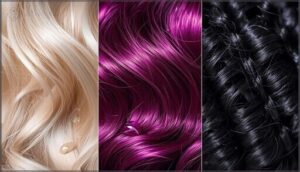
Not all hair holds color the same way—and that’s where things get interesting.
Your color’s staying power doesn’t just depend on the dye itself; it’s shaped by what you’re working with from the start.
Let’s break down the three biggest game-changers that determine whether your color stays vibrant or fades fast.
Hair Texture and Porosity
Think of your cuticle layer as a gate that decides who gets in. High porosity hair lets pigment molecules rush in fast but loses them just as quickly, while low porosity resists color penetration.
Fine texture absorbs dye faster than coarse strands, and hair elasticity affects how evenly pigment saturates during processing. Understanding your hair’s porosity through texture analysis gives you real control over color protection.
Natural Hair Color
Your starting point determines your finish line. Genetic influence sets melanin levels in your follicles, shaping permanent hair dye longevity on natural shades from jet black to platinum blonde.
- Darker bases (high eumelanin) show less color fade over time
- Lighter natural hair color absorbs vibrant pigment variation faster
- Warmer undertones hold reds and coppers longer than cool tones
- Genetic pigment patterns affect cuticle structure and hair texture porosity
Color perception shifts when artificial pigment meets your inherited palette.
Product Quality and Brand
Don’t gamble with drugstore mystery brands. Brand Reputation and Product Formulation separate pro-grade permanent hair dye from quick-fade disappointments.
Quality Control ensures consistent pigment molecules, Safety Compliance protects your scalp, and Customer Support guides you through ColorSafe Shampoo pairing.
Premium permanent hair color brands invest in Hair Care Products that lock color—4 to 6 weeks versus 2. Your Hair Color Product Recommendations determine whether your investment fades or flourishes.
Hair Care Practices That Extend Color
You’ve invested time and money in your new color care—now it’s time to protect it. The right hair care routine makes the difference between vibrant color that lasts and faded dye that disappoints.
Let’s break down the daily habits that keep your permanent color looking fresh and gorgeous for months.
Color-Safe Shampoos and Conditioners
Your best defense against fade? Color-safe shampoo built for the bold. Sulfate-free hair products use gentle cleansing agents that won’t strip pigment molecules, while pH levels stay balanced to seal the cuticle and lock in vibrancy.
- Moisture balance: Glycerin and argan oil prevent dryness that dulls permanent hair color
- UV filters: Shield your shade from sun-induced fading
- Bond protection: Hydrolyzed proteins strengthen processed strands for lasting color protection strategies
Washing Frequency and Techniques
Shampoo timing makes or breaks color locking—wash every two to three days max to preserve pigment. Use gentle massaging at the scalp, letting suds rinse through ends without harsh scrubbing.
Skip piling hair on top; friction accelerates color fade. Pat dry with microfiber, never vigorous rubbing. These hair washing habits protect your investment better than any sulfate-free hair products alone.
Water Temperature Effects
Water temperature controls how your hair cuticle opens and closes, directly affecting color fade rate and dye penetration. Hot showers speed up color fade by stripping pigment molecules, while cooler rinses seal cuticles for better color retention.
- Warm water opens cuticles during dyeing for richer permanent hair color
- Cold final rinse locks pigment inside the hair shaft
- Hot daily showers accelerate color fade and damage hair health
- Temperature swings create uneven tonal shifts on color-treated hair
- Lukewarm washing protects your investment in gorgeous, vibrant hair care
Lifestyle Habits That Impact Color Retention

You can’t control everything in life, but you can definitely control how you treat your color-treated hair outside the bathroom.
The choices you make every day—from beach trips to blow-dryers—directly affect how long your gorgeous shade stays vibrant.
Here are the three biggest lifestyle factors that’ll either keep your color locked in or send it down the drain fast.
Sun Exposure and UV Protection
The sun is your color’s biggest enemy—those UV rays break down pigment molecules faster than you realize. Shield your hair with a wide-brimmed hat during peak hours and spray on a UV-protectant product before heading outside. These simple steps prevent fading and keep your vibrant shade locked in, especially during summer when UV damage accelerates color loss.
| UV Protection Tips | How It Helps |
|---|---|
| Wear a wide-brimmed hat | Blocks direct UV rays during peak sun hours |
| Apply UV-protectant spray | Creates a barrier that prevents pigment breakdown |
| Seek shade between 10am-4pm | Reduces overall exposure when rays are strongest |
| Reapply protection after swimming | Maintains consistent color-protecting coverage |
Swimming, Chlorine, and Saltwater
Jump into the water without worry, but know that chlorine strips your pigment faster than almost anything else.
Pool chemicals raise your cuticle, letting color molecules escape with every lap, while sea water pulls dye from the surface and dulls your shine.
Rinse immediately after swimming, apply a protective leave-in before you jump in, or wear a swim cap to lock in that gorgeous shade.
Heat Styling and Tools
Every pass of your flat iron cranks up the temperature and opens the cuticle, letting pigment molecules slip out faster than you’d think. Heat styling fries more than your strands—it torches your color.
Grab a heat protectant before you reach for curling irons or hair dryers, keep tools under 365 degrees, and give your hair a break between styling sessions.
Best Products for Maintaining Hair Color
You can’t control everything about how your color fades, but you can absolutely stack the deck in your favor with the right products.
The difference between drugstore basics and color-safe formulas is real—using the wrong stuff is like trying to protect a leather jacket with dish soap. Here’s what actually works to keep your color vibrant and your hair healthy.
Recommended Shampoos and Conditioners
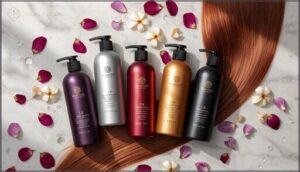
Your color-treated hair deserves the right arsenal. Swap harsh cleansers for sulfate-free hair products that won’t strip pigment molecules from your cuticle. Moisturizing treatments keep strands resilient against fade, while gentle formulas protect your investment without compromise.
- Pureology Hydrate Shampoo delivers vegan options with 100 percent recyclable packaging
- Olaplex No 4 strengthens bonds while you wash
- Redken Color Extend Magnetics preserves vibrancy for up to 40 washes
- Moroccanoil Hydrating Shampoo nourishes without stripping color
- Olaplex No 5 Conditioner restores elasticity and reduces frizz
Leave-in Treatments and Masks
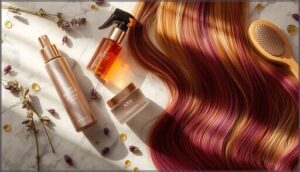
Think of leave-in treatments and deep conditioning masks as your color’s shield against the daily grind. These moisture-balancing formulas lock in pigment molecules while repairing damage, giving you control over fade. Color-safe products with UV filters and proteins keep your shade vibrant between salon visits—no rinsing required.
| Treatment Type | Key Benefit |
|---|---|
| Protein-Rich Leave In Products | Strengthen cuticle, reduce porosity |
| UV-Protecting Hair Masks | Shield from sun-induced fading |
| Color Therapy Hair Mask | Deep conditioning plus color protection |
Color-Depositing Products
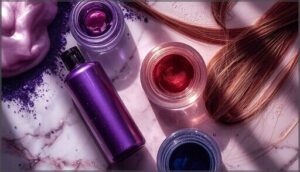
Beyond masks and leave-ins, color-depositing products give you hands-on control over fading prevention. These deposit formulas add pigment molecules during washing or styling, revitalizing permanent hair color without lifting your existing shade. You’ll see color enhancement through gradual pigment uptake on porous strands.
- Color-depositing shampoos release tint with every wash, maintaining tone consistency
- Pigmented conditioners boost vibrancy while moisturizing, especially on pre-lightened hair
- Color reviving gloss treatments add shine and depth in 3 to 20 minutes
- Toning masks neutralize brassiness and keep cool shades locked in
- Color refresh styling creams layer pigment protection throughout your day
Most color-safe products last 4 to 12 washes, depending on hair porosity. High-porosity hair grabs pigment fast but releases it sooner, so weekly use keeps your shade gorgeous. For color-protecting results, apply to towel-dried hair, leave on as directed, then rinse cool to seal the cuticle.
Touch-Ups and Refreshing Faded Color
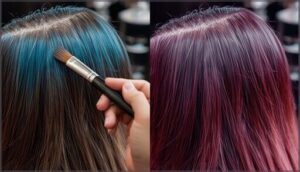
Your color won’t stay perfect forever—roots grow out, pigment fades, and that gorgeous shade you started with starts to dull.
Keeping your hair looking fresh means knowing when to touch up and what quick fixes actually work between full dye sessions.
Here’s how to stay on top of regrowth and bring back vibrancy when your color starts to fade.
Root Touch-Up Frequency
Usually, your roots will show their true colors every 3 to 6 weeks, depending on how fast your hair grows. Once you hit that half-inch mark of regrowth, it’s time for a touch up.
Fast growers? You might need maintenance every 3 weeks to keep that flawless permanent hair dye look. Slower growth rates buy you closer to 8 weeks before color fading at the root line becomes obvious.
Salon Vs. At-Home Refreshing
When you’re ready for a refresh after that regrowth creeps in, you’ve got two paths: professional or DIY. Salon visits bring specially formulated formulas, expert color correction if things go sideways, and zero guesswork—but they’ll cost you more.
At-home kits offer budget-friendly convenience with decent results, though hair damage risks climb if you mistime the process. Consider:
- Salons tailor pigment strength to your porosity
- Home refresh methods require strict timing
- Professional dye removal techniques prevent brassiness
- DIY saves money but limits shade options
Temporary Solutions for Fading
Between salon visits, you don’t have to live with dull, faded strands. Coloring shampoos deposit pigment with every wash, reviving your shade over three to five uses. Leave-in masks condition while revitalizing color in five to twenty minutes, fighting hair color fading causes like sun and heat.
For one-night adventures, hair chalk or colored sprays give you bold pops without touching your permanent hair dye underneath.
| Product Type | How It Works | How Long It Lasts |
|---|---|---|
| Coloring Shampoos | Adds pigment during washing | 3–5 washes |
| Leave-in Masks | Deep conditions while depositing color | 2–3 washes |
| Hair Chalk | Surface coating for temporary color | Until next wash |
| Color Reviving Gloss | Boosts shine and tone in minutes | 4–6 washes |
Common Myths About Permanent Hair Dye

You’ve probably heard a lot of conflicting advice about permanent hair dye—some of it true, some of it completely off-base. Let’s clear up the confusion and set the record straight on what permanent color can and can’t do.
Here are the biggest myths you need to stop believing.
Will Permanent Dye Wash Out Completely?
Permanent hair dye won’t wash out completely, but it will fade. The pigment molecules bond deep in your hair cortex, resisting total removal through shampooing alone.
However, color loss factors like UV exposure and harsh products cause gradual color fade over time. Your roots will grow in untreated, but the colored length stays—though increasingly dull without proper color retention strategies and fading prevention tips.
Is Permanent Dye Damaging?
The truth? Permanent Hair Color does carry some Hair Damage risks, especially if you’re not giving your hair the care it deserves. Here’s what you need to know about Hair Health and Color:
- Hair Breakage increases when ammonia and peroxide weaken your hair fibers over time
- Scalp Irritation can occur from PPD and other chemicals—patch test before you commit
- Dye Toxicity affects sensitive individuals through contact dermatitis and allergic reactions
- Color Loss and structural damage compound with repeated applications on already stressed hair
- Hair Damage Prevention works through deep conditioning, protein treatments, and choosing gentler formulas
Professional application and solid Hair Care routines minimize these risks, keeping your hair strong while maintaining gorgeous Color Fade resistance.
Can You Remove Permanent Dye at Home?
Yes, At Home Removal is possible, but tread carefully. Color removers use reducing agents to break down pigment molecules without fully bleaching, while Dye Stripping kits lift color more aggressively.
Both carry Hair Damage risks if you skip strand tests or ignore timing instructions. For major Color Correction or stubborn permanent hair dye, professionals deliver safer results and minimize Removal Safety concerns.
Tips to Make Permanent Hair Dye Last Longer
You’ve invested time and money into your gorgeous new color, so let’s make it last. The secret to vibrant hair isn’t just what you do after dyeing—it starts before you even mix the color.
Here are the essential steps to prolong your dye’s longevity from prep to daily maintenance.
Pre-Dye Preparation Steps
Want your color to stick around like it owns the place? Your Pre Dye Routine sets the stage for long-lasting results. Prep your Scalp and assess your Hair Porosity so dye grabs evenly.
- Clarify 24 hours before to strip buildup that blocks Color Guarding and Dye Application.
- Perform a strand test to predict how your Hair Type reacts to pigment.
- Apply petroleum jelly around your hairline for protective Color Guarding.
Post-Coloring Maintenance Routines
Your Post Color Care kicks off the second you rinse. Wait 48 hours before shampooing to let permanent hair color lock into the cuticle, then switch to Color Safe Products—sulfate-free formulas keep pigment molecules intact.
Wash every 2 to 3 days with lukewarm water, seal with a cold rinse for Fade Prevention, and apply a weekly color-depositing conditioner to fuel your Hair Refresh between salon visits.
Protective Styling and Daily Habits
Hair Braiding and Hair Wrapping shield your ends from friction that chips away color. Tuck your style under a satin bonnet at night, then refresh with Daily Conditioning spritzes formulated for Color Preservation.
Your Hair Care Routine should include weekly Scalp Massage with lightweight oils and Sulfatefree hair products that maintain vibrant pigment—these Hair Care Tips transform your Hair Maintenance into a Color Safe ritual.
Frequently Asked Questions (FAQs)
How long does permanent hair dye actually last?
Generally, permanent hair dye sticks around for four to six weeks before fading kicks in, though your roots will start peeking through around two to four weeks depending on your hair growth rate.
Will permanent hair dye wash out?
Permanent hair dye won’t completely wash out because color molecules lock into your hair’s cortex.
However, pigment gradually fades with each shampoo, shifting lighter or brassy over weeks despite its lasting bond.
Does a permanent hair dye fade?
Yes, Color Fade is real—even with permanent hair dye.
UV rays, heat styling, and washing break down pigment molecules over time, so your Color Treated Hair gradually loses intensity and shifts tone despite lasting through many shampoos.
Is there any way to prevent hair dye from fading?
Absolutely—color preservation starts with smart choices. Switch to color-safe shampoos, limit washing, rinse with cool water, shield hair from UV and chlorine, skip excessive heat styling, and use color-depositing treatments for dye protection and fading prevention.
Can diet affect permanent hair color longevity?
Ironically, while what you eat won’t stop your roots from showing, nutrient intake and hydration levels do support hair growth and health—keeping strands strong enough to hold permanent hair dye pigment through daily wear.
Does hard water impact permanent dye results?
Hard water’s mineral buildup creates a film on your strands, increasing hair porosity and accelerating color fading.
Calcium and magnesium dull permanent hair dye vibrancy, while copper shifts undertones—water softening helps stabilize dye molecules.
How does hair thickness influence color retention?
Thicker strands with dense cuticles trap permanent hair color molecules longer, reducing fade.
Fine hair loses pigment faster due to greater surface exposure, making melanin and porosity critical factors in retention.
What role does scalp health play here?
Your scalp barrier, microbiome balance, and circulation directly impact color retention.
Scalp irritation weakens hair fibers, while proper nutrition and a solid hair care routine strengthen strands, locking pigment in longer for vibrant results.
Do certain medications affect permanent dye duration?
You’d think pills just stay in your bloodstream, but certain medications—from blood thinners to chemo—actually alter your scalp’s sensitivity and hair texture, quietly speeding up permanent hair dye fading through unexpected chemical reactions.
Conclusion
Your color is a declaration—one that shifts with every wash, every sunny afternoon, every heat-styled session. But now you hold the blueprint: how long permanent hair dye lasts depends entirely on how you protect it.
Guard those pigment molecules with sulfate-free formulas, cool water, and UV shields. Touch up roots every four to six weeks. Treat fading as a signal, not a sentence. Master these habits, and your vibrant shade stays loyal—exactly as long as you demand it does.