This site is supported by our readers. We may earn a commission, at no cost to you, if you purchase through links.

Hair growth shampoo often gets judged too fast. Many people expect new length within a few washes, then give up when the shower drain still tells a different story.
In clinic, the first change I ask patients to watch for isn’t dramatic regrowth. It’s less shedding, a calmer scalp, and fewer hairs left on the brush.
That timeline matters, because knowing how long to see results from hair growth shampoo can keep you from switching products before they have a fair chance to work. The details aren’t mysterious, but they are more precise than most product labels suggest early on.
Table Of Contents
When Results Usually Start
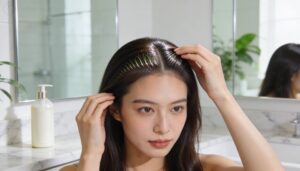
If you’re wondering when you’ll actually see changes from a hair growth shampoo, you’re not alone. The timeline isn’t instant, and each stage brings its own signs to watch for.
For a deeper look at what to expect, this guide to hair growth shampoo results at three and six months breaks down visual changes and progress checkpoints.
Here’s what you can expect as you start your routine.
Reduced Shedding in 2 to 4 Weeks
Within two to four weeks, you’ll often spot less hair in the shower drain. That’s your first clue that the hair growth shampoo is working.
This change comes from Scalp Microbiome Modulation, Sebum Production Control, and Active Ingredient Penetration. The Follicle Cycle Reset starts here—clinical evidence shows that shedding reduction, not new growth, is the expected timeline for visible hair growth results.
Early Scalp Improvements in 4 to 8 Weeks
As you keep up your routine, four to eight weeks often bring noticeable scalp improvements.
Microbiome Balance and Barrier Repair settle irritation, while Sebum Regulation and pH Optimization help your scalp feel calmer and less oily. Hydration Boost leaves skin less tight.
You’ll likely see healthier roots, improved hair thickness, and early signs of increased hair density—hallmarks of visible progress.
Visible Baby Hairs in 3 to 4 Months
Around the three- to four-month mark, you’ll likely notice new baby hairs along your hairline—often lighter, finer, and more reflective under light. This early regrowth stage fits the typical hair regrowth timeline.
Improved scalp hydration and careful styling techniques can make these short strands stand out, especially where hairline contrast is highest. Texture and density changes follow as these hairs lengthen.
Fuller-looking Density in 4 to 6 Months
As those baby hairs mature, you’ll see a fuller-looking density between four and six months. This window matches the average time for noticeable results, thanks to hair cycle synchronization and scalp pH optimization.
Evidence-backed active ingredients for hair regrowth—like caffeine and ketoconazole—work best with consistent use, supporting hair thickness improvement and density increase as nutrient delivery systems and product residue management improve active ingredient penetration.
Why Most Shampoos Need Consistent Long-term Use
Even if you’re keen for quick changes, consistent product usage is the backbone of progress. Your scalp needs steady Microbiome Stabilization and Barrier Recovery, while Active Accumulation builds over time.
Results hinge on:
- Shampoo washing frequency and dwell time recommendations for medicated shampoos
- User Adherence through seasonal influences
- Impact of contact time on shampoo effectiveness and timeline of shampoo effectiveness
What Changes Appear First
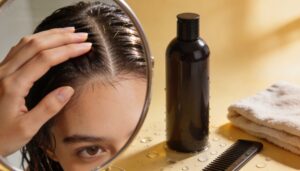
When you start using a hair growth shampoo, certain changes tend to show up before others. It’s important to know signs to watch for as your scalp adjusts.
Here’s what you can expect to notice first.
Less Hair in The Shower Drain
Notice fewer strands swirling in your shower drain? That’s often your first sign of hair shedding reduction.
Factors like water temperature effects, rinse pressure impact, and shower head design play a role, but a consistent hair detangling routine and improved scalp hydration levels, paired with a hair growth shampoo and proper contact time, can shift your hair growth timeline, as clinical trials suggest.
Fewer Hairs on Brushes and Pillows
When you start seeing fewer hairs caught by Brush Hair Capture or Pillow Hair Capture, it’s often a sign that your shampoo is working.
Static Reduction and Cuticle Smoothing from clinical formulas help minimize friction shedding. Improved Scalp Cleanliness reduces sticky residue, so loose strands don’t cling.
Most notice this change within four to eight weeks—matching hair loss treatment timelines and clinical trial expectations.
Reduced Flakes, Itch, and Scalp Oil
Is your scalp finally behaving? Early results often show reduced flakes and itch, thanks to improved Microbial Balance and Anti-Itch Botanicals.
Dandruff control kicks in after several washes, while Exfoliation Timing and a sulfate‑free formula help scalp sebum regulation. Barrier Repair from niacinamide and panthenol soothes irritation, making oil and flaking less stubborn before you see thicker strands.
Thicker-looking Strands Before True Regrowth
Ever wondered why your hair suddenly looks fuller after a wash?
Cuticle flattening and film polymer coating boost surface smoothness and hair slip, creating a visual density illusion. Light scattering from smoother strands mimics hair thickness, even before true regrowth.
Pairing active ingredients with a scalp massage technique and the recommended scalp contact time for shampoo further enhances this effect.
Why Length Gains Take Longer to Notice
Waiting for longer hair is like watching grass grow—slow, steady, and easy to overlook.
The Anagen Duration sets your pace, with each strand inching forward at about 1–1.5 cm per month. Strand Growth Lag means new hairs need time to cross the Visibility Threshold.
Measurement Timing matters; average time for noticeable results is three to six months, shaped by your Scalp Microenvironment.
What Hair Growth Shampoo Can Do
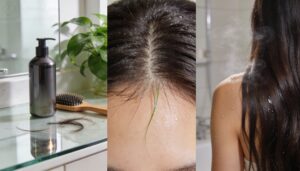
Hair growth shampoos work in ways that might surprise you. It’s important to know what these formulas can—and can’t—achieve for your scalp and hair.
Here’s what you should look for when judging their true impact.
Supporting Scalp Health Instead of Creating New Follicles
Focusing on scalp health means you’re not creating new follicles, but optimizing the environment for your existing hair. Think of it as tending soil for better crops: you encourage Microbiome Balance, boost Scalp Microcirculation, and support Pollution Shielding and Immune Modulation. Consistent contact time, gentle scalp massage, and a sulfate-free formula together improve antioxidant protection and blood circulation to the scalp.
Healthy hair starts with a balanced scalp, where gentle care helps existing follicles grow stronger, calmer, and more resilient
- Promotes Microbiome Balance
- Improves Scalp Microcirculation
- Shields against pollution and stress
- Modulates immune response for less irritation
- Improves antioxidant protection and resilience
How Cleansing Buildup Can Reduce Shedding Triggers
Picture your scalp as a garden—if residue and mineral build-up from hard water or styling products linger, roots struggle.
Residue Removal and scalp exfoliation with a sulfate-free formula boost Rinse Efficiency, lowering hair shedding and irritation.
Maintaining Scalp pH Balance lets follicles breathe.
Here’s how cleansing impacts triggers:
| Residue Removal | Exfoliation Benefits | Rinse Efficiency |
|---|---|---|
| Less buildup | Fewer flakes | Reduced fallout |
| Lower irritation | Smoother strands | Balanced pH |
| Stronger roots | Less shedding | Fresher feel |
The Difference Between Regrowth and Cosmetic Thickening
When you use hair growth shampoo, you might notice Visual Volume right away from Shaft Coating—film formers make strands look fuller.
True regrowth, though, means Follicle Activation and an Anagen Shift, which takes time.
Follicle stimulation, scalp massage technique, and active ingredient dwell time support density, but only new hairs from the growth cycle change lasting thickness.
Realistic Expectations From Rinse-off Formulas
While cosmetic thickening tricks your eye early on, rinse-off formulas deliver Short-term Benefits like cleaner roots and less visible flakes. Long-term Gains—such as true hair density—depend on consistent contact time, correct wash frequency, and patience with the hair growth cycle.
Managing your expectations means understanding Scalp Barrier Recovery takes weeks, and Visual Perception Bias often exaggerates improvement right after washing.
Ingredients That Affect Results

The ingredients inside your shampoo play a major role in how quickly you notice changes. Some actives target shedding, while others focus on strength or scalp health.
Here’s what you should know about the ones that make the biggest difference.
Ketoconazole for Dandruff-related Shedding and Inflammation
Ever wonder why ketoconazole is a staple in dandruff shampoos? Its Antifungal Action targets yeast, suppressing scalp overgrowth and optimizing pH.
This reduces inflammation and irritation—key triggers for hair shedding. By improving the follicle environment, ketoconazole helps calm inflammatory scalp conditions.
For many, fewer flakes and less redness mean healthier roots and steadier growth over time. Clinical studies show that ketoconazole reduces scalp inflammation and promotes healthier hair growth.
Caffeine for Follicle Stimulation Support
Caffeine’s value in hair growth shampoo lies in follicle stimulation and cellular metabolism support. Low caffeine concentration can offset androgen antagonism, boosting activity in scalp follicles.
Penetration kinetics matter—caffeine starts entering the scalp within two minutes, but rinse-off limits exposure.
Consistent use with synergistic actives and leaving shampoo on for several minutes influences the timeline for noticeable hair growth results.
Adenosine and Density-focused Formulas
Although adenosine is a naturally occurring regulator, its impact in hair growth shampoo hinges on Adenosine Receptor Activation and adequate Extracellular Adenosine Levels. For density-focused formulas, you’re looking at:
- Adenosine Penetration—does it reach scalp targets?
- Adenosine Synergy—how well does it pair with other actives?
- Scalp Microenvironment—local biology shapes hair density outcomes.
Niacinamide, Panthenol, and Proteins for Stronger Strands
Want hair that feels tougher but still soft?
Niacinamide reinforces your scalp’s barrier, locking in moisture and soothing irritation. Panthenol boosts elasticity, making strands easier to detangle. Hydrolyzed proteins form a protective film, reducing breakage from daily handling.
Together, these additives in hair growth shampoo deliver visible strength and comfort before true regrowth appears.
| Ingredient | Main Benefit |
|---|---|
| Niacinamide | Barrier Reinforcement |
| Panthenol | Moisture Retention |
| Hydrolyzed Proteins | Protein Film Formation |
| Protein Additives | Hair Breakage Prevention |
| Peptides | Hair Elasticity Boost |
Zinc Pyrithione and Salicylic Acid for Scalp Clarity
Looking for a cleaner, calmer scalp? Zinc Pyrithione Mechanism targets dandruff microbes, while Salicylic Acid Exfoliation loosens stubborn flakes—together, they create Antifungal Keratolytic Synergy.
For best results, follow frequency and dwell time recommendations for medicated shampoos; contact time impacts effectiveness. Here’s what you’ll notice:
- Fewer flakes
- Less itch
- Reduced oil
- Clearer scalp environment
- Improved Scalp Microbiome Balance
Why Ingredient Strength and Formulation Matter
Ever wondered why two shampoos with “hair growth” claims deliver such different results? The secret lies in active dosage levels, delivery system design, and pH compatibility balance. Surfactant selection and ingredient synergy shape how the effective concentration of actives reaches your scalp. That’s why the importance of product formulation and absorption can’t be overstated—pH-balanced sulfate-free formulas increase evidence-backed active ingredients for hair regrowth.
| Factor | Impact on Results |
|---|---|
| Active Dosage Levels | Higher = Faster, Deeper |
| Delivery System Design | Better Coverage, Retention |
| pH Compatibility | Less Irritation, Stability |
| Surfactant Selection | Cleansing vs. Gentleness |
How to Use Shampoo Correctly
Getting the most out of your hair growth shampoo comes down to how you use it. Small changes in your routine can make a big difference in results.
Here’s what you need to know before your next wash.
Leave-on Time: 2 to 5 Minutes
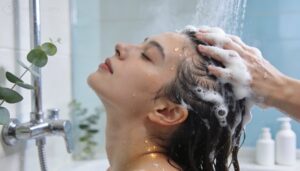
Nearly every medicated hair growth shampoo relies on a precise Dwell Time Guideline—two to three minutes is your Active Retention Window. Scalp Contact Optimization means lathering thoroughly, then letting the ingredient exposure duration work before your Rinse Timing Strategy.
This leave-on treatment ensures proper usage and maximizes the impact of contact time on shampoo effectiveness, especially for frequency and dwell time recommendations with medicated shampoos.
How Often to Wash for Best Results

After you nail the leave-on timing, your shampoo washing frequency matters just as much.
Daily washing suits oily scalps and heavy styling product removal, while 2–3 times weekly keeps scalp pH balance for most medicated formulas.
Adjust for a Post-Workout Rinse, Travel Routine Adaptation, and Seasonal Wash Adjustments:
- Daily for oil and sweat
- 2–3/week for medicated
- Flexible for lifestyle
When to Use Daily Vs Medicated Shampoos

After you’ve set your shampoo washing frequency, the next step is knowing when to reach for daily versus medicated formulas.
Use daily shampoos for general cleansing—especially if sweat, oil, or styling products build up fast.
Medicated shampoos, however, are reserved for active dandruff, persistent itching, or flare-ups.
Rotate products based on your Scalp Condition Assessment and follow recommended dwell times for each.
Four-minute Scalp Massage Technique
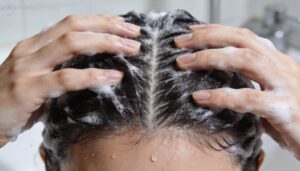
Once you’ve chosen your shampoo and set the frequency, focus on the four-minute scalp massage technique. Use finger pressure in steady circular strokes, dividing your scalp into sections for equal timing.
This method boosts blood circulation to the scalp, improves product absorption, and promotes scalp health. Consistent massage rhythm and full scalp coverage can help increase hair thickness, especially with medicated formulas.
Why Fingertips Are Better Than Nails
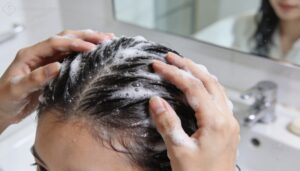
While you might be tempted to scrub with your nails, using your fingertips delivers gentle pressure, lowers scratching risk, and ensures even product spread across your scalp. This technique minimizes hair tugging and mechanical stress, making scalp massage more comfortable and consistent.
Proper usage—fingertip-only contact—helps you stick with frequency and dwell time recommendations, directly supporting thicker hair and healthier scalp results.
Conditioning Only Mid-lengths and Ends
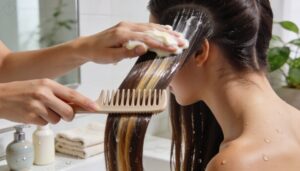
If you focus conditioner on mid-lengths and ends, you improve slip enhancement and cuticle smoothing—two essentials for detangling efficiency and frizz reduction. This approach boosts moisture retention where strands are driest, helping prevent hair breakage.
Proper usage of hair growth shampoo means letting conditioning agents work on the shaft, not the scalp, so shampoo starts working without residue weighing roots down.
What Can Slow Down Results

Even with the right shampoo, a few common obstacles can stall your progress. Some factors are easy to overlook but make a real difference in how quickly you see changes.
Here’s what you’ll want to watch for as you work toward healthier, fuller hair.
Inconsistent Use and Switching Too Soon
Think your scalp’s a quick-change artist?
Inconsistent Wash Schedule and Premature Product Switch sabotage progress by interrupting the Scalp Reset Period. Without proper usage—meaning steady frequency and dwell time—Active Exposure remains insufficient, and Shedding Data Misreading is common. Shampoo washing frequency directly impacts hair health; skipping or switching too soon resets gains, fueling consumer misconceptions about hair growth shampoo promises.
Harsh Sulfates, High PH, and Scalp Irritation
Ever notice your scalp itching or flaking after a wash? Harsh sulfates and high pH formulas strip away protective oils, disrupt scalp microbiome balance, and trigger irritation.
You’ll get better comfort and fewer setbacks by switching to sulfate-free surfactants, pH-balanced formulas, and barrier-repair ingredients. Gentle cleansing agents help preserve moisture, making a sulfate-free formula essential for maintaining scalp health and steady progress.
Stress, Hormones, and Nutrient Deficiencies
Stress throws your hair into chaos—cortisol impact triggers stress-related telogen effluvium, pushing follicles out of the growth phase for months. Thyroid dysregulation and hormonal hair loss can cause diffuse thinning and breakage. Iron deficiency and vitamin D deficiency, along with micronutrient gaps, slow your hair growth rate.
Until these are addressed, even the best shampoo won’t speed up visible progress.
Product Buildup, Hard Water, and Oily Scalp Conditions
Hard water product buildup is like a stubborn film—mineral deposits cling to strands, dulling shine and blocking shampoo efficacy. If you layer conditioners or skip scalp oil management, residue removal techniques become critical.
Oiliness traps debris, making frequent washes with a sulfate‑free formula and mineral chelation essential. Water softening solutions help, but without consistent oil control, progress slows noticeably.
Hair Type Differences in Visible Improvement
Product buildup isn’t the only culprit—your hair type, texture, and porosity impact how quickly you see noticeable results. For instance, coily vs straight hair can mask density changes due to the curl shrinkage effect and volume retention. Texture perception shifts: fine hair shows scalp improvements faster, while thicker curls hide new growth.
Effectiveness timeline of drug-free hair growth shampoos varies based on these factors.
Breakage Mistaken for Poor Growth
You might blame slow progress on poor growth, but breakage is often the real thief. If your ends split, snap, or fray, new hair never gets a chance to show length.
Proper usage of hair growth shampoo, paired with:
- Split End Prevention
- Heat Damage Mitigation
- Gentle Detangling
- Moisture Balance and Protein Reinforcement
—keeps strands intact.
When Shampoo is Not Enough

Sometimes, hair growth shampoo alone doesn’t get you all the way to your goals. If progress stalls or shedding continues, it’s important to know what other steps can help.
Here are key signs and next moves to evaluate when shampoo isn’t enough.
Signs You May Need Minoxidil or Medical Treatment
If you’re facing rapid patchy loss, scalp pain or swelling, thick dandruff scale, or excessive hair loss that won’t settle, it’s time to look beyond shampoo.
Clinical studies show minoxidil helps in androgenetic alopecia, but systemic minoxidil effects or persistent shedding means you need a dermatologist’s evaluation—especially if symptoms worsen or new scalp issues appear.
daily application recording can help you identify patterns and guarantee consistent use.
Pairing Shampoo With Leave-on Scalp Treatments
Pairing your shampoo with a leave-on scalp treatment—like minoxidil—demands the right timing sequence and scalp preparation. Always rinse shampoo thoroughly, towel dry, then apply leave-on formulas for ideal absorption and dilution prevention.
Product compatibility matters: use medicated shampoos as directed (2–3 times weekly), and don’t condition roots before applying treatments. This routine strengthens minoxidil synergy, maximizing your hair growth potential.
When Persistent Shedding Needs a Dermatologist
Even with a steady routine and the effectiveness timeline of drugfree hair growth shampoos, persistent shedding beyond six months, patchy loss, or scalp infection signs—like redness or burning—are red flag symptoms. If you notice systemic health indicators or hormonal imbalance clues alongside telogen effluvium, a dermatology consultation is essential.
Early referral prevents irreversible loss and aligns treatment timelines with your expectations.
Postpartum, Hormonal, and Stress-related Hair Loss
After childbirth, Estrogen Withdrawal triggers postpartum hair loss, while a Cortisol Surge from stress or Sleep Deprivation pushes follicles into shedding. Iron Deficiency and Thyroid Imbalance further delay regrowth.
drug‑free hair growth shampoos help, but hormonal impact on growth and stress‑related telogen effluvium mean you’ll need patience—hair loss treatment timelines often stretch beyond shampoo effectiveness expectations.
How to Track Progress With Photos and Shedding Counts
Regular tracking helps you separate visual density illusion from actual hair regrowth. To keep your hair loss journey honest, use consistent lighting, the same camera angle, and a reference marker.
Log weekly photos and stick to shedding count timing. Comparing hair density at the part line lets you spot subtle changes in hair follicles—don’t rely on memory alone.
Top 5 Products to Consider
Choosing the right shampoo can feel overwhelming, especially with so many options promising results.
To help you narrow things down, here are five products backed by evidence and strong clinical reputations. Each stands out for its approach to supporting hair growth and scalp health.
1. ISDIN Lambdapil Volumizing Shampoo
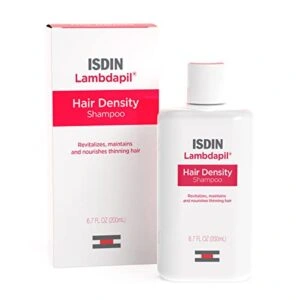
Looking for a shampoo that targets thinning hair without weighing it down? ISDIN Lambdapil Volumizing Shampoo stands out for its dermatologist-tested formula, blending zinc, biotin, B vitamins, and Serenoa serrulata fruit extract.
You’ll notice your hair feels fresher, less greasy, and appears fuller after consistent use. It’s designed for fine hair, reduces breakage, and rinses clean—no heavy residue.
However, it can leave hair dry, especially longer strands, so consider pairing it with a conditioner if your hair needs extra moisture.
| Best For | People with fine, thinning hair who want more volume without heavy residue. |
|---|---|
| Bottle Size | 6.7 FL OZ |
| Target Hair Issue | Thinning hair |
| Price Range | $50.00 |
| Main Benefit | Thickening |
| Application Method | Shampoo |
| Suitable Hair Type | Fine hair |
| Additional Features |
|
- Dermatologist-tested and developed for thinning hair
- Adds noticeable fullness and shine
- Reduces hair breakage and leaves hair feeling fresher
- Can leave hair dry, especially longer strands
- Doesn’t prevent or slow hair loss
- Expensive at $50 per bottle
2. Oribe Serene Scalp Densifying Shampoo
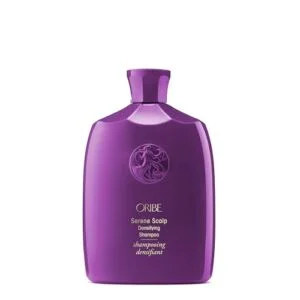
If you want a shampoo that’s clinically crafted for thinning hair, Oribe Serene Scalp Densifying Shampoo deserves your attention. Developed with a board-certified trichologist, it blends Capixyl, Redensyl, and pea sprout extract to fortify your scalp and boost density.
You’ll find the formula gentle, avoiding harsh chemicals and heavy residue—ideal for fine, fragile strands. The spa-like scent adds a soothing touch, while consistent use aims to reduce shedding and deliver fuller, healthier-looking hair over several months.
| Best For | People with fine, thinning hair who want a gentle shampoo to add volume and reduce shedding. |
|---|---|
| Bottle Size | 8.5 oz |
| Target Hair Issue | Thinning hair |
| Price Range | $52 |
| Main Benefit | Volume |
| Application Method | Shampoo |
| Suitable Hair Type | Fine/thinning hair |
| Additional Features |
|
- Gently cleanses and boosts fullness without heavy residue
- Developed with a board-certified trichologist for scalp health
- Makes hair feel soft, silky, and healthier-looking
- Expensive compared to most shampoos
- May not work for color-treated hair
- Some users saw increased hair loss or thinning after prolonged use
3. Pantene Abundant Strong Shampoo
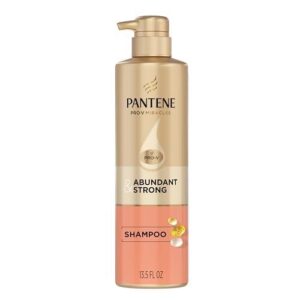
Ever wondered if a drugstore shampoo can truly make a difference in hair shedding? Pantene Abundant Strong Shampoo stands out for its Pro-Vitamin B5 complex and niacinamide, both known to strengthen strands and support scalp health.
You’ll notice less hair in your brush and a cleaner, fresher scalp within weeks.
For best results, use the conditioner and serum in the full system. It’s gentle enough for daily use, but keep in mind—results depend on consistent application and your unique hair needs.
| Best For | Anyone with dry, damaged, thinning, or fine hair looking for a gentle daily shampoo to help reduce shedding and boost scalp health. |
|---|---|
| Bottle Size | 13.5 oz |
| Target Hair Issue | Hair loss |
| Price Range | $14.97 |
| Main Benefit | Retention |
| Application Method | Shampoo |
| Suitable Hair Type | All hair types |
| Additional Features |
|
- Strengthens hair with Pro-Vitamin B5 and niacinamide, making strands feel fuller.
- Gentle, high-lather formula with a fresh, pleasant scent that isn’t overpowering.
- Works well for seasonal shedding, mild hair loss, and post-hormonal changes.
- Results can vary, and some users need the full 3-step system to see real benefits.
- May cause scalp irritation or dryness, especially for sensitive or very damaged hair.
- Clinical claims rely on brand studies, not independent research.
4. Kerastase Genesis Strengthening Shampoo
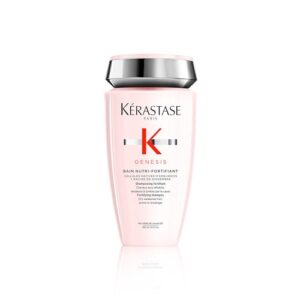
If you’re after a high-end option for breakage-prone hair, Kérastase Genesis Strengthening Shampoo stands out. It’s formulated with Edelweiss native cells and ginger root extract, helping reinforce strands from root to tip.
You’ll notice hair feels more resilient and easier to detangle after washing.
The creamy, silicone-free formula cleanses gently, making it suitable for daily use on normal to oily hair.
While pricey, it’s designed to reduce shedding from brushing, support scalp health, and leave your hair softer and more manageable.
| Best For | Anyone with breakage-prone, normal to oily hair looking for a premium shampoo that strengthens and reduces hair fall. |
|---|---|
| Bottle Size | 8.47 oz |
| Target Hair Issue | Hair breakage |
| Price Range | $46.00 |
| Main Benefit | Strengthening |
| Application Method | Shampoo |
| Suitable Hair Type | Normal/oily hair |
| Additional Features |
|
- Strengthens hair and reduces breakage from brushing
- Leaves hair soft, shiny, and easy to manage
- Gentle, silicone-free formula suitable for daily use
- Expensive compared to most shampoos
- May not condition as well as expected
- Effectiveness on hair loss varies for some users
5. Minoxidil Five Percent Beard Growth Kit
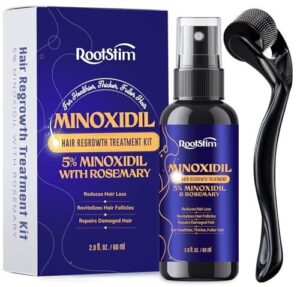
If you’re searching for targeted facial hair improvement, the Minoxidil Five Percent Beard Growth Kit offers a direct approach. This kit combines a 5% minoxidil spray with a handheld micro-roller, designed to boost absorption and stimulate patchy beard areas.
You’ll need to stick with twice-daily applications for several weeks—most users see thicker coverage within 8 to 12 weeks.
The formula avoids harsh additives, travels well, and suits those ready for a methodical, results-oriented routine. Consistency is your best ally here.
| Best For | People with patchy beards or thinning hairlines who want a straightforward, hands-on solution and are willing to stick with a routine. |
|---|---|
| Bottle Size | 2 fl oz |
| Target Hair Issue | Hair thinning |
| Price Range | $20.69 |
| Main Benefit | Regrowth |
| Application Method | Spray/Roller |
| Suitable Hair Type | Thinning/patchy hair |
| Additional Features |
|
- Easy, mess-free spray plus micro-roller for better absorption.
- Noticeable improvement in hair thickness within 8–12 weeks for many users.
- Compact kit with clear instructions and a satisfaction guarantee.
- Requires consistent twice-daily use for best results.
- Some users experience scalp irritation or no visible change.
- Not a quick fix—results take time and may vary.
Frequently Asked Questions (FAQs)
Does hair loss shampoo help hair growth?
Hair loss shampoos mainly help reduce shedding and improve scalp health, rather than trigger dramatic regrowth.
For example, formulas with caffeine or ketoconazole can support follicle activity and comfort, making hair look fuller and healthier over time.
Should you use a hair growth shampoo?
You should use a hair growth shampoo if you’re dealing with shedding, scalp irritation, or you want to boost thickness.
Ingredients like ketoconazole, caffeine, and niacinamide can help, but consistent use and realistic expectations are essential.
Is hair growth shampoo a magic bullet?
No, hair growth shampoo isn’t a magic bullet. It mostly reduces shedding and improves scalp health, but can’t create new follicles or deliver instant regrowth.
Consistent use helps better hair conditions, not dramatic overnight changes.
Can hair growth shampoos cause allergic reactions?
Yes, you can react to ingredients in growth shampoos—fragrances, preservatives like methylisothiazolinone, and sulfates are common triggers.
Symptoms range from scalp redness and itching to swelling.
Sensitive skin or eczema increases your risk for allergic reactions.
Are hair growth shampoos safe during pregnancy?
Pregnancy prompts product precautions—most growth shampoos are safe if you stick to gentle, fragrance‑free formulas and avoid minoxidil, finasteride, phthalates, and harsh sulfates.
Always check the label, rinse thoroughly, and consult your doctor for persistent shedding.
Will using heat styling tools affect results?
Frequent high-heat styling—like flat irons or hot blow-drying—can cause breakage and split ends, masking progress from growth shampoos.
Even if follicles are healthy, visible gains may look slower due to heat-induced damage and dryness.
Can children use hair growth shampoos?
Gentle guidance goes a long way—children should stick to mild, kid-formulated shampoos.
Adult “growth” shampoos aren’t designed for young scalps, so focus on reducing irritation, flakes, or breakage, not chasing new follicles or rapid regrowth.
Conclusion
While instant hair growth miracles are a myth, the journey to a healthier scalp and fuller locks is a realistic goal. Unlike quick fixes, hair growth shampoo works gradually, often revealing its true potential after months of consistent use. As you navigate the process, patience and persistence are key.
Knowing how long to see results from hair growth shampoo helps set realistic expectations. With time, the right shampoo can make a noticeable difference, transforming your hair care routine.
- https://onlinelibrary.wiley.com/doi/10.1111/j.1365-4632.2007.03119.x
- https://www.keyaseth.com/en-us/blogs/explainer-1/from-bean-to-follicle-a-scientific-approach-to-caffeines-hair-growth-boosting-power
- https://pmc.ncbi.nlm.nih.gov/articles/PMC11090064/
- https://www.greencosmetica.com/the-hidden-effects-of-sulfates-on-your-hair/
- https://answr.uk/blogs/haircare/so-what-s-the-deal-with-sulfates