This site is supported by our readers. We may earn a commission, at no cost to you, if you purchase through links.

Most guys overthink beard maintenance, then panic-trim at the worst possible moment. You’ll see it in every barbershop—someone who ignored their beard for weeks suddenly hacks away before a big event, destroying months of growth in five minutes.
The truth is, trimming frequency isn’t one-size-fits-all. Your beard’s length, growth rate, and lifestyle all dictate when you should pick up the clippers. Stubble demands attention every few days, while a long beard can go over a month between sessions.
Learning your beard’s rhythm keeps you looking sharp without sabotaging your growth goals or walking around with a patchy mess.
Table Of Contents
- Key Takeaways
- How Often Should You Trim Your Beard?
- What Happens if You Trim Too Early?
- How to Determine Your Ideal Trimming Routine
- Tools You Need for Effective Beard Trimming
- Step-by-Step Beard Trimming Techniques
- Common Beard Trimming Mistakes to Avoid
- Maintaining Beard Health Between Trims
- Should You Trim While Growing Your Beard?
- When to Seek Professional Beard Trimming
- Frequently Asked Questions (FAQs)
- Conclusion
Key Takeaways
- Your trimming schedule isn’t one-size-fits-all—stubble needs a touch-up every 2–4 days, while a long beard can go a full month between sessions.
- Jumping in too early wrecks your foundation—wait at least four weeks before your first real trim so your natural growth patterns have time to show up.
- The right tools matter more than most guys think—sharp blades, correct guard sizes, and a decent mirror setup are the difference between a clean shape and a patchy mess.
- Between trims, beard oil, regular brushing, and washing 2–3 times a week keep your hair healthy, soft, and ready to hold a sharp line when trim day comes.
How Often Should You Trim Your Beard?
Here’s the thing—there’s no one-size-fits-all answer to how often you should trim your beard. Your trimming schedule depends on where you’re in your beard journey, what look you’re going for, and how fast your hair grows.
If you’re still figuring out what works best for your face shape and lifestyle, check out this guide on how to choose the right beard style to nail down your look first.
Let’s break down the key factors that’ll help you figure out your perfect routine.
Recommended Trimming Frequency by Beard Length
Your beard length dictates your trimming schedule, plain and simple. Here’s the breakdown:
- Stubble (1-3mm): Touch up every 2-4 days to keep it intentional, not scraggly
- Short beards (0.5-1 inch): Trim every 1-2 weeks for sharp lines and control
- Medium beards (1-2 inches): Every 2-3 weeks maintains fullness without bulk
- Long beards (3+ inches): Monthly trims prevent split ends and keep shape
- Growing out: Stick to 4-week intervals for healthy, even growth patterns
In addition to routine trimming, daily grooming with proper beard care practices is key to maintaining a healthy and well-shaped beard.
Factors Affecting Trimming Schedule
Growth rate, hair texture, and style demands all shift your trimming schedule. Men with faster growth or coarse, curly beards usually need regular trims every 7 to 10 days to stay sharp. Fine, slower-growing hair stretches to 3 to 4 weeks easily.
Lifestyle needs matter, too—corporate jobs push you toward weekly beard maintenance, while a rugged look lets your beard care routine breathe. Maintaining a beard’s shape is one of the most important to keep in mind for long-term grooming.
Signs It’s Time for a Trim
But schedules mean nothing if you miss the signals your beard sends. Watch for these clear signs it’s time to grab your trimmer:
- Split ends fray or fork at the tips, weakening hairs and ruining beard length.
- Shape maintenance fails—your neckline and cheek line blur into stray stubble.
- Itch relief becomes urgent when overgrown hairs poke skin and cause irritation.
- Uneven patches show some areas growing longer than others, throwing off balance.
Regular trims solve all of it.
What Happens if You Trim Too Early?

Look, I get it—you’re keen to shape that beard and make it yours. But trimming before you’ve got at least a month of solid growth? That’s where guys run into real problems.
Let’s break down exactly what goes wrong when you jump the gun on your first trim.
Effects on Beard Growth and Shape
Trimming your beard too early won’t slow down beard growth—that’s controlled by follicles deep under your skin, not the hair you’re cutting. But here’s the catch: jump in before you’ve got about a month of growth, and you’ll disrupt natural growth patterns, making it harder to define beard shape.
Trimming before a month of growth won’t slow your beard, but it will disrupt natural patterns and make shaping harder
Early trimming techniques can strip away slower-growing areas, leaving you with patchy coverage and uneven hair texture instead of the density you’re chasing.
Avoiding Uneven Results
Even with perfect Symmetry Techniques, trimming your beard before the one-month mark creates lopsided results that no Beard Trimmer can fix. Early Trimming Patterns ignore Beard Mapping basics, so you’ll cut through natural growth zones and end up chasing Uneven Correction instead of building solid Growth Management.
Learning how to maintain a well-shaped beard starts with respecting your natural growth timeline, not rushing into cuts that compromise your foundation.
Master Beard Edging and Beard Trimming Techniques only after your foundation grows in completely.
How to Determine Your Ideal Trimming Routine

Here’s the thing—there’s no one-size-fits-all trimming schedule that works for everyone. Your beard’s unique growth pattern, the style you’re after, and your daily routine all play a role in how often you should pick up those clippers.
Let’s break down the key factors that’ll help you nail down your perfect trimming routine.
Assessing Growth Patterns
Your beard doesn’t grow like a lawn, so stop treating it like one. Average growth rates sit around half an inch monthly, but regional differences mean your chin might sprint while your cheeks crawl.
Tracking progress with photos every two weeks reveals genetic factors at work—some guys hit growth milestones fast, others need patience. Know your pattern before you start trimming your beard.
Personal Style Preferences
Your facial hair styling choices tell the world who you are, so pick a beard length and finish that matches your personal image. Corporate guys often opt for shorter beards (around 1 to 3 inches) to maintain a clean, professional look, while creative types embrace fuller, longer styles.
Sharp cheek lines convey polish, whereas natural edges suggest a low-maintenance vibe. Your grooming should align with your wardrobe and overall aesthetic, not random styles you see online.
Adjusting for Lifestyle and Maintenance
Your daily routine dictates how often you’ll reach for the trimmer. Active lifestyles, work environments, and time constraints all shape your beard maintenance routine and trimming frequency.
- Gym regulars need trims every two to three weeks to combat sweat damage and friction from workouts
- Corporate professionals maintain sharp lines weekly for polished, camera-ready grooming
- Busy schedules benefit from minimal beard care and maintenance—quick touch-ups every few days keep things simple
Tools You Need for Effective Beard Trimming

You can’t trim a beard with dull scissors and expect it to look sharp, that’s just the reality. The right tools make the difference between a clean, professional shape and a patchy mess that screams amateur hour.
Let’s break down what actually belongs in your trimming kit, so you can work with precision instead of guesswork.
Choosing The Right Beard Trimmer
Your beard trimmer is only as good as its blade quality, so don’t cheap out on stainless steel or titanium-coated options that stay sharp longer. Look for 20 to 40 length settings for real control, a battery life of at least 60 minutes, and a waterproof design you can rinse clean. An ergonomic grip prevents slipups when you’re defining those tight lines.
Scissors Vs. Trimmers
So which tool actually wins for trimming your beard? It depends on your style and skill level. Trimmers give you speed and edge precision for clean lines, while scissors offer surgical control for beard shaping and detail work—especially on longer growth. Most guys benefit from owning both, because cutting techniques matter more than loyalty to one tool.
Here’s when each one shines:
- Trimmers dominate for sharp cheek and neck lines – They carve straight edges faster than scissors ever could, making weekly maintenance a breeze.
- Scissors handle long beards without snagging – Once your growth passes 15 mm, beard trimmers can pull and tug, but scissors glide through smoothly.
- Trimmers cut bulk quickly, scissors fine-tune flyaways – Use your trimmer for the heavy lifting, then switch to scissors for mustache detail and rogue hairs.
- Scissors need zero power, trimmers need charged batteries – That makes scissors your backup when you’re traveling or forgot to plug in your trimmer.
- Trimmer maintenance includes oiling and cleaning, scissors just need occasional sharpening – Both require care, but scissor safety and longevity win long-term if you treat them right.
Importance of Guard Sizes
Now that you’ve picked your weapon, let’s talk guard size selection—because blade distance controls everything. Wrong guards turn precision trimming into patchy disasters, so here’s what matters:
| Guard Length | Beard Style | Face Shape Match |
|---|---|---|
| 3-6mm | Sharp stubble, defined edges | Round faces needing jawline |
| 9-13mm | Medium natural polish | Oval, adaptable proportions |
| 15mm+ | Structured long beards | Narrow faces wanting fullness |
Adjustable guards give you beard length control without swapping attachments constantly, while brand compatibility prevents loose fits that ruin your trim.
Step-by-Step Beard Trimming Techniques
Alright, so you’ve got the tools—now let’s talk technique. Trimming your beard the right way isn’t about hacking away randomly, it’s about understanding which lines to shape, when you’re trimming for length versus structure, and how to use your mirrors like a pro.
Here’s the breakdown that’ll keep your beard looking sharp every single time.
Defining Cheek, Neck, and Back Lines
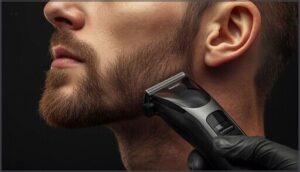
Mastering your lines separates a sharp beard from a sloppy one. Your Cheek Line runs from sideburn to mustache, ideally sitting high along natural growth—removing strays above keeps it clean. The Neck Line sits one to two fingers above your Adam’s apple in a soft U-shape, not on the jaw. Your Back Line continues the sideburn straight down, meeting that curved Neckline Placement smoothly.
Symmetry Tips: Check both sides constantly while Trimming Your Beard with your Beard Trimmer to avoid lopsided results.
Trimming for Shape Vs. Length

Once your lines are set, you’ll need to decide if you’re trimming for length or shape. Length Control means evening out hair tips with consistent guard sizes, while Shape Maintenance uses Beard Contouring to reduce bulk and flatter your Facial Structure. Most guys need both, but at different intervals.
- Short beards need length trims every 2–5 days; shape work happens weekly
- Medium styles get length tidying every 1–2 weeks, deeper Trimming Techniques monthly
- Long beards rarely trim length at the chin; shape sessions control side volume
- Faster growers shorten length cycles but keep shape intervals steady for balance
Using Mirrors for Precision

Mirror Placement matters more than you think. Hang your main mirror so its center sits 58–65 inches from the floor, then add a handheld behind your head to catch neck stragglers.
Lighting Tips: Neutral white LEDs around 4000K kill shadows and show true Beard Symmetry. Use your nose and mouth corners as Reflection Techniques anchors—keeps both cheek lines level while Trimming Your Beard.
Common Beard Trimming Mistakes to Avoid

Look, I’ve seen guys sabotage months of beard growth with one careless move. The mistakes are always the same—trim too much, use cheap tools, or rush the process.
Let me walk you through the three biggest screw-ups so you can skip the learning curve and keep your beard looking sharp.
Over-trimming or Under-trimming
Over-trimming shrinks your beard’s bulk and throws off your facial structure, while under-trimming lets split ends and tangles take over. Both trimming errors mess with your beard grooming and styling game.
If you’re hacking away weekly on a long beard, you’re inviting beard damage. If you’re skipping trims for months, your hair texture looks scraggly. Nail your trimming frequency—somewhere between beard maintenance tips that actually work.
Using The Wrong Tools
Dull blades grab and yank instead of slicing clean, so your face gets sore and your beard looks patchy. Wrong guards strip months of growth in one swipe or leave barely any change. Poor hygiene on dirty clippers spreads funk and irritation. Here’s what drags your beard trimming down:
- Unsuitable clippers built for scalp hair block precision around your chin and upper lip.
- Damaged trimmers with worn blades tug coarse facial hair and leave jagged, rough tips.
- Hair clippers instead of dedicated grooming tools and equipment create blocky, uneven lines.
- Wrong guards clog mid-trim or shift length settings, turning one cheek shorter than the other.
Trimming Too Frequently
Hitting your beard every few days cancels out natural growth, trapping you at stubble when you’re chasing length. Frequent trimming creates lopsided shape, pushes lines too high, and turns texture coarse.
Skin irritation spikes from constant blade contact, inviting razor bumps and breakouts. Over maintenance breeds obsession over tiny flaws, so beard damage stacks while real progress stalls.
Trimming errors compound fast when beard grooming becomes a daily habit instead of strategic beard maintenance and care.
Maintaining Beard Health Between Trims

Trimming’s just one piece of the puzzle, so don’t think you’re done once you put down the clippers. Between sessions, your beard needs real care to stay healthy, soft, and ready for its next shape-up.
Here’s what you need to focus on to keep your beard looking sharp between trims.
Washing and Conditioning Your Beard
Your beard won’t stay sharp without proper washing. Hit it with a dedicated beard wash 2 to 3 times per week to balance cleanliness and natural oils. Daily rinsing with plain water manages sweat and dust.
Follow up with a rinse conditioner for a few minutes, focusing on the ends where dryness hits hardest. Leave-in products lock in moisture between washes, keeping your beard grooming routine simple and effective.
Brushing and Detangling
Think of your beard as a living hedge—it needs daily maintenance to stay sharp. Most beards benefit from brushing once or twice daily to keep hairs aligned, distribute beard oils, and reduce tangles.
Here’s your routine:
- Use a wide-tooth comb first to work through knots
- Start at the ends, then work upward toward your face
- Follow with a boar bristle beard brush for smoothing
- Apply beard oil before brushing for easier glide
Detangling on slightly damp hair creates less friction and breakage.
Preventing Split Ends
Split ends are the enemy of beard health—they creep up the hair shaft and wreck your grooming efforts.
Keep your beard hydrated with daily oils like jojoba or argan, and throw in hot oil treatments monthly. Gentle washing every two to three days prevents dryness.
Use scissors for precise beard trimming every one to two weeks, and protect against heat damage by keeping blow dryers at a safe distance.
Should You Trim While Growing Your Beard?

Here’s the deal: trimming while you’re growing your beard out feels counterintuitive, but it’s actually one of the smartest moves you can make. The key is knowing what to trim, when to trim it, and how often you should be touching things up without sabotaging your progress.
Let’s break down how shaping during growth differs from your regular maintenance routine.
Shaping During The Growth Phase
Ironically, shaping during the growth phase is when you do your most important work, not your heaviest trimming. Light, strategic cleanup keeps your beard looking intentional while the bulk fills in.
- Neckline Definition – Clean up the neck line every one to two weeks, starting around week two, using a close guard to set a gentle curve between the top and bottom of your Adam’s apple without slowing overall growth.
- Cheek Line Tips – Wait three to four weeks before touching your cheek line so you can see your natural pattern, then lightly edge stray hairs above it with a detail trimmer to keep things tidy without shrinking height.
- Guiding Shape – Remove only the longest flyaways and frayed tips every few weeks to “coach” the outline into its future shape, keeping a bit more length at the chin and tapering slightly toward the sides for a stronger jawline.
- Bulk Control – Tame fast-growing neck hair and overly dense spots with a higher guard to prevent bottom-heavy or sideways puffing, snipping split ends with scissors to reduce frizz while the beard continues to grow.
Frequency for Growing Vs. Maintaining
Once your shape is set, your trim calendar flips completely. Growing means roughly monthly touch-ups—about every four weeks—to snip split ends without losing visible progress. Maintaining calls for sharper attention: every two to three weeks for medium beards, or even weekly for tight styles. Your goal drives the schedule, so track how your beard looks at one, two, and four weeks to dial in your ideal rhythm.
| Phase | Recommended Frequency |
|---|---|
| Active Growth | Every 4–6 weeks |
| Short Maintenance | Every 1–2 weeks |
| Medium Maintenance | Every 2–3 weeks |
| Long Maintenance | Every 4–8 weeks |
| Pre-Event Touch-Up | As needed, closer intervals |
When to Seek Professional Beard Trimming

Look, there’s no shame in admitting when you’re out of your depth. Sometimes your beard needs a trained eye and a steady hand, especially when you’re figuring out what works for your face shape or lifestyle.
Here’s when it’s smart to book that barber chair.
Benefits of a Barber’s Expertise
Getting a professional barber trim isn’t just about convenience—it’s about precision you can’t easily replicate at home. A skilled beard barber uses pro-grade trimming techniques and tools to create balanced, even lines that fit your face shape.
Barber services include skin care under your beard, quality products for beard care, and expert grooming tips that save you hours of trial-and-error barbering mistakes.
Getting Guidance on Shape and Style
Beyond the cut itself, your barber guidance session should include face shape analysis and a full beard style consult. Barbers know which shapes flatter round, square, or oval faces. Many now offer virtual try-ons or reference photos to nail down your vision. That tailored grooming roadmap covers:
- Ideal cheek and neck line placement for your structure
- Length ratios that balance your jawline
- Maintenance intervals between professional trims
- At-home beard trimming and beard styling techniques
This barbering and hair care expertise turns random growth into intentional beard growth and shaping, plus you walk out with grooming tips that actually work for your routine.
Frequently Asked Questions (FAQs)
What is the 4 week beard rule?
The four-week beard rule means you let your beard grow completely untouched for a full month before making any trimming decisions — giving your beard growth patterns enough time to reveal themselves honestly.
Can beard oil improve your trimming results?
Yes — beard oil genuinely improves your trimming results. Soft, conditioned hair glides under trimmer blades more smoothly, your lines stay sharper, and split ends stop blurring your edges before your next session.
Does diet affect how fast your beard grows?
Absolutely — diet plays a real role. Protein intake fuels keratin production, vitamin benefits support follicle health, and mineral effects keep hormones balanced.
Poor calorie balance and low nutrient density slow everything down noticeably.
How do you trim a beard with a cowlick?
Trim with the swirl, not against it. Use a longer guard over the cowlick, blend outward, and finish with a dab of balm to keep that facial hair lying flat.
What beard styles suit different face shapes?
Your face shape is the real cheat code in any beard style guide. Oval faces can pull off almost anything. Round faces need length at the chin. Square faces? Soften those edges.
Can stress cause patchy or uneven beard growth?
Stress does mess with your beard. High cortisol tanks testosterone, slows follicle health, and triggers hair shedding. Those beard patches aren’t random — they’re your body signaling hormone balance is off.
Conclusion
Your beard is a living blueprint—it tells you exactly what it needs if you’re paying attention. Knowing how often you should trim your beard comes down to reading your growth, respecting your length, and building a routine that actually fits your life.
Stop guessing and start observing. Track the stray hairs, the creeping neckline, the split ends. Once you understand your beard’s rhythm, you’re not just maintaining it—you’re mastering it.
- https://fivestarbarberbrand.com/2025/09/05/how-often-should-you-go-to-the-barber/
- https://www.healthline.com/health/beauty-skin-care/beard-maintenance
- https://livebearded.com/blogs/do-better/beard-trimming-for-beginners
- https://www.bootleggedbarberco.com/blog/beard-trim-short
- https://www.houseofhandsome.ca/how-trimming-affects-your-beard/