
This site is supported by our readers. We may earn a commission, at no cost to you, if you purchase through links.

Most people using hair growth shampoo assume more washes mean faster results—but that logic can quietly work against you. The scalp operates like a regulated ecosystem, and disrupting it too often strips the very environment your follicles need to function well. Frequency matters more than most labels bother to explain.
Hair growth shampoos carry active ingredients like caffeine and ketoconazole that require direct scalp contact and adequate dwell time to do anything useful. Without the right washing schedule, those ingredients either never absorb properly or overwhelm a barrier that’s already compromised from overuse.
Knowing how often you should use hair growth shampoo comes down to your scalp biology, hair type, and what you’re actually trying to correct—and the answer is rarely the same for everyone.
Table Of Contents
- Key Takeaways
- How Hair Growth Shampoo Works
- Use It 2–3 Times Weekly
- Adjust Frequency by Hair Type
- Change Your Schedule for Scalp Issues
- Signs You’re Washing Too Often
- Signs You’re Not Washing Enough
- Best Way to Apply Each Wash
- Track Results and Adjust Safely
- Frequently Asked Questions (FAQs)
- How often should you shampoo?
- How often should you wash your hair for growth?
- How often should dandruff shampoo be used?
- How often should you wash your scalp?
- What shampoo is good for lupus hair loss?
- Should you shampoo every day with seborrheic dermatitis?
- Can malassezia cause hair loss?
- Can hair growth shampoo replace minoxidil or finasteride?
- Should you use dry shampoo between hair growth washes?
- Can you use clarifying shampoo with a growth shampoo?
- Conclusion
Key Takeaways
- Washing your hair 2–3 times per week hits the sweet spot — enough to let active ingredients like caffeine and ketoconazole do their job without stripping the oils your scalp actually needs.
- Your hair type runs the show: oily or fine hair may need washing every other day, while curly or coily hair can go a week between washes without missing a beat.
- Leaving your shampoo on for 2–3 minutes isn’t optional — it’s the difference between ingredients that absorb and ones that just rinse away.
- When your scalp fights back with redness, tightness, or extra shedding, dial back the frequency first before ditching the product — most issues are about overuse, not a bad formula.
How Hair Growth Shampoo Works

Hair growth shampoo isn’t magic in a bottle — it’s more like a support system for your scalp. Before you figure out how often to use it, you need to understand what it’s actually doing up there.
Think of it like a routine — consistency matters most, especially if you’re starting young and want to understand how hair growth serums work for teenagers before building your regimen.
Here’s what’s happening beneath the surface.
Scalp Health Vs. Actual Follicle Stimulation
Here’s something worth getting straight before anything else: scalp health and follicle stimulation aren’t the same thing. Shampooing covers the first — managing sebum regulation, microbiome balance, and barrier integrity — but it doesn’t directly fire up your follicles. Think of it as keeping the soil fertile.
Dermatologist recommendations focus on inflammation modulation and active penetration, not growth commands. A clean, calm scalp just gives growth its best shot.
Why Shampoo Supports Growth More Than Creates It
Shampoo doesn’t build new hair fibers — it builds the conditions that let them thrive. When you use a hair growth shampoo at the right shampoo frequency, you’re supporting microbial balance, sebum management, pH optimization, and barrier restoration.
Dermatologist recommendations consistently frame it this way: nutrient delivery and scalp health create the environment that growth depends on.
The follicle does the rest.
Common Actives Like Caffeine and Ketoconazole
Two actives do most of the heavy lifting in hair growth shampoos: caffeine and ketoconazole.
The caffeine mechanism works by blocking adenosine receptors and inhibiting enzymes that break down cyclic AMP, basically keeping follicle cells more metabolically active.
Ketoconazole’s antifungal action targets yeast-driven scalp inflammation — a real barrier to healthy growth.
Their safety profile is solid, and ingredient interaction concerns are minimal with topical use.
Why Contact Time Matters for Results
Think of contact time as the handshake between the active ingredients and your follicles — skip it, and nothing gets done. Aim for two to three minutes every wash.
What affects that window more than most people realize:
- Water Temperature changes lather behavior — hot water thins it fast, shortening real scalp contact time
- Lather Distribution matters; part your hair so shampoo reaches skin, not just strands
- Product Dilution from excess water increases runoff before absorption can happen
- Rinse Technique should come after the full dwell — not during your scalp massage
- Contact Area is everything; uneven coverage means uneven results
Use It 2–3 Times Weekly

For most people, washing two to three times a week is the sweet spot that lets active ingredients do their job without stressing your scalp.
That gap between washes matters more than it sounds.
Here’s what you need to know to get your schedule right.
The Best Starting Frequency for Most People
For most people, 2–3 times per week is your recommended frequency for hair growth shampoo — and it’s not arbitrary. Scalp oil cycle needs breathing room. Washing too soon disrupts your initial comfort threshold before you can accurately gauge results.
| Factor | Too Frequent | Ideal (2–3x/week) |
|---|---|---|
| Scalp moisture | Stripped, tight | Balanced |
| Trial period length | Inconsistent data | Clear patterns emerge |
| Seasonal frequency adjustments | Ignored | Adapted as needed |
| Impact of overuse on scalp health | High irritation risk | Minimal disruption |
| Tailored frequency guide accuracy | Unreliable | Builds over time |
Use this as your baseline tailored frequency guide — adjust seasonally as your scalp changes.
Why Spacing Washes 2–3 Days Apart Helps
Spacing your washes 2–3 days apart isn’t just convenient — it’s strategic. Your scalp needs that window for Sebum Resupply Timing, Microbiome Balance, and Barrier Protection to reset naturally.
- Ingredient Tolerance improves when actives aren’t applied daily
- A Consistent Contact Window lets each wash work predictably
- Scalp oil management strategies stay effective without stripping moisture
That balance — cleanliness and hydration — is exactly where growth thrives.
Techniques like steaming hair for faster growth work precisely because they support both hydration and a clean, healthy scalp environment.
When Daily Use is Usually Too Much
Daily shampoo use sounds disciplined — but it often works against you. Overwashing triggers Surfactant Overexposure, stripping barrier lipids faster than your scalp can replenish them. Barrier Lipid Depletion weakens your skin’s defenses, inviting Increased Sensitivity Risk and inflammation.
Meanwhile, Product Buildup Accumulation and Scalp Microbiome Disruption quietly follow. Overusing can cause irritation that accelerates hair breakage — the opposite of your goal.
| Daily Washing Effect | What Actually Happens | Result for Growth |
|---|---|---|
| Surfactant Overexposure | Strips natural scalp oils repeatedly | Dryness, brittleness, breakage |
| Barrier Lipid Depletion | Weakens scalp skin defenses | Redness, tightness, sensitivity |
| Scalp Microbiome Disruption | Shifts healthy microbial balance | Increased flaking, inflammation |
Why Product Label Directions Still Come First
Your product label isn’t just fine print — it’s the manufacturer’s clinical blueprint. Regulatory compliance and safety standards exist because different formulations carry different active concentrations. A ketoconazole shampoo dosed for twice-weekly use isn’t interchangeable with a daily caffeine formula.
Label consistency protects you from irritation, and following those directions builds the consumer trust between effective use and actual clinical evidence. Start there, always.
Adjust Frequency by Hair Type

Not everyone’s hair plays by the same rules.
Your wash schedule should reflect your actual hair type, not just a general recommendation. Here’s how frequency shifts depending on what you’re working with.
Fine or Oily Hair May Need More Frequent Washing
Fine and oily hair types tend to have a faster sebum production rate, meaning your scalp can look greasy within 24–48 hours after washing. That buildup weighs roots down, making hair appear thinner.
For scalp oil management, washing 3–4 times weekly promotes hair growth without risking product buildup prevention issues.
Dry shampoo has limits—it masks oil but doesn’t remove it, so wet washing stays essential.
Thick or Wavy Hair Often Tolerates Longer Gaps
Thick hair and wavy hair work differently than fine hair — and that’s actually in your favor. The air pocket effect created by wavy patterns slows sebum diffusion, so oil doesn’t travel down strands as visibly or quickly. Combined with hair mass buffer, your scalp retains texture moisture retention longer.
Effective use of hair growth shampoo here means washing every 4–5 days — following hair type specific washing guidelines for how often to wash hair for growth.
Curly and Coily Hair Usually Needs Fewer Washes
Curly and coily hair maintenance follows a different rhythm entirely.
Tighter curl patterns slow sebum travel down the strand, keeping lengths drier while your scalp stays balanced longer — that’s why hair type specific washing guidelines for coily hair usually recommend once weekly or less. Curl cuticle alignment, moisture locking, and scalp barrier maintenance all benefit from spacing washes out, making effective use of hair growth shampoo easier without over‑stripping.
Dry, Damaged, or Color-treated Hair Needs Extra Caution
Damaged and color-treated strands demand a slower pace. Frequent washing strips the dye molecules and natural oils your hair desperately needs — dullness and breakage follow quickly.
Prioritize gentle surfactants and low-PH formulas, avoid hot water, and limit washes to twice weekly. Effective use of hair growth shampoo here means balancing moisture retention with color protection, so your scalp environment promotes growth without sacrificing strand integrity.
Change Your Schedule for Scalp Issues

Scalp issues change the game entirely regarding how often you should wash. Whether you’re dealing with dandruff, irritation, or a sensitive scalp, your routine needs to flex around those conditions — not fight against them.
Here’s how to adjust your schedule based on what your scalp is actually telling you.
Dandruff and Itchy Scalp Routines
Dandruff and an itchy scalp demand a smarter routine, not just more washing. Here’s what actually works:
- Wash 2–3 times weekly to balance scalp oil management without stripping moisture
- Apply gentle cleansing methods, leaving shampoo on for 2–5 minutes for real contact time
- Practice trigger management by rinsing after workouts and avoiding heavy root products
- Support scalp pH balance with a hydrating conditioner on ends only
Lifestyle adjustments matter too — stress genuinely worsens flares.
Ketoconazole Shampoos and Set Weekly Schedules
If dandruff is your issue, ketoconazole works best on a fixed weekly washing schedule — not randomly. Start with two to three washes per week, then follow a tapering protocol as flaking settles. Think of it like dosage timing: consistency beats intensity.
Weekly cycle planning and seasonal cycle adjustments keep scalp oil management stable, supporting steady hair growth without unnecessary irritation.
Its anti-inflammatory activity on scalp reduces irritation.
Sensitive Scalp and Irritation-friendly Spacing
If your scalp reacts to almost everything, your shampoo routine needs to work with skin barrier, not against it. Space washes every 2–3 days, using:
- Barrier-friendly surfactants like cocamidopropyl betaine
- Fragrance-free formulas without essential oils
- The gentle lather method — fingertips, minimal product
- Cool rinse technique to calm post-wash sensitivity
- Microfiber drying to reduce friction
Consistent scalp oil management strategies protect hair growth without triggering irritation.
What to Do When Redness, Tightness, or Flakes Worsen
When redness, tightness, or dryness and flaking suddenly worsen, pause the active ingredient in your hair growth shampoo for a few days first. Switch to a cool water rinse instead of warm rinse temperature, which dilates vessels and increases irritation.
Avoid tight hairstyles, reduce your frequency of shampooing, and focus on scalp barrier repair before reintroducing any medicated formula gradually.
Signs You’re Washing Too Often

Your scalp is usually the first to speak up when something’s off. Washing too often can quietly work against the growth you’re trying to support.
Here are the signs worth paying attention to.
Dry Scalp, Itching, and Irritation
Washing too often is one of the fastest ways to break down your scalp’s protective moisture barrier — and once that’s compromised, dry scalp, itching, and irritation follow quickly. Environmental triggers like cold weather make it worse.
Shampoo frequency directly shapes scalp health, so scaling back, choosing moisturizing ingredients, and applying barrier repair strategies can calm the cycle before it worsens.
Brittle Strands and Increased Breakage
Over-washing doesn’t just dry out your scalp — it quietly sets your strands up to snap. Moisture deficiency leaves hair less flexible, and once cuticle damage takes hold, mechanical stress from towel-drying or detangling becomes genuinely destructive.
Shampoo frequency directly affects your hair moisture balance, stripping the natural oils that help hair bend without breaking.
Prioritize hair conditioning every wash, and you’ll dramatically improve hair breakage prevention.
Frizz, Dullness, and Rough Texture
Your hair is telling you something when it looks dull, feels rough, and frizzes the moment humidity hits — and over-washing is often the culprit.
Stripping your hair’s moisture balance too frequently leaves cuticles raised and uneven, scattering light instead of reflecting it. Hard water buildup compounds this, coating strands with mineral residue that amplifies roughness.
Four signs this is happening:
- Persistent frizz that worsens in humid air due to lifted, damaged cuticles
- Dullness caused by hard water buildup and residue blocking light reflection
- Rough texture from heat styling damage combined with over-stripping of natural oils
- Increased dryness worsened by UV exposure effects and excessive shampooing
Switch to a microfiber drying method, incorporate a clarifying rinse monthly, and dial back to the ideal washing frequency for hair health — generally two to three times weekly.
How Over-washing Can Work Against Healthy Growth
Over-washing doesn’t just dry things out — it sets off a chain reaction that actively fights your growth goals. Lipid stripping weakens your scalp barrier, microbiome disruption invites inflammation, and sebum rebound keeps your scalp perpetually off-balance.
Over-washing triggers a chain reaction: stripped lipids, disrupted microbiome, and sebum rebound that silently sabotages your growth
| Over-washing Effect | Growth Impact |
|---|---|
| Inflammatory cascade | Stresses follicles |
| Mechanical stress | Increases breakage |
| Sebum rebound | Clogs follicle openings |
| Microbiome disruption | Triggers shedding cycles |
Signs You’re Not Washing Enough
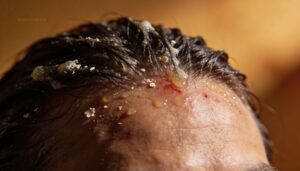
Under-washing has its own set of warning signs, and they’re just as worth paying attention to as washing too often. When scalp isn’t getting cleansed regularly enough, the effects show up in ways that can quietly work against your hair’s health.
Here’s what to look out for.
Oil Buildup Blocking a Clean Scalp Environment
Skipping washes lets sebum accumulation quietly work against you. As scalp oil builds, Follicle Obstruction becomes a real concern — that oily film traps dead skin cells, creates conditions ripe for Microbial Proliferation, and causes Scalp Barrier Disruption that blocks treatments from penetrating effectively.
Residue Irritation follows soon after.
Consistent oil buildup and sebum production left unmanaged undermine everything your growth shampoo is trying to do.
Heavy Styling Products and Residue on Roots
Styling products compound the buildup problem fast.
Gels, pomades, and waxes leave behind Polymer Buildup that water alone won’t clear — and as Sebum Residue Mix settles into the roots, Occlusion Effects trap heat and moisture underneath.
Without regular washing frequency for hair health, you’re stacking layers:
- Residue clings to roots, accelerating Flake Formation
- Irritation Pathways open as ingredients stay on longer
- Product accumulation blocks Scalp oil management strategies from working
Greasy Hair, Odor, and Scalp Discomfort
Buildup doesn’t stop at residue — Sebum Accumulation, Sweat Interaction, and Humidity Impact create a cycle that turns greasy roots into genuine scalp discomfort.
| What You Notice | What’s Actually Happening |
|---|---|
| Clumping roots | Sebum coating hair shafts |
| Stale odor | Odor Development from microbial activity |
| Persistent itch | Scalp Friction and irritation |
| Oily, flat texture | Poor oil control at follicle level |
Your scalp oil management strategies can’t work when you’re consistently under your ideal washing frequency for hair health.
Why an Unclean Scalp Can Affect Healthy-looking Growth
An unclean scalp isn’t just uncomfortable — it quietly undermines growth. Sebum Accumulation creates the conditions for Yeast Overgrowth, triggering a Scalp pH Shift that signals Barrier Compromise and Follicle Blockage.
When follicles stay clogged, UnderWashing Effects on Hair Follicle Health become visible: dull roots, poor density, sluggish regrowth.
Ideal washing frequency for hair health through regular Scalp detoxification and smart Scalp oil regulation directly shapes the Impact of shampoo Frequency on Scalp Health.
Best Way to Apply Each Wash
How often you wash matters, but how you wash might matter just as much. A few small adjustments to your technique can make each session work harder for your scalp and follicles.
Here’s what to do from the moment the water runs.
Focus Shampoo on The Scalp, Not The Ends
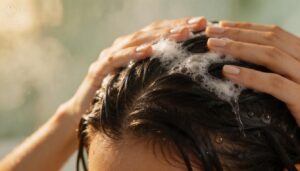
Your scalp is where the real work happens — not your ends. A root-focused application strategy means working the shampoo directly into the scalp with your fingertips, targeting follicle contact where oil regulation and hair growth actually occur.
Rinsing naturally carries the lather down the shaft, giving you an end protection strategy without overwashing fragile lengths that are already prone to dryness and breakage.
Leave It on for 2–3 Minutes

Once the lather’s on, don’t rush the rinse. That two- to three-minute contact time isn’t arbitrary — it’s what gives active ingredients like caffeine and ketoconazole enough scalp warmth and foam distribution to actually reach your follicles. Think of it as a mini leave-on treatment for hair regrowth.
- Set a timer — consistency beats guesswork
- Let foam distribution work across your full scalp
- Avoid rinse temperature extremes; lukewarm is ideal
- Rinse thoroughly to eliminate product residue buildup
Massage With Fingertips Instead of Nails
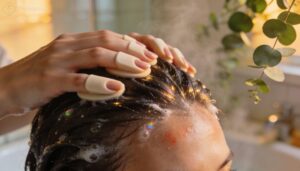
Your fingertips are the right tool here — not your nails. A nail-free technique with gentle circular distribution keeps pressure control consistent and prevents micro-tears that inflame follicle openings.
Move methodically from your hairline to crown, applying moderate pressure in slow circles. This scalp massage technique to increase hair thickness works by encouraging hair follicle stimulation through steady, even massage duration — not aggressive scrubbing.
Alternate With a Gentle Regular Shampoo if Needed

Not every wash needs to pull double duty.
If your hair growth shampoo causes tightness or dryness, alternating it with a sulfate-free gentle shampoo gives your scalp microbiome recovery time between active-ingredient sessions. Use your growth formula 2–3 times weekly, then swap in the mild cleanser for remaining washes.
This alternation routine balances cleanliness and moisture for hair growth without sacrificing consistency.
Use Conditioner on Mid-lengths and Ends Only

Your scalp already produces sebum — it doesn’t need conditioner competing with it.
Apply conditioner from mid-lengths down, concentrating on the ends where mechanical stress from brushing causes the most dryness and breakage. This targeted moisture approach delivers end hydration and mid-length slip without scalp buildup.
Rinse thoroughly for a light, clean feel that promotes balanced moisture and oil for hair growth.
Track Results and Adjust Safely

Hair growth shampoos work slowly, and knowing what to watch for keeps you from second-guessing a routine that’s actually working. clear signals will tell you whether your current frequency is helping your scalp or holding it back.
Here’s what to track — and when it’s time to make a change.
What Results to Expect After Weeks Vs. Months
Don’t expect a dramatic overnight transformation — hair growth is a slow process that unfolds in stages. Early scalp changes, like reduced flaking and less itching, can appear within 2–6 weeks.
Shedding decline timeline usually follows at 4–8 weeks. Density growth phases and volume perception shift usually don’t show until months 3–6, aligning with your natural hair growth cycle.
How to Tell if Frequency is Helping or Hurting
Once you’ve set a routine, your scalp becomes its own feedback system. Think of it as a Symptom Timeline you check between washes — not just after them. Your Oil Balance Indicator, Active Ingredient Tolerance, and Scalp Comfort Index all shift week by week.
Watch for these Hair Shedding Patterns and signals:
- Scalp feels comfortable 24–48 hours post-wash — frequency is working
- Redness or stinging appears within hours — you’re over-washing
- Hair shedding decreases steadily — actives are absorbing well
- Scalp irritation worsens after each session — reduce, don’t push through
- product buildup on hair regrowth shows as persistent greasiness — spacing needs adjusting
Ideal washing frequency for hair health isn’t fixed — it’s the schedule your scalp actually tolerates.
When to Reduce Use Instead of Switching Products
Before you toss out a product, consider this: reduced frequency often outperforms a brand switch.
If scalp irritation, tightness, or flaking appears, your Barrier Recovery needs space — not a new formula. Lowering wash days allows Scalp Rest Periods to restore moisture balance.
Overuse Risk is real, and Tolerance Evaluation starts with the shampoo you already have.
When to See a Dermatologist for Shedding or Inflammation
Reducing frequency helps with scalp dryness and minor irritation — but some signs go beyond what a routine tweak can fix. If you’re noticing patchy hair loss, persistent scalp burning, sudden scalp swelling, or unexplained shedding that keeps climbing week after week, see a dermatologist.
The same goes for scalp infection signs like spreading redness or warmth. A professional can distinguish telogen effluvium from something more serious.
- Patchy, smooth bald spots appearing suddenly
- Redness or swelling spreading within hours
- Persistent burning that doesn’t ease between washes
- Heavy shedding starting weeks after illness or stress
- Scalp inflammation that won’t respond to any product adjustment
Frequently Asked Questions (FAQs)
How often should you shampoo?
Most people wash their hair far more than they actually need to.
For hair growth, washing 2–3 times weekly hits the sweet spot—enough to keep your scalp clean without stripping the oils your follicles depend on.
How often should you wash your hair for growth?
Most people get the best results washing 2–3 times per week. This rhythm promotes microbiome balance, allows natural oils to protect follicles, and keeps active ingredients working without over-stripping your scalp.
How often should dandruff shampoo be used?
Most dermatologists recommend using dandruff shampoo 2 to 3 times per week. Once symptoms are controlled, you can scale back to maintain results without overdoing it.
How often should you wash your scalp?
Wash your scalp 2–3 times per week. Your scalp microbiome, exercise sweat, and humidity impact how often you actually need it — so adjust based on what your scalp tells you.
What shampoo is good for lupus hair loss?
For lupus hair loss, choose fragrance-free, gentle shampoos with scalp soothing ingredients like aloe vera, biotin strengthening agents, and keratin enrichment.
Dermatologist-recommended shampoos with ketoconazole help manage scalp inflammation and flaking effectively.
Should you shampoo every day with seborrheic dermatitis?
No — daily shampooing with seborrheic dermatitis usually backfires. It strips your scalp barrier and worsens irritation.
Aim for 2–3 times weekly with a medicated shampoo, then adjust based on flare management and dermatologist advice.
Can malassezia cause hair loss?
Yes — Malassezia can cause hair loss. This yeast triggers inflammatory shedding, drives follicle miniaturization through enzyme activity, and disrupts growth cycles.
Antifungal therapy helps restore scalp balance and promotes hair loss prevention over time.
Can hair growth shampoo replace minoxidil or finasteride?
No, hair growth shampoo can’t replace minoxidil or finasteride.
Their mechanism differences are fundamental — minoxidil boosts blood flow; DHT blockers halt follicle miniaturization.
Shampoos cleanse; they don’t replicate the clinical evidence or regulatory approval.
Should you use dry shampoo between hair growth washes?
Think of dry shampoo as a bridge, not a destination.
Use it 1–3 times weekly on non-wash days, but always wet-wash before applying your hair growth shampoo to make sure actives reach the scalp cleanly.
Can you use clarifying shampoo with a growth shampoo?
Yes, you can — just alternate wash days rather than mixing them in one session. Clarifying shampoo provides residue removal benefits, while your growth shampoo follows on a clean scalp.
Conclusion
Like a master gardener tending to a delicate ecosystem, you now hold the reins to improve your hair growth shampoo routine. By understanding how your scalp reacts to washing frequency, active ingredients, and hair type, you can coax the best results from your product.
Regarding how often you should use hair growth shampoo, a balanced approach yields the most benefits.
Tailor your schedule, listen to your scalp’s cues, and patience will be rewarded with healthier, fuller hair.