
This site is supported by our readers. We may earn a commission, at no cost to you, if you purchase through links.

A fresh fade turns heads on Monday. By Friday, it’s already telling a different story. Most guys don’t realize how fast a clean cut loses its edge—sometimes within days, depending on how fast your hair grows. That’s the gap between looking sharp and looking like you’re in between cuts.
Knowing how often to trim a fade haircut keeps you on the right side of that line. Your hair type, your lifestyle, even the season all play a role in how long your fade actually lasts.
Here’s what every barber wishes their clients knew before they let it go too long.
Table Of Contents
- Key Takeaways
- How Often Should You Trim a Fade Haircut?
- What Factors Affect Fade Haircut Frequency?
- How Hair Length Influences Fade Maintenance
- Does Fade Style Change Trim Frequency?
- Signs Your Fade Needs a Trim
- Tips to Extend Your Fade’s Freshness
- Professional Vs. DIY Fade Maintenance
- How Hair Health Impacts Trim Frequency
- Seasonal and Lifestyle Considerations for Fades
- Best Practices for Fade Haircut Upkeep
- Frequently Asked Questions (FAQs)
- Conclusion
Key Takeaways
- Most fades need a trim every 2–3 weeks, but skin fades demand it every 1–2 weeks or that crisp line vanishes fast.
- Your hair type, growth rate, and lifestyle — not just the calendar — are what actually set your real trim schedule.
- Watch for blurred blend lines, visible stubble bands, and fuzzy edges; those are your fade telling you it’s already overdue.
- Between barber visits, a detail trimmer on your edges, the right hold product, and a satin pillowcase at night can buy you several extra days of sharpness.
How Often Should You Trim a Fade Haircut?
A fresh fade doesn’t stay sharp forever — and that’s just the reality. How often you need to trim depends on a few key things, from your hair’s growth rate to the life you’re living.
If you’re rocking a high fade haircut, expect to be back in the barber’s chair sooner — that contrast fades fast.
Here’s what you need to know.
Typical Trim Intervals for Fades
Most fade haircuts need a trim every 2 to 3 weeks to keep the blend sharp and the cut frequency consistent. Skin fades move faster — trim hair every 1 to 2 weeks or that crisp edge disappears.
Low fades give you a little more breathing room, stretching fade haircut maintenance to 3 or even 4 weeks without losing too much style durability.
To understand the importance of regular haircuts and trims, staying on a consistent trimming schedule helps maintain hair health and a sharp appearance.
When to Schedule Touch-Ups
Knowing your trim schedule matters, but knowing when to book is where fade haircut maintenance gets personal.
Watch your hair growth rates — fast growers may need touchups every 7 to 10 days. Got a big meeting or event? Schedule your fade haircut 24 to 72 hours before.
These freshness factors keep your touch up tips simple: don’t wait until it looks rough. Maintaining a sharp look also depends on practicing regular fade maintenance routines.
What Factors Affect Fade Haircut Frequency?

Not every fade runs on the same schedule, and that’s not a flaw — it’s just how hair works. A few key factors decide how fast your fade loses its edge.
Here’s what actually drives that timeline.
Hair Growth Rate
Your hair growth rate is the biggest driver of your haircut frequency. On average, hair grows about half an inch per month — but genetic factors, hormone influence, age related slowdowns, ethnic differences, and nutrition effects all shift that number.
Some guys grow faster, some slower. Knowing your own growth rate helps you schedule fade haircut maintenance before things fall apart.
Hair Texture and Type
Your hair texture and type matter just as much as your hair growth rate. Straight hair shows fade lines fast — plan on trims every 1 to 2 weeks. Wavy hair tips point toward stretching that to 2 or 3 weeks.
Curly hair care and coily hair styles buy you more time naturally, since tight coils handle texture management and mask early regrowth well.
Lifestyle and Professional Needs
Your job and social life set the pace more than you’d think. Client-facing roles in sales or hospitality often demand a fresh fade every 7 to 10 days — workplace standards are real.
Career grooming and personal branding matter equally for content creators and barbers. Even social media presence pushes trim schedules tighter. Your professional image is always talking, so let it say the right thing.
Your professional image never stops talking, so make sure it says the right thing
How Hair Length Influences Fade Maintenance

Hair length plays a bigger role in fade upkeep than most people realize. The longer your top hair grows, the more it changes how fast your fade loses its shape.
Longer tops also mean more stress on the ends, so understanding what causes hair breakage can help you stay ahead of damage before it creeps up and throws off your fade line.
Here’s how different lengths affect your maintenance schedule.
Short Vs. Medium Fades
Short and medium fades aren’t just Fade Style Options — they’re two different commitments.
- Short fades use a 0–1 guard, demanding fresh trims every 1–2 weeks
- Medium fades run a 1.5–3 guard, stretching 2–4 weeks comfortably
- Short cuts show stubble fast, killing definition within 7–10 days
- Medium fades grow out softer, buying you more time
- Your haircut frequency guide starts with knowing which length you’re committing to
Impact of Longer Top Hair
Longer top hair quietly changes your whole fade maintenance game. When your top length stays full, you only need side touch-ups every 2 to 4 weeks — your haircut frequency guide basically splits in two.
Hair styling gets way more adaptable, too. Visual balance improves, texture pops, and the fade haircut holds its shape longer. That’s smarter haircut upkeep for different styles with less effort.
Does Fade Style Change Trim Frequency?

Not all fades are built the same, and that difference matters when you’re planning your next trim. The style you choose — low, mid, high, skin, or taper — directly shapes how fast it loses its edge.
Here’s how each one stacks up.
Low, Mid, and High Fades
Not all fades are created equal — and your trim schedule proves it. A low fade stays sharp for 3–4 weeks because the longer sides hide new growth. A mid fade? You’re looking at every 2–3 weeks. High fades demand the most commitment, needing a trim every 1–2 weeks.
Hair texture and hair growth rates matter too — coarser, darker hair shows regrowth faster across all fade styles.
Skin Fade Vs. Taper Fade
Skin fades and taper fades aren’t just different haircut styles — they run on completely different trim schedules.
- Skin fade: every 1–2 weeks; bare skin shows regrowth fast
- Taper fade: every 3–4 weeks; longer graduation hides early growth
- Regrowth management: skin fade maintenance demands more barber techniques and time
- Annual cost: skin fade clients book 25–35 appointments vs. 12–17 for taper fade
Your fade haircut choice drives everything.
Signs Your Fade Needs a Trim
Your fade doesn’t send a calendar invite when it’s time for a trim — but it does send signals. Most guys miss them until the whole look falls apart. Here’s what to watch for.
Loss of Definition

A fresh fade has that clean, sculpted look — crisp gradient, tight contrast, sharp edges. But fade line softening starts fast.
Within 7 to 10 days, hair growth patterns blur the blend, and definition loss creeps in around your temples and ears. That’s when your fade stops framing your face and just looks grown out.
Smart trim scheduling keeps you ahead of it.
Visible Growth Lines

Growth lines tell you everything. Once your hair regrowth hits 5–7 days post-cut, a thin band of stubble starts showing right where the fade ended. On skin and high fades, that line gets obvious fast.
Growth line visibility is your clearest signal that fade maintenance can’t wait. Fast growers especially need tight trim schedules — that line won’t blur itself.
Unruly Edges and Sides

Edges don’t lie. When your hairline cleanup is overdue, the front line goes fuzzy, temples puff out, and sideburns start looking like an accident. Side panel bulk adds width you don’t want. Even your neckline gets that fuzzy, week-old look fast.
Temple trims and edge maintenance every 7 to 10 days keep your fade blending clean and your whole shape tight.
Tips to Extend Your Fade’s Freshness

You don’t have to wait for your next barber visit to keep your fade looking sharp. A few simple habits go a long way between appointments. Here’s what actually works.
At-Home Edge Trimming
Between barber visits, a cordless detail trimmer gives you real control over your fade haircut. For hairline precision, hold the trimmer flat, use short taps, and stretch the skin lightly with your free hand. Stick to neckline maintenance and front edges only — skip the blended fade area.
Clean your blade after every use. That simple trimmer maintenance routine keeps everything sharp.
Using Styling Products
Your trimmer keeps lines clean, but the right styling products keep your fade haircut looking sharp between visits. Product selection matters more than most guys think.
- Match hold levels to your hair texture — thick hair needs clay or firm gel
- Use pomade for smooth sides with natural movement
- Apply a dime-sized amount only; less is more
- Focus product application on the top, not the faded sides
Daily Hair Care Habits
Your daily upkeep starts before you even grab a product. A quick morning routine — soft brush strokes, a gentle scalp massage, light moisture on top — keeps your fade sharp longer.
Hair brushing daily guides short hairs flat and adds natural shine. Protect your hair at night with a satin pillowcase. Simple hair maintenance tips, consistent daily styling, make every cut last.
Professional Vs. DIY Fade Maintenance

Keeping your fade sharp comes down to one question: do you trust the barber’s chair, or do you handle it yourself? Both routes work, but they come with different trade-offs you need to know.
Here’s what each option actually looks like.
Benefits of Barber Touch-Ups
Nothing kills a fade faster than letting it grow wild. A barber touch-up every 2 to 3 weeks keeps your haircut maintenance on point — sharp lines, clean blend, fresh look every time. Professional barber services go beyond trimming; they catch scalp issues early and fine-tune your style enhancement over time.
| Benefit | What the Barber Does | Frequency |
|---|---|---|
| Hairline cleanup | Re-edges temples and neckline | Every 1–2 weeks |
| Blend correction | Fixes uneven fade transitions | Every 2–3 weeks |
| Hair health check | Spots dryness, bumps, breakage | Each visit |
Safe At-Home Trimming Practices
Done right, at-home fade maintenance keeps your cut sharp between barber visits — without wrecking the blend. Grab a cordless clipper, a detail trimmer, and two mirrors. Always start with a longer guard and work down slowly. Clean only edges and the neckline. Stick to a 15–20 minute limit to avoid overcutting.
| Tool | Purpose | Safety Tip |
|---|---|---|
| Cordless clipper | General hair trim and fade maintenance | Start with guard size 2 or higher |
| Detail trimmer | Edge and neckline cleanup | Keep strokes short and flat |
| Handheld mirror | See back of head clearly | Check both sides before finishing |
| Guard set (1, 2, 3) | Control DIY vs professional haircuts depth | Never skip a size |
| Light moisturizer | Post-trim scalp care | Apply after every home styling session |
How Hair Health Impacts Trim Frequency
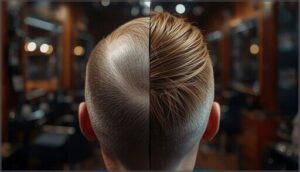
Your hair’s overall health plays a bigger role in trim frequency than most people realize. Damage, breakage, and scalp issues can all throw off your fade faster than growth alone.
Here’s what to watch for.
Split Ends and Breakage
Split ends don’t just look rough — they’re a sign your hair shaft damage has gone too far. Once the cuticle breaks down, breakage causes the strand to snap mid-length, not just at the tip.
That’s why frizz reduction and hair fiber repair start with the trim, not the product. Regular cuts every 6–8 weeks are your first line of defense for real hair health.
Scalp Health Considerations
Your scalp is the foundation of every clean fade. When sebum balance is off, oil clogs the hair follicle, blurring your lines faster and triggering scalp inflammation or skin irritation.
Washing every two to three days keeps scalp hygiene solid. Healthy scalp conditions support better hair growth tips in practice — and honestly, good haircut maintenance always starts below the surface, not above it.
Seasonal and Lifestyle Considerations for Fades

Your life doesn’t stay the same year-round, and neither should your trim schedule. The season you’re in and how you spend your days both shape how fast your fade breaks down.
Here’s what to keep in mind.
Summer Vs. Winter Trim Schedules
Your fade haircut doesn’t care what season it’s in — but your trim frequency should. Summer heat speeds up hair growth, so fade maintenance tightens to every two weeks. Winter slows things down, letting you stretch your haircut schedule to three or even four weeks.
- Summer: trim every 10–14 days
- Winter: trim every 3–4 weeks
- Spring/Fall: every 2–3 weeks works
- Adjust your haircut upkeep based on sweat and humidity, too
Athletic and Active Lifestyles
If you’re grinding through fitness routines daily, your fade haircut takes a beating. Sweat, helmets, and fast hair growth push you toward trims every 2–3 weeks for solid haircut maintenance.
| Active Lifestyle Factor | Trim Frequency |
|---|---|
| Daily intense workouts | Every 2 weeks |
| Helmet use (cycling, sports) | Every 2–3 weeks |
| Softer sporty styles | Every 4–6 weeks |
| Moderate activity | Every 3 weeks |
Athlete grooming doesn’t have to be complicated — pick a lifestyle trim schedule that fits your training, and stick to it for consistent haircut upkeep.
Best Practices for Fade Haircut Upkeep

Keeping a fade looking sharp comes down to a few simple habits you can build right now. It’s not complicated — you just need the right products, clean lines, and a trim schedule you actually stick to.
Here’s what that looks like in practice.
Choosing The Right Products
Your product selection should match your hair type and styling needs — not just what looks cool on the shelf. Thick or coarse hair? Reach for a strong clay or gel. Fine hair does better with a lightweight cream.
For hold levels, think about your finish options too: matte pomade for a natural look, classic pomade for shine. Build these choices into your haircare routine and your fade stays sharper, longer.
Maintaining Sharp Lines Between Trims
Right products keep your hair looking clean, but keeping those lines sharp is its own game. A T-blade trimmer manages hairline cleanup fast — just follow your natural edge, don’t push it back. Nighttime care matters too: a durag compresses your sides and buys you three to five extra days of definition.
- Use precision tools for edge trimming, not regular clippers
- Clean your neckline every few days for sharper fade maintenance
- Protect your hairline at night with a durag or wave cap
- Check from multiple angles — front, side, three-quarter — after every trim
Establishing a Consistent Trim Routine
Sharp lines mean nothing without a plan to keep them. Lock in your trim schedule now — most barbers recommend every one to two weeks for tight fade styles.
Rebook before you leave the chair, set a calendar reminder, and stick to it. Consistent barber visits beat reactive ones every time. That rhythm is how good haircut maintenance becomes second nature.
Frequently Asked Questions (FAQs)
How long does a fade stay fresh?
Most fades stay fresh for 7 to 10 days.
After that, hair growth starts blurring the blend.
Fade duration really depends on your hair type, fade style variations, and how sharp you want it.
Is it okay to trim hair every 2 months?
Trimming every 2 months is fine for hair health, but your fade will be mostly grown out. For haircut upkeep for short hair, trim schedules every 2 to 4 weeks keep definition crisp.
Can diet affect how fast fades grow out?
Yes, diet affects how fast your fade grows out.
Strong nutrient intake — protein, iron, and omega-3s — keeps hair growth rate steady, so your fade stays sharp longer between haircut maintenance visits.
Does hair color or dyeing impact fade upkeep?
Dyeing your fade absolutely changes your upkeep timeline. Root regrowth, color fade impact, and hair porosity all push trim schedules earlier — often every 2 to 4 weeks instead of the usual 4 to
How does humidity affect a fades appearance?
Humidity is a fade’s worst enemy. Moisture swells your hair shaft, blurring clean blend lines and turning crisp fade blending into fuzz.
Frizz control products and moisture management keep your cut looking sharp between barber visits.
Can stress cause a fade to look worse faster?
Stress absolutely wrecks a fade faster. High cortisol spikes oil production, disrupts your hair growth rate, and triggers scalp issues like flaking and irritation — all of which blur clean fade lines well before your next trim.
Are fades suitable for thinning or fine hair?
Fades actually work great for thinning hair. They keep sides short, pushing visual density to the top. Smart Hair Density Tips like low fades or skin fades turn Balding Patterns into a deliberate, clean style.
Conclusion
Fades fade fast—that’s just the truth. Knowing how often to trim a fade haircut isn’t guesswork once you understand your hair, your style, and your schedule. Two to three weeks keeps most guys sharp. Skin fades need even less time before they start slipping.
Don’t wait until the definition disappears to book your next appointment. Own your look before it owns you—because a fresh fade isn’t maintenance, it’s a statement.
- https://www.mrwinstons.com/blog/how-long-does-a-fade-haircut-last-essential-care-tips-for-longevity
- https://fivestarbarberbrand.com/2025/09/05/how-often-should-you-go-to-the-barber/
- https://www.houseofbarbershv.com/post/how-often-should-you-get-a-haircut
- https://www.tonysbarberbayview.ca/how-often-should-get-fade-haircut-to-maintain-the-style.php
- https://www.oreateai.com/blog/how-long-does-a-fade-last/6d2e8703d752a00156d2739ead7e36eb