
This site is supported by our readers. We may earn a commission, at no cost to you, if you purchase through links.

Most guys grab a dime of hair clay, slap it on dry hair, and wonder why their style looks stiff instead of textured. The product isn’t the problem—the technique is.
Hair clay is one of the most forgiving styling tools out there, but only when you know how to work it. It gives you that natural, piece-y finish that gel can’t touch and wax makes too shiny.
Knowing how to apply hair clay for a textured look comes down to a few small moves that make a big difference—and once you nail them, your morning routine gets a lot sharper.
Table Of Contents
- Key Takeaways
- What is Hair Clay for Textured Looks
- Prepping Your Hair for Clay Application
- How Much Hair Clay Should You Use
- Warming and Activating Hair Clay
- Applying Hair Clay Evenly
- Shaping Hair for a Textured Finish
- Tips for Achieving Natural Texture
- Common Mistakes When Using Hair Clay
- How to Wash Out Hair Clay Properly
- Top 5 Hair Clays for Textured Styles
- Frequently Asked Questions (FAQs)
- Do you apply texture clay to wet or dry hair?
- Does hair clay make your hair textured?
- How do I make my hair look textured?
- Can hair clay be layered with other products?
- How often should you reapply clay daily?
- Does hair clay expire or lose effectiveness over time?
- Can hair clay cause scalp irritation or buildup?
- Is hair clay safe for color-treated hair?
- Conclusion
Key Takeaways
- Warm a pea-sized amount of clay between your palms until it turns smooth and creamy, then work it through your hair from back to front for even coverage without heavy buildup near the hairline.
- Apply clay to towel-dried hair — about 70–80% dry — so the product grips evenly without being diluted by excess moisture.
- Use your fingers over a comb to create natural, piecey texture; scrunch and pinch small sections to build separation and volume where you want it most.
- Less product always beats more — start small, build gradually, and rework your style throughout the day with just a light mist of water instead of reapplying.
What is Hair Clay for Textured Looks
Hair clay is a styling product made with natural clays that give your hair texture, hold, and a clean matte finish without the greasy look of gels or waxes. It’s built for men who want a style that stays put but still moves naturally throughout the day.
If you’re after that clean, swept-back look, understanding how to train your hair to go back can make clay way more effective.
Here’s what makes it work, who it works for, and why it’s worth adding to your routine.
Key Ingredients in Hair Clay
Hair clay works because of what’s inside it. Clay minerals like kaolin clay and bentonite clay absorb oil and grip your hair for that dry, textured finish.
Natural waxes add hold without stiffness. Essential oils and humectants keep it spreadable and comfortable. Some formulas include film formers for longer-lasting texture and volume.
These natural ingredients work together to give you control.
Benefits for Textured Hairstyles
With those natural ingredients working together, you get more than just hold.
Matte finish keeps textured looks sharp and natural, while clay boosts hair volume and enhances texture and definition.
You’ll notice style control without stiffness, and frizz reduction that lasts all day.
It’s the go-to for anyone wanting texture and volume with a natural finish.
Hair Types Suited for Clay
Clay works for just about every hair type — here’s where it really shines:
- Fine Hair gets added bulk without feeling heavy or stiff
- Thick Texture stays controlled without the crunch of gels
- Wavy Styles and Curly Locks get definition with a clean Natural Finish
- Oily Roots benefit from clay’s absorbent minerals
Know your Hair Type, and Styling Clay does the rest.
Prepping Your Hair for Clay Application

Before you even touch the clay, how you prep your hair makes all the difference.
The right foundation gives the product something to actually grip and work with.
Here’s what to focus on before you start.
Washing and Drying Tips
Start with lukewarm water around 98°F to 105°F — it opens the cuticle just enough for a thorough cleanse without wrecking your scalp health or stripping natural oils. Finish with a cool rinse to close things back up. Your hair preparation sets the ceiling for your style.
| Step | Water Temperature | Purpose |
|---|---|---|
| Initial Wash | 98°F–105°F (Lukewarm) | Lifts oils, aids product removal |
| Final Rinse | 60°F–70°F (Cool) | Closes cuticle, reduces frizz |
| Avoid | Above 110°F (Hot) | Strips oils, disrupts hair texture |
| Towel Dry | Room temp | Reduces moisture without roughing cuticle |
| Air or Blow Dry | Medium heat | Preps hair for clay grip |
Why Clean Hair Matters
Think of your scalp as a foundation — what’s on it determines how well everything else holds. Product buildup blocks clay adhesion, which kills your natural finish before you even start.
Clean hair benefits your style in ways you’ll notice immediately:
- Better clay grip on each strand
- Longer-lasting volume without heaviness
- Healthier scalp with fewer irritation flare-ups
That’s men’s grooming at its most practical.
Towel-Dry Vs. Fully Dry Hair
Your moisture level at application shapes everything — hold, finish, and style longevity. Fully dry hair gives stronger grip and more texture, making it ideal for high-volume looks.
Towel-dried hair, around 90–95% dry, helps clay distribute evenly across different hair porosity levels and keeps the natural finish softer. Match your dry time factors to the style you want.
How Much Hair Clay Should You Use
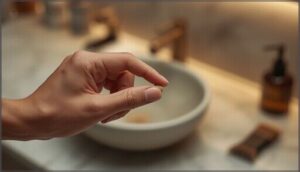
Getting the amount right makes a bigger difference than most people think. Too much clay is one of the fastest ways to kill a good style before it even starts.
Here’s what you need to know about dialing in the right quantity for your hair.
Recommended Amount by Hair Length
Getting the clay quantity right comes down to one thing: your hair length. Short hair — one to two inches — needs just a pea-sized amount for texture control.
Medium lengths need slightly more:
- Short hair: pea-sized or less
- Medium hair (3–5 inches): pea to dime-sized
- Long hair (6+ inches): dime-sized, split between both hands
That simple adjustment makes all the difference.
Risks of Overapplying Clay
Too much hair clay causes more problems than it solves. Clay buildup clogs follicles, triggers scalp irritation, and leaves product residue that dulls hair texture and volume.
You lose the matte finish you’re after, strands clump instead of separating, and hair breakage becomes a real risk. Follicle damage can even slow healthy growth over time. Less is genuinely more with this styling product.
Adjusting Quantity for Texture
Your style goal drives everything. For loose, natural texture and volume, a pea-sized amount spread wide gives hair movement without stiffness.
Want sharper texture and definition? Add a touch more and focus clay distribution on the mid lengths. Thick hair tolerates extra product better than fine hair does. Match your hair clay quantity to the look, not a fixed rule.
Warming and Activating Hair Clay
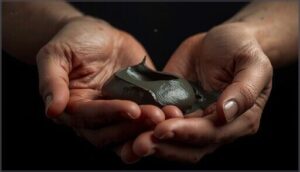
Getting the clay off your fingertips and into your hair the right way starts before you ever touch a strand.
How you warm and activate the product makes a bigger difference than most people expect. Here’s what to know before you start working it in.
Proper Warming Techniques
Warming your hair clay properly is what separates a smooth application from a clumpy mess. Scoop a pea-sized amount, then rub it between your palms using small circular motions for 10 to 20 seconds.
This hand warming technique activates the product emulsification process, breaking down the clay softening into a creamy consistency. No solid clumps means no tugging on your strands.
Ensuring Smooth Product Spread
Once your clay is emulsified, spread it in a thin layer across your full palm and between your fingers. That coverage gives you more contact points when you rake through your hair.
Use broad sweeping hand movements first, then switch to fingertips for detail work. Sectional application on thick hair keeps product distribution even — no heavy patches, just clean texture enhancement throughout.
Signs Clay is Ready to Apply
Your palms tell you everything. When the hair clay shifts from stiff and waxy to a soft, even film with a subtle matte sheen, it’s ready.
Press a fingertip in — no cracking, no dry chunks. That smooth product consistency means better hair grip and cleaner definition once you start working through sections. Good clay texture equals seamless application tips that actually hold.
Applying Hair Clay Evenly
Getting the clay onto your hair the right way makes all the difference between a clean look and a greasy mess. It’s not just about working it in — it’s about where you start, how you spread it, and what to avoid along the way.
Here’s what to focus on when applying clay evenly.
Starting Application From Back to Front
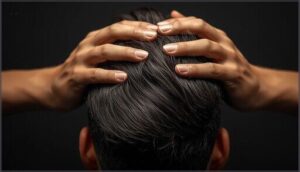
Start your clay application at the back, not the front. This back to front approach gives you better product control right away — the thicker sections behind the crown absorb most of the hair clay first, leaving a thin, even film for the front.
That layered styling technique keeps textured looks natural and prevents heavy buildup near your hairline where it shows most.
Distributing Clay for Consistency
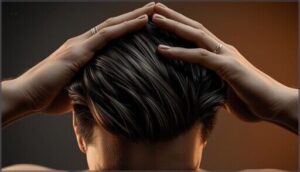
Even coverage comes down to how you move the product through your hair. Once you’ve worked from back to front, rake your fingers wide, then closer together — that alternating motion spreads clay application across both thick sections and fine flyaways.
Hair sectioning keeps things manageable, while layering techniques and product emulsification help texture and definition land evenly, not in patches. Consistent styling techniques deliver that clean matte finish.
Avoiding Greasy Roots
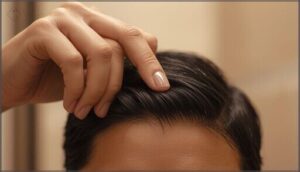
Greasy roots usually come down to where and how much product touches the scalp. For root care that actually works, follow these steps:
- Keep first contact 2–3 cm from the scalp
- Use a pea-sized amount — build slowly
- Choose matte finish clay formulas with kaolin for oil control
- Skim the surface; don’t massage product into the scalp
Clean hair and the right styling product make all the difference for scalp health and avoiding product buildup.
Shaping Hair for a Textured Finish
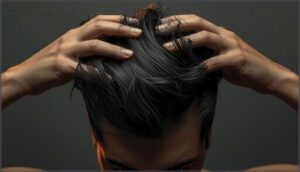
Once the clay is spread through your hair, the real shaping begins. How you work it in makes all the difference between a flat, product-heavy result and a finish that actually looks intentional.
Here’s what you need to know about shaping for texture.
Using Fingers Vs. Combs
Your tool choice shapes everything. Finger styling keeps hair clay sitting unevenly on the strand, which is exactly what builds that piecey, lived-in texture.
Comb techniques align everything into cleaner rows — better for side parts or structured shapes. For most textured styles, use a comb to set direction first, then finish with fingers for natural-looking texture control and simple styling ease.
Creating Separation and Volume
Separation is where volume actually lives. With your hair clay in place, use these sectioning techniques to build real lift:
- Pinch small clusters and pull upward for root lifting at the crown.
- Apply product placement to mid-lengths only, keeping roots light.
- Rake fingers through once for finish detailing and matte finish.
Volume maintenance comes down to working smart, not heavy.
Defining Waves or Curls
Clay is one of the best tools for curl enhancement and wave formation — when you use it right.
On damp hair, rake the styling clay through in sections, then scrunch upward from the ends. This simple technique encourages clumps to form and sharpens hair texture and definition as it dries.
You get frizz control, natural textured looks, and a clean matte finish without crunch.
Tips for Achieving Natural Texture

Getting natural texture isn’t about luck — it’s about knowing a few key moves that make a real difference.
The good news is that small adjustments to how you apply and work your clay can take your results from flat to effortlessly textured. Here’s what to keep in mind.
Building Texture Gradually
Building texture gradually is the difference between a style that looks intentional and one that looks overdone. Think of it like seasoning food — you can always add more, but you can’t take it back.
Build texture like you season food — you can always add more, but you can never take it back
Use these hair styling tips to master gradual building with layering techniques for consistent volume and hold:
- Start with a pea-sized amount of hair clay for short to medium hair
- Apply thin layers using hair zone targeting — roots first, then mid-lengths, then ends
- Check hold and movement after each pass before adding more
- Use product blending by pairing a texture spray as a base to reduce clay needed
- Focus extra clay only where texture control is missing, like a flat crown
This approach gives you clean textured looks without buildup.
Techniques for Messy Vs. Structured Styles
Messy and structured styles need different hands. For a messy look, rake hair clay through from back to front using quick, random passes — scrunch and pinch small sections to break up any pattern.
For structured styles, apply product control matters more: slow, deliberate strokes in one direction, then finish with a comb. Same hair clay, completely different finish techniques.
Maintaining Flexibility Throughout The Day
Style changes throughout the day — that’s just reality. The real flexible hold secret is in your hands, not more product.
Lightly mist hair with water, then push sections back up at the roots with your fingertips. That’s your best touchup technique for daily style adjustments. No Hair Clay Reapplication needed.
Your morning routine tips only need one solid application to last.
Common Mistakes When Using Hair Clay
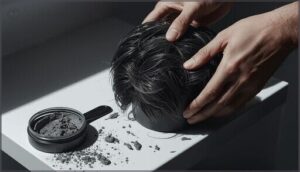
Even the best styling routine can fall apart if a few key habits are off. Most hair clay problems come down to the same handful of mistakes that are easy to fix once you know what to look for.
Here are the most common ones to avoid.
Applying to Wet Hair
One of the biggest wet styling tips most guys skip — don’t apply hair clay to soaking wet hair. When your hair is dripping, the moisture washes the product right off the strand before it can grip.
Aim for about 70 to 80 percent dry for smooth clay distribution and proper hair moisture balance. Damp application works. Wet hair doesn’t.
Using Too Much Product
More isn’t better with hair clay — it’s the fastest route to flat hair and a greasy look. Too much styling clay weighs strands down, causes scalp buildup, and turns a clean matte finish into something shiny and heavy.
Start with a pea-sized amount. That’s it. Good mens grooming and smart hair care tips and advice both point to the same rule: build up slowly.
Ignoring Hair Type and Length
Hair type and length shape everything about how clay behaves. Fine hair needs less product and lighter formulas, or strands clump and go flat.
Thick hair requires more clay and better clay distribution to reach inner layers. Short and medium lengths have different surface areas too. Match your product selection to what your hair actually is — not what you wish it were.
How to Wash Out Hair Clay Properly

Getting clay out isn’t complicated, but doing it wrong leaves buildup that makes your next style look flat.
A proper wash-out routine protects your hair and keeps the clay working the way it should.
Here’s what you need to know.
Rinsing Techniques
Getting hair clay out starts with water temperature. Run warm water — around 90 to 100°F — over your hair for one to two minutes to soften the clay before you touch it.
Then use your fingertips to work a scalp massage in small circles from the nape upward. Rinse duration matters — keep going until the water runs clear.
Using Clarifying Shampoo
Clarifying shampoo is your reset button after heavy hair clay use. It cuts through product buildup that regular shampoo misses, which directly promotes scalp health and hair porosity.
Use it strategically:
- Apply after your warm-water rinse
- Massage from roots to ends
- Leave on for 60 seconds
- Rinse thoroughly
Once or twice a week keeps hair texture and definition sharp.
Preventing Product Buildup
Buildup prevention starts long before wash day. Small daily habits protect your scalp health and keep your hair clay performing the way it should.
| Habit | Why It Matters |
|---|---|
| Use dime-sized amounts | Less product residue to clear |
| Alternate with light sprays | Reduces heavy buildup cycles |
| Rinse 1–2 minutes thoroughly | Ensures gentle rinsing removes clay fully |
| Avoid daily reapplication | Limits stacked product residue |
| Product-free days weekly | Rebalances scalp naturally |
Consistency beats correction every time.
Top 5 Hair Clays for Textured Styles
Choosing the right clay makes a real difference in how your style holds and looks by the end of the day. Not every product works the same, so it helps to know which ones actually deliver on texture and control.
Here are five solid options worth your attention.
1. Cnny Men’s Hair Styling Clay
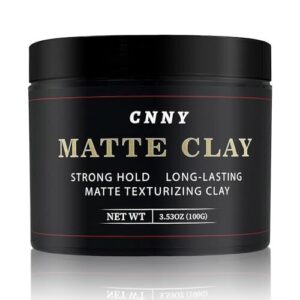
The CNNY Men’s Hair Styling Clay is a solid pick if you want firm hold without the shine. It comes in a 3.53 oz container and delivers a matte finish that works well for short to medium hair.
The formula is alcohol-free, so it won’t dry your hair out with daily use. You get strong texture and control without that stiff, crunchy feeling. Start with a pea-sized amount — this clay is firm, and a little goes a long way.
| Best For | Guys with fine hair who want a strong, natural-looking hold without any shine or stiffness. |
|---|---|
| Hold Strength | Firm |
| Finish | Matte |
| Scent | Faint Natural |
| Hair Type | Fine Hair |
| Wash Out | Yes |
| Weight | 3.53 oz |
| Additional Features |
|
- Firm hold with a clean matte finish — no greasiness or crunch
- Alcohol-free formula that’s gentle enough for daily use
- Easy to control, so you can actually style without fighting it
- Can feel sticky or tacky, especially if you use too much
- Not great for long hair or anyone who wants a lighter hold
- The scent is barely there, which might disappoint if you like a fresh fragrance
2. Flow Bros Hair Clay
Flow Bros Hair Clay is built for guys chasing that relaxed flow without the crunch. It’s water-based with a creamy texture that breaks down easily in your hands — no clumping, no mess.
The sandalwood scent is a nice bonus you’ll notice all day. It delivers a low-shine finish with strong hold that holds up through school or work hours. Pair it with a sea salt spray if your hair is on the thicker side for better grip.
| Best For | Guys who want a natural, low-shine look with all-day hold and none of the stiff, crunchy feel. |
|---|---|
| Hold Strength | Strong |
| Finish | Low Shine |
| Scent | Sandalwood |
| Hair Type | All Types |
| Wash Out | Yes |
| Weight | 2 oz |
| Additional Features |
|
- Holds strong all day without leaving your hair looking greasy or overdone
- Works for all hair types and rinses out easily so restyling is no hassle
- Smells great — the sandalwood scent actually sticks around
- May not cut it if you need a super firm, clay-like hold
- Thicker or coarser hair might need a little extra product to get the grip you want
- Only comes in a 2oz size, so heavy users will burn through it fast
3. Cremo Mens Hair Styling Clay
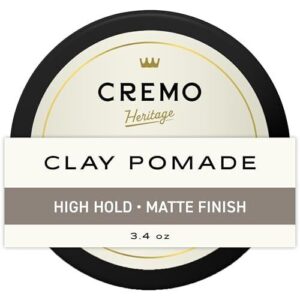
Cremo Mens Hair Sculpting Clay punches above its weight for a 3.4-ounce jar. It uses kaolin clay for strong, flexible hold with a clean matte finish — no crunch, no shine.
Warm a nickel-sized amount between your palms until it turns clear, then work it through from back to front. It reshapes easily throughout the day, so your style stays fresh without reapplying. Great pick if you want structure that doesn’t look like you tried too hard.
| Best For | Guys who want a natural, textured look with a hold that lasts all day without feeling stiff or overdone. |
|---|---|
| Hold Strength | Strong |
| Finish | Matte |
| Scent | Unscented |
| Hair Type | All Lengths |
| Wash Out | Yes |
| Weight | 3.4 oz |
| Additional Features |
|
- Strong, flexible hold that keeps your style in place without crunch or shine
- Easy to rework throughout the day — no need to reapply
- Washes out clean with just warm water and shampoo
- May struggle to hold up for longer hair or high-activity days
- The gelatinous texture can be a bit awkward to scoop out at first
- No safety seal on the jar, which might bug some people
4. Hair Dough Matte Styling Clay
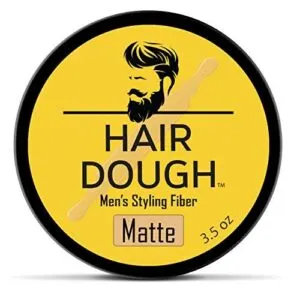
If you want a step up in hold, Hair Dough Matte Styling Clay delivers. At $18.99 for 5.61 ounces, it’s a solid mid-range pick that earns its place.
The thick, creamy texture warms down fast between your palms and spreads evenly without clumping. It’s strong enough to keep quiffs and messy crops in place all day, yet flexible enough to rework with your fingers.
Fine or thick hair — it accommodates both without weighing strands down.
| Best For | Guys with any hair type who want strong, all-day hold with a natural matte finish — especially those rocking textured, voluminous, or messy styles. |
|---|---|
| Hold Strength | Strong |
| Finish | Matte |
| Scent | Unscented |
| Hair Type | All Types |
| Wash Out | Yes |
| Weight | 5.61 oz |
| Additional Features |
|
- Holds strong all day without leaving your hair looking greasy or shiny
- Water-based formula means it washes out easily — no residue, no hassle
- Works across hair types, including curly, thick, and wavy
- Works best on damp hair, so dry application can be a bit tricky
- Once it sets, it can get stiff and tough to rework
- The scent leans sweet or fruity, which isn’t everyone’s thing
5. Old Spice Hair Styling Clay
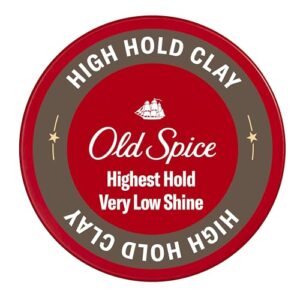
Old Spice Hair Styling Clay keeps things simple without cutting corners. At 2.22 ounces, it’s compact enough for your gym bag or travel kit.
The kaolin clay base grips well and dries to a true matte finish — no shine, no grease. It’s got a coconut and tropical wood scent that actually works.
Hold is strong for most hair types, though finer hair may need a lighter hand. Old Spice Hair Styling Clay is a good value for a daily-use clay.
| Best For | Guys with normal to thick hair who want a strong, no-shine hold they can wear all day without looking like they tried too hard. |
|---|---|
| Hold Strength | High |
| Finish | Very Low Shine |
| Scent | Coconut |
| Hair Type | All Types |
| Wash Out | Yes |
| Weight | 2.22 oz |
| Additional Features |
|
- True matte finish — zero grease, zero shine
- Works on wet or dry hair, so it fits into whatever your morning looks like
- Compact size makes it easy to toss in a bag and go
- Finer or blond hair might not get the hold it promises
- The clay is thick, so you’ll need to work it between your palms before it spreads evenly
- The scent leans soapy, which won’t be everyone’s thing
Frequently Asked Questions (FAQs)
Do you apply texture clay to wet or dry hair?
Towel-dried hair hits the sweet spot. Slightly damp strands let clay spread smoothly and grip evenly.
Soaking wet hair dilutes the product. Fully dry hair gives stronger hold but makes spreading trickier.
Does hair clay make your hair textured?
Yes, hair clay makes your hair textured. It coats each strand with fine clay particles, adding grip and separation.
The matte finish lets natural shadows show through, making texture stand out clearly.
How do I make my hair look textured?
Start with clean, dry hair and work a small amount of clay between your palms until smooth.
Rake it through with your fingers, lifting at the roots and scrunching sections to build natural separation.
Can hair clay be layered with other products?
Hair clay plays well with others. Layer a sea salt spray underneath for volume, then finish with clay for a matte, textured hold that lasts all day without the grease.
How often should you reapply clay daily?
Once in the morning is usually enough. A good clay holds for six to twelve hours.
If your style fades, just dampen your hair slightly and rework it with your fingers.
Does hair clay expire or lose effectiveness over time?
Like milk left on the counter, hair clay does expire. Most jars stay effective for 6 to 12 months after opening before the hold weakens and the texture turns chalky or crumbly.
Can hair clay cause scalp irritation or buildup?
Yes, it can. Certain ingredients like synthetic fragrances and preservatives may irritate your scalp. Daily buildup from clay residue can also clog follicles if you’re not washing it out thoroughly.
Is hair clay safe for color-treated hair?
Most hair clays are safe for color-treated hair, but check the formula first. Sulfate-free, water-based clays protect your color. Avoid bentonite-heavy products on fresh dye — they can pull pigment faster.
Conclusion
It’s funny how the guys who struggle most with styling are usually the ones closest to getting it right—they just haven’t connected the dots yet.
Knowing how to apply hair clay for a textured look isn’t about talent; it’s about small adjustments done consistently. Warm the clay, work it from back to front, and shape with your fingers. Do that every morning, and what once felt like guesswork starts feeling like second nature.
- https://headandshoulders.com/en-us/healthy-hair-and-scalp/hair-care/how-to-use-hair-clay
- https://wetshavingproducts.com/blogs/education/how-to-use-hair-clay-paste
- https://jaaamhk.com/en/blogs/style-guide/how-to-use-hair-clay-guide
- https://www.britannica.com/science/kaolin
- https://outofregz.com/blogs/ingredients/the-benefits-of-kaolin-for-your-hair