This site is supported by our readers. We may earn a commission, at no cost to you, if you purchase through links. This content is for general informational and educational purposes only and is not a substitute for professional medical, dermatological, or nutritional advice.
That rich, vibrant color you just walked out of the salon with won’t last without the right aftercare. Color-treated hair has been chemically altered at the molecular level, leaving it more porous and vulnerable to damage than virgin strands. The cuticle layer opens during the coloring process, and without proper protection, those pigment molecules start washing down the drain with every shampoo.
You’ll notice the fade within weeks—sometimes days—if you’re using the wrong products or washing too frequently. The good news? With targeted care techniques and color-safe products, you can extend your color’s vibrancy and keep your hair healthier between salon visits.
Table Of Contents
- Key Takeaways
- What is Color-Treated Hair?
- How Soon Can I Wash Freshly Colored Hair?
- Which Shampoos Are Best for Colored Hair?
- How Often Should I Wash Color-Treated Hair?
- How Can I Prevent Hair Color Fading?
- What Conditioners and Masks Should I Use?
- How Do I Protect Colored Hair From Heat?
- What Daily Habits Help Maintain Hair Color?
- How Does Nutrition Affect Color-Treated Hair?
- How Should I Maintain and Refresh Color?
- Frequently Asked Questions (FAQs)
- How often should I wash color-treated hair?
- How can I protect my hair from the sun while swimming?
- What are the benefits of using a heat protectant spray?
- How can I prevent my hair from getting frizzy after washing?
- Can I swim in chlorinated pools safely?
- Does hard water affect my hair color?
- Should I change my pillowcase for hair?
- Can I use hair oil on colored hair?
- How does stress impact color-treated hair health?
- Conclusion
Key Takeaways
- Wait 72 hours before your first wash after coloring to let the cuticle seal and pigment molecules lock into place, which prevents premature fading and protects your investment.
- Use sulfate-free, pH-balanced shampoos and wash only 2-3 times weekly with cool water, since hot water and harsh cleansers strip color molecules faster than anything else.
- Apply heat protectant before every styling session and keep tools at 350°F or below to cut breakage in half and prevent thermal damage that dulls your color.
- Deep condition weekly with protein-balanced masks and protect your hair from UV exposure with hats or spray-on filters, since sun rays accelerate color fade by up to 40% in eight weeks.
What is Color-Treated Hair?
Color-treated hair is any hair that’s been altered with dye, whether you went for a subtle balayage or a bold platinum transformation. The coloring process changes your hair’s structure at a molecular level, which means your strands need different care than they did before.
That’s why choosing the right hair treatments for color-treated hair makes such a difference in keeping your color vibrant and your strands strong.
Let’s break down the main types of color treatments and what they actually do to your hair.
Before we dive in, it’s worth noting that some hair dyes have been linked to hair loss, so understanding the chemistry behind each treatment matters.
Types of Hair Color Treatments
Your hair color journey starts with understanding the treatment you choose. Each type of dye transforms your strands differently:
Whether you go semi-permanent or full color, taking care of colored hair means protecting your investment from day one.
- Temporary tints wash out in 1–3 shampoos, perfect for experimenting without commitment
- Semi color lasts 4–12 washes with gentle surface penetration
- Demi permanent deposits richer pigment for 12–24 washes
- Permanent dye saturates the cortex completely and grows out naturally
Natural henna offers another alternative for color-treated hair enthusiasts.
How Coloring Affects Hair Structure
Dye molecules don’t just sit on the surface—they force open your cuticle layer and lodge deep into the cortex. That process disrupts keratin fibers, increasing hair porosity with every session.
Hair dye forces open your cuticle layer, disrupts keratin fibers, and increases porosity with every coloring session
You’ll notice color damage as reduced elasticity and more frizz. Bleaching weakens disulfide bonds even further, so understanding hair structure helps you protect color-treated hair before it becomes brittle.
How Soon Can I Wash Freshly Colored Hair?

You’ve just walked out of the salon with fresh color, and now you’re wondering when it’s safe to wash your hair. The timing of that first wash can make or break how long your color lasts.
Let’s break down exactly how long you should wait and what to do when you’re ready to rinse.
Importance of Waiting 72 Hours
You’ve just walked out of the salon—now comes the hard part. Waiting 72 hours before shampooing allows cuticle sealing and pigment set to lock in place.
This dye stabilization window prevents fade and keeps your color-treated hair vibrant longer. Skip the wash, and you’re giving those color molecules time to anchor deep into your strands, maximizing color lock and fade prevention.
Best Practices for First Wash
When you finally step into that first rinse, reach for a gentle, sulfate-free shampoo—sulfate free is your best friend here. Lukewarm water keeps cuticles calm while your color protectant shampoo works its magic on color lock.
If buildup sneaks in, a clarifying shampoo for colored hair lifts residue without fading your shade.
This post-color moment sets the tone for your entire hair care routine, so treat those strands with the respect they deserve for long-term colored hair maintenance and hair color preservation.
Which Shampoos Are Best for Colored Hair?
Your shampoo can make or break your color—it’s that simple. Regular formulas strip dye faster than you think, while the right products create a protective barrier around each strand.
Let’s break down what separates color-safe shampoos from the ones that’ll send your fresh hue down the drain.
Color-Protectant Vs. Regular Shampoos
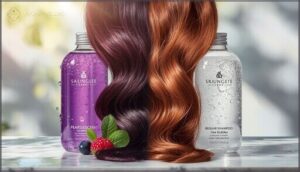
You might wonder if your regular shampoo is enough for Color Preservation, but here’s the truth: Color Protectant Shampoo is engineered to lock pigment inside your hair shaft. Regular formulas focus on cleansing alone, often stripping dye molecules with harsh surfactants.
Pairing it with targeted conditioners and heat protectants creates a complete system that keeps your color vibrant between salon visits.
Color-safe Shampoo Ingredients—like UV filters and antioxidants—actively shield Color-Treated Hair from fading, ensuring better Color Retention and Fading Prevention over time.
Sulfate-Free and PH-Balanced Options
Sulfate-free shampoos use mild surfactants like sodium cocoyl isethionate for gentle cleansing without stripping color. pH-balanced formulas—usually around 4.5 to 5.5—keep your cuticle sealed tight, locking pigment inside for better color stability and color preservation.
Pair sulfate alternatives with a color-safe conditioner in your hair care routine to optimize color retention. These color-treated hair care tips support lasting vibrancy between touch-ups.
How Often Should I Wash Color-Treated Hair?

Here’s the truth: washing your color-treated hair too often is the fastest way to watch your investment circle the drain. The key is finding a rhythm that keeps your hair clean without stripping the color molecules you worked so hard to lock in.
Let’s break down how to reduce your wash frequency and make dry shampoo your new best friend.
Reducing Wash Frequency
Your color-treated hair doesn’t need daily washing. In fact, overwashing strips both color and moisture, leading to faster fade. Here’s how to extend your wash cycle for better color preservation:
- Start by washing every 2–3 days instead of daily to maintain hair moisture and protect your investment
- Gradually increase intervals by one day if you have an oily scalp
- Focus on scalp care during washes while conditioning only mid-lengths and ends
This simple hair maintenance strategy keeps your color vibrant longer.
Using Dry Shampoo Between Washes
Dry shampoo is your secret weapon for extending color between washes. It absorbs scalp oils for 24 hours while reducing the need for water exposure that strips pigment. Apply it 6–10 inches from roots, let sit 2 minutes, then brush through for even distribution. Choose tinted formulas to avoid white cast and support your color preservation strategy.
| Dry Shampoo Benefits | Best Practice |
|---|---|
| Absorbs sebum buildup | Spray only at roots |
| Extends wash cycles 1–3 days | Use color-safe formulas |
| Protects color vibrancy | Avoid product buildup |
| Maintains scalp health | Rotate with regular washing |
How Can I Prevent Hair Color Fading?
Your hair color doesn’t have to fade fast if you know what damages it. A few simple adjustments to your washing routine and daily habits can keep your color vibrant for weeks longer.
Here’s how to protect your investment and make that salon-fresh shade last.
Washing With Cool Water
Think of hot water as a thief that steals your hard-earned color. Cool water benefits color-treated hair by reducing cuticle swelling, which directly improves color preservation. Studies confirm lower water temperatures minimize hair shaft expansion, keeping pigment locked in during gentle cleansing.
This simple shift in your hair care routine decreases dye bleeding and protects hair porosity, maintaining vibrancy between salon visits while soothing sensitive scalps.
Avoiding Clarifying Shampoos
Clarifying shampoos strip color faster than any other cleanser in your hair care arsenal. Their aggressive formulas lift cuticles and pull out pigment molecules, sabotaging color preservation within weeks.
Instead, protect your color-treated hair with these sulfate alternatives:
- pH-balanced daily shampoos designed specifically for color safety
- Chelating formulas that remove mineral buildup without harsh stripping
- Charcoal-based cleansers offering gentle cleansing and color fade prevention
- Vinegar rinses for natural buildup removal between washes
Limiting Sun and Environmental Exposure
Just like clarifying shampoos, UV radiation attacks your color-treated hair relentlessly. Ultraviolet rays accelerate color fade by up to 40% over eight weeks, oxidizing pigment molecules and stripping vibrancy.
Environmental shielding through wide-brim hats blocks 60–75% of UV exposure, while sunscreen sprays with UV protection create hair barriers that extend color preservation.
Reapply protective products every two to three hours during peak sun for maximum color fade prevention and hair color maintenance.
What Conditioners and Masks Should I Use?
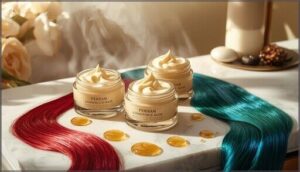
You’ve conquered the basics of preventing fade—now let’s talk about the products that actually repair and protect your color investment.
The right conditioners and masks don’t just add shine; they rebuild the structure your hair lost during the coloring process.
Here’s what you need to know about choosing treatments that work as hard as you do to keep your color vibrant.
Deep Conditioning Treatments
Weekly deep conditioning masks intensify moisture retention and hair repair in color-treated hair, especially when you apply heat. Steam or a warm towel boosts penetration by 15–25%, locking in color and strengthening your strands.
Look for protein balance—too much weighs you down, but the right blend rebuilds keratin and prevents breakage.
Aim for twice-weekly treatments to keep your hue vibrant and your hair resilient.
Recommended Color-Safe Masks and Conditioners
When you’re browsing the hair care aisle, zero in on masks and conditioners that explicitly say “color-safe” or “color-protecting”—they’re formulated to seal your cuticles without stripping pigment.
Products with color-locking technology and deep conditioning agents deliver targeted mask benefits, preserving vibrancy while boosting moisture.
A quality leave-in conditioner works overtime between washes, strengthening color-treated hair and reinforcing your color preservation techniques with every application.
How Do I Protect Colored Hair From Heat?

Heat is one of the biggest threats to your color-treated hair, stripping vibrancy and causing damage faster than almost anything else.
The good news is that protecting your hair from styling tools and hot water doesn’t require complicated steps.
Let’s walk through the essentials you need to keep your color safe while still achieving the styles you want.
Choosing Thermal Protectants
You need thermal protectants with silicones or polymer-based films—these create a heat barrier on your hair shaft and lock in moisture during styling.
Look for color-safe formulas with UV filters to shield your hue from fading. Water-based, alcohol-free options work best for color-treated hair since they evaporate quickly without leaving heavy residue that dulls your shade.
Minimizing Heat Styling Damage
Turn down the heat—literally. Heat protection cuts hair breakage by half when you keep styling tools at 350°F or below. Your color-treated hair care tips start here:
- Use ceramic or tourmaline tools to prevent hot spots that trigger thermal damage
- Limit passes to 1–2 per section for hair damage prevention
- Choose the lowest effective temperature for your texture
- Apply heat protectant before every session for hair health and wellness
- Let heat limits guide your routine to stop hair damage prevention and repair needs
That’s how you protect your investment.
What Daily Habits Help Maintain Hair Color?

Protecting your color doesn’t stop at the shower—what you do throughout the day matters just as much. The right daily habits create a shield between your vibrant hair and everything trying to dull it down.
Here’s how to lock in that color from morning to night.
Leave-in Treatments and Serums
Leave-in treatments act as your daily armor against color fade and damage. These lightweight formulas deliver Leave-In Moisture and Color Protection without weighing hair down.
Look for serums with silk or keratin amino acids—they reduce friction and breakage while providing Hair Repair benefits. UV filters minimize sun-induced fading, and thermal protection ingredients shield against heat styling.
Frizz Control comes naturally when you choose the right LeaveIn Conditioner for your ColorTreated Hair needs.
Wearing Hats and Using UV Protection
Beyond products, your best defense against Color Fade is physical Hair Shielding. Wear a wide-brimmed hat with tight-weave Hat Materials during peak sun hours to protect Color-Treated Hair from UV damage. Pair this with leave-in UV Filters for complete Sun Protection and Color Preservation.
- Choose hats with UPF-rated fabrics for reliable Hair Protection
- Apply UV-protectant spray before outdoor activities
- Reapply Color Protection products after swimming or sweating
- Seek shade between 10 am and 4 pm to maintain Hair Health
How Does Nutrition Affect Color-Treated Hair?

What you eat shows up in your hair, especially after coloring. A diet rich in the right nutrients helps your color-treated hair stay strong, vibrant, and resilient against damage.
Let’s look at which vitamins and foods make the biggest difference.
Essential Nutrients for Hair Health
Your hair color shines brightest when fueled from within. Protein intake provides the amino acids your strands need to stay strong, while iron supplements combat shedding by delivering oxygen to follicles. Omega benefits include scalp hydration, and zinc deficiency can trigger thinning. Biotin’s role? Supporting cell growth.
These nutrients form your foundation for vibrant, resilient color-treated hair.
Foods and Supplements for Stronger Hair
You can fortify color-treated strands through nutrient balance in everyday meals. Eggs and fatty fish deliver protein sources and omega-rich fatty acids that support hair growth and scalp vitality.
Leafy greens boost iron absorption for hair nourishment, while nuts provide collagen benefits.
Hair vitamins like biotin and zinc address hair health and damage when deficiencies exist, giving you control over hair health and nutrition from within.
How Should I Maintain and Refresh Color?
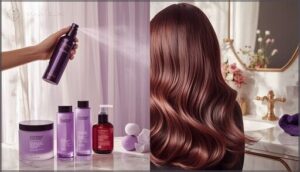
Your color won’t stay vibrant forever, but you can extend its lifespan with smart maintenance strategies.
Between salon visits, you’ll need techniques to keep roots covered, restore shine, and prevent damage from creeping in.
Let’s look at the essential methods for maintaining and revitalizing your color at home.
Root Touch-Up Techniques
When regrowth shows up, you don’t need a full color service—targeted root maintenance keeps your shade looking fresh. Use a touch-up kit that matches your current color, applying product only to the regrowth area (usually 1/4 to 1/2 inch from your scalp).
Follow these steps for impeccable results:
- Perform a strand test to confirm shade matching before full application
- Apply color precisely to regrowth, avoiding previously treated hair
- Time the process exactly as directed to prevent uneven color
- Rinse with cool water and follow with a color-safe conditioner
This targeted approach minimizes damage while maintaining uniform color.
Glosses and Color-Reviving Products
Between major color touch-ups, glosses refresh fading tones while adding radiant shine. These conditioning formulas deposit gentle pigment without harsh chemicals, extending color longevity by 2–6 weeks.
Apply color-reviving products to towel-dried hair for 10–20 minutes, focusing on shade matching to avoid unexpected shifts.
Perform a strand test first—porous hair uptakes color revivers more intensely, affecting your final result and overall color protection.
When to Trim and Schedule Touch-Ups
Glosses deliver temporary shine, but smart scheduling protects your investment long-term. You’ll notice hair regrowth around four weeks, signaling time for color touch-ups that prevent visible fade. Trim frequency depends on your style—short cuts need shaping every 4–6 weeks, while longer hair can wait 8–12 weeks.
Consider these hair maintenance routine essentials:
- Schedule root touch-ups every 4–8 weeks to control color fade and conceal regrowth
- Align trims with color appointments to minimize heat styling between visits
- Track split end prevention by trimming damaged ends before breakage travels upward
Proper touch-up scheduling keeps color-treated hair tips looking fresh without over-processing. Coordinate your hair coloring techniques with regular trims for healthier results.
Frequently Asked Questions (FAQs)
How often should I wash color-treated hair?
Think of your color as a fresh coat of paint—the less you scrub, the longer it lasts.
Wash color-treated hair two to three times weekly to preserve vibrancy while maintaining scalp health and moisture balance.
How can I protect my hair from the sun while swimming?
Wear a UV swim cap for hair sun shields and apply sunscreen for hair before diving in.
Rinse immediately after for chlorine removal and saltwater protection, then condition to restore moisture and color protection.
What are the benefits of using a heat protectant spray?
Thermal protection guards your strands from damage, guards your cuticles from cracking, and guards your color from fading.
Heat protectant sprays create a barrier that reduces moisture loss and breakage when styling above 350°F.
How can I prevent my hair from getting frizzy after washing?
After washing, seal your cuticles with cool water and apply a lightweight leave-in treatment or frizz control serum.
Gently squeeze excess moisture with a microfiber towel to reduce friction and preserve your color-treated hair.
Can I swim in chlorinated pools safely?
You can swim safely with color-treated hair by using a swim cap and pre-swim conditioner for chlorine damage prevention.
Rinse immediately after to minimize fading, then use a clarifying shampoo for complete chlorine removal and maximum hair protection.
Does hard water affect my hair color?
Hard water deposits minerals like calcium and magnesium onto your hair shaft, creating a dull film that blocks color vibrancy.
Filtered water or chelating treatments remove mineral buildup, protecting color longevity and maintaining brightness.
Should I change my pillowcase for hair?
Yes, you should. Silk or satin pillowcases reduce hair friction and preserve moisture overnight, helping minimize breakage and frizz.
This fabric smoothness aids color retention by protecting fragile, color-treated strands during sleep.
Can I use hair oil on colored hair?
You can safely use hair oil on color-treated hair. Choose lightweight, color-safe oils like argan or jojoba.
Apply sparingly to ends, avoiding roots. Test first to prevent buildup or unexpected color changes.
How does stress impact color-treated hair health?
High cortisol levels from stress weaken cuticles, increasing hair porosity and color fade. Stress hormones also trigger shedding and breakage, making color-treated hair care tips and stress management essential for preventing hair damage.
Conclusion
Think of your color like a fresh tattoo—it needs time to set before you expose it to the world. How you treat your hair in those first 72 hours determines whether your color stays vibrant or fades within weeks.
Follow these practices to care for color-treated hair, and you’ll protect your investment while keeping your strands healthier. Your color won’t maintain itself, but with consistent effort, it’ll stay salon-fresh longer than you’d expect.