This site is supported by our readers. We may earn a commission, at no cost to you, if you purchase through links. This content is for general informational and educational purposes only and is not a substitute for professional medical, dermatological, or nutritional advice.
Most guys pick a beard style the same way they pick a movie on a Friday night—scroll until something looks good, commit without thinking, and regret it twenty minutes in. The problem isn’t their taste. It’s that they skipped the part where the style actually has to work with their face shape.
A full bushy beard looks stunning on one guy and makes another look like he’s hiding from someone. That gap comes down to face shape, hair texture, and a few other factors most people never think to check. Get those right, and choosing the right beard style stops being a guessing game.
Table Of Contents
- Key Takeaways
- Assess Your Facial Hair Growth
- Determine Your Face Shape
- Match Beard Styles to Face Shapes
- Consider Personal Style and Lifestyle
- Consult With a Professional Barber
- Maintain and Adapt Your Chosen Beard Style
- Frequently Asked Questions (FAQs)
- How do I choose a good beard style?
- Do beard styles work with any face shape?
- How to choose a beard style for a rectangular face?
- What is the best beard style for a round face?
- What beard styles should you avoid with a round face?
- How do I choose a beard style for a diamond face?
- How do I know which beard style suits me?
- What is the 3 month beard rule?
- What is the 2 finger rule for beard?
- What is the rule 5 for beards?
- Conclusion
Key Takeaways
- Your face shape is the foundation of every good beard choice — measure it properly instead of guessing in the mirror.
- Patchy growth isn’t a dealbreaker, but it does narrow your options, so map your growth zones before committing to a style.
- A barber isn’t a luxury — they spot what you can’t see and cut months of trial and error down to one honest conversation.
- Even the perfect style falls apart without a consistent routine, so pick something that fits your actual schedule, not your ideal one.
Assess Your Facial Hair Growth
Before you even think about which beard style suits your face, you need to take an honest look at what your hair can actually do.
That means thinking about density, patchiness, and growth direction before browsing beard styles matched to your face shape.
Not every guy can grow a thick beard — and that’s fine, but it changes everything.
Here’s what to check before you start planning.
Evaluating Beard Thickness and Texture
Density is everything in selecting the right style. Run your fingers through your facial hair — is it thick and coarse, or fine and soft?
Your hair follicles and how they respond to androgens largely determine your beard growth and thickness. Coarser beard density gives you more options.
Finer hair texture means you’ll need a smarter approach.
Identifying Growth Patterns and Patchiness
Once you know your beard texture, take a good look at where it actually grows. Beard Mapping — noting your Growth Zones across the mustache, chin, cheeks, and jawline — tells you exactly what you’re working with.
Patchy Areas usually show up on the upper cheeks first. That’s normal.
Watch for these patterns:
- Dense chin and mustache with thin cheeks = goatee territory
- Neck-heavy growth with sparse sides = needs strategic shaping
- Uneven beard density across zones affects face shape and beard compatibility
- Mixed Facial Hair directions can highlight patchy beard spots if untrimmed
Understanding Genetic and Health Factors
Your growth patterns come down to beard growth factors you can’t fully control — mainly Genetic Patterns and Hormone Balance. If your dad and uncles grew thick beards, odds are you’ll too. Beard Density is largely inherited.
That said, Health Conditions like thyroid issues or Nutrient Deficiency can quietly thin facial hair growth over time. Rule those out before blaming your genes.
Determine Your Face Shape
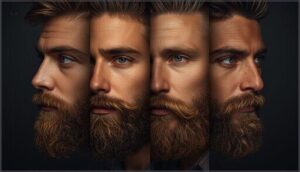
Before you pick a beard style, you need to know what you’re working with.
Face shape drives everything — it’s the difference between a look that fits and one that just sits there.
Here’s how to figure out yours.
Measuring Key Facial Features
Grab a flexible tape measure and four numbers will tell you everything. Face Length runs from your hairline down to your chin. Forehead Width crosses your brow peaks. Cheekbone Measurement goes from one high cheekbone to the other. Jawline Analysis is chin to jaw angle, doubled.
Once you know your measurements, put them to work—oblong face shape fade options can help you pick a cut that balances length and keeps things proportional.
Write them down. Those Facial Proportions reveal your face shape more honestly than any mirror guess.
Identifying Common Face Shapes
Those four numbers you just wrote down? They tell a story. Face Shape is determined by the relationship between face length and width, with Oval Face having a length that beats width, and Soft Jawline Contours and Balanced Cheekbone Proportions.
A Round Face is nearly equal in both length and width. A Square Face shares that same width-to-length ratio but with sharp, angular corners. A Rectangle Face runs longer with straight sides.
Face Shape Analysis starts with reading your Facial Structure honestly.
Using Face Shape in Style Selection
Your face shape is basically a roadmap for Beard Symmetry and Facial Balance — it tells you where to add volume and where to pull back. Here’s how to use it in your beard style selection guide:
- Oval face — most beard styles work, so Style Customization is all yours
- Round face — prioritize chin length for Jawline Enhancement
- Square face — soften angles with rounded beard edges
- Rectangle face — add side volume, keep the chin shorter
Good Face Proportions start with knowing your shape.
Match Beard Styles to Face Shapes
Once you know your face shape, the real work begins. Different shapes call for different styles, and getting that match right is what takes a beard from decent to sharp.
Here’s how it breaks down by face shape.
Best Beard Styles for Oval Faces
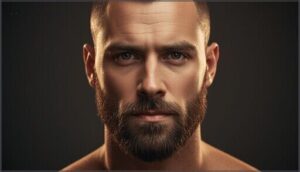
Oval faces are the lucky ones — almost every beard style works with your proportions. That’s not luck, it’s facial symmetry doing the heavy lifting. Your beard style selection guide basically starts with “pick what you like.” Still, some styles shine more than others.
| Beard Length | Best Styling Technique |
|---|---|
| 1–3mm stubble | Even trimmer pass, highlight jawline enhancement |
| Short boxed (0.5–1cm) | Clean cheek lines, sharp neckline |
| Goatee/Van Dyke | Taper the chin, keep cheeks clean |
| Full beard | Trim sides tighter than chin |
Beard texture matters too — work with what grows naturally.
Flattering Styles for Round Faces
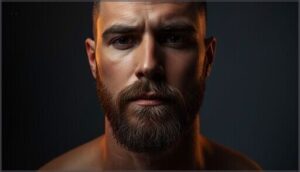
Round faces need beard styles that add length, not width — that’s the whole game. Focus your Round Face Beards strategy on chin volume and slimmer sides.
Extended goatees and Van Dykes are your best tools for Jawline Enhancement and Facial Hair Contour. Keep the cheeks trimmed short, let the chin grow out, and those Slimming Beard Tips will reshape your face shape fast.
Ideal Beards for Square and Rectangular Faces
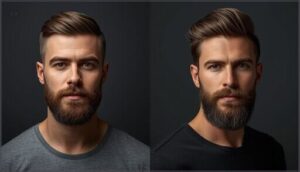
Square and rectangular faces are basically opposites in one category — both strong, but in different ways. A square jawline needs softening, so go with rounded beard bottoms, circle beards, or short full beards that ease those corners without hiding your structure. Beard Softening is the goal, not erasure.
Rectangular face? Keep Beard Proportions wider on the sides, shorter underneath — no extra chin definition needed.
Options for Heart, Diamond, and Triangle Faces
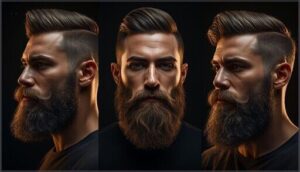
Three face shapes, three different problems to solve — but the fix is always about balance.
Heart face? You’ve got a wide forehead and a narrow chin. Build bulk along the jaw with a full beard or heavy stubble. Skip the pointy goatee — it only sharpens what’s already sharp.
Diamond beard styles work best with a boxed or full beard that evens out those strong cheekbones. Triangle face options flip the script: keep the cheeks fuller, the chin lighter, so that broad jawline doesn’t dominate.
Think of this beard style guide as Facial Hair Balance 101 — Jawline Enhancement where it counts, restraint everywhere else.
Consider Personal Style and Lifestyle

Face shape gets you pointed in the right direction, but it’s not the whole story.
Your personality, your job, and how much time you’re willing to spend in front of a mirror all matter too.
Here’s what to think through before you commit to a style.
Aligning Beard Style With Personality
Your beard is a form of self-expression — and personality traits shape that choice more than most guys realize. Beard psychology is real. The facial hair you gravitate toward quietly signals who you’re.
Your beard is not just a style choice — it is a quiet signal of who you are
- Bold and assertive? A full, thick beard owns the room.
- Creative type? A Van Dyke or Balbo sets you apart.
- Low-key but confident? Clean stubble nails that vibe.
- Detail-oriented? A sharp, sculpted style fits your grooming habits naturally.
Match your personal style to your style confidence, and the right beard almost picks itself.
Workplace and Social Considerations
Your personality shapes the pick — but your workplace shapes the corporate rules. Corporate policies are real, and ignoring them costs you.
A corporate beard with clean lines reads professional in client-facing roles. Rough or patchy? That’s a professional image problem before you even speak.
Social perception follows the same logic — trimmed edges signal intent. Beard stigma fades fast when your mens grooming looks deliberate.
Comfort and Maintenance Preferences
Style isn’t just looks — it’s how much work you’re actually willing to do. Designer stubble needs maybe five minutes every couple days.
A full beard means daily beard oil, weekly shaping, and real commitment to beard hygiene to avoid skin irritation. Honest grooming advice for men: pick a beard style that fits your actual schedule, not the one you wish you’d.
Consult With a Professional Barber

At some point, you’ve got to bring in someone who does this for a living expert. A good barber sees things you can’t — your growth patterns, your face structure, the tools that’ll actually work for you.
Here’s what they bring to the table.
Benefits of Expert Recommendations
A good barber doesn’t just trim — they solve. Through expert consultation and facial analysis, they assess your jawline, cheekbones, and chin in minutes, then give you one or two clear beard styling tips instead of leaving you drowning in options.
That’s precision guidance working for you. Proper barber recommendations for beards eliminate months of trial and error, making face shape and beard compatibility straightforward from day one.
Customizing Styles for Unique Features
Every face has quirks — and that’s exactly where a barber earns their keep. Facial Asymmetry, Patchy Growth, uneven Beard Textures — these aren’t dealbreakers. They’re puzzles with real solutions.
- Trim fuller jaw sides shorter for Jawline Enhancement without obvious effort
- Use goatee or Van Dyke styles to work around patchy cheeks
- Taper up toward cheekbones for natural Cheekbone Emphasis
- Adjust cheek lines to visually balance uneven features
Tools and Products for Each Beard Style
The right grooming tools make or break any beard style. Your barber can point you toward exactly what works for your specific look — no guesswork.
| Beard Style | Recommended Tools & Products |
|---|---|
| Stubble | Stubble Trimmer, Beard Oil |
| Short/Corporate | Beard Trimmers, Shaving Kits |
| Full Beard | Beard Straightener, Grooming Tools, Beard Wash |
| Goatee/Van Dyke | Styling Waxes, Precision Trimmers |
Maintain and Adapt Your Chosen Beard Style
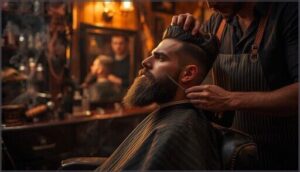
Finding the right beard style is only half the job — keeping it sharp is the other half.
A little consistency goes a long way, and knowing when to tweak things keeps you looking intentional rather than overgrown.
Here’s what you need to stay on top of it.
Essential Grooming and Trimming Tips
Even the best beard styles fall apart without a consistent routine. For beard trimming, start with a longer trimmer guard than you think you need — step down slowly.
Neckline shaping needs attention every week or two; cheek line clean-ups can stretch a bit longer. Finish with detail scissors for stray hairs. That’s what separates a maintained beard from a messy one.
Beard Care for Health and Appearance
Trimming keeps the shape, but beard hygiene keeps everything healthy underneath. Wash your facial hair a couple times a week with a gentle cleanser — lukewarm water, not hot. Pat dry, don’t rub.
Follow up with a light beard oil to replace moisture and soften coarse hair. Skipping this invites dandruff, skin conditions, and itch. Good beard care is simple — just stay consistent.
Adjusting Style as Trends and Preferences Change
Beard trends run in cycles — long and rugged one year, short and sharp the next. That’s just how fashion influence works.
A beard revamp doesn’t mean starting over. Tighten your cheek line, clean the neckline, adjust the length. Small moves, big difference.
Style evolution should feel natural, not forced. Your beard style guide is your face shape, your personality, and whatever actually feels like you.
Frequently Asked Questions (FAQs)
How do I choose a good beard style?
Start with your face shape and how your facial hair actually grows. Those two things together point you toward the right beard style faster than any beard style guide ever will.
Do beard styles work with any face shape?
Not exactly. Most beard styles work best when matched to your face shape. Oval faces get the most Style Versatility Options, while rectangle or round faces need more thought.
How to choose a beard style for a rectangular face?
A rectangular face is like a long hallway — your job is to widen it visually.
Keep sides full, chin short, and edges rounded to balance beard proportions and soften those facial contours naturally.
What is the best beard style for a round face?
For a round face, the goal is simple: add length, not width.
Goatees, Van Dykes, and ducktail shapes are your best friends — they’re classic Chin Beard Styles that work as natural Slimming Beards.
What beard styles should you avoid with a round face?
Funny enough, the styles most guys reach for first are the exact ones that backfire.
Round Face Pitfalls usually start with full cheeks, circle beards, or uniform stubble — classic Beard Style Mistakes that add width, not length.
How do I choose a beard style for a diamond face?
A diamond face is all about those wide cheekbones.
Your beard style goal is simple: add width at the chin, keep the cheeks tidy, and let jawline enhancement do the balancing work.
How do I know which beard style suits me?
Start with your face shape and how your facial hair actually grows. Those two things together point you toward the right beard style faster than any Beard Style Quiz or Style Inspiration scroll ever will.
What is the 3 month beard rule?
The 3 month beard rule means letting your beard grow untouched for 90 days.
It reveals your true facial hair density, growth patterns, and coverage — giving you real beard style guidance before making any decisions.
What is the 2 finger rule for beard?
The two finger rule is simple: stack your index and middle finger just above your Adam’s apple. Your neckline sits at the top edge — clean, natural jawline definition without guesswork.
What is the rule 5 for beards?
Rule 5 is simple: own your beard style. Once you’ve chosen a style that suits your face shape, commit to it.
That Rule Five Mindset — confident, consistent Beard Maintenance — is the real Grooming Essential nobody talks about enough.
Conclusion
Finding the right fit follows a familiar formula: face shape first, then texture, then lifestyle. That’s how to choose the right beard style without second-guessing every decision.
Your jaw, your growth patterns, your daily routine—they’re all clues pointing toward something that actually works for you. A great beard isn’t luck. It’s just paying attention to what’s already there.
Follow the fundamentals, trust a good barber, and the rest takes care of itself.