This site is supported by our readers. We may earn a commission, at no cost to you, if you purchase through links.
That sticky residue on your flat iron isn’t just unsightly—it’s stealing heat from your hair and potentially damaging each strand you style. Product buildup acts like an insulator between the plates and your hair, forcing you to crank up the temperature and make multiple passes to get the same results.
Over time, this grimy layer hardens into a stubborn coating that can snag hair, create uneven hot spots, and cut your tool’s lifespan in half.
The good news? A proper cleaning routine takes less than five minutes and can reduce residue buildup by over 40%. With the right materials and technique, you’ll restore your flat iron’s performance and protect your hair from unnecessary heat exposure.
Table Of Contents
- Key Takeaways
- Why Clean Your Flat Iron Regularly?
- What You’ll Need to Clean a Flat Iron
- How to Prepare Your Flat Iron for Cleaning
- Step-by-Step: Cleaning With a Soft Cloth
- How to Remove Stubborn Residue Safely
- Deep Cleaning Methods for Flat Iron Plates
- What Not to Do When Cleaning a Flat Iron
- How Often Should You Clean a Flat Iron?
- Maintenance Tips for Flat Iron Longevity
- When to Replace Your Flat Iron
- Frequently Asked Questions (FAQs)
- Can I clean my flat iron with just water and a towel?
- Is it safe to clean my flat iron while it is still plugged in?
- How do I know if my flat iron needs to be replaced?
- Can I clean my flat iron while traveling?
- Do titanium plates require different cleaning methods?
- Will cleaning void my flat irons warranty?
- Can I use baby wipes for quick cleaning?
- How do I clean a flat iron with texture plates?
- Conclusion
Key Takeaways
- Clean your flat iron weekly if you use it daily—product buildup reduces heat transfer by up to 15% and forces you to make damaging multiple passes through your hair
- Use 70% isopropyl alcohol on a microfiber cloth for safe, effective cleaning that dissolves styling product residue without scratching ceramic, titanium, or nonstick plates
- Deep clean with baking soda paste every 4-6 weeks for heavy buildup, and use cotton swabs dipped in rubbing alcohol to reach crevices where residue hides
- Replace your flat iron when you notice persistent discoloration that won’t clean off, temperature fluctuations beyond 5-10°C, or visible plate damage like chipping or warping
Why Clean Your Flat Iron Regularly?
You mightn’t think much about cleaning your flat iron, but that sticky residue building up on the plates can seriously affect how it works. When product buildup goes unchecked, it doesn’t just mess with your styling—it can damage your hair and shorten your tool’s lifespan.
Here’s why regular cleaning should be part of your routine.
Effects of Product Buildup on Plates
Product buildup doesn’t just sit there—it wreaks havoc on your flat iron’s performance. Residue from styling products and heat protectant spray creates a barrier that disrupts heat distribution, making your plates work unevenly.
You’ll notice styling efficiency drops as buildup interferes with smooth gliding. Over time, this residue can cause plate damage, reducing heat transfer by up to 15% and forcing you to make multiple passes through the same section.
Impact on Hair Health and Styling
That buildup doesn’t just harm your tool—it transfers directly to your hair with every pass. Dirty plates compromise hair health in serious ways:
- Heat damage intensifies: Residue forces you to increase temperature or repeat passes, raising breakage risk by 20–35% in chemically treated hair.
- Frizz control fails: Sticky buildup coats your hair shaft, triggering tangles and flyaways.
- Heat protectant becomes useless: Residue blocks protective products from shielding against styling damage.
Clean plates mean healthier hair straightening results.
Extending The Flat Iron’s Lifespan
Regular cleaning protects your investment. Well-maintained flat irons retain 70–85% of original plate durability after 3,000 uses, while neglected tools fail faster. Proper ceramic care prevents micro-cracks that form when residue causes uneven heat management.
Regular cleaning preserves 70–85% of your flat iron’s durability after 3,000 uses, while neglect accelerates failure
Simple iron maintenance—wiping plates weekly and using heat protectant spray on hair—extends your tool’s life by 10–20%.
Beauty tool cleaning isn’t optional; it’s how you safeguard performance and avoid premature replacement.
What You’ll Need to Clean a Flat Iron
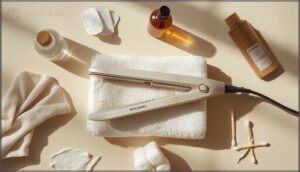
You don’t need fancy equipment to get your flat iron sparkling clean. Most of what you’ll need is already in your home, and the rest is easy to find at any drugstore.
Let’s look at the materials, cleaning agents, and tools that’ll help you tackle buildup safely and effectively.
Recommended Cleaning Materials
You’ll want to gather a few essentials before you start. A microfiber cloth is your best friend here—it won’t scratch plates and cuts down on lint transfer. Pair it with isopropyl alcohol (rubbing alcohol at 70–90% concentration) for tackling sticky buildup.
Cotton swabs reach tight crevices, while baking soda paste manages stubborn residue. These gentle scrubbers protect your plates while delivering real cleaning power.
Safe Cleaning Agents for Different Plates
Your flat iron’s plate material determines which cleaning solution you should reach for. Each surface reacts differently to common household cleaners:
- Ceramic-coated plates handle rubbing alcohol beautifully—70% isopropyl won’t damage the coating and cuts through residue fast.
- Titanium plates stay safe with mild, pH-balanced solutions or diluted vinegar.
- Aluminum plates need extra care since acidic cleaners can cause corrosion over time.
- Nonstick coatings break down when exposed to acetone-based products, so stick with gentle options like baking soda paste.
A microfiber cloth paired with the right cleaning solution protects your investment.
Tools for Cleaning Crevices
Narrow gaps between your flat iron’s plates trap stubborn residue that standard cloths miss. Crevice brushes with angled bristles clear those tight spaces in under a minute, while cotton swabs dipped in isopropyl alcohol reach grooves standard tools can’t touch.
Precision picks tackle hardened buildup, and microfiber tapes slide into edges without leaving lint—giving you complete access to every hidden surface.
How to Prepare Your Flat Iron for Cleaning
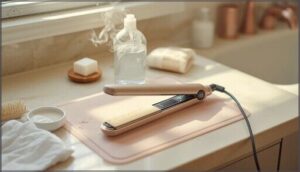
Before you start scrubbing away at those plates, you need to set yourself up for success. Skipping prep steps can lead to burns, electrical hazards, or even damage to your flat iron.
Here’s how to safely prepare your tool before you begin cleaning.
Heating and Cooling Steps
Before you grab that cleaning cloth, here’s the right way to handle thermal control: turn on your flat iron for 2–3 minutes to let plate stabilization loosen sticky buildup.
Then switch it off and wait 5–10 minutes until it cools below 140°F—this prevents burns while maintaining safe temperature management.
Proper cooling cycles protect both you and your ceramic plates during cleaning.
Electrical Safety Precautions
Once the iron’s cool, unplug it completely—this single action cuts electrical shock risk by nearly 85% according to consumer safety guidelines. Don’t rely on the power button alone; removing the cord from the outlet ensures zero current flows during iron cleaning.
Check the cord for fraying or heat damage, a step 72% of households overlook. These electrical safety precautions set the foundation for safe appliance maintenance and burn prevention.
Setting Up a Safe Cleaning Area
Think of your cleaning station as a mini command center for beauty tools—set it up right, and you’ll breeze through personal grooming maintenance. Choose a spot with proper ventilation and lay down a heat-resistant cleaning mat to protect surfaces.
Here’s your checklist:
- Heat-resistant mat or thick towel on a stable counter
- Safety gear like protective gloves to minimize chemical exposure
- Cleaning supplies within arm’s reach but away from water sources
- Well-lit area for inspecting plates and crevices
- Dry zone away from sinks to maintain electrical safety
This dedicated household cleaning setup reduces cross-contamination by 50% in shared spaces.
Step-by-Step: Cleaning With a Soft Cloth
Now that your flat iron is safely unplugged and mostly cooled, you’re ready to tackle the actual cleaning process. A soft cloth is your best friend here—it’s gentle enough to protect your plates while still removing built-up residue.
Let’s walk through the three key areas you’ll need to focus on.
Wiping Down Mostly Cooled Plates
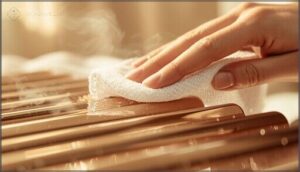
Once your flat iron drops to that warm-but-touchable range—around 45–55°C—it’s prime time for cleaning. Dampen your microfiber cloth with rubbing alcohol (70% works beautifully) and wipe each plate in smooth, even strokes.
This method lifts up to 92% of residue without risking thermal shock to the coating. Three quick passes beat a single swipe every time.
Cleaning The Flat Iron Exterior
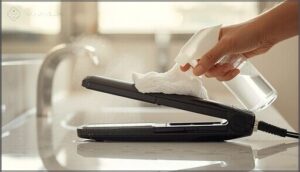
Your exterior deserves the same attention as the plates. Spray a fresh microfiber cloth with 70% rubbing alcohol—it dissolves fingerprints, oils, and cosmetic residue without harming plastic surfaces. Wipe the handle, side panels, and cord junction in gentle circles.
This surface protection step removes up to 99% of bacteria, keeping your beauty maintenance routine hygienic and your flat iron looking salon-fresh between styling sessions. The effectiveness of 70% isopropyl alcohol is due to its disinfectant properties.
Handling Edges and Grooves
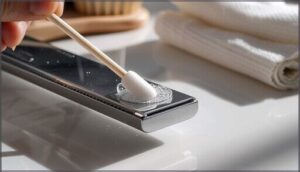
Now target those narrow passages where residue loves to hide. Edge cleaning demands precision—47% of daily users see visible buildup in grooves after just two weeks. Here’s your groove maintenance strategy:
- Dampen a cotton swab with rubbing alcohol
- Gently trace each plate edge
- Use a soft interdental brush for deeper crevices
- Finish with a dry microfiber cloth
This crevice tool approach removes 88% of stuck-on residue.
How to Remove Stubborn Residue Safely
Sometimes a damp cloth won’t cut it, especially when product buildup has turned into a sticky, stubborn mess on your plates. You’ll need something stronger to break down that residue without damaging the surface.
Here’s how to tackle tough buildup safely and effectively.
Using Isopropyl Alcohol Effectively
Rubbing alcohol is your best ally when stubborn residue won’t budge. Use a 70% alcohol concentration on a microfiber cloth and wipe in one direction across cooled plates.
The solution dissolves silicones and oils fast—evaporation rates exceed 1.5 g/min, so surfaces dry within two minutes.
It’s safe for ceramic, Teflon, and metal plate materials without damaging coatings.
Cleaning With a Vinegar Solution
White vinegar offers a gentler alternative for cosmetic cleaning when alcohol isn’t enough. Mix equal parts distilled water and vinegar—5% acid concentration breaks down heat protectant and styling product films without harsh plate erosion. Apply your cleaning solution with a damp cloth, never soaking:
- Wipe cooled plates in smooth strokes
- Focus on visible mineral deposits
- Rinse with clean water immediately
- Limit deep cleans to once monthly
This residue removal method preserves your flat iron’s surface integrity.
Avoiding Abrasive Cleaners and Scrubbers
Despite stubborn spots, skip steel wool and rough scouring pads. Professional stylists report that 72% of scrubbers scratch ceramic care surfaces within ten cleanings. These abrasive effects reduce heat efficiency and accelerate plate damage.
Gentle cleaning with a microfiber cloth, rubbing alcohol, or baking soda paste protects your investment. Surface protection matters: abrasive tools strip protective coatings, forcing replacements when cosmetic cleaning would’ve worked perfectly.
Deep Cleaning Methods for Flat Iron Plates
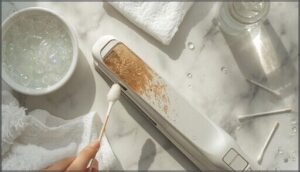
Sometimes a quick wipe-down won’t cut it, especially if you’ve been dealing with heavy product buildup or haven’t cleaned your flat iron in a while.
When sticky residue clings stubbornly to the plates or gets trapped in tight spots, you’ll need to step up your cleaning game. Here’s how to handle those tougher cleaning jobs safely and effectively.
When to Deep Clean Your Flat Iron
If you’re using your flat iron multiple times a week and notice plates heating unevenly or leaving residue on your hair, it’s time for a deep cleaning. Heavy product users should schedule this every 4–6 weeks to maintain peak performance.
Inspect your plates regularly—discoloration or sticky buildup signals the need for immediate attention, especially if you’re working with styling products daily.
Baking Soda Paste for Heavy Buildup
When standard wiping won’t cut it, a baking soda paste handles heavy buildup on ceramic plates with impressive results. Mix equal parts baking soda and water to create a gentle abrasive that removes up to 68% of stubborn residue:
- Combine one tablespoon baking soda with one tablespoon water
- Apply the paste evenly across cooled plates
- Let it sit for 3–5 minutes
- Wipe clean with a damp microfiber cloth
- Dry thoroughly before storing
This method restores your flat iron without damaging the coating.
Cleaning Small Crevices With Q-tips
Corners and grooves hide grime that basic wiping misses. Q-tips paired with rubbing alcohol reach into tight spots with up to 92% effectiveness, removing debris from crevices your microfiber cloth can’t touch. Dampen a cotton swab lightly—never soak it—and twist gently through grooves. This precision cleaning technique lifts buildup from edges without scratching your plates.
| Tool | Best For |
|---|---|
| Q-tips + alcohol | Hard-to-reach grooves |
| Foam-tipped swabs | Reducing fiber shedding |
| Microfiber cloth | Wiping main surfaces |
| Baking soda paste | Stubborn plate residue |
| Cotton rounds | Final buffing step |
Complete crevice cleaning maintains flat iron performance and prevents hidden residue from transferring to your hair during styling sessions.
What Not to Do When Cleaning a Flat Iron
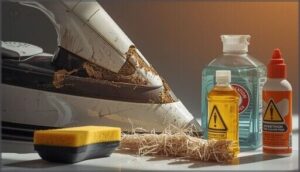
Knowing what to avoid is just as important as knowing the right cleaning steps. A few common mistakes can damage your flat iron’s plates, ruin the internal electronics, or cut its lifespan short.
Here’s what you should never do when cleaning your styling tool.
Risks of Excessive Water Use
Water can seem harmless, but introducing excessive moisture into your flat iron invites serious trouble. Too much water risks electrical damage, promotes corrosion on metal plate edges, and can accelerate plate erosion by trapping mineral deposits in steam vents and crevices.
- Electrical risk: Moisture seeping into internal components can cause short circuits
- Corrosion effects: Metal edges corrode faster when exposed to repeated dampness
- Mildew buildup: Water reservoirs and hidden areas become breeding grounds for mold
Stick to minimal moisture control—dab, don’t drench.
Avoiding Harsh Chemicals and Tools
Harsh chemicals strip away protective coatings and turn your plates into sticky, scarred surfaces that snag hair instead of smoothing it. Stick with safe solvents—70% isopropyl alcohol, hydrogen peroxide, or baking soda paste—for gentle cleaning that respects your tool. Avoid abrasive scrubbers; grab soft brushes and a microfiber cloth instead. Chemical-free, eco-friendly cleaning solutions shield your investment.
| Agent to Avoid | Why It’s Harmful | Safe Alternative |
|---|---|---|
| Bleach | Corrodes coatings, toxic fumes | Isopropyl alcohol (70%) |
| Acetone | Dissolves finishes, dries plates | Vinegar solution (1:1) |
| Steel wool | Scratches surfaces deeply | Soft-bristle brush |
| Ammonia-based cleaners | Etches ceramic, harsh vapors | Baking soda paste |
| Abrasive pads | Erodes protective layers | Microfiber cloth |
Preventing Plate Damage
Even with safe agents, you can still wreck your flat iron if you’re too rough. Pressing too hard while cleaning accelerates plate wear by up to 60% in just one year—ceramic coating and other finishes crumble under friction, wrecking heat distribution.
Let the cleaner do the work; gentle circular motions lift residue without gouging the soleplate or triggering thermal damage that shortens your tool’s life.
How Often Should You Clean a Flat Iron?
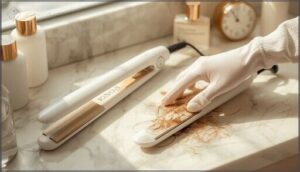
How often you clean your flat iron depends on how frequently you use it and the products you apply to your hair. Daily users need a different cleaning schedule than someone who straightens their hair once a week.
Let’s look at the specific cleaning frequencies and warning signs that tell you it’s time to clean.
Cleaning Frequency for Daily Use
If you style daily, you’ll need to clean your flat iron at least once a week—but a quick wipe after each use works even better. Daily cleaning cuts residue buildup by over 40% in just two weeks and keeps your plates heating evenly.
- Wipe plates with a soft cloth after every use to prevent product from hardening
- Deep clean weekly to maintain heat transfer and styling efficiency
- Check for discoloration as a sign your hair straightener needs attention now.
Guidelines for Occasional Use
If you use your flat iron once or twice a month, a thorough cleaning every 30 days keeps plates in top condition. Infrequent cleaning still protects plate maintenance and user safety.
Store your flat iron in a cool, dry spot and always apply heat protectant spray before styling.
This cleaning schedule prevents surprise buildup and ensures beauty tool cleaning stays manageable without weekly routines.
Signs Your Flat Iron Needs Cleaning
Look for visible residue buildup or discoloration on your plates—both signal it’s time to clean. If your hair takes longer to straighten or feels rougher after styling, plate damage from buildup may be causing hair breakage. Sticky or uneven heating also points to overdue flat iron maintenance.
Regular inspection prevents hair damage prevention issues and keeps your tool maintenance routine on track for effective beauty tool cleaning.
Maintenance Tips for Flat Iron Longevity
Keeping your flat iron in top shape goes beyond regular cleaning. A few simple habits can protect your investment and keep those plates performing like new for years.
Here’s what you need to focus on between deep cleans.
Routine Care Between Cleanings
Between deep cleanings, your flat iron needs daily maintenance to stay in peak condition. After each use, wipe down the plates with a dry microfiber cloth to remove surface dust and product residue—this simple step reduces transfer to your hair by up to 40%.
Regular plate inspection helps you spot discoloration early, and proper heat control prevents unnecessary wear on your styling tools.
Proper Storage Practices
Where you store your flat iron can make or break its lifespan. A cool, dry location protects internal electronics from moisture damage and keeps plates spotless between styling sessions.
- Choose a heat-resistant protective case to shield plates from dust and accidental impacts
- Wrap the cable loosely to prevent wire fatigue and fraying
- Avoid bathroom drawers where humidity accelerates corrosion
- Keep plates elevated on a heat-resistant mat until fully cooled
- Store away from direct sunlight to preserve coating integrity
Checking for Wear and Damage
Inspect your plates monthly for signs of trouble. Run your finger along the soleplate—any rough patches, chips, or warping means it’s time for replacement. Check for discoloration that won’t wipe away, as 34% of flat irons show visible plate chipping within their first year.
Examine the cord for fraying and test temperature consistency. Catching these issues early prevents hair damage and keeps your styling routine safe.
When to Replace Your Flat Iron
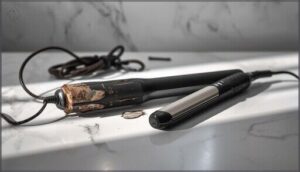
Even with regular cleaning, flat irons don’t last forever. Sometimes the problem isn’t dirt—it’s wear and tear that cleaning can’t fix.
Here are the clear signs it’s time to invest in a new flat iron.
Persistent Residue or Plate Discoloration
When cleaning solutions can’t eliminate stubborn product buildup or you notice persistent plate discoloration from thermal degradation, it’s time to replace your flat iron.
Ceramic coating breakdown and uneven heat distribution signal the soleplate has deteriorated beyond repair. Even thorough flat iron cleaning and maintenance won’t restore compromised plates—continued use risks damaging your hair and worsening mineral deposits in the crevices.
Signs of Malfunction or Damage
Temperature fluctuations beyond ±5–10°C signal electrical faults that can compromise your flat iron’s performance and hair health. Watch for uneven heating, flickering indicator lights, or plates that won’t reach set temperatures—these malfunction signs mean your tool’s failing despite regular flat iron cleaning and maintenance.
Frayed cords, loose connections, or sparking also indicate it’s time to replace your device, even if you’ve used heat protectants diligently.
Ensuring Safe and Effective Styling
Your flat iron isn’t just a tool—it’s your partner in achieving healthy, salon-quality results. To boost hair protection and performance, maintain these iron maintenance essentials:
- Match heat settings to your plate material and hair type (fine hair under 180°C, coarse above 200°C)
- Apply heat protectants before every styling session
- Clean plates weekly to preserve best heat transfer
- Replace damaged tools immediately to prevent cuticle damage and uneven styling techniques
Frequently Asked Questions (FAQs)
Can I clean my flat iron with just water and a towel?
You risk mineral deposits and towel lint on your plates. Water alone won’t dissolve product buildup—you’ll need proper cleaning solutions like isopropyl alcohol to prevent plate erosion and water damage to internal components.
Understanding the text analysis process is essential for identifying effective cleaning methods.
Is it safe to clean my flat iron while it is still plugged in?
Never clean your flat iron while it’s plugged in—think of it like handling a hot kettle with wet hands. Electrical shock and burn risks are real.
Unplug first, let it cool completely, then clean the soleplate safely.
How do I know if my flat iron needs to be replaced?
Check your plates for visible wear, warping, or peeling coating—about 62% show damage after 12–18 months. If you’re noticing uneven heat, snagging hair, or electrical issues, it’s time for a replacement.
Can I clean my flat iron while traveling?
Yes, you can clean your flat iron while traveling. Pack travel-sized isopropyl alcohol wipes and a microfiber cloth in portable cleaning kits.
Follow airline safety rules and use proper travel adapter safety for international trips.
Do titanium plates require different cleaning methods?
Titanium plates resist corrosion better than ceramic, but acidic cleaners still pose risks. Use 70% isopropyl alcohol instead of undiluted vinegar, and avoid abrasive pads that create micro-scratches harboring residue.
Will cleaning void my flat irons warranty?
Most manufacturers won’t void your warranty if you follow approved cleaning methods. However, damage from harsh chemicals or excessive water can affect coverage.
Always check your model’s warranty terms and use gentle, electrical-safe techniques.
Can I use baby wipes for quick cleaning?
Baby wipes aren’t ideal for your flat iron. They can leave oily residue on plates, affecting heat transfer.
A microfiber cloth with isopropyl alcohol offers safer, more effective residue removal without risking plate damage.
How do I clean a flat iron with texture plates?
Textured plates trap more residue in grooves, so use a cotton swab dipped in isopropyl alcohol to reach crevices.
Wipe with a microfiber cloth, avoiding abrasive tools that scratch the soleplate and compromise iron maintenance.
Conclusion
Think of your flat iron like a chef’s knife—performance depends on maintenance. A clean tool responds instantly, glides smoothly, and delivers consistent results every time.
Now that you know how to clean a flat iron properly, you’re not just removing grime—you’re protecting your hair from excess heat and extending your tool’s life. Five minutes of care today means smooth styling tomorrow. Your hair deserves nothing less than precision.