
This site is supported by our readers. We may earn a commission, at no cost to you, if you purchase through links.
Your scalp produces about one gram of sebum daily, and when that oil traps dead skin cells and product residue, your hair follicles can’t breathe. Clogged follicles don’t just cause those irritating bumps and itching—they create an environment where bacteria thrive, inflammation spreads, and hair growth stalls.
You might scrub your face religiously but neglect the skin beneath your hair, letting buildup accumulate for weeks.
The good news: cleaning your follicles doesn’t require expensive treatments or dermatologist visits for most cases. With the right techniques—from proper cleansing methods to targeted exfoliation—you can restore your scalp’s health, eliminate those painful pustules, and create conditions where your hair can actually grow.
Table Of Contents
Key Takeaways
- Clogged follicles result from sebum, dead skin cells, product residue, bacteria, and mechanical irritation combining to block pores, trigger inflammation, and stall hair growth—but you can reverse most cases with proper cleansing, exfoliation, and targeted treatments before permanent damage occurs.
- Clean your follicles using gentle shampooing techniques with mild surfactants, weekly exfoliation with salicylic acid or physical scrubs, clarifying shampoos to strip buildup, and medicated formulas containing ketoconazole or zinc pyrithione when bacterial or fungal infections develop.
- Prevent future clogs by washing daily after sweating, choosing lightweight water-based products over heavy silicones, shaving with sharp razors in the direction of growth, and maintaining weekly pillowcase changes to eliminate recontamination from accumulated oils and bacteria.
- Seek professional help immediately if symptoms persist beyond four weeks, pus-filled bumps spread, fever or lymph node swelling develops, or scarring and permanent hair loss begin—dermatologists can prescribe topical antibiotics, systemic antifungals, or laser treatments that over-the-counter products can’t match.
What Causes Clogged Hair Follicles?
Your hair follicles don’t clog themselves overnight. Several culprits, from your body’s natural oil production to external irritants, can block these tiny openings and trigger inflammation.
Once follicles are clogged or inflamed, you might explore natural remedies for alopecia to ease symptoms, though they won’t reverse autoimmune-driven hair loss.
Let’s break down the five main causes so you can identify what’s affecting your skin.
Understanding the root cause is the first step toward relief—check out this complete breakdown of what triggers shaving irritation to see which factors apply to you.
Excess Sebum and Oil Production
Your scalp’s oil glands can shift into overdrive, pumping out two to three times more sebum during hormonal surges. This excess oil traps debris, clogs follicles, and creates a breeding ground for scalp issues.
Luckily, you can tackle this at the source with simple home remedies for an oily scalp that rebalance sebum production naturally.
- Androgens trigger sebaceous glands to produce excessive oil, especially during adolescence or stress
- High-glycemic foods can temporarily spike sebum output on your scalp
- Genetic factors determine your baseline oil production levels, explaining why some people battle greasier scalps than others
Dead Skin Cell Buildup
Your skin sheds roughly 30,000 to 40,000 dead cells every minute, and when natural shedding outpaces clearance, those cells pile up on your scalp. This buildup mixes with sebum to form a crusty layer that clogs pores and chokes hair follicles.
Fortunately, proven scalp buildup removal methods can dissolve this crusty layer and restore healthy follicle function before shedding worsens.
Your skin sheds tens of thousands of dead cells every minute, and when they pile up faster than they clear, they mix with oil to clog your follicles
Regular scalp exfoliation and proper pore cleansing remove accumulated debris, supporting healthy skin renewal and follicle health without disrupting your scalp’s protective barrier.
Product and Residue Accumulation
Heavy conditioners, silicones, and styling products don’t just vanish after you rinse—they cling to your scalp, mix with minerals from hard water, and seal off hair follicles like concrete.
To break this cycle and restore scalp health:
- Use clarifying shampoos weekly to strip product buildup and residue
- Avoid dimethicone-heavy formulas that suffocate clogged pores
- Rinse twice as long as you think you need
- Rotate hair care routines to prevent accumulation
Bacterial and Fungal Infections
Microbes don’t wait for permission to invade—when bacteria like Staphylococcus aureus or fungi like Malassezia colonize your follicles, they trigger painful pustules, redness, and full-blown folliculitis.
Poor scalp hygiene and humid conditions create the perfect breeding ground for these infections.
You’ll need topical or oral antibiotics for bacterial resistance issues, while fungal infections demand systemic antifungals to penetrate deep and restore microbial balance.
Ingrown Hairs and Mechanical Irritation
When you shave, wax, or squeeze into tight clothes, you’re setting up a collision course—hair shafts bend, re-enter the skin, and trap themselves beneath the surface, triggering follicle inflammation and skin irritation.
Here’s how mechanical damage from hair removal methods fuels ingrown hair causes and clogged hair follicles:
- Shaving creates sharp, angled hair tips that pierce back into surrounding tissue.
- Waxing tears hairs mid-shaft, leaving fragmented roots prone to misdirection.
- Tight garments compress follicular openings, narrowing escape routes for emerging strands.
- Repeated friction inflames hair canals, thickening keratin and blocking regrowth pathways.
- Improper technique produces microtrauma, inviting secondary skin infection treatment needs and folliculitis flare-ups.
How to Identify Clogged Hair Follicles
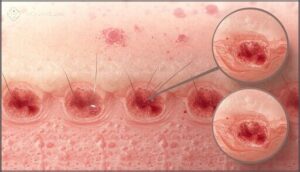
Recognizing clogged hair follicles early gives you the upper hand in preventing further irritation, infection, or hair loss. You’ll need to know what physical signs to look for, where they usually appear on your body, and how to distinguish them from conditions that may look similar but require different treatment.
If you’ve already damaged your follicles through chemical treatments, learning how to reduce hair loss after bleaching can help you restore scalp health and prevent ongoing follicle blockage.
The following sections will walk you through the key indicators that signal clogged follicles, the most vulnerable areas on your skin, and the critical differences between folliculitis and other common scalp issues.
Common Signs and Symptoms
You’ll notice clogged hair follicles as small, red bumps that resemble pimples clustered around individual hairs, often accompanied by itching, tenderness, or a burning sensation that won’t quit. Understanding the causes of hair follicle issues is essential for effective treatment and prevention.
Watch for pus bumps or whiteheads developing around the affected follicles, which signal bacterial involvement in the folliculitis. You might experience an itchy scalp with persistent flaking despite regular shampooing, indicating deeper blockage. Red inflammation spreads as dead cells accumulate, while crusty skin forms over damaged areas. Severe follicle inflammation can disrupt growth cycles, potentially leading to hair loss if you don’t address blocked hair follicles promptly through proper hair follicle care.
| Symptom | What It Indicates |
|---|---|
| Pus-filled bumps, tenderness | Bacterial infection present |
| Persistent itching, flaking | Oil and debris buildup |
| Red inflammation, warmth | Active follicle inflammation |
| Thinning hair, bald patches | Prolonged damage, hair loss |
Areas Most Commonly Affected
Clogged hair follicles strike hardest where oil glands work overtime, trapping sweat, dead skin cells, and product residue in follicles you didn’t know were vulnerable. Folliculitis doesn’t discriminate—it targets your scalp follicles, facial hair zones, and areas constantly rubbing against fabric.
- Scalp: Sebum buildup and dead cells block follicles, causing itchy inflammation and potential hair loss.
- Face and neck: Shaving irritates follicles along your jawline, triggering body acne-like bumps and neck irritation.
- Back and chest: Dense hair follicles trap sweat, breeding bacteria that inflame blocked hair follicles and sometimes ear infections nearby.
Differentiating From Other Scalp Conditions
Your scalp might be sending distress signals, but pinpointing whether it’s clogged follicles or something else requires a closer look at the symptoms. Compare your signs against these distinct scalp conditions and treatment patterns:
| Condition | Key Symptoms | What Sets It Apart |
|---|---|---|
| Clogged Hair Follicles (Folliculitis) | Inflamed bumps, pus-filled whiteheads, itching around follicles | Bumps form directly at hair roots, worsen after shaving or sweating |
| Dandruff Causes | White flakes, mild itching, oily or dry scalp | Flaking without inflammation, improves with anti-dandruff shampoo |
| Scalp Eczema | Red patches, intense itching, weeping or crusting | Skin irritation spreads beyond follicles, triggered by allergens |
| Psoriasis Symptoms | Thick silvery scales, well-defined plaques, bleeding when scratched | Scales extend past hairline onto forehead and neck |
| Fungal Infections | Ring-shaped lesions, hair breakage, musty odor | Hair loss in circular patches, contagious to others |
Don’t self-diagnose if symptoms overlap—fungal infections mimic folliculitis, while scalp eczema shares itching patterns with clogged follicles, making professional evaluation critical for scalp health and care.
Step-by-Step Guide to Cleaning Hair Follicles
Cleaning clogged hair follicles requires a systematic approach that combines proper technique with the right products. You’ll need to address both the surface buildup and the deeper blockages that prevent healthy hair growth.
The following methods will help you restore clear follicles and reduce inflammation, whether you’re treating your scalp or other affected areas of your body.
Gentle Cleansing Techniques
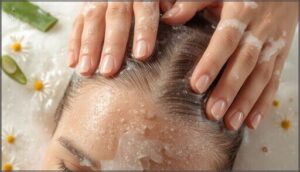
Start by choosing shampoos with mild surfactants that cleanse without stripping your scalp’s natural barrier. Use warm water around body temperature and apply gentle shampooing with soft fingertip pads in circular motions—this scalp massage boosts circulation while removing debris.
Focus on these fundamentals for scalp care:
- Limit wash sessions to two to five minutes to minimize mechanical stress
- Let lather flow down hair lengths rather than scrubbing vigorously
- Rinse thoroughly with cooler water to smooth the cuticle and support hair follicle health.
Regular scalp massage can help achieve sebum balance.
Exfoliation Methods for Scalp and Skin
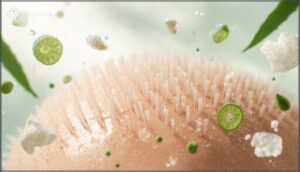
Mechanical scalp exfoliation using soft silicone brushes clears follicular debris more effectively than fingertips alone, while chemical peels with salicylic acid or glycolic acid dissolve the keratin plugs trapping oils and dead cells.
Apply gentle circular motions with sugar scrubs once weekly for oily scalps, but limit sensitive skin to biweekly sessions with hydrating formulas containing aloe or jojoba oil to prevent barrier disruption.
Using Medicated and Clarifying Shampoos

Beyond physical exfoliation, medicated ingredients like ketoconazole (1–2%) target fungal buildup while zinc pyrithione fights bacteria in your follicles. Alternate these with clarifying shampoo every 1–2 weeks to strip product residue and restore clean hair follicles. Lather for 3–5 minutes, rinse thoroughly, and follow this scalp cleansing protocol:
- Choose medicated formulas for active folliculitis flare-ups
- Use clarifying benefits to remove environmental buildup
- Avoid product interactions by scheduling around hair dye treatments
Home Remedies and Natural Solutions

Natural oils like tea tree (diluted to 1–2%) and jojoba provide antimicrobial action against bacteria, while scalp massage with argan oil for 3–5 minutes loosens debris.
Herbal remedies, including witch hazel astringent rinses and aloe vera gel, soothe irritation between treatments. Apple cider vinegar cuts residue naturally, supporting folliculitis relief when paired with these natural hair care tips.
| Remedy | Application Method |
|---|---|
| Tea Tree Oil | Mix 5 drops per tablespoon carrier oil, massage gently |
| Aloe Vera Gel | Apply weekly to calm inflamed follicles |
| Apple Cider Vinegar | Dilute 1:2 with water, rinse after shampooing |
Best Practices to Prevent Future Clogs

You’ve cleared the buildup, but keeping your follicles clean long-term requires consistent habits, not just one-time fixes. Prevention isn’t complicated, but it does demand attention to what you put on your scalp, how you treat your skin, and the daily choices that either protect or sabotage your follicles.
Focus on these four areas to stop clogs before they start.
Personal Hygiene Habits
Maintaining personal hygiene forms the foundation of preventing folliculitis and keeping hair follicles clear. Shower daily with mild soap and warm water, especially after sweating from workouts or heat exposure. Massage your scalp gently during washing to loosen oils and debris.
Wash pillowcases weekly to remove bacteria, fungi, and accumulated oils. Clean hair brushes every seven days to prevent reintroducing contaminants to your scalp.
Hair Care Product Selection and Use
Your hair care product selection directly impacts follicle health, so choose wisely based on your scalp type. Use clarifying shampoos once weekly to prevent buildup, rotating products to avoid residue accumulation. Look for gentle formulas with salicylic acid or tea tree oil for scalp care and maintenance. Avoid heavy silicones and comedogenic ingredients that block follicles, opting instead for lighter, water-based options that support hair growth promotion.
| Scalp Type | Recommended Ingredients | Products to Avoid |
|---|---|---|
| Oily | Salicylic acid, tea tree oil | Heavy silicones, dimethicone |
| Dry | Hyaluronic acid, glycerin | Harsh sulfates, alcohol-based formulas |
| Normal | Balanced pH formulas, light oils | Comedogenic ingredients, long-chain esters |
| Sensitive | Fragrance-free, gentle cleansers | Artificial dyes, strong exfoliants |
| Combination | Targeted treatments by zone | One-size-fits-all products |
Proper Hair Removal Techniques
Switch up your hair removal techniques to protect hair follicles from trauma and folliculitis. Shave with sharp, clean razors in the direction of growth, applying non-irritating gel to minimize clogged hair follicles.
For waxing, exfoliate gently 24–48 hours before treatment, avoid active breakouts, and follow aftercare routines with cool compresses.
Sugaring benefits include reduced irritation when you choose professional services and patch-test beforehand.
Lifestyle Adjustments for Scalp Health
Surprisingly, your daily habits reshape scalp health from the inside out. Aim for 7–9 hours of sleep nightly, drink 2.7–3.7 liters of water daily, and include omega-3s and zinc in a healthy diet to reduce inflammation affecting hair follicles.
Practice stress reduction through mindfulness or exercise, incorporate scalp massage into your hair care routine, and maintain regular scalp exfoliation to support skin health and prevent clogs.
When to Seek Professional Help

You can manage most clogged hair follicles at home, but some situations require a dermatologist’s expertise. Recognizing when your symptoms exceed what over-the-counter treatments can handle protects you from complications and unnecessary suffering.
Watch for these specific warning signs that indicate it’s time to schedule a professional consultation.
Persistent or Severe Symptoms
If symptoms persist beyond four weeks despite proper cleansing, you’re likely facing a deeper issue that demands professional evaluation. Severe itching, widespread skin irritation, or signs of bacterial infection indicate your body’s losing this battle on its own.
Watch for these red flags requiring immediate dermatologist intervention:
- Pus-filled bumps with severe inflammation or spreading folliculitis
- Chronic scalp infections unresponsive to standard anti-dandruff shampoos
- Persistent hair loss or visible follicle damage in affected areas
- Fever, lymph node swelling, or lesions extending beyond the initial site
- Scarring or permanent bald patches developing from recurrent clogged hair follicles
Don’t wait until infection treatment becomes complicated.
Medical Treatments and Dermatologist Advice
When folliculitis refuses to budge, dermatologists deploy precision weapons you can’t buy over the counter. Topical therapies like clindamycin or mupirocin are used for bacterial infection treatment, while antifungal shampoos containing ketoconazole target stubborn Malassezia overgrowth in hair follicles.
For chronic cases, dermatology experts may recommend laser treatments targeting pigment in follicles or systemic medications like isotretinoin, which achieves 90 percent stable remission in neutrophilic scalp folliculitis. Dermatologist guidance ensures appropriate procedural interventions and monitors for adverse effects during extended therapy.
| Treatment Category | Common Options | Typical Use Cases |
|---|---|---|
| Topical Therapies | Clindamycin, mupirocin, benzoyl peroxide | Mild bacterial folliculitis, surface infections |
| Systemic Medications | Oral antibiotics (dicloxacillin, cephalexin), fluconazole | Severe or recurrent bacterial/fungal folliculitis |
| Antifungal Agents | Ketoconazole shampoo, ciclopirox, selenium sulfide | Malassezia folliculitis, seborrheic scalp conditions |
| Procedural Interventions | Laser treatments, photodynamic therapy | Treatment-resistant chronic folliculitis |
| Specialty Protocols | Isotretinoin, dapsone, long-term antibiotics | Scarring folliculitis, folliculitis decalvans |
Warning Signs of Complications
When redness signs persist beyond 48 hours or swelling treatment doesn’t reduce tender, pus-filled boils, you’re staring down a complication that demands immediate attention.
Fever symptoms, spreading inflammation, or enlarged lymph nodes signal that your blocked hair follicles have crossed into serious skin infections territory—folliculitis has escalated, and scalp inflammation reduction requires professional intervention now.
Frequently Asked Questions (FAQs)
Can diet affect hair follicle cleanliness and health?
Yes, your plate shapes your scalp more than most realize. Nutrient deficiencies, dietary patterns, gut microbiome shifts, and macronutrient balance directly influence scalp health, sebum production, inflammation, and hair follicle function.
How often should you deep clean follicles?
Deep clean your scalp once or twice monthly if you have normal hair; weekly for oily scalps with heavy product buildup.
Sensitive or dry scalps need deep cleansing only every two to three weeks.
Are clogged follicles reversible or cause permanent damage?
Think of your follicles like a garden—most clogged hair follicles are reversible with prompt inflammation control and scalp rehabilitation, but severe or prolonged blocked hair follicles can cause permanent damage, making hair loss prevention and follicle function restoration critical for damage reversal.
Can stress or hormones worsen follicle clogging?
Absolutely—your stress hormones directly trigger sebaceous glands to overproduce sebum, while androgens boost oil synthesis in follicle units, creating the perfect storm for clogs that compromise scalp health and follicle function.
Do certain hairstyles increase follicle clog risk?
Here’s the straight truth: tight hairstyles, hair extensions, and occlusive styles all increase your risk of follicle damage and clogged hair follicles by trapping sebum, limiting airflow, and creating constant tension that compromises scalp health.
Conclusion
Don’t let buildup get under your skin—or your scalp. When you know how to clean hair follicles properly, you take back control from the bacteria, oils, and debris that create inflammation and stunt growth.
Apply the cleansing techniques, exfoliation methods, and preventive habits outlined here consistently, not sporadically. Your follicles will respond: less irritation, fewer bumps, healthier hair.
This isn’t complicated dermatology—it’s deliberate care that delivers measurable results.