This site is supported by our readers. We may earn a commission, at no cost to you, if you purchase through links.
Most men focus on sculpting the perfect beard but forget the detail that separates amateurs from pros: a clean neckline. That scruffy shadow creeping down your throat doesn’t make you look rugged. It makes you look like you gave up halfway through grooming.
The difference between a sharp beard and an unkempt mess often comes down to three minutes and knowing where to draw the line. Your Adam’s apple becomes your best friend here. Position your index finger just above it and you’ve found your natural boundary. Remove everything below that point with confidence.
The technique isn’t complicated, but precision matters. One clean horizontal cut parallel to your jawline transforms your entire look from sloppy to intentional.
Table Of Contents
- Key Takeaways
- How to Find Your Beard Neckline
- Preparing Your Neck Beard for Trimming
- Choosing Essential Tools for Neck Beard Trimming
- Step-by-Step Guide to Trimming Your Neck Beard
- Advanced Neckline Styling Techniques
- Maintaining Your Neck Beard’s Appearance
- Top 5 Products for Neck Beard Care
- Frequently Asked Questions (FAQs)
- Is there a beard neckline template?
- Where to stop beard neckline?
- How often should I trim my neck beard?
- Can I prevent razor bumps on my neck?
- How do I treat razor burn on my neck?
- How do I outline my neck beard?
- How do I decide on a neck beard shape?
- How often should I replace my beard trimmer?
- Can I trim my neckline with a straight razor?
- What causes patchy growth on the neck area?
- Conclusion
Key Takeaways
- Your neckline sits one to two finger widths above your Adam’s apple—this landmark creates the foundation for a sharp beard that separates professionals from amateurs who skip precision grooming.
- Use a guard-free trimmer to define a clean horizontal line parallel to your jawline, then connect vertical lines from mid-earlobe down to prevent the scraggly shadow that makes you look unfinished.
- Trim every three to seven days depending on your growth rate, always working with the grain using slow strokes on taut skin to avoid razor burn, ingrown hairs, and irritation that ruins your neckline.
- Face shape dictates neckline height—round faces need higher cuts to add definition, while longer faces require lower placement to balance proportions and create visual harmony.
How to Find Your Beard Neckline
Your beard neckline isn’t something you guess at—it’s got a precise location you can find in seconds. The key is using your body’s natural landmarks to pinpoint exactly where your beard should end and your neck should begin.
Most men place it one to two finger-widths above the Adam’s apple, following a natural curve that connects both sides of the jawline.
Here’s how to locate your neckline with total confidence every single time.
Identifying The Adam’s Apple as a Landmark
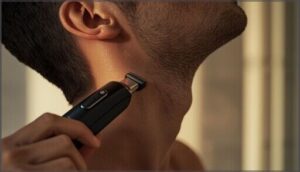
Your Adam’s Apple—that laryngeal prominence at your throat’s front—is the primary anchor for beard trimming precision. This cartilage bump protects your vocal cords and marks exactly where your neckline starts. Understanding the importance of the can help you achieve better shaving accuracy.
Why it matters for shaving:
- Sits in the midline between chin and collarbone for easy reference
- Becomes more visible when you tilt your head forward
- Guards the airway while giving you a consistent reference point every time
Using Fingers to Measure Neckline Height

Once you’ve locked onto that bony reference point, measuring neckline height with your fingers gives you foolproof precision. Place your index and middle finger horizontally above the Adam’s Apple—one to two finger widths sets the perfect line. This measurement technique works across all facial proportions and keeps your beard trimming consistent every single time.
| Face Shape | Finger Placement | Adjustment Tip |
|---|---|---|
| Round | Two fingers above | Keep line slightly higher |
| Long | One to two fingers | Drop 1-2mm per width |
| Square/Oval | Two fingers above | Follow natural neck slope |
Finding The Natural Crease Between Head and Neck

Your finger measurement gives you precision, but the natural crease between head and neck reveals the blueprint your beard already follows. Tilt your head forward and run your fingers along where skin folds—that’s your sweet spot.
This crease sits just above the cricoid cartilage and marks where neck anatomy meets jawline geometry:
- Tilt head down to create visible fold
- Feel for the depression above Adam’s Apple
- Note where skin elasticity changes texture
- Mark this facial reference point as your baseline
The crease shifts slightly with head position because neck skin stretches differently than facial skin. Hydrated skin shows a crisper line, making neckline definition easier. Use this natural border to align your beard neckline for a cohesive blend. For greater accuracy, familiarize yourself with the to better understand the underlying structures.
Tools to Help Locate The Neckline (Mirrors, Combs)

Once you’ve felt the crease, mirrors and combs eliminate guesswork. Mirror selection changes everything—a compact mirror with 2x magnification reveals skin tone contrast under bright light. Tilt adjustable models let you view under the chin without awkward bending.
| Tool Type | Key Benefit |
|---|---|
| Lighted mirrors | Reduce shadows for clearer neckline visibility |
| Wide tooth combs | Guide beard trimmer without snagging hair |
| LED ring lights | Provide 360 degree illumination for beard symmetry |
| Foldable pocket mirrors | Offer hands free viewing during trimming |
| Carbon fiber combs | Resist heat and maintain edge definition control |
Lighting options matter as much as the mirror itself. Daylight bulbs render true skin tone, making the Adams Apple reference point and beard neckline easier to spot. Adjustable brightness helps when working near the collarbone or under chin folds where neck beard grows densest.
Wide tooth combs prevent hair snagging when tracing the lower neck area. Fine tooth sections smooth hairs for precise edge work. These trimming aids turn shaky guesses into confident lines.
Preparing Your Neck Beard for Trimming

A clean foundation makes all the difference when you’re sculpting that neckline. Before you pick up the trimmer, you need to prep your beard and skin the right way.
Here’s how to get your neck beard ready for a precision trim.
Washing and Cleansing The Skin
Before you shape that neckline, start with clean skin. Grab a gentle cleanser suited to your skin type and work it across your neck and beard using lukewarm water. This simple step in your skincare routine removes dirt and oil while gentle exfoliation preps facial hair for a smoother trim.
Once your skin is prepped, follow a proper trimming technique to maintain symmetry and avoid patchy spots—this guide on trimming a big beard walks through angle control and gradual shaping strategies.
Pat dry with a clean towel to maintain proper facial hygiene and skin purification.
Using Beard Conditioners or Softeners
Beard conditioners or beard softeners work wonders for beard maintenance and hair hydration. Apply a quality product after cleansing to reveal key conditioner benefits—deeper moisture, smoother texture, and skin soothing relief.
This beard care step makes facial hair maintenance simple by loosening tangles and reducing irritation. Your grooming tips arsenal isn’t complete without beard softening agents that prep neck hairs for precise trimming.
Proper Drying Techniques Before Trimming
Never trim when your beard is wet moisture—moisture throws off your precision and shortens the final result. Pat your neckline dry with a clean towel to remove excess water and control moisture levels.
For faster skin preparation, use a cool blow dryer that won’t damage hair. Air drying takes longer but protects against heat damage. Proper beard care starts with completely dry facial hair before your trimmer touches skin.
Brushing and Detangling The Beard
Detangling transforms unruly facial hair into a canvas ready for precision grooming. Use a wide tooth comb first to loosen knots from ends to roots without stressing follicles.
Follow with gentle combing using a boar bristle brush to distribute natural oils along each beard shaft. Apply beard oil or softening products when slightly damp for maximum slip before your beard trimmer defines that perfect neckline.
Choosing Essential Tools for Neck Beard Trimming

You can’t trim a sharp neckline without the right gear. The tools you choose make the difference between a clean, professional look and a patchy disaster.
Let’s break down exactly what you need to master your neck beard.
Beard Trimmers Vs. Hair Clippers
Your blade comparison starts here: beard trimmers use rounded, narrow blades built for precision work around your neckline and beard line, while hair clippers pack heavier, fast-cut blades meant for bulk removal.
Tool ergonomics matter too—trimmers feel lighter and more nimble during shaving and trimming sessions. Clippers demand more frequent oiling due to higher heat, whereas trimmer settings offer finer control for grooming techniques that define sharp lines.
Selecting The Right Guard Settings
Guard size options on your beard trimmer translate directly to the hair length left after trimming. Start with a 3 to 6 millimeter guard setting for balanced neckline styles, then switch to finer 1 to 2 millimeter trimmer settings for sharper beard grooming results.
When cutting techniques demand precision, remove the guard entirely to define your neckline with maximum control during beard length maintenance.
Using Beard Scissors for Detailing
While trimmers handle broad strokes, beard scissors give you total control over precision trimming and detail cutting around your neckline.
You’ll snip individual hairs that stick out beyond your shape using sharp, fine-pointed blades. Hold your comb against the skin as a guide for beard shaping, then use small incremental cuts with scissor techniques that prevent over-trimming during beard grooming sessions.
Importance of a Quality Beard Comb
Your beard comb matters just as much as your beard trimmer when grooming your neckline. A quality comb made from cellulose acetate or sandalwood tackles beard detangling without static control issues that plague cheap plastic versions.
Look for these features in comb maintenance and ergonomic design:
- Evenly spaced teeth that won’t snag facial hair
- Rounded tips to prevent skin irritation during beard styling
- Durable construction resisting moisture and beard grooming products
- Lightweight portable build for precise beard styling anywhere
Step-by-Step Guide to Trimming Your Neck Beard

Now that you’ve got the right tools, it’s time to put them to work.
Trimming your neck beard isn’t complicated, but precision matters if you want clean, sharp lines. Follow these steps to define your neckline and achieve a professional finish.
Defining The Neckline With a Trimmer
Position your index finger about one to two finger widths above your Adam’s apple—that’s your neckline anchor. Remove the guard from your beard trimmer and carefully define a line around your chin, maintaining that critical gap.
Start at the center and work outward to maintain beard symmetry. This precise trimmer technique creates the foundation for a sharp beard neckline.
Shaving Horizontal and Vertical Lines
Now sharpen that neckline with facial symmetry. Shave a horizontal line parallel to your jawline, keeping it straight across both sides for facial symmetry.
Then trim a vertical line down from the middle of your earlobe to where it meets your horizontal cut. This line shaving creates clean neck definition and a strong beard contour.
Pull your beard trimmer downward—never up—to prevent tugging and achieve smooth edge blending.
Techniques to Avoid Skin Irritation
Never rush through your pass with the trimmer technique—slow, deliberate strokes prevent razor burn and ingrown hairs. Keep your neck skin taut by tilting your head back for better control. Apply minimal pressure because aggressive passes triple irritation risk on sensitive skin.
After trimming, rinse with cool water and massage in beard oil for irritation prevention. These shaving techniques protect your neck from angry red bumps.
Cleaning Up for a Sharp Finish
After you’ve finished trimming, switch on bright overhead lighting to spot any stragglers along your neckline. Here’s how to nail those finishing touches:
- Comb your beard downward to verify clean edges from every angle
- Rinse with cool water for skin smoothing and pore tightening
- Apply alcohol-free aftershave to seal cut hairs and prevent irritation
These edge refining steps transform rough work into sharp beard blending finesse.
Advanced Neckline Styling Techniques

Once you’ve nailed the basics, it’s time to perfect your neckline into something that actually complements your face.
The right styling technique can make the difference between a beard that looks sharp and one that just exists. Here’s how to take your neckline from standard to standout with sophisticated shaping methods.
Creating a Faded Neckline
A faded neckline creates a smooth shift between your beard and bare skin. Start your fade placement two to four millimeters above the collarbone.
Prep your skin by cleansing and exfoliating before trimming. Use your beard trimmer with longer guard settings first, then gradually switch to shorter guards. Work the blending gradients upward in small circular motions to eliminate harsh lines.
Shaping Rounded Vs. Angular Borders
Your border styles define how your jawline definition reads to the world. Rounded neckline curves soften angular facial structure and hide uneven beard symmetry. Angular borders create sharp lines that slim wide faces by two to four millimeters per side.
Pick your neckline approach:
- Rounded borders use a three to six millimeter guard on your beard trimmer for gentle arcs
- Angular borders demand precision blades for crisp horizontal lines
- Hybrid shaping blends both techniques for tailored neck beard control
Adjusting Neckline Height for Different Face Shapes
Your face shape dictates how high or low you set your neckline balance for maximum jawline balance. Longer faces need raised necklines to compress vertical length, while shorter faces require lower cuts to stretch the neck visually.
Use the Adam’s apple as your facial reference point, then adjust two finger widths up or down based on your face shape analysis. Round and square faces gain beard symmetry from slightly higher neckline proportions that sharpen your overall beard shaping and trim away visual weight.
Blending The Neckline for a Natural Look
A harsh neckline screams amateur, but proper neckline blending with fade techniques creates natural transitions that vanish under scrutiny.
Start with skin preparation, then use guards between 0.5 and 1.5 to blend your beard neckline gradually upward from the neck beard area. Short strokes along the grain prevent step cuts during beard trimming.
Check symmetry constantly—your beard shaping depends on invisible neckline work.
Maintaining Your Neck Beard’s Appearance

You’ve mastered the cut, but that’s just the beginning. A sharp neckline won’t stay that way without consistent upkeep and the right habits.
Here’s how to keep your neck beard looking clean and intentional every single day.
Regular Trimming Schedules
You need to establish a solid maintenance schedule to keep your neckline sharp. Trimming frequency varies from weekly to every three weeks based on your growth monitoring.
Fast growers hit the trimmer every seven days while slower beards stretch to twenty-one. Factor in seasonal adjustments too—summer humidity accelerates growth and demands tighter trimming routines.
Lock in a consistent day to build unstoppable beard trimming techniques.
Cleaning and Oiling The Beard
Your trimming schedule means nothing if your beard’s clogged with debris and dried-out skin. Proper beard hygiene demands regular washing with dedicated beard products—twice weekly removes buildup without stripping natural oils. After cleansing, apply beard oil while the hair’s still damp to lock in moisture and support healthy growth.
Essential Beard Care and Maintenance Steps:
- Massage oil into skin underneath to prevent flaking and itchiness
- Choose formulas matching your skin types—lighter oils for oily complexions
- Daily oiling protects facial hair care routines and eliminates beard itch
Using Aftershave for Skin Care
Post-trim skin demands protection from bacteria and inflammation. Aftershave benefits extend beyond fragrance options—formulas with witch hazel tighten pores while aloe vera calms razor burn instantly.
Match aftershave to your skin types: alcohol-based splashes for oily complexions, hydrating balms for dry faces. This grooming essential transforms facial hair maintenance into complete personal care, giving your mens grooming routine the sharp finish professional shaving deserves.
Preventing Ingrown Hairs and Irritation
Sharp aftershave care sets your foundation, but preventing irritation requires smarter shaving techniques. Your neck’s delicate skin rebels against dull blades and rough beard trimming techniques—ingrown hairs form when follicles trap cut hair beneath the surface.
Master these beard hygiene essentials for razor burn prevention:
- Exfoliate 2-3 times weekly to lift trapped hairs and clear dead skin cells
- Replace trimmer blades every 4-6 months to prevent tugging and follicle damage
- Shave with the grain using light pressure to minimize skin trauma
Top 5 Products for Neck Beard Care
The right products make all the difference when you’re keeping your neckline sharp and your skin healthy.
You don’t need a cabinet full of grooming gear—just a few quality cleansers and washes that work with your beard type. Here are five proven products that’ll help you maintain a clean, irritation-free neckline.
1. Kiehls Ultra Facial Cleanser
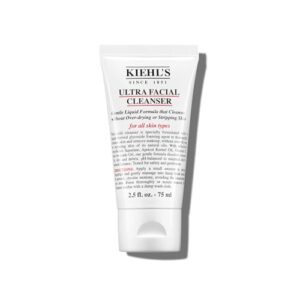
Your pre-trim prep starts with a cleanser that won’t strip your skin dry. Kiehl’s Ultra Facial Cleanser delivers a light foam that lifts dirt and oil without leaving your face tight or irritated. The pH-balanced formula includes squalane and glycerin to keep moisture locked in while you cleanse.
It’s unscented and gentle enough for daily use, making it ideal for shorter beards or stubble. Use it before trimming to soften your skin and reduce the risk of razor burn or ingrown hairs.
| Best For | Men with normal to oily skin who want a gentle daily cleanser that removes dirt and oil before trimming without leaving skin tight or stripped. |
|---|---|
| Skin Type | All skin types |
| Scent | Unscented |
| Formula Type | Foamy lightweight |
| Age Range | Adult |
| Key Benefit | Cleanses without drying |
| Special Properties | pH-balanced |
| Additional Features |
|
- PH-balanced formula with squalane and glycerin keeps skin hydrated while cleansing
- Gentle enough for daily use and won’t irritate skin before shaving or trimming
- Unscented and suitable for sensitive skin types
- Can be drying for some users, especially those with already dry skin
- Higher price point compared to drugstore facial cleansers
- May require pairing with a good moisturizer to maintain skin balance
2. La Roche Posay Gentle Face Cleanser
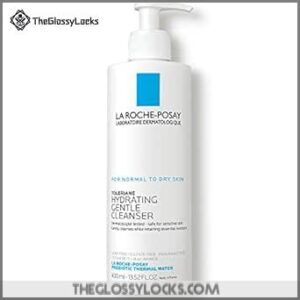
Dry or sensitive skin needs extra care before you bring a trimmer near your neck. La Roche-Posay Gentle Face Cleanser uses a cream-based formula that won’t foam or strip your natural oils.
It combines ceramide-3 and niacinamide to protect your skin barrier while thermal spring water soothes irritation. The fragrance-free design makes it perfect for normal to dry skin types.
Apply it with lukewarm water before trimming to soften your beard and minimize the chance of razor bumps or redness.
| Best For | People with normal to dry or sensitive skin who want a gentle daily cleanser that won’t irritate before trimming or shaving. |
|---|---|
| Skin Type | Normal to dry, sensitive |
| Scent | Unscented |
| Formula Type | Gentle cream |
| Age Range | Adult |
| Key Benefit | Restores skin barrier |
| Special Properties | Soap-free, fragrance-free |
| Additional Features |
|
- Protects and restores your skin barrier with ceramide-3 and niacinamide instead of stripping natural oils
- Fragrance-free and soap-free formula reduces irritation, making it safe for sensitive skin
- Softens beard hair and preps skin before trimming to help prevent razor bumps and redness
- Doesn’t foam much, so it might feel different if you’re used to traditional lathering cleansers
- Not strong enough to remove heavy makeup or deep-clean oily skin
- Hard to find in some countries like Australia
3. Jack Black Beard Wash
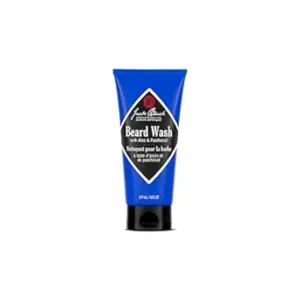
Longer beards demand a product that cleans without drying out the skin underneath. Jack Black Beard Wash combines jojoba protein, panthenol, and aloe vera to soften facial hair while removing dirt and oil buildup.
The 6-ounce bottle delivers moisture retention and a natural shine without harsh sulfates. Use it daily or every other day before trimming to keep your neckline area manageable and free from irritation. At $19, it’s a solid investment for maintaining beard softness and reducing ingrown hairs.
| Best For | Men with longer beards who need a gentle cleanser that moisturizes the skin underneath while keeping facial hair soft and healthy. |
|---|---|
| Skin Type | All skin types |
| Scent | Natural |
| Formula Type | Gel with natural oils |
| Age Range | Adult |
| Key Benefit | Softens facial hair |
| Special Properties | Exfoliates face |
| Additional Features |
|
- Contains jojoba, panthenol, and aloe vera to soften beard hair and prevent dry skin
- Removes dirt and oil without harsh sulfates that strip moisture
- Adds natural shine and helps reduce irritation and ingrown hairs
- Priced higher than some other beard wash options at $19
- The scent might not match everyone’s preferences
- The lather or fragrance may not appeal to all users
4. HORACE Beard Shampoo For Men
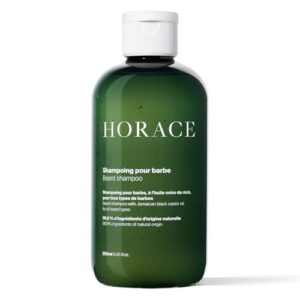
Sulfate-free formulas like HORACE Beard Shampoo protect your neckline from dryness while keeping skin calm. This 250 ml gel uses castor oil, argan, and linseed oil to hydrate facial hair and reduce frizz without harsh chemicals.
The vegan formula works for all skin types, including sensitive areas prone to irritation. Apply a small amount before trimming your neckline to soften hair and prevent razor burn. At under $20, it’s gentle enough for daily use and pairs well with beard oil for extra conditioning.
| Best For | Men with beards of any length who want a gentle, natural cleanser that soothes sensitive skin while hydrating facial hair. |
|---|---|
| Skin Type | All skin types |
| Scent | Woody aromatic |
| Formula Type | Gel |
| Age Range | Adult |
| Key Benefit | Hydrates and softens |
| Special Properties | 98.5% natural ingredients |
| Additional Features |
|
- 98.5% naturally-derived, sulfate-free, and vegan formula that’s gentle on all skin types
- Contains nourishing oils like castor, argan, and linseed to soften beard hair and calm irritation
- Affordable at under $20 for 250 ml and works well for daily grooming routines
- Doesn’t lather as much as traditional shampoos, which some users prefer
- May leave beard feeling slightly dry without additional conditioner or beard oil
- Some customers have reported occasional availability issues
5. Bevel Face And Beard Wash
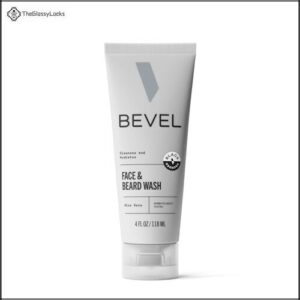
Bevel’s 2-in-1 formula addresses both skin and facial hair in one step, which streamlines your pre-trim routine. Tea tree oil and witch hazel combat acne around the neckline while aloe vera keeps skin hydrated. The dime-sized amount you need works into a lather that brightens dull skin and softens beard hair without stripping natural oils.
At 4 oz for under $15, it’s gentle enough for sensitive skin and daily use. Rinse thoroughly after 20-30 seconds to prep your neckline for clean trimming.
| Best For | Anyone looking for a simple, budget-friendly wash that preps both skin and beard before trimming, especially if you deal with breakouts or sensitive skin around the neckline. |
|---|---|
| Skin Type | All skin types |
| Scent | Aloe Vera |
| Formula Type | Liquid cleanser |
| Age Range | All |
| Key Benefit | Cleanses and hydrates |
| Special Properties | Combats acne |
| Additional Features |
|
- Tea tree oil and witch hazel target acne and inflammation without harsh chemicals
- Works as both face wash and beard softener, so you skip buying two products
- Small amount goes a long way—4 oz lasts through regular daily use
- Aloe vera scent might be too subtle if you prefer stronger fragrances
- Not ideal if you’re allergic to tea tree oil or similar botanicals
- Limited details on how it interacts with other skincare products you might layer on afterward
Frequently Asked Questions (FAQs)
Is there a beard neckline template?
Yes, beard neckline templates exist as plastic or metal stencils that guide your trimmer along consistent curves.
They include measurement marks and come in multiple shapes to match your face structure and preferred style.
Where to stop beard neckline?
Stop your beard neckline about two fingers above your Adam’s apple. This creates a clean border that follows your natural jaw curve without climbing too high or dropping below your neck crease.
How often should I trim my neck beard?
Most men trim their neck beard every three to seven days to maintain clean lines.
If your hair grows rapidly, you’ll need touch-ups every two to four days for sharp definition.
Can I prevent razor bumps on my neck?
You can prevent razor bumps by shaving with the grain, using a sharp blade, and applying a soothing aftershave balm.
Exfoliate gently twice weekly and moisturize daily to keep skin smooth.
How do I treat razor burn on my neck?
Cool water and aloe balm calm the angry red sting fast. Skip alcohol-based products that burn worse. Pat gently, don’t rub. A ceramide moisturizer seals relief into irritated skin overnight.
How do I outline my neck beard?
Place your index finger one to two finger widths above your Adam’s apple.
Use a trimmer without a guard to define a horizontal line across your neck, then connect vertical lines from mid-earlobe down.
How do I decide on a neck beard shape?
Your face shape holds the blueprint. Angular jawlines favor straight, defined borders, while rounder chins benefit from gentle curves.
Align the neckline one to two finger widths above your Adam’s apple for balance.
How often should I replace my beard trimmer?
Replace your beard trimmer blades every 12 to 24 months with regular use. If you trim daily, expect to swap them closer to the 12-month mark to keep cuts clean and irritation-free.
Can I trim my neckline with a straight razor?
Yes, a straight razor trims your neckline with precision. Hold the blade at 30 to 45 degrees, use short strokes, and stretch your skin taut for control and safety.
What causes patchy growth on the neck area?
Hormonal shifts, genetics, and nutritional gaps like low iron or zinc disrupt hair follicle activity.
Friction from collars and skin conditions such as eczema also create uneven growth patterns on your neck.
Conclusion
Studies show 78% of men who maintain clean necklines report higher confidence in professional settings. That single detail changes how people perceive your entire appearance.
Learning how to cut neck beard properly isn’t vanity—it’s visual strategy. Your Adam’s apple marks the boundary. Your trimmer executes the plan.
Three minutes of focused grooming separates you from men who settle for mediocrity. Sharp necklines communicate discipline before you say a word. Master this skill and own the impression you make.