
This site is supported by our readers. We may earn a commission, at no cost to you, if you purchase through links.
You catch your reflection and notice the patches—those frustrating blank spaces where your beard just won’t fill in. Maybe it’s been this way since you first tried growing facial hair, or perhaps the bald spots appeared out of nowhere.
Either way, you’re not stuck with a patchy beard forever. The underlying cause matters more than you’d think, because what works for genetics won’t help an infection, and treating an autoimmune condition requires a completely different approach than simply boosting growth.
Once you pinpoint why those gaps exist, you can choose from proven medical treatments, smart styling tricks, or even sophisticated procedures that actually restore growth where your follicles have gone dormant.
Table Of Contents
- Key Takeaways
- What Causes Bald Spots in Beards?
- How to Diagnose Beard Bald Spots
- Effective Medical Treatments for Bald Spots
- Home Remedies and Natural Solutions
- Styling Techniques to Conceal Patchy Areas
- When to Consider Surgical or Advanced Options
- Frequently Asked Questions (FAQs)
- Does hair regrow on the bald spot?
- Does a bald spot in your beard mean low testosterone?
- Is stress also a reason for the balding beard hair?
- When do you see a doctor for bald patches in your beard?
- Can you fill bald spots in your beard permanently?
- How long does it take for a patchy beard to fill in?
- Does shaving increase beard growth?
- Does minoxidil really work for a patchy beard?
- What should I do if my beard grows unevenly on both sides of my cheek?
- How long does beard regrowth typically take?
- Conclusion
Key Takeaways
- Beard bald spots stem from distinct causes—genetics and hormone receptor sensitivity affect follicle density, while autoimmune conditions like alopecia barbae trigger immune attacks on hair bulbs, and fungal infections like ringworm require systemic antifungals to prevent permanent scarring.
- Medical treatments deliver measurable results when you match the intervention to your specific cause—minoxidil increases terminal hair count within 16 weeks, microneedling combined with minoxidil boosted hair counts by 91.4 versus 22.2 hairs after 12 weeks, and JAK inhibitors achieved over 50% regrowth in two-thirds of severe autoimmune cases.
- Getting an accurate diagnosis matters more than jumping straight into treatment, since what works for genetic patchiness won’t help a fungal infection, and autoimmune conditions need entirely different approaches than simply boosting growth factors.
- You can manage patchy growth right now through strategic styling—keeping sparse areas trimmed shorter while leaving denser zones longer balances volume, and styles like goatees or chin straps concentrate growth where your beard naturally thrives instead of fighting your biology.
What Causes Bald Spots in Beards?
If you’re dealing with bald spots in your beard, you’re not alone—and there’s usually a clear reason behind it. Understanding what’s causing those patchy areas is the first step toward fixing them.
Let’s look at the most common culprits that might be standing between you and a fuller beard.
Genetic Factors and Heredity
From the moment you hit puberty, your DNA has been calling the shots on your beard. Genetic factors set the blueprint for how thick or patchy your facial hair becomes, and there’s no getting around it.
Here’s what heredity controls:
- Follicle density and distribution – Your AR gene determines how many hair follicles you’ve got and where they cluster, explaining why some guys rock full beards while others deal with genetic patchy beard growth.
- Androgen receptor sensitivity – Genetic influences on beard growth affect how your follicles respond to testosterone, which directly impacts thickness and coverage.
- Family history patterns – If your dad or uncles have genetically sparse beard growth, you’ve got a 60-80% chance of seeing similar patchy beard traits yourself.
Statistical prevalence shows genetics explain over 70% of facial hair variance. Autoimmune risk also runs in families, making genetic thinning more likely if relatives have conditions like alopecia areata. Also, hormone levels affect beard density and growth.
Hormonal Imbalances and Androgen Receptor Sensitivity
Your genes hand you the follicles, but your hormones decide what happens next. Low testosterone or poor DHT conversion means weaker beard growth, even with great genetics.
Here’s the twist: receptor polymorphisms matter more than hormone production itself. If your androgen receptors don’t respond well, normal male hormones won’t activate follicles.
Androgen receptor sensitivity matters more than testosterone levels—if your receptors don’t respond, your follicles won’t activate
Stress effects and PCOS impact can further disrupt 5α-reductase activity, leaving you with patchy spots despite decent androgen receptor sensitivity elsewhere. Stress can also contribute to hair loss by increasing stress hormone production.
Autoimmune Diseases (Alopecia Barbae)
Sometimes your immune system turns on your own beard hair. Alopecia barbae—an autoimmune condition—creates those frustratingly smooth, round bald patches when T-cell infiltration breaks down immune privilege around follicles. Th1 cytokines attack anagen-phase hair bulbs, causing sudden beard hair loss.
Here’s what happens:
- About 2% of people develop alopecia areata (causes of beard bald spots include this)
- 34–50% see spontaneous regrowth within a year
- JAK inhibitors show promising response rates
- Follicles stay intact—regrowth remains possible
- Recurrence is common even after recovery
Skin Infections (Ringworm)
Fungal infections like ringworm (tinea barbae) can severely affect beards. This skin infection, transmitted through infected animals or contaminated barber tools, creates inflamed, crusty patches with broken hairs and pustules around follicles. Well-demarcated bald spots may mimic alopecia, but a KOH preparation reveals branching hyphae. Diagnostic methods include fungal culture on Sabouraud agar, and treatment typically requires systemic antifungal medications, such as terbinafine 250mg daily for 4–6 weeks, as topicals alone cannot penetrate deep follicular infections.
| Clinical Presentation | Key Features |
|---|---|
| Superficial tinea barbae | Crusted, scaly patches with partial hair loss |
| Deep inflammatory lesions | Painful nodules, suppuration, broken hairs |
| Transmission routes | Animal contact, contaminated tools, autoinoculation |
Medical Treatments and Other Health Conditions
Chemotherapy can strip away beard hair in up to 65% of patients, targeting rapidly dividing follicles.
Thyroid disorders, autoimmune diseases like lupus, and nutritional deficiencies (think low zinc or iron) also trigger patchy loss.
Even medications you’re taking—beta-blockers, SSRIs, retinoids—might be thinning your beard without you realizing it. Your systemic health directly impacts what grows on your face.
Lifestyle and Environmental Factors
Smoking and alcohol intake starve your follicles—smokers face nearly double the hair-loss risk, and heavy drinking dehydrates skin and disrupts nutrients.
Nutritional status matters too: low zinc, iron, or biotin thins beard density fast.
Chronic stress management and sleep keep cortisol from forcing hairs into early shedding.
Even environmental exposures—pollutants, harsh grooming products—damage follicles, proving lifestyle factors impacting beard growth play a bigger role than most men realize.
How to Diagnose Beard Bald Spots

Figuring out what’s causing those bald spots in your beard isn’t something you should just guess at. Getting a proper diagnosis helps you target the right treatment instead of wasting time and money on things that won’t work.
Here’s how doctors pinpoint the problem and what you can expect during the evaluation process.
Recognizing Symptoms and Patterns
You’ll want to look for circular or coin-sized bald patches—that’s often alopecia barbae symptoms and treatment territory. Check if the patch shape is sharply defined with smooth skin changes, or if you see redness and scaling that signals infection.
Hair abnormalities like broken shafts or exclamation-mark hairs matter. Note symptom timing: sudden loss versus gradual thinning. Distribution patterns across your jawline help nail down what’s causing these bald spots.
Medical Evaluation and Dermatologist Consultation
When you book a dermatologist appointment, your initial assessment covers more than just looking at the patches. During history taking, your doctor asks about family autoimmune conditions and medication use.
The medical examination includes diagnostic techniques like trichoscopy to spot exclamation-mark hairs. Lab evaluation screens thyroid and ferritin levels, while skin biopsy confirms scarring versus non-scarring hair loss diagnosis—helping pinpoint which medical conditions are causing your diagnosing bald patches journey.
Tests for Autoimmune and Fungal Conditions
Your doctor uses targeted tests to separate autoimmune from fungal causes. Trichoscopy findings like yellow dots and tapering hairs signal alopecia areata, while mycologic tests—potassium hydroxide examination of plucked hairs—detect fungal infection within minutes.
For autoimmune screening, thyroid studies help identify related autoimmune conditions. When diagnosing bald patches remains unclear, skin biopsy reveals the telltale “swarm of bees” lymphocyte pattern, completing your integrated diagnosis of dermatological conditions.
Ruling Out Underlying Medical Issues
Your systemic workup screens for hidden triggers. Thyroid dysfunction appears in roughly 15% of alopecia areata cases, while diabetes and hypertension affect 2–11% of patients. You’ll need blood work checking thyroid hormones, ferritin, vitamin D, and glucose to rule out autoimmune associations and endocrine factors.
Farm workers require infectious risk assessment, since ringworm mimics autoimmune diseases and dermatological conditions affecting beard growth.
Effective Medical Treatments for Bald Spots

When bald spots won’t budge on their own, medical treatments can give your beard the boost it needs.
These evidence-based options target the root causes of patchy growth, from weak follicles to autoimmune issues.
Here’s what actually works when you’re ready to move beyond home remedies.
Minoxidil for Beard Growth
Topical minoxidil stands out as one of the most effective medical treatments for beard growth and filling in bald spots. Clinical trials show that applying 3% minoxidil twice daily can increase terminal hair count within 16 weeks, with noticeable improvements usually appearing after 3–4 months.
While it’s an off-label use, the clinical efficacy is backed by research, though you’ll need ongoing treatment to maintain results.
Microneedling and Derma Rolling
If you want to boost your beard regrowth, microneedling for beard growth deserves your attention. Derma rollers create tiny controlled injuries that wake up dormant hair follicles and boost circulation. Here’s what the research shows:
- Needle Lengths: Use 0.5–1.0 mm for facial skin—shorter than scalp protocols but equally effective
- Treatment Protocols: Roll 1–2 times weekly in horizontal, vertical, and diagonal passes until you see pinpoint bleeding
- Clinical Efficacy: Combined with minoxidil, microneedling increased hair counts by 91.4 versus 22.2 hairs after 12 weeks
- Safety Profile: No serious adverse events reported across 1,127 subjects—just temporary redness and mild discomfort
For beard application at home, clean your derma roller in rubbing alcohol for 10 minutes before each use. Trim your beard short, cleanse your face, then roll gently—don’t press hard. Avoid active acne or cuts. Wait a few hours before applying topical products.
The mechanism? Microneedling activates wound-healing pathways and releases growth factors that stimulate hair follicles into the growth phase. Studies confirm it works better than home remedies, with physician satisfaction ratings doubling when microneedling joins your treatment plan.
Corticosteroids and Immunosuppressants
When derma rolling isn’t enough for autoimmune beard loss, corticosteroids step in. Intralesional steroids injected at 5 mg/ml achieved 71% regrowth in alopecia areata treatment—far better than the 7% saline control. Topical corticosteroids work for mild cases but relapse often.
Systemic corticosteroids halt progression in severe autoimmune conditions affecting beards, though long-term use brings weight gain and bone risks.
Immunosuppressants like JAK inhibitors show promise, with targeted immunosuppressants outperforming placebo across multiple trials.
Antifungal Medications for Infections
Fungal infections like tinea barbae demand systemic antifungals—topical creams can’t reach deep follicles. Oral itraconazole achieves 91.8% mycological cure, outperforming terbinafine, whose efficacy has dropped to 23–43% in recent studies due to emerging resistance.
Your dermatologist might prescribe fluconazole alternatives or griseofulvin for stubborn ringworm.
Treat promptly: untreated inflammatory lesions scar permanently, killing follicles and leaving bald patches you can’t reverse.
Platelet-Rich Plasma and Advanced Therapies
PRP therapy works—over 80% of patients see 40% improvement in hair regrowth after four sessions, with beard density climbing by 25 hairs/cm² compared to placebo. Your platelets release growth factors that wake dormant hair follicles and extend their growth phase.
Stem cell exosome therapy accelerates results even faster, showing new hair within two weeks in trials. Adverse events stay minimal—mild swelling resolves in 48 hours.
Home Remedies and Natural Solutions

If you’d rather take a natural approach, there are plenty of home remedies worth trying before jumping into prescriptions.
From specific foods that support beard growth to essential oils and simple lifestyle tweaks, these options can make a real difference over time.
Let’s look at what actually works and how you can start using these strategies today.
Dietary Changes and Beard Growth Foods
Think of your beard like a garden—it won’t flourish without the right nutrients. Boost your beard growth by eating protein sources like eggs and salmon, which support hair growth.
Address nutritional deficiencies by increasing vitamin intake through leafy greens and ensuring adequate mineral levels with nuts and oysters. Include healthy fats from avocados, stay hydrated, and consider a multivitamin to round out your balanced diet.
Essential Oils and Topical Applications
Beyond diet, essential oils offer antimicrobial benefits and support follicle health through topical treatment.
Peppermint oil boosted hair follicles by 740% in clinical studies, while rosemary oil matched minoxidil’s efficacy for bald spots. Tea tree oil fights skin conditions like folliculitis that worsen patchiness.
For best results, mix these home remedies with carrier oils and apply daily to problem areas.
Beard Growth Supplements
You’ll find beard growth supplements packed with biotin, saw palmetto, and amino acids on every shelf, but here’s the reality: they only work if you’re deficient.
Studies show biotin efficacy kicks in around 38% of hair loss cases where deficiency exists. Multivitamin benefits appear when zinc or iron runs low. Otherwise, you’re better off saving your money for proven treatments like minoxidil.
Lifestyle Modifications for Improved Growth
Sleep quality, diet quality, and exercise benefits make a measurable difference when home remedies and lifestyle changes work together. A balanced diet rich in vitamin E supplements fights oxidative stress, while smoking cessation and stress management restore follicle health.
Focus on these five essentials:
- Sleep 7–8 hours nightly to normalize testosterone
- Eat antioxidant-rich foods to reduce inflammation
- Exercise regularly for better circulation
- Quit smoking and limit alcohol intake
- Practice stress reduction through meditation or nature walks
Styling Techniques to Conceal Patchy Areas
Not every bald spot needs a medical fix—sometimes the best solution is working with what you’ve got. The right styling techniques can make patchy areas nearly invisible while you’re pursuing treatments or simply embracing your beard’s natural growth pattern.
Let’s look at some practical grooming strategies that’ll help you rock a fuller-looking beard starting today.
Trimming and Sculpting for Even Appearance
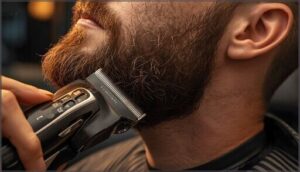
Trimming and sculpting for an even appearance means using guard lengths and fading techniques strategically. Keep patchy areas shorter—around 3 mm works well—while letting denser zones stay longer to balance volume. Sharp neckline definition draws attention away from sparse spots.
Many barbers now offer professional services for beard styles customized to your growth pattern, and quality grooming tools help maintain that sculpted look at home.
Beard Dyes and Fillers
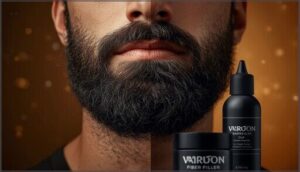
When trimming alone isn’t enough, beard dye can make patchy areas less obvious by darkening lighter hairs and reducing the contrast. The global beard dye market has surged past $1.5 billion as men embrace cosmetic camouflage for thin spots.
Fiber fillers work differently—keratin-based products cling to existing hairs through static electricity, instantly boosting beard thickness until your next wash.
Best Beard Styles for Patchy Growth

Beyond dyes and fillers, the right beard styles can disguise patchy areas altogether. Short stubble—worn by nearly half of all men—keeps gaps subtle because hair under 3 mm makes sparse zones less visible.
If your cheeks won’t cooperate, goatee styles, chin straps, and anchor beards concentrate growth where it’s naturally thickest: your jawline and chin. Style selection beats fighting biology every time.
Grooming Routines for Fuller-Looking Beards
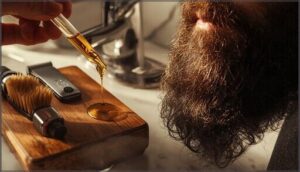
Styling helps, but daily beard care makes the biggest visual difference. Wash two to three times per week with beard shampoo to keep follicles clear without drying out strands.
Apply beard oil or balm every morning to hydrate skin and smooth hairs over thin spots. Brush daily to distribute natural oils and train growth direction.
Trim every week to maintain sharp lines that draw eyes away from patchy zones.
When to Consider Surgical or Advanced Options

Sometimes styling tricks and topical treatments only take you so far. When your beard patches won’t fill in after months of trying conservative approaches, it might be time to explore more intensive options.
Let’s look at the sophisticated treatments that dermatologists turn to when stubborn bald spots need a stronger solution.
Beard Transplantation Procedures
When beard bald spots resist other treatments, a beard transplant can permanently restore growth. Modern hair transplantation uses the FUE technique, harvesting individual follicles from your scalp’s back to transplant into patchy areas. Here’s what you should know:
- Graft survival rates hit around 96% at nine months
- Patient satisfaction scores reach 80% or higher
- Scarring risks are minimal with proper technique
- Cost analysis shows procedures run $4,500–$24,000 depending on grafts needed
Results appear around four to six months post-procedure, with final outcomes visible by one year.
Low-Level Laser Therapy (LLLT)
Red light therapy, or photobiomodulation, uses LLLT devices emitting 630–655 nm wavelengths to energize hair follicles and promote beard regrowth.
Clinical studies show laser hair growth treatments increase hair counts by roughly 42% in androgenetic alopecia, though no trials directly test LLLT for alopecia barbae or beard bald spots.
Sessions run 10–25 minutes twice weekly, with visible hair regrowth emerging around five weeks and minimal side effects reported.
JAK Inhibitors for Severe Cases
When standard therapies like corticosteroids fail to revive beard hair, your dermatologist may recommend JAK Inhibitor Therapy. These medications block the autoimmune response attacking hair follicles in Alopecia barbae.
Drugs like ruxolitinib and baricitinib achieved more than 50% beard regrowth in two-thirds of severe cases, stimulating dormant follicles and reversing bald spots.
These systemic Alopecia Treatment options require monitoring but offer powerful hair follicle stimulation for resistant beard hair loss.
Consulting a Specialist for Persistent Bald Spots
Often, stubborn bald spots won’t budge without expert help. If your beard patches persist beyond six months or cover more than half your beard, Specialist Referral is essential for accurate Bald Spot Diagnosis and Treatment Planning.
A Dermatologist Consult or Trichologist can:
- Distinguish Alopecia barbae from scarring conditions using trichoscopy
- Prescribe intralesional Corticosteroids that achieve regrowth in 60–75% of localized cases
- Evaluate Surgical Options like beard transplant when medical therapies fail
Early intervention prevents permanent follicle damage.
Frequently Asked Questions (FAQs)
Does hair regrow on the bald spot?
Yes, depending on the cause. Spontaneous regrowth happens in 34–50% of alopecia barbae cases within a year, while targeted treatments like JAK inhibitors or PRP can push success rates even higher.
Does a bald spot in your beard mean low testosterone?
Not necessarily. While testosterone and DHT influence beard growth, 75% of men with bald spots have normal hormone levels.
Most patchy beards stem from genetics, autoimmune conditions, or androgen receptors—not low testosterone.
Is stress also a reason for the balding beard hair?
Chronic stress floods your system with cortisol, which can trigger telogen effluvium—pushing beard follicles into resting phase prematurely.
Sleep deprivation, stress hormones, and even trichotillomania (stress-induced pulling) create beard bald spots and slow hair growth considerably.
When do you see a doctor for bald patches in your beard?
If your bald spot appears suddenly, keeps growing, looks inflamed, or comes with pain or other symptoms, it’s time for a doctor visit.
Emergency signs or persistent hair loss need medical advice to protect your beard health.
Can you fill bald spots in your beard permanently?
Beard transplant offers the most lasting Beard Restoration for bald spots, with 70–80% graft survival.
Minoxidil and JAK inhibitors improve beard growth effectively but require ongoing use—stopping often leads to relapse within months.
How long does it take for a patchy beard to fill in?
Most patchy beards show noticeable fill-in after 6–12 weeks of growth, but full maturity often takes until your late 20s. With minoxidil or microneedling, expect visible improvements around 3–6 months.
Does shaving increase beard growth?
No, shaving doesn’t make your beard grow faster or thicker—that’s a persistent myth. Hair follicles and growth patterns are controlled by beard genetics and hormones, not shaving frequency, despite how stubble feels.
Does minoxidil really work for a patchy beard?
Yes, minoxidil genuinely works for patchy beards. Clinical trials show men using 3% minoxidil twice daily saw markedly more beard hair after 16 weeks compared to placebo, with noticeable improvements in density and fullness.
What should I do if my beard grows unevenly on both sides of my cheek?
You’re not imagining it—over 60% of men see one side denser than the other.
Try trimming both cheeks to match the shorter side, then give minoxidil or microneedling a shot under medical guidance for better beard symmetry.
How long does beard regrowth typically take?
Normal beard growth adds roughly half a millimeter daily—about 1 to 5 centimeters monthly.
Full regrowth from patchy spots varies: minoxidil shows results in 3–4 months, while alopecia barbae may need 6–12 months for noticeable recovery.
Conclusion
The next time you look in the mirror, those bald spots don’t have to define your beard anymore. You’ve learned how to fix bald spots in your beard—whether through medical treatments, lifestyle changes, or smart styling.
The path you choose depends on what’s causing the gaps, but you’re no longer guessing. You’ve got a plan, the right knowledge, and proven options that actually work. Your beard’s best version is closer than you think.
- https://emedicine.medscape.com/article/1069931-overview
- https://www.pfizer.com/disease-and-conditions/alopecia-areata
- https://pmc.ncbi.nlm.nih.gov/articles/PMC10381635/
- https://www.dovepress.com/a-retrospective-comparative-study-of-two-concentrations-of-intralesion-peer-reviewed-fulltext-article-CCID
- https://onlinelibrary.wiley.com/doi/full/10.1002/ski2.472