
This site is supported by our readers. We may earn a commission, at no cost to you, if you purchase through links.

Most men abandon their electric shavers within the first month, convinced they’ll never match the closeness of a traditional razor. That’s because they’re using them wrong. An electric shaver can deliver a near-razor finish—sometimes even better for sensitive skin—but it demands a completely different approach than what you learned with a blade.
The angle changes. The prep changes. Even the direction you move across your face flips the script. Master these fundamentals, and you’ll wonder why you ever tolerated nicks, razor burn, and the tedious ritual of lathering up every morning.
The gap between a mediocre electric shave and a professional-grade finish comes down to technique, not equipment.
Table Of Contents
Key Takeaways
- Most men quit electric shavers early because they use blade techniques instead of mastering the opposite fundamentals—shaving against the grain, adjusting angles to 20-35 degrees, and applying light pressure rather than force.
- Pre-shave prep separates amateurs from pros: warm showers soften hair by 30%, trimming long growth prevents clogging, and pre-shave lotions or powders eliminate friction before the blade touches skin.
- Wet shaving with foam reduces irritation through lubrication while dry shaving offers speed, but both demand technique adjustments—lighter pressure and slower motions for wet, firmer contact and quicker strokes for dry.
- Post-shave care locks in results within 60 seconds: cold water closes pores immediately, alcohol-free balms with aloe heal inflammation, and moisturizers applied within three minutes cut irritation by 25%.
Choosing The Best Electric Shaver for Closeness
Not all electric shavers are built the same in terms of closeness. Your razor choice directly affects how smooth your skin feels after each shave.
Let’s break down what you need to know before you buy.
Foil Vs. Rotary Shavers
Your electric shaver choice determines shave quality from day one. Foil shavers use perforated metal over oscillating blades—delivering superior closeness on flat surfaces like cheeks and neck. Rotary shavers feature spinning circular heads that excel at contouring jawlines and handling longer hair.
Foil durability requires replacement every 12–18 months, while rotary efficiency demands blade changes every 12–24 months for peak performance. To maintain peak performance, consider following clear science guidelines for writing research papers.
Matching Shaver Type to Hair and Skin
Your hair texture and skin sensitivity dictate which shaver type delivers the close shave you’re after. Here’s how to match your biology to blade efficiency:
- Fine to normal hair with short stubble—foil shavers dominate on straight growth patterns
- Dense, curly, or longer hair—rotary shavers handle interwoven growth without choking
- Sensitive skin—foil systems usually cause less skin irritation with proper shaving techniques
- Coarse hair on resilient skin—rotary options provide aggressive cutting power
Test your user preference through shaver maintenance cycles to confirm your match. Understanding the importance of methodological rigor is essential for evaluating the effectiveness of shaving techniques.
Features That Enhance Shave Closeness
Once you’ve picked your weapon, certain blade technology features separate amateurs from pros. Look for reduced blade gap—it keeps cutters millimeters from your skin. Multi-head pivot and flexible foils track every contour, maintaining constant contact.
High-performance motors deliver steady torque for consistent pressure. Precision trimmers hit trouble spots without leaving stubble. Master these specs, and your electric shaver becomes an extension of your hand.
Importance of Regular Shaver Replacement
Even top-tier specs won’t save you once blade wear sets in. Foil durability drops after 12–18 months—dull blades pull hairs instead of cutting them clean.
Shave quality tanks, irritation spikes, and you’re left chasing closeness that won’t come. Regular blade replacement keeps your electric shaver sharp and your technique dialed.
Factor replacement costs into your budget; fresh parts restore performance every time.
Essential Pre-Shave Preparation Steps
You can’t just pick up an electric shaver and expect professional results right out of the gate. The secret to a truly close shave starts before the blade even touches your face.
A truly close shave starts with preparation before the blade ever touches your face
Master these four pre-shave steps, and you’ll set yourself up for the smoothest, closest shave possible.
Shave After a Warm Shower

Before you even pick up your electric shaver, step into a warm shower. Shower temperature matters—aim for about 40°C to soften facial hair and boost skin hydration without stripping natural oils.
Those few minutes hydrate your beard up to 30 percent, reducing cutting force and improving razor glide. You’ll need less pressure, get a closer shave, and dodge irritation when your hair’s softened and ready.
Trim Long or Curly Facial Hair
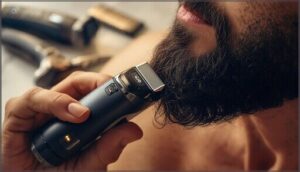
Before your electric shaver touches skin, grab electronic clippers with a guard for facial hair trimming. Long hair clipping prevents clogging and tugging—key mens grooming and personal care fundamentals.
For curly hair management, lift strands with a comb to improve cutting accuracy. These beard shaping techniques and electric trimmer tips set you up for a close shave every time.
Exfoliate and Cleanse The Skin

Strip away buildup before your blade makes contact. Dead skin removal prepares your face for a shave that feels like you mean business—no tugging, no dull results.
- Skin exfoliation 1–2 times weekly clears pore minimization roadblocks without wrecking your barrier
- Facial cleansing with lukewarm water lifts oil and debris that sabotage blade glide
- Gentle scrubbing using fine-particle exfoliants dodges microtears on tender skin
- AHA or BHA formulas accelerate turnover for smoother skin care routines
- Pat dry—never rub—to protect freshly prepped territory before shaving tips kick in
Use Pre-Shave Lotion or Powder

Prime your face and watch friction vanish. Pre Shave Benefits include smoother blade glide—Preshave Lotion softens whiskers while Powder Application absorbs oil on dry skin.
Lotion Types with glycerin boost moisture retention for Skin Preparation; powder works wonders on rotary shavers.
For Shave Enhancement, apply lotion to damp skin or buff powder lightly. Pair with Shaving Cream during wet Electric Shaving Tips for a Close Shave that commands respect.
Mastering Electric Shaving Techniques

You’ve prepped your skin—now it’s time to master the blade. The right technique separates a mediocre shave from a barber-quality finish.
Here’s how to handle your electric shaver like a pro and get the closest results possible.
Shave Against The Grain
Want a closer shave? Shave against the grain—it cuts hair below skin level for that ultra-smooth finish. Run your foil shaver in straight strokes opposite to beard growth, or guide your rotary in small circles against the grain.
Test this electric shaving tip on your cheeks first; if irritation flares, stick to with-the-grain passes on tender zones like your neck.
Correct Angle and Pressure
Hold your electric shaver at 20 to 35 degrees—think of it as the sweet spot where blade maintenance meets precision. Light, even pressure control wins every time; mashing the foil flattens whiskers instead of cutting them. Your ergonomic handle should glide, not grind.
Master these shaving angles and you’ll dominate difficult contours without razor burn, proving that shaving techniques beat brute force.
Motion: Straight Vs. Circular
Your blade angle is locked—now master motion patterns that match your shaver’s technology. Foil shavers demand straight, decisive strokes that slash through whiskers without hesitation. Rotary heads conquer skin contours with tight, overlapping circles. Mixing the wrong motion with your electric shaver kills closeness and breeds irritation.
Shaver strokes that deliver:
- Foil units: Back-and-forth passes, 2-3 inches per stroke
- Rotary blades: Small circular motions, quarter-size loops
- Neck areas: Straight upward pulls for both types
- Jawline curves: Circular patterns follow bone structure perfectly
Stretch The Skin for a Smoother Surface
Pull taut skin with your free hand while the electric shaver works—that’s how blade contact improves instantly. Skin tension eliminates wrinkles and bumps that block foil alignment or disrupt rotary motion.
Your non-dominant hand creates the smooth canvas your shaver needs for a close shave. Stretch cheeks toward your ears, pull neck skin downward, and watch shaving angles become razor-sharp.
Tackle Difficult Areas First
Start with the neck—your toughest territory—before your shaver heats up. Use multi-direction passes and stiffer angle control around your jawline and under your nose.
Skin tension remains critical here: pull taut, slow your strokes, and adjust blade sharpness awareness as you work.
Contour shaving demands patience and deliberate electric shaver technique for a genuinely close shave.
Wet Vs. Dry Electric Shaving Tips
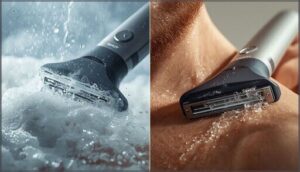
Your shaver can handle both wet and dry shaving, but each method delivers different results. Wet shaving with foam softens stubble and reduces friction, while dry shaving offers speed and convenience.
Let’s break down when to use each approach and how to adjust your technique for maximum closeness.
Benefits of Wet Shaving
Wet shaving tips transform your electric shaver routine by delivering superior skin hydration and razor glide. The importance of lather can’t be overstated—it creates a protective barrier that reduces friction and irritation.
Here’s how wet shaving benefits stack up:
| Wet Shaving Benefits | Impact on Skin | Shave Quality |
|---|---|---|
| Water-based lubrication | Minimizes micro-abrasions | Allows closer cut |
| Proper lather | Reduces post-shave irritation | Improves razor glide |
| Softened facial hair | Enhances skin comfort | Achieves smoother results |
Your electric shaver performs better when you master these shaving techniques and tips. The combination of hydration and shave cream benefits means you’ll achieve that close shave without compromising your skin’s integrity.
Using Shaving Cream, Gel, or Foam
Your choice between shaving cream types, gel benefits, or foam formulations determines how close your electric shaver cuts. Cream delivers thick cushioning that protects skin, while gel creates a transparent layer so you can see exactly where you’re shaving. Foam offers quick application but requires careful water balance—too much breaks down lubrication.
| Product Type | Best Skin Compatibility |
|---|---|
| Cream | Dry or mature skin needing emollients |
| Gel | Oily or acne-prone skin |
| Foam | Normal skin with time constraints |
Lubricant additives like silicones improve blade glide for shaving techniques and tips that achieve a close shave. Match your shaving gel or cream to your skin’s needs, and you’ll master wet electric shaver performance.
When to Choose Dry Shaving
Sometimes you need razor-sharp results without the hassle of water and product prep. Dry shaving benefits kick in when your daily maintenance demands speed—mornings when you’re racing the clock or travel shaving situations where access to a sink feels like a luxury you don’t have.
| Scenario | Why Dry Shaving Wins |
|---|---|
| Quick routines | No prep time, instant results |
| Travel shaving | Pack light, shave anywhere |
| Sensitive skin days | Skip potential irritants in creams |
| Short stubble | Electric shaver cuts efficiently |
| Early mornings | Maximum speed, minimal effort |
Your close shave doesn’t always require foam—just the right electric shaving guide and confidence in your shaver maintenance routine.
Adjusting Technique for Each Method
Your electric shaving guide changes depending on your method. Wet shaving demands lighter pressure and slower circular motions to let foam do its work, while dry shaving requires firmer strokes and precise shave angles for maximum contact. Follow these foil shaver tips and rotary motion adjustments to nail your technique.
| Method | Pressure | Speed |
|---|---|---|
| Wet | Light touch | Slow passes |
| Dry | Firm contact | Quick strokes |
| Hybrid | Medium grip | Variable pace |
Master cutter maintenance and skin adjustment periods—your best practices for how to get a close shave evolve with experience and proper shaving technique guide fundamentals.
Post-Shave Care for Smooth Results

Your shave doesn’t end when you power down the razor. What you do in the next 60 seconds determines whether your skin feels smooth or ends up irritated and bumpy.
Here’s how to lock in that clean finish and keep your face looking sharp.
Rinse With Cold Water
Right after you finish shaving, splash your face with cold water—it’s one of the simplest yet most powerful electric shaving benefits. This quick rinse delivers immediate cold water benefits that transform your post-shave experience.
Cold water works three ways to enhance your close shave:
- Pore minimization happens instantly, tightening skin and reducing irritation visibility
- Capillary constriction calms redness by shrinking surface blood vessels on contact
- Skin tightening creates that smooth feel while closing hair cuticles for lasting comfort
Apply Soothing Aftershave Balm
Your skin just took a beating—now it’s time to heal. Grab a fragrance-free aftershave balm with aloe vera and panthenol for serious skin soothing power. These balm ingredients slash inflammation and lock in moisture without stinging.
Use a pea-sized amount, massage upward until absorbed, and you’ll transform your post-shave routine. Alcohol-free formulas deliver maximum aftershave benefits while preventing skin irritation on sensitive skin care needs.
Moisturize to Prevent Irritation
You’ve got three minutes—that’s your window to lock in skin hydration and prevent irritation. Pat on a fragrance-free moisturizer with ceramides or niacinamide while your pores are still open.
Choose gel formulas for oily skin or cream-based moisturizers for sensitive skin prone to shaving rash.
This simple post-shave care move cuts irritation prevention failures by up to 25% after a single use.
Top Electric Shavers for a Close Shave
You’ve mastered the technique—now let’s talk about the tools that’ll actually deliver that close shave you’re after. Not all electric shavers are built the same, and the right one makes all the difference between a quick pass and a truly smooth finish.
Here are three top performers that consistently deliver professional-level closeness.
1. Braun Series 7 Electric Shaver

When you’re hunting for a close shave that rivals a blade, the Braun Series 7 790cc electric shaver delivers serious performance. This foil-based electric razor uses sonic micro-vibrations—up to 10,000 per minute—to lift stubborn hairs before cutting them close to the skin.
You’ll get five shaving modes to match your beard density and skin sensitivity, plus 50 minutes of battery life per charge. The ProHead system conforms to your facial contours with responsive 8-D flexibility, ensuring consistent contact across your jawline and neck.
Regular foil replacement every 12–18 months keeps your electric shave consistently smooth. The included Clean & Charge station manages shaver maintenance and care automatically, lubricating and drying the cutting elements between uses.
| Best For | Men with moderate to thick facial hair who want a close electric shave without daily blade irritation, and who value automated cleaning convenience. |
|---|---|
| Power Source | Battery Powered |
| Shaving Type | Dry Shave |
| Cleaning Station | Included |
| Trimmer Attachment | Long Hair Trimmer |
| Recommended Use | Beard, Face |
| Cordless Design | Yes |
| Additional Features |
|
- Delivers a remarkably close shave thanks to sonic micro-vibrations and flexible contour adaptation that keeps the foil in constant contact with your skin.
- Five adjustable modes let you dial in the perfect balance between power and gentleness based on your skin sensitivity and beard thickness.
- The Clean & Charge station handles all maintenance automatically—cleaning, lubricating, and drying—so you don’t have to think about upkeep.
- Replacement cleaning cartridges add up over time, and the station’s imperfect seal can lead to fluid evaporation between uses.
- The upfront cost is steep compared to manual razors, and foil cassettes need replacing every 12–18 months for optimal performance.
- Some users find it doesn’t quite match the closeness of a traditional blade razor, especially on tricky areas like the neck.
2. Freebird Electric Head Shaver

For head shaving, the Freebird FS2-1-US-EA-1 rotary mechanics deliver reliable coverage across curved scalps. You’ll appreciate the waterproof construction that lets you shave in the shower, and the 360-degree floating four-blade system conforms to crown contours without constant repositioning.
Shaver ergonomics matter when you’re maneuvering around your skull—this electric razor’s non-slip grip reduces hand fatigue during longer sessions.
Regular shaver maintenance keeps performance sharp: rinse the head after each use, dry thoroughly, and replace foils every 12–18 months. The included cleaning brush simplifies upkeep between deep cleans.
| Best For | People who shave their heads regularly and want a cordless, shower-safe option with multiple grooming attachments. |
|---|---|
| Power Source | Rechargeable Battery |
| Shaving Type | Wet/Dry |
| Cleaning Station | Not Included |
| Trimmer Attachment | Nose Trimmer |
| Recommended Use | Head, Face, Body |
| Cordless Design | Yes |
| Additional Features |
|
- 360-degree floating blades adapt to your scalp’s curves for smooth coverage without constant repositioning
- Fully waterproof so you can shave in the shower and rinse the head under the tap for easy cleanup
- Comes with useful extras—clippers, nose trimmer, brush, and massager—giving you a complete grooming kit
- Mixed reviews mention units breaking after a few months, raising durability concerns
- Battery life may fall short if you’re doing longer grooming sessions
- Non-USB-C charging port feels outdated compared to newer devices
3. Panasonic Arc6 Electric Shaver
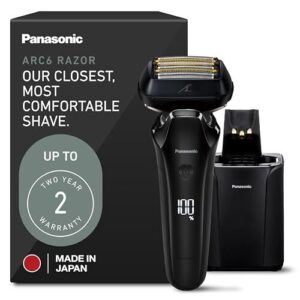
When you’re chasing that razor-close finish on your face, the Panasonic Arc6 brings serious firepower. Its 6-blade foil system and multi-flex head track your jawline and neck contours without multiple passes—84,000 cross-cutting actions per minute mean fewer strokes and less irritation.
The linear motor manages dense growth efficiently, whether you’re doing a quick dry electric shave or pairing it with foam for wet shaving.
Keep those blades sharp with regular shaver maintenance: rinse after every use and swap foils every 12–18 months for consistent closeness.
| Best For | Men with dense facial hair or sensitive skin who want a close, comfortable shave without multiple passes over the same area. |
|---|---|
| Power Source | Rechargeable Battery |
| Shaving Type | Wet/Dry |
| Cleaning Station | Included |
| Trimmer Attachment | Pop-up Trimmer |
| Recommended Use | Face, Beard |
| Cordless Design | Yes |
| Additional Features |
|
- Six-blade system with 84,000 cutting actions per minute delivers an exceptionally close shave in fewer strokes
- Multi-flex head adapts to facial contours, making it easier to handle tricky areas like the jawline and neck
- Wet/dry versatility lets you shave in the shower with foam or do a quick dry shave on the go
- Premium price point puts it above most competing electric shavers on the market
- Replacement foils and blades every 12–18 months add to long-term maintenance costs
- May cause irritation or razor burn if used without proper technique or prep, especially during dry shaving
Frequently Asked Questions (FAQs)
How often should I replace shaver blades?
Most shavers need blade replacement every 12 to 18 months, but your beard tells the real story. If you notice tugging or reduced closeness, swap those blades immediately—sharpness decides everything.
Can electric shavers cause ingrown hairs?
Yes, they can. Pressing too hard, skipping blade replacement, or using dull foils increases skin irritation and razor burn. Proper shaver maintenance and correct technique reduce ingrown hair risks markedly.
Should I shave daily or every few days?
Most guys obsess over daily discipline like it’s a badge of honor, but your skin doesn’t care about your calendar—it cares about closeness outcomes and adaptation.
Shave frequency depends on hair growth rate and skin tolerance.
How long does a full charge typically last?
Most modern electric shavers deliver 45 to 90 minutes of runtime on a full charge. High-end models push closer to 90 minutes, while quick-charge features offer 5–15 minutes from a brief boost.
Can I share my electric shaver with others?
Like lending out your toothbrush, sharing your electric shaver risks cross-contamination and hygiene risks. Personal safety demands solo use—shared use transfers bacteria despite shaver sanitizing, so keep razor maintenance and your shaver type personal.
Conclusion
The blade versus electric debate? It’s a false choice once you nail the fundamentals. How to get a close shave with an electric shaver isn’t about the device—it’s about unlearning bad habits and committing to proper technique.
Prep your skin, control your angle, move deliberately against the grain, and maintain your equipment like a professional. Do this consistently, and that morning ritual transforms from a compromise into a legitimate advantage you’ll never trade back.
- https://www.kiehls.com/skincare-advice/shaving-cream-vs-shaving-gel.html
- https://www.usa.philips.com/c-p/SP9841_84/shaver-s9000-prestige-wet-dry-electric-shaver-with-senseiq
- https://sharpologist.com/water-temperature-vs-age-for-wet-shaving/
- https://www.dove.com/us/en/stories/tips-and-how-to/grooming-tips/shaving-before-or-after-shower.html
- https://woodlees.com/reasons-shave-warmhot-water/