This site is supported by our readers. We may earn a commission, at no cost to you, if you purchase through links.
You flip your head upright after rinsing out that fresh color, and there it is—a purple splatter across your bathroom wall that wasn’t part of the plan. Hair dye doesn’t just sit on surfaces like regular dirt. It bonds with paint and porous materials fast, which means a quick wipe with a wet paper towel won’t cut it.
The type of dye you used and your wall’s finish determine how stubborn that stain becomes. Permanent dyes dig in deeper than semi-permanent ones, and textured walls trap pigment in ways smooth paint doesn’t. You need the right approach to lift the color without stripping your paint or making the problem worse.
The good news is you don’t need harsh chemicals or professional help to tackle this mess.
Table Of Contents
- Key Takeaways
- What Makes Hair Dye Stains Hard to Remove?
- Essential Tools and Cleaners for Stain Removal
- Step-by-Step Methods to Remove Hair Dye From Walls
- Special Considerations for Different Wall Types
- Tips to Prevent Future Hair Dye Stains on Walls
- Frequently Asked Questions (FAQs)
- What if the hair dye has already dried?
- What if I don’t have any of the cleaning products you mentioned?
- What if I’m not sure if the cleaning product is safe to use on my walls?
- What if I’ve tried everything and the dye stain is still there?
- Does hair dye damage wall paint permanently?
- How long before hair dye stains become permanent?
- Will repainting over dye stains cause bleed-through?
- Are commercial stain removers safe for walls?
- Conclusion
Key Takeaways
- Hair dye stains bond quickly with wall surfaces, especially on porous or textured finishes, so immediate blotting with a damp cloth prevents deeper penetration and makes removal significantly easier.
- Household items like rubbing alcohol, baking soda paste, dish soap, and Magic Erasers effectively remove most hair dye stains without damaging paint when you test them on a hidden spot first and avoid aggressive scrubbing.
- Your wall’s paint finish determines removal difficulty—gloss and semi-gloss surfaces resist dye absorption while matte and textured walls trap pigment in ways that require gentler, repeated cleaning passes.
- Preventing stains with plastic sheeting, drop cloths, and keeping cleanup supplies within reach saves hours of scrubbing compared to treating dried stains that set within 24-72 hours.
What Makes Hair Dye Stains Hard to Remove?
Hair dye stains are stubborn because they’re designed to bond permanently with surfaces, just like they do with your hair. The type of dye you’re dealing with and the surface it’s on both play a role in how difficult removal will be.
Here’s what makes these stains so hard to tackle.
Types of Hair Dye and Stain Severity
Different dye chemicals create distinct removal challenges. Understanding colorant types helps you tackle hair dye stain removal effectively.
Four types ranked by stain severity: Blood, rust, and mineral deposits top the list, while soap scum and cosmetic residue are easier to address with proper razor blade cleaning and storage techniques.
- Permanent dyes contain p-phenylenediamine and aromatic amines that form strong bonds with surfaces, making removing hair dye stains extremely difficult.
- Semi-permanent formulas use larger molecules that adhere through surface absorption, creating moderate dye penetration.
- Temporary dyes wash away more easily but still bind to porous finishes.
- Henna-based products leave tannin residues requiring specialized stain removal approaches.
To verify the accuracy of scientific study summaries, such as those on hair dye removal, it’s vital to apply methodological rigor in research.
How Hair Dye Interacts With Wall Surfaces
Hair dye chemicals interact with wall surfaces through pigment absorption and stain bonding. Dye penetration depends on porosity—smooth, sealed walls resist stains better than rough textures. Textured finishes trap pigment in crevices, while porous plaster absorbs dye deeper than sealed gypsum. Surface reactions occur when solvents in dye soften paint layers, causing wall damage and making stain removal harder. Many people assume standard household cleaners work fine, but removing stubborn residue from bathroom walls requires methods that won’t damage the underlying paint or finish.
| Surface Type | Absorption Level | Removal Difficulty |
|---|---|---|
| Sealed gypsum | Low | Easy |
| Smooth enamel paint | Low | Easy |
| Textured drywall | High | Hard |
| Porous plaster | Very High | Very Hard |
Impact of Wall Paint Finish on Removal
Paint finish types determine how easily you’ll remove hair dye from painted walls. Gloss and semi-gloss surfaces resist dye absorption, making stain removal straightforward with solvent cleaners. Matte and flat finishes absorb dye more deeply, so if you’ve accidentally splattered dye while dealing with paint stuck in your hair, act quickly before the stain sets.
Matte finishes absorb pigment deeper into the paint layer, requiring gentler methods to avoid damage.
Textured surfaces like orange peel trap dye in crevices, creating stubborn stains that resist standard cleaning and increase your risk of streaking.
Essential Tools and Cleaners for Stain Removal
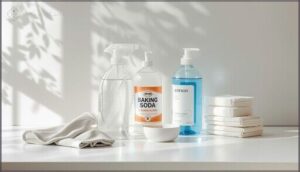
You don’t need fancy products to tackle hair dye stains on your walls. Most of what you need is already sitting in your bathroom cabinet or kitchen drawer.
Here’s a quick rundown of safe, effective cleaners that actually work without damaging your paint.
Safe Household Cleaning Agents
You’ll need a few simple household cleaning agents to tackle hair dye on your walls. Start with these proven options: One effective option is nail polish remover, which works quickly on dye stains—you can find a full breakdown of how to get hair dye off your sink and other surfaces using acetone-based products.
- Rubbing alcohol – Dissolves dye components on hard surfaces when applied with a soft cloth.
- Hydrogen peroxide (3%) – Lifts color stains gently without excessive bleaching.
- Mild dish soap solutions – Removes greasy residue and reduces dye transfer during initial blotting.
Test each cleaner on a hidden spot first.
Step-by-Step Methods to Remove Hair Dye From Walls
You can’t let hair dye sit on your walls if you want a clean removal. The faster you act, the easier the stain comes off.
Act fast on hair dye stains—the quicker you respond, the easier removal becomes
Here are four proven methods that work on most wall surfaces, starting with the gentlest approach and moving to stronger solutions.
Immediate Blotting and Cleaning Techniques
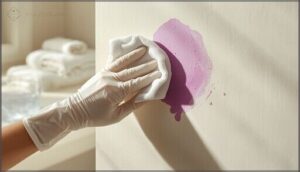
Act fast when you spot fresh hair dye on your walls. Blot the spill immediately with a clean white cloth or paper towel, working from the edges toward the center to contain the stain. Don’t rub—you’ll push dye deeper into the surface.
Use cool water on your cloth and keep blotting with fresh sections until no more color transfers.
Using Dish Soap and Baking Soda Paste
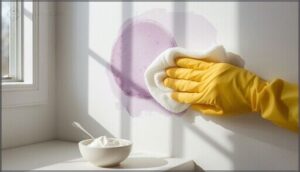
Mix equal parts baking soda and mild dish soap to form a thick paste. This combination lifts pigment from smooth painted surfaces without damaging most latex finishes.
Apply a thin layer to the stain and gently rub with a soft cloth in circular motions for one to five minutes. Rinse thoroughly with clean water and pat dry to check your progress.
Rubbing Alcohol and Nail Polish Remover
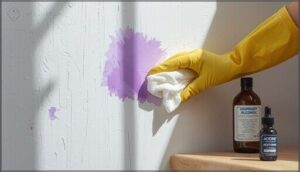
Rubbing alcohol dissolves hair dye pigments without harsh scrubbing. Dampen a clean white cloth with 70% isopropyl alcohol and blot the stain gently—don’t rub it in circles. Test a hidden spot first to avoid paint damage.
Nail polish remover with acetone works faster but can lift latex finishes, so use sparingly and rinse immediately with mild soap and water.
Magic Erasers and Toothpaste Solutions
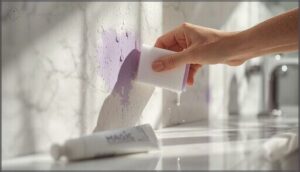
Magic Eraser works through micro abrasives that lift pigments without soaking your wall. Dampen the eraser lightly, squeeze out excess water, and scrub the stain in small circles.
For gentle removal, try non-gel toothpaste—its mild abrasives tackle dye fading on painted surfaces. Apply a thin layer, let it sit briefly, then wipe clean with a damp cloth.
Special Considerations for Different Wall Types
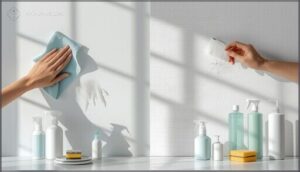
Not all walls are created equal, and the wrong cleaning method can damage your surface faster than the dye stain itself. Different materials require different approaches to get the job done without causing extra headaches.
Here’s what you need to know before you start scrubbing.
Painted Drywall Vs. Tiles
Your wall type changes everything when you’re tackling hair dye stains. Painted drywall absorbs dye deeper because of its porosity, making stain removal trickier and risking paint damage or drywall repair needs.
Tiles offer better stain resistance with their non-porous surface, allowing easier tile cleaning. However, grout lines trap dye and need targeted treatment for complete stain removal.
Removing Dye From Textured or Porous Surfaces
Textured walls trap dye pigments deep in their crevices, making porous materials harder to clean than smooth ones. Dye penetration increases in porous surfaces, so you’ll need multiple gentle cleaning passes instead of one aggressive scrub.
Use a soft-bristle brush with mild detergent to work into the texture without damaging it. Test your stain removal techniques on a hidden spot first for better surface prep and stain resistance.
Protecting Wall Finish During Cleaning
After working textured surfaces, shift your focus to wall finish protection. Test gentle cleaners on a hidden spot before treating visible areas.
Dampen microfiber cloths lightly—excess moisture damages drywall and paint. Apply cleaners with soft pressure to avoid abrading glossy coatings. Wipe with a clean, damp cloth immediately to remove residue.
Choose products labeled safe for painted surfaces to maintain surface protection during your stain removal techniques.
Tips to Prevent Future Hair Dye Stains on Walls
You don’t have to deal with stubborn hair dye stains if you plan ahead. A little prep work before you color your hair saves hours of scrubbing later.
Here’s how to protect your walls and stop stains before they happen.
Preparing Your Space Before Dyeing Hair
Before you start dyeing your hair, clear furniture away from the wall to create an open workspace. Remove decorations and drapes that might get in your way.
Set your dye station with all supplies within reach—gloves, brushes, and towels. Gather cleaning products like dish soap and paper towels nearby for quick spill response.
Open windows to improve ventilation during the process.
Protective Barriers and Covers
Cover your floors and lower walls with drop cloths or painter’s tarps to catch spills. Hang transparent plastic sheeting along walls near your workspace—it blocks dye splashes while letting you see what you’re doing. Use masking tape to secure all edges and create clean lines.
For extra paint protection, consider wall covers on high-risk areas or set up movable screen panels around your dyeing zone.
Quick Response to Spills and Drips
Even with barriers in place, accidents happen. Keep a cleanup kit within arm’s reach—paper towels, dish soap, and a spray bottle with water.
If hair dye hits the wall, blot immediately with a damp cloth to absorb the stain before it sets. Fast cleanup is your best defense against permanent marks, turning spill containment into a quick win for stain removal.
Effective language skills, like using dictionary search tools, can help you find the right words to describe your cleaning process.
Frequently Asked Questions (FAQs)
What if the hair dye has already dried?
Dried hair dye requires isopropyl alcohol or baking soda paste to break down pigment. Prep the surface first, then gently scrub in circles. Rinse residue with clean water and dry thoroughly to prevent damage.
What if I don’t have any of the cleaning products you mentioned?
You’re not totally out of luck—mix warm water with dish soap for basic dye removal, or create a baking soda paste.
Vinegar solution also helps lighten stubborn stains on painted walls.
What if I’m not sure if the cleaning product is safe to use on my walls?
Test any cleaning solution on a hidden spot first to check surface compatibility. Read product label guidance for wall safety checks.
If you’re still uncertain, try gentle cleaning methods like diluted dish soap before stronger stain removal options.
What if I’ve tried everything and the dye stain is still there?
Try a dedicated remover designed for walls, then consider repainting with color matching if the stain penetration remains.
Professional remediation may be needed when standard dye stain removal techniques don’t resolve surface resealing issues.
Does hair dye damage wall paint permanently?
Hair dye won’t damage wall paint permanently in most cases when you act fast. Semi-permanent dyes lift easier than permanent ones, especially on sealed surfaces with gloss finishes offering better stain resistance.
How long before hair dye stains become permanent?
Once a dye stain sits for 24 to 72 hours, color penetration deepens like roots digging into soil.
Permanent damage becomes likely after this removal deadline, especially with concentrated permanent dyes on porous walls.
Will repainting over dye stains cause bleed-through?
Yes, if you skip primer. A stain-blocking primer prevents bleed-through by sealing dye molecules. Without it, pigments migrate through new paint, especially on porous walls or with thin topcoats.
Are commercial stain removers safe for walls?
Most store-bought cleaners won’t wreck your walls, but matte finishes can dull easily. Test any product on a hidden spot first—even gentle formulas can strip paint if you’re not careful with surface compatibility.
Conclusion
That purple splatter doesn’t have to haunt your bathroom forever. Learning how to get hair dye off walls comes down to acting fast and matching your method to your wall type.
You’ve got the tools and techniques now—from baking soda paste to rubbing alcohol—so that stain doesn’t stand a chance.
Next time you’re updating your color, protect your space first. Your walls will thank you, and you’ll save yourself the cleanup headache.
- https://pinterest.com/pin/create/button/?url=https%3A%2F%2Fpaintloving.com%2Fhow-to-get-hair-dye-off-painted-walls%2F&media=&description=How+to+Get+Hair+Dye+Off+Painted+Walls+With+Effective+Cleaning+Tips+and+Tricks
- https://academichelpexpress.blog/2024/08/please-use-the-bulleted-points-and-the-rubric-below-to-guide-your-work-your-pa/
- https://www.sciencedirect.com/science/article/pii/S0749208123000268