This site is supported by our readers. We may earn a commission, at no cost to you, if you purchase through links.
Your fade haircut looked razor-sharp when you left the barbershop last week. Now? The lines are already starting to blur, and that clean taper you paid good money for is disappearing faster than you expected.
This is the reality of fade haircuts—they’re high-maintenance by nature, and ignoring that fact means you’ll be walking around with a mediocre cut most of the time. Hair doesn’t grow evenly around your head, so those crisp edges at your temples, ears, and neckline start looking messy within days.
The good news is you don’t need to book weekly appointments or master barber-level skills to keep your fade looking fresh between visits. With the right approach to daily care, smart product choices, and knowing when to handle touch-ups yourself versus heading back to the chair, you can stretch that sharp look and take control of your style.
Table Of Contents
- Key Takeaways
- How Often Should You Maintain a Fade?
- Essential Daily Fade Care Tips
- At-Home Fade Touch-Up Methods
- Choosing The Right Products for Your Fade
- When to Visit Your Barber for a Refresh
- Frequently Asked Questions (FAQs)
- How often should I maintain a fade haircut?
- Are skin fades hard to maintain?
- How long does a fade stay fresh?
- How to touch up a fade haircut?
- Can I wash my fade haircut daily?
- What causes fades to lose their sharpness quickly?
- Should I use heat styling on faded hair?
- How do I fix an uneven fade myself?
- Does hair texture affect fade longevity significantly?
- Conclusion
Key Takeaways
- Fades demand consistent upkeep every 2-3 weeks (weekly for skin fades) because uneven hair growth around your temples, ears, and neckline blurs those sharp lines faster than you’d expect.
- Daily maintenance—brushing with the grain, using lightweight oils to prevent flaking, and sleeping on satin—keeps your fade looking intentional between barber visits without requiring pro-level skills.
- At-home touch-ups should only target edges, necklines, and stray hairs around ears; never attempt to reblend the actual fade yourself or you’ll end up with uneven patches.
- Your barber sets the foundation, but stretching visits to 3-4 weeks depends entirely on you handling simple edge work at home and using the right products for your specific hair texture.
How Often Should You Maintain a Fade?
Getting a sharp fade is only half the process—keeping it crisp takes a little strategy.
If you’ve got an oblong face, certain fade styles will flatter your shape better than others, so it’s worth picking the right cut from the start.
How often you touch it up depends on how fast your hair grows and the style you like best. Here’s what to keep in mind before you plan your next trim.
Recommended Trim Frequency for Fades
If you’re serious about Fade Maintenance, staying on top of your trim schedule isn’t up for debate. Most barbers recommend trimming a fade haircut every 2–3 weeks—even weekly for high or skin fades—since Hair Growth Rates and regrowth patterns can quickly blur your lines.
A sharp fade needs regular, intentional trimming—don’t let lazy maintenance dull your look. Understanding how hair grows unevenly around the ears, temples, and neckline is key to keeping your fade fresh for longer.
Factors Affecting Maintenance Schedule (hair Type, Growth Rate, Style)
How often you tidy up your fade haircut isn’t one-size-fits-all—it actually depends on three things:
- Hair Texture and Type—thicker hair or strong curl patterns blur those lines fast, upping your maintenance frequency.
- Growth Patterns—some folks’ fades fluff or bulk up in just days.
- Style Influence—sharp, dramatic fades demand tighter haircare routines than low-key blends. For more details about face shape and fade compatibility, proper pairing can also factor into overall maintenance needs.
Signs Your Fade Needs Attention
Beyond those three factors, your fade actually tells you when it’s time—here’s what to watch for:
| Warning Sign | What You See | What It Means |
|---|---|---|
| Blurry Edges Fix | Soft, smudged fade line maintenance instead of crisp transitions | Two to three weeks of regrowth signs blurring your blend |
| Bulky Sides | Hair pushing against hats or letting you pinch thickness | Extra volume killing style consistency and that tight-to-scalp look |
| Messy Outline | Stray hairs along temples, fuzzy ear curves, uneven neckline | Edge work overdue—your fade haircut maintenance window closed |
| Styling Struggles | More product needed, sides won’t stay flat, lopsided appearance | Hair growth patterns outpacing your haircut maintenance tips routine |
When any of these pop up, book that refresh.
Essential Daily Fade Care Tips
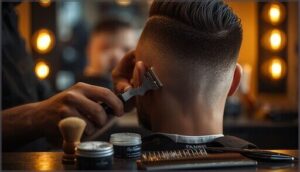
You can’t just walk out of the barber chair and forget about your fade until the next appointment.
Between cuts, a quality nose and ear trimmer for athletes keeps those stray hairs in check without needing a full mirror setup.
The real work happens at home with a daily routine that keeps your hair looking tight and your edges crisp. Here’s how to take control of your fade maintenance with three simple habits that make all the difference.
Proper Brushing and Combing Techniques
Want your fade haircut to look razor-sharp day after day? Brush smart. Use a soft boar bristle brush for daily brushing and a wide-tooth comb up top. Always brush in your natural hair direction—never scramble it. Light brush strokes around your fade line keep that blend smooth and the edges crisp.
Here are three essentials:
- Choose quality, non-snagging combs
- Brush down sides, don’t push against the grain
- Use short, gentle strokes near the fade line.
Moisturizing to Prevent Dryness and Flaking
Consistency—this is your secret weapon in scalp care. Keep fade moisture up by massaging lightweight hair oils or scalp serums along the faded line after a gentle wash.
Skip heavy creams and anything alcohol-based. Moisture equals sharpness.
Avoid heavy creams and alcohol-based products—moisture is what keeps your fade looking sharp
Follow these haircare tips; let this table show what helps or hurts real hair health:
| Fade Moisture Musts | Fade Flaking Remedies |
|---|---|
| Lightweight Scalp Lotion | Glycerin Serum |
| Argan/Jojoba Oil Drops | Hydrating Shampoo |
| Daily Scalp Massage | Aloe-based Gel |
| No Hot Water | Scalp Sunscreen |
| No Heavy Body Creams | Medicated Dandruff Wash |
Protecting Your Fade While Sleeping
Right before bed, rethink your mens grooming advice—this is where details matter. Your Hair Maintenance Routine should cover everything: opt for a satin pillowcase, tie on a snug head wrap, and brush in your Nighttime Routine.
For a sharper finish, invest in a quality electric beard trimmer for shaping to maintain clean edges while you sleep.
That Friction Reduction protects your fade haircut’s sharpness, while a steady Sleep Position keeps the blend smooth. Smart haircare tips pay off by sunrise.
At-Home Fade Touch-Up Methods
Keeping your fade sharp at home doesn’t have to feel overwhelming. With the right tools and a little know-how, you can handle touch-ups like a pro.
Here’s what you need to focus on in terms of at-home fade maintenance.
Using Clippers and Trimmers Safely
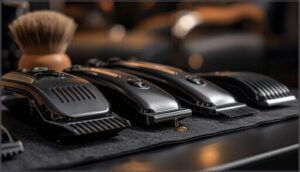
Think of your clippers and trimmers like power tools—they demand respect. Start with proper hair preparation: wash and dry completely before you cut.
Choose guard selection carefully, clicking each one firmly into place. Keep blade care simple by oiling after every use and brushing out hair.
Mastering clipper safety and trimmer maintenance means you’ll shape your fade haircut confidently without nicking skin or creating uneven patches.
Cleaning Up Edges, Neckline, and Around Ears
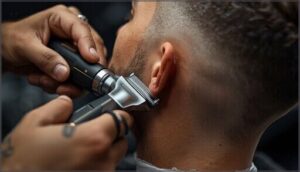
Sharp edges define your fade haircut—they’re the difference between looking crisp and looking sloppy. Here’s how to master edge maintenance like a pro:
- Neckline cleanup: Flip clippers upward, shave vertical passes to your guide line, then use trimmers for stray hairs
- Ear detailing: Comb hair down, trim only what extends past the ear’s natural curve
- Hairline shaping: Use short, light strokes with your trimmer along temples and front
- Edge trimming: Stretch skin with your free hand for smooth, close results
Common Mistakes to Avoid During Home Maintenance

Even small clipper guard errors can wreck your fade line management in seconds. Using a guard that’s too short removes too much hair at once, while skipping tool maintenance tips like oiling blades causes painful tugging.
Don’t rush your home trim techniques—bad lighting and tiredness lead to crooked cuts. Focus on scalp irritation prevention by cleaning loose hairs immediately after every fade haircut session.
Choosing The Right Products for Your Fade

Your fade is only as sharp as the products you put on it. The right styling gear keeps your hair looking fresh, adds shine, and protects the blend from getting dried out or frizzy.
Let’s break down what works for different hair types, what to reach for when you want that polished finish, and what to leave on the shelf.
Best Styling Products for Different Hair Types
Your hair type drives which styling products actually work on a fade. Fine hair needs volumizing sprays and root-lifting foams to stand up against those tight sides.
Curly hair grabs onto curl creams and medium-hold gels that define your pattern without crunch. Thick or coarse hair demands strong-hold gels and oil-based pomades that tame density while keeping shape locked in all day.
Lightweight Creams and Oils for Shine
Once you’ve nailed the right hold, lightweight creams and oils for shine seal the deal on fade finishing. These shine products smooth frizz along your blend line without weighing down hair texture.
Try argan-based oil benefits for quick absorption, or non-greasy cream application that works across all men’s grooming routines. Start with a dime-sized drop, warm it between your palms, then press it over your fade for that polished hair maintenance routine glow.
Products to Avoid That Can Harm Your Fade
Just as important as picking the right products—skip the wrong ones. Heavy pomades clog follicles along your taper line, while alcohol sprays strip moisture and leave short sections brittle.
Comedogenic gels trigger breakouts around your hairline, and harsh chemicals weaken fade-length hair fast. Silicone buildup coats strands, killing that clean blend. Preventing heat damage and steering clear of these keeps your hair maintenance routine on point.
When to Visit Your Barber for a Refresh
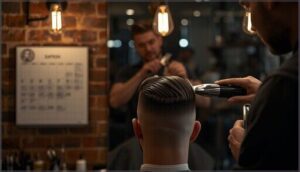
You can handle a lot at home, but your barber‘s the one who keeps that fade truly dialed in.
Knowing when to book your next appointment—and how to make the most of it—keeps you looking sharp without breaking the bank. Here’s what you need to nail down for professional fade maintenance that actually lasts.
Benefits of Professional Fade Maintenance
Precision separates a pro fade from a home experiment. When your barber takes care of the touch-up, you’re banking on:
- Flawless fade techniques that keep both sides even—most DIY attempts drift into lopsided territory fast
- Sharp edges around temples and necklines, framing your face with surgical accuracy
- Style consistency across every visit, so you skip the guesswork and walk out looking intentional
That professional touch isn’t just skill—it’s your shortcut to maintaining a fresh haircut without the stress.
How to Communicate Your Fade Preferences
Walk in ready to explain exactly what you want—that’s how you turn a barber consultation into a fade haircut that actually fits your vision. Start by naming your fade height options: low, mid, or high.
Mention hair type considerations, whether you’ve got curls or straight strands, and describe your style preferences. If you rock facial hair integration, tell your barber how the taper fade should blend with your beard using clear fade techniques.
Maximizing Time Between Barber Visits
Stretch your barber visits to three or four weeks by handling edge maintenance at home—quick trims around the neckline and ears keep your fade haircut looking intentional.
Use lightweight products for style preservation, brush daily to train the top, and stick to sulfate-free washes. These fade longevity tips reduce barber scheduling pressure while your fade haircut styles stay clean between professional haircut maintenance sessions.
Frequently Asked Questions (FAQs)
How often should I maintain a fade haircut?
Most fades need trimming every 2 to 3 weeks to keep that sharp blend looking tight. Skin fades demand closer attention—every 1 to 2 weeks—while low fades can stretch longer.
Are skin fades hard to maintain?
Yes, skin fades demand more attention than most cuts.
Regrowth shows fast against shaved sides, so you’ll need touch-ups every one to two weeks to keep sharp lines and prevent style consistency issues.
How long does a fade stay fresh?
Most fades stay crisp for one to three weeks before regrowth softens the lines.
Skin fades need touch-ups fastest, while low fades hold freshness longer—your hair growth rate and texture play major roles here.
How to touch up a fade haircut?
Grab a cordless trimmer with a close blade and trace your existing hairline edges. Focus on cleaning the neckline, sideburns, and around ears—never try reblending the actual fade yourself.
Can I wash my fade haircut daily?
Daily shampoo seems like overkill, yet clean scalp balance matters for fade hygiene.
Wash frequency depends on hair porosity and oil level—most grooming tips suggest 2-3 times weekly for solid hair maintenance without stripping moisture.
What causes fades to lose their sharpness quickly?
Your hair grows about half an inch monthly, blurring tight blends within days. Heavy products, rough pillowcases, and skipped touch-ups also dull that crisp gradient fast, especially with skin fades.
Should I use heat styling on faded hair?
You can use heat styling on your fade, but keep temperatures below 340°F and always apply a heat protectant first.
Low or medium heat helps shape the top without damaging your crisp lines.
How do I fix an uneven fade myself?
Spot dark patches under bright light, then flick your clippers outward along harsh lines using mid‑guards.
Blend in narrow bands, clean edges with a trimmer, and always start longer than you think—fade correction demands patience over speed.
Does hair texture affect fade longevity significantly?
Absolutely—curl pattern effects and texture influence are huge fade longevity factors.
Tight coils hide regrowth rates better than straight strands, so your hair texture determines how often you’ll need barbering techniques and maintenance to keep things sharp.
Conclusion
Think maintaining a fade haircut means living at the barbershop? Not even close. The truth is, most of the work happens at home—daily brushing, smart product choices, and simple edge touch-ups make the real difference.
Your barber sets the foundation, but you’re the one keeping it sharp between visits. Master these basics, stay consistent with your routine, and you’ll own that clean look instead of chasing it every week.
- https://www.mrwinstons.com/blog/how-long-does-a-fade-haircut-last-essential-care-tips-for-longevity
- https://www.pallmallbarbers.nyc/new-york/how-to-keep-your-fade-haircut-fresh-between-barbershop-visits/
- https://pirateparlour.com/2024/08/13/maintain-your-haircut/
- https://kingdombarberstudio.com/the-ultimate-guide-to-keeping-your-fade-haircut-sharp-between-barber-visits/
- https://conversion-dev.svc.cul.columbia.edu/hair-clipper-guard-lengths