
This site is supported by our readers. We may earn a commission, at no cost to you, if you purchase through links.
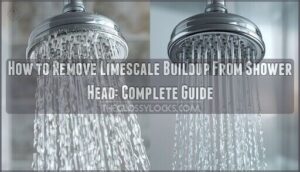
Your shower pressure feels weaker than usual, and those fine spray jets have turned into wild, sideways squirts that hit everything except where you’re standing. That crusty white buildup around the nozzles isn’t just ugly—it’s stealing your water pressure and turning your morning routine into a frustrating guessing game.
Hard water deposits choke off individual jets, narrow the internal passages, and create uneven spray patterns that leave you standing under what feels like a half-working sprinkler.
The good news? You don’t need special tools or expensive replacements to fix it. A few household items and about 30 minutes can restore your shower head to full power, giving you back the consistent water flow and coverage you’ve been missing.
Table Of Contents
- Key Takeaways
- What Causes Limescale Buildup on Shower Heads?
- How to Inspect Your Shower Head for Limescale
- Choosing The Right Limescale Removal Method
- Removing Limescale With Vinegar Soaking
- Using Baking Soda and Paste Methods
- Cleaning With Lemon Juice or Citric Acid
- Applying Commercial Limescale Removers Safely
- Manual Tools for Limescale Removal
- Preventing Future Limescale Buildup
- How Often Should You Clean a Shower Head?
- Frequently Asked Questions (FAQs)
- Conclusion
Key Takeaways
- Limescale buildup from hard water clogs shower head nozzles and reduces water pressure by 30-45%, but household items like vinegar, baking soda, or citric acid can dissolve calcium deposits in 30-60 minutes without special tools or expensive replacements.
- You can descale a shower head either by soaking it in undiluted white vinegar after removing it or by securing a vinegar-filled plastic bag around a fixed head, then scrubbing softened deposits with an old toothbrush to clear individual spray holes.
- Regular maintenance every month (or every two weeks in hard water areas) prevents severe buildup that requires replacement, and wiping the shower head dry after each use stops mineral deposits before they crystallize and harden into stubborn blockages.
- Natural cleaning methods like vinegar and citric acid work effectively for routine descaling and are safer than commercial chemical removers, though severe buildup may require overnight soaking or combining vinegar with gentle baking soda scrubbing for complete removal.
What Causes Limescale Buildup on Shower Heads?
Understanding what causes limescale buildup is the first step to getting rid of it for good. Hard water is the main culprit, but there’s more to the story than just minerals in your tap.
Let’s look at how limescale forms, what it looks like when it shows up, and why it’s messing with your morning shower.
Hard Water and Mineral Content
Hard water contains high concentrations of calcium and magnesium—minerals that bond together when heated or evaporated. Water testing reveals hardness levels above 120 mg per liter trigger aggressive scale formation on your fixtures.
These mineral deposits, primarily calcium carbonate, cling to metal and plastic surfaces. That’s what creates limescale buildup you’re battling.
Understanding mineral content puts you in control of preventing future calcium deposits before they take over your shower head. Regularly checking the water hardness levels can help you address the issue more effectively.
Signs of Limescale Accumulation
You’ll notice limescale buildup through visible deposits—chalky white crusts forming around nozzle openings that feel rough. Uneven spray patterns appear when calcium deposits block individual jets, creating thin streams or sideways spurts. Reduced pressure becomes obvious when you’re cranking the valve wider than usual for the same flow. Mineral buildup also causes sputtering sounds and intermittent surges as water fights through those flow restrictions.
Regular showerhead cleaning methods can help prevent these issues.
Impact on Water Flow and Shower Performance
Beyond the visible warning signs, limescale directly sabotages your shower’s performance. Mineral buildup narrows internal waterways by 35–45 percent, which translates to serious flow rate reduction and pressure loss you feel every day. Your spray pattern gets distorted as blocked nozzles create uneven jets, making rinsing take longer. Worse, limescale affects water temperature stability and overall shower efficiency:
Limescale chokes your shower’s internal waterways by up to 45 percent, killing pressure, distorting spray patterns, and destabilizing water temperature
- Restricted nozzle diameter cuts flow rate by 30–40 percent
- Blocked jets create gaps in water coverage
- Lower spray intensity extends rinsing time
- Scale on mixing valves causes temperature fluctuations
- Progressive buildup increases maintenance burden
Descaling restores what mineral deposits steal from your daily routine.
How to Inspect Your Shower Head for Limescale
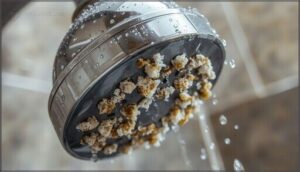
You can’t fix a limescale problem you don’t see, so your first step is a close-up inspection of your shower head. Look for telltale white or yellowish crusts around the nozzles and face plate—that’s your enemy right there.
If the buildup is affecting your entire system, you might also need to improve shower water pressure naturally by addressing clogs in multiple fixtures.
Here’s how to size up the damage and figure out what you’re dealing with.
Visible Buildup and Discoloration
Limescale shows up as chalky white or grayish crust around nozzles and across your shower head’s surface. You’ll spot visible deposits forming rings at spray holes, dulling chrome finishes, or creating pale streaks on darker fixtures.
On rubber nozzles, look for whitish spots where calcium deposits harden after each use. If iron’s in your water, mineral stains might lean yellow or orange instead.
If buildup keeps coming back fast, a low-flow shower head designed for small spaces can cut down on mineral exposure without killing your water pressure.
Surface discoloration and soap scum often team up with limescale crust, creating cloudy, rough patches that trap grime.
Assessing Severity of Deposits
Severity evaluation starts with your spray pattern. A few crooked jets signal mild limescale—thin, patchy mineral deposits you’ll knock out with a quick vinegar soak.
When several nozzles quit completely and flow drops noticeably, you’re dealing with moderate calcium deposits that need longer soaking plus scrubbing.
Thick, crusty mineral buildup that chokes most outlets means severe scale. If descaling fails to restore pressure or buildup returns fast, replacement beats repeat mineral analysis.
Choosing The Right Limescale Removal Method
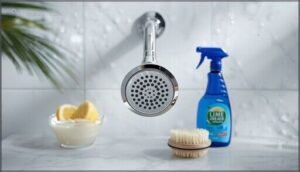
You’ve spotted the limescale, and now it’s time to pick your weapon. The right method depends on what you’re comfortable using, how bad the buildup is, and what your shower head can handle.
Just like you’d replace your cleaning toothbrush regularly to avoid bacteria, keeping your tools fresh ensures you’re actually cleaning—not just spreading grime around.
Let’s walk through your options so you can tackle this the smart way.
Natural Cleaners Vs. Chemical Solutions
You’ve got two paths when choosing limescale removal methods: natural cleaning agents like vinegar and citric acid, or commercial chemical solutions.
If you’re dealing with persistent buildup and weak flow, pairing a natural descaling routine with a high-pressure shower head designed for low water pressure can restore your shower’s full force.
Acidic cleaners using eco-friendly descaling solutions—white vinegar or citric acid powder—dissolve calcium carbonate effectively with minimal chemical risks. Green solutions work great for routine maintenance, while commercial descalers offer convenience and sequestrants that prevent redeposition.
Natural alternatives cost less per treatment but need proper dilution.
Soaking Vs. Scrubbing Techniques
Choosing between soaking and mechanical removal depends on how thick your limescale buildup is. Light deposits respond well to quick scrubbing with a soft brush, but moderate to heavy scaling needs acid soaking—vinegar soak for 30 to 60 minutes, or overnight for severe clogs.
- Soaking allows descaling methods to reach internal passages you can’t scrub
- Mechanical removal with brushes clears visible crusts after vinegar soak softens deposits
- Combine both techniques: soak first, then scrub for complete shower head descaling and limescale prevention
Compatibility With Shower Head Materials
Not every shower head can handle the same descaling methods—your material safety check comes first. Chrome plating tolerates diluted vinegar for short soaks, but prolonged acid exposure can reveal hidden defects and void warranties.
Stainless steel offers better acid resistance, while plastic durability suffers under strong cleaners.
Match your descaling methods to your fixture’s construction, keeping contact times brief and rinses thorough for reliable mineral deposit removal and long-term shower head maintenance.
Removing Limescale With Vinegar Soaking
Vinegar is your best weapon against limescale because the acetic acid breaks down calcium and magnesium deposits without harsh chemicals. You can tackle this job whether your shower head comes off easily or stays fixed to the wall.
Here’s how to prep your solution, soak effectively, and use the clever plastic bag trick when you can’t remove the head.
Preparing a Vinegar Solution
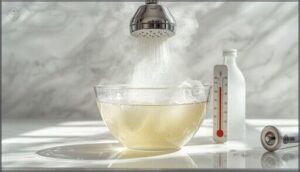
The right vinegar solution gives you serious descaling power without wrecking your shower head. Standard white household vinegar contains about 5 percent acetic acid—enough to dissolve calcium and magnesium carbonate without the harsh bite of commercial chemicals.
Here’s how to prep your descaling solution:
- Use full-strength vinegar for stubborn limescale or dilute it 1:1 with water for sensitive finishes
- Warm the vinegar to 100-110°F (not boiling) to speed up the reaction
- Plan for 30 minutes to overnight soaking depending on buildup thickness
- Test a small spot first if you’ve got plated or coated fixtures
- Work in a ventilated space and keep the solution away from kids and pets
Room-temperature vinegar works fine if you’re not in a rush—just expect longer contact time for heavy deposits.
Detaching and Soaking The Shower Head
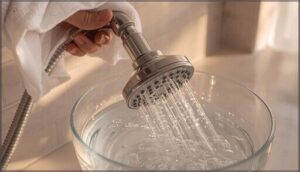
Most threaded shower heads twist off counterclockwise by hand—no wrench needed unless it’s stubborn. Turn off the water first to avoid surprise showers, wrap a cloth around the connection to protect chrome finishes, then unscrew.
Submerge the detached shower head in your vinegar solution so all nozzles sit underwater. Light limescale needs 30–60 minutes; heavy buildup can soak overnight without harming most finishes.
The Plastic Bag Method for Fixed Shower Heads
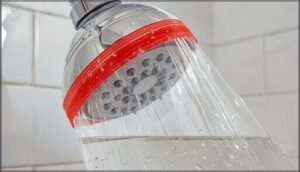
Can’t unscrew your shower head? The plastic bag method lets you descale solutions work without removing anything. Fill a food-grade bag with undiluted white vinegar or a citric acid solution, then secure it around the head with a rubber band so all nozzles stay submerged.
- Test bag attachment before tightening to prevent leaks
- Soak times run 30–60 minutes for light buildup, overnight for heavy deposits
- Check material compatibility—brass and plated finishes need shorter exposure
- Adequate ventilation reduces acid concentration fumes during treatment
After soaking, remove the bag and flush hot water through for several minutes. Gently scrub nozzles with an old toothbrush to clear any loosened limescale.
Using Baking Soda and Paste Methods
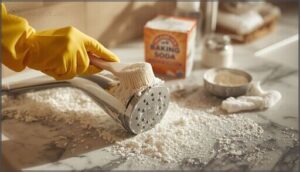
Sometimes vinegar alone won’t cut through the toughest limescale, especially if you’ve got thick, crusty buildup that’s been sitting there for months. That’s when baking soda becomes your best friend—it adds gentle scrubbing power without scratching your shower head’s finish.
Here’s how to use baking soda paste methods to tackle those stubborn deposits head-on.
Creating a Baking Soda Paste
Mix three parts baking soda with one part distilled water to create a thick paste that holds its shape but spreads easily. This sodium bicarbonate mixture won’t dissolve limescale like vinegar does, but its gentle abrasive properties help you scrub away softened mineral buildup without scratching your shower head.
Apply it in a layer, let it sit for 15–20 minutes, then you’re ready to tackle those stubborn deposits.
Scrubbing Away Stubborn Deposits
Once your baking soda paste has softened the calcium deposits, grab an old toothbrush or soft-bristled brush and work it gently around each nozzle. You’ll break up those stubborn deposits without scratching chrome or stainless finishes—that’s real surface protection.
The mild abrasive techniques combined with gentle scrubbing give you effective mineral removal where vinegar soaking alone falls short, especially around clogged spray holes.
Combining Baking Soda With Vinegar
When you add vinegar to your baking soda paste, you’ll see vigorous fizzing action—that’s an acid-base reaction creating carbon dioxide bubbles that lift surface debris. But here’s the catch: this neutralization process consumes the acetic acid quickly, weakening the descaling mechanism.
For better limescale removal, try this shower head cleaning approach:
- Apply baking soda paste first
- Let it sit 15 minutes
- Pour vinegar over deposits
- Scrub during the chemical interactions
This descaling solution maximizes effectiveness before the acid neutralizes completely.
Cleaning With Lemon Juice or Citric Acid
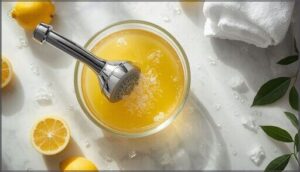
Lemon juice and citric acid work the same way vinegar does—they break down calcium and magnesium deposits with natural acidity. You’ll find these methods gentler on your nose and easier to work with if you can’t stand the smell of vinegar.
Here’s how to use citric acid powder or fresh lemon juice to tackle limescale buildup on your shower head.
Preparing a Citric Acid Solution
Grab about 2 tablespoons of food-grade citric acid powder and stir it into a liter of warm water—heat speeds up the dissolution and helps your acidic solution tackle limescale faster.
Use a plastic or glass container, since citric acid concentration matters for descaling effectiveness.
Wear gloves and eye protection when handling the powder, and store any extra crystals in a sealed container away from moisture.
Applying Lemon Juice to Mineral Deposits
Fresh lemon juice works as a natural descaling agent—squeeze it directly onto visible mineral deposits and let the citric acid effects break down calcium for about 15 minutes.
For stubborn limescale removal, soak a cloth in pure lemon juice concentration and wrap it around affected nozzles.
This acidic cleaning solution handles shower head maintenance without harsh chemicals, making mineral deposit removal straightforward and effective.
Effectiveness for Mild Buildup
Citric acid really shines on mild scale—laboratory tests show a 5 percent solution dissolves over 90 percent of calcium carbonate within an hour. For light mineral deposits on your shower head, it outperforms vinegar in both speed and odor.
This descaling method works best for limescale prevention through routine maintenance, tackling thin buildup before it hardens into stubborn deposits requiring aggressive descaling methods or higher acid concentration.
Applying Commercial Limescale Removers Safely
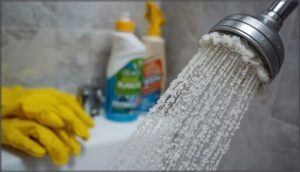
Sometimes vinegar won’t cut it, and you’ll need to bring out the heavy-duty cleaners like CLR or Lime-A-Way. These products work fast on stubborn buildup, but they contain strong acids that require careful handling.
Before you grab that bottle, you need to know two essential things that’ll keep you safe and your shower head in good shape.
Safety Precautions and Ventilation
Before you open that commercial descaler, think of chemical safety as your first line of defense. Strong acidic descale products can release fumes that irritate your lungs and eyes, so crack open a window and run the exhaust fan—proper ventilation systems keep air quality safe.
Slip on protective gear like gloves and safety goggles to shield your skin from burns. Unlike gentle white vinegar or baking soda, these cleaners demand respect and fresh airflow.
Following Manufacturer Instructions
Think of manual guidelines as your blueprint—they spell out descaling solution contact times, material compatibility, and cleaning protocols that protect both you and your shower head. Commercial descalers vary widely, so respect those safety precautions printed on the label and test a hidden spot first to avoid voiding product warranties.
- Check your shower head manual for prohibited ingredients like chlorine bleach or hydrochloric acid
- Follow exact dilution ratios and contact times to prevent finish damage
- Rinse thoroughly with running water after descaling to clear chemical residues
- Never mix different limescale removal agents—chemical reactions can release dangerous fumes
Manual Tools for Limescale Removal
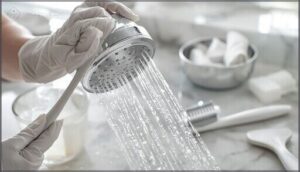
Sometimes you need more than just soaking—certain limescale deposits won’t budge without a little elbow grease. The good news is you don’t need fancy equipment to tackle stubborn buildup manually.
A few simple tools you already have at home can help you scrub, wipe, and unclog your shower head back to full working order.
Using Toothbrushes and Cleaning Brushes
An old toothbrush gives you surprising control when tackling limescale—those compact nylon bristles reach tight crevices around shower nozzles that wider brushes miss.
Soft or medium bristles won’t scratch chrome finishes during limescale removal, and angled necks help you scrub the underside of fixed heads.
Keep a dedicated cleaning toothbrush separate from personal ones to avoid cross-contamination, and replace it when bristles fray to maintain bristle durability and brush maintenance standards.
Soft Cloths and Non-Scratch Pads
After your brush loosens limescale deposits, a damp microfiber cloth safely wipes away residue without scratching chrome-plated or plastic shower heads.
Non-scratch pads pair well with your descaling solution when stubborn mineral rings remain—light pressure lifts softened deposits from nozzle faces while protecting thin finishes.
Always prioritize gentle cleaning and material compatibility during shower maintenance, since rough pads can void warranties and dull glossy surfaces.
Unclogging Nozzles With Toothpicks
When vinegar softens mineral buildup but nozzles stay blocked, wooden toothpicks become your precision unclogging tools. Insert just the tip into each spray hole with minimal force—you’ll break loose stubborn limescale deposits without tearing rubber jets or widening openings.
Work nozzle by nozzle after descaling, then flush the shower head on hot for one minute to clear dislodged debris and restore full water pressure during shower maintenance.
Preventing Future Limescale Buildup
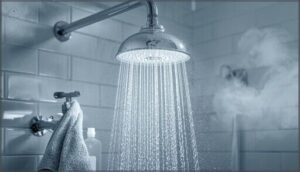
Once you’ve scrubbed away that stubborn buildup, you don’t want to repeat the whole process again next month. The real secret is staying ahead of the problem with a few simple habits.
Here’s how to keep your shower head running clean without the constant battle against limescale.
Regular Cleaning Schedules
Set yourself up with a solid cleaning schedule to stay ahead of limescale. Monthly descaling keeps shower heads flowing freely—most manufacturers recommend it as your baseline for showerhead maintenance. In hard water areas, bump that up to every two weeks.
Add a weekly wipe with vinegar spray between deep cleaning sessions, and you’ll catch deposits before they harden into stubborn mineral barriers that wreck your water pressure.
Wiping Down After Each Use
Between scheduled cleanings, grab a microfiber cloth and wipe your shower head dry after every use—this simple habit stops mineral buildup before it starts.
Daily drying tips like this cut limescale formation by removing water droplets that would otherwise crystallize into deposits. Keep a soft cloth inside the shower for post-shower routines that take seconds but deliver serious prevention benefits.
Installing Water Softeners or Filters
For serious hard water problems, a whole-house water softener eliminates the calcium and magnesium that form limescale—treating every drop before it reaches your shower head.
If you don’t want the maintenance costs of softening, point-of-use filter installation on the shower line offers partial hardness reduction.
Run hardness testing first to compare water treatment options and pick the system that matches your water’s mineral load.
How Often Should You Clean a Shower Head?
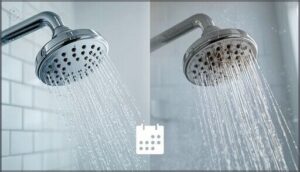
You don’t need to clean your shower head on a fixed schedule—it depends on your water and how fast limescale shows up. Some homes need attention every month, while others can go three months without issues.
Let’s break down what affects your cleaning routine, when to do it, and why staying on top of it saves you headaches down the road.
Factors Affecting Cleaning Frequency
Your shower head’s cleaning schedule isn’t one-size-fits-all—it depends on water hardness, mineral concentration, and usage patterns. If you’re in a hard water area above 180 mg per liter, you’ll see limescale and mineral buildup faster than folks with soft water.
High-traffic bathrooms need more frequent attention, and local hygiene risks can push cleaning schedules tighter to prevent issues beyond just performance.
Recommended Maintenance Intervals
Generally, you’ll want to tackle monthly descaling if you’ve got average water hardness—it keeps mineral buildup and bacteria in check without turning cleaning into a chore. In harder water zones, bump that up to every two weeks or even weekly preventive measures like a quick wipe-down.
For light-use bathrooms, a deep clean every three to six months works fine, but regular inspection between cleaning schedules ensures your shower maintenance tips stay on track.
Benefits of Consistent Shower Head Care
Keep your shower head clean and you’ll see better water pressure, fewer clogs, and longer fixture longevity before replacement becomes necessary. Regular limescale removal also addresses microbial control—bacteria love hiding in mineral buildup.
You’ll enjoy energy savings from efficient spray patterns, improved aesthetic maintenance, and real water efficiency. Consistent shower maintenance tips protect your investment while keeping those mineral deposits from turning into major headaches.
Frequently Asked Questions (FAQs)
Can limescale damage the shower head permanently?
Left unchecked, mineral buildup can spell permanent damage—thick calcium deposits block nozzles beyond recovery, corrode metal parts, pit chrome finishes, and crack seals, forcing you to replace the entire fixture instead of simply descaling it.
Do all shower head materials resist limescale equally?
No, different materials handle mineral buildup differently. Plastic and silicone nozzles resist calcium deposits better than brass or steel because smoother surfaces slow scale formation rates, while metal corrosion factors accelerate water softening challenges.
Are eco-friendly descalers as effective as chemical ones?
Citric acid dissolves 168 grams per square meter of limescale in 240 minutes, while hydrochloric acid removes 248 grams in just 30 minutes.
Eco descaler efficacy requires higher acid concentration and longer contact times, but green cleaning methods remain safer for environmental impact despite slower chemical comparison performance.
What water hardness level causes the most buildup?
Very hard water above 300 mg/L as calcium carbonate causes the most severe limescale formation.
At this level, mineral deposits accumulate rapidly on shower heads, clogging nozzles and reducing flow much faster than moderate hard water conditions.
Can descaling improve hot water temperature or pressure?
Yes, descaling boosts water pressure and flow rate by clearing blocked nozzles, but it won’t raise hot water temperature—that’s your heater’s job.
Clean showerheads improve thermal efficiency and can yield modest energy savings system-wide.
Conclusion
You’ve taken back control of your shower, and that’s no small victory. Learning how to remove limescale buildup from shower head components means you’re no longer at the mercy of mineral deposits stealing your water pressure.
A quick vinegar soak every few months keeps those jets clear and your mornings predictable. Your shower head works for you now—not against you—delivering the consistent, full-coverage spray you deserve every single time.
- https://www.focuspluscph.com/en/inspiration/bathroom/descaling-the-shower-head-step-by-step-guide/
- https://wheelhouseindustries.com/the-environmental-impact-of-traditional-descaling-chemicals-vs-organic-alternatives/
- https://www.bvwater.co.uk/b-v-chemicals-blogs/shower-head-descaling-and-disinfection
- https://www.nytimes.com/wirecutter/guides/how-to-clean-a-showerhead/
- https://goldbathroom.uk/blogs/news/clean-limescale-shower-head