
This site is supported by our readers. We may earn a commission, at no cost to you, if you purchase through links.

Your first head shave will feel like stepping off a cliff—exhilarating, slightly terrifying, and oddly freeing once you commit. Most guys overthink the mechanics until they’re standing in the bathroom with a razor in hand, suddenly realizing they have no idea where to start or which direction to go.
The difference between a smooth, confidence-boosting dome and a nicked-up disaster comes down to proper prep work and technique. Getting it right means understanding your scalp’s landscape, choosing tools that match your skin type, and developing a routine that keeps irritation at bay while maintaining that clean look you’re after.
Table Of Contents
Key Takeaways
- Proper prep work—trimming to 1-2mm, washing, exfoliating, and layering pre-shave oil with cream—cuts razor burn by up to 28% and makes the difference between a smooth shave and a nicked-up disaster.
- Shaving with the grain first reduces irritation risk by 30-50% compared to going against it, and pairing the right tool (safety razors for closeness, electric shavers for speed and safety) to your skin type prevents most common problems.
- Post-shave care isn’t optional: rinsing with cold water closes pores, alcohol-free moisturizer with ceramides restores your scalp’s barrier, and daily SPF 30+ sunscreen cuts skin cancer risk by 60-80% on your newly exposed dome.
- Maintaining a smooth head long-term means re-shaving every 2-3 days, replacing razor blades every 5-7 shaves, and watching for skin changes like persistent redness or unusual spots that signal bigger problems.
Pre-Shave Preparation for Your Scalp
You wouldn’t start a road trip with a flat tire, and the same logic applies here—prep work makes or breaks your shave. Skipping the basics is a fast track to razor burn, nicks, and a head that feels like sandpaper instead of silk.
Skipping prep work is a fast track to razor burn, nicks, and a head that feels like sandpaper
Here’s what you need to do before the blade ever touches your scalp.
Examine Scalp for Bumps and Moles
Before you take the leap and run a razor across your head, give your scalp a thorough inspection. You’re looking for bumps, moles, scars, and skin lesions that could get nicked. Scalp health matters when shaving your head—here’s what to check:
- Raised or changing moles
- Seborrheic keratoses and cysts
- Vascular bumps that bleed easily
- Old scars or keloid tissue
- Non-healing sores or irregular spots
Feel around with your fingertips for anything hiding under your hair.
Trim Hair to Short Length
Once you’ve mapped your scalp, grab hair clippers and cut everything down to 1–2 mm. Short length hair makes blade efficiency jump by about 28%—you’re cutting razor drag and improving shave quality with every pass.
Trimming stops tugging, reduces irritation by roughly 21%, and helps your razor glide smoothly over your scalp. It’s the difference between wrestling your razor and commanding it.
Wash and Exfoliate The Scalp
With short hair in place, wash your scalp with a pH-balanced cleanser and warm water—this softens stubble and opens pores.
Then exfoliate twice weekly using a mild glycerin or lactic acid formula. Scalp exfoliation slashes micro injury prevention risks by 22% and cuts pore blockage by 35%, building a solid skin barrier before shaving your head.
It’s smarter skin care routine planning that delivers razor burn prevention results.
Apply Pre-Shave Oil and Cream
Once your scalp is clean and exfoliated, layer on pre-shave oil for about 90 seconds—62% of men report smoother glide and 28% less razor drag. Then add a pH-balanced shaving cream to lock in that oil benefits and shield against razor burn prevention. This Pre-Shave Routine cuts nicks by 14% and boosts blade preparation, especially if you’re shaving your head with sensitive skin conditions.
- Choose a lightweight shave oil for oily scalps to prevent clogging
- Apply oil and let it sit 60–120 seconds before lathering cream
- Select fragrance-free cream types to reduce irritation by 6%
- Pair oil with conditioning cream for 11% better blade glide
- Reapply oil mid-session if shaving takes longer than five minutes for sustained shave comfort
Choosing The Best Head Shaving Tools

The right razor can make or break your first head-shaving experience. You’ve got options ranging from classic manual razors to modern electric clippers, and each one performs differently on your scalp.
Let’s break down what works best so you can pick the tool that matches your skin type and shaving goals.
Manual Razors (Safety and Cartridge)
Manual razors give you total command over your shave. Safety razors slash cut risk by 60% and deliver that ultra-close finish, though you’ll need to nail the technique first.
Cartridge razors flex around your head’s curves with their pivoting design—about 22% better contouring—but blade sharpness drops after three uses.
Both demand sharp blades and proper technique to dodge razor burn.
Electric Shavers and Clippers
Electric shavers offer a nick-free head-shaving experience, with 62% of users reporting smoother scalps compared to traditional blades. Modern blade technology has advanced to provide a 90-minute battery life and operates at a whisper-quiet 60 dB. Clippers with detachable blades, which have seen a 72% increase in popularity since 2016, make shaver maintenance easier and allow for 0.5mm precision.
To achieve the best results, follow these grooming tips: pre-wet your scalp, adhere to proper shaving techniques, and prioritize clipper safety for consistent outcomes.
Pros and Cons of Each Tool
Choosing between razor types means weighing what matters most: closeness, speed, or safety. Safety razors deliver a 0.15mm stubble finish and cut irritation by 12%, while electric shavers slash shave time by 40% with minimal nick risk. Clippers trim to under 3mm and reduce micro-cuts by 25%.
Consider these trade-offs:
- Manual razors need frequent blade maintenance but offer superior closeness
- Electric shavers provide quick, cord-free convenience with built-in safety
- Clippers excel at prep work but require a razor pass for total smoothness
Selecting Tools for Sensitive Skin
Sensitive scalp? Your blade choice matters more than technique. Single-blade safety razors cut irritation by 19% versus multi-blade cartridges, while electric foil shavers reduce razor burn by 14%. Pair your razor with fragrance-free shaving cream—it drops reactions by 21%—and always patch-test new products. Hypoallergenic aftershave with ceramides speeds healing 28% faster than standard formulas.
| Tool Type | Best For Sensitive Skin | Key Benefit |
|---|---|---|
| Safety Razor | Yes – single blade design | 78% report less irritation |
| Cartridge Razor | Moderate – use guarded blades | 31% fewer micro-cuts with guards |
| Electric Foil Shaver | Yes – minimal contact | 14% lower burn vs. rotary |
| Shaving Cream | Fragrance-free formulas only | 21% fewer reactions |
| Aftershave Balm | Ceramide-infused products | 28% faster barrier recovery |
Step-by-Step Guide to Shaving Your Head
Now that you’ve got your tools ready, it’s time to actually shave your head. The technique matters more than you’d think—rushing through it or using the wrong angle can leave you with irritation, missed spots, or worse.
Here’s how to get a smooth, clean shave without wrecking your scalp in the process.
Shaving With The Grain
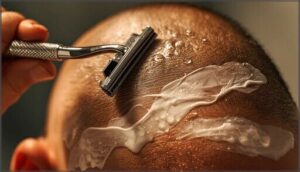
You’ll want to start at the top of your head, using smooth strokes that follow your hair’s natural grain direction. Keep your razor at a consistent angle—about 15 degrees—and don’t press down too hard.
Light blade pressure prevents nicks, while short, overlapping strokes give you control. Rinse your razor every few passes to keep the shaving cream from clogging the blades.
Techniques for a Close Shave
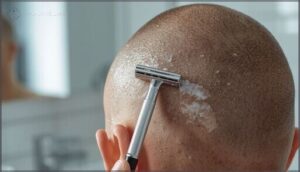
Getting that baby-smooth finish takes more than just dragging a razor across your scalp. You’re chasing closeness without the burn, and that comes down to solid head shaving technique.
- Shave angles matter—keep your razor between 30–40 degrees against your skin for maximum contact without irritation
- Razor pressure should be feather-light; let the blade do the work instead of forcing it
- Skin tension helps—stretch tight areas with your free hand for smoother shaving strokes
- Blade maintenance isn’t optional; swap cartridges every 5–7 shaves to prevent nicks
- Re-wet constantly—keeping your razor clean between passes cuts drag by about a quarter
Want that extra-close result? After your first pass with the grain, re-lather and carefully go against it. Just know you’re trading closeness for a higher irritation risk—about 18% more micro-abrasions with multi-pass shaving techniques. If your scalp can handle it, you’ll get results that last longer.
Shaving Difficult Areas Safely

The crown, nape, and behind your ears test even experienced shavers. Guarded safety razors drop nick risk by 38% in these tight zones—that’s real shaving safety and precautions data.
Adjust your blade angle lower (around 20 degrees) for sensitive skin near your hairline and ears.
Use your free hand to stretch scalp tissue flat while shaving your head; it cuts misalignment complications nearly in half and protects against razor burn.
Rinsing and Cleaning The Razor

After maneuvering through those tricky spots, keep your blade sharp and safe with smart razor maintenance. Rinse every 2–3 passes under warm water (around 100°F) to clear buildup and boost glide by 12–18%. This simple rinsing frequency habit cuts clogging, protects against razor burn, and extends blade life.
Essential cleaning techniques:
- Run steady water—not spray—for faster debris clearance
- Pat blades dry after each shave to prevent corrosion
- Replace cartridges after 5–7 shaves to avoid micro-cuts
How to Avoid Cuts, Irritation, and Ingrown Hairs

Even with the right tools and technique, a few wrong moves can leave your scalp looking like a battlefield. Cuts, irritation, and ingrown hairs are the usual suspects that turn a smooth shave into a frustrating mess.
Here’s how to outsmart these common problems and keep your head looking sharp without the collateral damage.
Shaving Against Vs. With The Grain
When you’re shaving your head, grain direction makes all the difference. Shaving against the grain may sound rebellious—and can deliver that ultra-smooth finish—but it raises your irritation risk by 30–50% and nick incidence by up to 25%.
Stick with the grain for your first pass, especially if your scalp’s sensitive, then follow with an across-the-grain stroke for closeness without the razor burn.
Managing Sensitive or Problem Areas
Your scalp’s not one flat surface—crown curves, scars, and moles need extra care. For those tricky spots:
- Use short, feather-light strokes around bumps
- Apply extra shaving cream on reactive zones prone to razor burn
- Switch to single-blade tools if scalp irritation flares up
- Keep aftershave alcohol-free near sensitive skin
Electric shavers cut micro-cuts by 35% on problem areas compared to straight razors.
Preventing and Treating Ingrown Hairs
Ingrown hair causes boil down to hair looping back into your skin—especially if you’ve got curly or coarse texture.
Shaving with the grain cuts your risk by 15–25%, while exfoliation methods like 2% salicylic acid drop recurrence by 40% over three months.
For ingrown hair treatment, use gentle circular motions during post-shave care and keep your scalp moisturized to stop follicle blockage cold.
Handling Nicks and Razor Burn
Precision matters—dull blades triple your nick risk, so swap them every five to seven shaves. If you catch a weeper, press an alum block on it for instant clotting.
Razor burn backs down fast with alcohol-free aftershave and cool water rinses.
Skip fragranced shaving cream if your scalp flares up, and layer on a soothing balm to calm inflammation before it escalates.
Essential Post-Shave Scalp Care

You just dragged a blade across your scalp—now it’s time to treat that skin right. What you do in the next few minutes can make the difference between a smooth, comfortable head and days of irritation.
Here’s how to lock in your shave and keep your scalp looking sharp.
Rinse With Cold Water
Right after you finish with the razor, splash cold water over your scalp—it’s your first line of defense against irritation. This simple step closes pores, calms redness, and reduces that annoying itch by about 9%.
Here’s what it does:
- Tightens pores instantly after shaving cream or gel use
- Cuts down trans-epidermal water loss by 14%
- Preps skin for aftershave absorption
Moisturize and Soothe The Skin
Your scalp just lost its natural oil shield, so don’t skip the moisturizer—you’ll feel tight within hours without it.
Grab an alcohol-free lotion or aftershave balm with ceramides or panthenol; these soothing gels boost skin hydration by 15–20% and cut itch by 30%. Pat it on gently.
This simple skincare routine keeps your post-shave care game strong and your scalp smooth.
Apply Sunscreen for Protection
Your bald head is now a UV magnet—up to four times more exposed than when you’d hair. Slap on broad-spectrum sunscreen with SPF 30 or higher every morning, right after your moisturizer sinks in.
Reapply every two hours outdoors to cut skin cancer risk by 60–80%. Mineral formulas with zinc oxide work great for sensitive scalps and won’t ghost you.
Maintain Cleanliness and Hygiene
Your scalp’s a breeding ground for bacteria after shaving—antibacterial wipes slash that load by 30–50%. Here’s how to keep your dome spotless:
- Daily Cleansing: pH-balanced washes maintain your skin barrier and cut water loss by 15%
- Razor Maintenance: Clean blades after every stroke; 70% alcohol kills 80% of germs
- Hair Follicle Care: Gentle exfoliation twice weekly prevents clogged pores
- Bacterial Control: Store tools dry to crush mold growth by 90%
- PostShave Care: Replace blades regularly—it drops irritation by 25–40%
Maintaining a Smooth Bald Head Long-Term

Shaving your head isn’t a one-and-done deal—it’s a commitment that requires consistent upkeep and attention. If you want that smooth, clean look to last, you’ll need to build a routine that keeps your scalp healthy and sharp-looking.
Let’s break down the essentials for maintaining your bald head over the long haul.
Daily and Weekly Scalp Care Routine
Treat your newly liberated scalp like high-performance skin—it demands consistent attention. Daily Cleansing with a gentle shampoo prevents buildup, while Scalp Hydration through a light moisturizing lotion keeps dryness at bay. Weekly Exfoliation clears dead cells that can clog follicles. Sun Protection isn’t optional—broad-spectrum sunscreen shields against cumulative damage.
These Moisturizing Practices and PostShave Care rituals transform Bald Head Maintenance from chore to second nature, keeping your dome smooth and healthy. For ideal care, consider following scalp care tips to maintain a healthy scalp.
When to Re-Shave or Touch Up
You’ll notice stubble creeping back within two to three days—that’s your cue for Re-Shave Intervals. Touch-Up Timing depends on your hair growth rate and desired smoothness.
Most guys find a Shave Frequency of every 48 hours keeps things dialed in. If irritation flares, push it to four days.
Regrowth Management isn’t complicated—just listen to your scalp and stick to what works for your Bald Head Maintenance rhythm.
Cleaning and Storing Shaving Tools
Keeping your razor sharp and safe starts with solid hygiene practices. After every shave, rinse your razor blades under hot water, then hit them with 70% isopropyl alcohol—studies show it cuts bacteria by over 99%.
- Sanitize blades after each use to prevent irritation
- Dry thoroughly with a microfiber cloth to stop corrosion
- Store in a breathable case to block contamination
Tool maintenance isn’t optional—it’s your insurance against nicks and infections.
Monitoring for Skin Changes or Issues
Your head’s clean, but now you need to watch for warning signs. Check your scalp weekly for redness, bumps, or unusual spots—dermatologists report contact dermatitis in about 4% of shavers using new blades.
If you notice persistent razor burn, folliculitis, or changes in moles, don’t wait. Early detection prevents bigger problems and keeps your skin health and protection dialed in.
Frequently Asked Questions (FAQs)
How do I shave my head if I am a girl?
Contrary to the myth that women need special tools, the process stays identical—safety razors, clippers, and proper pre-shave prep work universally.
Female shaving tips emphasize scalp sensitivity and moisturizing, regardless of gender, ensuring razor burn remedies protect everyone equally.
Can I use my pet’s clippers?
Skip the pet clippers—they’re built for animal fur, not human hair types. You’ll risk scalp irritation, uneven results, and hygiene issues.
Grab proper human grooming tools for safer, smoother shaving your head without clipper safety concerns.
How often do you need to shave your head?
Most guys shave every two to three days—that’s the sweet spot balancing shaving frequency, scalp sensitivity, and regrowth rates. Daily shaving increases irritation, while weekly shave intervals save on maintenance costs.
How often should I replace my razor blades?
Replace your razor blades every five to seven shaves to maintain sharpness and prevent irritation. If you’re shaving daily, that’s roughly every ten days.
Sensitive skin? Swap them out even sooner for smoother results.
Can I shave my head in the shower?
Yes, you can shave your head in the shower. Warm water temperature softens hair, while shower prep with shaving gel improves razor safety. Just watch your footing and use proper head shaving techniques.
What if I have a very uneven scalp?
Scalp mapping helps you identify problem spots before shaving techniques begin.
Choose razors with floating heads and use light, angled strokes on uneven surfaces.
Proper skin preparation and moisturizing reduce irritation on irregular areas markedly.
Should I use hot or cold water while shaving?
Hot water softens stubble yet tightens skin—so use warm water for prep and razor glide, then rinse cold to calm redness.
This dual approach balances shaving comfort and post-shave care perfectly.
Conclusion
Once you’ve conquered the first shave, you’ll wonder why you didn’t learn how to shave your head years ago. The freedom of skipping barber appointments and owning your look beats any initial hesitation.
Keep your tools clean, your technique consistent, and your scalp protected from the sun. What starts as a nervous experiment quickly becomes second nature—just another part of your routine that takes five minutes and zero stress.



Mike Wright
March 31, 2020 at 12:31 PM
Yes indeed having a good shaver for ahead is the must-have thing... even though if one doesn't use regularly :)