This site is supported by our readers. We may earn a commission, at no cost to you, if you purchase through links.
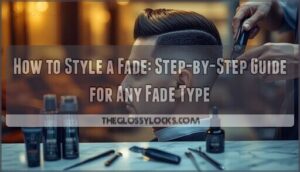
Most barbers can spot a botched fade from across the shop—patchy lines, uneven blending, or a style that looked sharp in the chair but fell apart by lunchtime. The difference between a fade that turns heads and one that screams “DIY disaster” isn’t the cut itself. It’s how you work with what’s already there.
Your clipper work laid the foundation, but styling brings the fade to life. The top needs structure, the blend needs definition, and the whole look needs products that actually match your hair type.
Once you nail the technique, you’ll stop relying on your barber to make it work and start owning the style yourself.
Table Of Contents
- Key Takeaways
- What is a Fade and Why Style It?
- Choosing The Right Fade for Your Look
- Essential Tools and Products for Fades
- Preparing Hair for Fade Styling
- Step-by-Step Guide to Styling a Fade
- Best Styling Techniques for Popular Fades
- Maintaining and Refreshing Your Fade Style
- Frequently Asked Questions (FAQs)
- Conclusion
Key Takeaways
- A fade’s sharpness depends on matching the blend point to your face shape, hair texture, and density—not just the clipper work itself.
- Daily styling requires the right product for your hair type: lightweight creams for fine hair, stronger hold formulas for coarse strands, and water-based pomades to avoid buildup.
- Most fades lose their crisp contrast after 10 to 14 days when regrowth hits the temples and blend zones, requiring touch-ups every 2 to 3 weeks.
- Common styling mistakes like over-wetting hair, using oil-based products daily, and skipping heat protectant before blow drying destroy the fade’s definition and create scalp buildup.
What is a Fade and Why Style It?
A fade haircut cuts hair short on the sides and back while keeping the top longer, creating a smooth gradient from skin to length. The style works because it’s clean, modern, and suits your personal look—but it only stays sharp when you know how to maintain and style it between cuts.
If you want to take your fade even further, you can try shaving the sides of your head for a bolder, high-contrast look that emphasizes the top.
Here’s what makes a fade worth the effort and how different variations give you control over your final look.
Key Features of a Fade
A fade haircut features a smooth gradient from short sides and back to longer hair on top. Clippers with varying guard sizes create three to five distinct fade heights.
You control the blend point—where the fade begins—to match your face shape and hairline definition. Proper haircutting techniques guarantee smooth transitions without harsh lines.
Hair texture influences how the fade appears, so choose your approach carefully.
Popular Fade Variations
Once you understand the core gradient, explore which style matches your vibe. Your choice sets the tone—literally—for everything that follows.
- Burst Fade Appeal: Semicircular contour around the ear creates a bold, curved edge that showcases texture on top.
- Skin Fade Contrast: Hair tapers to skin level for maximum drama and clean lines.
- Taper Fade Blending: Gradual reduction from sides to neckline offers natural, workplace-friendly versatility.
- Low Fade Haircut: Starts just above the ear for subtle, professional polish.
- High Fade: Begins near the crown, delivering modern edge and sharp definition.
For more on achieving a smooth blend between lengths, review this guide to.
Benefits of a Styled Fade
Knowing the variations is step one—but why invest the effort? A styled fade haircut sharpens face framing by slimming your sides and defining your jawline. You gain texture control on top while shorter panels boost cooling comfort.
Maintenance stays low with crisp lines hiding regrowth between trims. Personalization options let you switch between barbering tips and hairstyle trends that match your vibe—whether you’re chasing mens grooming classics or hair styling tips that break the mold.
Choosing The Right Fade for Your Look
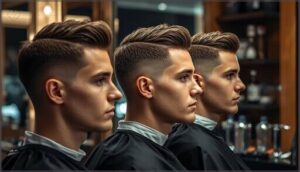
Your fade isn’t just a haircut—it’s a statement that works with your natural features, not against them. The right fade enhances your face shape, complements your hair texture, and creates a clean blend that holds up between cuts. Match your fade to these three factors for a look that feels custom-built.
Face Shape Considerations
Your face proportions dictate which fade haircut styles will enhance your best features. Match a high fade to angular jawlines and prominent cheekbone structure for sharp facial symmetry. Round shapes benefit from mid fades that add vertical definition. Square foreheads pair well with textured tops and low blends.
Analyze your jawline, forehead shapes, and overall face shape before committing to any mens grooming decision.
Hair Type and Density
Density variations dictate how much scalp shows through and how products perform. Fine hair texture needs lighter creams to avoid collapse, while coarse strands handle stronger hold formulas. Check your curl patterns—wavy and coily types add natural volume that changes fade transitions.
Understanding your hair’s density and texture helps you choose the right clipper technique and adjust blade pressure for cleaner, more controlled fades.
Porosity levels affect moisture retention, so adjust your haircare advice and styling routines. Growth rates vary, meaning your fade haircut timeline shifts based on your unique hair type.
To style effectively, consider how determines texture but also impacts maintenance and styling choices.
Blend Point and Hairline
Your blend point sits where clippers shift from skin to longer top hair—usually around the temple for most fade haircut styles. Align it with your natural hairline design to avoid harsh lines.
Use proper guard size progression and blend techniques to create smooth fade shift zones. Edge definition sharpens the overall look while controlling scalp visibility.
Position matters: too high appears disconnected, too low loses impact during hair styling sessions.
Essential Tools and Products for Fades
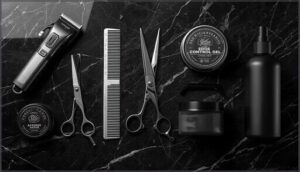
You can’t pull off a sharp fade without the right gear. Your clippers need the correct guards, your scissors must stay sharp, and your styling products have to match your hair type and the look you’re after.
Here’s what belongs in your kit.
Clippers and Guard Sizes
Your clippers and guard sizes determine whether your fade looks tight or sloppy. Most barbers work with guards 0 through 4, though having a full set up to 8 unlocks more styling freedom. Here’s what you need:
- Zero guard gives you a bald look for skin fades
- 1 guard (1/8 inch) creates stubble for tight blends
- 2 guard (1/4 inch) manages medium transitions
- 3-4 guards build pronounced side length
Clean your clipper guards after each cut to maintain consistent length.
Scissors and Trimmers
Styling scissors and trimmers are essential tools for achieving precise haircuts. Styling scissors, ideally 6.5 to 7 inches with a comfortable pivot joint, allow you to carve shape into the top of the hair, while trimmers create crisp lines along the neckline and temples. Cordless trimmers with lithium-ion batteries offer 60 to 120 minutes of runtime, sufficient for detailed work. Regular blade sharpening and trimmer maintenance ensure clean cuts and reliable tools.
| Tool | Primary Use |
|---|---|
| Styling Scissors | Trim and texturize top sections |
| Hair Trimmer | Define edges and clean necklines |
| Clipper Guards | Control length during fade blending |
Recommended Styling Products
Your fade won’t hold shape without the right hair styling products and grooming tools. Pomade hold keeps slicked styles locked in, while sea salt volume lifts fine hair for beachy texture. Cream definition tames frizz on longer tops, and clay matte finishes textured fades without shine.
Pair haircare products with styling scissors for precision cuts that enhance your look.
Preparing Hair for Fade Styling
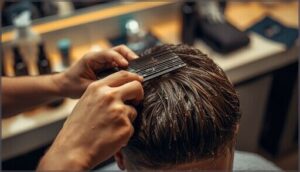
Getting your hair ready is where most people mess up their fade before they even start. You can’t slap product on dry, tangled hair and expect a clean result.
Here’s what you need to do first to set yourself up for success.
Washing and Drying Techniques
Clean hair is the foundation for any fade haircut that turns heads. Wash your hair with warm water to dissolve oils and open the cuticle, then finish with a gentle scalp massage to boost circulation. Pat dry with microfiber towels to cut drying time and minimize breakage.
For a product-free haircare routine, air dry completely before styling—your fade deserves that extra attention.
Detangling and Sectioning
Once your hair is damp, grab a wide-tooth comb and start at the ends—detangling tips always stress working upward to the roots.
Sectioning techniques matter: part hair from temple to crown in 1–2 centimeter panels, securing each with lightweight clips.
Tension control keeps your fade haircut symmetrical, so maintain gentle, even pressure. This haircut technique sets you up to own your look with precision and confidence.
Pre-styling Product Application
Once you’ve sectioned your hair, apply a heat protection spray from roots to ends—shield against up to 450 degrees. Let it sit 30 to 60 seconds before drying. Product layering starts here:
- Use one to two pumps of mousse for volume at the crown
- Add salt spray for texture enhancement and grip
- Apply hydrating pre-styling sprays mid-lengths to ends
- Focus on areas most exposed to heat
- Allow partial drying before post-styling products
This hair priming step sets your fade haircut up for moisture control and lasting hold.
Step-by-Step Guide to Styling a Fade
A fade only looks sharp when you style the top with intention and keep those transitions tight.
Start by building volume where it counts, then blend the gradient so it flows without any harsh lines.
Finish by defining the fade line to make the contrast pop and hold the shape.
Creating Volume and Texture on Top
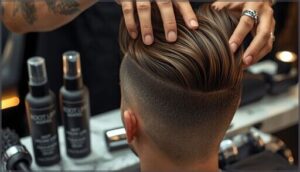
You want lift and separation, not a flat top. Start with a root lift spray on damp hair—apply to the crown and blow dry upward with a round brush.
Layer in a matte paste or texturizing spray for definition. Scrunch sections while drying to enhance natural waves.
Finish with a light volumizing mist to lock height without stiffness.
Blending The Sides and Back
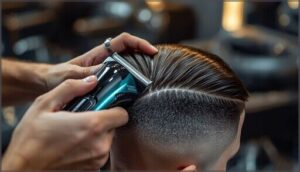
Once the top has lift, shift focus to the sides and back. Use clippers with consistent guard sizes to maintain smooth transitions from skin or low guard to longer lengths.
Work in small, upward strokes—feather the clipper over comb along the blend point. Check symmetry constantly.
Proper blending tools and steady technique keep fade haircut lines smooth without harsh breaks or steps.
Defining The Fade Line
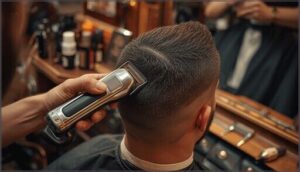
The fade line is your visual anchor—a crisp boundary between short sides and longer crown. Define it with steady clipper passes and zero-gap edge control methods for sharp contrast.
- Select guard size based on desired line placement—higher for bold fades, lower for subtle transitions.
- Use consistent strokes to maintain line sharpness and prevent uneven breaks.
- Check hairline symmetry constantly during clipper maintenance passes.
- Improve edges with a trimmer to sharpen the boundary and elevate barbering skills.
Best Styling Techniques for Popular Fades
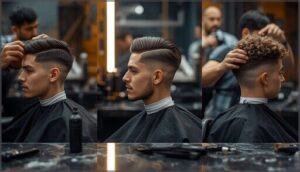
Each fade type demands a different approach to styling. The way you work with a buzz cut fade won’t match the technique for a quiff or undercut.
Here’s how to handle the most popular fade styles with confidence.
Styling a Buzz Cut Fade
A buzz cut fade puts texture and definition front and center. To achieve this look, apply a light styling cream or matte finish wax to the top for grip without shine. Using clippers with the right guard size will help maintain clean fade haircut lines. Regular clipper maintenance is essential to keep your fade techniques sharp.
Here’s your roadmap:
| Step | Action |
|---|---|
| Prep | Wash and towel dry hair texture until damp |
| Style | Work styling products through top with fingertips |
| Finish | Clean fade edges with trimmer for precision |
Styling a Quiff or Undercut Fade
Lift your quiff with medium heat and a round brush, directing airflow from roots to ends. Apply matte clay to dry hair for grip and structure.
For an undercut fade, use a fine trimmer to sharpen the fade line every two weeks. This maintains the bold silhouette and prevents blend zones from softening.
Finish with light hold spray to lock quiff texture without shine.
Styling a Crew Cut Fade
Keep the top short and textured with point cutting to create natural movement in your crew cut fade. Work a small amount of matte clay through dry hair for separation without weight. Comb forward or to the side for definition.
This crew cut style requires minimal fade maintenance—just refresh your barbering every two to four weeks to preserve the sharp fade haircut and texture.
Maintaining and Refreshing Your Fade Style

Keep your fade sharp with a solid routine. Daily care prevents fuzz and keeps the gradient clean between cuts.
Lock in your style by knowing when to trim, what products work, and which mistakes kill a good fade.
Daily Care and Product Tips
Your fade haircut stays sharp with the right haircare routine and product selection. Wash every 2 to 3 days with sulfate-free shampoo to keep scalp health in check.
Apply leave-in conditioner for hair hydration and use water-based pomades for styling tips that won’t weigh you down.
These grooming tips protect your fade maintenance game while keeping hair styling fresh between cuts.
When to Trim or Touch Up
Your fade maintenance hinges on catching regrowth before contrast fades. Most fades blur after 10 to 14 days when hair regrowth hits 1 to 2 millimeters—temples and sideburns show it first.
Watch for these trim timing signals:
- Visible line softening at the blend point
- Uneven shadowing along shifting zones
- Loss of crispness near ears and neckline
Touch up with clippers every 2 to 3 weeks to keep that sharp fade haircut locked in.
Preventing Common Fade Styling Mistakes
Most styling errors happen when you skip key maintenance steps. Heavy products cause buildup that dulls your fade haircut and irritates your scalp. Avoid these barbering techniques mistakes:
| Common Mistake | Result | Fix |
|---|---|---|
| Over-wetting hair during styling | Clumping and flattened volume | Damp—not soaked—hair holds shape better |
| Using oil-based pomades daily | Product buildup at blend line | Switch to water-based formulas |
| Skipping clarifying shampoo | Residue dulls fade contrast | Rinse every 1–2 weeks |
| Applying conditioner to sides | Weight crushes fade definition | Midlengths and ends only |
| Sleeping without protection | Bedhead flattens top texture | Lightweight satin cap preserves style |
Proper fade maintenance protects against hair damage and keeps haircut techniques sharp between touch-ups.
Frequently Asked Questions (FAQs)
What is the 3 2 1 rule for haircuts?
This barbering technique breaks your fade into three guard lengths—three at the top, two in the middle, one at the base—creating smooth haircut layers and balanced style proportions with clippers.
How to style faded hair?
Start with clean, damp hair.
Apply lightweight pomade or cream to the top section.
Use a blow dryer and brush to add volume, then shape texture with your fingers for a natural finish.
Can I fade my own hair at home?
Yes, with clippers and guards you can fade your own hair at home. Practice builds control. Start with longer guards and work down for smooth blending. Check both sides for symmetry.
How long does a fresh fade typically last?
Your fade’s sharp line fades like morning fog—usually lasting 2 to 4 weeks. Hair growth rate, fade type impact, and texture differences determine longevity.
Haircut maintenance and haircare routine prevent product buildup, keeping grooming tips fresh.
Whats the best fade for curly hair types?
Choose a low to mid fade for curly hair. This preserves curl volume on top while tapering the sides.
Defined curl fades require careful blending to maintain texture. Styling techniques emphasize natural curl movement.
Do fades work with thinning or receding hair?
Thinning hair finds its wingman in the fade. Choose a mid or low fade to create an illusion of density through contrast mask.
Soften your hairline with specific blend points that match your hair type and texture reflection needs.
Should I use heat protection before blow drying?
Apply a heat protectant every time you blow dry. Protection Purpose shields hair from moisture loss and damage.
Spray evenly through damp strands before heat—your fade stays sharp, healthy, and easier to restyle.
Conclusion
A fade without styling is like a canvas without paint—it’s there, but it’s not finished. You’ve got the tools, the technique, and the blueprint to make it work. Now it’s about repetition. The more you practice how to style fade cuts, the less you’ll second-guess yourself in the mirror.
Stop waiting for the next barber appointment to feel sharp. Take control, perfect the process, and make the look yours every single day.