This site is supported by our readers. We may earn a commission, at no cost to you, if you purchase through links.
Beard tapering isn’t just for barbershop regulars—anyone with a trimmer and a little patience can master it. But step up to the mirror, and the challenge becomes real: how do you shape your beard so it looks intentional, not accidental?
Clean fades along the jaw, sharp cheek lines, and a neckline you don’t regret—there’s a method to all of it. Whether you want a subtle gradient or a bold transformation, learning how to taper your beard gives you control over your look and confidence in your grooming game. Here’s how you get every line and blend just right.
Table Of Contents
- Key Takeaways
- Essential Tools for Tapering Your Beard
- Preparing Your Beard for Tapering
- Defining Cheek and Neck Lines
- Step-by-Step Guide to Tapering a Beard
- Tapering Techniques for Different Beard Lengths
- Maintaining a Tapered Beard
- Choosing The Right Tapered Beard Style
- Top 3 Beard Grooming Kits and Tools
- Frequently Asked Questions (FAQs)
- How to Cut a Tapered Beard Line?
- How to Taper a Short Beard?
- How to Shape a Taper Faded Beard?
- How do I fix an uneven beard taper?
- Can you taper a patchy beard effectively?
- How long does a beard taper usually last?
- Is tapering suitable for sensitive skin types?
- What are common mistakes when tapering at home?
- Conclusion
Key Takeaways
- Mastering beard tapering involves using the right tools—like quality trimmers, combs, clippers, and beard oil—for sharp lines and smooth blends.
- Preparing your beard properly with washing, conditioning, detangling, and setting clear cheek and neck lines sets you up for a pro-level taper.
- The key to a clean, gradual fade is working guard-by-guard, blending in small increments, and finishing with precise edge detailing.
- Keeping your tapered beard looking sharp depends on a consistent grooming routine, adjusting trim frequency to your growth, and choosing a fade style that matches your face.
Essential Tools for Tapering Your Beard
Having the right tools on hand makes all the difference for tapering your beard. You want gear that gives you control and keeps things easy.
Here’s what you’ll need to get started.
Choosing The Right Beard Trimmer
Choosing a beard trimmer is like picking your favorite tool in the shed—what matters most is performance. Go cordless for freedom or corded for endless juice. Check blade material: stainless or titanium offers sharp, skin-friendly grooming. Make sure length settings, motor power, and attachments suit your style. Think budget, but remember: good clippers outlast cheap disasters. A top pick offers great power and versatility.
- Corded vs Cordless
- Adjustable Length Settings
- Blade Material Quality
- Motor Power and Performance
- Budget Considerations
Must-Have Beard Combs and Scissors
Once you’ve got your trimmer, reach for a quality beard comb—think wood or cellulose acetate for slip, shape, and less static. Pair it with ergonomic beard scissors, preferably Japanese steel, for crisp snips and comfort.
Grooming efficiency is the name of the game. Most trusted grooming kits include both, so your styling tips and beard maintenance are always on point. For best results, select combs made from anti-static materials.
Selecting Clippers and Guards
Once your comb and scissors are sorted, it’s time to get hands-on with your clippers and guard combs. The right setup makes all the difference:
- Guard Size Ranges (1–20mm) shape every beard style
- Corded vs Cordless choices for flexibility
- Blade Material Quality boosts smoothness
- Ergonomic Clipper Design prevents fatigue
- Swappable clipper guards guarantee pro-level blending
Importance of Beard Oil for Maintenance
With your tools ready, don’t overlook beard oil. Daily beard oil and care keep your facial hair softer and your skin hydrated—no more itch or flakes.
Healthy beards grow better, too; regular use promotes fuller growth and tames split ends. Adding oil to your beard routine isn’t just about shine, it’s total beard maintenance done right.
Preparing Your Beard for Tapering

Getting ready to taper your beard starts with a little groundwork. Before you grab your trimmer, there are a few basics you’ll want to cover.
Here’s what you need to do to start off right.
Growing Out Your Beard
Ever notice how Beard Growth is as much about patience as it’s about genes? A full canvas takes time, so don’t rush Initial Styling.
If you’re wrestling with a Patchy Beard or Itch Management, that’s normal—just part of Beard Maintenance.
Strong Facial Hair Care early on sets the stage for solid Beard Styling and makes future tapers look sharp.
Washing and Softening Facial Hair
Before you taper your beard, give it the prep it deserves. Wash your facial hair two to three times a week with a gentle, humectant-rich beard shampoo using lukewarm water to preserve natural oils.
Always follow with a quality conditioner—this step softens hair, prevents brittleness, and prepares strands for grooming.
Finish with beard oil for deep hydration.
Detangling With a Beard Comb
Untangling knots before tapering makes Beard Styling and Maintenance a breeze—it also safeguards beard health. Glide a wide-tooth beard comb (wood or acetate trumps plastic for less static) from tips upward, using a gentle detangling technique. Stay consistent: comb twice daily if you’ve got length, or once for short beards. This smooths the way for clean, even tapers.
- Reduces tugging and breakage at the root
- Helps distribute oils and softens for precise trims
- Readies uneven growth for Beard Tapering Techniques and sharp beard fades
Setting Up Your Work Area
Ask any barber—your results depend on your setup. Place Grooming Tools like your Beard Trimmer and Clippers within easy reach, and check they’re clean and safe to use. Good Lighting and mirror quality help you spot strays before they become mistakes.
Ventilation matters, too—fresh air isn’t just for Barber Shops. Stick to Hygiene Standards, and set yourself up right.
Defining Cheek and Neck Lines
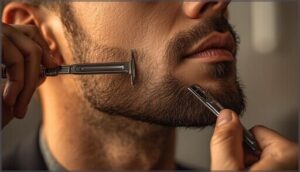
Before you start tapering, it’s smart to get your cheek and neck lines mapped out. These outlines shape the entire look and make your taper sharp.
Here’s what to focus on as you set those lines for a clean, professional finish.
Identifying Your Natural Beard Lines
When you’re aiming to taper a beard that actually suits you, start where your natural growth is thickest along the cheek line and jaw. Use your sideburns as a guide—most guys see a clear border after a week’s growth.
The pros lean on hand mirrors or beard stencils for tool accuracy, avoiding common mistakes that come with guesswork.
Marking The Neckline for a Clean Finish
Wondering where to draw the line for a sharp beard fade? Most pros—myself included—use the Adam’s apple as a marker, placing the neckline one or two fingers above it. This trick ensures symmetry.
If you’re after a clean, defined neckline, correct errors early; even a half-inch too high can throw off the whole look. Keep trimming beard neckline neat!
Creating Symmetrical Cheek Lines
A perfect cheek line lifts your whole beard fade. For natural Facial Symmetry, trace an “imaginary line” from mouth corner to ear’s midpoint, then use a transparent Shaping Tool. Thicker Hair Density? Keep cheek lines higher. If Patchy Growth haunts your cheekline, dip lower for a fuller look.
Here’s the quick rundown:
- Identify growth patterns
- Use shaping tools
- Trim both sides alternately
- Touch up every 3–5 days for best Maintenance Frequency
Step-by-Step Guide to Tapering a Beard
Ready to taper your beard like a pro? Here’s a clear, step-by-step approach that walks you through each stage of the process.
Let’s break it down so you can get started right away.
Trimming The Longest Part First
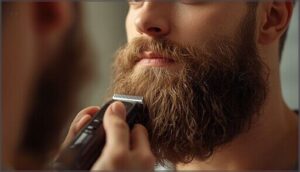
Starting with the longest part of your beard isn’t just habit—it’s key to length control and bulk reduction. Trimmers or clippers set high let you remove excess in one go, setting a clear shape.
This first pass impacts symmetry, minimizes error, and lays the groundwork for every beard fade or taper. It’s the pro’s secret for fluid beard trimming.
Using Guards for Gradual Length Changes
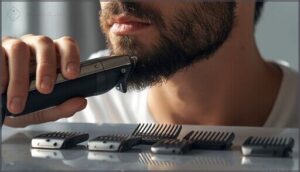
After setting your base length, grab those guard combs. Here’s the trick to a great beard fade—change guard sizes in small steps as you work along your jawline:
- Set your first guard (Guard Size Basics).
- Switch up for Incremental Adjustments.
- Use Lever Usage for micro tweaks.
- Experiment—Blending Techniques make taper a beard genuinely yours.
Blending With The Guard-by-Guard Method

Now that your guards are lined up, blending with the guard-by-guard method is where your beard fade comes to life. Move slowly through distinct blending zones—jaw to cheek—adjusting guard size with a light touch. Control pressure, watch for errors, and check often in the mirror. Most find outcome satisfaction rises when using at least three guards for their tapered beard.
| Guard Selection | Blending Zones |
|---|---|
| Start with #6 | Jawline/Bulk |
| Switch to #4 | Mid-cheek |
| Drop to #2 | Sideburns/Edge |
| No guard/scissors | Edge Detailing |
Using The Flicking Motion for Smooth Transitions
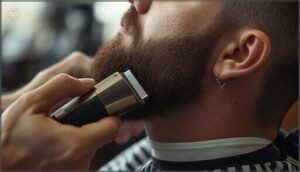
When you crave that blended Tapered Beard or Faded Beard, the flicking motion is your secret weapon. Here’s how to master it:
- Glide clippers up to the blending area.
- Angle out—don’t push flat.
- Flick wrist outward at the blend line.
- Use the blade’s edge for control.
- Pause, check, correct mistakes.
Smooth blending techniques separate amateurs from pros.
Detailing and Cleaning Edges
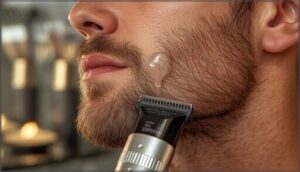
For real definition, edge cleaning is where your taper turns from “just okay” to “barber-grade.” Grab a precision trimmer to outline your neckline and cheek lines—clean symmetry is everything.
Smooth on beard oil or a hydrating gel to help prevent ingrowns. Edge frequency? Aim to sharpen up every few days so your fade stays tight, stylish, and healthy.
Tapering Techniques for Different Beard Lengths
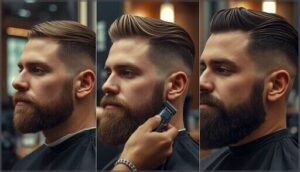
Every beard is different, and so are the ways you can taper it. Whether you keep your beard short or let it grow long, each length calls for its own approach.
Let’s look at the best techniques to get a smooth, sharp fade at any length.
How to Taper a Short Beard
Tapering a short beard is about precision, not just trimming. Working with the right Guard Size and steady Tapering Angles, you’ll blend your stubble taper into a clean, short boxed shape. Stay sharp on Maintaining Symmetry—a small slip can stand out. Use Clippers and check Beard Length with every pass for that classic Beard Fade.
- Use a number 1.5 or 2 Guard Length for the lower cheeks and neckline
- Maintain short boxed edges for structure
- Angle Clippers for smooth transitional Beard Fade
- Double-check symmetry between both sides often
- Finish with oil for a softer, healthy look
Tapering a Long Beard for Volume
Looking for more volume in your beard without the bulk? Volume Tapering is your ace. Trim the sides in subtle steps—shortening along the cheeks while leaving the chin longer—blending with guard-by-guard shifts and smart Density Management.
Asymmetric Growth or Patchiness Solutions? Shape sparse zones slightly shorter for a fuller Beard Fade.
Here’s what a pro’s process looks like:
| Technique | Result |
|---|---|
| Guard-by-Guard Blending | Smooth, voluminous gradation |
| Chin Length Preservation | Fuller, denser silhouette |
| Sculpting Sparse Areas | Patchiness masked with density control |
Blending Sideburns Into The Beard
Ever wonder why a faded beard looks so put-together? Fluid connections between sideburns and beard instantly upgrade your Professional Appearance.
Use guard-by-guard sideburn trimming techniques, flicking at a 45° angle for Style Cohesion and that coveted Facial Elongation effect.
Stick to a Blending Frequency of every 2–3 weeks, and your Tapered Beard blends will always look sharp and intentional.
Clipper-Over-Comb and No Guard Detailing
Think you’ve mastered the basics? Let’s sharpen your game. The clipper-over-comb technique lets you sculpt a Tapered Beard with custom gradients—comb angling controls fade intensity, while well-maintained blades keep every cut smooth.
For crisp edges, detailing symmetry and guardless touch-ups clarify those lines, especially around tricky spots. Rotate blending methods and vary Guard Size for a smooth gradation.
Maintaining a Tapered Beard

Keeping your beard taper sharp takes a little effort, but it pays off once you settle into a routine. The secret’s in the regular habits you build and how well you respond to your beard’s unique growth.
Here’s what to keep in mind as you lock in that fresh, tapered look.
Establishing a Weekly Grooming Routine
Consistency is your best friend for beard care and maintenance. A sharp weekly grooming routine keeps your look professional and avoids scrambling before big events. Here’s what works:
- Wash and condition (2-3 times/week)
- Apply beard oil after cleansing
- Comb and detangle
- Shape with a trimmer
- Sanitize tools
Routine consistency makes excellent grooming habits stick.
Trimming Frequency for Different Growth Rates
Your beard trimming schedule isn’t one-size-fits-all—it hinges on your unique growth rate and chosen length. Quick-growing beards or sharp fades demand shaping every week, while slower, longer styles go 6–8 weeks between trims. Even age and genetics adjust those intervals.
Pay attention, and adjust your Maintenance Routine: the right rhythm keeps your taper looking sharp and intentional.
Daily Beard Care and Conditioning
Dial in daily cleansing to keep things fresh—most guys wash their faces every morning, but targeted beard care means more than soap and water.
Beard oil hydrates, softens, and fights itch, while conditioners cut down on breakage.
Mixing DIY beard care with the right products helps maintain your length, boosts hygiene, and keeps your fade looking intentional.
Addressing Uneven Spots or Mistakes
Damaged your fade with a shaky hand or see patchy beard spots appear overnight? You’re not alone. From grooming mistake impact—like going too high on your neckline—to genetics or vitamin D issues, uneven areas happen.
Your best defense: steady maintenance routines, smart beard grooming, and careful beard trimming. Tackle new spots early with professional-grade corrective methods and prevention strategies.
Choosing The Right Tapered Beard Style
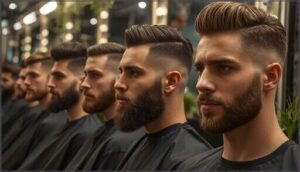
Every face has a style that fits it best, and your beard’s no different. Finding the right taper can change the way you look and feel.
The right beard taper transforms not just your look, but how you feel about yourself
Let’s check out a few popular options to see which one suits you.
Popular Beard Fade and Taper Styles
Ever wonder why the faded beard dominates barbershop talk? It comes down to options and attitude. Gradient beard styles let you show off personality without sacrificing professionalism. The most popular picks right now:
- Low Fade: Clean and subtle.
- Mid Fade: Balanced and adaptable.
- High Fade: Sharp, bold edge.
- Boxed Fade: Structured, geometric finish.
- Chin Strap: Sleek jawline definition.
Matching Styles to Face Shapes
Face shape shapes everything—especially how your tapered beard lands. Oval Versatility means you can try almost any Gradient Beard or Fade style.
Got a round face? Tapering with Round Elongation adds length. Square faces shine with subtle Square Softening along the jaw. Rectangular Proportion means fuller sides work best.
Heart Balancing? Go wide at the chin—don’t let a tight taper exaggerate narrowness.
Benefits of a Tapered Beard Look
Precision speaks volumes in beard styling. A tapered beard isn’t just a trend; it’s a strategy for a sharper face shape and simple maintenance. Here’s why:
- Boosts your professional image—clean fades mean confidence.
- Delivers real comfort benefits—less itch and irritation.
- Maximizes style personalization—matches modern grooming trends for any guy seeking mastery in facial hair styling.
Top 3 Beard Grooming Kits and Tools
Finding the right grooming kit can make all the difference in your beard game. If you’re serious about that clean, tapered look, the right tools are worth every penny. Here are three top picks that deliver reliable results.
1. Beard Club Enhanced Beard Growth Kit

Looking for a kit that pulls ahead in both science and satisfaction? The Beard Club Enhanced Beard Growth Kit nails the essentials for anyone serious about beard care, tapers, or mastering that sharp beard fade.
Inside, you get well-chosen kit ingredients—think beard growth oil, derma roller, and vitamins—all backed by clinical efficacy. User satisfaction runs high, with many noticing fuller fades in weeks.
Add in a safe profile and buzzy market trends, and it’s easy to see why this kit leads for modern beard tapering.
Best For: Men who want fuller, healthier beards and want an all-in-one kit backed by science and user results.
- Noticeably improves beard fullness and reduces patchiness within 1–3 months for most users.
- Safe, cruelty-free formula with natural oils and vitamins for hair and skin health.
- Includes everything you need—derma roller, oil, balm, vitamins, and comb—for a full beard care routine.
- Some users report missing items in their kits or dissatisfaction with the scent or oiliness.
- Individual results vary, and some see little to no beard growth improvement.
- Long-term effects and results beyond a few months aren’t well studied.
2. Philips Norelco Vacuum Beard Trimmer
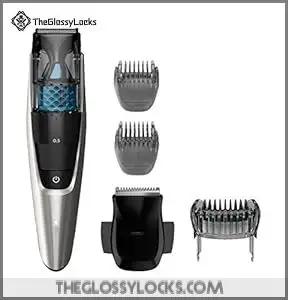
Philips Norelco brings something different to your sink—a beard trimmer that sucks up most of your cut hair with its integrated Vacuum Technology. If you’re chasing tight beard fades or precise tapering, you’ll love the easy-to-adjust Length Settings (twenty in all) and consistent battery performance—eighty minutes cordless on a full charge.
Grooming Outcomes are even, mess is minimal, and Maintenance Tips are simple: rinse the attachments, charge up, repeat. This tool streamlines your backup squad of Beard Grooming Tools and Equipment.
Best For: Anyone who wants quick, mess-free beard trims with easy length adjustments and minimal clean-up.
- Catches most cut hairs while you trim, keeping sinks cleaner.
- Offers 20 built-in length settings for flexible styling.
- Long battery life with both corded and cordless use.
- Some hair can still escape, especially in tight areas.
- Blade and comb assembly tabs may break if handled roughly.
- The vacuum chamber can be tricky to clean out completely.
3. Braun Multi Grooming Kit MGK3060
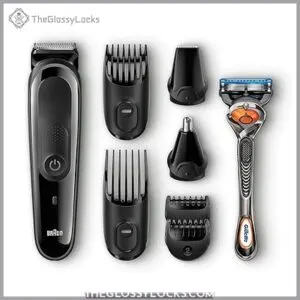
Why settle for less when the Braun MGK3060 brings true styling versatility to your bathroom shelf? This grooming kit covers it all—from beard fades to crisp beard trimming and shaping.
With thoughtful kit components like detail trimmers, four combs, and a neat Gillette razor, you’ll have your bases covered for every trim. Stainless steel blades stay sharp for months; battery performance is solid for weekly upkeep.
User feedback highlights the MGK3060’s comfort, clean results, and blade quality—making it a standout for home beard tapering.
Best For: Anyone who wants convenient, precise beard, hair, and body grooming at home with a variety of styling options.
- Multiple attachments and adjustable combs cover a wide range of grooming styles
- Blades stay sharp and cut comfortably through thick hair
- Fully washable for easy cleaning and long-term hygiene
- Battery takes 8 hours to fully charge, which feels outdated
- Spare parts and repairs can be costly if needed
- Not everyone will use all the included attachments
Frequently Asked Questions (FAQs)
How to Cut a Tapered Beard Line?
There’s art in drawing a sharp beard line—line symmetry comes from careful neckline shaping and cheekline angling.
Blending gradients with clippers, edge detailing, and mastering Low Fade, Mid Fade, or High Fade elevates your beard fades beyond basic grooming.
How to Taper a Short Beard?
Tapering a short beard comes down to tapering tool precision and blending techniques: use a beard trimmer with adjustable guards, start with the longest guard, fade sides gradually, finish with careful edge detailing, and keep up with regular grooming maintenance frequency.
How to Shape a Taper Faded Beard?
A well-shaped taper faded beard stands out by balancing symmetry and sharp lines. Use clippers for fades, match Beard Shape Basics to your face, and remember—Professional Barber Tips always recommend mastering the Fade Style Guide for best results.
How do I fix an uneven beard taper?
To fix an uneven beard taper, start by softening hair and using your beard trimmer or clippers for fades, adjusting trimmer settings.
Define the neckline carefully, trim with even passes, and address asymmetry causes for sharp line definition.
Can you taper a patchy beard effectively?
You can absolutely taper a patchy beard with the right grooming methods and smart facial hair shaping. By blending patches with a low fade, you’ll disguise gaps, boost Tapering Effectiveness, and even see a positive psychological impact.
How long does a beard taper usually last?
Think of a beard taper like a fresh paint job—it starts sharp, but how long it lasts depends on your growth rate, taper style, hair type, and maintenance routine.
With regular upkeep, most beard fades stay crisp for 2–4 weeks.
Is tapering suitable for sensitive skin types?
Tapering is suitable for sensitive skin types, but you need proper prep and gentle techniques. Prioritize tool sanitation, opt for mild product ingredients, and space out tapering frequency.
If irritation persists, a quick dermatologist consultation keeps your grooming routine on track.
What are common mistakes when tapering at home?
Picture a rushed beard fade: you skip prep, grab the wrong guard, and set that neckline way too high. Rushing tapering, guard misuse, prep neglect, over correction, and neckline errors are classic slip-ups—even with clippers.
Conclusion
Think of your beard like a landscape—it takes vision, careful shaping, and steady hands to reveal its best lines. With every tool in your kit, you’re not just trimming hair; you’re sculpting your own style, making each detail count.
Mastering how to taper your beard means turning daily maintenance into an art form. Embrace that canvas in your mirror, and feel the confidence that comes from owning the look you’ve crafted yourself—one precise fade at a time.
- https://www.beardbrand.com/blogs/urbanbeardsman/beard-styles
- https://thebeardclub.com/blogs/beard-culture/tapered-beard-how-to
- https://ibmc.edu/5-popular-beard-styles-how-barbers-grow-and-maintain-them/
- https://billybsbarbershop.com/blog/f/2025-trends-trimmed-beard-styles-taking-over-this-year
- https://beardcoalition.com/blogs/news/the-future-of-beard-care-trends-and-innovations