This site is supported by our readers. We may earn a commission, at no cost to you, if you purchase through links.

Most guys focus on their beard length and forget about the one detail that separates a sharp look from an unkempt mess—the neckline. A poorly defined neck beard creeps down toward your collar, making even the fullest beard look sloppy and unintentional.
The difference between looking groomed and looking like you’ve given up often comes down to a clean edge where your jaw meets your neck. Learning how to trim neck beard properly transforms your entire facial profile, adding definition to your jawline and structure to your face.
The right technique takes less than five minutes but requires precision, the correct tools, and an understanding of where that line should actually sit.
Table Of Contents
- Key Takeaways
- Finding Your Beard Neckline
- Preparing Your Neck Beard for Trimming
- Step-by-Step Neck Beard Trimming Guide
- Shaping and Styling The Neckline
- Top 5 Products for Neck Beard Care
- Neckline Maintenance and Skin Care Tips
- Frequently Asked Questions (FAQs)
- Where to stop beard neckline?
- How do you trim a beard neckline?
- Should you trim a beard if you have a misshapen or bushy neckline?
- What is a good neckline for a beard trim?
- What if you cut your beard neckline too high?
- Should I trim my neck when growing a beard?
- How do I trim my beard neckline by myself?
- How do you shave your neck beard for your jawline?
- How do you trim a scruff beard?
- How often should I trim my neck beard?
- Conclusion
Key Takeaways
- Your neckline should sit one to two finger widths above your Adam’s apple in a gentle U-shape that follows your natural jaw crease, with placement adjusted based on your face shape—higher for round faces to add length, lower for oval faces to maintain balance.
- The difference between a groomed beard and an unkempt mess comes down to a clean neckline edge that takes less than five minutes to trim but requires starting low and working upward with precision to avoid irreversible mistakes.
- Proper prep matters more than most guys think—wash, exfoliate, and condition your neck area before trimming to prevent irritation, ingrown hairs, and tugging that ruins the final result.
- Maintaining your neckline every five to seven days with the right tools and finishing with alcohol-free aftershave or beard oil keeps your jawline sharp and prevents the patchy, forgotten look that screams amateur.
Finding Your Beard Neckline
Your beard neckline isn’t some arbitrary boundary—it’s the difference between a sharp look and a messy, unkempt appearance.
Getting your neckline and cheek lines properly shaped sets the foundation for a polished, intentional beard that actually complements your face.
Getting this right means knowing exactly where your beard should end and your neck should begin.
Here’s how to find that perfect line and tailor it to your face shape.
Locating The Adam’s Apple
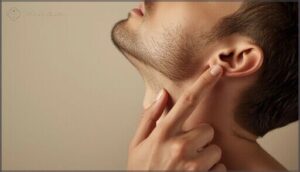
Finding your neckline starts with locating your Adam’s Apple, the prominent bump in the middle of your throat. Tilt your head back slightly and feel for that firm cartilage protrusion—it moves when you swallow.
This anatomical reference point acts as your key reference point for beard symmetry and proper neckline placement. Position your beard trimming line about one to two finger widths above it for balanced facial structure.
For more detail on maintaining a well-defined beard neckline, explore tools and placement tips.
Feeling The Crease Between Jaw and Neck
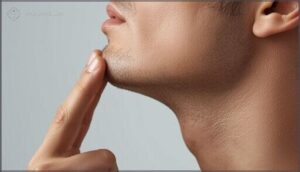
Once you’ve found your Adam’s apple, tilt your chin down and gently press your fingertips upward until you feel the distinct crease where your jaw meets your neck. This natural fold—formed by the mandibular ligament and platysma muscle—defines your beard neckline boundary.
To maintain proper jawline definition and minimize irritation during beard trimming, follow these steps:
- Press firmly along the crease to map its full width
- Note where skin texture shifts from smooth to rougher
- Mark this line as your upper trimming limit for beard care
Maintaining vital neck and jaw definition plays a vital role in achieving a tidy beard neckline.
Visualizing The Ideal U-Shape

Now picture a smooth U shape sitting two to three millimeters above your Adam’s apple—that’s your neckline blueprint for beard trimming.
The inner curve follows the hollow under your chin, matching your facial contours naturally. For jawline alignment and neckline symmetry, center the widest point of the U directly under your chin, keeping both sides within two millimeters of each other for proper beard proportion.
Neckline Placement for Different Face Shapes
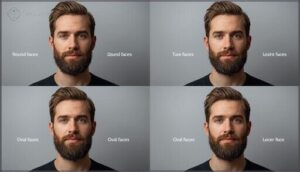
Your face shape dictates where that U-shape sits for ideal facial proportions. Round faces need a higher neckline closer to the Adam’s apple to lengthen your neck visually, while long faces benefit from raising the line slightly above standard placement.
Oval faces work with a gentle curved neckline positioned lower, and square faces maintain beard neckline symmetry at steady height to preserve your natural angular jawline.
Preparing Your Neck Beard for Trimming

Before you pick up that trimmer, you need to prep your neck and beard the right way. Skipping this step leads to tugging, irritation, and a sloppy finish that undermines all your effort.
Here’s how to set yourself up for a clean trim every time.
Cleansing and Exfoliating The Neck Area
Your neck skin care routine sets the foundation for a clean trim and prevents irritation down the line. Start by washing the neck area with a gentle cleanser designed for facial hair and sensitive skin tips—use circular motions for 20 to 30 seconds, then rinse with lukewarm water.
Follow up with exfoliation techniques one to three times weekly using a mild scrub or chemical exfoliant to clear buildup and support beard hygiene around your beard neckline.
Conditioning The Beard for Easy Trimming
Beard hydration transforms stubborn hairs into manageable strands, boosting beard elasticity by roughly 18 percent and cutting down snags during facial hair work.
Apply a lightweight beard oil daily to increase pliability, then rinse with warm water before trimming prep to open cuticles and improve comb-through by 12 percent. This hair softening step streamlines beard maintenance and delivers smoother grooming results every time.
Drying and Combing The Beard Properly
Proper moisture removal starts with a clean microfiber towel pressed gently against your beard to absorb water without triggering frizz control issues. Pat from the neck area upward, squeezing excess moisture rather than rubbing vigorously.
Once damp, use a wide tooth comb for hair texturing, starting at your beard neckline and working up to detangle. This beard maintenance routine prevents breakage and sets you up for precise grooming work.
Step-by-Step Neck Beard Trimming Guide

Now that your beard is prepped and ready, it’s time to actually trim that neckline with precision.
The steps below will walk you through the entire process, from marking your line to checking for symmetry. Follow each one carefully to avoid common mistakes that can throw off your entire look.
Marking The Neckline With a Pencil
Before you make your first cut, grab a soft mechanical pencil with 0.5 mm lead to sketch your ideal beard neckline. Mark a symmetrical U-shape just above the natural crease where your jaw meets your neck.
To avoid trimming errors, use these pencil techniques:
- Align the mark with your Adam’s apple as a vertical anchor
- Draw while dry to prevent smudging
- Keep the line higher on dense beards, lower on lighter growth
- Check both sides for perfect beard symmetry
Starting Low and Trimming Upwards
Always start your first pass below where you think the final line should land—this gives you room to perfect without removing too much. Use slow, steady upward strokes with your beard trimmer to reveal the natural contour. This approach protects against skin irritation and maintains beard symmetry while you build toward neckline precision.
| Trimming Techniques | Trimmer Safety Benefit |
|---|---|
| Short upward strokes | Reduces tugging and razor burn |
| Start 1 inch below target | Prevents over-trimming mistakes |
| Use guard settings | Maintains even beard styles |
| Check profile angle | Ensures natural neck beard shift |
Shaving a Horizontal Line Across The Neck
Once you’ve trimmed upward to your guide, it’s time to lock in a clean horizontal line across the neck using sharp razor strokes.
Stretch the skin slightly with your free hand, then use short controlled passes moving from collarbone toward the jaw—this keeps your beard neckline symmetry sharp and prevents slips that ruin edge maintenance during neck shaving.
Trimming Below The Neckline for Clean Edges
After shaving that horizontal line, flip your trimmer to a shorter guard and work downward from your beard neckline toward your collarbone—this edge control removes stubble for skin safety without nicking sensitive areas.
- Use a number-one guard or bare trimmer blade for maximum neckline precision below the line
- Move the trimmer in slow downward strokes to maintain beard symmetry on both sides
- Rinse your neck frequently to check progress and avoid over-trimming patches
- Keep at least a quarter inch of clearance above visible skin irritation or redness
Checking Evenness on Both Sides
Once you’ve cleaned up below the line, step back and compare both sides in natural light—this symmetry check is critical for professional beard neckline results.
Use your Adam’s apple as a center reference point, then run your fingers along each side to feel for uneven highs or lows. Mark any differences with a white pencil, then make small adjustments with your trimmer until both sides mirror perfectly.
Shaping and Styling The Neckline

A clean neckline is just the start—shaping it correctly transforms your beard from amateur to intentional.
The finish you choose affects how your face reads from every angle, and subtle adjustments can completely change the vibe. Here’s how to shape and style your neckline with precision and purpose.
Choosing Between a Rounded or Square Finish
Your neckline style comes down to two options: a rounded edge or a square finish. Rounded edges soften your facial structure and create natural beard symmetry, making them ideal for fuller beards and approachable vibes.
Square finishes deliver sharp, defined beard lines that emphasize your jawline and project confidence. Choose based on your face shape—round faces need angles, while oblong faces benefit from curves.
Using a Trimmer for Precision Shaping
Once you’ve picked your finish, grab your beard trimmer and set it to a zero or 0.5 mm guard for precision trimming along the edges.
Use short strokes at a 15 to 30 degree angle against hair growth for crisp definition. Check both sides frequently to maintain beard symmetry, adjusting trimmer settings as needed for clean edge blending.
Creating a Natural Transition With Fading
To avoid harsh lines that scream amateur hour, you’ll need to master fade techniques that blend your neck beard into clean skin. Start with proper skin preparation—wash, exfoliate, and apply light oil to reduce friction during your facial hair grooming session.
For natural transitions in beard blending, follow these fading tools and beard trimming techniques:
- Begin with a longer guard at your beard neckline
- Switch to progressively shorter guards moving downward
- Use sweeping motions parallel to your neck
- Flick the trimmer outward to soften edges
- Finish with a zero guard for flawless blending
Adjusting The Neckline Based on Beard Style
Your facial structure dictates everything—a short stubble demands a higher neckline to maintain beard symmetry, while a full beard allows neckline depth that sits lower on the throat.
Round faces need V-shaped neck beard lines for length, whereas square jaws benefit from curved beard trimming that softens angles.
Match your beard care routine to your style variations, and beard texture will guide how aggressively you define each edge.
Top 5 Products for Neck Beard Care
Your neckline won’t look sharp without the right grooming essentials backing up your trimming skills.
The best cleansers and washes prep your skin, soften your beard, and prevent irritation before and after you pick up the trimmer. Here are five grooming essentials that’ll keep your neck beard clean, healthy, and ready for precision work.
1. Kiehls Ultra Facial Cleanser
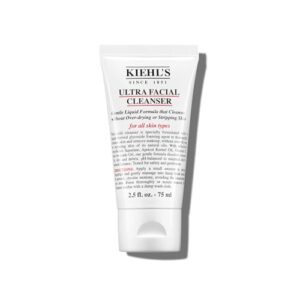
Your neck deserves the same care as your beard, and Kiehl’s Ultra Facial Cleanser delivers exactly that. This pH-balanced, foaming formula removes dirt and excess oil without stripping your skin dry—a vital step before trimming.
Enriched with squalane, glycerin, and avocado oil, it cleanses gently while keeping your neck hydrated and smooth. The 2.5-ounce bottle works for all skin types, even sensitive ones.
Use it daily to prep your skin, preventing irritation and ingrown hairs that can ruin your neckline’s clean appearance.
| Best For | Men with all skin types who want a gentle, effective cleanser to prep their neck area before trimming and prevent irritation or ingrown hairs. |
|---|---|
| Skin Type | All skin types |
| Scent | Unscented |
| Age Range | Adult |
| Daily Use | Yes |
| Cleanses Skin | Yes |
| Suitable for Sensitive | Yes |
| Additional Features |
|
- PH-balanced formula cleanses without stripping natural oils, leaving skin hydrated and smooth
- Enriched with squalane, glycerin, and avocado oil for added nourishment
- Suitable for sensitive skin and effective at removing dirt, oil, and light makeup
- Can be drying for some users, especially those with naturally dry skin
- Higher price point compared to other facial cleansers on the market
- Unscented formula may not appeal to users who prefer fragrant products
2. La Roche Posay Gentle Face Cleanser
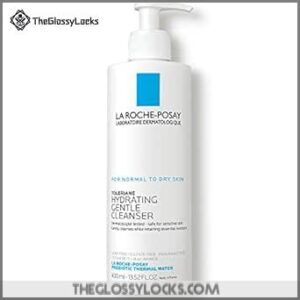
When your skin runs sensitive and dry, La Roche-Posay Gentle Face Cleanser becomes your go-to weapon for pre-trim prep. This creamy, non-foaming formula hydrates while cleansing, thanks to ceramide-3 and niacinamide working together to protect your skin barrier.
It removes dirt and oils without leaving that tight, stripped feeling that invites irritation. The fragrance-free, soap-free design won’t trigger breakouts or redness—vital when you’re repeatedly trimming your neckline. Use it before each trim session to keep your neck smooth and ready for precision work.
| Best For | People with sensitive, dry skin who need a gentle daily cleanser that won’t irritate their skin before or after trimming their neckline. |
|---|---|
| Skin Type | Normal to dry, sensitive |
| Scent | Unscented |
| Age Range | Adult |
| Daily Use | Yes |
| Cleanses Skin | Yes |
| Suitable for Sensitive | Yes |
| Additional Features |
|
- Hydrates while cleaning without leaving skin tight or stripped, thanks to ceramide-3 and niacinamide
- Fragrance-free and soap-free formula minimizes irritation and breakouts during repeated use
- Clinically proven and dermatologist-tested for sensitive skin types
- Doesn’t foam or lather well, which some users prefer in a face wash
- Not strong enough for heavy makeup removal or deep cleaning needs
- Not available for purchase in certain countries like Australia
3. Jack Black Beard Wash
Your beard deserves a wash that works as hard as you do—and Jack Black Beard Wash delivers with jojoba, panthenol, and aloe vera in one multitasking formula. It cleanses dirt and oil from both facial hair and skin while conditioning at the same time, leaving your beard soft with a natural shine.
The 6 oz bottle rinses clean without greasiness, making it perfect before trimming your neckline. At $19.00, it’s an investment that prevents the dryness and flakiness that sabotage precise grooming work.
| Best For | Men with beards who want a 2-in-1 cleanser and conditioner that softens facial hair while moisturizing the skin underneath. |
|---|---|
| Skin Type | All skin types |
| Scent | Natural |
| Age Range | Adult |
| Daily Use | Yes |
| Cleanses Skin | Yes |
| Suitable for Sensitive | No |
| Additional Features |
|
- Formula with jojoba, panthenol, and aloe vera cleanses and conditions in one step
- Removes dirt and oil while preventing dryness and flakiness under the beard
- Leaves facial hair soft with a natural, healthy-looking shine
- At $19 for 3 fl oz, it’s pricier than some basic beard wash options
- The scent might not match everyone’s expectations
- The lather or fragrance may not appeal to all users
4. HORACE Beard Shampoo For Men
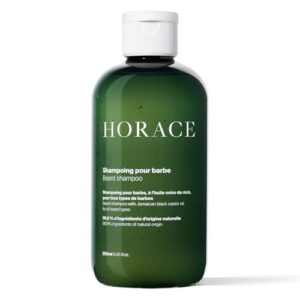
When 98.9 percent of the formula comes from natural sources, you know you’re not coating your beard in synthetic junk. HORACE Beard Shampoo uses plant-based cleansers like decyl glucoside alongside argan oil, linseed oil, and aloe vera to purify without stripping moisture.
The sulfate-free gel softens facial hair while calming the skin underneath, making it perfect prep before trimming your neckline. At 250 ml and vegan, it’s daily-use grooming that keeps your beard clean and manageable without dryness.
| Best For | Men with beards of any length who want a gentle, natural daily cleanser that won’t irritate sensitive skin. |
|---|---|
| Skin Type | All skin types |
| Scent | Woody |
| Age Range | Adult |
| Daily Use | Yes |
| Cleanses Skin | Yes |
| Suitable for Sensitive | Yes |
| Additional Features |
|
- 98.5% naturally-derived, sulfate-free formula with nourishing oils like argan and castor that hydrate while cleansing
- Vegan and gentle enough for daily use on all skin types, including sensitive skin
- Helps soothe skin underneath the beard and can combat dandruff when paired with a scrub
- Doesn’t lather as much as traditional shampoos, which some users prefer
- May leave beard feeling slightly dry compared to using a separate conditioner
- Some users have reported availability issues when trying to purchase
5. Bevel Face And Beard Wash
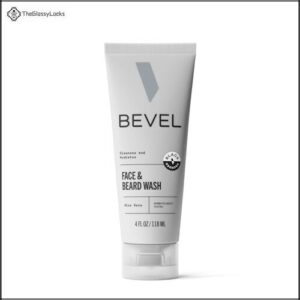
While HORACE keeps it natural, Bevel Face And Beard Wash takes a 2-in-1 approach that streamlines your routine without compromise. Tea tree oil and witch hazel tackle excess oil and breakouts, while aloe vera and coconut water hydrate your skin and soften your beard in one step.
Vitamin B3 brightens your complexion and evens out dark spots. At 4 FL oz, you only need a dime-sized amount to prep both your face and beard before trimming your neckline—no separate products required.
| Best For | Guys who want one efficient product that cleans their face and beard while tackling breakouts and dark spots. |
|---|---|
| Skin Type | All skin types |
| Scent | Aloe Vera |
| Age Range | All |
| Daily Use | Yes |
| Cleanses Skin | Yes |
| Suitable for Sensitive | Yes |
| Additional Features |
|
- Tea tree oil and witch hazel clear up acne without over-drying your skin
- Vitamin B3 brightens your complexion and fades dark spots over time
- Works as both face wash and beard cleanser, so you skip the extra step
- Tea tree oil might irritate if you have sensitive skin or allergies
- The aloe scent is pretty mild, so if you like stronger fragrances, this might feel bland
- At 4 FL oz, the bottle runs out faster than bigger options if you’re using it daily
Neckline Maintenance and Skin Care Tips

Trimming your neckline is only half the battle—keeping it clean and irritation-free requires consistent care. Your skin needs attention just as much as your beard does, especially in areas prone to razor burn and ingrown hairs.
Here’s how to maintain a sharp neckline while keeping your skin healthy and comfortable.
Regular Trimming Schedule for The Neckline
Consistency is your secret weapon for a clean neckline that always looks deliberate. Most beards need attention every one to two weeks to maintain that sharp boundary, though faster growth might push you toward weekly sessions.
Here’s what to track:
- Short beards demand trimming every five to seven days for razor-sharp definition
- Average facial hair grows about half an inch monthly, setting your baseline
- Seasonal shifts can speed up or slow down growth, adjusting your intervals slightly
- Higher contrast necklines closer to the throat require more frequent touch-ups
- Missing scheduled trims creates noticeable gaps that scream “forgotten maintenance“
Set a recurring reminder and stick to it—your beard trimmer should become a weekly ritual, not a monthly surprise.
Preventing Ingrown Hairs and Irritation
Sharp neck definition means nothing if irritation takes over. Exfoliation techniques clear dead cells one to two times weekly, preventing ingrown hair from ruining your beard neckline.
Shave with the grain using short strokes, and swap blades every five to seven shaves. After trimming, rinse with cool water and apply fragrance-free moisturizer within three minutes to support your skin barrier and maintain impeccable facial hair care.
Applying Beard Oil or Balm After Trimming
Lock in moisture within three minutes after trimming by warming beard oil between your palms and massaging upward from neck to jawline. For beard oil benefits and proper skin hydration methods, try product layering techniques:
- Apply oil first to nourish skin and soften hair
- Follow with balm to seal edges and add hold
- Brush downward to distribute evenly across your beard neckline
This trimming aftercare advice keeps facial hair care simple and effective.
Using Alcohol-Free Aftershave for Sensitive Skin
Alcohol free aftershave benefits your sensitive skin by hydrating without the sting that comes from harsh formulas.
Pat a small amount across your beard neckline while skin is clean, letting ingredients like aloe and glycerin calm redness and lock in moisture.
These gentle ingredients support your skin barrier after trimming, making neckbeard maintenance comfortable and your overall beard care routine more effective.
Frequently Asked Questions (FAQs)
Where to stop beard neckline?
Your beard neckline stops roughly one to two fingers above your Adam’s apple, following a gentle U-shaped curve that traces your jawline and creates natural symmetry across both sides of your neck.
How do you trim a beard neckline?
Start by marking your beard neckline with a washable pencil, then trim upward from the lower neck using a beard trimmer.
Check for beard symmetry on both sides to maintain facial harmony and proper beard care and maintenance.
Should you trim a beard if you have a misshapen or bushy neckline?
Yes, trimming corrects beard symmetry and reveals your facial structure. A bushy neckline hides your jawline, while neckline correction with proper trimming techniques restores balance.
Regular beard care and maintenance prevents bulk around your throat.
What is a good neckline for a beard trim?
A good neckline for a beard trim sits 5 to 1 inch above your Adam’s apple, following a gentle U-shape that mirrors your jawline for natural Beard Symmetry and balanced Facial Structure.
What if you cut your beard neckline too high?
Cutting your beard neckline too high disrupts facial proportions and exposes more neck skin, creating a stark, unbalanced look.
Expect skin irritation, patchy regrowth, and 1–2 weeks before neckline correction becomes possible.
Should I trim my neck when growing a beard?
Absolutely. Trimming your neck beard regularly prevents straggly growth and keeps your facial hair looking intentional.
A clean neckline enhances beard style, defines your jawline, and promotes proper beard care and maintenance as you grow.
How do I trim my beard neckline by myself?
Tilt your head down, feel the crease where jaw meets neck, mark your neckline with pencil, then trim upward from your Adam’s apple using steady strokes—checking both sides for symmetry throughout.
How do you shave your neck beard for your jawline?
Start by locating your Adam’s apple, then shave everything below a U-shaped neckline that follows your jaw’s natural angle.
This facial hair trimming technique creates beard symmetry and sharp jawline shaping through proper neck contouring.
How do you trim a scruff beard?
For scruff maintenance, use a trimmer with a short guard—usually 1-3mm—and work along the beard neckline with steady strokes.
Trim the neck below your jawline, then fade edges for natural-looking beard grooming techniques.
How often should I trim my neck beard?
Your beard neckline demands attention every five to seven days for a sharp, controlled look.
Faster growth or sensitive skin shifts that window to three or ten days, so let your face set the pace.
Conclusion
Most men obsess over beard oil and exotic balms, yet skip the one thing that actually defines their look—a sharp neckline. You’ve just learned how to trim neck beard properly, which means you now control the single detail that separates intentional style from accidental scruff.
The tools are basic, the technique is simple, and the difference is immediate. Your jawline won’t sculpt itself, but five minutes of precision every week will.