This site is supported by our readers. We may earn a commission, at no cost to you, if you purchase through links.
Most people don’t realize they’re one wrong move away from turning a simple grooming task into a painful infection. Your nose hair acts as your respiratory system’s first line of defense, trapping dust and bacteria before they reach your lungs.
But when those hairs start peeking out, they undermine every other grooming effort you make. The trick isn’t removing them entirely—it’s trimming them safely without compromising their protective function.
With the right tools and technique, you can maintain a clean appearance in under two minutes while keeping your nasal defenses intact.
Table Of Contents
Key Takeaways
- Trim only the visible nose hairs at the nostril opening, leaving deeper hairs untouched to protect your natural air filter.
- Always use clean, rounded-tip scissors or an electric nose hair trimmer with safety guards to avoid cuts and infection.
- Wash your hands and disinfect your tools before each trim, and never use sharp objects, tweezers, or chemical removers inside your nose.
- Trim every two to six weeks or when hairs become visible, stopping if you notice pain, bleeding, or signs of infection.
Why Trim Nose Hair?
Your nose hair isn’t just there by accident. It’s actually doing important work to protect your respiratory system. Before you start trimming, it helps to understand what those hairs do, why you might want to trim them, and what’s true versus what’s just myth.
Nose Hair’s Protective Role
Your nose hair isn’t just there by accident—it’s your respiratory system’s first line of defense. These tiny fibers trap dust, allergens, and airborne particles before they reach your lungs. They also support nasal health through mucosal defense and help maintain olfactory function. Think of nose hair as your body’s built-in air filtration system:
Nose hair acts as your body’s built-in air filter, trapping dust and allergens to protect your lungs and support nasal health
- Blocks harmful debris at the nasal entrance
- Warms and humidifies incoming air
- Protects delicate respiratory tissues downstream
Proper grooming and hygiene means trimming excess growth while preserving this natural protection. Effective scientific study methods are essential for understanding the importance of nose hair in our overall health.
Reasons for Trimming Excess Hair
While nose hair protects your airways, excess growth can affect your social confidence and facial aesthetics. Visible strays undermine personal hygiene efforts and create cosmetic concerns you’d rather avoid. Using nose hair trimmers keeps your grooming and hygiene on point.
Here’s how hair growth patterns vary:
| Factor | Impact on Growth |
|---|---|
| Age | Increases density and length over time |
| Genetics | Determines baseline thickness and rate |
| Hormones | Influences hair production cycles |
| Environment | Pollutants can stimulate protective growth |
| Health | Certain conditions alter growth patterns |
Personal grooming isn’t vanity—it’s self-care that boosts how you show up every day.
Myths About Nose Hair Removal
You’ve probably heard that trimming causes thicker regrowth or invites serious infections—both are nose hair myths. Removal risks exist only when you pluck or use dirty tools. Keeping your trimmer clean is just as important as technique—proper post-shave care for sensitive areas applies the same hygiene principle to prevent irritation anywhere you groom.
Trimming safety improves with clean equipment and gentle technique. Hair regrowth happens naturally from surrounding follicles, not from trimming itself. While trimming maintains healthy ends, protective styles like braids help your hair grow by reducing breakage and retaining length over time.
Infection prevention starts with proper nose hair trimming techniques and nasal health and hygiene practices, not avoiding personal grooming safety altogether. Storing your trimmer properly is just as important—keeping it in a dry spot can extend its lifespan and reduce the risk of rust or bacteria buildup, as explained in this guide to choosing and maintaining nose hair trimmers.
Choosing Safe Nose Hair Trimming Tools

The right tool makes all the difference when you’re trimming nose hair. Some options are designed to protect delicate tissue, while others can cause cuts or irritation.
Let’s look at the safest choices and what you should skip entirely.
Electric Nose Hair Trimmers
Electric nose hair trimmers are your safest bet for quick, painless maintenance. These battery-powered devices use rotary or oscillating blades with protective guards to prevent nicks and cuts. For those with extra-sensitive nasal passages, specialized trimmers designed for sensitive skin feature hypoallergenic blades and rounded tips that minimize irritation.
Look for stainless steel blades that resist corrosion and models with safety features like automatic shutoff.
Regular device sanitization and blade replacement keep your electric trimmer hygienic and effective for consistent nose hair trimming. Keeping your hands clean before grooming is equally important—proper beard hygiene and washing techniques prevent bacteria transfer from your hands to your face.
Rounded-Tip Scissors
If precision matters to you, rounded-tip scissors deliver control without the risk. Their blunt edges protect your nasal mucosa from accidental punctures during trimming.
Choose stainless steel models for easy disinfection and rust resistance. Check for safety certifications before you buy.
Compact, curved blades give you the hair clipping accuracy you need while keeping blade maintenance simple and scissor safety your top priority.
Tools to Avoid for Trimming
Beyond the safe options, certain tools pose serious risks you should avoid. Sharp objects like dental picks or unsterilized scissors can cause mucosal injury inside your nostril. Chemical depilatories burn delicate nasal tissue. Improvised tools—paperclips, safety pins—invite disaster.
Skip plucking with metal tweezers or waxing entirely. These methods create open wounds that bacteria love. Stick with your trimmer or rounded scissors instead.
Preparing for a Safe Trim

Before you start trimming, take a few minutes to set yourself up for success. A clean workspace and the right setup will help you avoid mistakes and keep things safe.
Here’s what you need to do first.
Cleaning Tools and Hands
Think of your trimmer as a surgical instrument—clean it like one. Wash your hands with soap for at least 20 seconds before you start.
Rinse your trimmer with warm water and soap, then wipe the blades with rubbing alcohol. Dry everything completely.
This simple hygiene practice stops bacteria from entering tiny cuts and keeps infections away.
Setting Up Proper Lighting and Mirror
You can’t trim what you can’t see—that’s why proper lighting techniques and mirror placement matter. Bright, diffuse illumination at 3500–4500 Kelvin reveals every hair without distorting color or casting shadows.
For ideal nose hair trimming guide results:
- Position your mirror at eye level to eliminate awkward angles
- Add side lighting to reduce glare and shadows
- Choose soft, even illumination for accurate grooming visibility
Good lighting turns guesswork into precision during personal grooming.
Inspecting The Nose Area
Before your first cut, check for nasal discharge or crusting—they signal infection risk. Look at nose symmetry and nostril inspection reveals redness or lesions that need healing first.
Mucous health matters: dry membranes bleed easily during grooming, while excess moisture harbors bacteria.
Skin conditions like cracking demand postponing trimming until resolved. This quick visual assessment protects nasal health during routine nose hair maintenance.
Step-by-Step Guide to Trimming Nose Hair
Now that you’ve prepped your tools and workspace, it’s time to actually trim. The process is simple once you know the basic steps.
Here’s how to do it safely with either an electric trimmer or scissors.
Safely Using Electric Trimmers

Electric trimmers give you control without guessing. Start by checking your device is charged and the guard is secure.
Gently insert the trimmer nozzle at the nostril entrance—never push deep into the nasal cavity. Move it in slow circles, trimming only visible hairs. Don’t force it through resistance.
Rinse the blade after use and store it in a dry spot to prevent bacteria buildup.
Trimming With Scissors
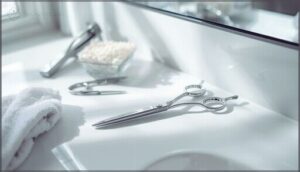
Small scissors with rounded tips offer precision trimming when handled carefully. Clean your blunt-nosed scissors with alcohol first—this prevents bacteria from sneaking in.
Stand in front of a bright light and tilt your head back slightly. Trim only visible hairs poking out, never pushing blades deep inside.
Short snips beat aggressive cuts every time, keeping your nose hair care safe and infection-free.
What Areas to Trim and Avoid
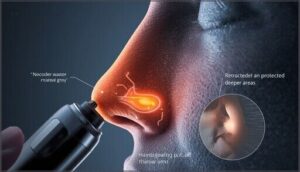
Now that you’ve got your technique down, knowing where to trim makes all the difference. Focus on the nasal vestibule—the outer entrance to your nostril. That’s your safe zone.
- Trim visible hair just inside the nostril rim and alar crease only
- Leave internal nasal passages untouched to protect your airways
- Avoid the nasal septum area to prevent bleeding
- Never narrow your nostril openings while trimming
Your trimmer should stay shallow, preserving those deeper hair follicles that filter air and guard against infection.
Common Nose Hair Trimming Mistakes

Even with the right tools, it’s easy to make mistakes that can hurt you or cause infections. Some common errors seem harmless but can lead to irritation, bleeding, or worse problems.
Here are the most important trimming mistakes to avoid.
Trimming Too Deep Inside The Nostril
Pushing your nose hair trimmer too far inside risks mucosal damage and nose injury risks. Your nostril anatomy includes delicate blood vessels that bleed easily when irritated.
Trimming depth matters—stick to visible hairs at the opening. Deep trimming threatens nasal health risks like infection and persistent irritation.
Safe trimming practices mean stopping at the first sign of resistance for better nasal protection.
Using Unsafe Tools or Methods
Wrong tools create real danger. Flame damage from lighters burns delicate tissue instantly. Sharp objects like pointed scissors cause cuts and bleeding. Chemical burns from depilatories irritate sensitive nasal lining. Tweezers and pliers yank follicles, opening wounds for infection. Home remedies involving foreign objects risk obstruction.
Stick with proper nose hair trimmers or rounded-tip scissors designed for safe trimming.
Over-Trimming Risks
Trimming too much removes your natural defense system. Your nose hair filters airborne pathogens and dust before they reach your lungs. Over-trimming weakens that barrier.
Cutting too close causes problems you don’t see:
- Microabrasions inside your nostril invite nasal infections
- Skin irritation develops from repeated tool friction
- Humidity regulation fails, leaving passages dry and uncomfortable
- Reduced filtration exposes you to allergens and bacteria
Trim only what’s visible outside your nostrils.
How Often Should You Trim Nose Hair?

You don’t need to trim nose hair on a strict schedule. Most people find that every two to four weeks works well, but your own growth rate will guide you.
Let’s look at the factors that affect timing and the signs that tell you it’s time for a trim.
Recommended Trimming Frequency
Most people should trim nose hair every four to six weeks. Your maintenance routines depend on growth patterns and hair density. If you notice visible hairs sooner, trimming every two to three weeks works better. Some need seasonal adjustments when dry air speeds growth.
Use your nose hair trimmer when hair becomes visible, not by strict calendar dates. Find what fits your personal grooming needs.
Factors Affecting Nose Hair Growth
Hormonal influence from testosterone drives nose hair growth, especially during puberty and age-related changes. Genetic factors determine your baseline facial hair density and nose hair thickness.
Environmental impact from smoking or air quality can stimulate growth. Nutritional effects matter too—iron or zinc deficiencies slow hair growth cycles.
Your body’s unique hair care and maintenance needs vary based on these combined factors affecting your nose.
Signs It’s Time for a Trim
When nose hair extends past your nostril opening, you’ve got a clear signal. Visible hair growth that catches your eye in the mirror is the most obvious cue. Nasal irritation from hairs brushing your skin or triggering sneezes also indicates it’s time.
Hair thickness and personal beauty and grooming standards affect your trimming frequency. Trust your comfort—nose hair care and maintenance is personal.
Nose Hair Trimming Safety Tips

Trimming nose hair is simple, but a few safety steps can prevent problems down the road. The right habits keep your nose healthy and free from irritation or infection.
Here’s what you need to know to trim safely every time.
Preventing Infection and Irritation
You can’t skip the hygiene basics—infection control starts before you even pick up the trimmer. Wash your hands for at least 20 seconds with soap and water to protect your nasal health.
After trimming, apply a gentle, fragrance-free moisturizer to the outside of your nose for irritation prevention. These simple hygiene practices keep your nasal passages safe and comfortable.
Maintaining Clean Trimming Tools
Your trimmer won’t stay safe without proper cleaning between uses. Wash the blade with warm water and mild soap after each trim, then dry it completely to stop bacteria from building up.
Wipe down the cutting surfaces with 70% isopropyl alcohol weekly for tool sanitization.
Store your nose hair trimmer in a dry case—moisture invites contamination that puts your nasal health at risk.
When to Seek Medical Advice
Even with clean tools, watch for warning signs. Severe pain, facial swelling, or nose bleeding that won’t stop means something’s wrong.
Infection signs like fever, pus, or warmth around your nostril need medical evaluation fast. Nasal vestibulitis—painful bumps inside—can threaten respiratory health if ignored.
Don’t wait when health risks appear. Your nasal hygiene matters, but so does knowing when to get help.
Frequently Asked Questions (FAQs)
Can trimming nose hair affect breathing ability?
You won’t notice breathing changes from trimming visible nose hair. Airway resistance stays the same in healthy people. Only trimming too deep or causing irritation can temporarily affect airflow.
Does nose hair grow back thicker after trimming?
No, nose hair doesn’t grow back thicker after trimming. That’s just a myth. Trimming cuts the visible tip but doesn’t change your follicle health, hair thickness, or regrowth rate whatsoever.
Are there alternatives to trimming nose hair?
Yes, but they’re less practical. Nasal hygiene with saline sprays reduces irritation without removing natural filters. Laser removal exists but isn’t common.
Avoid plucking and waxing—they cause infection risks trimming doesn’t.
Can certain medications increase nose hair growth?
Some medications can trigger unusual hair growth patterns. Hormone effects from testosterone therapy or minoxidil may stimulate hair follicle activity, including nose hair.
Drug interactions vary individually, so consult your doctor about medication side effects.
Is it safe to trim nose hair daily?
Think of your nose as a natural air filter—trimming daily wears it down.
Medical professionals advise against daily nose hair trimming because frequent sessions increase irritation, minor injury risks, and can disrupt nasal health impacts over time.
Conclusion
Skip your next trim and those stray hairs will undo your entire look within days. Two minutes every few weeks prevents both grooming embarrassment and respiratory vulnerability.
You now know how to trim nose hair safely without risking infection or damaging your body’s natural filters. Clean tools, shallow cuts, and a consistent routine keep you looking sharp while your nasal passages stay protected.
Your nose hair works for you when you trim it right.
- https://www.healthline.com/health/plucking-nose-hairs
- https://academichelpexpress.blog/2024/08/please-use-the-bulleted-points-and-the-rubric-below-to-guide-your-work-your-pa/
- https://x.com/godofprompt/status/1990526288063324577
- https://www.sciencedirect.com/science/article/pii/S0749208123000268
- https://pmc.ncbi.nlm.nih.gov/articles/instance/9553038/bin/pone.0275964.s005.docx