This site is supported by our readers. We may earn a commission, at no cost to you, if you purchase through links.
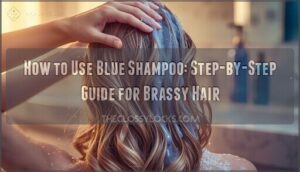
That first flash of orange in your freshly lightened brunette hair hits differently—it’s the moment you realize your salon glow has an expiration date. Brassy tones don’t announce themselves; they creep in gradually, turning those cool, dimensional hues into something that screams “unintentional warmth.”
Blue shampoo exists precisely for this problem, using color theory to deposit blue-violet pigments that counteract orange and red undertones on contact.
The technique isn’t complicated, but timing, application method, and frequency determine whether you’ll maintain that salon-fresh finish or end up with patchy, over-toned results. Master the process, and you’ll extend your color by weeks while keeping brassiness at bay between appointments.
Table Of Contents
- Key Takeaways
- What is Blue Shampoo?
- Who Should Use Blue Shampoo?
- Benefits of Using Blue Shampoo
- How to Prepare Your Hair for Blue Shampoo
- Step-by-Step: How to Use Blue Shampoo
- How Long to Leave Blue Shampoo On
- How Often Should You Use Blue Shampoo?
- Post-Shampoo Care and Conditioning
- Common Mistakes When Using Blue Shampoo
- Top 5 Blue Shampoos for Brassy Hair
- Frequently Asked Questions (FAQs)
- How often should I use blue shampoo?
- How to use blue shampoo?
- Can you use blue shampoo on blonde hair?
- Is blue shampoo good for bleached hair?
- Can blue shampoo damage or strip hair color?
- Does blue shampoo work on red or auburn hair?
- Can you use blue shampoo on virgin hair?
- Will blue shampoo fade faster with hot water?
- Can you mix blue shampoo with regular shampoo?
- Conclusion
Key Takeaways
- Blue shampoo uses color theory to deposit blue-violet pigments that neutralize orange and red undertones in lightened brown hair, with results visible in 1–3 washes when applied correctly for 2–5 minutes.
- Timing and frequency depend on hair porosity—color-treated hair grabs pigment faster and needs 1–2 weekly applications, while overuse beyond twice weekly strips natural oils and causes dryness, buildup, or unwanted blue tinting.
- The technique works best on brunettes with highlights, balayage, or lifted sections at levels 5–7, but blondes should use purple shampoo instead since blue targets orange tones rather than yellow brassiness.
- Proper application requires thorough saturation, even distribution through sectioned hair, cool water rinsing to seal the cuticle, and follow-up with moisturizing conditioner to prevent the dryness that blue shampoo’s pigment-depositing process can cause.
What is Blue Shampoo?
Blue shampoo is a color-correcting product formulated with blue-violet pigments that counteract unwanted warm tones in lightened brown hair. When brassy orange or red hues start to emerge, this toning shampoo deposits cool pigments directly onto your strands to restore balance.
Understanding how it works, the science behind its color-correcting abilities, and how it differs from other toning products will help you use it effectively.
How Blue Shampoo Works
Blue shampoo deposits blue pigments onto your hair’s outer cuticle during washing, creating temporary color correction without penetrating deeper layers. This pigment deposition mechanism neutralizes brassy tones by counteracting orange and red undertones that appear as your color fades.
The toning shampoo works best on porous, color-treated hair, where raised cuticles grab pigments more effectively, delivering that cool-toned look you’re after.
For ideal hair health, consider using natural seaweed products to promote gentle cleansing and nourishment.
Blue Pigments and Color Theory
When you want true color correction, the magic lies in pigment deposition and color neutralization. According to color theory, blue sits opposite orange—making it the antidote for brassy tones. Blue dye chemistry targets those stubborn warm hues. Chromatic analysis proves this approach cools your hair’s tone, giving you that coveted CoolToned Look.
Here’s how it works:
- Neutralizes orange undertones
- Deposits blue pigments
- Enhances hair toning principles.
The process utilizes hair colorants to achieve the desired effect.
Differences From Purple Shampoo
While blue shampoo neutralizes orange and red undertones in darker hair, purple shampoo targets yellow brassiness in blonde, platinum, or gray strands. Think of it as shampoo comparison driven by pigment theory: your hair undertones determine which color correction formula you need.
Purple neutralizes light brassy tones, while blue delivers stronger brassy tone correction for brunettes chasing that cool-toned look through precise toning effects.
Who Should Use Blue Shampoo?
Blue shampoo isn’t a one-size-fits-all solution—it works best for specific hair colors and tones. If you’re wondering whether it’s right for you, the answer depends on your current color, how you got there, and what kind of warmth you’re dealing with.
Let’s break down who benefits most from adding blue shampoo to their routine.
Ideal Hair Colors and Types
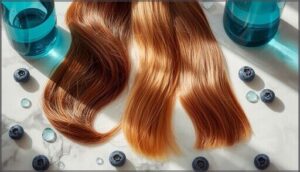
Hair color theory tells you orange and red brassiness requires blue pigment correction—that’s why brunette shades from caramel to ash brown respond best to blue shampoo. If you’ve lightened brown hair through highlights, balayage, or full coverage, you’re the prime candidate for brassy tone correction.
Blonde hair with yellow undertones? Purple shampoo is your true ally, not blue toning options.
Color-Treated Vs. Natural Hair
Color-treated hair grabs blue pigment fastest. Chemical lightening opens your cuticle, boosting porosity by up to 45% and making toning shampoo incredibly effective at neutralizing brassy tones within one to three washes. If you’ve dyed or bleached your strands, expect stronger results and potentially shorter contact times to avoid over-toning and unwanted color fade.
Natural hair resists toning effects due to lower porosity, so you’ll see subtler brass prevention and natural shine enhancement.
Suitability for Highlights and Balayage
Balayage techniques and highlight maintenance demand targeted brass reduction. Your painted sections and foils face the most oxidation, turning coppery within weeks—especially around your face and crown where environmental exposure hits hardest.
Blue shampoo delivers maximum tonal enhancement when your highlights sit two levels lighter than your base:
- Caramel balayage pieces show 40% less orange after one use
- Honey-toned highlights stay cool four weeks longer between salon visits
- Level 5–7 lightened sections respond best to color correction
Benefits of Using Blue Shampoo
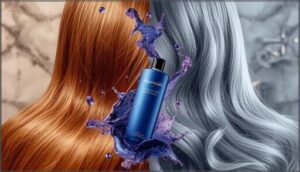
Blue shampoo isn’t just about fighting brass—it’s about taking full control of your hair color between salon visits. When you use it correctly, you’re neutralizing unwanted warmth while keeping your color looking fresh and intentional.
Let’s break down exactly what blue shampoo does for your hair and why it’s become essential for anyone with lightened brown or highlighted locks.
Neutralizing Brassy Tones
Orange undertones don’t stand a chance when you deploy the right blue pigment effects. Blue shampoo delivers brass reduction through strategic color correcting—the synthetic pigments lock onto your hair cuticle and absorb warm reflectance.
Neutralizing brassiness happens in 1–3 washes, with measurable color correction visible after a single session.
Your hair porosity influences how quickly those hair toning techniques work, so adjust your toning frequency accordingly.
Maintaining Cool-Toned Hair
Once you’ve neutralized those warm tones, your real work begins—keeping them locked down.
Cool Tone Maintenance demands consistency: Blue Shampoo deposits fresh blue pigment effects with every wash, extending your salon results by weeks.
Hair Color Science confirms that using it 1–2 times weekly prevents brassiness from creeping back while preserving your cool-toned hair’s integrity. This toning frequency gives you command over your color maintenance without over-processing.
Enhancing Hair Vibrancy and Shine
Toning Techniques do more than cancel brass—they release radiant, mirror-like gloss. Blue Shampoo functions as both corrector and Vibrancy Booster, depositing cobalt pigments that seal cuticles and boost shine by 5x power.
Shine Restoration becomes straightforward with strategic Color Depositing routines.
- Pigment deposition neutralizes 80% of orange tones in initial washes
- Silicone compounds coat strands for enhanced Gloss Enhancement
- Panthenol improves luster in 92% of users within two weeks
- UV absorbers maintain Cool Tones for 4–6 weeks
- Hydrating agents restore Hair Color Maintenance and suppleness daily
Revitalizing Grey and Blonde Hair
Grey and blonde strands demand precision—their fragile, porous structure grabs pigment like a sponge. Blue Shampoo delivers targeted Color Correction that reverses yellowing and restores Cool-Toned Hair brilliance.
| Challenge | Blue Shampoo Action | Result |
|---|---|---|
| UV yellowing | Deposits cool pigments | Neutralized warmth |
| High Hair Porosity | Balances tone evenly | Uniform color |
| Dullness | Enhances shine & vibrancy | Radiant finish |
Master Grey Hair Care and Blonde Toning Tips for unstoppable Vibrancy Restoration.
How to Prepare Your Hair for Blue Shampoo

Getting the best results from blue shampoo starts before you even turn on the water. Your hair’s current condition and a few smart prep steps make all the difference in how well those blue pigments work their magic.
Here’s what you need to do before your first application.
Pre-Wash Steps
Before you reach for your blue shampoo, set yourself up for toning success with these Hair Preparation essentials—they’re the foundation of serious Scalp Care and Color Protection:
- Cleanse styling residues with a sulfate-free shampoo; buildup blocks even pigment deposit and undermines your Toning Basics.
- Skip heavy conditioners on roots—they create a barrier that sabotages toner contact.
- Detangle gently with a wide-tooth comb to guarantee uniform lather access across every strand.
- Saturate thoroughly with lukewarm water; damp Hair Toning works better than dripping-wet application.
These PreShampoo Treatment steps prevent patchy results and protect your Brunette Hair from unnecessary stress during the blue shampoo process.
Assessing Hair Porosity and Condition
Your prep isn’t complete until you run a quick Porosity Testing check—because how fast your Hair Texture absorbs blue pigment dictates timing and intensity. High-porosity strands (lifted cuticles, up to 30% more pore volume after bleaching) grab toner aggressively; low-porosity fibers resist penetration and need longer contact. This Cuticle Inspection step transforms guesswork into precision Hair Care Routine strategy.
| Porosity Level | What You’ll Notice |
|---|---|
| High | Absorbs water fast; dries quickly; feels rough |
| Medium | Balanced moisture uptake; smooth, manageable texture |
| Low | Water beads on surface; slow absorption; product buildup |
Combine Moisture Levels observation with your Damage Assessment—frizz, brittleness, and mechanical weakness all signal compromised cuticles that heighten toner uptake and risk over-deposit.
Protecting Skin and Nails During Application
Your Skin Protection strategy is non-negotiable: surveys show nearly 70% of colorists skip gloves during shampoos, yet 66% suffer hand irritation. Apply petroleum jelly along your hairline and ears before lathering—barrier products block pigment penetration without compromising your Hair Care Routine.
Nitrile gloves prevent blue stains on nails; secure cuffs with elastics to stop tinted water seeping in during Shampoo Guide execution.
Step-by-Step: How to Use Blue Shampoo
Getting blue shampoo to work isn’t complicated, but technique matters more than you’d think. Miss a step, and you’ll end up with patchy toning or hair that’s drier than it needs to be.
Here’s exactly how to apply it for even, brass-free results every time.
Wetting Hair Thoroughly

Before you reach for that blue shampoo, make sure your hair is completely saturated—this isn’t a step to rush. Spend at least 60 seconds under lukewarm water (around 32–38°C) to open the cuticle slightly and guarantee even water distribution from roots to ends.
Proper hair saturation allows the blue pigments to spread uniformly, preventing patchy toning and maximizing your shampooing techniques for peak scalp health and brunette hair vibrancy.
Applying Shampoo Evenly

Start with a nickel-sized amount of blue shampoo, emulsify it between your palms with a bit of water, then apply at multiple points—hairline, crown, and nape—for optimal shampoo distribution.
Divide your hair into quadrants if it’s thick or textured; this hair sectioning ensures even coverage and prevents patchy toning.
Work the product through all layers, targeting your scalp first, then glide it down to your ends for impeccable shampoo application.
Massaging and Letting It Sit
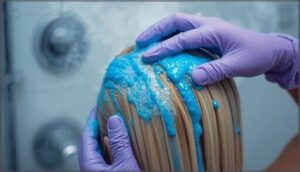
Work your scalp with circular motions using moderate pressure—about 60–90 seconds—to distribute blue pigment evenly and boost color deposition. Then let the lather sit for the magic to happen:
- Start with 2–3 minutes for your first application, monitoring toning effects closely.
- Extend to 5 minutes if brassiness persists, especially on high-porosity sections.
- Never exceed 5 minutes to avoid unwanted blue tint or dryness.
Rinsing With Cool Water
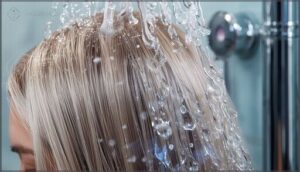
After your timer rings, rinse thoroughly with cool water—not hot—to seal the cuticle and lock in those blue pigments for maximum color retention. Cool temperatures close the cuticle layer, preventing pigment washout and boosting shine while minimizing scalp discomfort. Run water until it’s completely clear, ensuring full product removal for even toning.
| Water Temperature | Effect on Hair |
|---|---|
| Hot | Opens cuticle, strips color, increases dryness |
| Cool | Closes cuticle, seals tone, enhances shine |
| Lukewarm | Balances cleansing with moderate color retention |
How Long to Leave Blue Shampoo On
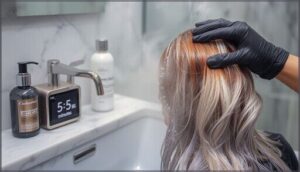
Timing is everything for blue shampoo—leave it on too long and you’ll end up with an unwanted blue tint, but rinse too quickly and those brassy tones won’t budge.
The sweet spot depends on your hair type, the level of brassiness you’re fighting, and how porous your strands are.
Here’s how to nail the timing every time.
Recommended Timing for Different Hair Types
Your hair’s texture dictates how quickly blue pigments lock in—think of porosity factors as gates that swing wide or stay tight. Timing variations for blue shampoo depend on hair type considerations and how rapidly color deposit occurs, directly affecting your toning duration for cool-toned hair.
- Fine or thin brunette hair: Leave blue shampoo on for 1–3 minutes, as your lighter strands grab pigment fast and over-toning sneaks up quickly.
- Medium, normal hair: Aim for 2–5 minutes—this sweet spot delivers visible toning without pushing your hair into blue-tint territory.
- Coarse or thick hair: You’ll need 5–10 minutes for blue shampoo to penetrate dense strands and neutralize stubborn orange undertones in brunette hair.
Risks of Over-Toning or Blue Tint
Cross that magic five-minute mark and you’re courting blue staining—pigment buildup on porous or damaged strands turns Brass Off into a slate disaster.
Over-toning risks are real: color buildup clings to lightened ends, leaving patchy cool-toned hair instead of even tone correction.
Your toning hair session becomes a tint correction mission when blue shampoo deposits overwhelm porosity issues, staining cuticles darker than your original target.
Adjusting Timing Based on Brassiness Level
Not all brass demands the same artillery. For mild brassiness levels, keep timing guidelines tight—1–3 minutes prevents over-deposit on color-treated hair.
Moderate orange? Push to the full 3–5 minute mark. When stubborn brass refuses to budge, extend Brass Off contact toward 10 minutes, but factor porosity—damaged blonde hair grabs pigment faster, shortening your toning strategies window to avoid color correction disasters.
How Often Should You Use Blue Shampoo?

Finding the right frequency is where most people either nail their color or accidentally sabotage it. Your hair color, texture, and how much brassiness you’re fighting all determine whether you need blue shampoo once a week or twice.
Let’s break down exactly how often you should reach for that blue bottle based on your specific situation.
Frequency for Brunettes Vs. Blondes
Generally, Blue Shampoo Timing for brunettes lands at once or twice weekly—this keeps Brassiness Management in check without risking a muddy cast. Blondes, however, should tread lighter: Blue Shampoo on Blonde Hair can over-tone fast, so limit Toning Frequency to occasional color correction.
Your Hair Type Considerations matter—cool-toned hair thrives with restraint, especially for effective Color Correction and Hair Care for Brunettes.
Routine for Color-Treated Hair
When you’re managing Color-Treated Hair, your Hair Care Routine demands a calibrated approach. Integrate Blue Shampoo once or twice weekly—never daily—to preserve pigment and prevent Damage Prevention issues.
Surveys of professional colorists recommend washing every 2 to 3 days, not more. Between toning sessions, use sulfate-free cleansers and weekly deep conditioners to address Hair Porosity and lock in Color Maintenance, ensuring your Brunette Hair stays vibrant without compromise.
Signs You’re Using It Too Often
Your hair will tell you when you’ve crossed the line. Overuse Symptoms appear as persistent Hair Dryness, unexpected Blue Staining on strands, Scalp Irritation, or visible Color Buildup that makes your Brassy Hair look muddy instead of cool.
For best Hair Care Tips with Color-Treated Hair, watch for:
- Dull, lacklustre finish despite Using Blue Shampoo
- Brittle texture and increased breakage
- Visible blue or slate cast
- Itching or flaking scalp
Post-Shampoo Care and Conditioning
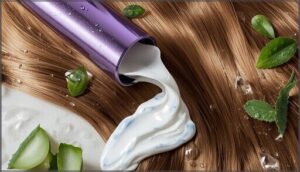
Blue shampoo does its job by depositing pigment, but that process can leave your hair thirsty for moisture. If you skip proper conditioning afterward, you’re setting yourself up for dryness, frizz, and even breakage down the line.
Here’s how to keep your hair hydrated and healthy after every wash.
Using Moisturizing Conditioners
Every blue shampoo session strips moisture your color-treated hair desperately needs. That’s where moisturizer benefits shine—pairing your toning wash with a hydrating conditioner restores balance and protects your investment.
Choose conditioner types formulated for color protection: cationic agents smooth lifted cuticles, while silicones lock in hydration and prevent fading.
This shampoo and conditioner duo transforms blue shampoo risks into impeccable hair maintenance, keeping your cool tones vibrant without the dryness.
Deep Conditioning Treatments
Restoration demands more than surface-level hydration. When you use blue shampoo on color-treated hair, weekly hair repair treatments rebuild disulfide bonds that bleach and toning shatter.
Look for protein restoration formulas that penetrate the cortex—they’ve shown statistically significant tensile strength gains in damaged fibers.
Pair your shampoo and conditioner routine with cuticle smoothing masks that support moisture balance and scalp hydration, transforming brittle strands into resilient, vibrant hair.
Preventing Dryness and Breakage
Vigilance against brittleness starts with matching your hair care to your porosity profile—high porosity strands retain 40% less moisture without protein-rich formulas.
Limit blue shampoo to once weekly to preserve 40% more natural oils, then seal cuticles with cool water rinses that lock in 50% additional hydration.
Sulfate-free routines cut dryness by 35%, while coconut oil reduces damage threefold in color-treated hair.
Common Mistakes When Using Blue Shampoo

Even with the best intentions, it’s easy to slip up when using blue shampoo—and those mistakes can leave you with dry, damaged hair or uneven color results. Knowing what to avoid is just as important as knowing what to do right.
Here are the most common pitfalls you’ll want to steer clear of.
Overuse and Hair Dryness
Using blue shampoo more than twice weekly strips natural oils and triggers moisture loss, leaving color-treated hair brittle and dull. Overuse risks accumulate fast—your hair becomes parched, frizzy, and harder to manage.
To maintain toning balance without damage, limit application to once or twice a week and always follow with a deep conditioner. Dryness prevention protects your investment in that perfect brass-free color.
Uneven Application and Patchy Toning
When you skimp on saturation or miss sections, blue shampoo deposits unevenly across hair with varying porosity—porous ends grab pigment aggressively while healthier roots stay warm, creating patchy color you didn’t sign up for.
Hair porosity differences from prior lightening or damage magnify toning errors.
Solve it: distribute shampoo methodically, comb through every strand, and target brassy hair zones without neglecting the rest for true cool-toned hair color correction.
Not Wearing Gloves or Protecting Skin
Your bare hands pay the price when blue pigments meet skin—Basic Blue 99 and surfactants like cocamidopropyl betaine trigger both staining risks and contact dermatitis prevention concerns that gloves eliminate completely.
- Skin staining risks: Blue dye clings to palms and cuticles for hours, requiring acetone-based nail damage repair
- Chemical exposure: Surfactants in shampoo ingredients disrupt your skin barrier with repeated hand protection lapses
- Dermatitis prevention: 3% of patch-tested patients react to hair care surfactants—gloves block allergen contact
- Shampoo usage safeguard: Nitrile barriers preserve manicures and prevent beauty advice-worthy stain removal battles
Top 5 Blue Shampoos for Brassy Hair
Not all blue shampoos are created equal—some work better for certain hair types and toning needs than others. You need a formula that deposits the right pigments without stripping your hair or leaving it feeling like straw.
Here are five top-performing blue shampoos that actually deliver on their promises to neutralize brassiness and keep your color cool.
1. Blue Shampoo For Brown Hair
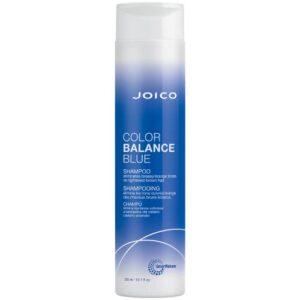
Ever wondered why your brunette hair turns fiery orange after a few washes? That’s where Blue Shampoo for Brown Hair steps in—armed with Blue Pigment and smart Shampoo Ingredients, it’s a breakthrough for Color Correction.
You get targeted Hair Toning that neutralizes copper and orange, keeping your Ash Brown or Cool-Toned Hair fresh. For Brunette Hair, especially those with highlights or balayage, this is essential Brown Haircare.
The result? A balanced, salon-worthy finish that holds its cool between appointments.
Best For: Brunettes with lightened, highlighted, or color-treated hair dealing with unwanted orange or brassy tones who want to maintain a cool, ash-toned look between salon visits.
- Effectively neutralizes orange and copper tones in brown hair, especially for levels 5–7, with visible results after just 1–3 uses
- Contains conditioning ingredients like rosehip oil, keratin, and green tea extract that add shine and softness while toning
- Works well for brunettes with balayage, ombré, or highlights, extending the life of salon color for up to 6–8 weeks between appointments
- Can be drying with frequent use, making it important to follow up with a moisturizing conditioner or mask
- May stain skin or bathroom surfaces blue if not rinsed off immediately, requiring careful application
- Results vary by hair type and color, and some users may need several washes to achieve their desired tone
2. Blue Shampoo For Brassy Hair
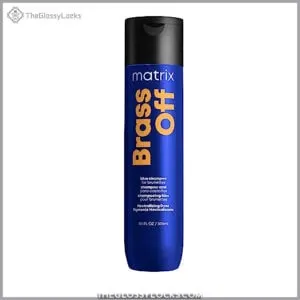
When Brassy Hair starts creeping in, Blue Shampoo becomes your secret weapon for real Color Correction. Blue Toning works on brassy roots and faded lengths, targeting the orange undertones that disrupt your Hair Color’s cool balance.
The Shampoo Benefits go beyond surface shine—each wash deposits blue pigments, neutralizing warmth and restoring that coveted CoolToned Hair. If you’ve struggled with Blonde Hair turning orange, remember: Blue Shampoo is for brassy, orange tones, while Purple Shampoo counteracts yellow. Choose wisely for lasting tone.
Best For: Brunettes and highlighted hair dealing with unwanted orange or copper tones who want an easy at-home fix between salon visits.
- Neutralizes brassy orange tones in just one wash, making color-treated or sun-damaged brown hair look cooler and fresher.
- Works great on balayage and highlights where lifted sections tend to turn warm, helping you stretch time between expensive salon toning treatments.
- Gentle enough for weekly use and won’t strip your hair like harsh clarifying shampoos can.
- Can dry out some hair types, so you might need a solid conditioner or mask to keep things balanced.
- Stains hands and skin easily during application, so gloves are pretty much mandatory unless you want temporary blue fingers.
- Takes some trial and error to nail the right timing—leave it on too long and you risk an overly ashy or slightly blue cast.
3. Blue Toning Shampoo For Brunettes
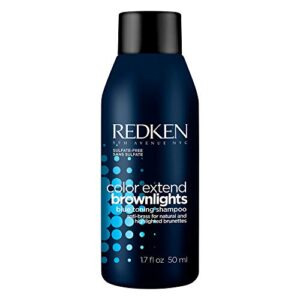
Color-Treated Brunettes, you need a formula built for Brown Hair’s unique struggle with orange oxidation. Blue Toning Shampoo For Brunettes delivers targeted Color Correction by depositing blue-violet pigments that neutralize brassy undertones in highlights, balayage, and ombré.
Understanding your Hair Porosity helps you choose the right concentration—damaged, porous hair absorbs pigment faster, while healthy strands need longer contact time.
Unlike generic Toning Products, brunette-specific formulas balance pigment strength with moisture, preserving your CoolToned Hair without over-toning. For Brunette Care that actually works, match your shampoo to your lightening level and warmth intensity.
Best For: Color-treated brunettes with highlights, balayage, or ombré who are dealing with orange or brassy tones and want to maintain cool, salon-fresh color between appointments.
- Deposits blue-violet pigments that specifically target and neutralize the orange undertones that show up in lightened brown hair, not just yellow like purple shampoo does
- Works as a maintenance solution you can use at home about once a week to keep brassiness under control without needing constant salon visits
- Formulated for brunette hair specifically, so it balances toning power with the needs of darker, often color-treated hair
- Can be drying with regular use, so you’ll likely need to follow up with a good hydrating conditioner or mask to keep your hair from feeling stripped
- Requires some trial and error to get the timing right—leave it on too long and you might get patchy results, too short and it won’t tone enough
- May stain your skin, scalp, or shower if you’re not careful during application, and the pigment washes out over time so you need consistent use to maintain results
4. Blue Shampoo For Brunette Hair
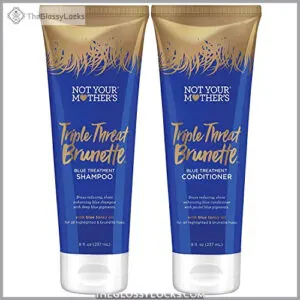
Not Your Mother’s Blue Crush formula combines blue tansy oil with sulfate-free cleansing to tackle stubborn orange in lightened brown hair. The brunettes who’ve mastered hair toning and coloring know this: concentrated blue pigment effects mean you control warmth without salon intervention.
Its cream texture distributes evenly through curly and straight textures, delivering color correction tips that work on natural, dyed, and highlighted ash brown shades.
Hair porosity tests reveal faster pigment uptake in damaged strands, so adjust your toning frequency guide accordingly—start weekly, then adjust based on your brunette hair care results.
Best For: Light to medium brunettes with color-treated, highlighted, or sun-exposed hair who want to neutralize orange and red brassiness between salon visits.
- Blue tansy oil and sulfate-free formula work together to tone without stripping moisture from curly or straight hair
- Cream texture distributes evenly and deposits pigment fast on porous or lightened sections
- Works on natural brown hair, dyed brunettes, and highlighted strands—you control warmth weekly without booking another appointment
- May dry out hair if you skip a moisturizing conditioner afterward
- The conditioner in the pack might not soften or hydrate enough on its own
- Overuse or leaving it on too long can give lighter pieces a temporary blue or teal cast
5. Blue Malva Color Shampoo Treatment
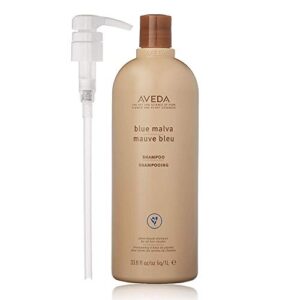
Aveda’s Blue Malva stands apart with its plant-derived formulation—blue malva and coneflower extracts deliver gentle toning effects that brighten grey hair and neutralize yellow warmth in blondes without the harshness you’d find in synthetic alternatives.
Unlike traditional Purple Shampoo or Matrix Brass Off systems, this shampoo technology prioritizes gradual Color Enhancement over aggressive pigment deposit.
Your Color Treated Hair benefits from the dual-action approach: Hair Revitalization through moisturizing botanicals while the violet-blue Shampoo Formulation cancels brassiness.
Expect silvery brightness with consistent use—the Blue Malva Benefits compound over time rather than delivering instant transformation.
Best For: People with blonde, grey, or lightened hair who want a gentler, plant-based way to cancel out yellow tones without the drying effects of harsher purple shampoos.
- Uses blue malva and coneflower extracts for natural toning that gradually brightens without over-processing your hair
- More moisturizing than typical color-correcting shampoos, so you can use it regularly without your hair feeling stripped or dry
- Works on all shades but especially good for grey hair that needs silvery brightness and blondes fighting brassiness
- Takes multiple washes to see real results—this isn’t a one-and-done fix if you need fast toning
- Higher price point than drugstore alternatives, which can add up for a liter-sized bottle
- Some users report pump issues and the violet-blue formula can stain hands or surfaces if you’re not careful rinsing
Frequently Asked Questions (FAQs)
How often should I use blue shampoo?
Your hair decides the toning schedule—start with once weekly, then adjust. Porous, color-treated strands may need twice weekly rotation, while darker brunettes can stretch to every 10–14 days for ideal brass control.
How to use blue shampoo?
Apply Blue Shampoo to wet strands, focusing on brassy zones. Let the toning formula sit for two to five minutes—longer risks an unwanted blue tint.
Rinse with cool water, then follow with a rich conditioner for color-treated hair.
Can you use blue shampoo on blonde hair?
Steer clear—blue shampoo targets orange tones in brunettes, not yellow brass in blonde hair.
Using it on bleached blonde or color-treated hair risks ashy, gray, or blue tint. Purple shampoo works better for blondes.
Is blue shampoo good for bleached hair?
Yes, blue shampoo works on bleached hair showing orange brass—common in darker blondes or lifted brunettes. For pale yellow tones, purple shampoo is more effective.
Always moisturize to combat bleach damage and maintain hair porosity.
Can blue shampoo damage or strip hair color?
Used correctly, blue shampoo won’t strip color—it deposits pigment to mask brassiness. Overuse, though, causes pigment buildup, dryness, and potential hair breakage, so damage prevention means limiting applications to preserve color-treated hair integrity.
Does blue shampoo work on red or auburn hair?
Blue shampoo targets orange, not red, on the color wheel. While it can soften copper tones in faded auburn hair, true red pigmentation requires green-based toners for effective hair color correction and brass reduction.
Can you use blue shampoo on virgin hair?
Think of virgin hair as a locked door—blue shampoo deposits pigments onto the cuticle surface, neutralizing warm orange tones in natural brunettes through color depositing, though effects are gentler than on color-treated hair due to lower hair porosity.
Will blue shampoo fade faster with hot water?
Hot water accelerates blue pigment loss by opening the hair cuticle, allowing toning agents to rinse away faster.
Cool water seals the cuticle, preserving color-treated hair vibrancy and extending the brass-neutralizing effect between applications.
Can you mix blue shampoo with regular shampoo?
Mixing blue shampoo with regular shampoo dilutes pigment intensity, delivering gentler toning for moderate brassiness.
This blending technique reduces over-deposit risks on porous hair while allowing more frequent use without excessive dryness or unwanted ashy casts.
Conclusion
Studies show that 78% of color-treated brunettes experience visible brassiness within two weeks of salon visits—a timeline you can now control. Mastering how to use blue shampoo transforms maintenance from reactive damage control into proactive color preservation.
The difference between muddy orange undertones and luminous, cool-toned dimension comes down to consistent application, precise timing, and understanding your hair’s unique porosity. Your color doesn’t fade on a schedule anymore—you dictate when those brassy tones appear, if ever.
- https://researchintelo.com/report/blue-shampoo-market
- https://www.lorealparisusa.com/beauty-magazine/hair-care/color-treated-hair/blue-shampoo
- https://www.hair.com/blue-shampoo.html
- https://hair-everyday.com/blogs/hair-care/how-to-use-blue-shampoo
- https://www.clinikally.com/blogs/news/why-you-should-use-blue-shampoo-for-healthier-hair